The new website allows for cross-airline bookings, including for ancillaries
Value Alliance is further making good on its promise of bringing interlining benefits to member airlines and consumers by relaunching its website to include a cross-airline booking system covering 160 destinations.
The new website allows users to book connecting flights and ancillary products offered by Value Alliance members, with the aim to further expand members’ customer reach and boost sales through cross-selling.
The new website allows for cross-airline bookings, including for ancillaries
According to Value Alliance, participating airlines can now reach further into markets previously untapped and be able to better compete in destinations they serve.
“While passengers can search and book flights on our individual website, including pre-purchase of ancillary services like baggage and meals, the new Value Alliance website is a great one-stop shop that enables a full view of more destinations. It’s a great way for our customers to see the best flights available among our members’ vast network, said Michael Szucs, chairman of Value Alliance and chief executive advisor of Cebu Pacific.
As well, passengers who book flights through the website will have the added benefit of re-accommodation in the event of missed flight connections. In the event of schedule disruptions, customers may go to the site for hotel accommodation and other essentials, for up to a stipulated amount, added the alliance.
A series of ValueAlliance.com campaigns including several week-long online promotions are set to roll out from May to July 2018.
Value Alliance is also offering complimentary flight re-accommodation and hotel accommodation or compensation up to US$500 for missed flight connections arising from schedule disruption, another first in the LCC industry.
ibis Styles Siem Reap, Cambodia
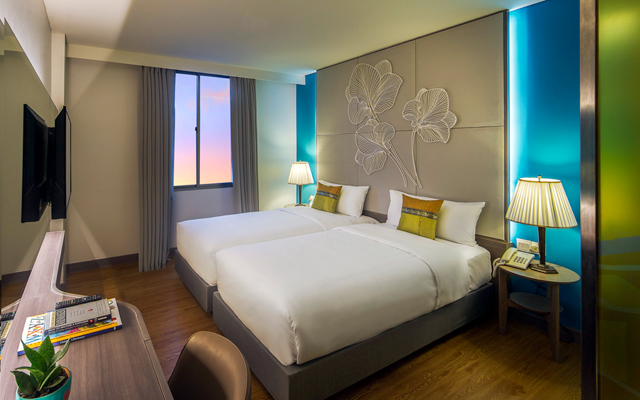
Cambodia now has its first ibis Styles hotel with the opening of ibis Styles Siem Reap one minute’s walk from Old Market and five minutes from the Night Market and Pub Street. ibis Styles Siem Reap features 112 rooms, all-day-dining restaurant Streats – which serves local and international fare in addition to options for vegetarians and the waistline-conscious – as well as a rooftop swimming pool looking out to the Siem Reap River. ibis Styles Siem Reap is located 30 minutes from Siem Reap International Airport.
Hotel Ease Access Tsuen Wan, Hong Kong
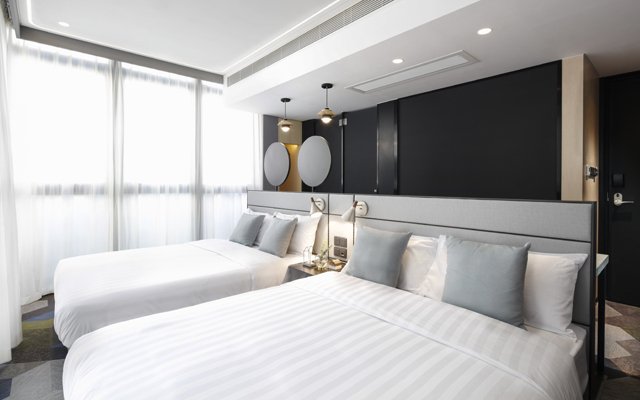
After introducing its first Hotel Ease Access property early this year, Tang’s Living Group has now launched Hotel Ease Access Tsuen Wan. The hotel features 170 rooms, ranging from 9m2 to 20.4m2, across six categories. All rooms come with complimentary Wi-Fi and a smartphone for free international calls and Internet use. The hotel is less than 10 minutes’ walk to the Kwai Hing MTR station and just 30 minutes’ drive from the airport.
Renaissance Bali Uluwatu Resort & Spa, Indonesia
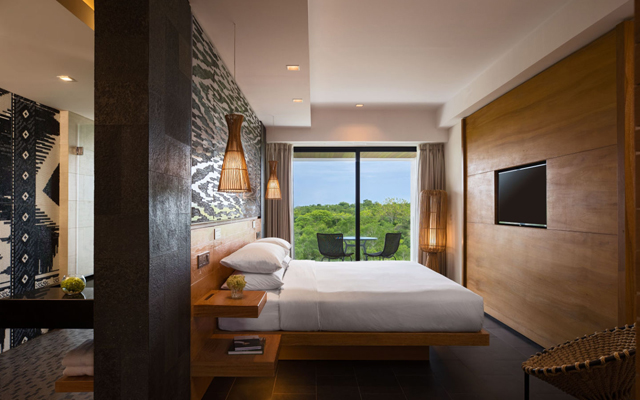
Renaissance Bali Uluwatu Resort & Spa has opened it doors as Marriott International’s southernmost property in Bali and the brand’s debut in Indonesia. With views of the Indian Ocean or Bali’s Bukit peninsula, each of the 207 guestrooms and suites features a private balcony and bathrooms that include freestanding tubs. Culinary concepts include Clay Craft Restaurant, which also incorporates a pottery school, and Double Ikat Restaurant, offering Indonesian cuisine and a Cooking Studio that imparts Indonesian cooking techniques to guests. In addition to the hotel pool bar and lobby lounge, guests may also catch a complimentary shuttle to Roosterfish Beach Club, also managed by the hotel. On-property facilities include an infinity pool with views over the ocean, saltwater pool and kids’ pool, spa and gym.
Photo credit: Hoshino Resorts
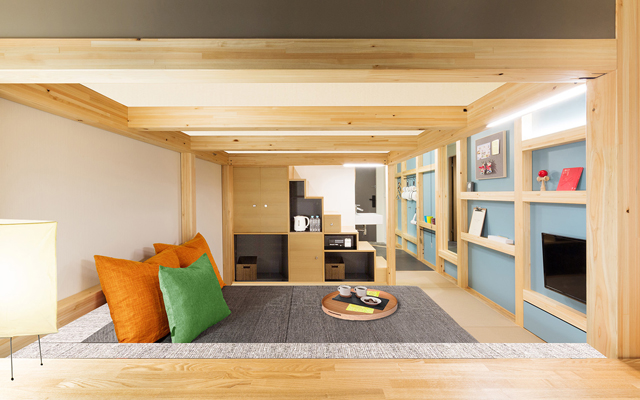
Hoshino Resorts OMO5 Tokyo Otsuka, Japan
Hoshino Resorts OMO5 Tokyo Otsuka has opened its doors in “retro Toyko”, just a minute’s walk from Otsuka Station. Designed in the style of a yagura (traditional Japanese wooden tower), each guestroom features high ceilings and a Japanese cypress staircase leading up to a loft bedroom, as well as a bathroom and seating area. The hotel is also home to the casual OMO Cafe and OMO Base lobby lounge, with guided tours led by OMO Rangers.
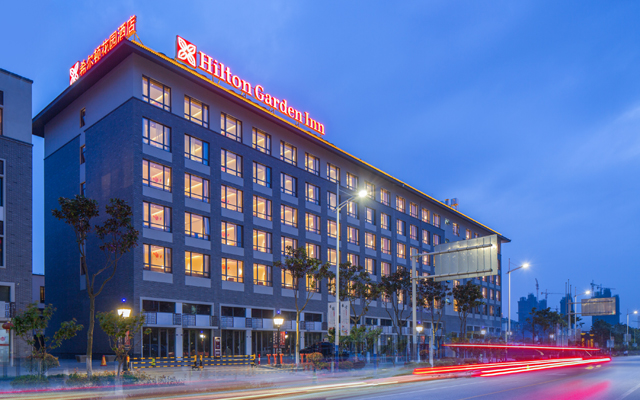
Hilton Garden Inn, Qidong, China
Hilton Garden Inn Qidong has opened in China’s Jiangsu Province, marking the entrance of an international brand into the city. Located within Central Park Mall, the hotel features 181 guestrooms, complimentary high-speed Wi-Fi throughout the property, a 24-hour gym, a self-service laundromat, a foyer that can be used for events and three flexible meeting rooms. For F&B, guests can choose from the all-day-dining Garden Grille and Bar, noodle bar Mian Tan and lobby lounge The Garden Bar. Guests can also pick up snacks or a quick meal at Pavilion Pantry, open 24/7.
When Prince Harry and Meghan Markle tie the royal knot on May 19, British Airways’ flight BA93 on May 19 to Toronto – where their love story first took off – will be operated by a crew of only Meghan’s (or Megan’s) and Harry’s.
The 10-strong cabin crew, made up of two Harry’s, seven Megan’s and one Meghan, will operate the flight departing Heathrow at 13.10, an hour after the couple say ‘I do’ at Windsor Castle, just seven miles from the airport.
Flight BA93 all ready to celebrate the royal union
Senior first officer Harry Blake will be behind the controls of the flight deck, alongside the captain.
In further celebration of the royal wedding, any customer named Harry, Meghan or Megan departing from Terminal 5 on the big day, and their travel companions, will be invited to use the airline’s First Class lounge.
The celebrations won’t stop there as lemon and elderflower Victoria sponges – the same flavour as Harry and Meghan’s wedding cake – will be given out to customers departing from Heathrow on May 19.
Extra champagne has also been loaded on to the Toronto celebration flight and passengers on board will receive a personal bottle of Castelnau Blanc du Blanc to enjoy alongside their individual celebratory wedding cake.
British Airways earlier this month launched the thrice-weekly service between Toronto and Gatwick, the airline’s first flight to Canada from the London airport.
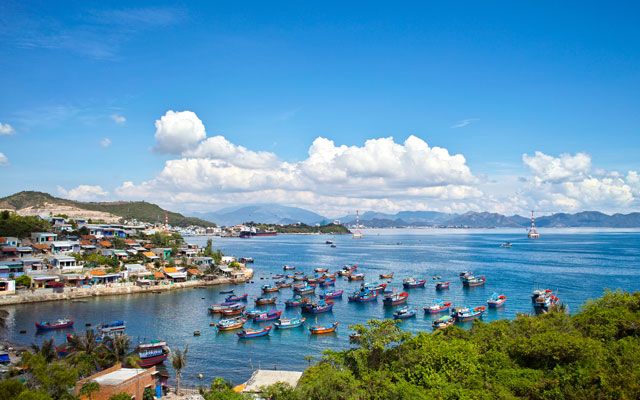
Coastal cities like Nha Trang has received much hotel investment attention in recent years
Vietnam’s luxury hotel sector looks set to explode in the next few years – and there is plenty of room for more big players, say experts.
While the country’s urban centres have welcomed new additions to the luxury market, it is the coastal areas and rising destinations that are seeing the fastest growth, according to Nguyen Thuc, manager of CBRE Vietnam’s research and consulting team.
Coastal cities like Nha Trang has received much hotel investment attention in recent years
He cites the island of Phu Quoc and coastal areas of Danang and Nha Trang as examples where there have been “aggressive expansion plans from big name international brands”.
AccorHotels has unveiled a string of planned properties and Marriott is following suit. A Radisson Blu hotel is opening in Cam Ranh this month, followed by another on Phu Quoc at Vinpearl Phu Quoc Casino Complex, which was also slated to start welcoming guests this month.
Hilton has also signed several agreements with Hanoi-based developer VRG Group to open two properties in Ho Chi Minh City. And Mövenpick Hotels & Resorts has unveiled plans to open an additional five resorts covering the coastline before 2020, adding to its current resorts in Hanoi and Cam Ranh.
The remote northern region of Sapa is also undergoing dramatic development, with an MGallery hotel, among many others, slated to open in 4Q2018.
Nguyen Duc Quynh, deputy director general of Furama Resort Da Nang, said despite the imminent explosion of luxury hotels and resorts in the coming years, the market is far from being saturated.”
Said Quynh: “Hotel occupancy in Ho Chi Minh City, Hanoi, Danang and other provinces, especially coastal cities, is still high – between 65 and 85 per cent. Therefore, the development does not bring danger (of over-saturation), instead it gives customers more choices.”
CBRE’s Thuc added that the development of the luxury segment brings with it a swathe of benefits, including giving makeovers for destinations.
Nha Trang is an example, he said, where there is an abundance of three-star hotels catering to budget travellers and large tour groups. The coastal spot has become popular with Chinese and Russian tourists.
“The development of luxury products brings additional resources to the province, as well as the country, and helps to change the image,” he said. “You may have fewer guests, but you get higher margins.”
Mark Willis, president of Mövenpick Hotels & Resorts Asia, said there remains “plenty of room for expansion in this segment”, with source markets for upscale and luxury travel to Asia expanding constantly and China’s FIT sector also predicted to increase.
He added it is not just the international market driving the luxury sector; domestic travel is also pushing it forward.
“Vietnamese living standards are rising fast and consumers are increasingly willing to pay more for top-quality facilities and services,” said Willis.
Sereena Supa’at has been appointed director of sales and marketing for Six Senses Duxton and Six Senses Maxwell.
Prior to joining Six Senses, Supa’at spent four years at Patina Capitol Singapore as director of sales and marketing.
The Singaporean has over 15 years’ experience in the luxury hospitality sector, and she has cut her teeth at hospitality companies including Patina Hotels and Resorts, Capella Singapore, St. Regis, Mandarin Oriental Hotels, The Fullerton Hotel, and Banyan Tree Hotels and Resorts.
The Indian Hotels Company Limited (IHCL) will be relaunching its budget brand, Ginger, in the next few weeks, a move that follows its switchback to multi-brands in February.
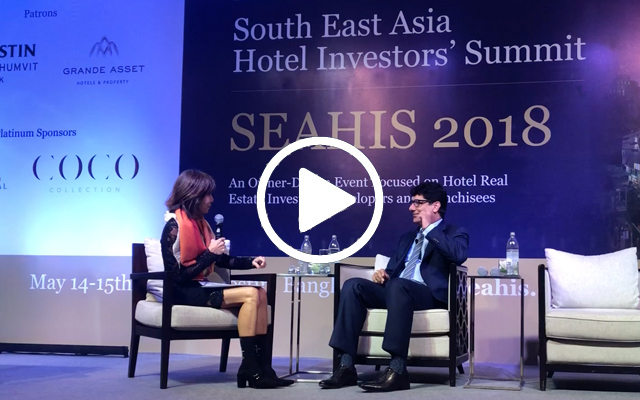
Ginger, already a leading affordable hotel brand in India, would be given a new design and identity, and in its new phase could be a limited service, premium economy or a junior mid-scale hotel, said IHCL’s managing director and CEO, Puneet Chhatwal, during a Q&A moderated by this author at the South-east Asia Hotel Investors Summit in Bangkok on Tuesday. He believed the relaunch would help scale Ginger rapidly in the local market.
Scale is one of four reasons Chhatwal reversed a move made by his predecessor, Rakesh Sarna, early last year to concentrate everything under a single brand, Taj Hotels, Palaces, Resorts and Safaris.
Indian Hotels Company Limited’s Puneet Chhatwal being interviewed by TTG Asia’s Raini Hamdi at the South-east Asia Hotel Investors Summit, Bangkok; full interview here
When asked why he brought back the upper upscale Vivanta and the upscale Gateway, Chhatwal, who took up the IHCL mantle last November, said: “Scale cannot come only from luxury, and if you don’t have scale, you become irrelevant – even in your own home market. The growth, as per all studies, as per STR, is coming in the upscale and economy segments. Over and above that, we are present in all the luxury destinations – at least within the Indian sub-continent – with not one but multiple assets, so that would have meant the demise of growth.”
He added a one-size-fits-all approach does not work in a heterogeneous country like India, where there are “a lot of important secondary, tertiary and semi-tertiary markets and they can’t all afford to have luxury hotels like Taj”.
Third, margins are higher in limited service, which requires less resources. “So some of these brands help you drive margins and if your margins are higher, you’re less volatile, you’re a stronger company on the stock exchange, which we are,” he said.
Last but not least it’s about IHCL’s ‘honour’ culture. “You can’t just tell an owner with whom you’ve entered into an agreement for 20 years – ‘listen, now we have changed our strategy and we will do only one brand, thank you very much’ – I mean, there’s a legal obligation, there is a moral obligation, there is a collaboration obligation,” he said.
Chhatwal said the decision to revert to multi-brand was made by the entire management leadership, and that his predecessor must have had some reasons at the time to pursue the single-brand strategy. “At this cycle we’re in, we’re getting a little bit of tailwind; it makes sense to expand than contract,” he said.
When asked if his priority was to defend IHCL’s leadership in India or expand its international footprint, Chhatwal was clear the company would do the former but at the same time expand globally “slowly and carefully”, and in commercial capitals that have a strong connection with the Indian diaspora, citing cities such as Toronto, Manchester, Birmingham, Bangkok, Singapore and Kuala Lumpur as examples.
On hotel chain consolidation, he does not believe that legacy Taj will be acquired, though never say never. “Anything can happen anywhere in the world, but I do believe that Taj has a very special place in the hearts of the Tata Group. This was the second or third company that was launched and the story was, Mr (Jamsetji) Tata was refused entry into a hotel because he was not British (common across British India at the time). And that’s when he acquired Taj (Mahal Palace Mumbai in 1903) and named the company Indian Hotels Company Limited.
“I think there is culture, pride, legacy, sense of belonging. It’s a very strong name, one of the exceptions within the group that does not have a Tata name to it. So there must be some reasons for it,” said Chhatwal.
What about ICHL acquiring instead, in order to build scale? A source told TTG Asia that ICHL is in talks about an acquisition, but Chhatwal was only able to say: “We will always evaluate opportunities…”
During the session, Chhatwal also gave his take on the USPs Taj has when competing with the big boys for projects; on the fate of smaller hotel groups; on the need for smaller chains to collaborate, such as with the Taj and Shangri-La alliance; on how he’s taking the best of American, European and Asian styles of management into IHCL; on how IHCL builds loyal staff – watch the video here.
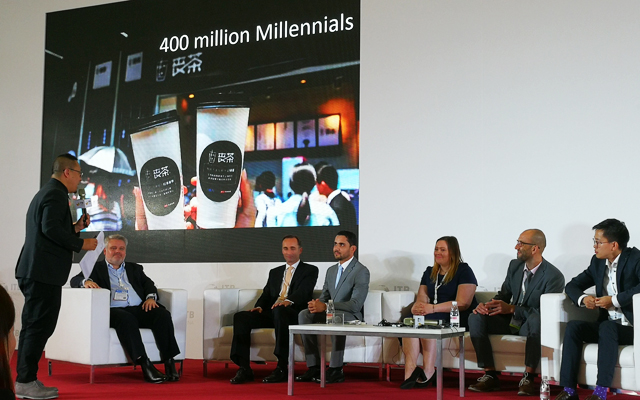
Panel at ITB China discussing Chinese millennials, the "fastest-moving market" with short attention spans
For travel marketers who have never heard of Douyin, chances are that their marketing strategies targeting the Chinese millennials are already falling behind, said industry players at a panel discussion at ITB China 2018 in Shanghai.
Estimated to number more than 400 million, millennials are a force to reckon with in China’s outbound travel growth. But marketing to this key demographic requires a close watch of trends and recognising the cultural nuances and complexities, key travel figures shared during the ‘Connecting destinations with Chinese millennials’ session yesterday.
Chinese millennials are hardly a uniform market, with each subset – post-80s, post-90s and post-00s, etc – displaying its own quirks and preferences, according to Roger Qiu, general manager of Europe, Middle East & Africa, destination marketing of Ctrip Group. “Each segmentation is complicated,” he added.
Panel at ITB China discussing Chinese millennials, with their fickle minds and short attention spans, but who also make up the “fastest-moving market”
Filipe Silva, board member of Turismo de Portugal, agreed: “There are differences within the millennials group. For instance, the millennial profile in a first-tier city is different from those in second- or third-tier cities.”
Whereas live streaming was just in demand a few years ago, the digitally connected cohort has now swapped their short attention span to short social video site Douyin, said Qiu. As a result, Ctrip is constantly re-examining and evolving its marketing strategies according to millennial trends and preferences, he added.
Travel brands also have to ensure “authenticity” while making content “cool and quick” to appeal to Chinese millennials, who have demonstrated a keen willingness to adopt new mobile apps and websites, noted Kirsty Burkill, head of marketing – Asia at Merlin Entertainments.
To attract the attention of Chinese millennials, which Burkill said is the “fastest-moving market” compared with their regional and global counterparts, Merlin Entertainments has mapped out different marketing strategies for its brands, with Douyin account launched for Madame Tussauds to keep Chinese Gen Z updated of the latest additions to the wax musuems.
But fickle as they may be, this “confident” generation is on a constant lookout for “world-class wow moments”, noted Burkill, and herein lies opportunities for attractions and tourism boards to tap on.
Experiences are highly coveted by this rising collective, with faraway and less popular outbound destinations now seeing an uptick in demand from Chinese millennials.
Israel is one such beneficiary as a destination, having seen fast-rising inbound Chinese numbers in recent years, with the growth hitting almost 100 per cent in the last two years, shared Bora Shnitman, Israel Tourism attache at Israel Ministry of Tourism’s China office. The share of FITs for the Chinese inbound market, meanwhile, has grown to 50 per cent, up from just seven per cent a few years back.
“We attract Chinese millennials with travel experiences in other countries in South-east Asia and Europe, who now have international experience and want to go to ‘mysterious’ place like Israel,” said Shnitman. “They plan their travel in small groups of friends or by themselves on Mafengwo or Qyer.”
In South America, Brazil is also benefiting from Chinese youngsters’ curiosity about the world. Observed Alisson Andrade, general manager of competitive intelligence and market access, Brazilian Tourism Board: “Chinese millennials are more open to experiences than shopping in Brazil. They like to connect with locals, stay in communities and learn to play drums, etc.”
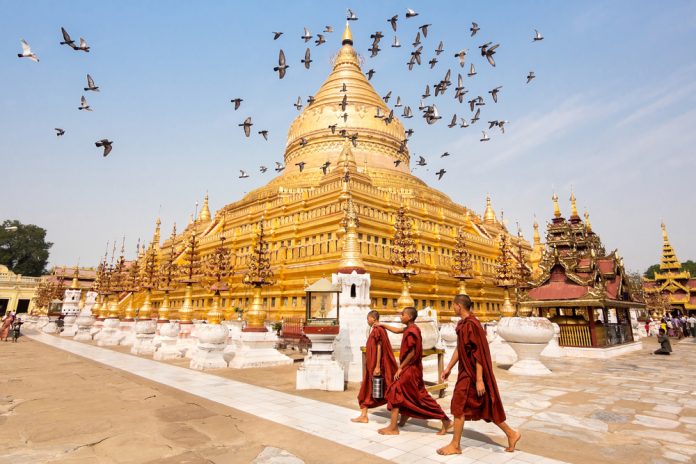
Shwezigon Paya, a Buddhist temple located in Nyaung-U, a town near Bagan
With Asian markets dominating in the face of declining European arrivals, Myanmar tourism players are shifting their focus to intra-regional travellers.
The Asian market accounted for 70 per cent of international arrivals to Myanmar in 2017. Growth in the market is led by Vietnamese visitors, with a 75 per cent year-on-year increase at Yangon International Airport (YIA), followed by the Philippines with a 62 per cent hike and Singapore by 20 per cent.
Even traditionally strong European markets are sliding; Shwedagon Pagoda in Yangon pictured
Thailand and China topped the arrivals chart, with YIA welcoming more than 230,000 and 140,000 respectively in 2017.
While Asian arrivals have increased, Western visitors have declined. The North American market fell by three per cent, while West Europe only saw a two per cent increase, with the traditionally strong markets of France plummeting 10 per cent, Germany 22 per cent and the UK two per cent.
Minister of hotels and tourism, U Ohn Maung, said the growth of regional markets has been bolstered by a visa waiver that has been in place for about a year for many South-east Asian countries. Additionally, the ministry is currently looking into developing a special visa on arrival for ASEAN countries plus three others – China, South Korea and Japan.
May Myat Mon Win, Myanmar Tourism Marketing chairperson, said this year will see an increase in digital marketing campaigns aimed at this segment, with the organisation actively targeting China. She said: “We’ve never done any marketing in China before, so this is a first.”
Min Than Htut, founder of Pro Niti Travel, added that while their traditional strong markets of the UK, the US and Canada will remain the main focus, this year will see them target parts of Asia – mainly Singapore, the Philippines and Indonesia. “We think Asia is where we have to go this year,” he said.
With the rise of inbound arrivals, Bertie Lawson, managing director of Sampan Travel, reminded that it is essential that responsible tourism is promoted, especially with the growing number of sustainable sites across Myanmar.
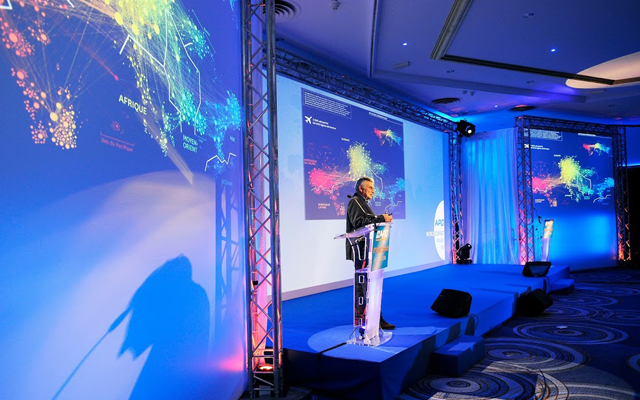
At the eighth edition of APG World Connect, an annual gathering of APG members, airline executives, travel agents and air transport professionals
Travel industry members can expect to learn more about the latest innovations in airline distribution when the GSA airline representation network AGP organises its annual aviation conference in Monaco this year.
To be held in Fairmont Monte Carlo from October 31 to November 2, the 10th APG World Connect will focus on the topic of “Connecting with the airline customer”, with the spotlight shone on its two recent key innovations.
At the eighth edition of World Connect, an annual gathering of APG members, airline executives, travel agents and air transport professionals
APG Distribution Platform is fully IATA NDC (New Distribution Capability) compliant and operates under the newest XML technology, while APG Access A1 allows airlines without a GDS presence to interline with all other airlines in the APG Interline E-Ticketing (APG IET) “hub” – an existing platform allowing travel agents to issue flight combinations from different airlines on one ticket and under one airline code.
“Both these innovations will be showcased to World Connect 2018 (attendees), some of whom are newer low-cost and hybrid airlines that have established an online presence using the Internet to reach travellers, and that now wish to expand their reach to customers of travel agents,” revealed Tunku Iskandar Tunku Abdullah, regional vice president & board member of The APG Network as well as group president, APG Malaysia & APG Singapore.
The new products come at a “minimal up-front cost”, and monthly variable costs are based on transaction volume, Iskandar added.
While the full programme for APG World Connect is still being developed, Jean-François Clervoy, a veteran who has taken three NASA space shuttle missions, has confirmed his attendance at the conference to share more about space exploration.
In 2017, revenues achieved by APG members for airline clients increased from €10.6 million (US$12.6 million) in 2012 to €18.3 million in 2017, an increase of 72 per cent. The highest growth in 2017 over 2016 was achieved by Asia-Pacific airline clients at 81 per cent. APG is targeting a 35 per cent growth in revenues for client airlines worldwide in 2018.
The APG Network comprises 111 members and service partners, and has commercial relationships with over 200 airlines.
Under pressure from their sophisticated clients to deliver the extraordinary, luxury travel buyers will be hard at work at the inaugural ILTM Asia-Pacific in Singapore next week in scouting for that special product or service at the show.
With a good turnout of sellers who are themselves upping their game in delivering experiential goods, buyers are not likely to be disappointed.
TTG Asia Luxury, the only travel trade publication partner of ILTM Asia-Pacific 2018, has a feature on Sellers Showcase in its latest issue that will be distributed to buyers and sellers of the show. Watch this video for a sneak preview of five products and services that will be on the shelves at the event next week, which will be held at Marina Bay Sands Singapore from May 21-24.
Make sure to grab your copy of the co-branded TTG Asia Luxury/ILTM Asia-Pacific issue which is packed with features on the state of Asian outbound luxury travel markets; how expert planners are changing to adapt to increasingly demanding clients; which destinations are emerging for luxury travellers and, of course, host Singapore, where new luxury hotels are opening and adding exciting accommodation choices to the city.


 Renaissance Bali Uluwatu Resort & Spa, Indonesia