The Thai government and Chinese e-commerce giant Alibaba last week entered into a strategic partnership to drive the development of Thailand’s digital economy and the Eastern Economic Corridor under the Thailand 4.0 policy.
Under this partnership, agencies of the Thai government and business units of Alibaba will work closely together in a number of areas, including establishing a smart digital hub in the EEC, training of digital talent and SMEs, smart tourism and Thai agricultural exports to China.
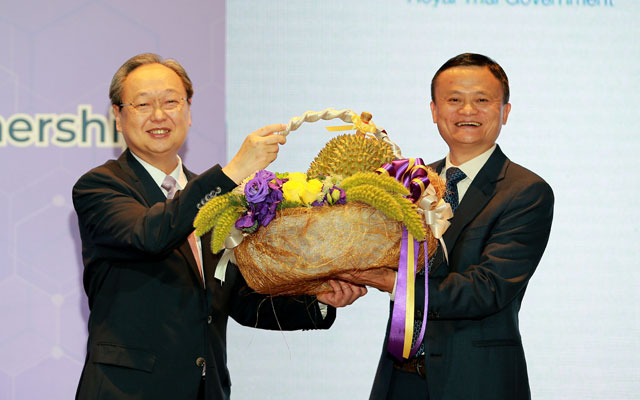
Thai minister of commerce Sontirat Sontijirawong (left) seals the strategic partnership announcement with a Thai Monthong durian gift basket to Alibaba Group executive chairman Jack Ma (right)
The Tourism Authority of Thailand (TAT) and Alibaba’s online travel business and one of China’s leading online travel service providers, Fliggy, will also expand their cooperation to support the development of smart and digital tourism in Thailand and attract more Chinese travellers to the country.
Fliggy will work with TAT to offer smart technological experiences at facilities and tourist attractions across Thailand for the convenience of visitors – ranging from online tour guides to electronic ticketing systems. Both sides will join forces to promote Thailand’s hidden tourist attractions that are off the beaten track for Chinese visitors.
The demand to visit Malaysia among Indonesian travellers continues to grow despite competition from other regional destinations, driven by what outbound agents say is a compelling combination of easy access, affordability and the variety of product offerings in the country.
This was apparent in the enthusiastic reception to the Malaysian Association of Tour and Travel Agents’ (MATTA) roadshows in Jakarta and Surabaya earlier this week, which brought together 35 sellers, comprising agents, hotels and theme parks, to promote Malaysia’s latest tourism products and offerings to Indonesian agents.
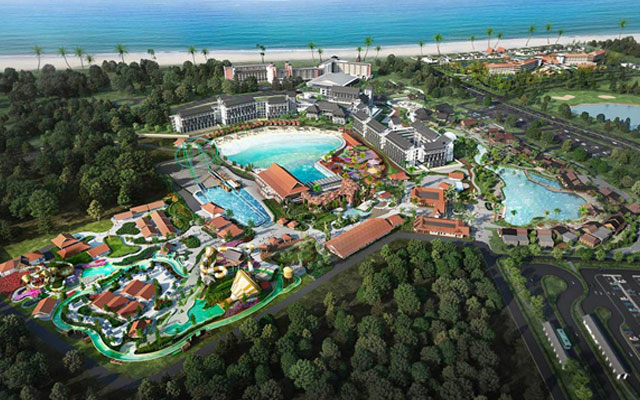
The upcoming Desaru Coast in Johor was a new seller at the MATTA roadshow this year
The MATTA event, jointly organised with the Association of the Airline Ticketing Companies in Indonesia (ASTINDO), received strong interest from hundreds of travel specialists from Jakarta and Bandung for the Jakarta event, and Surabaya and its surrounding areas for the Surabaya event.
Deputy secretary general of ASTINDO, Pauline Suharno, who is also managing director of Elok Tour, thinks the warm agent reception is in part due to the participation of new Malaysian sellers such as Desaru Coast and Asia-Pacific Masters Games in Penang.
“Besides tour operators selling tour packages, there are also hotels and attractions wholesale ticketing agents. This allows us to have a variety of products to sell as not all Indonesians — especially those who are familiar with Malaysia — like to buy tour packages.
“There are travellers who go to travel companies like ours to buy just air tickets, hotel rooms or entry tickets to attractions,” she elaborated.
The Indonesian outbound specialists TTG Asia spoke with also pinpointed the easy access between Indonesia and Malaysia as a key factor stoking demand for the latter. There are at least 600 flights per week connecting primary and secondary cities of both countries.
Besides, Pauline said, Malaysia is also a convenient hub for travel to a third country due to its ample direct flights, not only from Kuala Lumpur but also from other cities in the country.
Mangara Gultom, chairman ASTINDO Jakarta Chapter, opined that Malaysia’s affordability has been a strong pull factor for Indonesians.
“This many flights available makes the prices more competitive. Besides, sellers at a road show like this usually come up with new offerings, allowing us to create new or updated products and special offers,” Mangara said.
Meanwhile, Noviyanti Chandra, general manager of Happy Tour, sees traveller interest in multi-country packages like a seven-day overland tour combining Singapore, Kuala Lumpur and Hat Yai in Thailand, which was created after she observed a trend of young Indonesians wanting to collect passport stamps.
“Our target is the first-time traveller abroad. But surprisingly, the repeaters also like this package, perhaps because this tour gives them more experience and experiential travel is highly sought after by Indonesians,” Noviyanti said. – Additional reporting by Mimi Hudoyo
While artificial intelligence (AI) has made headlines in the past year, some members in the travel circle believe that the platform is “overhyped” and should not intimidate smaller travel players.
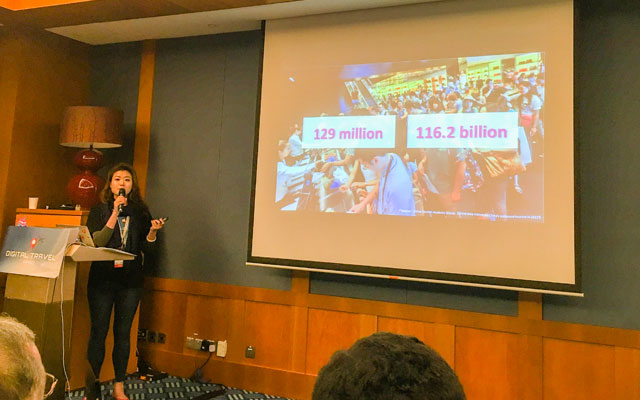
“It’s still okay if your company has not adopted AI yet. It’s just computers making sense of data,” expressed Jonathan Hardy, managing director, Asia Pacific, ADARA, speaking at Digital Travel APAC in Singapore yesterday.
Chatbots have risen in popularity in recent years, but it is not a one-size-fits-all solution
Due to the “huge range” of functions of AI that allows, Hardy suggests that greenhorns can get familiarised by starting with simple programming and side-personalisation.
Another easy introduction to AI applications is the chatbot, which has proven popular in recent years. However, industry players are cautioning against careless use of this solution.
Stephan Keschelis, vice president ecommerce & digital transformation, NH Hotel Group, shared: “Chatbots are good for improving usability, and you can access chat logs to see areas of improvement. However, hotel bookings come with a lot of fine print that can be hard to throw at the customer with just a bot.
“We have to be very sensitive, especially when the customer wants to compare rates that are not comparable – such as room types, and rooms with and without breakfast,” he remarked.
“Bots are useful for standardised processes, but it doesn’t substitute human agents.”
Timothee Semelin, corporate director digital marketing and transformation, Rosewood Hotel Group, shared that the group is only looking at chatbots for select brands such as Pentahotels and not for Rosewood Hotels & Resorts, as it does not fit the luxury brand profile of the latter.
What is also lacking, opined Hardy, is awareness outside of industry forums about data privacy and how data works. He said: “There needs to be massive education and awareness about how to use it. There have to be expectations about consent and guidelines, with a model that can be rolled out across different markets.”
Drawing from Delta’s recent hacked chatbot – which released its customer data to a public domain – Hardy advised companies to “make sure your chatbot vendor is robust enough”, in order to avoid turning the positive feature “into a negative in just moments”.
Visitors to Thailand are seeking more diversified experiences and venturing into secondary destinations, offering hoteliers opportunities to target inbound visitors through a market segmentation approach that aligns with Tourism Authority of Thailand (TAT)’s latest Open to the New Shades of Thailand campaign.
The Expedia Group reveals some emerging trends for Thailand, garnered from its 675+ million monthly visits from across the globe in 2017:
Attractions such as Wat Mahathat Temple in Sukhothai Historical Park (pictured) are on the rise
A greater demand for cultural and historic destinations
Chiang Rai in Thailand’s northern province recorded an outstanding +80% year-on-year inbound growth, thanks to local hill tribes and their distinctive customs that make for an intriguing cultural mix for intrepid travellers. Chiang Mai, on the other hand, experienced a relatively slower but healthy growth at +30%.
While Asian travellers seem more interested in experiencing local customs, European travellers from France, Germany and the UK showed greater interest in exploring Thailand’s historical ruins.
Sukhothai, known for its ruins of Thailand’s first kingdom dating back over 700 years, experienced +50% year-on-year in inbound demand, where Europeans alone attributed to more than half of this growth.
Package bookings drive higher ADRs in beach destinations
While the top five most visited beach destinations among international travellers remained the same as 2016, Pattaya led the pack with year-on-year growth at +40%, followed by Phuket and Hua Hin with a modest growth of +20%. On the other hand, Koh Samui and Krabi recorded relatively slower growth at around 10%.
In these top five destinations, Expedia Group’s package – which bundles flights and hotel accommodation – travellers paid 1.2 times more for their accommodations compared to standalone bookings.
On average, package travellers tend to stay one more day and are 50% less likely to cancel their trips due to the non-refundable flight element, as compared to standalone bookings. The US, Australia and the UK led the growth for package demand to Thailand’s key beach destinations.
While nearly seven in 10 bookings to Thailand comprise of one or more beach destinations, international visitors are also venturing beyond the beaten path. Upcoming beach destinations such as Koh Chang and Koh Lipe both recorded a healthy +30% growth.
Khao Yai National Park (pictured) was also a popular destination for South-east Asian travellers this year
Thanks to UNESCO-listed Khao Yai National Park, Khao Yai recorded an outstanding three-digit growth at +160% year-on-year. Over half of these visitors are from South-east Asia countries with Singapore topping in the first place, accounting for nearly 40% of Khao Yai’s overall inbound demand.
Gastronomy becomes Bangkok’s key attraction
Bangkok attracted the attention of foodies worldwide when it was named the world’s top street food city. Michelin then launched its first edition Michelin Guide Bangkok, featuring a total of 98 restaurants. These recent developments highlight how Bangkok embraces international dining while spotlighting its own rich culinary heritage and authentic Thai cuisine.
While Japanese travellers place the highest importance on food experience, Australian visitors ranked food as the second most important factor influencing their choice of travel destination according to a recent Asia Pacific Travel Trends research. Expedia Group’s data for Bangkok supported these findings as Japan was ranked top three inbound markets while Australia was one of the fastest-growing inbound market among Thailand’s top 10 feeder markets, injecting a healthy double-digit growth into Bangkok.
China-based mobile advertisement platform company Madhouse has released a paid platform that allows companies to time and broadcast their own advertisements targeted at Chinese outbound travellers.
TravelMad, launched at Digital Travel APAC 2018 yesterday, enables industry marketers to advertise on popular mobile apps used in China, such as WeChat, Dian Ping, Mei Tu Xiu Xiu and more.
Wang: correct mobile platform essential to reaching out to the China market
Advertising on these platforms is essential for penetrating the Chinese market, who do not use social media that are global marketing favourites, such as Facebook and Instagram, explained Wendy Wang, vice president, Madhouse.
On the platform, marketers can customise their campaigns that reach out to Chinese who are travelling in other countries such as Thailand, Japan and Singapore.
Users can adjust their campaign criteria such as target country, frequency and time period of advertisement distribution, format of advertisement and location-based push advertisements.
The platform also delivers real-time reporting on the performance of the campaign, such that users can recalibrate their criteria based on click-through results.
Wang told TTG Asia on the sidelines of Digital Travel APAC 2018 that Madhouse is participating in roadshows and workshops across South-east Asia to promote the platform and encourage the region to reach out to the “high-value Chinese market”.
The agency currently has one representative in Singapore for the South-east Asia market, and hopes to expand depending on demand, said Wang.
Radisson Hotel Group has announced the signing of a new property, Radisson Red Mandaue in Mandaue City, Cebu.
Scheduled to open in 4Q2021, Radisson Red Cebu Mandaue will form part of Astra Centre, a major new mixed-use development of Cebu Landmasters.
A rendering of the upcoming property
The property will feature 146 guestrooms with a minimum room size of 28m2, each equipped with the latest smart technology, allowing guests to stream content from their phone to their TV.
Guests will also have the option to check-in digitally via the Radisson Red app, enabling them to bypass reception and head straight to their room by unlocking the door using their smartphone.
Facilities include high-speed Wi-Fi, two F&B outlets, a 24/7 gym and Meet Event Studios – the hotel’s approach to corporate functions.
Radisson Red Cebu Mandaue will become Radisson Hotel Group’s second hotel in Cebu, following the upper-upscale Radisson Blu Cebu, located in the North Reclamation Area.
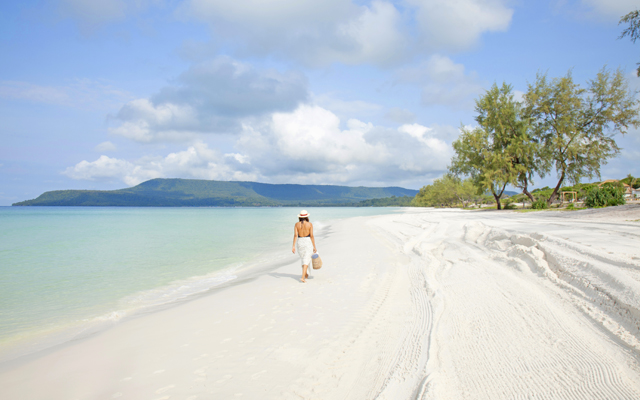
Location This five-star property is nestled along a 550m-long stretch of private beach that overlooks the translucent turquoise waters on the south-western coast of Koh Rong. Private boats to the island take one hour from the mainland port of Sihanoukville.
Koh Rong Island
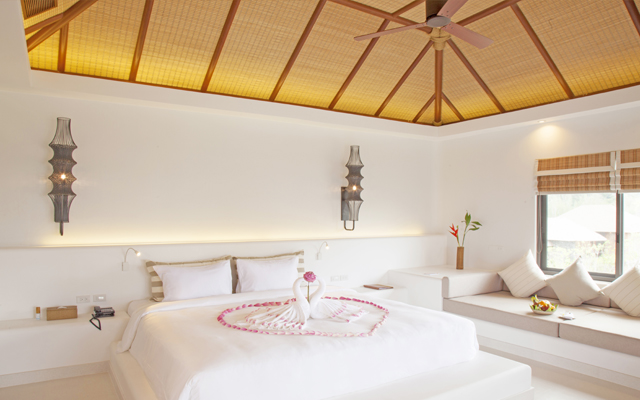
Rooms The 67 freestanding villas take in ocean view and beachfront villas – some with private plunge pools – and two- and three-bedroom options. All are spacious and fitted with super king-size beds, sofas and an impressively large bathroom, with separate toilet and shower, as well as an outdoor rain shower.
A simple yet stylish theme runs throughout with contemporary designs given a Khmer twist, adding to the luxuriously calm atmosphere that sits at the resort’s core.
Ocean View Villas
I stayed in the Ocean View Villa, which, in line with the rest of the accommodation, has a bright feel, thanks to light pouring in through the floor-to-ceiling windows. Lying in bed in the morning and looking out at the pristine beach views was heavenly, as was sitting on the private terrace to watch sunset.
A minibar is provided, as is complimentary fruit, safety box, plasma TV, Wi-Fi and coffee machine.
F&B Part of Royal Sands’ beauty is its isolation. However, that makes eating off-site difficult, with the closest option a 20-minute drive away, and anything else much further. Thankfully, guests have two options, each with expansive menus.
The Chill is perfect for lunch, snacks, sundowners or a more relaxed dinner overlooking the ocean. This poolside restaurant also serves beverages throughout the day and evening. The Ocean Restaurant also affords stunning views and serves an extensive buffet breakfast as well as more fine dining evening options.
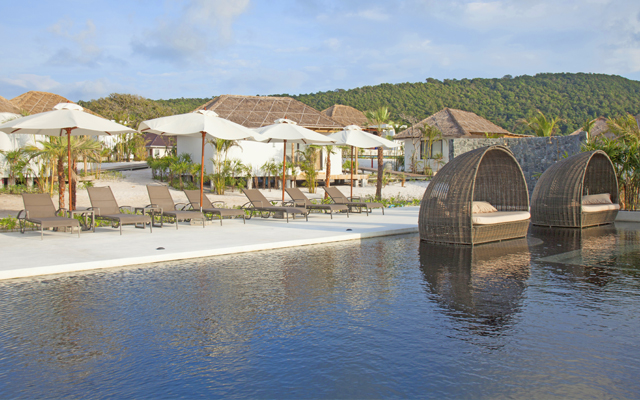
Facilities A spacious infinity pool overlooks the ocean, with bamboo cocoons perfect for relaxing in nestled above private Jacuzzis.
Swimming Pool
A spa, yoga sala and gym cater to those wanting to indulge in some wellness while away. A range of activities take in snorkelling, kayaking, island hopping, diving, fishing, stand-up paddle boarding, mountain biking and trekking.
Service The staff were exemplary of Cambodian hospitality: welcoming, passionate and always on hand to help, as well as offer recommendations for activities.
Verdict
Royal Sands Koh Rong is a truly welcome addition to the island, offering the ultimate luxurious paradise island escape for those seeking simple yet sophisticated solace.
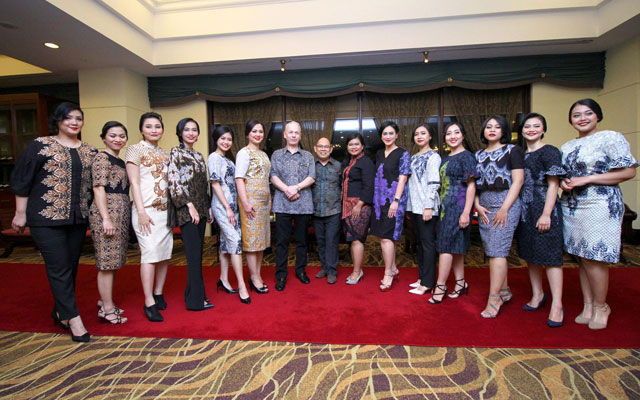
The Sultan Hotel & Residence Jakarta – in collaboration with Alleira Batik and GAIA Indonesian Premium Tea – held a kebaya and batik fashion show on April 18, to celebrate the 139th Kartini’s Day that would fall on April 21.
The fashion show was held in The Lagoon Lounge and lobby area, which saw several of the hotel’s female team members donning elegant kebaya outfits and sashaying down the runway.
Since 1964, Kartini Day has been celebrated by all Indonesian provinces, to commemorate the birthday of national independence hero Raden Adjeng Kartini.
The objective is to honour Raden Adjeng Kartini’s struggle to realise the equal opportunity between men and women in the modern era. This celebration has a profound meaning of women’s emancipation and is a reminder to all levels of Indonesian society to continue to fight for gender justice.
Update: Raden Adjeng Kartini’s name was incorrectly stated in an earlier version of the story. It has since been corrected.
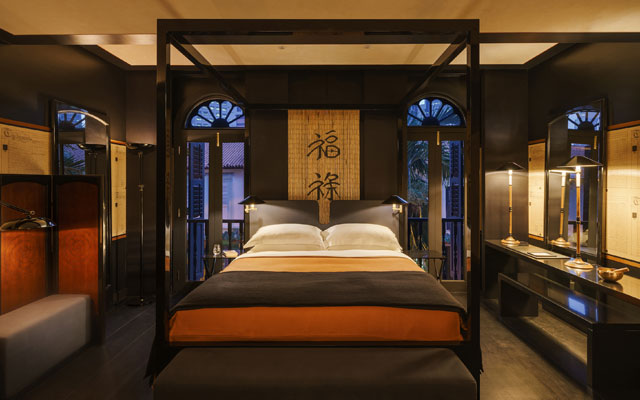
Six Senses Duxton, Singapore
Six Senses Duxton, the first city hotel from the Six Senses family, has opened in Singapore’s Chinatown area with 49 guestrooms tucked within a row of traditional shophouses. No two rooms are the same, with each featuring designs from across eight different themes such as Nutmeg, Shophouse, Opium and Pearl. Regardless of room choice, each space is furnished with a Naturalmat organic mattress, bathroom amenities by The Organic Pharmacy, flatscreen TV with satellite channels, and Bose Bluetooth speaker. Yellow Pot, the hotel’s on-site restaurant, has two semi-private dining rooms. The property’s sister hotel, Six Senses Maxwell, will be opening later this year and will boast a spa.
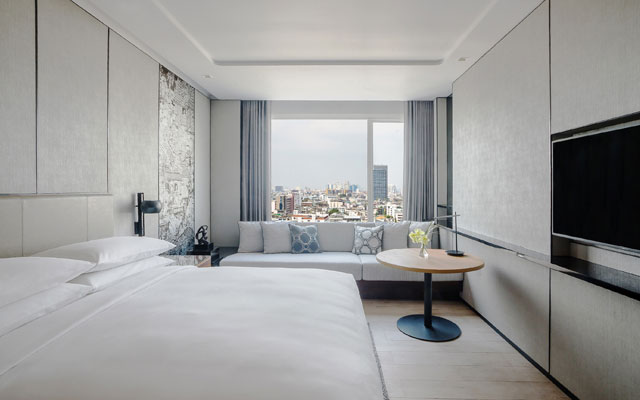
Bangkok Marriott Hotel The Surawongse, Thailand
Located on Surawong Road, the new-build Bangkok Marriott Hotel The Surawongse comprises 197 guestrooms and 106 deluxe suites across 32 storeys. Facilities on the property include four dining options, the Quan Spa, fitness centre, as well as an outdoor infinity pool. Event planners can make use of the property’s 1,555m2 of versatile event space spread across two ballrooms, nine meeting rooms, a colonial-style courtyard and an outdoor garden.
Four Points by Sheraton Seoul, Gangnam, South Korea
The second Four Points hotel has opened in Seoul’s Gangnam district with 199 rooms and two penthouse suites. Each room is furnished with a 49-inch ultra HDTV, complimentary Wi-Fi and an egg chair. Facilities include a gym, sauna, the all-day dining restaurant Evolution and The Lounge & Bar, which boasts the brand’s signature craft beer programme. Over 106m2 of meeting and event spaces are available on the second floor.
Soravit on Granville, Hong Kong
Billing itself as the “first Thai-themed hotel in Hong Kong” is the 76-key Soravit on Granville. All rooms and suites features custom-made Thai silk linens and traditional Thai wood furniture, and are categorised into the Superior, Deluxe, Premier and Executive. Room sizes range from 18m2 up to 35m2, the latter of which boasts a separate living area and large work desk. The hotel also features a collection of artwork from two Thai artists, Tippanet Yaemmaneechai and Sirikoy Chutataweesawas. The only on-site restaurant, Queen’s Dining, serves up dishes from south-eastern China, Thailand and Vietnam.
No longer viewed as the boring sibling of adjoining Kuala Lumpur, the state of Selangor is steadily coming onto visitors’ radar, driven by a new crop of hotels, competitive rates, and a strong roster of ecotourism and man-made attractions.
New hotels, many of which boast “excellent” locations, are what made Selangor a much more compelling sell nowadays, opined Arokia Das, director, Luxury Tours Malaysia.
I-City Theme Park, one of Selangor’s key attractions
The recently opened New World Petaling Jaya Hotel, which sits adjacent to the iconic Paradigm Mall in Petaling Jaya, is a prime example, according to Arokia.
Other new upscale hotels like Sunway Clio Hotel and Sheraton Hotel Petaling Jaya are also located close to big shopping malls, making them good lodging options for Asian tourists, he added.
Arokia is also pinning hopes on the upcoming DoubleTree by Hilton@i-City as a new four-star option for i-City Theme Park visitors. Park-goers currently prefer to stay in Sunway or Subang areas due to the absence of international branded properties in the vicinity, Arokia posited.
Meanwhile, Selangor’s cheaper room rates has always been an attractive proposition for the state.
Said Arokia: “On average, the contract rate savings for a five-star hotel (in Selangor) is around 20 per cheaper than that of a similar star category in the city centre (in Kuala Lumpur).”
Furthermore, the recent expansion of i-City Theme Park, which saw the launch of Red Carpet 2 in August 2017, has further raised Selangor’s attraction as a theme park destination, pointed out Adam Kamal, general manager at Tour East Malaysia.
The two-storey, 2,787m2 Red Carpet 2 is a bigger extension of Red Carpet – Malaysia’s first interactive wax museum located at another part of i-City – featuring some 100 wax figurines of famous personalities and sculptures of superheroes.
Sunway Lagoon, the other key theme park in the state, also introduced Nickelodeon Lost Lagoon – the first Nickelodeon themed attraction in Asia – two years ago.
Adam remarked: “With two major theme parks, there is reason for tourists, especially millennials who want an experiential holiday, to extend their stay in Selangor by one night. Both theme parks are also close to Kuala Lumpur, which makes it suitable for day trippers from the city.”
Asutra Convex is currently developing a tour programme by Light Rail Transit, starting from the Subang Jaya stop in Selangor and ending at Kuala Lumpur City Centre stop, to highlight unique sites in between the two points for sightseeing.
1 Utama E, the new 55,000m2 extension to the 1 Utama shopping centre completed in January, welcomed two sports tourism centres, the FlowRider surf centre and the AirRider indoor skydiving, alongside an enhanced roster of restaurants, cafes, bars and bistros.
Azizi Borhan, managing director, Asutra Convex, expects these new mall-based attractions to entice tourists as it allows them to experience surfing and simulated skydiving in a safe environment.
Beyond the theme parks and shopping malls in the city, Selangor still has lots to offer for those keen to explore its countryside, Azizi stated.
“Our tours to Carey and Ketam Islands are selling well. Also, day visits to homestays in Selangor are well received by Korean, Japanese and Singaporean FIT tourists who are interested to experience local food cooked by villagers and their way of life.”
According to statistics from Tourism Selangor, the state attracted more than 7.4 million domestic and international tourists last year, a two per cent increase over 2016. Tourists from China, Singapore, Japan, Indonesia and India make up the top five foreign markets to Selangor.