TTG Asia
Asia/Singapore Saturday, 20th December 2025
Page 1472

The biggest challenges for Asia’s inbound agents in 2018 (part 1)

0

INDONESIA
Indonesian inbound travel companies consider the rapid growth of online travel businesses as their biggest challenge moving into 2018.

Eddy Sunyoto, managing director of Terimakasih Indonesia Tours & Travel, said: “The biggest challenge is the international online travel companies that have big budgets to promote and sell their products without any boundaries. In the long run, these companies will kill the local medium and small (brick-and-mortar) travel companies.”

Adjie Wahjono, operations manager of Aneka Kartika Surabaya, concurred: “For us, the digital marketing and OTA era is the biggest challenge.”

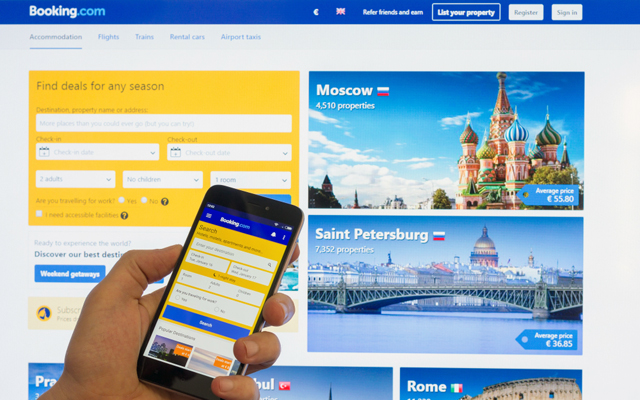
Previously, OTAs primarily dealt with airline tickets and hotel bookings, while more complicated ground arrangements would require real agents and consultants.

“While the latter is still true, technology keeps on evolving and online companies also keeps developing. (What if they progress from) airline ticketing or hotel bookings to include booking transfers, activities and sightseeing? Soon they might be able to arrange multi-day trips or overland tours,” Adjie said.

Eddy added: “Currently, (with no regulations in place), anyone can act as a travel agent and do business online. My concern is that while the online booking capabilities may increase the number of arrivals, the quality (of services) may decline.”

Adjie also pointed out that the line between wholesale and retail travel companies is being blurred.

“We are a B2B tour operator through and through, but in the past few years, we have seen many new faces and companies introducing themselves as (online) platforms, inviting us local operators to feature our products there. It is a very tricky situation. Once we are inside, our B2B tour operator partners will accuse us of bypassing them,” Adjie explained.

But there is no stopping technology, and industry players have no choice but to follow suit.
Eddy, who is also a board member of the Association of the Indonesian Tour and Travel Agencies (ASITA), said the association will be launching an online platform to help members enter the digital world.

Adjie shared: “We are observing ways to multi-channel – just like what many airlines and hotels have done – through our own brand website, through selected platforms, yet still retain our good relationships with our long established B2B partners worldwide.”

Other agents meanwhile are planning to adapt or adopt business models.

Tanto Ruwiyadi, Look Asia Holidays’ managing director, said: “We have no other alternative than to review and change our business strategy to follow the digital era. To continue to survive as an offline travel agency and compete with an OTA, we have to do (what it takes).”

“For example, we need to note what clients’ concerns about OTAs are, and we then find ways to serve them better,” Tanto said. As an offline travel company, his staff also needed be more active, and quicker and more efficient in relaying information to customers.

Sebastian Ng, managing director of Incito Vacations, hopes to find a way to tap clients in their homes, as new gadgets have made searching for information easier, and the distance between would-be clients and destinations is closer.

“What we are doing is to improve our tools to reach both direct customers and through tour operators,” Ng shared.

Apart from this, Ng wants the government to step in and help build traveller trust, as there have been cases where travellers book a tour through a fraudulent online travel company. – Mimi Hudoyo


MALAYSIA
Inbound agents in Malaysia generally believe the market will continue to be soft in 2018 as it had been in 2017, and this will lead to lower revenue and profit margins due to undercutting, and new entrants fighting for a smaller market share.

Adam Kamal, CEO, Olympik Holidays, elaborated: “A few years back, OTAs used to offer only hotel bookings. Today, they offer the whole package which includes transfers, tickets to attractions as well as accommodation. It will be a challenge for us to compete on price alone.”

Explaining the difficulty in competing with OTAs, Ally Bhoonee, executive director of World Avenues, shared: “Hotels pay OTAs a minimum 15 per cent commission for each booking, and a sales incentive at the end of the year. OTAs are also spared the country’s six per cent GST charge as they are based overseas.

Some local hoteliers in Malaysia have also resorted to providing the same rates to OTAs as that enjoyed by local wholesalers in order to sell their rooms.

“There needs to be proper dialogue and transparency between hotels and tour operators. Hotels should treat us as long-term partners. For years, before the OTAs came, we were the only distribution channel for hotels,” said Ally.

Meanwhile, Luxury Tours Malaysia’s senior manager, Arokia Das, predicted that price undercutting will continue into 2018 from 2017, especially for the high volume Indian inbound market, as inbound operators from low volume markets also want a slice of the Indian pie.

Arokia added: “Price undercutting is a means of breaking into a new market and quickly building up a clientele.

“A big chunk of the overseas outbound Indian market is made up of small and medium-sized tour operators who are focused on profit margins. They will go for lower prices, even if it means sacrificing on quality.”

Several inbound agents interviewed believed that the way forward is not to compete on price. Instead, it is to offer great service, and niche products where there is little or no competition.

Adam said: “We are developing unique, niche packages such as adventure tourism. These include off-road cycling, whitewater rafting and ATV excursions.”

Arokia’s company is offering value adds to business partners – such as free Wi-Fi in vehicles, complimentary tea and mineral water bottles with the logo of the agency partner – to encourage their loyalty.

Meanwhile, Nigel Wong, director, Urban Rhythms Tours, Adventures & Travel, opined that the political stability in Malaysia after the national general election may also affect the inbound business.

“(As well) the new tourism tax will affect arrivals this year but to what extent remains uncertain,” he said.

Wong said his company will invest more on online marketing this year to showcase Malaysia as a safe and desirable destination for holiday seekers. He also called for more training programmes to be done so that the travel industry could collectively rise and provide a higher quality of service, as well as explore newer and more innovative ways of marketing the country. – S Puvaneswary


PHILIPPINES
Resiliency is the bottomline for inbound agents as they prepare to wrestle with challenges that the new year will bring, varying from stiff competition to the destination’s tarred image and marketing.

Competition mainly comes from foreigners who are allowed full ownership of travel agencies for a minimum capital of US$200,000.

In this case, foreign-owned corporations are nationalistic in nature that, instead of getting the services of local agencies, they tend to go for Japanese or Korean-owned agencies, said Paul So, secretary-general of Philippine Travel Agencies Association (PTAA) and managing director of Great Sights Travel and Tours.

While there are exceptions like Japan Travel Bureau – which has infused a US$3.5 million capital and employs 50 Filipinos in its offices in Bonifacio Global City and Cebu City – there are other foreign agencies that contribute much lesser to the local economy and are not monitored, he said.

“The government should put in place a safety net for small Filipino entrepreneurs and companies as foreign agencies are not supposed to eat into their business,” So suggested.

As well, competition also stems from online agencies offering basement price tours and accommodation, which is “one of our biggest challenges” said PTAA president Marlene Dado Jante.

Jante shared that PTAA will be coming out with a newspaper ad to warn the public about the risks of buying cheap online tour packages.

“The Department of Tourism (DoT) has no police power so they cannot monitor every ‘colorum’ agency, so it’s important to educate the public, and tell them to check the agency’s licence or DoT accreditation.”

Another major challenge is the Philippines’ negative image – a result of the continuing political, human rights and security issues.

“What kind of signals are we sending to the global community?” asked an irate travel consultant.

As such, many travel agencies have been advised to tap the domestic market, a reliable fallback as it is multiple times bigger than the inbound market and growing steadily. Philippine Tour Operators Association’s president Cesar Cruz said the association will continue to introduce special packages featuring new destinations and attractions.

Other companies such as Luxus Pacific Travel and Tours are tapping into new inbound markets like Russia, which is on the rebound for the Philippines.

General manager Mary Ann Ong said the company will also be tapping into the luxury Chinese market, which offers better yield than the mass. – Rosa Ocampo


SINGAPORE
Agents in Singapore are concerned with losing their hold on the market to online players, and are looking for solutions to secure a foothold in this digital era.

Dominic Ong, managing director of Star Holiday Mart, told TTG Asia that online players are “taking away opportunities” from traditional brick-and-mortar agents, as they no longer offer just flight and hotel bookings, but also tickets to attractions and tours.

This is exacerbated by operators that are pushing for direct bookings.

Ong observed: “Attractions and other ground tours are preparing for this wave (of online adoption), and some even create apps to support it.”

As a result, the market share is slipping away from agents, who are starting to innovate with both online and offline solutions.

For example, Star Holiday Mart is looking to strengthen its B2B partnerships by investing in an application programming interface, as well as buying packages from smaller agents and making them available online, said Ong. His agency hopes to grow its B2B relations in Asia, the Middle East and the Indian subcontinent.

Similarly, CSI Marketing is planning to “review (its) current business model, build up new digital capabilities and adopt different growth strategies”, said its senior director, Joseph Sze.

Such enhancements include mobile or app interfaces, chatbots, VR goggles and data analysis, which can be used “to effectively target different customer segments and market tour programmes to specific tourists”, explained Sze.

The sense of urgency is imminent, and Sze asserted that local players should capitalise on available government support to remain competitive.

He said: “Singapore travel agencies must transform and elevate to a higher level of enterprising travel business, equipped with forefront technology adoption…by leveraging Singapore Tourism Board’s (STB) technology support scheme.”

STB’s five-year Tourism Development Fund encourages the birth of quality tourism products and experiences, and capability and talent enhancement efforts among tourism-related enterprises.

Still, local agents remain wary of completely migrating online. Traditional players cannot compete in the arena of digital juggernauts, opined Ong, who plans to combat this competition by capitalising on his company’s strength of person-to-person service.

He observed: “There is a market of high-end travellers who still want in-person service. In order to stand out, we’re going to concentrate on upselling value-adds such as private transfers, express passes for attractions and restaurant reservations.”

This higher-spending segment is largely consisted of travellers from India, China and Indonesia, said Ong. – Pamela Chow


VIETNAM
Various issues like a lack of funding and coordination between government agencies, the ease of Internet bookings essentially cutting out DMCs, and the overdevelopment of some of the country’s natural areas are the challenges moving forward.

Jeff Redl, managing director of Diethelm Vietnam, said lack of funding allocated to marketing the country is a constant criticism, suggesting that stronger support would help drive tourism growth.

Oleg Shafranov, Khiri Travel Vietnam general manager, agreed: “Among the biggest challenges remain the limited government effort – most probably due to insufficient funding – in promoting Vietnam in target markets, (and a) lack of coordination between local government agencies in promoting the country as a single destination.”

Pham Ha, CEO of Luxury Travel Vietnam, said increasing competition from South-east Asian rivals, including Indonesia, Malaysia and Thailand, is also becoming a problem.

Asia DMC’s director of business, Armand Cheveux, said the emergence of Internet bookings with B2C possibilities and tour operators, cutting DMCs and contracting services in destinations is another issue.

Redl added a slowdown in longhaul markets is expected to continue throughout 2018, with Brexit still affecting travel from the UK, Latin America still suffering from an economic crisis, and the ongoing Middle East crises.

“We [the travel industry] need to promote sales to alternative markets, especially shorthaul ones. We need to develop MICE business, and find and develop new destinations,” he said.

Shafranov said low return rates of international visitors – on average 10 per cent – also needs to be addressed, adding that the industry is working to turn this around, and “tour operators have been collectively promoting the country in international markets”.

However, Shafranov lamented that one of the largest and most complex issues the country faces is overdevelopment and excessive commercialisation of some of the country’s natural areas, and the degradation of heritage assets.

To tackle the problem, Khiri Travel has developed various forms of sustainable tourism aimed at giving back to the communities in which they operate.

Through its Khiri Reach project, it coordinates these efforts with others in the tourism industry, as well as NGOs, volunteers and local suppliers. – Marissa Carruthers

New hotels: The Residence Bintan, Grand Hyatt Manila and more

0


The Residence Bintan
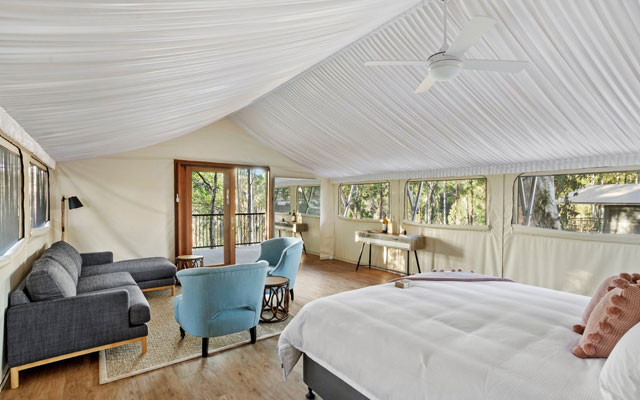
Cenizaro Hotels & Resorts is making its first foray into Indonesia with The Residence Bintan, scheduled to open in February 2018. The 127-key Residence features 28 one-bedroom villas and four two-bedroom villas by the beachfront, 15 one-bedroom villas on the hilltop, and 80 one-bedroom suites.

Facilities at the property include its signature Indonesian restaurant Rica Ricat, a spa, as well as activities such as snorkelling and diving at Pulau Mapur; batik or birdhouse painting and tie-dye classes. Corporates can choose from three meeting rooms, al fresco spaces, and teambuilding activities such as paintball and archery tag (on request).


Grand Hyatt Manila
At Grand Hyatt Manila, all 461 guestrooms feature a lounge area, walk-in closet with a safe and floor-to-ceiling windows. Facilities include a fitness centre and spa, both of which will open on March 1. The hotel will have three main F&B concepts – the all-day-dining Grand Kitchen; No. 8 China House for casual Chinese dining; and The Peak bar (the latter two will open mid-2018). For meeting and events, the hotel offers flexible meeting rooms; Grand Ballroom; Grand Salon for intimate events; and Garden Pavilion, which comes complete with indoor and al-fresco seating areas.


Best Western Sapporo Odori-Koen
Best Western Sapporo Odori-Koen, which officially opens later in the quarter, has begun accepting bookings. Located in the heart of Sapporo’s Chuo-ku, or “central ward”, the hotel features 60 rooms, all equipped with complimentary Wi-Fi. The hotel is 600m from JR Sapporo Statio, an hour’s drive from Sapporo’s New Chitose Airport, and less than two hours from the famous ski slopes and year-round outdoor activities of Niseko.


Hilton Huizhou Longmen Resort
The Hilton Huizhou Longmen Resort has opened its doors in China’s Fuli Nankunshan Hot Spring Healthy Valley. All of its 366 guestrooms and suites offer floor-to-ceiling views of the rivers and hillsides that surround the property, where the suites are further equipped with in-suite hot spring pools. Facilities on the resort’s grounds include a 24-hour fitness centre, an outdoor swimming pool, six F&B venues, private rooms to sing karaoke. There are also 11 function rooms, including a Grand Ballroom, for events and meetings.


Avani Broadbeach Gold Coast Residences
Occupying a prime beachside address on Surf Parade is the 219-key Avani Broadbeach Gold Coast Residences. The new-build offers a choice of one- or two-bedroom suites, with the choice of hinterland, ocean-facing, or sky-high ocean views. Each suite comes with a balcony, fully-equipped kitchen, and a lounge and dining area furnished with a Smart TV and complimentary Wi-Fi. On-site facilities include a resident’s lounge, gym, sundeck, and an outdoor 25m-long swimming pool. In addition, a bar and restaurant will open in the in the first quarter of this year on the ground floor.

The biggest challenges for Asia’s inbound agents in 2018 (part 2)

0

CHINA
China welcomed 69.5 million arrivals in 1H2017, an increase of 2.4 per cent, and tourism revenue grew 4.3 per cent to US$60.1 billion, compared to the same period in 2016, according to the China National Tourism Administration (CNTA).

Temple of heaven, Beijing

While CNTA is optimistic arrivals and revenues will continue to grow in 2H2017, geopolitical tension created by North Korea, along with low funding levels of destination marketing by China and increased bureaucracy affecting tourism operation and social media, is casting a shadow.

Sam Braybon, ambassador to Shanghai of Bespoke Shanghai, Bespoke Travel Company, said destination marketing of China in western countries is low.

“China can do more to raise its appeal in order to achieve higher growth rates – like Japan and South-east Asia, where some places are less expensive to visit.”

Aside from increasing Chinese marketing and promotion efforts, and adopting interesting and innovative approaches to make them more appealing, Braybon suggested China tourism agencies cooperate with travel agents in joint promotions.

In addition, more could be done to address the negative reports on air quality and food safety.

As for social media, Kin Qin, deputy general manager, Century Holiday International Travel Company, said while searching for information online can be done quickly and easily, what is posted is not always accurate, and can “disrupt” what travel agents recommend and advise.

Qin noted: “We are tackling this by focusing on understanding better what our customers want, and being more prepared to meet their expectations.”

Ricky Yang, deputy general manager, Easy Tour China Travel, added: “We suffered a drop in online bookings in 2017, and are in the process of upgrading our website and adjusting our online strategy.”

On the rise in bureaucracy, travel agents cited the “unpredictable” and “short notice” nature of government policy on fees, tourism zoning and development.

Examples cited include the slapping of a RMB60 (US$9) transport fee per person to enter a Guilin resort town, which was announced in August and came into effect in weeks, which affected contracts for big groups in particular.

A Beijing-based travel agent commented: “There is a crackdown, and the tightening of controls started in August. I expect more to come. For example, there are now car plate licence restrictions and we also need to submit information about the company, our guides, tour itineraries in advance, which adds a lot of work as clients of tailored programmes often do not follow a strict itinerary.” – Caroline Boey


HONG KONG
The travel trade in Hong Kong expects a challenging year given uncertainties that lie ahead, especially political tensions that impact inbound business.

The Sino-Japanese row has resulted in the Japanese staying away from China and Hong Kong and although the situation has improved, Hong Kong now has to compete with South Korea, which is aggressively marketing to South-east Asian markets due to similar tensions with China.

W Travel Services’ managing director, Wing Wong, said: “South Korea has intruded into the South-east Asian market with very low tour prices. My Indonesian and Malaysian clients are now considering going to South Korea rather than Hong Kong.

“In order to survive, we will cut costs and expand our source of income. However, we won’t slash our prices dramatically because the cost of transportation, such as coaches, is getting dearer,” Wong said.

He is relieved to see that promotions by the Hong Kong Tourism Board (HKTB)are continuing to enhance prospects. He also looks forward to see a lowering of the travel agent licence fee this year.

Political instability, like the recent US-North Korea conflict, is also considered another big challenge, as it has dampened sentiments among North Americans to travel to Asia, according to agents.

Faces of Hong Kong’s CEO, Ivy Sung, said: “It’s quiet, with not many enquiries on Asia. Though there isn’t much we can do from the political perspective, I will not give up.”
She hopes the HKTB will have more joint promotions, for example partnering airlines and hotels to host overseas buyers.

Sung is also heartened by the board’s efforts to attract more arrivals through events.
“It’s a good sign to see the government bring in more big international events, such as the Hong Kong Cyclothon and Volvo Ocean Race. We hope for more opportunities to bid to support these events in the future,” Sung shared.

Meanwhile, expectations that online travel businesses will continue to further encroach on revenues are also weighing in the minds of traditional players.

Travolor Travel & Explore’s manager, Jo Chan, hopes to combat the trend with tailor-made products and better services.

He said: “If we can’t beat them, (we have to) join them and offer more automation and invest in online content. We can’t compete on pricing and volume, but (instead) offer a better service.” – Prudence Lui


INDIA
Overall, India’s inbound tour operators fear that high taxation, along with a lack of innovation in tourism offerings and an absence of a strong government tourism policy, will haunt their business in 2018.

Ravi Gosain, managing director, Erco Travels, lamented: “The biggest challenge for us is that prices are rising without any value additions. It is therefore difficult for us to justify the price increase to our partner foreign tour operators every year.

“India faces a lot of social and political problems which we have to defend. At the same time, the unfavourable GST implementation on the tourism and hospitality sector has added to our woes.”

From a former indirect taxation regime that saw the state government levying VAT, luxury and entertainment taxes, in addition to the central government’s set of different taxes, India introduced the GST system on July 1 last year in an effort to streamline the structure. However, the new taxation has made tour prices around the country uncompetitive.

Pronab Sarkar, president, Indian Association of Tour Operators, explained: “The tourism industry in India has always borne the burden of multiple taxes and thus, has always been overtaxed and suffered losses. The average tax percentage levied on tourism industry, under the pre-GST regime, as well as under GST regime, roughly remains the same, which is approximately 25 per cent.

“Taxation on the tourism sector is comparatively lower in neighbouring countries, which has resulted in an increase in their tourism business. However, tourism growth in India has been and remains very stagnant,” he said.

Subash Goyal, chairman, STIC Travel Group, added: “For a package tour, principal tour operators in India may have to engage one or more tour operators depending on the itinerary in the different states to provide services locally to their clients. As per the present GST system, all those tour operators involved are liable to charge five per cent GST on the same services, which results in multiple taxation.”

Goyal hopes that the government will consider the current GST loopholes and provide relief to tour operators. He said the stakeholders are engaging with government authorities on different platforms to relay their concerns.

Aside from this issue, there is also a need to focus on promoting unique tourism experiences in the destination, Gosain opined.

“We need to be more innovative in our product offerings. India has lot to offer and we need to create our own original products, rather than just highlighting the country’s monuments. India needs to look beyond the image of cultural destination, if we want to increase the number of leisure tourists,” Gosain said.

Added Arun Anand, managing director, Midtown Travels: “India’s Ministry of Tourism has been making good efforts to promote India to international markets. But the time has come to draw up a different marketing strategy to attract different tourist segments.

“For example, to attract international MICE business, we need an entirely different approach as compared to the strategy for leisure travellers.” – Rohit Kaul


JAPAN
The emergence of Japan in recent years as a major tourist destination may be good for the industry, but it also poses some new challenges for its operators.

High on the list of concerns remains the difficulty of securing accommodation in popular destination cities and at peak times of the year such as during the cherry blossom season each spring.

However, this problem appears to be easing as hotel chains catering to all budgets are opening additional properties in anticipation of the windfall that will accompany the Rugby World Cup in 2019 and, the following year, the Tokyo Olympic Games. Equally, more travellers are taking advantage of the spread of Airbnb-style minpaku accommodation.

More recent emerging challenges fall into the categories of too little and too much. “There is so much competition in the inbound sector now that it is getting harder and harder for us,” said Ayako Adachi, owner of Tokyo-based Japan Oriental Tours.

“Five years ago, there were not so many smaller agencies like us, but that has changed and now we need to understand better just what travellers want when they come to Japan and to meet those needs,” she told TTG Asia.

The company is increasingly looking to develop new tours in parts of the country that are less well-known, Adachi said, and is reaching out to repeat visitors who are seeking new experiences.

Denis Morozov, manager of the inbound division of Tokyo-based JIC Travel Center, agrees that agencies are being sidelined, but he believes that technology is partly to blame. “Travellers are booking their hotels and excursions online by themselves, which is making this sector tough,” he said.

“Everyone is looking forward to the Olympic Games in 2020 and I think more people might use agencies to ensure they have accommodation and tickets and so on, but it might get difficult again afterwards.

“We have chosen to focus most of our efforts on wealthy clients and the luxury market, the people who do not mind paying a little more for a guaranteed good service,” Morozov shared.

Japan’s relative inexperience in dealing with large numbers of foreign tourists is also showing up in such areas as human resources, where there is great demand for staff with foreign language skills, although the number of capable multilingual employees falls short of.

“There is simply insufficient number of tour guides with the language skills that we need,” said Avi Lugasi, owner and managing director of Kyoto-based travel agency Windows to Japan.

“Japan is a country where a good guide makes a big difference to a customer’s enjoyment of the vacation, so it is very important for us to be able to provide them with a good service.”

The government used to have a system for training guides to ensure they had a certain level of ability, but it has since relaxed the rules. “Now virtually anyone can call themselves a guide, even if they are not skilled. This is already an acute problem and will only get worse, I fear,” Lugasi said. – Julian Ryall


SRI LANKA
Sri Lanka’s tourism sector has been battling a decrease in arrivals from the Middle East and Europe due to problems such as raging flash floods and a dengue outbreak, failed marketing campaigns, as well as a three-month partial closure of the country’s main airport for urgent maintenance.

Tourism growth slowed in 2017 with just a 3.5 per cent increase in arrivals in January to August from the same period in 2016.

Sri Lanka’s prime minister Ranil Wickremesinghe announced at a recent tourism conference in Colombo that the country hopes to attract five million tourists by 2025, up from the current two million under the Sri Lanka Tourism 2017-2020 Strategic Plan which includes aggressive promotion and marketing.

Temple of the tooth in Kandy

But the key to turning the tide rests on the digital marketing and destination marketing campaigns which have eluded Sri Lanka for many years, often with false, stop-go-stop starts.

In addition, according to industry figures, 10,000 more hotels rooms are in the pipeline, doubling the 10,000 existing ones.

Warned Harith Perera, managing director of Diethelm Travel Sri Lanka, said: “If we don’t fast-track these campaigns particularly with more rooms coming into the market, prices could come down and quality could suffer.”

The industry however is warming up to yet another long-delayed digital marketing campaign in key markets. The campaign should start at the end of this month, and will be followed by a wider global destination marketing campaign later in the year.

Ahintha Amerasinghe, chairman and managing director of the Worldlink Travel Group, said that instead of solely looking at the country’s main markets of India, China and Europe, Sri Lanka should “also tap non-traditional markets like Vietnam, Indonesia and the Philippines”.

Dileep Mudadeniya, vice president-brand marketing at Cinnamon Hotels and Resorts, believed that things will “move faster with many projects in the works”, as well as 2020 being declared Visit Sri Lanka Year. – Feizal Samath

Myanmar deliberates bed tax

0
Bed tax meant to finance tourism promotion

The Myanmar Ministry of Hotels and Tourism is hoping to fatten its limited destination promotion funds with income from a possible bed tax.

Tint Thwin, director general of the Ministry of Hotels and Tourism, said the plan is to collect US$1 per room per night from international travellers, and 1,000 kyats (US$0.80) from domestic travellers staying in hotels.

Bed tax meant to finance tourism promotion

Tint Thwin explained that the bed tax is needed, as the ministry has “a very tight budget (allocation) for promotion from the government”.

Money collected from the proposed bed tax will go into financing Myanmar’s participation in travel tradeshows, production of destination promotion materials, development of human resources, online presence, and improvement of tourism infrastructure such as building public toilets, among other things.

Tint Thwin expects the country to collect between US$4 million and US$5 million a year in bed taxes, based on last year’s international arrival of 3.5 million people staying an average of one week, as well as five million domestic travellers.

However, the ministry’s decision is vexing local hoteliers, according to Aung Myo Min Din, chairman of the Myanmar Hotelier Association.

Aung Myo Min Din told TTG Asia that this was a bad time to impose the new bed tax as the country might be raising the minimum wage limit by 45 per cent this year, a move that would drive up costs and rooms rates. “We are afraid this will dampen travellers’ desire to visit Myanmar,” he said.

Aung Myo Min Din revealed that this concern was tabled at the recent ASEAN Hotel & Restaurant Association meeting where Malaysian members shared that inbound traffic had dipped when Malaysia imposed a similar tax. In comparison, arrivals into Indonesia grew when the Indonesian government eased regulations on travellers.

At press time, private sector players and the government are in talks to find a better solution to growing the destination promotion fund.

Tint Thwin said: “I am sure the industry understands and agrees that more money is needed. We have a budget of only US$300,000, and our participation in the tourism expo organised by the Japan Association of Travel Agents last year cost us US$200,000.

“We also agree that tourism is one of the most important sectors (driving Myanmar’s national economy) but we are the least developed (in this aspect) among ASEAN members. We have the lowest arrivals of them all and yet our prices are higher than that of Laos, Cambodia and Thailand while our service standards are not as good. We need to improve.”

Tint Thwin hopes “the best solution to this” will be found in a couple of months.

ASEANTA plays problem-solver to industry concerns

0
ASEANTA working on addressing issue of buyers 'not producing'

A stronger system to qualify ATF buyers and a membership expansion are among some proposed initiatives that have emerged from the ASEAN Tourism Association (ASEANTA) Board Meeting on Tuesday.

The initiatives aim to resolve persistent industry concerns.

ASEANTA working on addressing issue of buyers ‘not producing’

Board members deliberated the possibility of establishing a database of quality international buyers to raise the standards of attendees at ATF’s B2B meetings component, TRAVEX.

ASEANTA president Cheah Swee Hee said: “We have been studying the past few ATFs and we see some hosted buyers who are not really producing. ASEANTA must (find a solution for this).”

Cheah revealed that the proposal on the database was presented to NTO representatives on Tuesday.

He said the database could contain buyers recommended by various industry stakeholders and screened by ASEANTA board members.

“If we want the database to be more detailed, we could employ artificial intelligence and use technology to match (buyer profile with destination product offerings).”

Meanwhile, a committee with an IT expert has been formed and it has started to look into antitrust and personal data protection laws that will impact the creation and management of this database. This effort will also give confidence to sources when they collect data, opined Cheah.

A second major initiative considered by the board is the inclusion of airports and tour companies in ASEANTA membership.

“Our ASEAN airline members have been asking for the inclusion of airports so that there is better synergy, as the airports also play major roles in creating seamless travel for travellers,” he explained.

Cheah added that having travel companies in the membership would facilitate the communication and execution of programmes developed by ASEANTA.

“As ASEANTA members, these travel companies will get first-hand information (on what we hope to achieve and can take action accordingly),” he said.

The ASEANTA board will regroup in April for its annual general meeting, and Cheah hopes that the constitution will be amended by then to incorporate the new membership guidelines and to also bring to market the other proposed initiatives.

Record 62.2 million passengers for Changi in 2017

0
Capacity expansion ongoing at Singapore Changi Airport

In 2017, Singapore Changi Airport handled a record 62.2 million passenger movements, up six per cent year-on-year, with landings and take-offs growing 3.5 per cent to reach 373,200.

Traffic across all regions saw positive growth, led by China and India which saw increases of 12 and 16 per cent respectively. South-east and North-east Asia contributed to about 70 per cent of total traffic.

Capacity expansion ongoing at Singapore Changi Airport

Connections to Kuala Lumpur grew seven per cent, replacing Jakarta as Changi’s top city link for 2017. Among Changi Airport’s top 20 destinations, Guangzhou was the fastest growing (+15 per cent), while Brisbane, Penang and Phuket recorded growth of at least six per cent.

December was once again the busiest month of the year, with nearly 5.9 million passenger movements (+3.3 per cent) and 32,960 aircraft movements (+3.1 per cent). The busiest day of the year was December 22, 2017 with 208,043 passengers passing through Changi’s terminals – a record for the airport.

During the year, Changi Airport welcomed three passenger airlines – Hebei Airlines, Norwegian and US-Bangla Airlines, joining over 100 airlines. Ten new passenger city links were also established, to China (Harbin, Shijiazhuang, Yantai), Greece (Athens), India (Madurai), Japan (Hiroshima, Okinawa), Malaysia (Bintulu), Sweden (Stockholm) and the US (Honolulu).

Also notable were the airport’s efforts to cater to the fly-cruise and fly-ferry markets, on top of continuing its courtship of MICE and transit segments. A new shuttle service was introduced last year to facilitate transfers between Changi Airport and Tanah Merah Ferry Terminal, and this has seen a ridership of close to 10,000 passengers in its seven months of operations.

To grow the fly-cruise market, the Changi Airport Group (CAG) has also signed various collaborations with cruise companies – which are expected to bring in more than 600,000 visitors over a four-year period.

“Looking ahead in 2018, we expect to see more developments in the longhaul segments to Europe. This includes Scoot’s non-stop service to Berlin, and LOT Polish Airlines’ service connecting Singapore and Warsaw. We will also welcome the return of Qantas’ Singapore-London route and an overall increase in seat capacity between Singapore and Australia, as well as Lufthansa’s resumption of its service to Munich,” said Lim Ching Kiat, CAG’s managing director, air hub development.

CAG will also continue efforts to strengthen connectivity to secondary cities in China and India – its fastest growing markets in 2017, Lim added.

Demand for air travel in Asia-Pacific is expected to triple in the next two decades. With the opening of Jewel Changi Airport and the completion of Changi’s Terminal 1 expansion in 2019, Changi Airport’s total handling capacity will increase to 85 million passengers per annum.

Curtains to rise on new Mekong film festival

0
Hope to turn campaign into an annual affair

The Mekong Mini Movie Festival will make its debut at TRAVEX this Friday as a year-long event to celebrate the myriad faces and experiences of the Greater Mekong Subregion, promote the region as a single tourist destination, and attract business.

Jens Thraenhart, executive director of Mekong Tourism Coordinating Office (MTCO), said the festival is a public-private partnership initiated by Destination Mekong, an organisation set up this month and comprising the NTOs of Cambodia, China, Laos, Myanmar, Thailand and Vietnam, MTCO and private sectors in the six countries.

Thraenhart: hopes to turn campaign into an annual affair

To achieve its objectives, the festival will attract both amateur and professional moviemakers to create short films – running no more than 60 seconds – of any one destination or up to three in the Greater Mekong Subregion.

Videos must first be registered at MekongMoments.com, and then be posted on the creator’s own Twitter, Instagram or YouTube accounts, bearing the hashtags #MekongMoments, #Minis and the country being showcased.

The organisers will shortlist some of the best submissions, with three winners in the single-destination category to be announced at the Mekong Tourism Forum in Nakhon Phanom, Thailand this June 27 to 28, and another three in the multi-destination category awarded at ATF 2019 in Vietnam.

Thraenhart told TTG Asia: “We hope to create a large amount of inspiring content for the region with promotions and screenings internationally. We also hope this will become an annual campaign.”

The festival will be promoted through the MTCO website and social media, as well as the online and offline channels belonging to NTOs and DMOs of the Greater Mekong Subregion, and participating media owners and private sector.

India lends ASEAN a helping hand in hospitality, tourism training

0
Exploring areas of collaboration in tourism training

India is offering her extensive network of hospitality and tourism training to South-east Asian nations, in an effort to help the region’s tourism workers brush up their skills.

At an ASEAN NTO meeting on Tuesday, D Venkatesan, deputy director general of India’s Ministry of Tourism, said: “India has offered to carry out human resource development training for ASEAN, where the countries send people to us to use our extensive network of established hotel management and tourism schools, covering many sectors, as well as our wealth of experience.”

Exploring opportunities for collaboration in tourism training

He cited the Indian Institute of Skiing and Mountaineering, the Indian Institute of Tourism and Management Training, and the Indian Himalayan Centre for Adventure and Ecotourism as examples.

Added Venkatesan: “There is a lot of scope to collaborate.”

India is currently hammering out the final plans with Laos, which will be the first country from the ASEAN group to send staff to study. It is hoped this will take place this year, with other countries following suit.

Venkatesan told TTG Asia: “The finer details need to be worked out, such as how many people from each country and which category of people, and then we can get started.”

India is also pushing hard to establish direct flights with South-east Asian countries. He shared that Vietnam has submitted a proposal for a flight connecting Ho Chi Minh City with Delhi, with hopes it will launch this year.

Venkatesan added: “South-east Asia is a big market for India for Buddhist pilgrimages so more flights connecting us to Buddhist countries would be very welcome.”

Airbnb allows users to pay less upfront for bookings

0
Airbnb users no longer have to pay the full amount at the point of booking

Airbnb is introducing Pay Less Up Front, which allows guests to pay only for part of the trip at the time of booking – a 50 per cent deposit in most cases – and pay the rest closer to the check-in date.

This is a departure from before, where guests had to pay in full when booking.

Airbnb users no longer have to pay the full amount at the point of booking

In the testing of the new scheme, Airbnb said it saw “clear demand” for more convenient payments. Given the option of paying less up front, 40 per cent of guests chose to do so, and opted for higher-value bookings on the whole.

The company also found that Pay Less Up Front encourages bookings further in advance. Compared with ordinary bookings, the new payment option led to bookings with nearly double the lead time, helping hosts to secure and manage bookings more easily.

The new payment option is available today across all platforms: iOS, Android, mobile-web and desktop.

To qualify for Pay Less Up Front, the total stay must be US$250 or more, and be booked at least 14 days from check-in.

Aviation roundup: Philippine Airlines, Thai AirAsia X and more

0

PAL slashes Singapore for more Bangkok flights
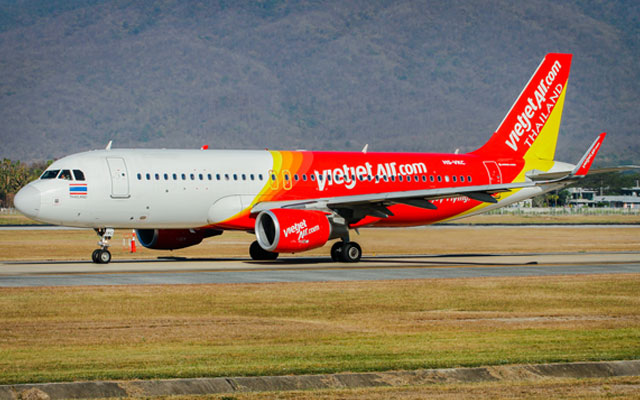
Effective March 25, 2018, as part of the airline’s route rationalisation, Philippine Airlines (PAL) will suspend its Cebu-Singapore operations and increase its Cebu-Bangkok flight frequency from thrice-weekly to daily.

Passengers with confirmed tickets on CEB-SIN/SIN-CEB flights from March 25 onwards may rebook on CEB-MNL-SIN/SIN-MNL-CEB flights within 30 days from original flight date, with rebooking penalties/charges waived. They also have the option to refund the cost of their tickets within 30 days from original flight date with refunding charges waived.

The said date will also mark the start of daily operations between Cebu and Bangkok from the current thrice-weekly service. PR738 departs Cebu daily at 21.10 and arrives in Bangkok at 12.10 the following day. PR739 leaves Bangkok daily at 01.30 and touches down in Cebu at 06.30.


Thai AirAsia X returns to Sapporo
Thai AirAsia X will commence daily flights between Bangkok (Don Mueang) and Sapporo (New Chitose) on April 10 after abruptly ceasing the route in 2015.

Flight XJ620 will depart Bangkok at 23.55 for arrival in Sapporo at 08.40 the following day. XJ621 will leave Sapporo at 09.55 to arrive back in Bangkok at 15.10.


JAL Group unveils changes for 2018
JAL Group (JAL) has announced a slew of changes for FY2018 (ending March 31, 2019).

Instead of introducing twice-daily Tokyo (Narita)-Bangkok (Suvarnabhumi) and Osaka (Kansai)-Honolulu services until October 27, 2018, as was announced in December, the airline has confirmed it will extend and maintain 14 flights per week for both routes until March 30, 2019.

Also, in an effort to match the demand between Japan and Russia following the relaxation of visa requirements, JAL will offer seasonal daily flights on its Tokyo (Narita)-Moscow (Domodedovo) service from July 1 through to October 27.


JC International launches Singapore-Phnom Penh flights

Cambodian carrier JC International Airlines will launch daily flights between Phnom Penh and Singapore today, according to Routes Online. Operated with a Airbus A320, flight QD675 departs Phnom Penh at 09.15 and arrives in Signapore at 12.15. For the return leg, flight QD676 leaves Singapore at 12.55 for arrival in Phnom Penh at 13.55.