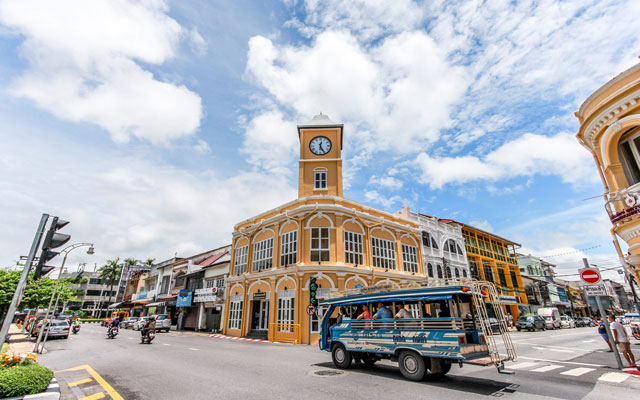
Sino-Portuguese architecture with local passenger bus in Phuket Town (pictured)
Park Inn by Radisson, the upper midscale brand of Radisson Hotel Group, will make its debut in Thailand with the launch of a new hotel in Phuket Town.
Scheduled to open in 1Q2020, the three-storey Park Inn by Radisson Phuket Town will form part of a mixed-use development. The property will feature around 130 rooms offering complimentary Wi-Fi, while facilities will include a restaurant and a fitness centre.
Phuket Town (pictured) is the next stop for the hotel group
The hotel will be located next to Highway 402 – Phuket’s main north-south highway and a major commercial corridor. Guests will also have easy access to major shopping malls, including the Central Festival Phuket, King Power Duty Free Store and Blu Pearl – The Mall Group’s multi-billion-baht lifestyle development featuring multiple retail outlets, a water park, convention centre and theatre.
Park Inn by Radisson Phuket Town will be the brand’s fourth location in South-east Asia, following Park Inn by Radisson Davao and Park Inn by Radisson Clark in the Philippines, and Park Inn by Radisson Putrajaya in Malaysia. The brand now features more than 150 hotels globally.
The Peninsula Hotels has appointed Mark K Kobayashi as senior vice president, sales and marketing.
Reporting to the COO in his new role, Kobayashi will be responsible for global marketing, sales, revenue, brand marketing, communications, e-commerce, digital marketing, guest engagement, global guest database management and the global customer service centre.
Kobayashi began his career with The Peninsula Hotels in October 2006 when he joined The Peninsula Tokyo as director of public relations. He was then promoted to regional director of communications, Japan, in 2012. Three years after, he became director of marketing, Japan.
Later in March 2017, he relocated to Hong Kong where he held the post of vice president, marketing, The Peninsula Hotels.
Last week, Kandima Maldives hosted the first-ever Tomato Festival ‘La Tomatina’ to take place in the island nation.
Over 300 people attended the four-hour event, packed with fun-filled beach games including a tomato fight, tug of war, mini football, water bucket relay and climb the coconut tree.
During the event the house DJ entertained the crowd with his party mixes while the barmen served free Latino-themed snacks and drinks.
The first festival of tomatoes was held in 1945 in the Valencian town of Buñol, where participants got in tomato fight for entertainment.
Okura Hotels & Resorts has appointed Jan Marshall as general manager of the 170-room Hotel Okura Manila, which is slated to open in 1Q2019 within the Manila Resorts World complex.
Marshall is a managing executive officer of Okura Nikko Hotel management, having spent more than 15 years with the group. Previously, he served as general manager of Hotel Nikko Osaka. He also has spent time as general manager of Sofitel Tokyo and director of operations for Accor Japan.
He has accumulated broad working experience throughout the US and Asia, where he spent the last 20 years of his career. His postings include Los Angeles, San Francisco, Manila, Sydney, Bali, Jakarta, Tokyo and Osaka.
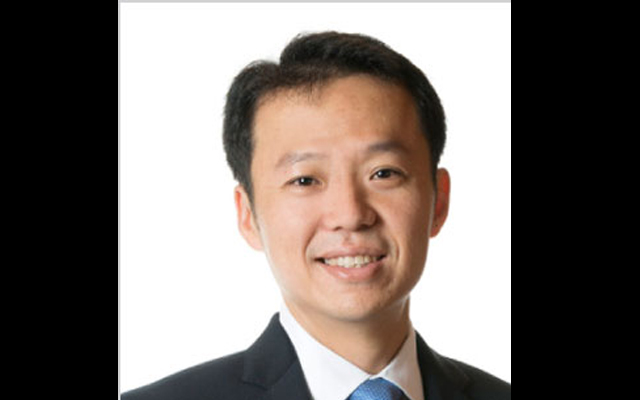
Lee Chee Koon to be CapitaLand’s new president and group CEO
CapitaLand’s group chief investment officer Lee Chee Koon will become president & group CEO from September 15, taking over from Lim Ming Yan who gave notice to retire earlier this year.
Lim will continue to serve as a board director for the company until December 31, 2018.
Lee Chee Koon to be CapitaLand’s new president and group CEO
Lee first joined the company in February 2007 and has held several appointments within the group, including as CEO of Ascott, CapitaLand’s wholly owned serviced residence business.
Before joining Ascott in July 2009 as managing director for China, Lee was vice president in the office of the president at CapitaLand. Prior to joining CapitaLand in February 2007, he held appointments in various ministries such as the Ministry of Trade and Industry, Ministry of Finance and the Monetary Authority of Singapore.
Meanwhile, CapitaLand has appointed group COO of CapitaLand Group Jason Leow Juan Thong as president (Asia & retail) and CEO of CapitaLand China Lucas Loh Jen Yuh as president (China & investment management), effective September 15.
In his new role, Leow will look into growing the Group’s presence in Asia (excluding China), including Singapore and Vietnam, as well as to expand its retail business.
Loh will be responsible for overseeong the growth of China as a core geographical market for the group, as well as the expansion of its investment management business.
Both Leow and Loh will report to Lee in their new positions.
Amadeus says it is one of the first providers to have achieved level three certification both as an aggregator and IT provider
Despite acknowledging the power of innovative technologies to enable new ways to sell, a majority of Asia-based airlines surveyed by Sabre admit to falling short of their ideal ancillary sales vision.
Sabre Corporation recently surveyed 30 Asia-based airlines, and the results indicate that carriers are re-evaluating their strategic focus as they think creatively about new ways to generate revenue and increase yield.
Nearly 80 per cent of airlines surveyed say they did not meet their desired ancillary sales vision
Close to 70 per cent of the airlines who participated in Sabre’s study indicated that two main factors are influencing change: technological advancement and increasing traveller expectations.
With travellers expecting unique, targeted offers from their shopping experience, over half of the survey participants (53 per cent) believe that leveraging data intelligence, whether to gain insights into market trends or passenger behaviour, is a top growth area for their airline.
Yet, 80 per cent of the airlines surveyed claim to not have achieved their desired ancillary sales, and only one in five respondents have identified product differentiation as their airline’s strategic focus.
The results, which were announced by Sabre last week at STX Singapore, demonstrates a significant opportunity for Asia-Pacific airlines to create a personalised retail experience for the traveller as a means to differentiate their products and drive incremental revenue.
“With consumer trends evolving as fast as the markets they serve, airlines have the potential to generate significant growth by efficiently channelling their content with innovative technology solutions that harness artificial intelligence and machine learning,” said Rakesh Narayanan, vice president, air line of business, Sabre Travel Network Asia Pacific.
“Our Beyond NDC programme drives collaboration with airlines and agencies to help them create rich personas and micro-segmented offers using rich data that support their business objectives.”
Ancillary sales have increased by 88 per cent year-on-year in the region, but reports show the same top ancillary requests appear across all markets: baggage, seat selection and meals. While in-flight Wi-Fi is increasingly featured in the top three most popular ancillaries, accounting for a quarter of business traveller requests in Asia-Pacific, there remains room for airlines to partner with technology leaders to help them up the ante on competitive differentiation.
Sabre opined that successful retailers understand that the key to delivering curated experiences lies in tailoring offers to distinct buying personas, requiring a robust data-sciences approach to maximise individual consumer engagement as well as end-to-end profitability.
From left: MHTC CEO's Sherene Azli, Malaysian deputy minister of health Lee Boon Chye, Malaysian deputy minister of finance Haji Amiruddin bin Hamzah, AirAsia Group Berhad’s Kamarudin Meranun and AirAsia Indonesia's Dendy Kurniawan
AirAsia Indonesia has signed an MoU with Malaysia Healthcare Travel Council (MHTC) to jointly promote Penang as Malaysia’s top healthcare tourism destination.
MHTC will arrange medical tourism trips including doctor and hospital appointments, as well as airport pick-up services, for Indonesian passengers of AirAsia visiting Penang for medical treatment.
From left: MHTC CEO’s Sherene Azli, Malaysian deputy minister of health Lee Boon Chye, Malaysian deputy minister of finance Haji Amiruddin bin Hamzah, AirAsia Group Berhad’s Kamarudin Meranun and AirAsia Indonesia’s Dendy Kurniawan
AirAsia will provide exclusive flight discounts to MHTC customers, while AirAsia guests with prearranged appointments made through MHTC will also enjoy additional benefits at participating hospitals, including up to 20 per cent discount on the medical check-up and non-medical bills, as well as in selected F&B outlets simply by showing their boarding pass.
MHTC CEO Sherene Azli commented: “Penang receives around 60 per cent of Malaysia’s healthcare travellers and in 2017 alone, the state’s healthcare travel industry generated half a billion ringgit (US$121 million) in revenue. Among the medical fields that Penang is known for include cardiology, orthopaedics, oncology, neurology, in-vitro fertilisation, ophthalmology and dentistry.
“Initiatives as such will only increase the potential of the state to cater to more healthcare travellers from Indonesia who have discovered Penang to be their preferred destination for healthcare.”
AirAsia Indonesia currently serves Penang with twice-daily flights from Jakarta, thrice daily flights from Medan and thrice weekly flights from Surabaya.
Klook has revealed the Asian cities with fastest and slowest airport-to-city journeys.
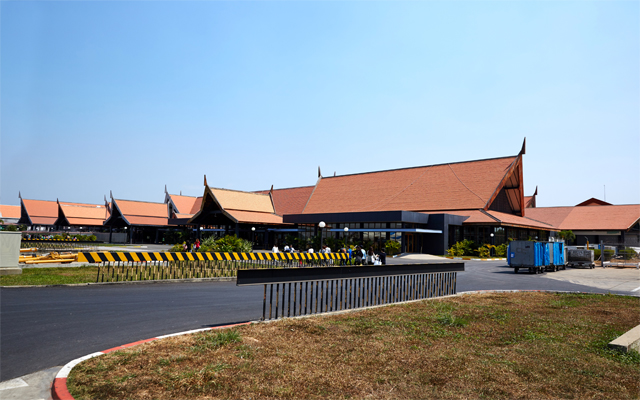
Siem Reap was found to provide the fastest journey (26 mins) from airport to city centre, while the trip from Tokyo-Narita takes the longest – almost two hours (100 mins).
Siem Reap International Airport
Meanwhile, Klook says journeys from Kuala Lumpur, Seoul and Hong Kong airports are most efficient, averaging less than one minute per kilometre.
Car and bus traffic is slowest (from five to 10 minutes per kilometre) when traveling from Ho Chi Minh City, Cebu and Manila to the city.
The travel services booking platform researched 20 major cities across the region, timing each route in-person on a Friday evening during rush hour. It then evaluated the fastest method of transit in each destination — be it taxi, private car transfer, train, bus, or train — as well as distance, time and roadblocks along the way.
From August 1 to October 31, guests can enjoy a Suite package at Park Hyatt Bangkok when they spend two nights or more at the hotel.
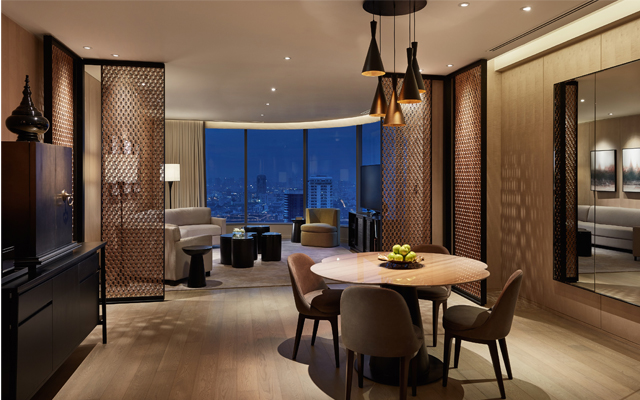
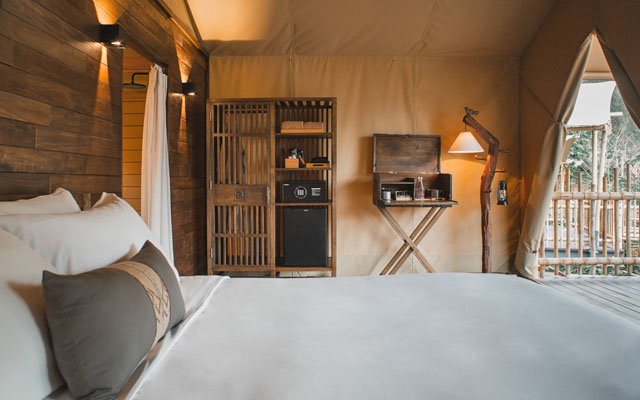
The offer includes accommodation in a Suite (from Park Deluxe); daily breakfast at the Embassy Room; an afternoon tea for two at the Living Room; a three-course set dinner for two at Penthouse Grill; a welcome drink each at the Cocktail Bar or Rooftop Terrace; round-trip airport transfer in a BMW Series 7; fast-track pickup service including buggy service for two; one bottle of Bollinger Cuvee Brut Champagne; and high-speed Internet access throughout the stay.
Ambassador Suite Living
To enjoy the deal, book on the hotel’s website with the offer code SUIPKG. Prices start from 22,500++ baht (US$688) per room per night.
A walk through one of the world's densely populated areas
Why
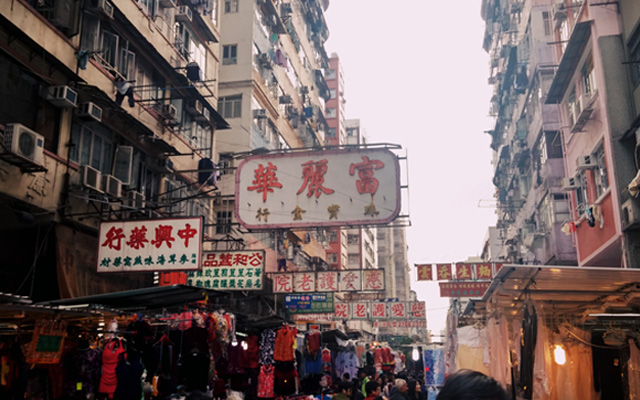
For those wanting to learn about how locals live, there is no better way than stepping right into the heart of neighbourhoods. Following the success of Old Town Central walks last year, Hong Kong Tourism Board this year repackaged cultural resources of Sham Shui Po, one of the world’s most densely populated areas, to encourage visitors to explore at their own pace.
A walk through one of the world’s densely populated areas
What
The three-hour walking tour set off from Sham Shui Po MTR station in the morning. As a local, I often visit Sham Shui Po to shop and dine, but my knowledge of the area has been confined to the Golden Computer Shopping Center and Apliu Street.
This time, as I’m on a small private group tour with Chan and our retiree tour guide William Ip, I was looking forward to gaining a deeper cultural and historical appreciation of the district.
The extensive itinerary covered Mei Ho House Museum (the first public housing in Hong Kong in 1950s), Jockey Club Creative Arts Centre (JCCAC; a former industrial building transformed into a hub of arts and creativity), Pei Ho Street and Tai Po Road junction, Kung Wo Soy Bean Product Shop, Ap Liu Street Market, and handcraft & lifestyle stores on Tai Nan Street.
What interested me the most was that the area is home to a tapestry of trade, taking in pawn shops, a toy street, as well as small businesses brokering umbrella repair, fabrics and audio equipment.
How
I particularly enjoyed the opportunities for local interaction, such as with an artist at JCCAC. Due to time constraints, however, the group did not get to catch snake queen Ms Chow while at the Shia Wong Hip Snake Soup shop. Still, the staff gave us a peek at the shop’s numerous displays, from live snakes in cages to bottles of snake wine.
I hope to make another visit to Shia Wong Hip Snake Soup to take pictures with the shop’s pet snake, named Kitty, under the supervision of Ms Chow.
Our final stop surprised me, as the shops and building in Sham Shui Po have received a facelift courtesy of HKwalls graffiti, a street art group that invited local and international graffiti artists to leave their mark.
For those wanting more insight and interaction, private tours are available upon request. Prices start from HK$1,800 (US$230), for groups of two to 18 pax. Alternatively for a big corporate groups of up to 200 pax, the company can arrange for multiple guides to be present.
I would also recommend doing the tour in the morning to avoid crowds.
Verdict
There is no better way to explore the city than on foot, to soak in the ambience and rub shoulders with the locals. My knowledgeable local tour guide made a huge difference as he could easily respond to all my burning questions.