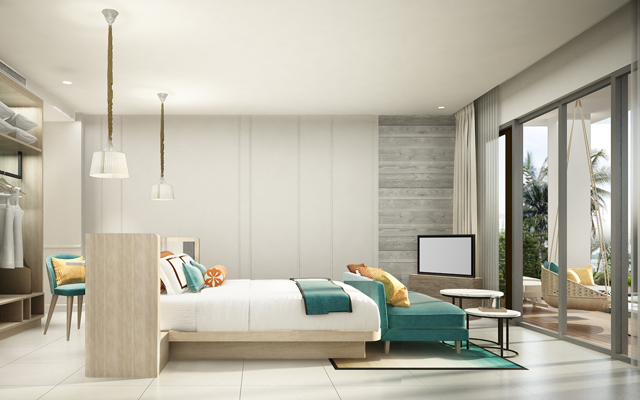
Thailand’s Centara Hotels & Resorts is expected to boast a fourth property in Krabi come September 2019.
Centara Ao Nang Beach Resort & Spa Krabi will offer 180 rooms ranging from 39m2 to 81m2 across eight configurations, including 20 rooms with bunk beds. Most ground floor rooms will have direct pool access.
The property is also expected to feature F&B outlets that can be used for breakfast and special event buffets, a spa and a beach club.
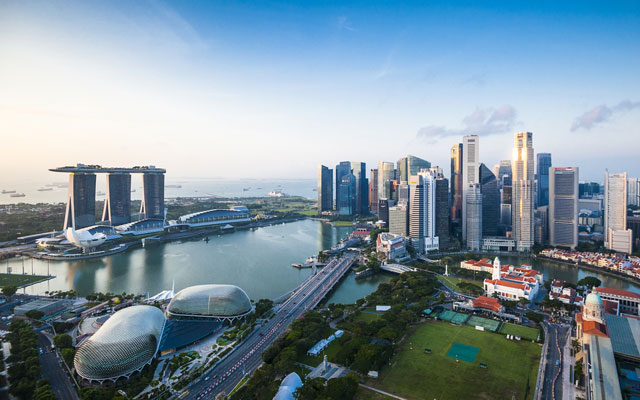
The Swiss hospitality management school will set up an international campus in Singapore
The Singapore Tourism Board (STB) and the National Association of Travel Agents Singapore (NATAS) last Friday announced new and updated initiatives at the STB-NATAS Travel Agent Industry Forum, aimed at helping travel agents stay relevant in the competitive landscape.
These include the Travel Talent Transformation & Management Programme, which aims to improve HR practices and attract and retain workers, the one-stop NATAS Resource Centre supporting business transformation projects, and an updated Business Transformation Through-Train Programme to guide the implementation of new business models.
These initiatives are part of the Travel Agent Roadmap launched by STB and NATAS two years ago.
Since the launch of the Roadmap in August 2016, more than 90 projects, ranging from technology adoption to business remodelling, have received support from STB’s Business Improvement Fund. These projects have helped travel agents improve productivity and save over 800 man-hours – which translates to 100 workers – per day.
More initiatives to help travel agents in the city stay relevant
Transforming business through Through-Train Programme v2.0 STB will be launching version 2.0 of the Business Transformation Through-Train programme in 2Q2019. Aimed at progressive travel agents ready to relook their business models, the programme helps travel agents envision new business models, identify gaps and opportunities and implement business shifts to remain competitive.
Following this year’s pilot run with seven agents, version 2.0 of the programme takes into consideration feedback from the first run.
Ong Ling Lee, STB’s director travel agents & tourist guides, policy & planning group, added: “From next year it’ll be held twice a year, up from once a year. We’ll be adding more sessions, where participants will have more time to consult with the experts, as well as time to do more research.”
An open call to the industry for the second run will be made in 1Q2019.
Boosting travel agents’ tech savviness To educate travel agents on the technology solutions available and guide their technology adoption, STB will organise regular talks that cover emerging technologies, conduct a solution call-out to identify relevant technology vendors for travel agents and develop a do-it-yourself guide to assist travel agents in selecting suitable technology solutions that will meet their business needs.
In the coming year, NATAS will also be launching a Travel Technology Challenge that builds on the Tourism Innovation Challenge to further proliferate new technology solutions among the industry.
NATAS is also looking at the potential of developing an offline-to-online (O2O) portal to support travel agents in moving into the online domain. The portal will feature themed travel fairs throughout the year, and will serve as a plug-and-play solution for travel agents who currently do not have an online presence.
Bridging manpower gaps, managing travel talent STB and NATAS also announced the Travel Talent Transformation & Management Programme, which is aimed at identifying and bridging gaps in HR practices. Travel agents will be able to diagnose their HR gaps through one-on-one sessions with consultants, learn how to resolve these gaps through masterclasses and site visits to firms with successful HR practices, and be guided through the solution implementation.
For jobseekers, NATAS will work with Workforce Singapore (WSG) to list available jobs in the travel agent industry on the MyCareersFuture job portal.
STB and NATAS will embark on a series of marketing activities next year, focusing on changing the perception of the industry as a viable career option for jobseekers. More details will be announced at a later date.
In addition, Wee Hee Ling, CEO, Euro-Asia Holidays, and also deputy chairman of the NATAS manpower committee shared that the committee is reviving its youth chapter – headed by Albert Tan of Pegasus Travel Management. Wee expressed hopes that this would help pull in the younger generation tour agents, which would in turn help to solve manpower issues.
From left: Pegasus Travel Managements’ Charles Tan; STB’s Ong Ling Lee; Euro-Asia Holidays’ Wee Hee Ling; and Monster Day Tours’ Ty Suen during the STB-NATAS Travel Agent Industry Forum media roundtable
Birth of Tour Operators Alliance A group of tour operators have also come together to form a Tour Operators Alliance, STB announced at the forum. The founding team includes Monster Day Tours, Let’s Go Tour Singapore, Singapore Sidecars, Ruby Dot Trails, and Tribe.
Ty Suen, founder of Monster Day Tours, and the alliance’s spokesperson, shared: “We are still in the early stages but the top agenda is getting to know each other’s strengths and what we can bring to the table. What we do have is a direction of how we want tours to be, and we want to push the agenda that Singapore is more than just a stopover destination. And this can only be done with the help of more interesting content and experience.”
Suen added that each tour operator currently runs day tours individually, but rather than competing with each other, they want to pool their resources together, in order to reach out to more channels and work with larger DMCs.
For instance, Singapore Sidecars and Monster Day Tours are able to work together together where Singapore Sidecars’ specially trained riders operate the vespa sidecars, with guiding by Monster’s guides, should tourists tourists want a more in-depth view of Singapore. And instead of a three-hour tour originally, by combining their resources, both companies would be able to sell a longer six-hour tour, which would be a combination of a Vespa and walking tour.
NATAS Resource Centre in development Lastly, NATAS is looking at developing an online Resource Centre in 2019, a one-stop shop where travel agents can access toolkits and resources and obtain advice on how to embark on business transformation projects.
Ong concluded: “The core of the travel business is about connecting people and the destination. Technology can play a big part (in helping). But to make technology work, the business, the way of connecting people together, has to evolve. It doesn’t have to be a big step, small steps are fine. Travel agents must be willing and able to put effort (in order for change to happen).
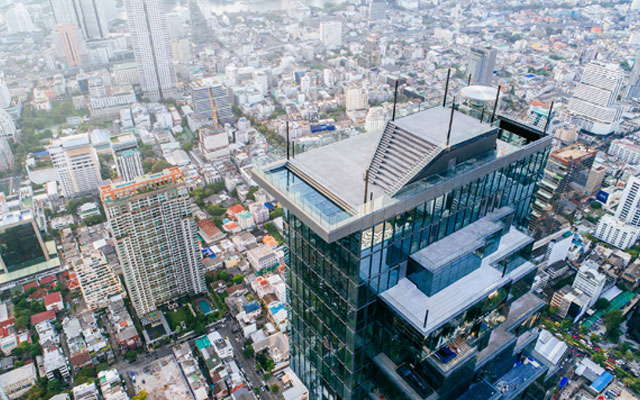
King Power Mahanakhon has opened the Mahanakhon SkyWalk, Thailand’s highest observation deck located on the 74th, 75th and 78th floors of one of the country’s tallest buildings.
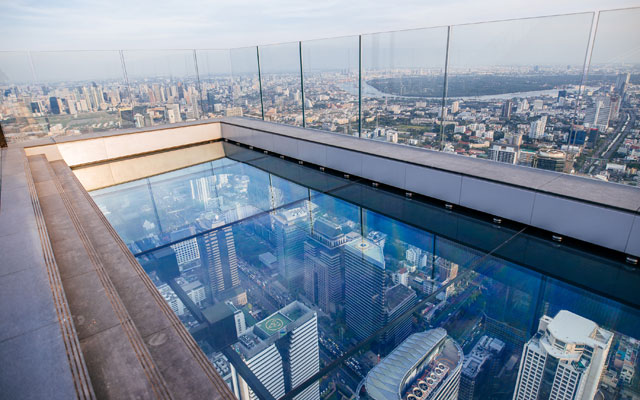
Visitors will be whizzed from the lobby to the sky-high observatory on the 74th floor, the indoor observation deck offering 360-degree panoramic views, in 50 seconds. On the 78th floor sit the rooftop area and outdoor observation deck with a glass tray floor, as well as Bangkok’s highest viewpoint at 314m above the ground. Also, the 78th floor will house Thailand’s highest rooftop bar.
1 of 3
Mahanakhon Skywalk
The attraction is open daily from 10.00 to 24.00 with the last admission at 23.00.
In celebration of the launch, promotions include a complimentary upgrade to the rooftop with the purchase of a Mahanakhon SkyWalk ticket at 765 baht (US$23) from the normal price of 1,050 baht from now until January 31, 2019.
Located in the heart of Bangkok’s CBD and directly connected to Chong Nonsi BTS station, Mahanakhon SkyWalk is part of the King Power Mahanakhon project.
The mixed-use development includes King Power duty free and retail shops (floors 1-4) , King Power Hotel (floors 1-18), The Ritz-Carlton Residences (floors 23-73), the Mahanakhon Cube for F&B venues, as well as the Mahanakhon Square – which boasts 1,000m2 of space for exhibitions, performances and events in central Bangkok.
Japan, Thailand and Taiwan the top destinations for Chinese during the holidays
After enjoying surging inbound visitor numbers from China in recent years, Thai tourism operators are now bracing for a slowdown in growth from this top feeder market.
For the upcoming Chinese New Year (CNY), in early February 2019, it is unlikely that Chinese inbound figures would surpass peak performance recorded during the same period in 2018, said Supawan Tanomkieatipum, president of the Thai Hotels Association (THA).
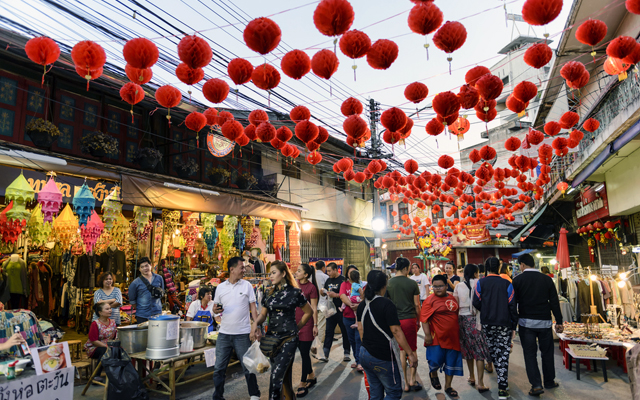
Chiang Mai market during the Chinese New Year festivities
Average hotel occupancy rates in tourist provinces are not expected to exceed 80 per cent for the upcoming festival, compared with nearly 100 per cent in early 2018.
About 313,000 Chinese visited Thailand during the CNY period this year, sending Chinese arrivals surging to a monthly all-time high of 1.2 million in February 2018 alone, said Supawan.
Chinese inbound figures, however, took a plunge following the Phuket boat tragedy in July, falling 14.9 per cent year-on-year in September 2018 and 8.8 per cent year-on-year in 3Q2018.
“Since we faced a lack of confidence in the Chinese market from middle this year, advanced bookings have been made less than a month, instead of a few months ahead previously,” said Supawan.
“However, the THA believes that the Chinese market is picking up after hitting rock bottom in September and October, and we are waiting to see how the market will recover in the wake of the exempted visa-on-arrival fee.”
China is among the 21 countries granted the 2,000 baht (US$61) visa-on-arrival fee exemption, applicable from December 1, 2018 to January 31, 2019, as Thailand seeks to stimulate tourism arrivals for the year-end period.
Surawat Akaraworamat, vice president, the Association of Thai Travel Agents (ATTA), also foresees the recent visa fee measure would be key in restoring the Chinese market.
But double-digit monthly growth rates seen for the Chinese market in 1H2018 would be impossible to replicate moving forward, he cautioned.
However, Surawat believes that Thailand would remain as a favourite destination for the Chinese market come CNY 2019, although the country’s popularity would not be so high as in 2018, as charter flights shifted to nearby countries like Cambodia, Myanmar and Vietnam.
It is hence opportune for tourism operators in Thailand to improve their services and rehabilitate tourist destinations in the coming year, Surawat said, adding that ATTA has instructed members to improve their operations and target quality customers for sustainable business.
“The problems lie not only with the lack of confidence in safety in Thailand but also with the depreciation of the Chinese currency. The yuan’s value against Thai baht dropped about 10 per cent in September.”
For now, the yuan depreciation is affecting the Chinese FITs market more than group series, as tour operators bear the burden of foreign exchange with tour packages sold in yuan, Surawat said.
Still, if the trade war and yuan depreciation persist, it would seriously affect tour companies, he added.
Recognising that the fast growth days of the Chinese market is over, Yuthasak Supasorn, governor of the Tourism Authority of Thailand (TAT), said the organisation now places a stronger emphasis on attracting quality tourists and increasing tourism expenditure over the number of Chinese visitors.
Yuthasak told TTG Asia that TAT has recently joined forces with Chinese agents and airlines to roll out promotional campaigns, which are expected to attract 500,000 Chinese visitors to Thailand for the rest of 2018.
These efforts, together with the visa fee waiver, would further yield positive results during CNY 2019, he said.
China remains a perennial favourite destination for Singaporean travellers, fuelled by a bevy of air links to first- and second-tier Chinese cities, and growing access to in-depth and immersive experiences in the vast country.
Ong Hanjie, managing director of EU Asia Holidays, observed that although recent “K-pop, K-drama and J-beauty” trends have drawn many Singaporeans to South Korea and Japan during peak seasons, he still sees families visiting China during and outside of holiday periods.
Harbin remains a top draw in China for Singaporean travellers
He commented: “China is still one of the countries that Singaporeans consider travelling to at any time of the year. The main attractions of our tour packages (are) breathtaking, picturesque sites in China where they can be immersed in tranquil nature.”
More unique draws include spending time in different ethnic villages to interact with tribesfolk, visiting filming sites from movies by director Zhang Yimou, and even Singaporean-Chinese tracking down their ancestral villages.
“With the ethnic Chinese constituting a majority of Singapore’s population, there is a number of Singaporeans ‘returning’ to China to seek their heritage roots and visit ancestral villages in Xiamen and Guangdong,” observed Dynasty Travel’s director, public relations & communications, Alicia Seah.
She explained: “These ‘root-seeking’ travellers can range from a small group of family members, comprising six to eight persons, to a big clan of about 50 to 100 visiting their ancestral villages.”
Besides these provinces, Singaporeans are also drawn to the picturesque outdoors of Zhangjiajie, Yunnan, Harbin and Beijing, the latter two being popular winter destinations for young families.
“China is one of the top outbound destinations from Singapore after Indonesia and Thailand. More than one million Singaporeans visit China each year,” noted Seah.
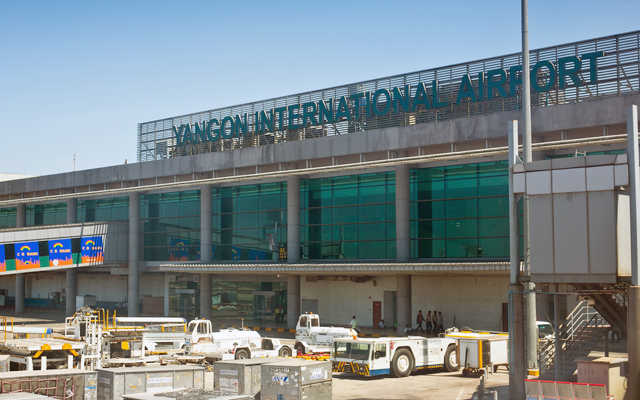
The airport operator is continuing with expansion in hopes for a rebound in slowing traffic growth
Despite looking set to close 2018 with its slowest growth in air passenger traffic in five years, significant investments have been made to boost capacity at Yangon International Airport (YIA) with the airport operator hopeful that traffic will pick up in 2019.
Three years since commencement of operation and management of Yangon city airport, Yangon Aerodrome Company (YACL) has invested in terminals and infrastructure improvements, technical upgrades and staff training to improve safety, security and services.
The airport operator is continuing with expansion in hopes of a better year in 2019
Capacity expansion is currently underway.
YACL said 2018 is expected to show an increase of 2.5 per cent in air passenger traffic at YIA, bringing the number to around six million from 5.9 million for the whole of 2017.
Over the past five years, air passenger growth at YIA – by far the busiest of Myanmar’s three international airports – had increased at an average of 8.6 per cent annually.
YACL said that tourist arrivals from European and North America markets appear to have been impacted by international media reports on domestic Myanmar issues.
“While there has been a slowdown in visitor growth, we have continued to expand YIA’s capacity and capability while intensifying efforts to open up new markets. We are confident that, in partnership with all the relevant stakeholders in the tourism industry, the community and the Myanmar government, 2019 tourist air passenger traffic will surpass that of 2018,” said Ho Chee Tong, CEO of YACL.
“As the investor and operator of Myanmar’s main international airport, we have a responsibility to enhance infrastructure while striving to deliver a high level of safety, security and service.”
After four years working at VietJet Air in business development, Phan Le quit his dream job and set about finding a solution to unite Vietnam’s fragmented travel market by launching VLeisure.com in 2013.
His aim was to provide an online, one-stop B2B travel platform where agencies can manage and distribute services and products to online partners, has recently landed fresh investment valuing VLeisure at US$4 million.
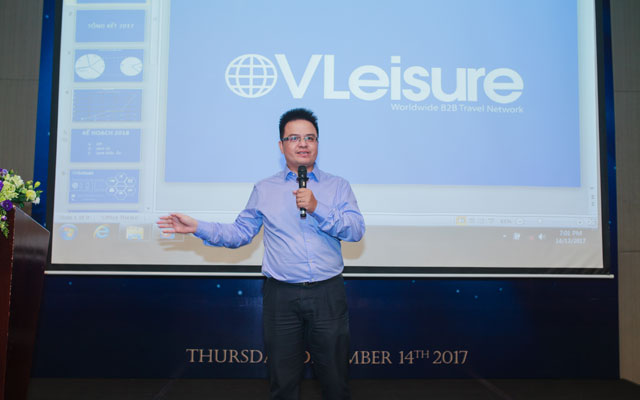
Phan Le: digital technology is the way forward for Vietnam’s tourism sector
Said Le: “When I started the company, I felt the domestic market was undervalued and often overlooked compared with the inbound and outbound markets. The booking process was inefficient and a pain, and the market was fragmented. There was a need to build a tech solution, a mobile solution to be exact. I love travelling and saw an opportunity to create a travel tech business where I get to build exciting things and connect people.”
Through the platform, buyers and sellers can manage inventories with ease, make bookings more efficiently in real time, while taking advantage of VLeisure’s competitive rates.
The database offers more than 50,000 accommodation options across 147 countries, tours, tickets and excursions, transfers and flights.
A swathe of niche products has also been developed, including local hotel rates for agencies operating outside Vietnam, Laos and Cambodia such as China’s Ctrip and Fliggy.com.
White label solutions are also available for large agencies, with VLeisure providing a travel API to be integrated into websites and mobile apps.
To date, VLeisure has signed up more than 3,000 online and 10,000 offline agencies, with the company recently securing an undisclosed sum of funding from South Korean early-stage investor, BonAngels Venture Partners. This has valued the company at US$4 million.
Le will use the cash injection to strengthen VLeisure’s position in South-east Asia while expanding into new markets, such as China and South Korea. He added: “We are looking to launch new products and services to better serve our clients, not only in Vietnam but in Laos and Cambodia.”
Looking ahead, Le believes digital technology is the future for Vietnam’s tourism sector, as the country’s swelling middle-class have more disposable income to spend on travel.
“As more Vietnamese have discretionary income to spend on exploring new places and destinations, the more it will be great for the travel tech space,” he said. “The next trend is digital; the new generation is raised to think and behave with a super computer at their fingertips.”
Positioning itself to remain at the forefront of this movement, the VLeisure team is currently working on securing more partnerships with global wholesalers and general sales agents and developing more products, including connecting more APIs with agencies, creating more themes and developing additional white label solutions.
“This will better position VLeisure for future growth,” said Le.
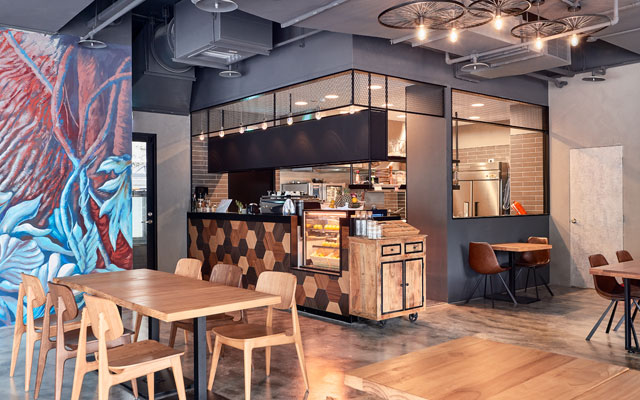
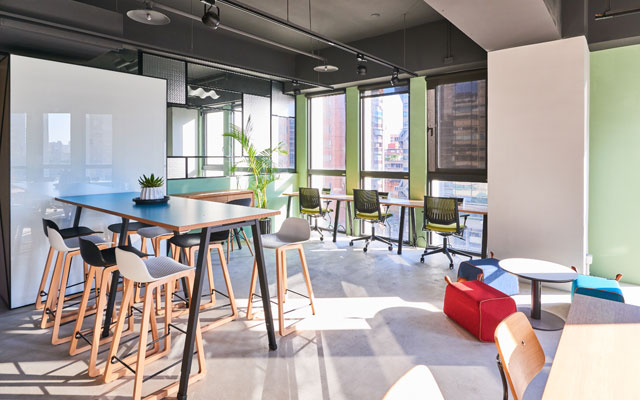
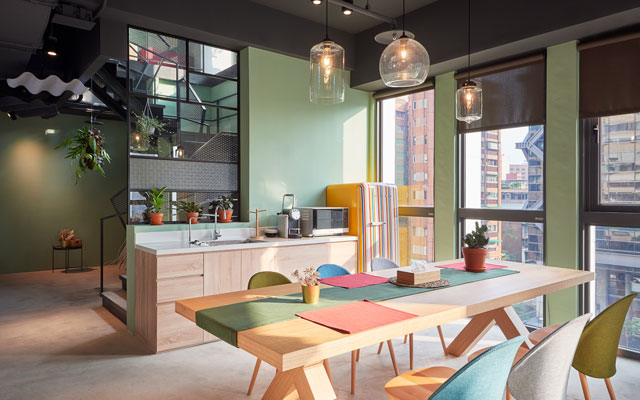
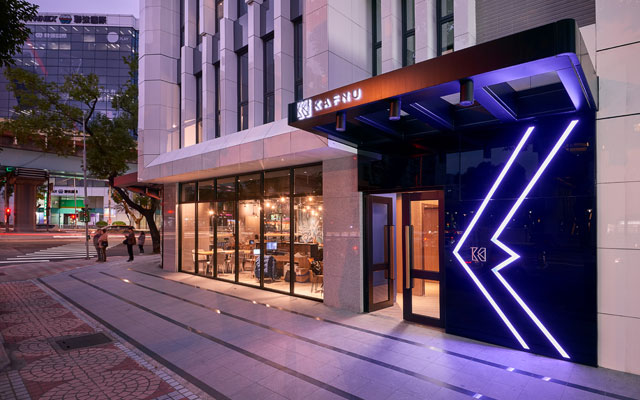
After announcing plans to add 50 Kafnu properties in Asia-Pacific, The Next Story Group has now unveiled further details of the brand’s expansion using a hub-and-spoke model.
Following the launch of Kafnu Hong Kong in late 2017, Next Story Group opened Kafnu Taipei and Kafnu Bengaluru this year. Kafnu Alexandria in Sydney and Kafnu Saigon Pearl in Vietnam are slated to open by the end of 2018, and with five confirmed Kafnu properties in the pipeline. Next Story Group is targeting a portfolio of 50 Kafnu communities by 2021.
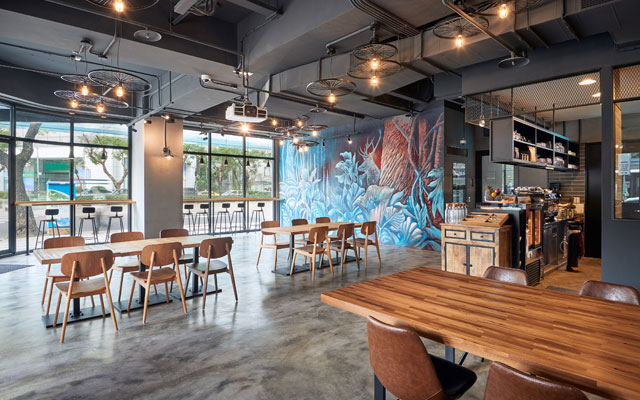
Kafnu Taipei
1 of 5
To date, there are three operating Kafnu properties. By the end of 2018, Kafnu will be present in five locations.
Upcoming Kafnu openings in 2018 include Kafnu Alexandria, located in a three-storey building along Bourke Road in Sydney. The property will offer 16 guestrooms, a range of work spaces and meeting rooms, a podcast studio, a photo studio, a brainstorming room and an Oxygen Lab.
Kafnu Saigon Pearl is situated in the heart of Ho Chi Minh City and will offer eight floors of facilities, including work spaces, a lounge and music room, an entertainment room, an events floor, as well as an executive floor with nine guest rooms.
In 2019, Kafnu will expand into Colombo and Mumbai, as well as add a second property in Bengaluru.
In Kafnu’s hub-and-spoke strategy, a large city ‘hub’ of 5,000-10,000m2 is surrounded by ‘spoke’ locations of 2,000-5000m2 to offer Kafnu members the same level of utility and connectivity no matter the city.
It also provides members with access to strategic partnerships, premium services and private curated events.
“These back-to-back Kafnu launches form just the initial phase of our hub-and-spoke strategy, which supports our goal of operating 50 Kafnu locations across Asia-Pacific within three years. A region-wide network means that our Kafnu members can access like-minded communities of hyphenates wherever they travel to,” said Andreas Flaig, group chief development officer, Next Story Group.
Soss, formerly from Travel Holdings, now leads the new team at Hotelbeds
Hotelbeds has formed a strategic partnerships team headed up by Jason Soss.
The newly created team forms part of the commercial strategy & strategic partnerships function of Hotelbeds and will report directly to functional director Asi Ginio.
Soss, formerly from Travel Holdings, now leads the new team at Hotelbeds
Led by Soss, global head of strategic partnerships, the team focuses on analysing and generating major business opportunities, developing and implementing new market initiatives, and managing Hotelbeds largest partnerships, particularly in the airline, loyalty and OTA space.
Soss, who has over 20 years of experience in the travel space, was previously the president of global business development for Travel Holdings – which formed part of Tourico Holidays and was subsequently acquired by Hotelbeds in 2017 – where he was responsible for creating and managing the company’s largest partnerships, including American Airlines, Priceline, JetBlue, InterContinental Hotels Group, Google, and many others.
In this new role, Soss will take over the company’s largest partnerships at a global scale, coming from the legacy Tourico Holidays, GTA and Hotelbeds businesses, allowing Hotelbeds to benefit from Jason’s specialised and high-level experience in travel verticals such as global airline distribution, OTAs, point redemption businesses, vacation rental space, online advertising sales, and travel technology platforms.
Reporting to Soss within the team is Jon French, director of strategic partnerships for EMEA & APAC, Bruna Buiatti as director of strategic partnerships in Latin America, Ronald Chan as head of holidays APAC, and Camilla Riccardi as manager of trategic Partnerships in EMEA.
The news follows the recent consolidation of Hotelbeds, GTA, and Tourico Holidays operations under the Hotelbeds name, with the gradual phasing out the GTA and Tourico Holidays brands. Additionally, Hotelbeds Group and its commercial Bedbank brand, will both now be branded as Hotelbeds to place a bigger emphasis on the company’s sole focus of the bedbank sector.
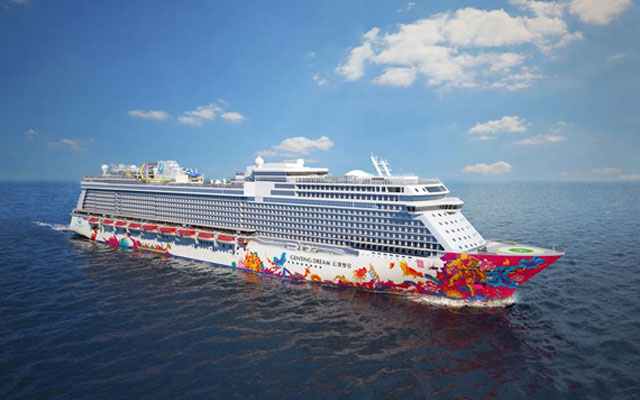
The Genting Dream, currently homeported in Singapore, has become the first cruise ship in Asia to offer halal certified cuisine options.
With the ship granted halal certification by the Department of Islamic Development Malaysia, The Lido restaurant now offers a dedicated halal buffet section for Muslim guests.
Genting Dream
“As an Asian homegrown brand, it gives us great pleasure to launch Dream Cruises’ first halal-certified cuisine offerings on board Genting Dream to meet the growing demand… Our halal certification will also support our meetings and incentive business partners who have requested this important offering,” said Thatcher Brown, president of Dream Cruises.
MICE groups now also have halal cuisine available for catering at dedicated function rooms.
Genting Dream is on a year-round homeport deployment in Singapore, sailing two-, three- and five-night itineraries to Penang, Phuket, Langkawi, Kuala Lumpur (Port Klang), Surabaya, North Bali and Macleod Island.