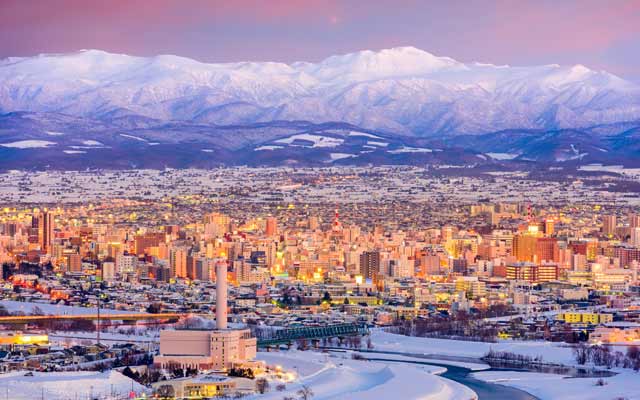
Hokkaido was struck by two earthquakes in recent months, but tourism business has been quick to rebound particularly in the high-end sector, according to some of Japan’s luxury travel players.
A deadly 6.6-magnitude quake rocked the south of Hokkaido on September 6, damaging public infrastructure and triggering widespread power outages. Many evacuees are still living in temporary accommodation at press time.
Luxury demand up for post-quake Hokkaido
To soften the impact of the September tragedy on tourism, the Japanese government in October rolled out discounts for holidaymakers.
While the government subsidies were meant to attract bargain-seeking holidaymakers, it was the less price-sensitive high-end travel segment that showed quicker recovery, according to Masami Kono, CEO of Cril Privee, which provides customised travel services.
Speaking to TTG Asia on the sidelines of the Further East luxury travel show in Bali, he said his clients were choosing to proceed with their holiday plans as early as a few days following the disaster, soon after power returned to the prefecture.
In the mass market segment, group tours that included Hokkaido were delayed for weeks, he claimed. “Travel agencies have greater liability considerations, and hence had to allow for a wider window (for the risks to settle).”
High-end travellers, in contrast, were better able to make up their own mind about visiting the destination. “Many of our clients draw from (various) sources of information that led them to decide that the destination was safe to visit,” he shared.
Demand for Hokkaido is already back to the usual level for Cril Privee, driven by a recent surge in interest for Niseko from markets such as mainland China, Singapore, Hong Kong and Malaysia, Kono said.
Similarly, Hiroshi Kuchiki, founder and CEO of Magella Resorts & Trust, was positive that business recovery is in motion at the Japanese luxury travel company.
Unsurprisingly for him, the government’s discount initiative did little to entice high-end travellers to visit Hokkaido. Rather than seek to benefit from the tragedy, many in this segment tend more to be motivated by how they can help the disaster-struck destinations, he explained.
A more effective scheme to hasten recovery, he suggested, would be for a portion of what tourists pay to go towards quake recovery.
Meanwhile, Hokkaido Treasure Island Travel saw only two cancellations in the immediate aftermath of the earthquake, said Yuki Homma, director, inbound department executive manager, while disclaiming that this was off the small base number the specialist agency handles.
Homma shared that the agency, which hails most of its business from Asia, has recently observed growth in clients from Europe and the US seeking more active holidays in Hokkaido.
Space travel will remain domain for the ultra-rich for time being
Imagine travelling from New York to Shanghai in 40 minutes or from Hong Kong to Singapore in 22 minutes. This may be possible within the next 15 to 20 years, said Jean-Francois Clervoy, a European Space Agency astronaut and veteran of three NASA Space Shuttle missions.
Space travel a domain for the ultra-rich for time being
Clervoy believes that given the developments in sub-orbital travel technologies and the fascination with space travel, we may witness such drastic improvements within our lifetime.
Clervoy: vast improvements in space travel technology
“It is interesting to observe that when very rich people wonder about what to do with their money, the first idea coming to their mind is space travel. Most of them have become rich thanks to their successful entrepreneurship. Therefore we can expect that following the fulfilling of their own dream, their next step will be to develop businesses based on space travel,” he said at the recent 10th APG World Connect Conference in Monaco.
Still, he qualified that it may be a good while more before space travel becomes accessible to the masses.
“Space travel is subject to universal laws of physics which makes it possible only with a huge amount of energy involved, making it necessarily more expensive and riskier than today’s regular air travel. I expect to see in my lifetime regular space flights for the privileged, rich individuals but mass space travel will likely come far later,” said Clervoy.
Moreover, beyond the technologies that will enable space travel, a great deal of work remains to be done in evaluating the practical needs that will arise.
“Due to its extreme conditions, space travel requires such a high level of excellence that it forces the aerospace industry to constantly challenge itself to get more efficient and safe.
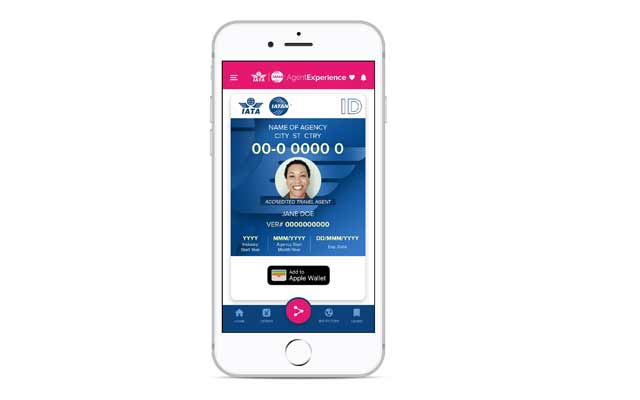
IATA is stepping up its global outreach efforts for its new digital identification cards for travel agents, encouraging industry professionals to get on board its paperless initiative to enjoy the perks and advantages as accredited cardholders.
The IATA ID Card – also known as IATAN ID card for travel agents based in the US – is a globally recognised identification card issued by IATA to travel professionals working for IATA-accredited travel agencies.
The digital IATA ID card was piloted in Canada and Australia in August 2018, followed by a global rollout in September.
IATA's new digital ID cards for travel agents
1 of 4
Asia, in particular, is where the Montreal-based organisation now hopes to make greater inroads for its new digital card, Inigo Prieto, T&T product manager at IATA, told TTG Asia. “Penetration in Asia-Pacific is low, unlike strong acceptance of the card in Australia, Canada and the US,” he said.
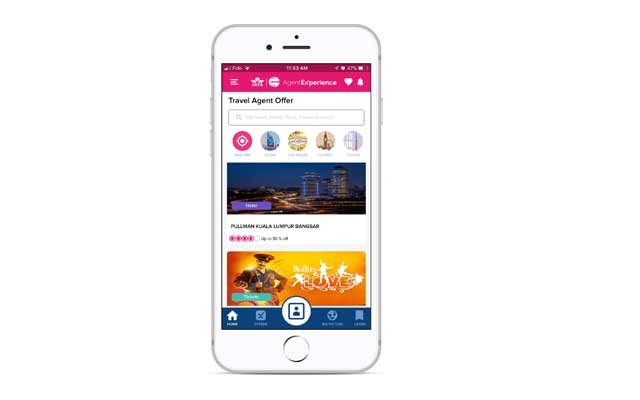
The digital version, which complements the existing physical ID card, can be assessed through the IATA AgentExperience mobile app.
According to IATA, the new digital ID card accrues significant benefits to agents, among which is the easy proof and verification of travel agents’ professional status through email or QR code scan, greater protection against theft, and quicker access to industry offers and benefits from across travel suppliers worldwide within 48 hours of order confirmation.
The digital card is open to all IATA-accredited agents issuing air tickets through the BSP system, as well as Travel Industry Designator Service travel agents and tourism sales intermediaries.
To entice more agents to adopt the paperless initiative, Prieto said IATA is actively enlisting industry industry suppliers to offer travel concessions and rewards to its accredited agents.
However, “education” is still needed for local suppliers to understand the benefits of granting rewards and concessions to travel agents, Prieto stated, with wider outreach and distribution of their products and services through authentic sellers being a key advantage.
So far, the app has saw over 13,000 downloads in the two months since its launch, accounting for 10 per cent penetration among the 120,000-plus cardholders worldwide.
The next phrase in 2019 is to “add more features and build a community of agents on the app”, Prieto revealed, including “delivering micro, bite-sized training such as best practices” for agents.
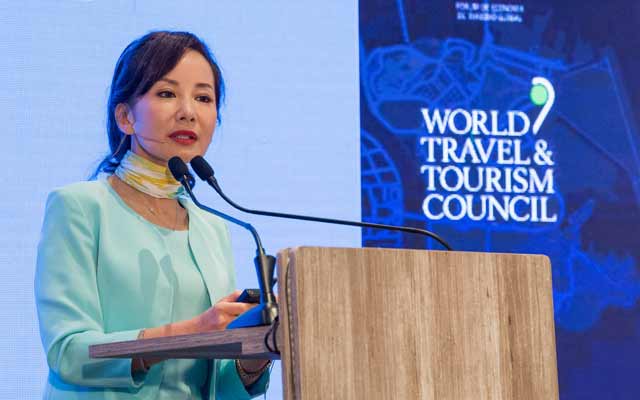
Ctrip CEO Jane Sun speaking at the Asia Leaders Forum in Macau
WTTC is highlighting the urgent need for more efficient processing of airport passengers using technology such as biometrics, but in Asia, trust and security as well as intergovernmental cooperation could pose challenges.
Air traveller capacity is estimated to grow from four billion in 2017 to 7.8 billion by 2036, according to IATA projections.
Speaking at the Asia Leaders Forum, which was held in Macau and hosted by the Global Tourism Economy Forum last month, WTTC president & CEO, Gloria Guevara, said: “We have an initiative which uses biometric data to (facilitate more) seamless experience and safe journeys in all aspects of travel including airport, cruise, hotels and car rentals.”
Ctrip CEO Jane Sun speaking at the Asia Leaders Forum in Macau
As it is, she said many airports around the world already use facial scans for identification and hotels are allowing check-in via mobile phones or fingerprint scans.
“Asia is hot for technology and its adoption is really fast in this part of the world. About 50 per cent of millennials come from Asia where they are very used to (new) technology.”
The downside of the technological age, however, is that automation could mean a lot of jobs may not be around in five to 10 years, which highlights the need to better understand what the future holds. “With that knowledge, we can determine the necessary skill sets and train people appropriately.”
Ctrip.com International is also pushing for biometrics and for using WTTC’s platform as a traveller digital identity database.
CEO Jane Jie Sun, explained: “This requires the joint effort of three parties, namely authorities, travel industry and travellers. The only way to success is by gaining consent from travellers to access their data – passport/identity card, flight information, hotel reservation, car rental booking – as well as the cooperation from industry and support of government.”
Given technological advancements – such as in biometrics, blockchain and cryptography – authorities can retrieve required data for visa screening, border security, tax refund, anti-terrorism and other purposes, she remarked.
“It enables us to identify who’s travelling at what time, when or where, who needs help and what kind of person poses a threat to the travel ecosystem. Also for tax refund where we often have very long lines, by working together and using a robust database, the process can be streamlined.”
Exo Travel, CEO, Hamish Keith, said: “It’s vital to move forward, to become pioneers and to be at the forefront of this kind of technology. Obviously, a number of countries in South-east Asia are connected with a lot of travelling across the borders, so if we can synchronise this travel technology and data, it’d really help us to move our tourism forward quickly.
He opined that Asia is not ready for such all-encompassing technological change yet, but is hopeful that change will come.
Industry stakeholders like ZuZu Hospitality Solutions, co-founder, Vikram Malhi Sikram, added that challenges include the lack of resources for smaller hotels as well as security issues.
He said: “It is really hard for small independent hotels run by local entrepreneurs to adopt such technology. Unlike international hotel chains, they can’t afford and don’t have the know-how.
“It’s also about how quickly customers can trust and adapt to the process as security… Questions of trust in suppliers arise with information security (a big concern). There are a lot of consumer issues that need to be resolved.”
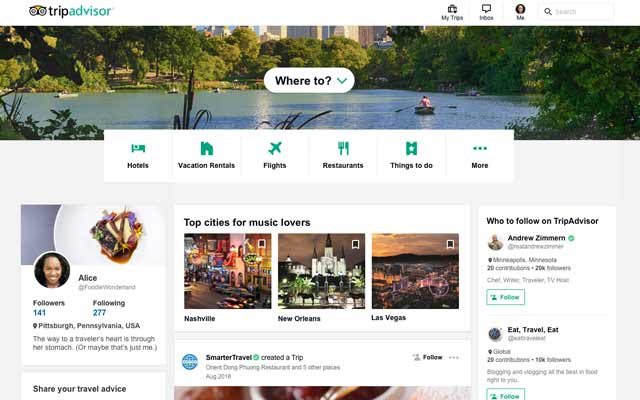
Having announced its intent to become more social and personalised, TripAdvisor has now unveiled a new look to become “the go-to resource for travel”.
The redesigned platform now allows travellers to discover travel recommendations and advice from the people and experts they have chosen to follow. They can then easily save and share ideas to plan and book their perfect trip.
Travellers now have access to helpful and inspirational videos, photos, articles and guides from friends and family, as well as from over 1,000 brands, publishers and influencers including National Geographic, South China Morning Post, Discover Hong Kong, Cara McIlroy and Ezzentric Twee.
TripAdvisor relaunches as social network
1 of 4
TripAdvisor relaunches as social network
Stephen Kaufer, president and CEO, TripAdvisor, said: “The new TripAdvisor provides its members with great content from the people, brands and influencers they rely on for travel and in-destination advice before and during their trip. With the introduction of new voices to TripAdvisor, travellers can better plan their trips by easily finding their ideal hotel, experience or restaurant.”
A new feature, Trips, enables travellers to collaborate with others by saving, organising, sharing and creating lists or in-depth guides highlighting their favourite hotels, restaurants, experiences in a particular destination.
Other new features include:
● Follow others they trust: In addition to friends and family, members can follow more than 1,000 brands, publishers and social media influencers that have already joined the beta experience directly within the travel feed.
● Discover advice and recommendations via their travel feed: Upon logging in, a member’s homepage transforms into a personalised feed of information based on who they follow. As a member searches for a specific destination, their travel feed automatically surfaces relevant content from the global TripAdvisor community. Users can also click through to a business listing to reserve a table, trip or hotel without leaving the site or app.
● Create Trips: Members are now able to create and access Trips, a collaborative way to privately plan and share ideas with friends and family, or made public and shared with the community to inspire and help others.
● See what friends and family recommend: Members are now able to find and follow their Facebook friends who are on TripAdvisor and see their reviews and ratings of hotels, experiences and restaurants as they use the site.
Kaufer added: “This is just the beginning for TripAdvisor as we continue to work with the community to build the best experience for travellers worldwide. In the coming weeks, we will welcome more brands and influencers to the travel feed and will allow members to upload and share videos and articles.”
TripAdvisor touts to be the world’s largest travel website with “nearly half a billion unique visitors every month” and enjoys “more than 702 million reviews and opinions”.
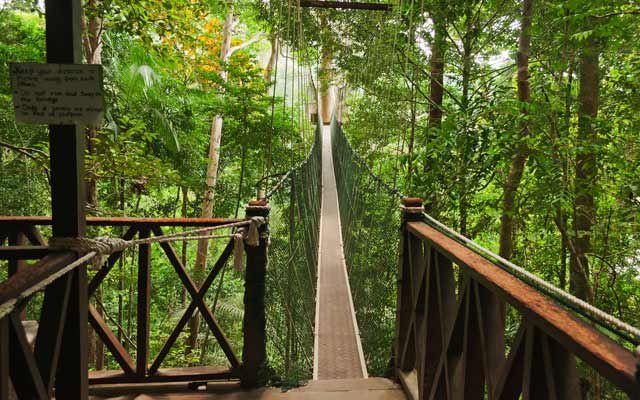
The canopy walkway is temporarily closed until January
The canopy walkway at Malaysia’s Taman Negara National Park has been temporarily closed since November 8 until further notice.
The 87-room Mutiara Taman Negara, the only resort located within the Taman Negara National Park, expects occupancy to drop over the coming weeks due to the closure, combined with the suspension of some activities during the year-end monsoon season.
The canopy walkway is temporarily closed until January
Kingston Khoo, director of sales & marketing at Mutiara Taman Negara, said that more extreme adventure activities will be suspended from November 15, 2018 to January 15, 2019. These include trekking Gunung Tahan (Tahan Mountain), visit to Kepayang Cave and hiking to Kumbang Hike where a wildlife viewing tower is located.
Explorer packages for the masses will continue to be available to guests. Among the examples of soft adventure activities are night jungle walks, trekking to Teresek Hill and fish feeding at Kelah Sanctuary.
In a circular notifying partners of the walkway closure, Asian Trails Malaysia said that its Jungle Trekking Excursion to Terisek Hill remain unchanged, “except guests will not be able to experience the canopy walkway for the time being”.
Manfred Kurz, managing director, Diethelm Travel Malaysia, said business from Europe is unaffected as tourists are mostly looking for soft adventure with a jungle experience.
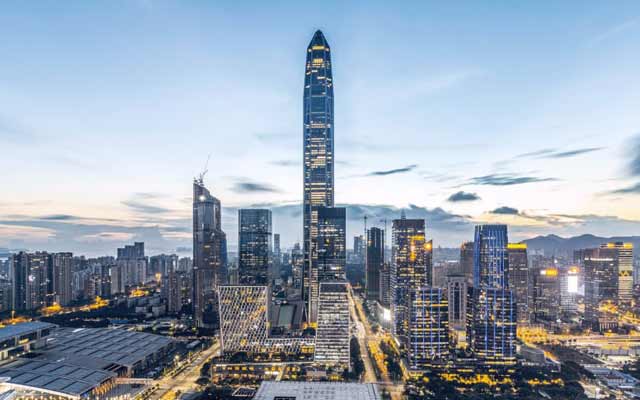
Rosewood Shenzhen is set to open in China’s fastest-growing economic metropolis come 2022, heralding the strategic consolidation of the brand’s footprint in China’s tier one cities.
The hotel will join Rosewood’s China properties in Beijing and Sanya, and upcoming properties in Hong Kong and Guangzhou this winter, as well as Chengdu in 2022 and Shanghai in 2024.
Rosewood Shenzhen is set to open in 2022
Rosewood Hotels & Resorts has been appointed by China Resources Land (CR Land), the flagship subsidiary of China Resources Group, to manage the Shenzhen property in Shennan Boulevard at the intersection of Nanshan, Futian and Baoan Districts.
Forming part of a mixed-use development of office, retail, hotel and serviced apartments, Rosewood Shenzhen will feature 300 rooms and 50 Rosewood Residences units.
There will be four restaurants and bars, 1,250m2 of meeting and event facilities, including a 750m2 main ballroom. Leisure facilities will include Sense, A Rosewood Spa, an indoor and outdoor swimming pool and a fitness centre.
“The opening of Rosewood Shenzhen will not only be a key moment in our strategic growth in China and across Asia-Pacific, it will represent a highly differentiated ultra-luxury experience for Shenzhen’s residents and visitors,” said Sonia Cheng, CEO of Rosewood Hotel Group.
The property is expected to cater to business travellers drawn to China’s first Special Economic Zone and technology hub on the Pearl River Delta, while also appealing to “affluential explorers”.
Named UNESCO Creative City of Design, Shenzhen is establishing itself as China’s creative hub with high-profile design events and new creative destinations such as OCT Loft, and the neo-futuristic Museum of Contemporary Art.
Ahead of its scheduled opening in 2019, Nikko Bangkok is offering special rates of 5,200++ baht (US$157) for a superior room.
The offer is valid for stays from February until June 30, 2019 and is inclusive of breakfast for two.
Located at 27 Sukhumvit Soi 55, within walking distance of the BTS Skytrain Thonglor station, Hotel Nikko Bangkok features 301 guestrooms and suites, including 10 extended stay rooms complete with kitchenette.
The hotel will have four restaurants and lounges, while meetings and events spaces include the Fuji Grand Ballroom, one of the largest in the Thonglor neighbourhood with a capacity for 1,250 pax in cocktails configuration.
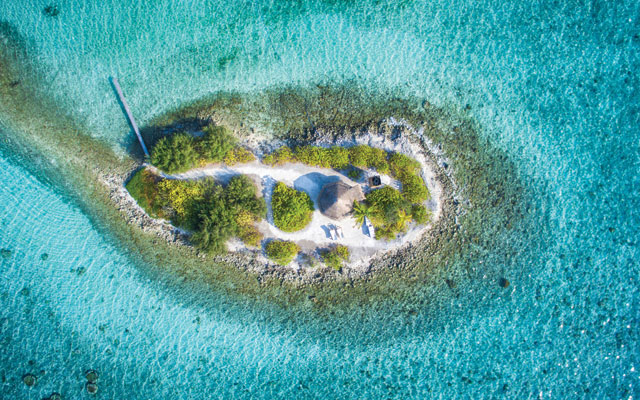
Aerial view of an island belonging to the Adaaran Select Hudhuranfushi property
New, innovative products are constantly appearing in Maldives’ hospitality scene, but seasoned hoteliers believe that barefoot luxury and unparalleled beauty remain the Maldives’ best product proposition and selling point.
But stiff competition means resorts in the Maldives are constantly trying to outdo each other. Ever since Conrad Maldives Rangali Island created the world’s first underwater restaurant 17 years ago, the island nation has seen numerous creative products – mostly underwater – such as spas, restaurants, and wine cellars. Recently, Conrad Maldives Rangali Island went a step further and unveiled the world’s first undersea villa.
Aerial view of an island belonging to the Adaaran Select Hudhuranfushi property
Another new tourism product due for an early-2019 opening is Crossroads Maldives, a US$680 million resort by Thailand-based Singha Estate that comprises nine connected islands. The destination will include entertainment, shopping, restaurants and resorts by Hard Rock Café and Hilton.
Abdulla Ghiyas, president of the Maldives Association of Travel Agents, believes that the Maldives has always been at the forefront of innovative tourism attractions, and exciting products like Crossroads and Conrad’s undersea villa will take the destination to a whole new level.
However, both Sonu Shivdasani, founder and CEO of the Soneva hotel chain, said that such new products do not reflect the essence of the Maldives.
“Premium resorts will try new gimmicks. However, at the ultra-luxury level of the super rich and well-travelled urban elites, barefoot nature and the beauty of the Maldives is what they will seek. The more one can bring these guests closer to the actual beauty of the Maldives, the more successful one will be,” he remarked.
Andrew Ashmore, chief commercial officer at Coco Collection Hotels & Resorts, remarked that most resorts in the Maldives offer a similar product, with only a few exceptions that can be highlighted as unique.
“If you look at the newer properties like Movenpick, Fairmont, Westin, Raffles, JW Marriott, etc… they are all the same. All of these properties (pretty much 90 per cent), offer the same thing and look the same,” Ashmore noted.
To offer something different, the Coco chain has launched the nation’s first private island Coco Privé. The 1.4ha property costs US$45,000 a night, and features a master residence, five guest villas, purpose-built kitchen, cocktail bar, wine cellar, and is serviced by a team.
Ashmore added that the Chinese, the Maldives’ largest source market, visit the country for what it represents – islands, sea and resorts. Indians, a growing market of 5.5 per cent, are drawn by the romantic islands and good vegetarian food, not because of undersea attractions or shopping.
Access will also be made easier, with a new US$60 million UAE-funded international airport nearing completion on Maafaru island in Noonu Atoll. It is due to open in July 2019.
Suresh Dissanayake, Adaaran Resorts’ assistant vice president – sales & marketing, believes that while there still is a market for luxury products, differentiation is the key.
“Luxury can be anywhere in the Maldives. However, you will have to find your USP and position in order to sustain in the competitive environment,” he concluded.
Reinforcing this point, hospitality brand expert David Keen said that as many urbanites live in condos and apartments, they are willing to pay a high price to experience the simpler things in life such as walking along a beach barefoot.
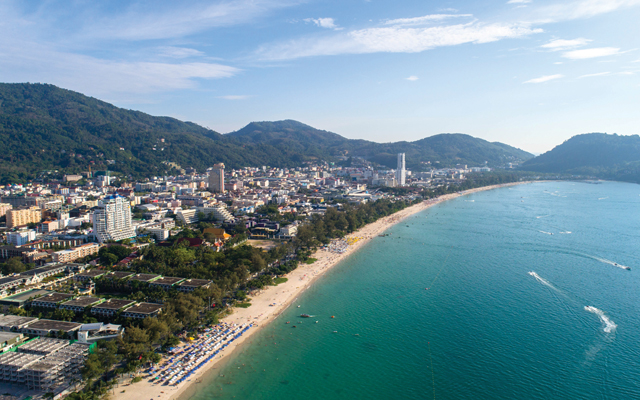
Phuket: Not purely beaches Phuket has largely built its stature as a beach holiday island, but it is increasingly transforming into an urbanised holiday destination, shaped by the forces of growing airlift, surging visitor numbers and changing source markets.
“A definite shift in geographic markets over the past 10 years”, with China, Russia and Australia making up bigger market shares than before, has led to “rising demand for non-beach centric activities”, according to a recent report by C9 Hotelworks.
Aerial view of Patong beach in Phuket
Michael Ayling, general manager of Blue Tree Phuket – a US$40 million water park and lagoon destination opening in early 2019 – thinks the attractions sector is still underserved in Phuket, as the island has comparatively fewer water parks than Pattaya and Hua Hin.
Besides Blue Tree Phuket, other upcoming themed tourism attractions include Vana Nava Water Park, Entertainment Park, and Aquaria at the new Central Festival mall extension.
The arrival of more theme parks will enable Phuket to have a stronger year-round appeal, said Ayling, as the focus of tourist activities can turn inland during the monsoon months from May to October.
At the same time, the arrival of Middle Eastern airlines bringing more direct air connections to Phuket is already turning the island into a year-round destination, attracting not just the regional market but European visitors too.
Matthew Hindmarch, director of hotels and resorts, Aksara Collection, noted: “The Scandinavians are coming year-round now thanks to growing air connectivity. A traditional high season market like Denmark is starting to travel year-round.”
Following the recent expansion of the Phuket International Airport, the Airports of Thailand has announced a US$1.8 billion second airport in Phang Nga, just over the Sarasin Bridge. C9 expects Phuket’s improving infrastructure to create a broader Greater Phuket Tourism Triangle that includes Phang Nga to add diversity and refresh Phuket’s maturing global appeal.
However, industry players warn of room oversupply in Phuket, which is already showing strains of overdevelopment, especially in Patong Beach.
“It’s getting difficult to sell Phuket,” said Richard Brouwer, CEO of Khiri Travel, as the deluge of hotel development and visitors have made Phuket into “a prime beach destination for the volume market”.
David Kevan, partner and product person of UK-based Chic Locations, agreed: “Phuket doesn’t need any more hotels – it has enough.”
According to C9, Phuket has a total of 1,774 tourist accommodation establishments with 84,427 keys as of 1Q2018, including registered and unregistered properties.
Meanwhile, the popular holiday island sees no sign of abatement in its still-expanding hotel supply, including a Mandarin Oriental coming in 2022. – Xinyi Liang-Pholsena
Cebu: overtourism risk with growing popularity
More hotels and resorts will dot Cebu’s Mactan Island over the next several years, with investors and visitors lured by the destination’s growing popularity and better accessibility.
Already boasting the biggest cluster of upmarket hotels and resorts including a Shangri-La, Movenpick, Plantation Bay and Maribago, Cebu will soon welcome the 271-key Dusit Thani Mactan Cebu in 4Q2018, the 250-key Sheraton Mactan Resort in 2019, plus upmarket local hospitality brands like Aruga, Grafix, Ayala Land’s Seagrove in the pipeline.
Mactan, already known as a luxury beach destination, will undoubtedly draw more tourists with the July opening of Mactan-Cebu International Airport’s (MCIA) resort-themed Terminal 2.
With better airport infrastructure and an array of properties that other destinations lack, Cebu is now the top alternative destination in lieu of Boracay, which was closed for a six-month rehabilitation since April 26.
Indeed, Margie Munsayac, vice president – sales and marketing, Bluewater Resorts, confirmed that rooms in Mactan are difficult to secure at the moment in Mactan as it benefits from Boracay’s closure.
Mactan attracts mainly Asians, specifically North Asians, for stays of three to four nights.
Jid Velasco, director of sales and marketing, Plantation Bay Resort and Spa in Mactan, shared that the there’s almost no distinction between the high and low seasons for the property due to the steady stream of guests year-round.
But with hotel and resort developments centred in Mactan’s Puerto Engano area, the destination’s “carrying capacity is becoming a real concern for the industry”, said Jojo Clemente, president of Tourism Congress of the Philippines, who also urged a study to address the possibility of overcapacity and overdevelopment in Mactan.
Clemente, who became an advocate for establishing the carrying capacity of tourist destinations in the Philippines following Boracay’s closure, opined that Mactan can still accommodate “a few more resorts” to maintain its current arrivals but certainly “not too much” to avoid strains on the island’s resources. – Rosa Ocampo
Langkawi: UNESCO status a natural asset
For Langkawi, the UNESCO Global Geopark status is a valuable marketing asset the destination heavily relies on, attracting visitors drawn by its offerings of pristine beaches, mangrove swamps and billion-year-old limestone formations.
Iskandar Zulkarnain, director of sales and marketing at The Andaman, A Luxury Collection Resort, Langkawi, shared that the UNESCO Global Geopark status is what differentiates Langkawi from Bali’s culture and Phuket’s nightlife.
He said: “The tagline, Naturally Langkawi, complements the UNESCO Global Geopark status and attracts nature lovers and holidaymakers looking for ecotourism attractions.”
But connectivity remains a key challenge for this Malaysian beach destination, with international links limited to Singapore, and Guangzhou, Kunming and Guiyang in China.
Langkawi Development Authority (LADA) CEO, Azizan Noordin, is currently looking into improving the destination’s air accessibility by lobbying for more international airlines – namely Qatar Airways, Emirates, Finnair, Thai Airways and Hainan Airlines – to launch direct flights to Langkawi.
LADA is also in talks with Germany’s Condor Air, which will commence services between Frankfurt and Kuala Lumpur from November.
To encourage airlines to test new routes to Langkawi, LADA is providing chartered flights with incentives.
Welcoming such initiatives on the authorities’ part, Anthony Wong, president of Langkawi Business Association as well as group managing director, Asian Overland Services Tourism & Hospitality Group, said: “For a destination with limited direct flights from foreign destinations, getting charters is a good start. It allows the airline to gauge whether there is a market for the destination and whether it will be viable to commence scheduled flights later.”
As part of its strategy to encourage foreign tourists to spend longer than the average duration of four days/three nights, Azizan said LADA is looking for investors to develop a premium outlet, a water theme park, and a private medical centre in Langkawi. – S Puvaneswary
The Sanchaya Bintan
Bintan: Luxury sheen growing
Bintan has long been a weekend getaway for city slickers from Singapore, but few would associate the Indonesian island as a real luxury destination because of a perceived lack of infrastructure to cater to the upper upscale market, and little by the way of a concerted and coordinated effort among its players to market it as one.
This is steadily changing as more high-end accommodation and facilities open on the island, their own marketing and promotions helping to lift the island’s high-end image to a global audience and, perhaps eventually, creating a critical mass needed to trumpet Bintan jointly and consistently as a glamorous getaway.
The presence of fresh company could be good news for Banyan Tree Holdings, the swashbuckler which led the way in the luxury market by opening Banyan Tree Bintan in 1994 in Lagoi, an area that boasts pristine coastline, tropical jungles and unspoiled natural landscapes.
Then came The Sanchaya, which entered Bintan in December 2014 and paved the way for a new era of uber luxury on the island as an exclusive beachfront estate featuring 29 villas and suites. Its four-bedroom Vanda Villa is said to be Bintan’s only US$10,000-a-night villa.
The question is, beyond more luxury accommodations, what is actually luxurious about Bintan?
Just as Banyan Tree Bintan peddled the idea of a world-class retreat when it opened – which obviously sells as the resort is still standing after 24 years – The Sanchaya’s estate manager Magnus Olovson too believes in “restorative” luxury.
Said Olovson: “New York has its Hamptons, Sydney the Blue Mountains and Rome its Naples (for weekend escapes)… In Singapore, Bintan has emerged as such a retreat, proving to be a major drawing card for the well heeled. Bintan is also an ideal go-to retreat for those wishing to temporarily escape bustling Jakarta.
Bintan Resorts International spokesperson Iris Kok also pointed out that the island has more than just luxury accommodation to cater to luxe travellers. Citing Treasure Bay Bintan as an example, she said: “Treasure Bay Bintan has gotten so much social media attention and is insta-famous for the appealing shade of blue of its 6.3ha Crystal Lagoon, South-east Asia’s first and largest recreational sea-water lagoon.”
The newest luxury kid on the block in Bintan is Cenizaro Hotels & Resorts, a Singapore-based group which owns The Sheraton Towers Singapore, and owns and operates its own upmarket hotel brand, The Residence, with properties in Tunisia, Mauritius, Zanzibar and Maldives.
Cenizaro shows its confidence in Bintan as an upmarket destination not only by fielding the latest Residence there, but in a greenfield site in the east of the island, far away from Lagoi which is in the north.
Andy Xie, executive director of The Residence Bintan, commented: “Bintan has grown a lot in terms of visibility with (government) initiatives such as the Batam-Bintan Crossborder (an event to develop the Singapore and Malaysian markets for Batam and Bintan) last year.
“We believe there will be many forthcoming initiatives that will further put Bintan on the map, which is why we have also chosen to open a property there.” – Mimi Hudoyo
JW Marriott Phu Quoc
Phu Quoc: a new star arises
Vietnam’s emerging island of Phu Quoc is welcoming a crop of luxury properties, attracting a new tier of traveller to its shores.
Phu Quoc has planted itself on the global tourist radar and is gearing up to be a major player in the country’s tourism stakes, welcoming an increasing number of visitors and development.
According to the latest figures from Vietnam National Administration of Tourism, in 2017 the island received nearly two million visitors, a 35 percent year-on-year increase. This figure is expected to rise, with Phu Quoc International Airport undergoing an upgrade to handle five million visitors annually by 2020 and seven million by 2030.
The latest wave in Phu Quoc’s rise has seen a swathe of luxury resorts land on the island, transforming it from a relatively unknown spot on the South-east Asia backpacker trail to a sought-after destination.
The opening of the 459-room Phu Quoc Long Beach Resort in June is among the latest of international brands launching on Phu Quoc.
JW Marriott Phu Quoc Emerald Bay opened in 4Q2017, while Novotel Phu Quoc opened in 2016 as part of five-star Sonasea Villas & Resorts tourism complex, Vinpearl Phu Quoc complex, comprising a five-star hotel and villas, amusement park, golf course and a wildlife safari.
In the luxury pipeline is BIM Group’s Regent Residences Phu Quoc, which will be the island’s first six-star resort when it opens in 2020.
While the raft of luxury properties plug the current shortage of availability during peak months, Linh Le, group managing director of Asia DMC, expresses fears of Phu Quoc losing its natural charm.
“Once built, the developments will establish Phu Quoc as an international destination,” he said. “However, natural beach landscapes will be replaced with manicured beach landscapes belonging privately to resorts and dedicated to resort guests.”
Atilla Mesut Erda, chief operating officer at Fusion Resort Phu Quoc, which opened in mid-2017, added it is vital the island’s natural appeal is preserved by developers.
She said: “The local community and stakeholders need to ensure Phu Quoc does not lose its traditional charm, clean environment, pristine beaches, and the friendly spirit of the locals.” – Marissa Carruthers
Desaru Coast
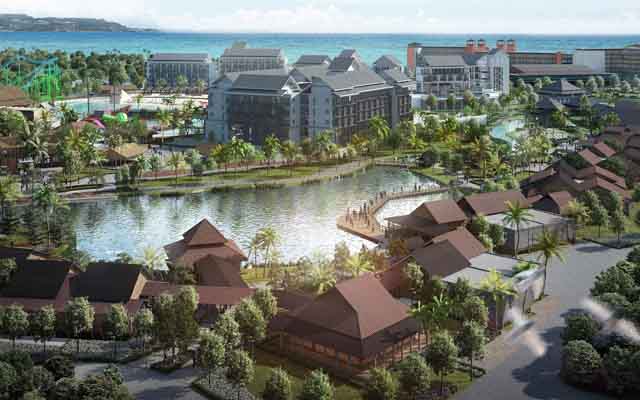
Desaru: sunny days ahead for integrated destination
Desaru Coast is fast shaping up as a tourism hotspot in Malaysia, as the integrated destination in South-eastern Johor welcomes a host of developments and attractions.
Developed by Desaru Development Holdings One, Desaru Coast is home to four hotels and resorts, two world-class golf courses, a themed water park, a retail village as well as a conference centre.
By the end of 2018, the destination will see the launch of the 365-room Hard Rock Desaru Coast, the 275-key The Westin Desaru Coast Resort, and One&Only Desaru Coast, which will offer 42 suites, two luxury suites and an exclusive four-bedroom villa. This will be followed by Anantara Desaru Coast Resort & Villas in 2019.
The Desaru Coast Conference Centre, due to open by end 3Q2018 and managed by The Westin Desaru Coast Resort, is a fully-equipped multipurpose venue with a banquet area and exhibition space that can host up to 1,000 participants.
Desaru Coast Adventure Waterpark, which opened in July, is also an anchor attraction, offering unique rides such as the first-ever water coaster in the region and one of the largest wave pools in the world.
Golfing is a key recreational attraction in the destination. The Els Club Desaru Coast comprises two manicured golf courses that feature 45 holes in total; Ocean Course, a 27-hole golf course designed by four-time major winner Ernie Els; and Valley Course, an 18-hole golf course designed by Els in collaboration with major champion, Vijay Singh.
Roslina Arbak, CEO, Desaru Development Holdings One, said key foreign markets targeted are Singaporeans as well as tourists travelling to Malaysia via Singapore, Indonesia, China, Hong Kong and India.
She added: “While our primary focus is to attract holidaymakers, we are also mindful that Malaysia is growing to be one of the most preferred business events destinations for foreign delegates.
“Further, we believe Desaru Coast, with its integrated destination offerings, situated along a pristine 17km beachfront, is well placed to capture the growing “bleisure” market, benefiting from its unique mix of corporate and leisure facilities and strategic location,” said Arbak. – S Puvaneswary