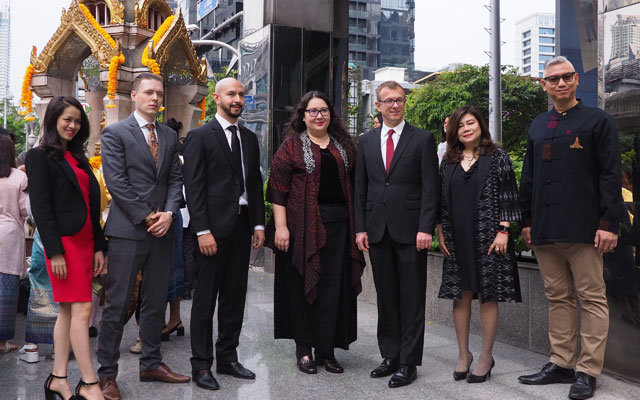
Diethelm Travel Group has moved its headquarters to a new office location in Bangkok, which welcomed its first visitors last week.
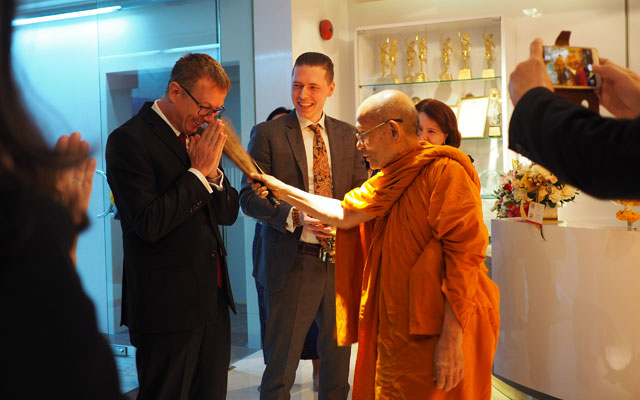
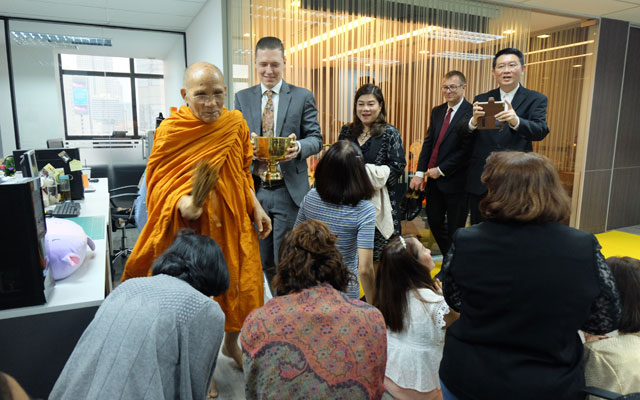
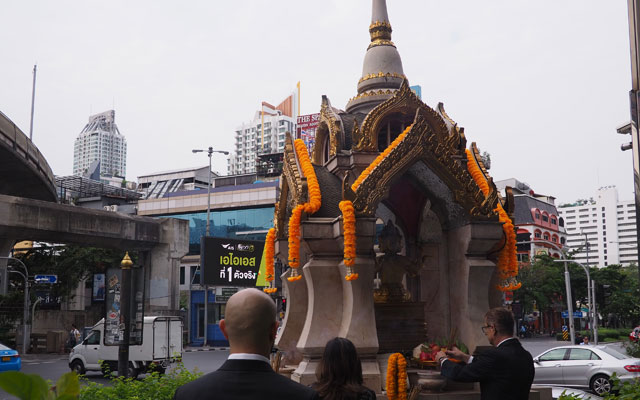
Beginning with a morning blessing ceremony performed by Buddhist monks for staff and select guests from the media, the day continued with a hosted lunch followed by an afternoon open house.
1 of 6
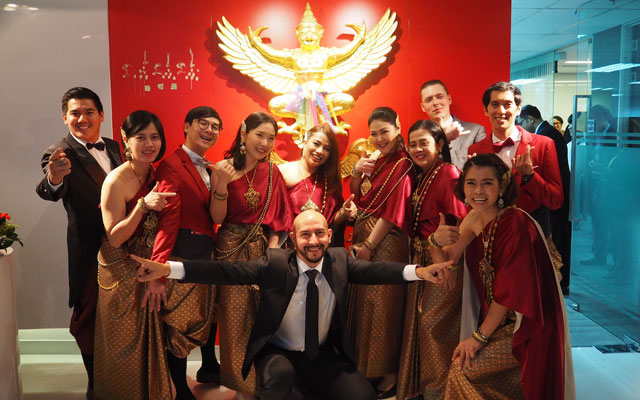
The Diethelm Travel team, dressed in traditional Thai attire, then met with clients and special attendees, including over 160 hoteliers, for a social afternoon tea.
In lieu of gifts or flowers, attendees contributed donations for the Saijaithai Foundation to help support regions of southern Thailand recently affected tropical storm Pabuk.
Commenting on the Bangkok headquarters’ new home, CEO Stephan Roemer said: “We’ve moved our headquarters to a new office space that better fits the company’s growth and commitment to operating at a high international standard… We (welcomed guests) to our new home and introduced them to the next era of Diethelm Travel in Bangkok.”
The new office is located at No. 140/7, ITF Tower, 8th Floor, Silom Road, Suriyawong, Bangrak. Its main line phone number is now (66) 2 782 7000.
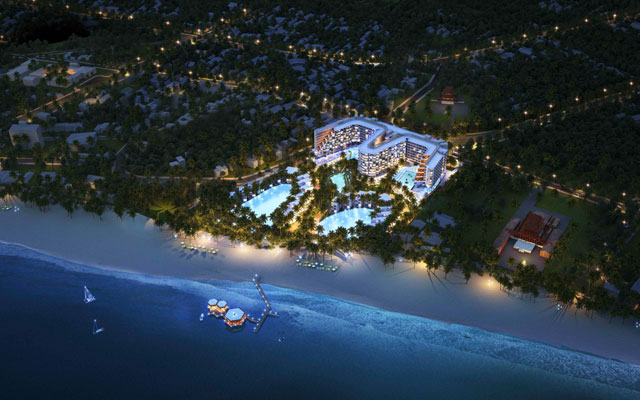
Austrian hotel chain Vienna House is expanding into Asia, with a debut planned for Vung Tau, a beach resort about 175km from Ho Chi Minh City in southern Vietnam.
Currently operating close to 40 locations throughout Europe, Vienna House has unveiled the Vienna House Vung Tau as its first Asian location, set to open in 2021.
1 of 2
Vienna House will make its Asia debut in Long Hai town (pictured), Vung Tau
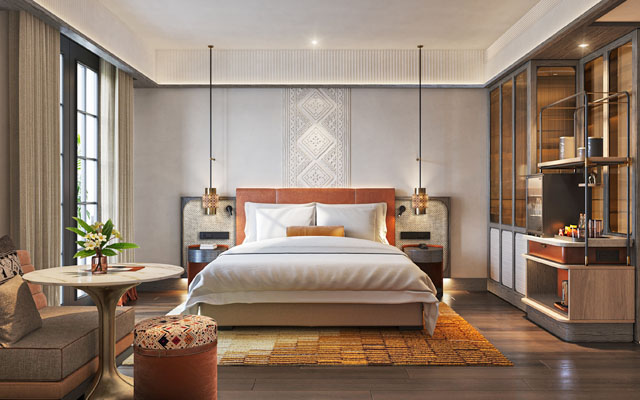
Concept art of Vienna House Vung Tau
“Vienna House Vung Tau is a great step in the first phase of an ambitious expansion plan to bring Vienna House throughout Asia,” said Jonathan Wigley, CEO of Vienna House Asia, pointing to Vietnam’s “vigorous” tourism growth in recent years.
Other Vienna House properties in Thailand and Indonesia will be announced shortly, he added.
The Vung Tau property will be an oceanfront resort offering 775 rooms, suites, penthouses and villas. Facilities include pools with pool bars, an onsen hot bath, a gym, tennis courts, a sports bar, an all-day dining restaurant, a fresh seafood market, a cafe and tea room, a 530m2 grand ballroom, flexible meeting rooms and retails areas.
Laos has set its sights on attracting one million Chinese visitors this year as part of the Visit Laos-China 2019 campaign, with a series of events, fam trips and seminars lined up to grow this key source market.
Sounh Manivong, director general of tourism marketing department, Laos’ Ministry of Information, Culture, and Tourism (MICT), said: “We want to collaborate with many countries in the future. China is a market with huge potential, so we will start with them and then expand to other nations.”
Luang Prabang, Laos
The two countries have signed an agreement to push tourism in both destinations, starting with a launch event in Vientiane on January 25, followed by a Laos tourism promotion seminar for Chinese business and tourism players.
Other activities include Laos hosting a large-scale promotional event in Beijing in April; a Laos festival in Hunan in July; a promotion seminar in Pakse in August; and a fam trip for Chinese media in southern Laos, before rounding out the year with a closing ceremony in Beijing in December.
With more than five daily flights connecting China and Laos, Sounh said work is underway to secure more direct flights with major Chinese cities this year.
Sounh added the government is working to secure more flights, including from Japan. Promotional activities will also be carried out in South Korea and Japan – two key target markets.
The country landed a recent coup in Scoot’s thrice-weekly flights from Singapore to Luang Prabang and Vientiane, which will begin in April.
China aside, Laos is putting South-east Asia on its radar. “A few years ago, our target markets were Europeans and Americans. This year we are changing this by focusing on attracting South-east Asians and Chinese,” said Somxay Chongheumoua from the tourism marketing research division of MICT’s tourism marketing department.
The increased focus on South-east Asian travellers is coming as good news for some tourism businesses in Laos, although they continue to see Europe and the US as their core markets.
A Laotian tour operator who declined to be named told TTG Asia that compared to the Chinese and some Europeans, South-east Asian travellers are more inclined to spending on local businesses.
He observed: “Tourists from Thailand or even Vietnam are different – they would rather use local services and consume local products. This is important to ensure locals get to benefit from tourism.”
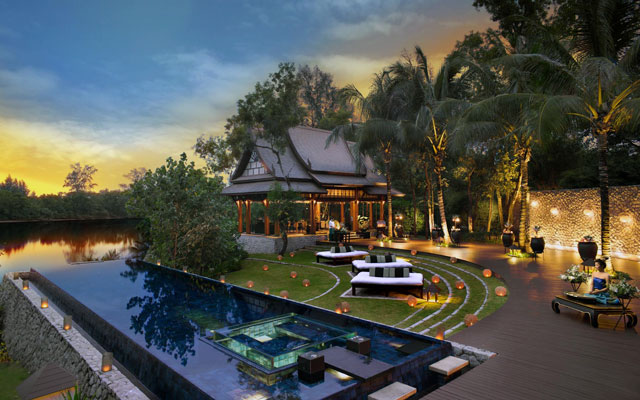
With most of Banyan Tree Hotels & Resorts’ portfolio now part of the Le Club AccorHotels loyalty programme, members can enjoy a limited time rewards offer for stays at Banyan Tree, Angsana and Cassia properties.
There are currently 48 properties under the Banyan Tree Hotels & Resorts’ global network, of which 37 will take part in the Le Club AccorHotels loyalty programme.
DoublePool Villas by Banyan Tree, Phuket
As part of the launch promotion, members who make bookings by February 24, 2019 for stays until 14 April, 2019 are entitled to four times the Rewards Points. Elite members of Le Club Accorhotels will enjoy additional member benefits and privileges.
AccorHotels and Banyan Tree announced a strategic long-term partnership in December 2016 whereby both groups will collaborate to develop and manage Banyan Tree-branded hotels around the world. The partnership also gives Banyan Tree access to AccorHotels’ global reservation and sales networks as well as the renowned Le Club AccorHotels loyalty programme.
With some 37 million and growing international arrivals into Thailand, industry players are now pondering what else is needed to raise the country’s competitive edge in the tourism game and remain a desired destination, especially as neighbours such as Vietnam are also emerging as strong contenders on the regional travel landscape.
What will be much needed will be “out of the box” thinking and “bold” leadership, urged prominent business leaders at Thailand Tourism Forum (TTF) in Bangkok yesterday.
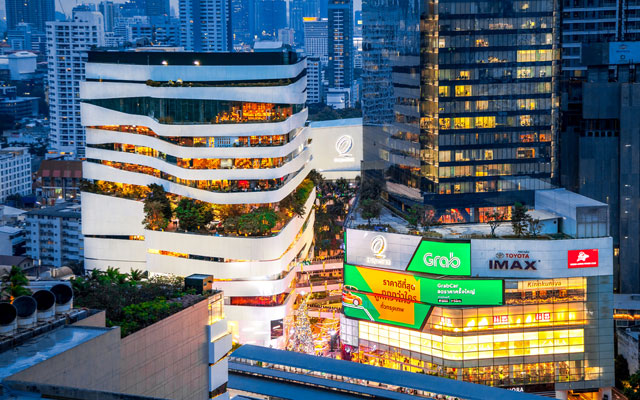
The Emquartier in Sukhumvit, Bangkok
For a country that has no lack of cultural and natural attractions, what’s needed for Thailand now are a more vibrant entertainment sector as well as more iconic attractions and events to bolster tourism spending and make the country the “playground of Asia”, stressed Supaluck Umpujh, chairwoman of The Mall Group.
For too long, Thailand was perceived as a “backpacker’s paradise” and a “value for money” destination, which resulted in low tourism revenue for the country, Supaluck posited. “People (used to) buy cameras in Singapore, but take photos in Thai temples,” she remarked. “They eat, they stay but they don’t spend; (the expenditure) doesn’t correspond with numbers (into the country).”
The Thai retail queen asserted that the arrival of luxury shopping and entertainment complexes such as The Emporium, Siam Paragon and The EmQuartier – which are owned by The Mall Group – has since changed the face of Bangkok’s Siam district and lower Sukhumvit Road into prime investment areas for real estate and hotels alike.
Looking ahead, she also wants Thailand to move past the “low entertainment” the country is known for, into one that encompasses family and immersive fun for everyone.
The mega developments that The Mall Group has in the pipeline could possibly redefine the business, retail and entertainment scene in Bangkok, said Supaluck.
The Mall Group has recently entered into a joint venture with AEG, the US-based sports and live entertainment company, to pump more than 10 billion baht (US$315 million) into two new world-class arenas, EM Live and Bangkok Arena, that are will anchor two new entertainment districts in the Bangna district when they open by 4Q2022.
Such mega developments also present future investment opportunities for hoteliers. “Sticking near a resort or whatever that excites” will be key considerations as hoteliers “think of different different ways” in hotel development, remarked Clarence Tan, managing director South-east Asia & Korea at InterContinental Hotels Group.
For instance, Holiday Inn Resort Vana Nava Hua Hin, which opened four years after the water park was in operation, has helped to open new segment for families for Hua Hin, Tan added.
Said IHG’s head of resorts in Thailand & Indonesia, Shantha de Silva: “It was uncharted territories when we went in to work with a water park, which became a strong attraction on its own in Thailand. The brands went well together to drive tourism into Hua Hin, which is reflected in Hua Hin’s performance.”
Tan added: “People used to go to resorts for sun, sand and sea. And then there’s shopping, which I don’t disagree. Another ‘s’ came up today, which is sustainability. And then you add the sixth one, which is sports and entertainment; these will be safe spots to invest in.”
Stephan Roemer, CEO of Diethelm Travel Group, sees merit in the development of such attractions in Thailand, especially if they help to better position the country in attracting the luxury or family market segments.
However, Thailand clearly is still struggling with the current number of arrivals, so Romer hopes that infrastructure and capacity issues are something the Thai government would address.
As well, real improvements in Thailand’s outdated railway network as well as mass transit lines in key cities like Bangkok will also help the country create new scenic routes and better value for experiences, said Nikhom Jensiriratanakorn, director, Horwath HTL.
Meanwhile, Rahul Mittal, director at Cistri (Urbus), sees “a natural asset” in Bangkok’s Chao Phraya River and urges both the public and private sectors to come together to regenerate and develop the the city’s iconic feature and its surrounds.
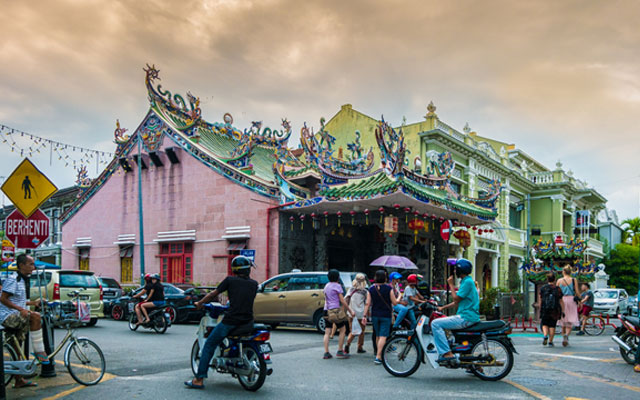
Destinations like the state of Penang are beginning to tap opportunities in the Vietnam outbound market
Reporting by Mimi Hudoyo, S Puvaneswary, Marissa Carruthers and Pamela Chow
Bolstered by growing intra-region connectivity and a strong economy, Vietnam is emerging as a source market, with regional NTOs and tour operators training their sights and developing strategies to woo more Vietnamese travellers to their shores.
The MasterCard Future of Outbound Travel in Asia Pacific Report, 2016-2021 revealed that Vietnam’s CAGR growth in outbound travel is expected to reach 7.5 million trips by 2021.
Destinations like Penang (pictured) are beginning to tap opportunities in the Vietnam outbound market
Abdul Hadi Che Man, director of Tourism Malaysia in Vietnam, told TTG Asia: “Vietnam is a very fast-growing market for Malaysia. Until September 2017, arrivals grew by 54 per cent and daily expenditure increased 49 per cent from RM399 (US$97) to RM594.
He added: “Last year set high expectations but we will push for continual growth this year. We will work closely with our travel agent partners to explore the possibility of working with OTAs to attract more FITs.”
Trade players in Malaysia attribute the growing air connections from Vietnam as a key factor to driving arrivals. Penang, for instance, is a key beneficiary of enhanced air links from Vietnam.
AirAsia began four-times-weekly flights between Penang and Hanoi from July 2018, in addition to stepping up frequencies between Ho Chi Minh City and Penang from four-times-weekly to daily since last March.
With improved air accessibility, Penang Global Tourism is working with AirAsia on joint tacticals to promote the state, and will also exhibit at the upcoming Viet Nam International Travel Mart in Hanoi this March and the 15th International Travel Expo in Ho Chi Minh City, according to Ooi Chok Yan, CEO, Penang Global Tourism.
For Indonesia, the average 10 per cent growth posted for Vietnam in recent years makes it a significant market for the archipelago, even as numbers are still small at present.
Visitor arrivals from Vietnam to Indonesia in 2017 totalled 77,466, and the number is expected to reach 100,000 in 2018 (full year statistics for 2018 not yet available at press time).
While Vietnamese outbound traffic to Malaysia has been aided by rising air links, Indonesia is hampered by the lack of direct connections. Currently, the only direct flight is operated by Vietnam Airlines between Ho Chi Minh City and Jakarta.
Heri Hermawan, head of marketing division – Indochina, Ministry of Tourism, Indonesia, said: “Vietnam has the potential to become a primary market (in South-east Asia). Vietnamese interest in Indonesia is high, but so far it is still Bali. The lack of direct flights is an issue.”
Vietnam has emerged as a promising market in Singapore too. In 2017, Vietnam broke into Singapore’s top 10 source markets with a year-on-year increase of 13 per cent, reaching 531,000 arrivals and rivalling arrival volume from Thailand.
More recently, from January-November 2018, the market posted the highest year-on-year percentage growth of all South-east Asian nations in arrival numbers to Singapore. It registered a 12.4 per cent increase, seconded by Brunei at 11.8 per cent.
Several ATF sellers that TTG Asia spoke with are keen to woo this emerging market, which is still largely characterised by groups.
Irwan Raman, director of business development, Panorama Destination Indonesia, shared: “We have a marketing representative in Vietnam who supports us to penetrate the market beyond Ho Chi Minh City and Hanoi, such as to Danang, and introduce new destinations.”
Adam Kamal, general manager, Tour East Malaysia, said: “While Kuala Lumpur and Penang are still main draws, this year we are trying to promote Johor Bahru with overland transfers to Singapore.”
The Saujana Hotel Kuala Lumpur, senior director of sales & marketing, M Manimaran, said: “At this show, we hope to connect with Vietnamese outbound agents selling golfing tours as we have two, 18-hole championship golf courses within the resort.
“Our property is a five-minute drive to Ara Damansara Medical Centre, so medical tourism is another market we are exploring with our local travel partners.”
IHG's Clarence Tan and B&G Estate's Theprit Srichawla
Less than a year following its unveil of voco, the InterContinental Hotels Group (IHG) has signed a management agreement with Thailand’s B&G Estate to bring the new upscale brand into South-east Asia with a new-build voco in Bangkok.
Scheduled to open in 2021, voco Bangkok Sukhumvit 11 will offer 300 guest rooms, a rooftop restaurant and bar, a swimming pool and pool bar, as well as a fitness centre. The hotel will also be equipped with meeting facilities able to accommodate up to 400 guests, with the largest meeting room capacity of 200 guests. The property is located near Nana BTS station.
IHG’s Clarence Tan and B&G Estate’s Theprit Srichawla
Commenting on this signing, Clarence Tan, managing director, South-east Asia & Korea, IHG said: “As the world’s most visited destination, Bangkok represents an excellent launch market for one of the newest additions to our brand portfolio. This signing continues the accelerated growth of the voco brand since we launched it last June.”
The signing of voco Bangkok follows the recent debut of the first voco in the world, voco Gold Coast in Australia, which opened its doors last November.
The owner, B&G Estate, is a Bangkok-based company that owns and operates a retail and corporate property, Interchange 21, and has plans to grow its hospitality portfolio.
IHG has 24 hotels operating under five brands in Thailand, including: InterContinental, Crowne Plaza, Holiday Inn, Holiday Inn Express and Hotel Indigo, with another 27 in the development pipeline for the next three to five years.
Seven Seas Explorer (pictured), launched in 2016, will in 2020 be joined by the new Seven Seas Splendor
Norwegian Cruise Line Holdings (NCLH) has announced a new 750-pax ship order for Regent Seven Seas Cruises, with the vessel expected to debut in late 2023.
A sister ship to Seven Seas Explorer and Seven Seas Splendor, the new 475 million euros (US$540 million) vessel will be designed and built by Fincantieri.
Seven Seas Explorer (pictured), launched in 2016, will be joined by the new Seven Seas Splendor
More details regarding the new ship’s dining venues, amenities and onboard experiences will be revealed leading up to 2023. Voyages for the ship’s inaugural season will go on sale in 2021.
The first Seven Seas Explorer ship made its debut in 2016, and the next ship, Seven Seas Splendor, is set for delivery in early 2020.
With this announcement, NCLH has 11 ships on order for delivery through 2027 including seven ships on order for Norwegian Cruise Line, two for Oceania Cruises and two for Regent Seven Seas Cruises. The company will take delivery of its newest ship, Norwegian Encore, in fall 2019.
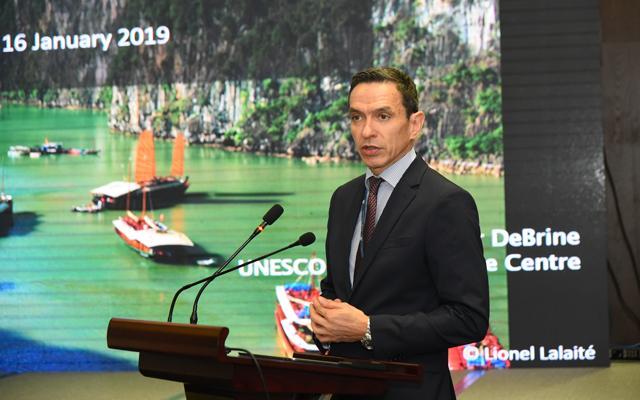
DeBrine: UNESCO more than just about lists; new technologies to bring stories to life
South-east Asia is urged to collectively embrace technology to showcase the region’s diverse cultural heritage and boost tourism across member states.
At the ‘Connecting heritages for ASEAN tourism development in digital age’ conference held at ATF 2019 last week, delegates heard the vital role digital technology plays in promoting tourism in the modern world.
DeBrine: UNESCO more than just about lists; new technologies to bring stories to life
Peter DeBrine, senior project officer, UNESCO World Heritage Nature, Sustainable Tourism and Outreach Unit, said: “Technology has become crucial for modernising the interpretation at cultural and natural sites, providing innovation in educational ways to enhance the visitor experience.”
He added with 38 World Heritage sites across South-east Asia and each member country home to at least one, this is a prime opportunity for nations to work together to develop cross-cultural and cross-country trips.
And technology is the best way to inspire and entice visitors.
Said DeBrine: “As much as UNESCO likes lists, we like storytelling even more. How we tell our stories is directly linked to digital technology – it’s right in our hands with mobile phones. Digital and technology tools play a pivotal role in linking culture with sustainable tourism development.”
DeBrine said a joint initiative between UNESCO and National Geographic is an example of best practice in this area. Funded by the European Union, the World Heritage Journeys Europe online platform showcases the continent’s unique cultural heritage while supporting sustainable tourism development.
Under different travel themes, Europe’s 34 World Heritage sites are brought to life through more than 1,000 pages that feature powerful images, stories, videos and interactive maps.
Added DeBrine: “The goal is to use digital technology to change the way people travel and experience local culture, and gain deeper appreciation about world heritage and the destination as a whole. We want to try and encourage people to stay longer.”
Con Apostolopoulos, senior vice-president National Geographic Partners, Asia Pacific and the Middle East, said this model could be transferred to South-east Asia, with curated journeys focusing on gastronomy, romance, heritage and art to create a range of compelling stories that encourage cross-country trips across South-east Asia.
However, he said the major challenge lies in member states working together.
“Where I see a significant opportunity for (South-east Asia) is by pooling their resources and do something of a huge scale. Each story is uniquely yours, because pooling your resources doesn’t mean losing your identity.”
SHATEC to provide hospitality training and consultancy for LHRA members
The Laos Hotel & Restaurant Association (LHRA) and Singapore Hotel Association Training & Educational Centre (SHATEC) signed an MoU at ATF last Wednesday, which will see the latter providing training services to Laos’ hospitality workforce.
“The hospitality industry, and tourism arrivals into Laos, are both growing, so we need to increase the capacity and quality of our services,” Oudet Souvannavong, president of LHRA, told TTG Asia.
SHATEC to provide hospitality training and consultancy for LHRA members
Later this year, SHATEC’s trainers will head to Vientiane to coach local staff over a period of three to six months, depending on each trainee’s skill level.
The curriculum will include structured learning modules in hospitality English, service delivery and excellence, soft skills and MICE programmes. SHATEC will also offer consultancy services to LHRA’s members.
Oudet elaborated: “In Laos, education for hospitality is not very well-developed. The government has a number of schools for hotels and tourism, but these institutes don’t provide enough (training) to meet the growth rate of the hotels. Hoteliers are lacking staff and the turnover rate is very high – 40 to 50 per cent.”
Ultimately, the partnership aims to empower the local workforce to pass the skills and knowledge acquired on to subsequent staff, ensuring a “sustainable” business model for the local industry, shared Margaret Heng, SHATEC’s chief executive.