TTG Asia
Asia/Singapore Monday, 27th April 2026
Page 1367

Worldwide Hotels launch for Singapore-based group

0
Singapore's home affairs minister Shanmugum, WorldWide Hotels Group's Choo Chong Ngen and Carolyn Choo

Worldwide Hotels was officially launched in Singapore on Wednesday, marking the consolidation of V Hotel, Hotel Boss, Hotel Mi, Value Hotel, Venue Hotel and Hotel 81 under one group.

The launch event at Suntec City Convention Centre was attended by over 300 guests, as well as guest of honour, K Shanmugam, Singapore’s minister for home affairs and minister for law.

In celebration of the occasion, which commemorated the group’s 25th anniversary as well, Worldwide Hotels-Choo Chong Ngen Foundation donated S$2 million (US$1.4 million) to the Institute of Technical Education and S$50,000 to Chong Pang CCC Community Development and Welfare Fund in support of providing assistance to students from lower income families.

The consolidation is said to give Singapore its “largest homegrown tourist class hotel group”. Worldwide Hotels also plans to expand beyond the lion city, from its current overseas portfolio of eight properties.

Video interview: Why travel still is the blue-eyed boy for big investors

0

Two major investors, Openspace Ventures and SOSV, in a video interview with TTG Asia, believe that opportunities lie in mobile and urge companies to think travel as more than just about flights, hotels or even bus tickets.

Travel is still the blue-eyed boy for them because it remains a mainstay of the disruption technology has created, while Asia’s travel & tourism growth and mobile penetration present vast opportunities for startups to disrupt traditional industry players.

Said William Bao Bean, partner, SOSV: “For South-east Asia and South Asia, we’re focused mainly on mobile. It’s the largest mobile-first market, so people’s first experience with the Internet is on their phone and this is an area that we’re focused on.”

He added: “They are looking at experiences to make them happy, to do things with their friends, as opposed to the last generation or the last couple of generations which just wanted to go out to buy things. We think that that’s a huge opportunity and we’re investing in it.”

SOSV is the most active early-stage investor in the world as of Q2 this year in various industries. It started investing in travel in 2004 when it worked on the IPO for Expedia’s subsidiary in China, eLong. Since then, SOSV has made about 15 investments in the travel space, said Bao Bean.

Openspace Ventures’ Hian Goh, partner at the firm, said it has “a lot of dry powder” for 2018/2019 to invest, US$135 million which it recently closed. The focus is on South-east Asia and, again, mobile appeals.

“The interesting thing about travel now is that companies need to think about what travel actually means. With the mobile phone, you can do a lot more than just book flights and hotels, and innovative companies will come out of places which are least expected. They actually are attacking the travel space but they are not setting up another OTA or hotel booking website,” said Goh.

He added: “The average $100 mobile phone now has four times more processing power than the super computer that beat Garry Kasparov in 1997. People don’t realise the amount of information that one has in the mobile device and the willingness of the Asian audience to have you engaged with that information to provide personalised and very effective travel services. Something that is very different versus the Western perspective. I look forward to seeing a lot of disruptive Asian travel companies come up.”

When asked if Asian startups are challenging the status quo, both Goh and Bao Bean pointed to Indonesia’s Traveloka and India’s OYO as proof they are.

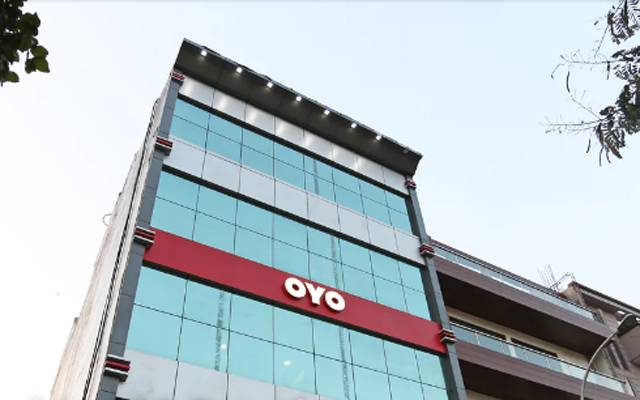
“You would think that hotels are done. But OYO came from out of India and is now expanding to China. They’re bringing pretty innovative new model to turning dusty old nasty hotels into something you can trust, are reliable, something you can feel safe about booking. They have made a huge impact in a very short amount of time.”

He added: “As early stage investors, we’re focused on solving problems. This can be hopefully large problems. For example, hotels are getting squeezed by OTAs and their margins are getting compacted. So what can we invest in to help hotels better monetise? Is it sending their guests out of the hotel to do activities or to do restaurants? User acquisition is very important; it’s not just the bed that you sleep in, it’s the range of activities around it.”

Watch the full video to learn how Openspace Ventures and SOSV separate the wheat from the chaff in the crowded startups space.

Genting to homeport 5,000-pax Global Class ship in Shanghai

0
Rendering of the Global Class ship

As part of an MoU between Genting Hong Kong and the Baoshan District Government, Genting Cruise Lines will deploy its new Global Class ship from the Dream Cruises fleet to Shanghai as her first homeport.

Genting Cruise Lines will also plan to establish a cruise related company in the Baoshan district under the agreement.

Rendering of Global Class, an upcoming addition to the Dream Cruises fleet

Said to be the largest cruise ship to homeport in Asia-Pacific, the Global Class vessel is scheduled to be delivered by the beginning of 2021.

“Genting Cruise Lines through its roster of brands, Star Cruises, Dream Cruises and Crystal, has led the development of the cruise industry in the Asia-Pacific and China for the past 25 years. As the most popular cruise port in China and the fourth largest in the world, we value Shanghai as one of our strategic homeports and remain confident of the cruise market in the city,” commented Kent Zhu, president of Genting Cruise Lines.

“Designed for the Asian market, the new ship will feature advanced technology, innovative itineraries and provide products to meet the needs of our Chinese guests.”

The ship was designed over three years and is currently being constructed at MV Werften, Genting Hong Kong’s own shipyard in Germany.

The largest cruise ship built in Germany, the Global Class will measure 342m long and 46.4m wide. With a capacity of 204,000 gross tons, the ship will be able to accommodate 5,000 passengers in 2,500 cabins based on a twin share basis – to meet peak season capacity needs in Asia – and feature a total life-saving capacity of up to 9,500 passengers.

The Global Class ships will use facial and voice recognition in many of its onboard services to eliminate most queues; contextual marketing to even out demand on ship facilities; automated robots to perform everyday tasks – allowing the staff to focus on service delivery – along with other artificial intelligent and digital systems.

Designed specifically for the rapidly growing Chinese and Asian cruise market, features on board the ship include a Cineplex, theme park, Asian spa, multiple authentic Asian dining experiences including fast-casual food outlets, and affordable shopping facilities in addition to luxury retail boutiques.

Paving the way for the Global Class, Dream Cruises will deploy its newest ship in Shanghai beginning from April 2019 with the 75,338-gross ton, 1,870-passenger Explorer Dream.

Explorer Dream will provide more cruise options for guests by opening up routes to include Russian ports of call in addition to popular destinations in Japan.

Beyond halal food and amenities, new mindset needed to court Muslims

0
From left: Shinjan Sarangi, Shaji Abu Salih, Ali Akbar Sahiwala and Devesh Kuwadekar

Travel suppliers looking to cater to Muslim travellers need to look beyond the basic requirements of halal food and environment, said speakers at the Muslim travel session during the recent ITB Asia in Singapore. Instead, service providers need to take a more holistic approach to the market.

Ali Akbar Sahiwala, creative director and founder of Rehla Design, said “people often think squarely about Muslim travellers”. Instead, they need to take note of “Place, Pixel, and Personality”.

From left: Shinjan Sarangi, Shaji Abu Salih, Ali Akbar Sahiwala and Devesh Kuwadekar

“In Place, figure out what is unique about your destination and how convenient it is for people to stay. For Pixel, make sure that communication is clear, and that customers can easily obtain information,” Ali shared. As for Personality, he said the Muslim brand was lacking unique travel products and offerings.

“It is not just about halal food, but making sure that you are connecting Muslim travellers with the local culture, and understand what they want,” stressed Sahiwala.

Davesh Kuwadekar, vice president and head of market development of Mastercard, said: “We also need to talk to airport authorities and duty-free shops. I don’t see many products catering to the Muslim market.”

Citing an example, Davesh said that during the months of February or March there would be a Chinese New Year podium at airports, but Muslim festivals were usually overlooked.

Meanwhile, Shaji Abu Salih, head of sales and marketing at Dubai-based Shaza Hotels, said catering to the fundamental needs of Muslim travellers alone was not enough.

He said: “There is no one solution (that fits all), as the the halal meaning is complex. For our hotel, we have products that cater to different (Muslim) markets.”

Shaji explained: “Within our two new hotels that are currently being built in Mandalika, Lombok, our facilities will be different from our (other hotels) which target Saudi travellers, for example.”

The new Mandalika hotels will cater to Indian and Pakistani Muslims who want destination weddings, while existing properties for Saudi Muslims are family-friendly.

Brian Harris returns to Seoul as Grand InterContinental Seoul Parnas GM

0

Brian Harris has been appointed general manager of Grand InterContinental Seoul Parnas.

The American brings over 20 years of experience in luxury hotel operations to the table, where his career has taken him to cities including Los Angeles, Chicago, Seoul and Jakarta.

He was previously in Seoul for close to a decade working for an established luxury hotel. In Jakarta, he held dual roles as the resident manager at Hotel Mulia Senayan and The Suites at Hotel Mulia Senayan.

He also previously held positions such as the area director of sales and marketing North Asia with Hyatt Hotels.

Santika spins off fresh, young brand

0

Santika Indonesia Hotels and Resorts has debuted a three-star brand that carries a modern and energetic vibe to cater to the growing population of millennial travellers.

Sudarsana, general manager for corporate business development and marketing communications with the Indonesian hotel company, said the new Kampi Hotel brand is different from the Santika corporate image.

“Santika reflects Indonesian tradition, culture and heritage, while Kampi is contemporary while retaining the heartfelt hospitality quality that Santika properties are known for,” he said.

Kampi’s contemporary nature is shown in its service culture, which Sudarsana said would be delivered by staff – known as crafters – in a fun, friendly and casual way. F&B served at Kampi hotels will also be fusion or modern.

Millennial travellers can expect attractive, 1980s-themed properties with “pretty corners” to satisfy their desire for the best social media snapshots.

The first Kampi hotel will soft-open in Surabaya this November with 196 guestrooms, a ballroom, meeting rooms, a restaurant and a fitness centre.

Sudarsana explained that Surabaya was chosen to house the first Kampi hotel as it is the second largest city in Indonesia, and a “hub for millennials who want to explore East Java”.

More Kampi hotels are in the plans, and they will be located in big cities.

With Kampi, Santika Hotels and Resorts now boasts a portfolio of seven brands including The Samaya, The Kayana, The Anvaya, Hotel Santika Premiere, Hotel Santika and Amaris Hotel. Altogether, the company operates 110 hotels across Indonesia.

Qantas to open a first class lounge in Changi Airport next year

0
An artist impression of Qantas' First Lounge

Qantas has announced a multimillion investment for a new First Lounge at Singapore Changi Airport, which will become its fourth port worldwide with this dedicated offering after Sydney, Melbourne and Los Angeles.

Development of the Singapore First Lounge will begin in April 2019, with the opening scheduled for end-2019.

An artist impression of Qantas’ First Lounge at Changi Airport

Qantas will work with chef Neil Perry and industrial designer David Caon in collaboration with Akin Atelier, to create the lounge. The lounge will offer seating for 240 customers, as well as shower facilities, a cocktail bar, open kitchen, and a la carte dining with Asian-inspired menus.

Meanwhile, the existing Business Lounge, which opened in 2013, will also be expanded. Combined, the First and Business Lounges will offer seating for more than 800 customers.

CEO Alan Joyce announced the investment as part of the Qantas Group’s first quarter trading update, and indicated that the airline’s overall lounge capacity in Singapore would increase by 60 per cent.

“With the return of our A380 service to Singapore we’ve got more passengers transiting through our existing lounge and strong demand for travel in premium cabins,” he revealed.

In addition to Qantas’ investment in Singapore, the airline recently announced the upgrade of its lounges in Tokyo, Auckland, Sydney, Brisbane, Hobart and Tamworth. A new Melbourne domestic lounge precinct is due to open at the end of October.

Singapore is Qantas’ largest hub outside of Australia, carrying more than 20 per cent of the airline’s widebody fleet. Qantas operates over 50 return services in to and out of Changi Airport each week, while Jetstar Group operates 298 weekly return flights to 26 destinations from Singapore.

IATA forecasts doubling of air passenger numbers by 2037

0
IATA predicts that there will be 8.2 billion people who travel by air in 2037

Present trends in air transport suggest passenger numbers could double to 8.2 billion in 2037, with Asia-Pacific driving the biggest growth, according to IATA.

The latest update to IATA’s 20-Year Air Passenger Forecast anticipates a 3.5% compound annual growth rate (CAGR) over the next two decades.

IATA predicts that there will be 8.2 billion people who travel by air in 2037

The association warned, however, that growth prospects for air transport, and the economic benefits driven by aviation, could be curtailed if protectionist measures are implemented by governments.

“Aviation is growing, and that is generating huge benefits for the world. A doubling of air passengers in the next 20 years could support 100 million jobs globally,” said Alexandre de Juniac, IATA’s director general and CEO.

There are two highlights that stand out in the forecast, he continued. “Firstly, we are seeing a geographical reshuffling of world air traffic to the East. And secondly, we foresee a significant negative impact on the growth and benefits of aviation if tough and restrictive protectionist measures are implemented,”

The Asia-Pacific region will drive the biggest growth with more than half the total number of new passengers over the next 20 years coming from these markets. Growth in this market is being driven by a combination of continued robust economic growth, improvements in household incomes and favourable population and demographic profiles.

IATA projects routes to, from and within Asia-Pacific will see an extra 2.4 billion annual passengers by 2037, for a total market size of 3.9 billion passengers. Its CAGR of 4.8% is the highest, followed by Africa and the Middle East.

China is forecast to displace the US as the world’s largest aviation market (defined as traffic to, from and within the country) in the mid-2020s, with an traffic expected to grow by one billion to reach 1.6 billion by 2037. IATA expects the rebalancing of China’s economy towards consumption to support strong passenger demand over the long term.

India will take third place after the US, surpassing the UK around 2024. By 2037, traffic is projected to expand by to 572 million, up 414 million from 2017.

IATA also highlighted Indonesia to be a standout performer – forecast to climb from the world’s 10th largest aviation market in 2017 to the fourth largest by 2030. Traffic is expected to grow by 282 million for a total of 411 million by 2037.

Thailand is also projected to enter the top 10 markets in 2030, replacing Italy, with a projected 214 million passengers by 2037 after increasing by 116 million.

No matter which growth scenario comes to pass, IATA opined that aviation faces an infrastructure crisis. Governments must work closely with the industry, to be more ambitious in developing efficient infrastructure, fit for purpose, and offering value for money, the association stressed.

“The world stands to benefit greatly from better connectivity. However, at this rate, airports and air traffic control will not be able to handle demand. Governments and infrastructure operators must strategically plan for the future. Decisions made now will have an impact on the value created by aviation for their regions,” said de Juniac.

The increased demand to fly creates a responsibility to expand in a sustainable manner. The aviation industry remains committed to its goals of carbon-neutral growth from 2020 onwards and cutting CO2 emissions to half 2005 levels by 2050.

“Commercial aviation is one of the only global industries to take on such comprehensive environmental targets. With mandatory emissions reporting beginning on January 1, 2019 under the Carbon Offsetting and Reduction Scheme for International Aviation, this will help rally the industry to invest in more fuel efficient aircraft and sustainable aviation fuels,” said de Juniac.

Song Saa to plant 120ha sustainable luxury resort in Siem Reap

0
Song Saa (pictured)

The owners of Song Saa Private Island in Cambodia is inviting developers and investors to be a part of its latest sustainable hospitality project, a 120ha integrated resort in Siem Reap.

The site of the new Song Saa Reserve project is five minutes from the famed Angkorian temple of Banteay Srei, with a 35ha lake as a central feature.

The site of the Song Saa Reserve project

In line with the ethos of Song Saa Private Island and sister NGO Song Saa Foundation, the new project is positioned as an ethically led integrated resort that blends luxury tourism with initiatives that restore and improve the local natural and human environment.

Investors will have the opportunity to purchase plots for hospitality-based projects, including a projected seven resorts. With over 120ha of land available, Song Saa Collective says developers can consider projects “on a scale that is unrealistic in Siem Reap city”.

Among the sustainable tourism features proposed are a hospitality training centre, a “Green School”, rainforest nursery, permaculture gardens and a solar farm.

With an environment and social plan as well as a rainforest restoration strategy in place, implementing agency Song Saa Foundation will work with developers to uphold sustainability standards at Song Saa Reserve.

“Since Melita and I arrived in Cambodia in 2005, we’ve felt a deep sense of commitment to developing the country in a way that’s inclusive and aligns all stakeholder interests while showing the world how special this country is,” said Rory Hunter, CEO and co-founder of the Song Saa Collective.

“The Song Saa Reserve scales up our ethos and approach and allows Cambodia to show the world how tourism, done right, is a powerful means for lifting people out of poverty and protecting the environment, while delivering lifetime experiences to global travellers and attractive returns to our shareholders.”

Coopers Hill is responsible for the site’s master planning, and real estate company CBRE is acting as the sole agent.

In times of excess baggage, share the load

0
Sokmey Ty

Sokmey Ty was tired of facing hefty fees for checking in luggage a few kilogrammes overweight at airports, especially knowing that many of her fellow travellers probably had swathes of empty space in their suitcase.

That led Sokmey and her friend Daneth Reasmey to brainstorm at how they could provide plane passengers with a way to share their luggage allowance.

Sokmey Ty hopes to create a platform to exchange excess baggage

“We started thinking, what if these two people could meet each other and share their baggage allowance together to save, and earn money?” said the 24-year-old Cambodian entrepreneur.

The result is SidesBag, an innovative online marketplace that enables airline travellers to buy and sell baggage weight allowance from fellow passengers. The company recently launched its first prototype in the form of a basic website.

Although the site is still in its infancy, visitors will be able to view a list of flights along with luggage weights that were being sold, as well as buyers looking for extra allowance. Travellers can then fill in their flight details and the baggage weight they are looking to buy or sell. There will also be a search option to find fellow travellers headed to the same destination.

“Our ultimate vision is to transfer passengers’ baggage weight through our platform, seamlessly,” said Sokmey, now SidesBag’s CEO and head of marketing.

Slated to launch early next year, SidesBag is currently building partnerships with relevant businesses and is in talks with travel agencies and regional transportation booking companies to get them on board.

“We want them to include our services on their booking platforms,” said Sokmey. “It’s the biggest milestone we have reached so far.”

To ensure safety, passengers exchanging luggage allowance are not expected to carry goods on the other person’s behalf. Instead, the two parties must check in together, and ask for the luggage allowance to be spread at the counter.

The next phase of SidesBag will see the company partner with airlines to allow luggage pooling without this step.

“We expect many more airlines and businesses involved in air travel will join us to solve this real pain,” added Sokmey.