TTG Asia
Asia/Singapore Tuesday, 16th December 2025
Page 1352

Indonesia trade surprised by Pitana’s sudden resignation

0
I Gde Pitana speaking during a UNWTO Ministerial Roundtable last year

I Gde Pitana has resigned from his position at Indonesia’s Ministry of Tourism as deputy minister covering Indonesia, South-east Asia, Australia and Oceania, effective yesterday.

The sudden resignation has taken the industry by surprise.

I Gde Pitana speaking during a UNWTO Ministerial Roundtable (photo licensed under CC BY-NC-ND 2.0)

In a circular made available to TTG Asia, Pitana said he stepped down to “return to my original habitat”. He said the step was taken “to pursue my personal goals” as a professor of Tourism at Udayana University, Bali.

Pitana said: “It has been too long since I left the world of education. It’s time to return to serve the university that raised me.”

He added: “I want to build tourism through education, because skilled human resources are the key to the future of Indonesian tourism. My duties and obligations are much bigger now.”

While leaving his current post, Pitana’s duty at the Ministry of Tourism will not end here. Tourism minister Arief Yahya has assigned him as ‘an expert staff’ for areas covering marketing and tourism cooperation.

Until the minister inaugurates a new deputy, all formal matters concerning Pitana’s are handled by an acting deputy, namely Ni Wayan Giri Adnyani.

Is Thailand’s tourism ready to tackle crime and safety problems?

0
The security upgrade forum in session with Tanes Petsuwan, TAT deputy governor for marketing communications (photo credit: TAT)

Thailand says it is ready to undertake “a sweeping overhaul of all the country’s safety and security measures relevant to the travel and tourism industry”, and hopes to reduce threats to tourists including when it comes to crime.

At a half-day forum convened last week to analyse key issues and brainstorm ideas to enhance security, Weerasak Kowsurat, minister of tourism and sports, said: “Thailand has recently experienced numerous incidents impacting the safety and security of both Thais and foreign tourists. This has had a negative impact on the image of tourism and could potentially impact the tourist atmosphere of the country.

“In the short term, it could lead to cancellation of travel bookings. In the long term, it could lead to a lack of confidence in the service business, especially in relation to the safety and security of life and property of tourists.”

The security upgrade forum in session with Tanes Petsuwan, TAT deputy governor for marketing communications (photo credit: TAT)

This comes on the back of Chinese president Xi Jinping calling on Thai authorities to do everything possible to ensure safety and security for all visitors, not just those from China, following a tragic boat accident that claimed the lives of 47 Chinese tourists.

But this was not the first time a foreign government has stepped in in response to events surrounding tourist safety in Thailand. In 2014, the British government voiced concern over Thai authorities’ investigation of a high-profile murder case of two British tourists in Koh Tao. The diving destination has been coined “death island” due to the many foreigner deaths reported to have occurred there, including as recently as last month.

Two Burmese nationals were convicted of the crime, sparking outrage around the world. International actors such as human rights NGOs and the media continue to cry foul, believing the suspects to have been scapegoated to protect local mafia and tourism interests. Authorities have been criticised for letting threats to tourists persist by sweeping the issue of crime under the rug.

While Tourism Authority of Thailand (TAT) governor Yuthasak Supasorn stated that “the overall goal is to reduce the number of accidents, crime and threats to the life and property of tourists”, the focus for now seems to be on accidents rather than crime and corruption.

According to a TAT statement statement, the measures and recommended actions generated by the forum would be divided into: preparation measures, crisis management measures, post-crisis relief measures. It is these measures that will be communicated to the National Tourism Policy Board and the Cabinet to approve for further action by the relevant agencies.

“For sure, we can launch another marketing campaign based on discounted rates, but it is more important to win the hearts of the Chinese people by showing them that we are truly sorry for the accident and that we are serious about fixing the problem that caused it,” the tourism minister said at the event themed Travel around Thailand, Safe Everywhere.

More than 150 participants from the country attended the half-day forum presided over by Weerasak. Among them were representatives of private and public sector associations.

Already, Thailand is acting to enforce more stringent boat safety measures. According to TAT, the captain and helmsman must register each boat’s name and specification, plus the exact number of passengers and tour route must be submitted to the responsible officials including Phuket’s Marine Office, Tourist Police and Provincial Administrator before leaving port each time.

TAT also shared that effective immediately, Thai boat operators will be swiftly punished with the maximum penalty that the law affords if found in violation of the new laws related to marine tourism.

Moreover, blueprints of boats are required to be inspected by officials and be officially authorised. In case of any incident, the officer who authorised the boat will also face charges if the vessel in question is found not to be up to standard.

AirAsia spreads wings with full divestment from Expedia JV

0

The Expedia Group is buying up AirAsia’s remaining 25 per cent equity interest in AAE Travel, a joint venture formed by the two firms in March 2011 and in which Expedia Group has held 75 per cent equity since 2015.

AAE Travel had started out as a 50-50 partnership that gave Expedia exclusive online, third-party distribution rights of the airline’s flights and packages in Asia-Pacific, excluding Australia and New Zealand.

AirAsia will concurrently purchase AirAsiaGo.com domain names and related assets

AirAsia’s divestment effectively dissolves the deal, opening up the LCC to new distribution channels, and prompting Expedia Group to integrate websites localised during the tie-up into its global platform.

The cash consideration for Expedia Group’s ownership is US$60 million, and excludes AirAsia’s concurrent purchase of AirAsiaGo.com domain names and related assets from AAE Travel.

AirAsiaGo.com, which offers a full suite of travel products including AirAsia flight and hotel packages featuring Expedia Group lodging content, will continue to be powered by Expedia Group.

“AirAsia has (helped) establish Brand Expedia as a strong and increasingly locally relevant player in the Asia region,” said Mark Okerstrom, president and CEO, Expedia Group. “This transaction unlocks better integration of our Brand Expedia Asia business into our core global travel platform, giving us even greater confidence in our ability to harness the huge growth potential that Asia represents.”

Tony Fernandes, group CEO of AirAsia, commented that the airline plans to continue working closely with Expedia Group in the future, particularly on regional and global distribution of flights.

He further shared: “This sale represents the divestment of the last of our non-core investments from the previous round of joint ventures. These proceeds will be used to develop big unicorn products such as BigPay, Travel 360, Redbox Logistics and Ourshop.”

Sydney emerges as one of the leading destinations in Cvent’s annual list of top destinations for meetings and events in Asia-Pacific

0
Sydney. Australia

Sydney continues to hold onto its position as one of the top meeting destinations in the Asia Pacific region in 2018.

The list was compiled based on sourcing activity through the Cvent Supplier Network which in 2017 sourced more than 40 million room nights worldwide and $14.7 billion of business, supporting more than 715,000 events around the globe.

The top seven cities Singapore, Sydney, Bangkok, Kuala Lumpur, Hong Kong, Shanghai and Melbourne maintained their positions on the list. Seoul dropped out of the top 10 as newcomer New Delhi shot to the eighth spot, ahead of Mumbai.

The top 10 cities in Asia Pacific in 2018 are:

  1. Singapore, Singapore
  2. Sydney, Australia
  3. Bangkok, Thailand
  4. Kuala Lumpur, Malaysia
  5. Hong Kong, Hong Kong
  6. Shanghai, China
  7. Melbourne, Australia
  8. New Delhi, India
  9. Tokyo, Japan
  10. Mumbai, India

Sydney is a proven event destination that delivers on all measures: experienced teams at world-class facilities and venues; a breadth of travel and accommodation possibilities; as well as its renowned Aussie welcome and unrivalled natural beauty, according to Business Events Sydney.

Just as importantly, it offers easy accessibility between the airport, conference facilities and the city centre, and is a safe and stable destination for international visitors and locals alike. It also has a culture to match, with a dynamic dining scene, a love of the arts, a passion for sport, and a naturally exuberant spirit.

To keep up with the competition, Business Events Sydney CEO, Lyn Lewis-Smith, said: “We keep ahead of global trends, create or adopt innovative approaches and advocate changes that improve the business visitor experience in our city.

“We (also) seek out business events where Australia offers incredible industry expertise capability to share with and learn from the world for our corporate visitors to share and brag about back home,” she added.

Each year, Sydney welcomes around 40,000 delegates. Ranked as one of the world’s top 20 places to meet, it has played host to some of the largest and most prestigious association and incentive events in the world today.

To compile the lists, Cvent evaluated more than 11,000 cities featured in the Cvent Supplier Network, tracking activity from January through December 2017.

Qualifying data included total unique requests for proposal received, total room nights, number of awarded requests for proposal, awarded room nights, percentage of qualified meeting venues and the number of profile views.

Chris McAndrews, Vice President of Marketing for Cvent’s Hospitality Cloud, said the cities featured in the top 10 have spent significant resources into developing the business and events locations.

“Meetings have become a major economic driver for cities worldwide. Because of this positive impact, destinations are pulling out all the stops to attract MICE business, and we expect to see this healthy competition continue,” said McAndrews.

Singapore takes the crown in Cvent’s annual list of top destinations for meetings and events in Asia-Pacific

0

Singapore has once again been named the top meeting destination in the Asia Pacific region in 2018, for the third year in a row by Cvent.

The list was compiled based on sourcing activity through the Cvent Supplier Network which in 2017 sourced more than 40 million room nights worldwide and $14.7 billion of business, supporting more than 715,000 events around the globe.

The top seven cities Singapore Sydney, Bangkok, Kuala Lumpur, Hong Kong, Shanghai and Melbourne maintained their positions on the list. Seoul dropped out of the top 10 as newcomer New Delhi shot to the eighth spot, ahead of Mumbai.

The top 10 cities in Asia Pacific in 2018 are:

  1. Singapore, Singapore
  2. Sydney, Australia
  3. Bangkok, Thailand
  4. Kuala Lumpur, Malaysia
  5. Hong Kong, Hong Kong
  6. Shanghai, China
  7. Melbourne, Australia
  8. New Delhi, India
  9. Tokyo, Japan
  10. Mumbai, India

“It is an honour and privilege to be consistently recognised as a preferred business events destination,” said Jeannie Lim, executive director, Conventions, Meetings & Incentive Travel, Singapore Tourism Board (STB).

Lim said: “Singapore stands out as a city that offers a wealth of possibilities – both at work and play – in a dynamic, pro-business environment that offers excellent connectivity, security, and a diversity of unique and inspiring venues and experiences.”

Highlighting how Singapore offers a safe and secure environment, as proven by its top position in Gallup’s Law and Order Index 2017, Lim said: “Our secure landscape continues to provide confidence to business travellers and event organisers as they look to hold business events in Singapore.”

Singapore is a pioneering and stimulating presence in the MICE industry in this region, according to STB. It has all the basics of a good host: a great business environment, world-class facilities and infrastructure, professional services, exclusive event venues and cool attractions, all in a rich and unique Asian setting like nowhere else.

As a compact city, it is convenient to travel around Singapore. Hotels, restaurants, venues, shopping and sightseeing spots are conveniently clustered in various neighbourhoods, and are easily accessible via Singapore’s safe and reliable public transportation system. Besides a vibrant dining, arts and entertainment scene, Singapore is home to countless key attractions and a wide range of accommodations to suit any budget.

To compile the lists, Cvent evaluated more than 11,000 cities featured in the Cvent Supplier Network, tracking activity from January through December 2017.

Qualifying data included total unique requests for proposal received, total room nights, number of awarded requests for proposal, awarded room nights, percentage of qualified meeting venues and the number of profile views.

Chris McAndrews, Vice President of Marketing for Cvent’s Hospitality Cloud, said the cities featured in the top 10 have spent significant resources into developing the business and events locations.

“Meetings have become a major economic driver for cities worldwide. Because of this positive impact, destinations are pulling out all the stops to attract MICE business, and we expect to see this healthy competition continue,” said McAndrews.

Demand for inflight Wi-Fi driving airline loyalty in Asia-Pacific

0
Wi-Fi considered the second most important factor for passengers in Asia-Pacific when choosing an airline, behind only reputation

Over three quarters (78%) of passengers would more likely rebook with an airline if high-quality inflight Wi-Fi is offered, according to the fourth annual global Inflight Connectivity Survey published by Inmarsat in association with market research company Populus.

It should be noted that Inmarsat is a provider of global mobile satellite communications services; the findings thus might be self-serving.

Wi-Fi is considered the second most important factor for passengers in Asia-Pacific when choosing an airline, behind only reputation

Nevertheless, the study shows that almost three quarters (72%) of Asia-Pacific passengers who had access to inflight Wi-Fi in the past year chose to use it – the highest uptake of any region globally. Almost nine in 10 (86%) passengers in Asia-Pacific would use inflight Wi-Fi if it were available on their next flight.

With two thirds (67%) of Asia-Pacific passengers describing inflight Wi-Fi as crucial, meeting the demand for Wi-Fi in the skies is key to improving passenger experience and driving loyalty in the region, the report argued.

In fact, inflight Wi-Fi is considered the second most important factor for passengers in Asia-Pacific when choosing an airline, behind only airline reputation, said the report.

Onboard Wi-Fi could also lead to more productive business trips, as almost nine in 10 business travellers (88%) in the region would use inflight Wi-Fi to continue working on the plane. Access to Wi-Fi is also an important driver of choice for nervous flyers, as two thirds (64%) said that they would use the technology to remain in contact with family and friends on the ground.

An earlier Inmarsat survey published in 2016 showed that the majority of airline passengers would sacrifice other inflight amenities for Internet access, with 54% saying they would choose Wi-Fi over an inflight meal.

Notably, today’s passengers are adding alcohol to the list of inflight amenities they would sacrifice to get online, with more than half of passengers in Asia-Pacific (51%) suggesting they are even prepared to give up their inflight alcoholic drink in exchange for access to Wi-Fi.

More than 9,300 passengers from 32 countries across Europe, the Middle East, Asia-Pacific, and North and Latin America were surveyed.

Marriott sells two major assets in Fiji

0
Marriott will continue to operate these properties; Sheraton Fiji Resort pictured

Marriott International has sold two major hotel and hospitality assets in Fiji to the Fiji National Provident Fund (FNPF). The US$131 million transaction is Fiji’s largest ever hotel deal.

The five-star 300-room Sheraton Fiji Resort, the next door 276-room Westin Denarau Island Resort & Spa and the 110-hectare Denarau Golf & Racquet Club, are prime locations within Denarau Island, Fiji’s top holiday destination, according to international law firm Withers which represented Marriott in the sale.

Sheraton Fiji Resort

Marriott will remain as the operator of the assets under long-term management agreements.

Robert Williams, Asia-Pacific leader of Withers’ hotels and hospitality team, said: “This is a significant deal for Marriott International, FNPF and the Fiji tourism sector, involving prime assets on the popular Denarau Island. The transaction further deepens Marriott’s partnership with FNPF, which already owns the Fiji Marriott Resort Momi Bay.”

Withers represents leading owners and operators within the hotels and hospitality sector. The team specialises in acquisitions and sales of hotels and resorts, mixed-use hotel projects, negotiating hotel management, franchising and leasing deals, operating platform M&A transactions, and providing capital raising, fund structuring and vacation ownership advice.

Okura Nikko to debut its new upscale brand in Nagoya

0
Artist impression of the ground floor of Nikko Style Nagoya

Okura Nikko Hotel Management has confirmed it will debut its new upscale, select-service Nikko Style brand in Nagoya, Japan, come 2020.

Located in Nagoya’s Meieki district, Nikko Style Nagoya will offer 191 rooms, a communal lobby, all-day dining and a fitness gym.

Artist impression of the ground floor of Nikko Style Nagoya

Marcel van Aelst, CEO of Okura Nikko Hotel Management, commented: “This will be our first property branded under Nikko Style, our new lifestyle brand targeting customers who are especially interested in new and creative hotel experiences.”

Van Aelst added that there are plans to “create an all-new customer base” by expanding the new brand to major locations worldwide.

The company said a highlight of the debuting property will be the communal lobby designed to facilitate interaction among hotel guests, locals and other visitors. It will include a special event area for culinary events, workshops on Nagoya’s cuisine and performances by local musicians.

The all-day dining will include Japanese cuisine that uses produce supplied by local farmers, as well as local beers and Japanese sake.

Standard rooms will offer 30m2 of floor space with five metres of frontage.

Nagoya’s Meieki district is a principal transportation hub with intersecting JR, Nagoya Railroad and Kintetsu Railway lines. In recent years, it has become the main gateway to the Nagoya metropolitan area and surrounding region.

New Royal Caribbean tool gives user photos custom soundtracks

0
The tool can generate over a million unique tracks, inspired by music ranging from 90s hip-hop to electronic dance music

Innovation in the holiday cruise industry is no longer confined to on-board or shore excursion products, Royal Caribbean International (RCI) shows as it launches a patent-pending tool that uses AI to create custom soundtracks based on the mood and content of users’ photos.

Created by the cruise company in collaboration with experts from the Berklee College of Music and technologists from around the world, SoundSeeker uses AI to analyse photos for colour, landscape, backdrop, emotion, body language and facial expression.

The tool can generate over a million unique tracks, inspired by music ranging from 90s hip-hop to electronic dance music

SoundSeeker then finds the musical elements corresponding to each mood in the photo to compose an audio and visual photo album, which users can share with their friends without leaving the platform.

To determine the musical pairing to photos, accounting for pitch, tempo and instrumental combinations, Berklee leveraged music theory to create a roadmap.

The Royal Caribbean tool is equipped to generate over one million unique tracks, based on custom base tracks, composed exclusively for the cruise line. The customised tracks are inspired by a variety of music, including 90s hip-hop, rock, modern and electronic dance music.

In a statement, Jim Berra, RCI chief marketing officer, commented: “People of all ages crave new ways to share their best experiences on social media. This unprecedented tool allows you to put a completely unique, multisensory spin on sharing those memories – now friends and followers can see and hear your life’s adventures.”

Earlier innovations by RCI include SeaSeeker, a custom-engineered scuba mask for Snapchat Spectacles; Voom, said to be the fastest internet at sea; virtual balconies, which give interior cabins a view; RFID technology; cocktails served by robots at the Bionic Bar; and a mobile app that boasts smart features like expedited arrival and X-ray vision into behind-the-scenes areas of the ship.

Christoph Holzapfel helms Six Senses Con Dao

0

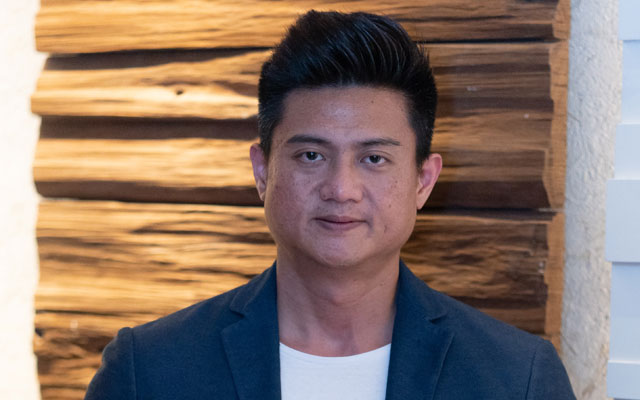
Christoph Holzapfel has been appointed as general manager of Six Senses Con Dao.

He joins the luxury resort in Vietnam from his most recent role as resort general manager at JA Manafaru in the Maldives.

His 25 years of hospitality experience includes leading teams in general management roles in Botswana, Namibia and South Africa with the Orient Express group, Abercrombie and Kent, and various independent lodges and camps. He has also worked with Anantara as general manager in Abu Dhabi, and has also been involved with several resort pre-openings.