TTG Asia
Asia/Singapore Friday, 12th June 2026
Page 1350

New year, new outlook

0

AUSTRALIA by Adelaine Ng

Asian travellers to Australia are rapidly moving away from group travel to FIT and arrive already confident about what they want to see and do, presenting new challenges as well as new opportunities for travel agents who can adapt.

Sydney. Australia


“There’s been a big change in the market segmentations coming out of Singapore, Indonesia and Malaysia,” said AOT Inbound’s general manager of global sales, Gary Paterson. “The rising middle class is driving (the FIT trend and) the awareness of what’s on offer in Australia is (high).”

Paterson says travel agents who have relied on group tours are feeling the pinch. The Chinese market alone has seen a 30 per cent drop in bookings over the past year. But opportunities exist for agents willing to explore new areas of demand and change the way they do business.

“In Asia, they don’t know how to sell FITs yet,” said Paterson. “It’s (also) one of the biggest challenges in China now because the market has turned its nose against travelling in tour groups (but) have no one to turn to with experience on putting an FIT programme together.”

As a result, many FITs are turning to technology to help their decisions. But this is where agents ahead of the game can benefit, said Flors Fluitsma, owner of boutique travel agency Orange Journeys. “Australian agents can learn from their overseas counterparts and create online platforms that link travellers looking to develop their itinerary directly with an operator in the destination,” he said.

Paterson confirms technology will be key for the FIT market, especially from China. “We work with people like Ctrip in China and 20 per cent of their business is made within 48 hours of arrival,” he noted.

With the market evolving quickly, CEO of Australian Federation of Travel Agents, Jayson Westbury, advises local travel agents to diversify their options by looking at markets outside Asia. “The US market is one to watch,” he said. “Australia is spending more (tourism) money in the US and there is so much capacity between the two countries… it could be a surprise pocket for 2019.”

2019 BUZZWORDS FITs, technology, market diversification

HONG KONG by Prudence Lui

Two new major infrastructure developments – the Hong Kong-Zhuhai-Macau Bridge and the Hong Kong link to China’s High Speed Rail (HSR) – are spurring rail, cruise and multi-destination travel in Hong Kong.
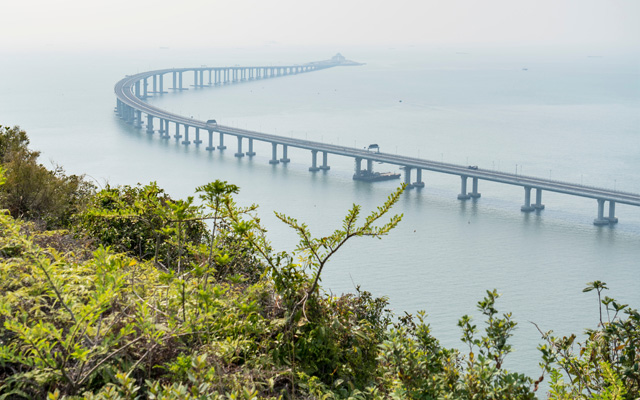
The new Hong Kong-Zhuhai-Macau Bridge


According to Gray Line Tours, director of sales, Ronald Wu, there has been a surge in visitors  arrivals and enquiries from all markets and ages since these developments last year.

“The opportunities will be in developing multi-city tours covering Hong Kong, Macau and western China such as Zhuhai and Zhongshan using the bridge, or shorthaul destinations using the train. So far, over 50 per cent of our overseas enquires request or prefer to visit Macau by the bridge, or travel to China by train rather than ferry or flight. They come from as far as Africa.”

Cruise travel is also expected to be a key drawcard in 2019 with the HSR link creating new opportunities in rail-cruise travel.

With the World Dream ship currently homeported in Kai Tak Cruise Terminal, rolling out rail-cruise products and incentives, more visitors from China’s inner cities like Chengdu started arriving in Hong Kong on rail and spending two nights in the city on a weekend cruise.

Simple Travel Services, director, Vandana  Sachdeva added that the Indian market too is warming up to cruises in Hong Kong.

In summary, she predicted tourism to benefit from “the new modes of transport – especially  the train to Shenzhen – and the opening of hotels like Ocean Park Marriott Hotel, passenger flow from India to Hong Kong, Macau and Shenzhen”.

2019 Buzzwords
Cruises, multi-city travel, rail-cruise

JAPAN by Julian Ryall

The message that Japan has much to offer beyond the well-worn Golden Route appears to have reached visitors planning their trips in 2019.

Japan, cycling tour


“We are getting a large number of enquiries from trade partners about trips that combine activities such as cycling, hiking and sea kayaking,” said Kathie Callum, agent sales manager for Oku Japan KK.

“Cycling vacations, in particular, are taking off. We have just launched our first self-guided cycling tour for next year and there has been a lot of interest,” she told TTG Asia.

She added: “Even first-timers to Japan wanting to visit Kyoto and Tokyo are telling us that they also want to get off the beaten track and see the ‘real’ Japan.”
Oku Japan has noticed a “significant uptick” in bookings from travellers from Singapore, Malaysia and Hong Kong and a more gradual increase in longhaul bookings from the US and Europe.

“Even visitors coming from regional source markets are looking more for experiences than they did in the past,” Callum said. “They come from urban areas so they want to find space and (experience culture, cuisine and more) in the countryside.”
Yoko Ogata, manager of the inbound travel division of Nippon Travel Agency, foresees that more Chinese would arrive in Japan this year in the absence of political disputes between Tokyo and Beijing.

“About 80 per cent of our clients are from other parts of Asia. China is strong, but so are Taiwan and South Korea,” she added.

Moreover, inbound agents expect to see greater demand from non-traditional source markets. “We are also anticipating a positive impact from visitors from rugby-playing nations in 2019 because a number of Japanese cities will be hosting matches in the Rugby World Cup,” Ogata said.

South Africa, New Zealand, Argentina and several other rugby nations are not regular visitors to Japan, Ogata said, but the sporting events will be a good opportunity to showcase the nation’s attractions to them.

2019 Buzzwords Cycling tours, sporting events, tours beyond Golden Route

INDIA by Rohit Kaul

The inbound sector is seeing the ascent of new segments including LGBT and adventure travellers.

Notably, India’s Supreme Court ruling decriminalising homosexuality is expected to spur interest in the destination among LGBT travellers.

According to Indian tour operators, the new ruling has given India a more welcoming image among LGBT tourists, and will go a long way to encourage them to travel more freely across the country.

“I expect 2019 will be an important year in the growth of inbound LGBT tourist in India. We expect good demand from markets like the US and Europe,” said Ravi Gosain, managing director, Erco Travels.

He stressed that many LGBT tourists choose destinations that are not only rich in culture and history, but also welcoming.

“India is now well positioned to cater to this segment. If the private and public sectors work together and market India as a preferred destination for LGBT travel, we will see a substantial number of such travellers visiting India in 2019,” he added.

As well, efforts to market the destination to adventure seekers in 2018 as part of India’s Year of Adventure Tourism is expected to continue to pay off in 2019.

“India is generally known as a tourist destination for its rich culture and heritage. But we expect adventure tourism to be an important segment in 2019 with many state tourism boards apart from India’s Ministry of Tourism looking to showcase their products and experiences in adventure travel,” said Arun Anand, managing director, Midtown Travels.

“Madhya Pradesh hosted AdventureNext – an international event specialised in adventure travel in December 2018. It was the first time that the event took place in Asia and was attended by about 200 delegates including global buyers. We expect such efforts will reap benefits in 2019.”

2019 Buzzwords LGBT, adventure travel

INDONESIA by Ade Siregar

Bali will continue to be travellers’ best-loved Indonesian destination in 2019, according to the country’s inbound tour operators, although they are increasingly seeing the old favourite as a springboard into other parts of the country.

Bali, Indonesia


Umberto Cadamuro, COO, inbound at Pacto, said: “One thing we have earned from an eventful 2018 (international conferences, sporting events and natural disasters) is that the destination branding is as strong as ever.”

Abed Frans, chairman of Association of the Indonesian Tours and Travel Agencies (ASITA) East Nusa Tenggara Chapter, remarked that the popularity of emerging destinations is growing with Bali as its hub.

“Nihiwatu, which has been named the best beach (resort) in the world, and Komodo Island are two destinations that (most) interest international travellers,” said Abed.
Meanwhile in Bali, tour operators expect China and India to still be high on the list in terms of arrivals, apart from the traditional Australia and Europe markets.

Commenting on the Chinese market, Abed said: “We have to be firm in setting price. (Many of) these travellers ask for very low prices.”

Tanto Ruwiyadi, a board member of the ASITA Bali Chapter, cited the association’s data that showed this mass market came in groups and stayed in Bali for an average of 5D4N, spending US$2,000-3,000 per visit.

Meanwhile, travellers from Europe, the US and Australia “come in small groups or as FITs, stay an average of 14-21 days and spend between US$7,500-10,000”, Tanto said.
With some tourism players expecting Bali to still face issues that come with mass tourism, agents are pinning hopes on quality over quantity when it comes to target segments.

Tanto said: “I can understand that volume is still needed to boost arrivals to other parts of the country, but we need to (start) concentrating on quality tourism for Bali.

“My dream is that we can apply a regulation like Bhutan, where travellers are required to spend a minimum of US$500-600 per day with certain minimum length of stay. This way the people of Bali can better enjoy the benefits of tourism.”

Indonesian inbound agents are also observing the rise of “3.0 travellers”. Said Pacto’s Umberto: “Mobile devices in the hands of travellers will be the single greatest influence impacting the travel experience.”

Umberto added that the “do everything” approach is no longer viable in view of the Internet competition. “Specific expertise is the answer.”

2019 Buzzwords Bali as springboard for emerging destinations, balancing growth versus quality

MALAYSIA by S Puvaneswary

Inbound agents handling regional markets are seeing increased interest in nature and soft adventure.

Raaj Navaratnaa, general manager, New Asia Holiday Tours & Travel, shared: “Five years ago, we typically served travellers in their 50s and seniors who enjoyed city tours and shopping. Now, our clients are in their 30s and 40s on average, and their interest is in nature and soft adventure activities such as birding, mountain biking, and farm or orchard visits.”

Malaysian operators are rolling out experiences spotlighting local crafts like kite making


Travellers from large cities such as Shanghai, Beijing, Seoul and Tokyo are interested in visiting rustic destinations off the beaten track and getting closer to the locals, he added.

In 2019, the agency will promote tours to Carey Island in Selangor and Kukup Island in Johor, as well as the east coast of Peninsular Malaysia to showcase local craftsmanship such as in the making of boats and wau kites.

Navaratnaa, seeing great growth potential in the education tourism sector, will develop short tours in Kuala Lumpur, Malacca and Johor for the student market from Myanmar, Laos and Cambodia.

Uzaidi Udanis, managing director, Eyes Holidays – who observes a growing interest among millennials seeking social media-worthy destinations and experiences – intends to scour Instagram and other social media platforms to see what activities and destinations are appealing before considering the viability of incorporating them into packages.

Among the up-and-coming destinations he has identified are Sky Mirror and Batu Caves in Selangor, Sipadan Island, and Seven Wells Waterfall in Langkawi.

He added that popular activities among millennials from South-east Asia include white water rafting, ATV riding, deep sea fishing, snorkelling and diving.

In 2019, Udanis will therefore develop more homestay products and soft adventure activity-based tours in Selangor, Perak, Pahang and Terengganu, alongside tours in the Kuala Lumpur gateway.

Meanwhile, European tourists are placing more emphasis on experiential tours and local interaction, and less on beach holidays, shared Manfred Kurz, managing director, Diethelm Travel Malaysia.

He said: “(Rather than sightseeing from a tour bus), they are more keen to interact with locals and learn about the local culture. Homestay programmes have  become more popular… We will develop more of such programmes in 2019 in both East and West Malaysia, in addition to walking and cycling tours.”

2019 Buzzwords Soft adventure, local interaction, social media-worthy experiences


PHILIPPINES by Rosa Ocampo

Beaches will remain the Philippines’ main attraction in 2019.

El Nido, as well as various beaches in Cebu and Negros, are expected to continue holding sway over South Koreans, Chinese and Americans. More high-end travellers from Israel are also choosing beach holidays in the Philippines.

Boracay, Philippines


New beach destinations are also being discovered, including those in the Visayas and the Bicol region, according to Jojo Clemente, president of Rajah Tours.

Amiable Intertours owner Bernadette de Leon foresees that Sumilon, Badian and Mactan in Cebu would retain their popularity, especially with Cebu’s new international airport terminal, as well as Panglao in Bohol, and Coron and El Nido in Palawan.

Travel-savvy millennials are fuelling demand for activities in emerging tourism hotspots. They translate to volume, have the means to travel in style or on backpack, and are spirited enough to try something new.

As well, curious travellers are hungry for food, drinks and nightlife experiences in metro Manila including Poblacion in Makati, Bonifacio Global City in Taguig, The Commons in Pasig, and other hubs that have become destinations in themselves.

Flip Trip Travels, which operates online platform Tripkada, is seeing more millennial clients on the quest for inclusive, sustainable and new tourism destinations. They join trips organised by fellow travellers and split the bill, and sometimes participate in do-gooding.

Sharp Travel tour operations manager Benjie Bernal expects more cruise ships to dock in Philippine ports in 2019.

His agency is the groundhandler for a growing number of small expedition ships carrying 150-200 pax, moving from one port to another, including La Union, Batanes, Palaui Island, Kalanggaman in Leyte, and Calaguas in Camarines Norte.

Surprisingly for Bernal, there are classic cruise ships – bigger ones with over 1,000 pax – scheduled to visit the Philippines next year, with itineraries including Boracay, Manila, Palawan and more.

2019 Buzzwords Beaches, cruises, sustainable tourism

SINGAPORE by Pamela Chow

As Singapore’s Passion Made Possible campaign launches globally, inbound operators are taking advantage of the international drive to develop more intimate, authentic and innovative tours.
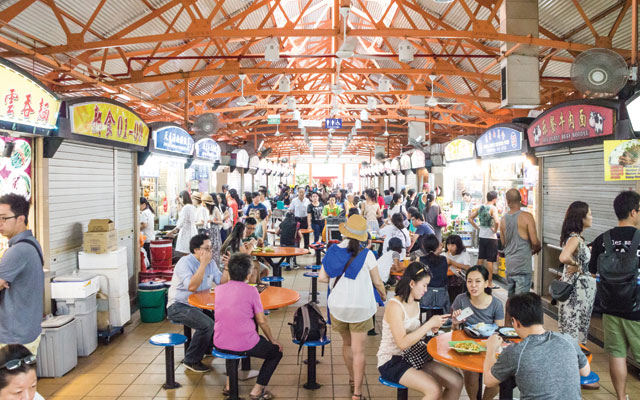
A hawker centre in Singapore


Daniel Tan, founder, Let’s Go Tour Singapore, said: “Passion Made Possible has given us a lot of exposure and leverage. We’ve been able to reach operators overseas and brand ourselves.

“Given the popularity of our Historical Singapore tour, we will be expanding on themed tours. We are curating a tour that looks at Singapore through the eyes of an early immigrant – for example, from China in the 1920s.”

Meanwhile, Singapore’s burgeoning culinary scene is spurring greater creativity in food-themed tours. In 2019, the country will become the first Asian host of the World’s 50 Best Restaurants Awards, and will see more conversations on its nomination for inscription into UNESCO’s Representative List of the Intangible Cultural Heritage of Humanity.

This has encouraged culinary tour company Wok ‘n’ Stroll to plan more programmes and tours with hawkers and restaurateurs, while other agencies like Let’s Go Tour Singapore and A+B Edu Tours and Travel have been rolling out more in-depth experiences such as fresh market shopping and behind-the-scenes coffee roaster visits.

The growing awareness of Singapore’s gastronomy scene has cultivated interest in not just consumption, but also the production of local cuisine, observed Angie Lau, deputy director inbound, A+B Edu Tours and Travel.

“We bring people inside bakeries and let them try their hand at making their own curry puffs. We also go to traditional coffee roasters and look behind the scenes at how Singaporean coffee is made at our coffee shops,” said Lau.

2019 Buzzwords Themed tours, gastronomy, local cuisine

THAILAND by Chadamas Chinmaneevong

With travellers now able to book air tickets, accommodation and activities online, Thai tour operators will have to work on differentiating themselves to win quality clients, in addition to developing online strategies as well as closer collaboration with OTAs, trade members opined.

Pornthip Hirunkate, managing director of Destination Asia Thailand, said amid booming online travel businesses, travel agents must create tour programmes that clients cannot find and buy online.

“We must offer more than visits to beautiful places and impressive services. New and interesting experiences are key because the majority of Thailand’s inbound tourists are repeat visitors,” Pornthip said.
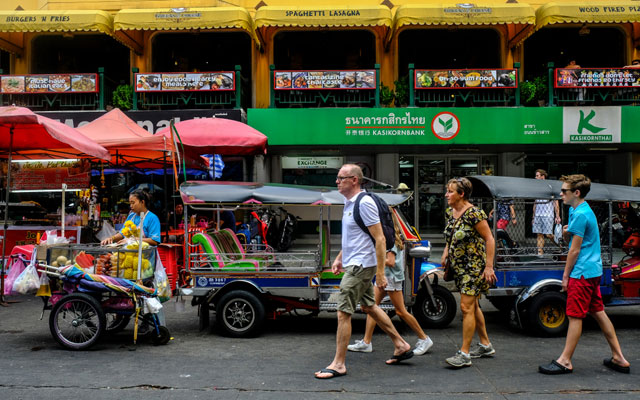
Tourists walking along Khao San Road in Bangkok


She added that many agents are working with business partners in neighbouring countries as travellers want to visit more than one country.

Besides, Pornthip cautioned operators not to put all their eggs in one basket. “Everyone should (work towards) reducing risks because nobody knows what will happen in the future”, she said.

For example, many tour companies in Phuket are out of business after the number of Chinese arrivals plunged following the boat accident last July.

2019 Buzzwords Creative tours, online bookings, diversification

VIETNAM by Marissa Carruthers

Vietnam is expected to attract more longhaul and luxury travellers as more destinations and products emerge in the country.

Alexander Leven, general manager of Asian Trails Vietnam, said experienced tour operators are increasingly shifting their focus to the country’s far north in search of unspoilt destinations, as the majority of secondary destinations are now overrun by regional tourists.
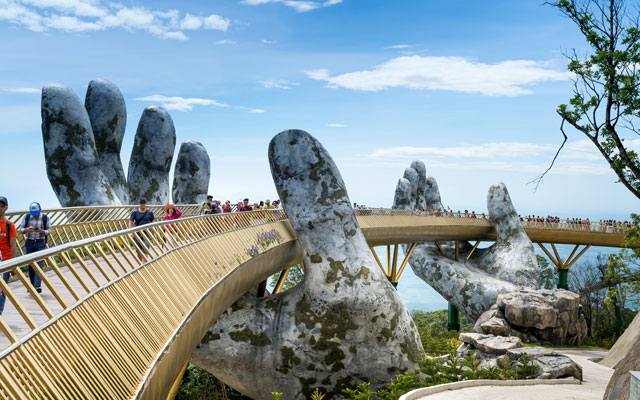
 

This is also a trend that Jeff Redl, managing director of Diethelm Travel Vietnam, predicts will grow within the Western market.

“Western travellers are looking at avoiding crowded areas with too many tourists,” he said. “By developing new areas with better infrastructure, the country is able to offer off-the-beaten-track itineraries for curious travellers.”

He noted a shift in demand from the classic north to south itinerary, with more visitors spending more time in the north during the summer months, or combining south Vietnam with Cambodia in winter.

Added Redl: “They are understanding Vietnam should be considered horizontally, not vertically, and needs several visits (across different) times of the year, and should be supported by the expertise of local tour operators.”

Another segment expected to flourish in 2019 is the luxury market, according to Pham Ha, CEO of Luxury Travel Vietnam. Contributing factors include the addition of new boutique cruises, hotels and tours.

Said Ha: “(There is) a fast-growing list of modern luxury and spa destinations and recently opened golf courses, and the launch of sea planes, helicopters, luxury yacht and river cruise services ensure stress-free journeys away from busy roads.”
Luxury Travel will actively target this market by launching new cruises, expanding to five languages, opening more sales offices in target markets and attending more tradeshows.

2019 Buzzwords Luxury travel, tertiary destinations, in-depth experiences

PAL’s new Delhi-Manila service the ‘missing link’ to spur Indian arrivals

0

Philippine Airlines’ (PAL) return to India with four-times-weekly flights between Manila and Delhi starting April could be the “missing link” to stimulate arrivals from this growing source market.

The Philippine national carrier stopped flying Manila-Delhi with costly stopovers in Bangkok five years ago, and since then travel agents in both India and the Philippines have appealed repeatedly with airlines, including Cebu Pacific and AirAsia Philippines, to resume the connection.

Philippine trade players have for years been appealing to airlines to launch direct flights from India

Boris Travel and Tours general manager Irene Maliwanag hence viewed PAL’s Manila-Delhi service as a big win for the travel trade which consistently clamoured to restore the links between the two countries.

She expected PAL’s nonstop service to boost inbound further as current flight options linking both countries entail stopovers, including Cathay Pacific via Hong Kong preferred by her budget-conscious clients and the more expensive Singapore Airlines via the Lion City.

Welcoming the new direct flight, Simon Ang, managing director – operations at Celebrate Life TLC, pointed out that India has already surpassed Germany as the Philippines’ 12th biggest market. In January-October 2018, Indian arrivals grew 14.4 per cent year-on-year to 101,622.

PAL president and COO Jaime Bautista added that returning to India, and launching new routes to Hanoi and Phnom Penh, is meant to carry travellers to these countries from the US and Canada where it has 43 weekly flights to six destinations.

“We will leverage Manila’s geographical location as an ideal stopover point for people flying to South-east and South Asia from the East and West Coasts of North America,” Bautista explained.

But while the Delhi flight is expected to boost travel to the Philippines, PAL’s four-times weekly Manila-Hanoi flights starting March 31 and five-times weekly Manila-Phnom Penh flights beginning April are more likely to benefit outbound travel to these two new destinations.

Ang explained that Vietnam and Cambodia don’t have a huge travelling population but will have “surefire” benefits for Philippine outbound travel. In January-October 2018, inbound from Cambodia dropped 7.6 per cent to 3,470 while those from Vietnam fared a lot better with a 32.6 per cent growth to 44,143.

Agreeing, Great Sights Travel and Tours managing director Paul So said that the Philippines is also challenged in getting tour guides that speak Cambodian and Vietnamese to serve both feeder markets.

So underscored the need to make easier the visa requirements for Indians – a frequent request of travellers and travel agencies alike – and address the scarcity of three- and four-star accommodations for these travellers.

PAL’s new Delhi-Manila service the ‘missing link’ to spur Indian arrivals

0

Philippine Airlines’ (PAL) return to India with four-times-weekly flights between Manila and Delhi starting April could be the “missing link” to stimulate arrivals from this growing source market.

The Philippine national carrier stopped flying Manila-Delhi with costly stopovers in Bangkok five years ago, and since then travel agents in both India and the Philippines have appealed repeatedly with airlines, including Cebu Pacific and AirAsia Philippines, to resume the connection.

Philippine trade players have for years been appealing to airlines to launch direct flights from India

Boris Travel and Tours general manager Irene Maliwanag hence viewed PAL’s Manila-Delhi service as a big win for the travel trade which consistently clamoured to restore the links between the two countries.

She expected PAL’s nonstop service to boost inbound further as current flight options linking both countries entail stopovers, including Cathay Pacific via Hong Kong preferred by her budget-conscious clients and the more expensive Singapore Airlines via the Lion City.

Welcoming the new direct flight, Simon Ang, managing director – operations at Celebrate Life TLC, pointed out that India has already surpassed Germany as the Philippines’ 12th biggest market. In January-October 2018, Indian arrivals grew 14.4 per cent year-on-year to 101,622.

PAL president and COO Jaime Bautista added that returning to India, and launching new routes to Hanoi and Phnom Penh, is meant to carry travellers to these countries from the US and Canada where it has 43 weekly flights to six destinations.

“We will leverage Manila’s geographical location as an ideal stopover point for people flying to South-east and South Asia from the East and West Coasts of North America,” Bautista explained.

But while the Delhi flight is expected to boost travel to the Philippines, PAL’s four-times weekly Manila-Hanoi flights starting March 31 and five-times weekly Manila-Phnom Penh flights beginning April are more likely to benefit outbound travel to these two new destinations.

Ang explained that Vietnam and Cambodia don’t have a huge travelling population but will have “surefire” benefits for Philippine outbound travel. In January-October 2018, inbound from Cambodia dropped 7.6 per cent to 3,470 while those from Vietnam fared a lot better with a 32.6 per cent growth to 44,143.

Agreeing, Great Sights Travel and Tours managing director Paul So said that the Philippines is also challenged in getting tour guides that speak Cambodian and Vietnamese to serve both feeder markets.

So underscored the need to make easier the visa requirements for Indians – a frequent request of travellers and travel agencies alike – and address the scarcity of three- and four-star accommodations for these travellers.

PAL’s new Delhi-Manila service the ‘missing link’ to spur Indian arrivals

0

Philippine Airlines’ (PAL) return to India with four-times-weekly flights between Manila and Delhi starting April could be the “missing link” to stimulate arrivals from this growing source market.

The Philippine national carrier stopped flying Manila-Delhi with costly stopovers in Bangkok five years ago, and since then travel agents in both India and the Philippines have appealed repeatedly with airlines, including Cebu Pacific and AirAsia Philippines, to resume the connection.

Philippine trade players have for years been appealing to airlines to launch direct flights from India

Boris Travel and Tours general manager Irene Maliwanag hence viewed PAL’s Manila-Delhi service as a big win for the travel trade which consistently clamoured to restore the links between the two countries.

She expected PAL’s nonstop service to boost inbound further as current flight options linking both countries entail stopovers, including Cathay Pacific via Hong Kong preferred by her budget-conscious clients and the more expensive Singapore Airlines via the Lion City.

Welcoming the new direct flight, Simon Ang, managing director – operations at Celebrate Life TLC, pointed out that India has already surpassed Germany as the Philippines’ 12th biggest market. In January-October 2018, Indian arrivals grew 14.4 per cent year-on-year to 101,622.

PAL president and COO Jaime Bautista added that returning to India, and launching new routes to Hanoi and Phnom Penh, is meant to carry travellers to these countries from the US and Canada where it has 43 weekly flights to six destinations.

“We will leverage Manila’s geographical location as an ideal stopover point for people flying to South-east and South Asia from the East and West Coasts of North America,” Bautista explained.

But while the Delhi flight is expected to boost travel to the Philippines, PAL’s four-times weekly Manila-Hanoi flights starting March 31 and five-times weekly Manila-Phnom Penh flights beginning April are more likely to benefit outbound travel to these two new destinations.

Ang explained that Vietnam and Cambodia don’t have a huge travelling population but will have “surefire” benefits for Philippine outbound travel. In January-October 2018, inbound from Cambodia dropped 7.6 per cent to 3,470 while those from Vietnam fared a lot better with a 32.6 per cent growth to 44,143.

Agreeing, Great Sights Travel and Tours managing director Paul So said that the Philippines is also challenged in getting tour guides that speak Cambodian and Vietnamese to serve both feeder markets.

So underscored the need to make easier the visa requirements for Indians – a frequent request of travellers and travel agencies alike – and address the scarcity of three- and four-star accommodations for these travellers.

PAL’s new Delhi-Manila service the ‘missing link’ to spur Indian arrivals

0
Philippines' outbound prospects are suffering from a weak peso, rising fares, and inflation

Philippine Airlines’ (PAL) return to India with four-times-weekly flights between Manila and Delhi starting April could be the “missing link” to stimulate arrivals from this growing source market.

The Philippine national carrier stopped flying Manila-Delhi with costly stopovers in Bangkok five years ago, and since then travel agents in both India and the Philippines have appealed repeatedly with airlines, including Cebu Pacific and AirAsia Philippines, to resume the connection.

Philippine trade players have for years been appealing to airlines to launch direct flights from India

Boris Travel and Tours general manager Irene Maliwanag hence viewed PAL’s Manila-Delhi service as a big win for the travel trade which consistently clamoured to restore the links between the two countries.

She expected PAL’s nonstop service to boost inbound further as current flight options linking both countries entail stopovers, including Cathay Pacific via Hong Kong preferred by her budget-conscious clients and the more expensive Singapore Airlines via the Lion City.

Welcoming the new direct flight, Simon Ang, managing director – operations at Celebrate Life TLC, pointed out that India has already surpassed Germany as the Philippines’ 12th biggest market. In January-October 2018, Indian arrivals grew 14.4 per cent year-on-year to 101,622.

PAL president and COO Jaime Bautista added that returning to India, and launching new routes to Hanoi and Phnom Penh, is meant to carry travellers to these countries from the US and Canada where it has 43 weekly flights to six destinations.

“We will leverage Manila’s geographical location as an ideal stopover point for people flying to South-east and South Asia from the East and West Coasts of North America,” Bautista explained.

But while the Delhi flight is expected to boost travel to the Philippines, PAL’s four-times weekly Manila-Hanoi flights starting March 31 and five-times weekly Manila-Phnom Penh flights beginning April are more likely to benefit outbound travel to these two new destinations.

Ang explained that Vietnam and Cambodia don’t have a huge travelling population but will have “surefire” benefits for Philippine outbound travel. In January-October 2018, inbound from Cambodia dropped 7.6 per cent to 3,470 while those from Vietnam fared a lot better with a 32.6 per cent growth to 44,143.

Agreeing, Great Sights Travel and Tours managing director Paul So said that the Philippines is also challenged in getting tour guides that speak Cambodian and Vietnamese to serve both feeder markets.

So underscored the need to make easier the visa requirements for Indians – a frequent request of travellers and travel agencies alike – and address the scarcity of three- and four-star accommodations for these travellers.

World’s first Monopoly-themed attraction to open in Hong Kong’s Peak

0

The world’s first Monopoly Dreams themed attraction is set to open in Hong Kong come 3Q2019.

Opening at The Peak, the “king of property” in the Hong Kong edition of the popular board game, Monopoly Dreams will sprawl over 1,858m2 of indoor and outdoor space, and feature augmented reality, hologram and 4D interactive game technology.

This will be the world’s first Monopoly-themed attraction

Interactive attractions will be based on iconic Monopoly elements including the Bank, Water Supply, Jail, Title Deed cards, Chance cards and Community Chest cards.

“Our partnership with Monopoly Dreams allows Hasbro to further extend the reach of Monopoly to location-based entertainment sector and provide families and tourists with highly immersive entertainment experiences,” said Casey Collins, general manager and senior vice president, entertainment & licensing of Hasbro.

Gary Chan, COO of Monopoly Dreams, said that the company is targeting for the attraction to accommodate over 700,000 visitors.

Oceania Cruises orders two 1,200-pax ships for new Allura class

0
The new ships will have a similar capacity as the 1,250-guest Riviera

Oceania Cruises, the upper-premium subsidiary of Norwegian Cruise Line Holdings, has ordered two ships under its new Allura-Class, scheduled to be delivered in 2022 and 2025 respectively.

The contract price for each of the two vessels is approximately 575 million euros (US$664 million) per ship.

The new ships will have a similar capacity as the 1,250-guest Riviera

The two 67,000 gross ton ships will each accommodate about 1,200 guests. This new class of mid-size cruise vessels will retain the design elements and signature amenities of Oceania’s Marina and Riviera ships, while affording guests an additional level of comfort, convenience and luxury amenities, the cruise line said in a statement.

The expansion of Oceania Cruises’ fleet is expected to” meet the strong demand for upscale culinary- and destination-focused cruise vacations around the globe”, said Frank Del Rio, president and CEO of Norwegian Cruise Line Holdings.

Oceania Cruises currently has six ships, which carry 684 or 1,250 guests and call at more than 450 ports across Europe, Alaska, Asia, Africa, Australia, New Zealand, New England-Canada, Bermuda, the Caribbean, Panama Canal, Tahiti and the South Pacific.

APAC leads growth as global air travel rises 5.9% in 2018

0
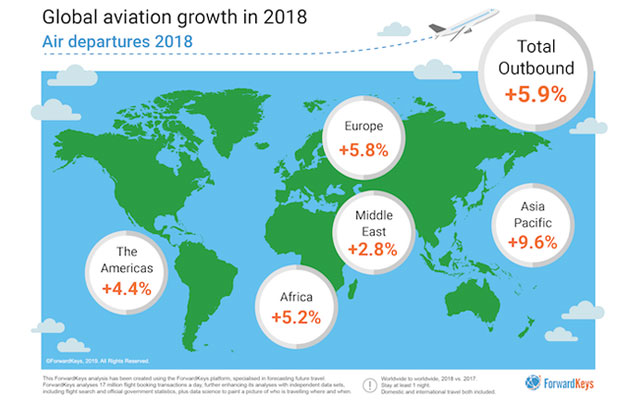
Overall, global air travel grew by a very healthy 5.9% in 2018

Global air travel grew by 5.9% in 2018, with Asia-Pacific seeing the strongest increase, according to data published by ForwardKeys.

While air travel grew in nearly every part of the world, there were substantial regional variations. Growth in Asia-Pacific, at 9.6%, was more than three times stronger than the weakest performer, the Middle East, where flight departures grew by 2.8%.

Overall, global air travel grew by a very healthy 5.9% in 2018

The second-best performing region was Europe, where air travel grew by 5.8%. Flight departures from Africa grew by 5.2% and from the Americas by 4.4%.

The growth in Asia-Pacific was driven primarily by increasing travel within the region. Domestic travel was up 14% and departures between Asia-Pacific countries were up 9.6%; whereas intercontinental departures were up 4.5%.

Olivier Ponti, ForwardKeys, vice president insights, said: “The growth in international air traffic within Asia-Pacific is a direct consequence of increasing disposable incomes, urbanisation and more dynamic lifestyles. As the middle classes of large urban centres – especially in China – have more money in their pockets and a growing appetite for travel, they fly more often, initially within their own continent, and then further afield. They have become a major driver of leisure and business travel worldwide.”

European air travel grew at virtually the same rate as the global average, but international travel within Europe, which was up 7%, grew faster than trips to other regions of the world, which was up 2.8% – a sign of the good shape of the European economy. The Middle East registered the highest growth of intercontinental departures from Europe, at 5.8%, helped by the easing of security concerns regarding Egypt.

ForwardKeys’ summary of aviation growth in 2018

By contrast, the trend in the Americas was in the opposite direction. There, the growth in travel to other continents, at 7.1%, outstripped the growth in domestic air travel, which grew by 4.0%, and the growth in travel between countries, which grew by 3.2%. Assisted by several new routes such as New York to Nairobi, Africa was the fastest-growing destination for travellers departing from the Americas, up 8.5%.

In Africa, growth in domestic air travel was negative, down by 0.9%, but growth in international air travel to other African countries was strong, up 6.6%, and growth in travel to other continents, where Africa’s main trading partners are located, was stronger still, up 7.8%. Highlights included departures from Africa to Europe (+9.3%), Asia-Pacific (+7.7%), and the Middle East (+6.9%).

Despite the ongoing blockade of Qatar, which started in June 2017 and continues to hamper regional international travel, the Middle East registered a 2.8% increase in air traffic. The decline of intra-regional travel was compensated by double-digit growth in domestic travel, up 10.9%, and a 2.5% increase in departures to other regions, with Europe benefitting the most from this trend, up 8.3%.

New hotels: La Seine Hotel by Burasari, Fairfield by Marriott Hotel Busan and more

0

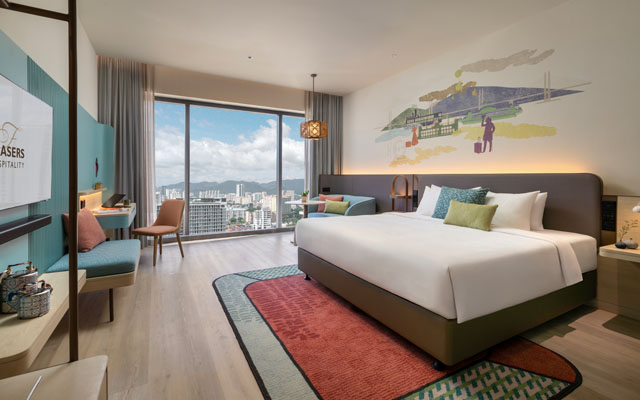
La Seine Hotel by Burasari, Laos
The five-star property has opened on the river promenade in Vientiane, Laos’ capital city. The boutique hotel offers 37 rooms and suites, and boasts bold colour palettes and Art Deco-inspired interiors. All rooms come with bath amenities and an in-room espresso machine. The hotel has two F&B options, a rooftop bar and The Red Rose Restaurant, and offers a happy hour special on selected wines.

Fairfield by Marriott Hotel Busan, South Korea
Marriott has opened a 225-room Fairfield by Marriott-branded property in Haeundae, a beach resort destination in eastern Busan. There are 224 guestrooms, one of which is a 45m2 family room that includes a separate living room. All guestrooms are furnished with 49-inch flatscreen TVs, ergonomic desks and chairs, minibars and safety deposit boxes. Facilities include a restaurant, fitness centre, and for business travellers, workspaces in the lobby, as well as a meeting room that can hold up to 30 people.

Novotel Vijayawada Varun, India
AccorHotels is the first international hotel brand to set up shop in Vijayawada, Andhra Pradesh’s commercial centre. The property has 194 rooms, 25 apartments and 12 suites, alongside recreational facilities such as a rooftop swimming pool, fitness centre, jogging track and a spa. There are also four dining options on-site ranging from the all-day dining restaurant to the Chinese kitchen, as well as a 930m2 banquet hall.

Hyatt Regency Bali, Indonesia
Previously known as the Bali Hyatt, the nine-hectare property has opened after five years of extensive renovations. It now features 363 keys, which includes 39 one-bedroom suites that come with a private balcony, separate living room, and an additional powder room with a shower. Guests who book suites are also offered access to the Regency Club Lounge.

Amenities on-site include three F&B venues, three swimming pools, a 24-hour fitness centre, and the Shankha Spa complete with 10 spa suites. Meanwhile, the hotel’s meeting facilities comprise a 468m2 ballroom that can accommodate up to 600 guests cocktail-style, an outdoor courtyard that can hold up to 120 attendees, and four multifunctional meeting spaces ranging from 92m2 to 324m2 in size.

DoubleTree by Hilton Shanghai Nanxiang, China
A 313-key DoubleTree by Hilton has risen in the up-and-coming CBD in Shanghai Jiading, the only international hotel in the town of Nanxiang. Aside from the four F&B options on-site, recreational facilities include an indoor swimming pool, sauna and steam rooms, spa and 24-hour fitness centre. Meeting planners will be able to avail the hotel’s 1,300m2 of event space across 12 function rooms, among which is a 750m2 grand ballroom which can accommodate up to 850.

Budget Car Rental returns to original GSA in Japan

0

Budget Car Rental has once again named Jeiba Corporation as its General Sales Agent (GSA) in Japan.

Jeiba was the company’s original GSA in Japan of 13 years, from 1996 to 2009.

As Budget Car Rental’s GSA, Jeiba Corporation will be responsible for delivering value through customer service, and promoting to general outbound travellers, including business customers, with the aim of being the go-to car rental company for Japanese travellers.

Mark Servodidio, president, international, Avis Budget Group, said: “Japan is an important market for Budget. We know Japanese customers enjoy self-drive road trips and authentic travel experiences, both domestically and when visiting other destinations including the US, Hawaii, Europe and closer to home in Asia.”