Jason Allen Villarino has been appointed general manager of Keemala boutique resort in Phuket.
He was most recently general manager of Silavadee Pool Spa Resort on Koh Samui. Prior to that, Villarino has experience working in the Maldives at Soneva Gili by Six Senses, and in Thailand at Tubkaak Boutique Resort, Krabi and Evason Hideaway & Six Senses Spa, Hua Hin.
Labuan Bajo, one of the 10 New Balis, is the gateway to Komodo National Park (pictured)
The Indonesia Ministry of Environment and Forestry (KLHK) is forming an integrated team to study the possible closure of the Komodo Island.
The decision was made during last week’s meeting of the director general of Natural Resources and Ecosystem Conservation of the Ministry of Environment and Forestry (KLHK), the East Nusa Tenggara Provincial Government and the West Manggarai Regency Government, following widespread concern in the travel industry when the regional government announced its intention to close the park for one year.
Labuan Bajo, one of the 10 New Balis, is the gateway to Komodo National Park (pictured)
The team consisting of local government, KLHK, tourism stakeholders, Indonesian Institute of Sciences, the Ministry of Tourism and civil society organisations will work together until July 2019, and provide recommendations to KLHK and the Directorate General of Conservation of Natural Resources and Ecosystem in August 2019.
Until the integrated team completes its research, tour operators can still sell packages to Komodo Island. However, tourism activities, such as trekking, snorkelling and diving will come under tightened regulations to ensure the sustainability of the park’s ecosystem.
Wiratno, director general of Natural Resources Conservation and Ecosystems, stated that all parties were in agreement that Komodo National Park is a world heritage site that must be managed with prudence.
“Governance needs to be improved, especially in relation to safeguarding and protecting Komodo animals, including the availability of prey, especially deer,” he explained.
In official press statement, Wiratno said that should the integrated team’s recommendations lead to closure, only the Komodo Island will be affected. The closure would not take place before January 2020.
“The closure plan is only for Komodo Island, not all of Komodo National Park. Snorkelling at almost 43 good dive spots can still be done,” Wiratno said.
In fact, Komodo dragons – one of the biggest sell-points of the destination – are not only found on Komodo Island but also on the surrounding islands.
Travellers can still see the famed creatures on Rinca Island, Padar Island, Gili Motang and Nusa Kode, as well as the mainland of Flores in the Riung Island Nature Park 17 in Ngada Regency.
Meanwhile, the assessment of the entrance tariff will also be immediately coordinated with the Ministry of Finance, the Ministry of Tourism, tour operators and the Association of Indonesian Tours and Travel Agencies, added Wiratno.
The visitor management system, information centre, and institutional strengthening of communities for conservation and the economy will also be thoroughly regulated.
Opportunities for cooperation in strengthening the function and licensing of natural tourism services and natural tourism facilities can also be explored according to applicable regulations and laws.
“In the coordination meeting it was also decided that the arrangement of the ship’s entrance lane and the entrance ticket sales to the Komodo National Park would be set through one door, namely Labuan Bajo Port,” Wiratno said.
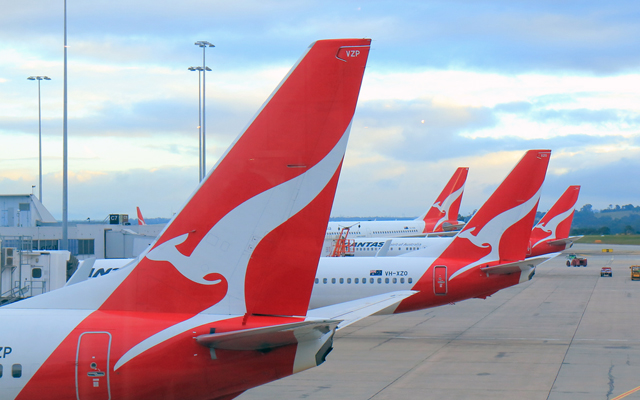
With the signing of separate distribution agreements with major GDS players, Qantas will make available its new pathway designed to deliver more personalised and seamless experiences to customers via agent booking channels, set to come into effect on August 1.
Amadeus sellers that sign up to the Qantas Channel can continue to access the airline’s wide range of fares and products available for agents – including future NDC content – while enjoying the efficiencies and servicing capabilities of the Amadeus system when booking, changing or cancelling trips.
Amadeus and Sabre agents will be able to sign up to the Qantas channel
They will also be able to access Qantas fares without a channel fee.
Sabre-powered travel agencies who sign up to the Qantas Channel will enjoy a wider range of content from the airline, and be able to leverage up-to-date information to create rich, personalised offers for customers.
Qantas chief customer officer Vanessa Hudson said the airline was pleased to be working with the two GDSs to make the Qantas Channel available to their agents globally.
“The digital environment has changed the way we need to work with our trade partners, and our new technology paired with this new Qantas Channel agreement will support us on the journey to delivering our vision for our mutual customers. We’re excited to continue to innovate with our trade partners and share in the benefits of this new technology.”
Along with the Qantas Channel agreement, Sabre also announced the Australian airline will be joining its Beyond NDC Program as a strategic partner.
The airline is already part of Amadeus’ NDC-X programme, having joined last June with the aim of connecting the Qantas Distribution Platform (QDP) to Amadeus.
“Partnerships are the foundation of progress. As Qantas’ IT and distribution provider, we are proud to support the airline’s strategy to deliver increasing personalised experiences across all touchpoints,” said Cyril Tetaz, executive vice president, airlines, Asia-Pacific, Amadeus.
In 2018, Qantas renewed its IT and distribution agreement with Amadeus, and completed a major digital redesign of its online booking process in collaboration with the GDS, in order to provide customers with a more personalised and intuitive digital experience.
Update [February 11, 15:23]: Travelport has reached out to highlight that it has also signed with Qantas to give its agents access to content sourced from the NDC-enabled Qantas Distribution Platform. In a press release, Travelport’s managing director Australia and New Zealand, Scott Barber, said: “We are delighted to be supporting Qantas as it develops its new Channel and introduces the NDC standard. As the first GDS operator with an NDC booking solution available to a small group of customers, we have proven our capability to deliver this new standard.”
The local travel trade is calling for the reinstatement of MASwings’ Kota Kinabalu-Sandakan flights in Sabah, saying Sandakan was an easier sell when the service was operated by the Malaysia Airlines (MAS) subsidiary which offered better flight timings and interlining conveniences.
MASwings had stopped operating Kota Kinabalu-Sandakan effective January 1, although this route is also operated by AirAsia on a four-times weekly basis and twice daily by MAS via Tawau.
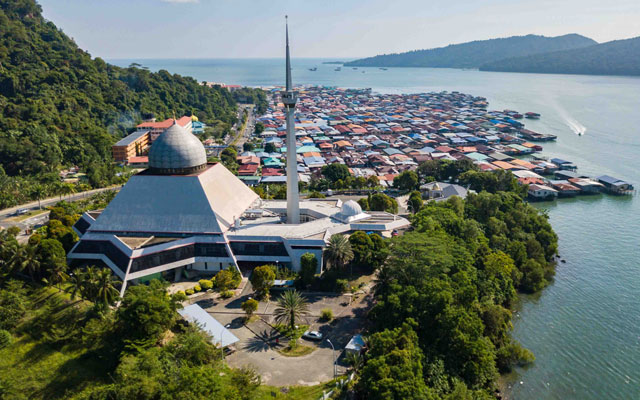
Inbound operators say that Sandakan (pictured) is a harder sell now with the cessation of MASwings flights
President of the Malaysian Association of Tour and Travel Agents (MATTA), KL Tan, shared: “Inbound agents are facing difficulties promoting Sandakan day excursion tour packages because AirAsia’s flight AK6499, from Sandakan to Kota Kinabalu, departing on 1805 hours, does not operate on Tuesdays, Thursdays and Saturdays.”
Tan pointed out that this is AirAsia’s latest flight departing from Sandakan to the Sabah state capital, and should this flight be full, tourists will have to take an earlier flight that departs at 14.45 (AK6495), which means they will have to miss half a day’s tour in Sandakan.
He continued: “Furthermore, tourists connecting back to Kuala Lumpur for their overseas connections will not be able to check their luggage all the way through as MAS and AirAsia do not share the same code and passenger privileges in the event of flight retiming.”
Diethelm Travel Malaysia’s managing director, Manfred Kurz, agreed, saying that Sandakan has become less attractive as a day trip destination since MASwings stopped serving the Kota Kinabalu-Sandakan route.
He shared: “We used to promote Sepilok Orang Utan Rehabilitation Centre and a city tour of Sandakan as part of a package. But with the current flight schedules we removed the city tour portion which makes it very expensive to travel all the way to Sandakan, just to see the orangutan.
“For our business, Sandakan is the second most important hub in Sabah after Kota Kinabalu as it is also the gateway to see wildlife in Kinabatangan.
“Reintroducing MASwings, with the same flight timings as previously, will be the perfect solution as it allows a full day tour in Sandakan and tourists with connecting flights on MAS and its partners will be able to check their baggage all the way through.”
The Kota Kinabalu-Sandakan route is among six routes in Sabah and Sarawak that MASwings cancelled effective January 1, 2019 to make way for commercial airlines as based on the new Public Service Obligations 2019 Agreement, enforced after the Malaysian Aviation Commission had conducted a study on rural air services in Sabah and Sarawak.
The study found that the six routes, operated by MASwings as well as commercial airlines such as MAS and AirAsia, had a high load factor of up to 86 per cent, which made it profitable for commercial airlines to continue flying these routes.
A decision was then made for MASwings to cease operations on these routes which the government will no longer subsidise. The routes are: Kota Kinabalu-Sandakan; Kota Kinabalu-Tawau; Kota Kinabalu-Miri; Kuching-Miri; Kuching-Kota Kinabalu and Kuching-Sibu.
The two new classes in Economy. Photo credit: Garuda Indonesia Facebook
Garuda Indonesia has introduced two new options in the economy class for passengers “to rest more comfortably” during their longhaul flights, as part of the carrier’s strategy to roll out innovative products amid tight competition.
These two options – the Economy Sleeping Comfort (ESCort) and Premium Seats – are only available on the airline’s London-Denpasar and Jakarta-London routes.
The two new classes in Economy. Photo credit: Garuda Indonesia Facebook
ESCort seats allow passengers to lie down during the longhaul flight on one economy row, with a mattress, pillow, duvet and blanket provided. Other benefits in the ticket class include free baggage allowance of up to 40kg, business class meal and amenity kit, priority baggage handling, Wi-Fi voucher worth US$5 and mileage accrual at 200 per cent.
Meanwhile, premium economy passengers will enjoy more seat space as one adjacent seat would be cleared. A duvet, free baggage allowance of up to 40kg, business class meal and amenity kit, priority baggage handling, Wi-Fi voucher worth US$5, and mileage accrual at 150 per cent will also be included.
The Jakarta Post has reported that there will be around 24 seats available for ESCort, with prices starting from Rp28 million (US$2,000), and 30 seats available for premium economy, with prices starting from Rp21 million.
The Post added that the services are now available for booking via all Garuda Indonesia’s direct channels, including its website, mobile app and call centre since January 26.
Tours and activities are labelled with different icons (in green) to indicate responsible travel categories they excel at
With its new responsible travel rating system, Exo Travel says it is providing an important and transparent way for agents to assess, view, filter and select tours and experiences from a responsible travel perspective.
When designing holidays for guests, agents can now assess the benefits of an experience or short tour based on the icons displayed on the list pages of tours and experiences. Those that were found to be responsible in one or more of these five categories have been given a special denotation to indicate which category they excel at.
Tours and activities are labelled with icons (in green) to indicate the different responsible travel categories they do well in
The five categories are:
– Carbon friendly – Involves transportation that avoids carbon emissions or compensates carbon emissions through Exo’s voluntary carbon-offset strategy.
– Cultural knowledge – Emphasis on authentic and respectful exchange of cultural knowledge with local people.
– Social impact – Supports the purchases of local products and services that directly benefits social businesses
– Make a difference – includes direct financial donations benefitting non-profit organisations that aid disadvantaged members of society, promote local arts and culture or protect the environment.
– Local benefits – No less than 30 per cent of the cost of the tour is given directly back to local people to improve living conditions.
“By guiding guests into responsible choices, together we can improve the livelihoods of local people, protect their natural and cultural heritage and support local institutions committed to positive change – all while providing guests with unforgettable, feel-good experiences they will love and enjoy,” says Ruben Derksen, director of product and marketing at Exo Travel.
X Factor UK winner will perform at the fundraiser in May
The Phuket Hotels Association (PHA) will host its 2019 benefit gala (PHAB) on May 3 to raise funds for more than 10 fully-paid hospitality scholarships and traineeships for local residents.
The PHAB 003 James Bond-themed “Shaken Not Stirred” event will take place at the Latitude Marquee, Laguna Phuket from 19.00 until midnight.
Last year, the PHAB 2 gala dinner drew 350 guests and raised over four million baht (US$130,000) for the scholarship fund.
X Factor UK winner will perform at the fundraiser in May
This year’s event is expected to welcome up to 400 guests with an evening of cocktails, dining and entertainment – including a silent auction showcasing prizes such as a luxury yacht cruise on the Born Free Yacht Cruises by Le Meridien Phuket as well as three-night stays in a number of Accor, Anantara, Hyatt, Dream Group and Marriott hotels worldwide. The association targets to raise five million baht in the live auction.
Proceeds from the event will be used to support the education in hospitality studies for young scholars and trainees from Phuket. The training will last from three to four years and cover vocational and degree courses, helping to pave the way for a new generation of hospitality managers, chefs and other key personnel for the island’s tourism sector.
The entertainment highlight will be live music by UK X Factor 2013’s Winner, Sam Bailey who is sponsored by David Hayes’s event management company, JAND Events. The supporting act for the evening is The Young Musicians Collective, a newly formed group of senior students from the Phuket Academy of Performing Arts, who will start off the night with their James Bond themed music. One of Phuket’s most in-demand DJ, Benjamin Jenkins (Ben Jay) will also take to the stage for floor filler sets.
The event is also supported by the Tourism Authority of Thailand.
Fundraiser tickets are priced at 4,500 baht for premium tickets, inclusive of food and selected free-flow, and at 5,500 baht for VIP tickets, which include food and free-flow as well as bubblies.
A recent report from the IATA Global Passenger Survey revealed that passengers are less willing to share personal data. In fact, only 65 per cent of participants surveyed said they were willing to share additional information such as their destination or their purpose of travel.
Recent high profile cases involving data breaches in travel and beyond have ensured people are at best wary of giving out their details and at worst not giving out information at all.
Valenzuela: gather data in an appropriate, relevant and authentic way
Privacy-personalisation paradox
There is a clear disconnect between information people say they want to share with airlines and the services they now expect airlines to provide. Consumers say personal services managing flight disruption such as automatic flight re-booking and re-issuing boarding passes are important to them, along with other services such as real-time information on destinations, events, city guides and more. It’s clear that passengers want the benefits of data-enabled personalisation but they’re not so keen on sharing their data.
This is potentially a big problem for airlines, which have the ability to collect billions of data points that enable them to enhance revenue and engage with customers in many different ways. This is data that’s rich with information, a gold mine worth US$100 billion according to transport analyst Corrine Png, and the kind that retailers can only dream of.
The key lies in obtaining the information in an appropriate, relevant and authentic way because passengers don’t want to feel that they are being spied on.
Securing relevant data
While retailers may yearn for access to the kind of data airlines can gather, they make up for this through their skills in creating ancillary revenue. Airlines traditionally offer customers insurance, car hire and hotels as a matter of course before they’ve completed the flight transaction but there are usually many steps required before they reach that stage.
There is usually a lack of distinction between customer types and that’s where they fall behind. Where airlines offer hotels to everyone that visits a destination, online retailers offer add-ons based on customer history. Data gathering should be about relevance, simplicity and a benefit to the customer.
These are individual pieces of information that collectively represent something valuable but a data breach can lose huge quantities. The questions is how do you secure it?
Air Canada, British Airways and Delta Air Lines have all suffered data breaches recently which combined affected about two million passengers, but Cathay Pacific’s announcement last October that a repeated attack throughout March to May last year was a new low, with about 9.4 million people affected.
The airline is managing the fallout from a cyberattack (hackers accessed combinations of information including passengers’ names, nationalities, dates of birth, telephone numbers, email and home addresses ) while also trying to win back the trust of millions of customers caught up in the incident. Airlines need this data but customers are more reluctant to give it up, either because they’re too busy, not interested or they value their privacy.
With great data comes great responsibility
Airlines need to have sound security practices in place to protect consumer data, and importantly they should own up right away when something goes wrong. British Airways did this recently through a well organised crisis PR management programme, but they also immediately reached out to customers to make amends. Data protection and staff training should be high on the agenda for airlines.
Big data is key for airlines. It’s the antidote to the pressures of tight profit margins and intense competition and they need to put the data to work. The downside to this is that big data is a huge liability and airlines need to strengthen their IT security measures. They need to establish a trust framework that ensures secure data sharing, legal compliance and privacy.
Similarly, governments need to play a more active role in data protection. They have always reacted immediately when there have been physical threats to aviation – take the recent grounding of flights at Gatwick airport as a result of a rogue drone operator as an example. By creating new regulations, providing security support and funding research programs, they must now also turn their attention to bolstering aviation’s digital security both commercial and operational.
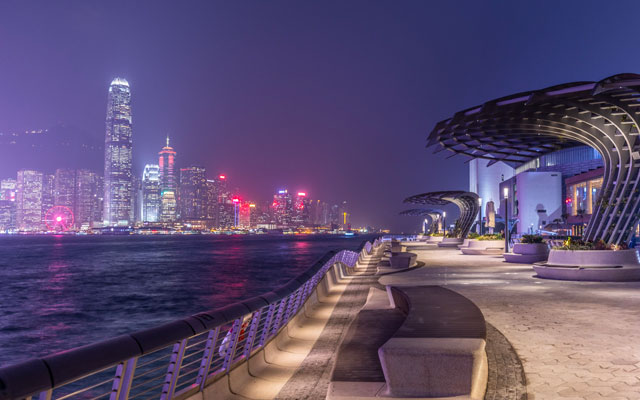
After three years of construction, Hong Kong’s waterfront Avenue of Stars (AoS) has reopened with new features including electricity generation by wave energy.
Funded by New World Development’s AOS Management Company, AoS is the result of close co-operation between Adrian Cheng, executive vice-chairman and general manager of New World Development, New York High Line architect James Corner and other famed designers.
Avenue of Stars
1 of 3
Bruce Lee statue
Handprints
View at night
The 457m-long promenade first opened in 1982, and in 2004, it was named the AoS and modelled after the Hollywood Walk of Fame. The revitalised AoS continues to offer views of the skyline and Victoria Harbour with new highlights.
This is the first pilot site in Hong Kong to generate electricity by wave energy; it will be used for demonstration and education purposes.
Sustainable materials include a durable, bio-based wood substitute used for the handrails and seats; recycled glass, which makes up 30% of the flooring; and light-coloured paving materials to reflect more sunlight and reduce the heat island effect.
Inspired by Hong Kong’s market stalls, Harbour Kiosk, designed by LAAB, automatically transforms its “gate” into an “awning” during the day and returns to its compact shape at night.
A special lighting system by Speirs & Majors is concealed inside the cladding, illuminating the water flowing beneath the pedestrian deck after dark.
Displayed on the wooden handrails are 117 famous handprints for convenient photo opportunities.
Visitors can scan QR codes on the handprints and four statues – Anita Mui, Bruce Lee, a replica of the Hong Kong Film Awards statuette, and McDull – to access the artists’ biographies and clips from their films. They can also take photos with the statues using augmented reality technology.
The attraction now also features multifunctional LED lampposts that include Wi-Fi and mobile signals for visitors.
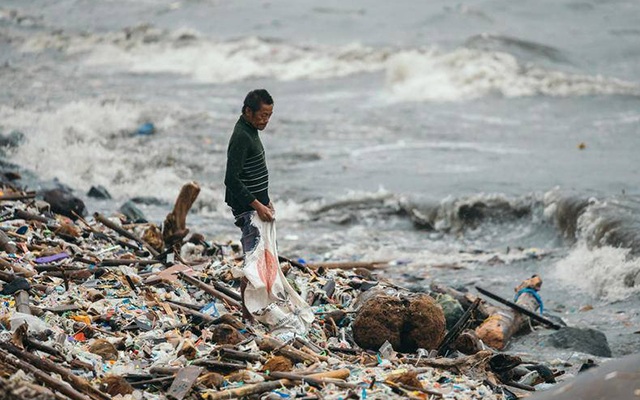
A clean-up of Manila Bay is underway, as the its shores were covered in heaps of wet trash, brought about by the onslaught of Typhoon Karding last August. Photo credit: Greenpeace Philippines
An extensive clean-up has kicked off at the badly polluted Manila Bay, Philippines, expected to cover 190km of coastline and a scope that includes sanitation infrastructure, resettlement and long-term education.
An industry source, requesting anonymity, said the Bay’s stench and brackish waters are a setback to cruising and there were several instances when hotels were heavily damaged by storm surges and flooding.
Shores of Manila Bay covered in trash brought in by Typhoon Karding last August (photo credit: Greenpeace Philippines)
“Even the famous sunset over Manila Bay is affected by pollution and tons of trash swept on the shore after the typhoons (have not been) good for our image,” he complained.
Manila Bay’s clean-up kicked off with the closure of several restaurants and other establishments found to have violated environmental laws by dumping their waste on the bay. On January 27, thousands of volunteers retrieved large amounts of trash from the bay.
Environment secretary Roy Cimatu announced the three phases of the rehabilitation: clean-up and improvement of water quality, rehabilitation and resettlement, and education and sustainment.
There’s no timeline yet for the mammoth project for Manila Bay which snakes around 190km of coastline, spanning three regions including National Capital Region to which Manila belongs.
The rehabilitation of the Bay will be on a larger scale than the ongoing clean-up of Boracay, as it is expected to also involve cleaning waterways, updating old sewer lines, relocating informal settlers, sustained law enforcement and monitoring, among other things.
“We support the initiative to clean up Manila Bay, one of the attractions of the capital. It’s a long time coming,” said Jojo Clemente, president, Tourism Congress of the Philippines (TCP).
“I’m really liking that businesses are now being called out for years of environmental damage. I hope this continues and that those found to have (inadequate or no) waste management systems are held accountable,” he continued.
Ritchie Tuano, newly elected president of the Philippine Travel Agencies Association (PTAA), said that “in principle, we support any initiative of the government that promotes and improves tourism”.
TCP plans to meet up with tourism stakeholders, while PTAA will organise a meeting with its members to tackle the Bay’s rehabilitation.