Singapore-based e-ticketing platform GlobalTix has announced the completion of a S$12.5 million (US$9 million) growth investment round from B2B venture capital firm Tin Men Capital.
Founded by brothers Chan Chee Chong and Chan Chee Kong, GlobalTix owns and operates an e-ticket distribution platform serving the tourism industry by helping to connect tourist attractions with online and offline travel agents across the globe.
Scaling up is the vision of the two Chan brothers, founders of GlobalTix
The company currently handles more than US$75 million worth of transactions on its platform annually, and works with travel-related companies such as Universal Studios Singapore, Waterbom Bali, Singapore Airlines and TripAdvisor, among others. It has offices in Singapore, Indonesia, Thailand and the Philippines.
“Although the GlobalTix platform already covers inventory for attractions across Asia, we realise that we can do even better by learning from the success of our coverage of tours and attractions providers in Singapore, and repeating that model by investing in having a direct presence in the key in-bound tourism markets in Asia,” said Chan Chee Chong, CEO of GlobalTix.
Marriott International has entered into a long-standing collaboration with Japanese real estate developer Sekisui House to open 12 Fairfield by Marriott hotels across five prefectures in Japan – Kyoto, Wakayama, Mie, Gifu and Tochigi – with an anticipated 15 hotels to be signed by next year.
All properties are expected to open by 2021, with the first dozen hotels scheduled to open in late 2020.
Sekisui’s Yoshihiro Nakai with Marriott’s Craig Smith at a signing ceremony in Tokyo
The partnership with Sekisui House will enable Marriott to tap the “growing trend” of more visitors to Japan exploring its lesser known destinations by offering travellers access to remote destinations through the new Fairfield by Marriott properties planned, according to Craig Smith, president & managing director, Asia-Pacific, Marriott International.
He said: “We see that, while there is increasing demand to explore destinations outside of the popular gateway cities, there is currently a limited amount of accommodations in these more remote areas.”
The upcoming Fairfield by Marriott hotels will be situated in convenient locations near popular roadside rest stations called “Michi-no-Eki”, which number more than 1,000 across Japan.
These newly-built standalone properties will offer between 49 to 96 rooms, and will be sited near key attractions in the five prefectures of Kyoto, Wakayama, Mie, Gifu and Tochigi.
The Fairfield by Marriott hotels will be located near popular roadside rest stations
Opening in Kyoto and its surrounding area by late 2020 are Fairfield by Marriott Kyoto Miyazu (85 rooms), Fairfield by Marriott Kyoto Kyotamba (75 rooms) and Fairfield by Marriott Kyoto Minamiyamashiro (51 rooms).
There are two hotels planned by 2020 in Mie prefecture, namely Fairfield by Marriott Mie Mihama (50 rooms) and Fairfield by Marriott Mie Odai (70 rooms).
The Wakayama prefecture will have three Fairfield hotels open by 2021: Fairfield by Marriott Wakayama Chikatsuyu (50 rooms), Fairfield by Marriott Wakayama Susami (50 rooms) and Fairfield by Marriott Wakayama Kushimoto (96 rooms).
By 2021, four Fairfield by Marriott Hotels are expected to open in the Gifu prefecture in the Chubu region, including Fairfield by Marriott Gifu Mino (53 rooms), Fairfield by Marriott Gifu Gujo (90 rooms), Fairfield by Marriott Gifu Takayama Shokawa (60 rooms) and Fairfield by Marriott Gifu Seiryu Satoyama Park (67 rooms).
As well, Kanto region’s Tochigi prefecture will be home to Fairfield by Marriott Tochigi Utsunomiya (87 rooms), Fairfield by Marriott Tochigi Nasushiobara (79 rooms) and Fairfield by Marriott Tochigi Motegi (49 rooms) by late 2020.
A growing number of venture capitalists are turning towards Asia to seek out travel technology startups to put their investment dollars in, drawn by the region’s thriving startup scene and emerging markets.
Among them is JetBlue Technology Ventures, the corporate venture capital arm of domestic US carrier JetBlue Airways, which marked its debut at the recent Future Travel Experience (FTE) Asia Expo with a competition that identified startups with viable solutions for investment.
Bess Chapman, operating principal of JetBlue Technology Ventures, remarked that Asia is a hotbed of startup innovations, especially ones that may have potential applications in the airline industry, such as customer service, loyalty programmes, Internet of Things and big-data platforms.
She added: “Biometrics (development) has been massive. Several airports in Asia, like Dubai and Changi, have already rolled out pilot (programmes) for biometrics, and I think that’s something exciting that the Asian market has to offer.”
Travel technology startups will be relieved to hear that there are “a lot of opportunities to update the antiquated airline industry”, in which airlines “haven’t been pushed” to improve their maintenance and operation processes, she said.
“We’re looking to grow our presence (in Asia). We want to be there for our startups, and the challenge in Asia is that we don’t have an office here,” she said.
Chapman shared that the FTE competition opened up potential to “expand (its) international partnership programme with new travel and hospitality brands”.
Internationally, JetBlue Technology Ventures has invested in 21 startups, and recently launched an international partnership programme to help other travel stakeholders implement selected startup technologies. Its first partner is Air New Zealand, and more will be announced in the following months.
She said 40 per cent of its investments can be applied back to JetBlue Airways’ airline operations, and that JetBlueTechnology Ventures operates separately from the main company.
Dafam Hotel Management recently organised a media fam trip to Lombok and Bali as part of its efforts to support Lombok’s tourism recovery, following the devastating earthquake that struck the island a few months ago.
During the fam trip, 35 members of the media from Jakarta, Semarang and Bali were taken to tour around Gili Air island, which is now recovering after being hit by a tsunami in August.
Visitor confidence’s returning to post-quake Lombok, says Dafam
Andi Ananto, general manager of Mola-mola Resort Gili Air, said: “The occupancy dropped significantly following the earthquake, but it is now recovering and we are running an average of 50 per cent occupancy (with Europe dominating the market). This shows that the confidence of travellers is coming back.”
The Semarang-based hospitality company has four properties in Bali and Lombok, namely Dafam Savvoya Seminyak Bali, Villa Savvoya Seminyak Bali, The Beverly Hlls Bali and Mola-mola Resort Gili Air, Lombok.
Malaysia Aviation Group has appointed Philip See as the new CEO of its regional subsidiary Firefly, effective January 1, 2019.
He will replace Ignatius Ong, who joined Malaysia Airlines (MAS) as group chief revenue officer in June 2018. Ong has since then worn double hats.
See is currently the head of strategy and network for MAS, which he joined in 2015. He has previously served in MAS’ turnaround management office back in 2004 until 2010.
Before joining Malaysia Airlines in 2004, See was a financial analyst in Deutsche Bank’s London office.
The Lion Air plane that crashed into Java Sea last month with 189 people on board was not airworthy and should have been grounded, said Indonesian investigators.
Preliminary findings revealed yesterday by Indonesia’s National Transport Safety Committee (KNKT) suggested that Lion Air put the plane – a new Boeing 737 Max 8 – back into service despite encountering problems on earlier flights.
Investigation continues to determine the cause of crash for Lion Air flight 610
Data from the jetliner showed that the pilots appeared to struggle with an automated system designed to keep the plane from stalling – a new feature in the 737 Max family.
The Boeing 737’s nose was repeatedly forced down over two dozen times during the 11-minute flight, even when the plane was not stalling – possibly due to a faulty sensor, the report stated.
It is, however, unclear why the pilots did not turn off the automated system.
The report, which did not give a definite cause for the deadly incident, also added that it was too early to conclude if the anti-stall system had contributed to the crash.
KNKT is continuing investigations, with a more detailed report expected to be completed within 12 months.
Boeing, in response to KNKT findings, said it is “deeply saddened” by the loss of Lion Air flight 610.
“As our customers and their passengers continue to fly the 737 MAX to hundreds of destinations around the world every day, they have our assurance that the 737 MAX is as safe as any airplane that has ever flown the skies,” Boeing said in a statement.
Meanwhile, KNKT has recommended that Lion Air improve its safety culture and should ensure the operations manual is followed “in order to improve the safety culture”.
It also urged the Indonesian carrier to ensure that “all operations documents are properly filled and documented”.
The Department of Tourism (DoT) has finally thrown in the towel on the fourth edition of Madrid Fusion Manila, citing the need “to focus its resources on the many pressing challenges in the industry, in particular to address the needs of sectors that require support as the tourism industry adopts a policy of sustainable tourism”.
Although DoT has the option to host the international gastronomy event for five years, the fourth edition, which was supposed to have taken place this year, has no taker yet from the private sector.
Without a hosting organiser, fourth edition of Madrid Fusion Manila sizzles out
PACEOS (Philippine Association of Convention/Exhibition Organizers and Suppliers), which won the event management bidding for Madrid Fusion Manila in the first three years, cannot afford to do it on its own without government support, its president Joel Pascual told TTG Asia.
“It will be a tough call” as they don’t have the means to promote it to the world which is MFM’s direction, Pascual said.
On the other hand, Arnold Gonzales, Tourism Promotions Board deputy COO for marketing and promotions, said they might revive the World Street Food Congress next year.
Commenting on the impact of Madrid Fusion Manila, Gonzales said it has introduced and lifted the image of the erstwhile relatively unknown Philippine gastronomy in the world market, benefiting tourism, agriculture and other sectors of the economy.
DoT said in a statement that it “will continue its support of Filipino gastronomy by focusing its efforts on areas that will make it truly sustainable” and “will continue to develop and improve culinary and farm tourism product offerings, while the department’s foreign offices will continue to promote the country as a premier culinary destination to the international market”.
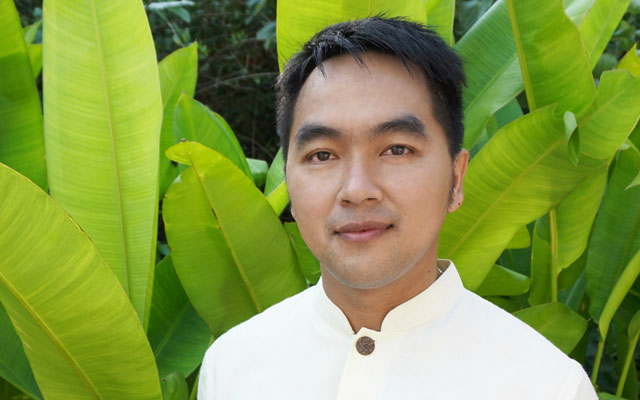
The Travel Corporation (TTC) has named Anthony Lim the new managing director for Asia for the Insight Vacations and Luxury Gold brands.
Anthony Lim
Based in Singapore, Lim will lead the team in Asia and India, working closely with both Darshan Marhehswari, country manager for TTC, Asia, and Bhavani Arun, senior sales manager, Insight Vacations.
Lim brings a wealth of marketing and sales management experience to Insight Vacations and Luxury Gold, gained through a long-spanning career in senior executive roles across both healthcare, hospitality and the airline sectors.
Shangri-La Hotels and Resorts has partnered Blacklane to provide premium chauffeur service to its Golden Circle members.
With this partnership, Shangri-La Golden Circle members booking a ride through Blacklane worldwide will earn one Golden Circle Award Point for every two US dollars, British pounds or euros spent.
Blacklane now a global ride service partner of Shangri-La Hotels
For the inaugural offer, members can enjoy a 10 per cent discount on their first Blacklane ride and double Golden Circle Award Points for every materialised booking from now until February 28, 2019.
“Together with Blacklane, we are creating more value and a growing suite of benefits and lifestyle experiences for our Golden Circle members when they travel around the world,” said Wee Kee Ng, Shangri-La’s vice president – loyalty and partner marketing.
Berlin-based Blacklane serves more than 300 cities, including 100 in the Asia-Pacific region, and 60 countries.
Dusit International is joining hands with Thailand’s Silpakorn University to preserve the architectural and artistic heritage of Dusit Thani Bangkok, the company’s flagship hotel which will be redeveloped next year as part of a landmark mixed-use development.
The project, named Preserving Dusit Thani Bangkok’s Artistic Heritage, will see experts from Silpakorn University identify, document, dismantle and preserve key items of historical or artistic value in the property for use in the new version of the hotel, which is slated to open in 2023.
Thai motifs and murals from the Benjarong Restaurant will be preserved for use at the new Dusit Thani Bangkok
Dusit Thani Bangkok, which opened in 1970, is said to be an early exemplar of contemporary Thai architecture, blending western modernism with traditional Thai design that is inspired by Wat Arun (Temple of Dawn).
Speaking at the launch of the Preserving Dusit Thani Bangkok’s Artistic Heritage project, Chanin Donavanik, vice chairman and chairman of the executive committee, Dusit International, said: “With the hotel now about to undergo a significant change for a new era of tourism, we would like to preserve as many items of historical and sentimental value as possible. I believe our past is the inspiration for a sustainable future…”
Suphajee Suthumpun, group CEO, Dusit International, added: “ This joint effort aims to preserve meaningful memories of the hotel and bring them to life once again in the next four years when the new Dusit Thani Bangkok opens its doors. We hope that the artefacts we preserve will create a warm atmosphere that delights new guests seeking new, impressive experiences, as well as regular guests who have an emotional attachment to the original hotel.”
Dusit Thani Bangkok will hold its last full day of operations in its current form on January 5, 2019. During this time, data and photographs of the project will also be presented in a digital book for those keen to learn more about the original building.
Data from the jetliner showed that the pilots appeared to struggle with an automated system designed to keep the plane from stalling – a new feature in the 737 Max family.
The Boeing 737’s nose was repeatedly forced down over two dozen times during the 11-minute flight, even when the plane was not stalling – possibly due to a faulty sensor, the report stated.
It is, however, unclear why the pilots did not turn off the automated system.
The report, which did not give a definite cause for the deadly incident, also added that it was too early to conclude if the anti-stall system had contributed to the crash.
KNKT is continuing investigations, with a more detailed report expected to be completed within 12 months.
Boeing, in response to KNKT findings, said it is “deeply saddened” by the loss of Lion Air flight 610.
“As our customers and their passengers continue to fly the 737 MAX to hundreds of destinations around the world every day, they have our assurance that the 737 MAX is as safe as any airplane that has ever flown the skies,” Boeing said in a statement.
Meanwhile, KNKT has recommended that Lion Air improve its safety culture and should ensure the operations manual is followed “in order to improve the safety culture”.
It also urged the Indonesian carrier to ensure that “all operations documents are properly filled and documented”.