TTG Asia
Asia/Singapore Monday, 13th April 2026
Page 1344

Sentosa courts Chinese tourists amid major transformation

0
AJ Hackett Sentosa Bungy Jump

Singapore’s Sentosa Development Corporation (SDC) is intensifying efforts to woo more tourists from China as the destination welcomes a series of new developments promising to widen the island’s appeal.

“Tourists prefer to visit Resorts World Sentosa (RWS), not Sentosa as a whole island,” observed Joseph Sze, senior director of Siam Express, a Singapore DMC.

Sentosa keen to capture more Chinese inbound travellers to Singapore; AJ Hackett Sentosa Bungy Jump pictured

He opined that while Sentosa has “great tourism resources and market potential”, it would fare better among both international and domestic visitors by rebranding and repositioning as “a whole integrated island”.

But this is set to change with redevelopment plans, which could see the nearby Pulau Brani “transformed” as part of Sentosa while “retaining the island charm with new attractions and nature zones”, revealed SDC’s assistant chief executive and chief financial officer, Chin Sak Hin.

“We are working closely with the other government agencies on planning this whole area. We are now at the masterplanning stage,” he said.

Meanwhile, Far East Hospitality (FEH) is launching three hotels along Artillery Avenue in the Palawan area, covering three different segments of the traveller market.

Opening in April 2019 are Village Hotel at Sentosa, offering 606 rooms, as well as the 193-key The Outpost Hotel, featuring a stylish adults-only colonial island concept. In 3Q2019, The Barracks Hotel will open its 40 rooms in a conserved colonial building in the style. The three properties will raise Sentosa’s total room count to 4,200.

Arthur Kiong, CEO, FEH, said: “Sentosa has always been known as a regional tourist spot. However, we found that 90 per cent of the market currently comprises luxury hotels, so we saw an opportunity to add to the island’s mid-tier inventory.”

As change comes to the island, SDC’s Chin told TTG Asia: “The Chinese market is very important to us. We have invested quite a lot in this space. We have accounts on digital channels Mafengwo and WeChat and we are working with big OTAs like Ctrip. Last year we also rolled out AliPay islandwide; now about 70 per cent of businesses on the island accept AliPay.

“We still see a lot of scope for us to invest in China’s digital space. We need to do even more to engage Chinese tourists, of which there are increasingly more FITs.”

Not only are Chinese travellers digitally savvy, they are also “world-savvy”, and are now in search of unique and different experiences, Chin explained.

To cater to such changing preferences, Sentosa has been rolling out a year-round calendar of diverse and “relevant” events, said Chin.

Launching soon is the Pikachu Night Parade, the first to be hosted outside of Japan, as part of Sentosa’s Island Lights light-up event next month.

SDC will market these events and attractions based on themes such as beach, music, food, sports and festivals, to help visitors gain awareness of the island’s suite of offerings.

Meanwhile, broader developments are underway to give visitors more access to attractions on the island. SDC’s My Sentosa App was refreshed with new functionalities such as itinerary planning, smart navigation and gamified trails.

“The island is also working with the Ministry of Transport and ST Engineering Land Systems (on) autonomous Mobility-On-Demand-Vehicles, which will go on a public trial next year,” added Lynette Ang, SDC’s chief marketing officer.

Other activities promising to bring change to the island include the redevelopment of Sentosa’s main north-south pedestrian thoroughfare by 2021, a robust calendar of unique events such as the Sentosa Sandsation: Marvel Edition and Sentosa GrillFest, as well as developing the Sentosa 2030 masterplan.

Fujita Kanko unveils AI-powered hotel brand for millennials

0
Tavinos lounge

Fujita Kanko is launching Tavinos, a new millennial-friendly brand touting an artificial intelligence (AI) concierge to help hotel guests find a travel buddy, among other tasks.

With Tavinos, the Japanese hospitality is hoping to blend “the social aspect of hostels with style and technology”.

Besides matching guests interested in similar activities, the AI-powered concierge can also perform automated check-in/check-out as well as provide local information.

Fujita Kanko says the “minimal staffing” enabled by technology will allow the hotel to keep rates affordable – averaging at around 10,000 yen (US$89) per night for a twin/double room – even in prime urban locations.

Fujita Kanko will open the first 188-room Tavinos in Hamamatsu-cho, Tokyo, in August 2019, followed by the second 278-room Tavinos in Asakusa, Tokyo, in May, 2020.

Rooms, sized at an average 12m2, and other hotel spaces will be covered in manga art, while the lobby lounge will offer continental breakfast and serve as a communal area for guests to meet and mingle.

“There are already affordable accommodations throughout Japan, but travelling millennials are hungry for the community of a hostel and the professionalism and expertise of an experienced hotelier,” commented Akira Segawa, president and CEO of Fujita Kanko.

“Tavinos will offer what outgoing and adventurous travellers want: the opportunity to meet interesting people, plan activities together, and explore.”

Jeju Air puts down US$4.4b order for Boeing 737 Max

0
Jeju Air

While concerns continue to swirl around the Boeing 737 Max 8, South Korea’s biggest LCC Jeju Air has announced a US$4.4 billion purchase of 40 units of the jet, the biggest contract for a single aircraft type by an airline in the country.

The purchase contract includes an option to buy an additional 10 aircraft, and Jeju Air estimates it will take delivery of the planes between 2022 and 2026.

Jeju Air indicates the 737 MAX 8 is an ideal aircraft to help grow and meet rising passenger demand for international routes

According to Jeju Air, the order is expected to help the company maintain its cost competitiveness.

The new planes will be deployed on popular international routes, with no further details on the routes available at press time.

The largest order comes amid a boom in outbound budget travel from South Korea, with six of the country’s budget carriers seeing a quadrupling of passengers international routes to 20.3 million in 2017, Reuters reported, quoting the country’s transport ministry.

Jetstar to cease-auto inclusion of travel insurance for online bookings

0
Jetstar Asia Airways agrees to be more transparent in the ticket and booking process

Jetstar will join Singapore Airlines and Scoot to remove travel insurance pre-selection next October after the Consumer Association of Singapore (CASE) engaged the three airlines to be more transparent in their ticket pricing and booking process.

CASE had earlier this year reached out to the airlines separately about selling insurance with flight bookings through an “opt-out” approach, where the add-on product is automatically included in the purchase until the consumer unchecks a box.

Jetstar Asia Airways agrees to be more transparent in the ticket pricing and booking process

In a statement released this week, the association said: “With the growth of e-commerce in the past decade, we have noticed several challenges that consumers encounter when shopping online. For example, encountering pre-ticked boxes that adds options to their purchases without their express consent.

“Any additional goods or services, whether paid or free, should only be included if the consumer has given express consent. In CASE’s view, failure to opt-out of travel insurance should not be regarded as express consent as it is possible for some consumers to overlook that this option had been selected.”

From October next year, Jetstar will implement an “opt-neutral” approach for travel insurance, in which consumers will need to consciously select to either accept or reject travel insurance while making flight bookings.

Scoot and SIA have already replaced “opt-out” insurance with an “opt-in” feature starting February and May this year respectively.

“Businesses should clearly present all information relevant to a sales transaction upfront to the consumer,” CASE reiterated, while “strongly encouraging” all businesses to engage in ethical marketing by ensuring that their consumers consciously agree to the purchase of goods and services by taking clear action.

Under Singapore law, businesses are not prohibited from using pre-ticked boxes to seek express consent for additional payments from consumers. However, there are measures in place to protect consumers from pre-ticked boxes in certain jurisdictions overseas such as the European Union.

Instaroom launches FAQ bot for hotels

0
FAQ Bot being trialled at hotels including Hotel Palace Zoo (pictured)

Instaroom, an artificial intelligence (AI) powered messaging platform built for hoteliers, has launched its new FAQ Bot, designed to answer commonly asked customer questions and reduce hotel management costs.

According to the company, the new FAQ Bot, which comes with premium subscriptions, can be integrated into a hotel’s homepage and help reduce incoming inquiries by up to 40 per cent, consequently decreasing inbound phone calls and emails.

FAQ Bot being trialled at hotels including Hotel Palace Zoo (pictured)

White-label bots customisable to a property’s needs are also on offer.

“Every day hoteliers are answering the same questions over and over again – including when are breakfast hours, what are parking costs, and how much for a room,” said Niklas Pettersson, co-founder and CEO of Instaroom.

An example of how the Instaroom bot could benefit hoteliers

“Over the course of a year, thousands of employee hours are being wasted. We’ve designed an intelligent bot that customers can interact with on a hotel’s website and our beta results show that nearly 50 per cent of visitors are using the widgets. The product has increased efficiency for hoteliers, but it’s also making the customer journey much more user-friendly in an era where consumers expect quick results.”

Among the hotels where Instaroom has been testing its new AI FAQ bots are Desa Visesa Ubud in Bali, Delfins Beach Resort in the Dutch Caribbean Island of Bonaire, and the Hotel Palace Berlin.

Instaroom has opened a new office in Singapore’s CBD, which will serve as the headquarters for sales and marketing in Asia-Pacific.

The company has welcomed two new investors, including Jack Chia, who currently serves as vice president of corporate business development for Pico Global in Singapore, and Anthony Lai, managing director of OTA #NoFilter Holidays.

Amari hotel to rise by Vientiane riverside in 2021

0
A rendering of the upcoming Amari Vientiane

Onyx Hospitality Group is set to launch the riverside Amari Vientiane come 2021, its second property under the brand in Laos after Amari Vang Vieng which opened this year.

Resulting from a management agreement with Laos-based Asia Investment, Development & Construction Sole, the new-build hotel will be located by the Mekong river at the intersection of Quai Fa Ngum and Khun Bu Lom Roads, a short walk to the city’s night market street and the Chao Anouvong Park.

A rendering of the upcoming Amari Vientiane

Featuring 250 rooms and suites in a 15-storey building, Amari Vientiane
will offer Amari brand signatures including service from Amari Hosts, the street market-style Amaya Food Gallery, Breeze Spa, meetings facilities and indoor and outdoor space.

Other facilities include a specialty restaurant, outdoor pool and fitness centre.‏‏

“As a rapidly booming tourism destination, Laos recently saw the doubling in capacity of its international terminal at Vientiane’s Wattay International Airport. We look forward to the opportunity of targeting more international visitors as flight connectivity increases in the coming years,” said Douglas Martell, president and CEO of Onyx Hospitality Group.

Adrian Chan helms two Marriott hotels in Sanya

0

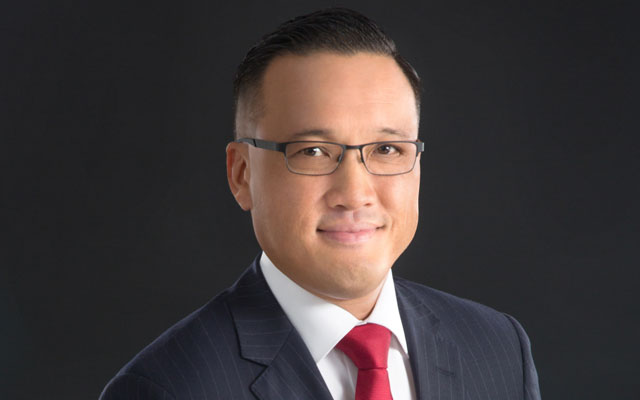
Adrian Chan is appointed the new general manager of Sanya Marriott Hotel Dadonghai Bay and The Shanhaitian Resort Sanya, Autograph Collection.

The hospitality veteran has over 22 years of management experience in various cities – including Calgary, Beijing, Suzhou, Chengdu and Sanya – under his belt.

Born in Hong Kong, Chan first started his career at the Calgary Marriott before taking up various operational roles in other international luxury hospitality companies, including Fairmont, IHG, MGM, Swire and Rosewood.

Prior to this appointment, he was also the pre-opening hotel manager for Rosewood Sanya.

Ctrip expands wildlife partnership with WRS

0
WRS' Isabel Cheng (left) and Ctrip's Xiaojiang Yu

Ctrip and Wildlife Reserves Singapore (WRS) have signed an agreement to collaborate on corporate initiatives to educate and raise awareness about wildlife among the general Chinese public, and to bring greater convenience to Chinese travellers planning to visit Singapore’s wildlife parks.

WRS’ Isabel Cheng (left) and Ctrip’s Xiaojiang Yu

The MoU was signed between Overseas TTD (Things to Do) Business Ctrip CEO Xiaojiang Yu and WRS chief marketing officer Isabel Cheng.

Through the expanded partnership, Ctrip and WRS will explore cooperation on several initiatives such as launching and promoting an online store on Ctrip platforms offering WRS products and special experiences; collaborating on key travel products, services and platforms to provide Ctrip users with the best possible experience visiting WRS parks; promoting wildlife awareness and education efforts among key audiences; and inaugurating Ctrip’s adoption of animals Marco the Giraffe and Lance the Asiatic black bear at the Singapore Zoo and Night Safari.

India mulls ways to boost disappointing Chinese arrivals

0

As current inbound arrival figures from China remain dismal, India’s Ministry of Tourism is stepping up its efforts to woo the Chinese market, including the relaunch of a tourism office and promotional videos in China.

“The current visitor arrivals from China to India are not satisfactory,” said KJ Alphons, India’s tourism minister. “Our aim is to attract 10 per cent of 144 million Chinese (outbound) tourists in the next five years.”

Gateway of India as seen from the Mumbai Harbour

The Ministry of Tourism has recently relaunched an India tourism office in Beijing that closed previously in 2016, in addition to organising a multi-city roadshow covering Beijing, Wuhan and Shanghai earlier this year.

A series of promotional videos has been shot in Mandarin to promote segments including wildlife, Ayurvada and luxury travel, while there are plans to host Chinese bloggers and journalists for a fam trip next year.

“We are also looking at ways to upgrade our tourism infrastructure in Buddhist sites including wayside amenities and a six-lane highway. We will also introduce theme-based marketing and promotional campaigns in the China,” said Alphons.

However, some tour operators remarked that much has to be done if India has to attract significantly more Chinese tourists, of which only 240,000 visited India last year.

“India is yet to become an aspirational tourist destination in the minds of Chinese tourists.There is a need for theme-based marketing campaigns to attract Chinese leisure travellers, whose numbers are far less than business travellers,” said Arun Anand, managing director, Midtown Travels.

The lack of Mandarin-speaking guides is another major bottleneck faced by Indian tour operators, Ravi Gosain, managing director, Erco Travels, pointed out.

“The Ministry of Tourism needs to look at ways to train guides in Mandarin,” said Gosain. “There is a lot of competition from shorthaul destinations like Thailand and Hong Kong and longhaul destinations like Australia and Europe in attracting Chinese tourists.”

India mulls ways to boost disappointing Chinese arrivals

0
Gateway of India as seen from the Mumbai Harbour

As current inbound arrival figures from China remain dismal, India’s Ministry of Tourism is stepping up its efforts to woo the Chinese market, including the relaunch of a tourism office and promotional videos in China.

“The current visitor arrivals from China to India are not satisfactory,” said KJ Alphons, India’s tourism minister. “Our aim is to attract 10 per cent of 144 million Chinese (outbound) tourists in the next five years.”

Gateway of India as seen from the Mumbai Harbour

The Ministry of Tourism has recently relaunched an India tourism office in Beijing that closed previously in 2016, in addition to organising a multi-city roadshow covering Beijing, Wuhan and Shanghai earlier this year.

A series of promotional videos has been shot in Mandarin to promote segments including wildlife, Ayurvada and luxury travel, while there are plans to host Chinese bloggers and journalists for a fam trip next year.

“We are also looking at ways to upgrade our tourism infrastructure in Buddhist sites including wayside amenities and a six-lane highway. We will also introduce theme-based marketing and promotional campaigns in the China,” said Alphons.

However, some tour operators remarked that much has to be done if India has to attract significantly more Chinese tourists, of which only 240,000 visited India last year.

“India is yet to become an aspirational tourist destination in the minds of Chinese tourists.There is a need for theme-based marketing campaigns to attract Chinese leisure travellers, whose numbers are far less than business travellers,” said Arun Anand, managing director, Midtown Travels.

The lack of Mandarin-speaking guides is another major bottleneck faced by Indian tour operators, Ravi Gosain, managing director, Erco Travels, pointed out.

“The Ministry of Tourism needs to look at ways to train guides in Mandarin,” said Gosain. “There is a lot of competition from shorthaul destinations like Thailand and Hong Kong and longhaul destinations like Australia and Europe in attracting Chinese tourists.”