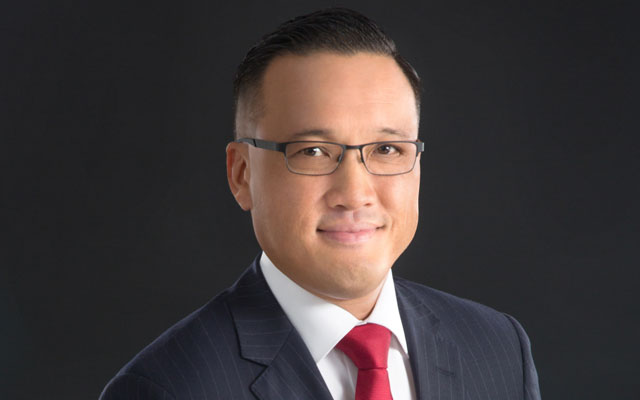
Singapore Marriott Tang Plaza Hotel has appointed Jason Leung as general manager, joining the hotel from his most recent role as general manager of Le Meridien Singapore, Sentosa.
The hotel veteran has more than 16 years of experience under his belt, having began his career in sales and marketing in the hospitality industry in Sydney.
In 2006, he assumed the role of business development director at Four Points by Sheraton, Sydney, and was quickly promoted to director of sales. He then transferred to The Westin Resort Nusa Dua, Bali in 2009, where he held various key management roles including director of sales & marketing, executive assistant manager and hotel manager.
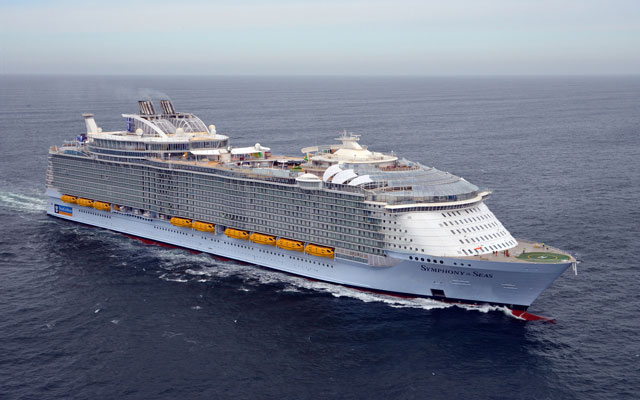
Symphony of the Seas is the fourth Oasis-class vessel which debuted last year
Royal Caribbean Cruises (RCL) has entered into an agreement with French shipbuilder Chantiers de l’Atlantique for an order of a sixth Oasis-class ship, slated for delivery in the fall of 2023.
This order is contingent upon financing, which is expected to be completed in the second or third quarter of this year.
Symphony of the Seas is the fourth Oasis-class vessel which debuted last year
Richard Fain, chairman and CEO, RCL, said in a statement: “This order is a reflection of the exceptional performance of this vessel class and the extraordinary partnership between Chantiers de l’Atlantique and RCL.”
This will be the 23rd cruise ship that RCL is building at Chantiers de l’Atlantique.
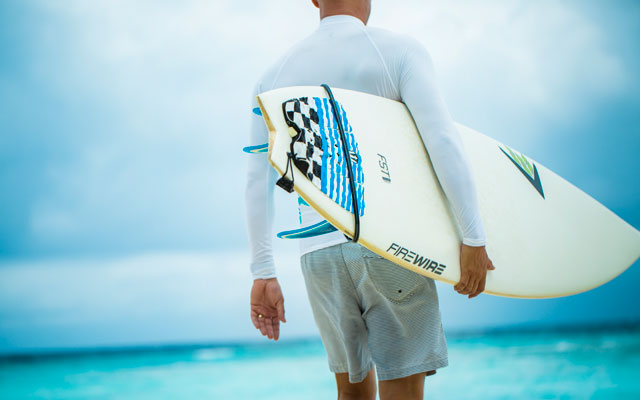
Como Maalifushi in the Maldives has launched a Surf Pass programme in partnership with luxury surf company, Tropicsurf.
The programme will bring guests on a boat trip to the three atolls of Thaa, Laamu and Dhaalu Atolls in the archipelago’s remote south-west region to enjoy isolated and relatively unknown surf breaks.
Surf’s up at COMO Maalifushi
For instance, the Thaa Atoll coastline is known for its consistency, with swells captured from numerous directions. Surfers can ride on Farms – a right-hander with an idyllic backdrop, delivering mechanical-shaped waves from a contoured reef-corner ideal for noseriding, shortboarding or standup paddle boarding.
Como Maalifushi’s daily Surf Pass costs US$245 per person and includes a luxury speed-boat journey to the waves; access to the three atolls and its 20 surf breaks; a Tropicsurf coach and guide; as well as sunscreen, water and towels.
For the more adventurous, Tropicsurf’s instructors can take guests to a string of uninhabited islands further south, said to offer excellent surf breaks including a few highly prized secrets.
The Surf Pass Programme is available on a seasonal basis between April and October. April is an excellent month for glassy conditions, while May signals the start of the rainy season. June to September offers larger swells and more consistency, while October tends to have smaller swells that are fairly reliable. Water remains at a near constant temperature of 30°C year-round.
Sheraton Grand Danang Resort has appointed Sherrilyn Charles as director of sales and marketing.
She comes to the Vietnam resort from Samoa, where she was the complex director of sales and marketing for two connected Sheraton properties.
The industry veteran brings two decades of experience in the industry, gained from years of working in the Europe/Middle East/Africa regions.
The Caribbean native’s first position upon graduation was with Hilton Hotels in the Netherlands in sales. She grew her career in sales and marketing, taking on roles with progressive levels of responsibility at hotels and resorts in the EAME, Pacific and South-east Asia regions.
Charles then joined Starwood in 2008 where she served as international business development manager.
Kong: in the coming months, focus will be on unlocking WorldHotels’ potential by improving revenue delivery to its hotels
WorldHotels has been acquired by Best Western Hotels & Resorts, marking another change of ownership since it was bought over by US-based hospitality sales and marketing consortium Associated Luxury Hotels two years ago.
The WorldHotels brand, which represents a collection of approximately 300 hotels and resorts around the world, will play a “critical role” in enhancing Best Western’s portfolio of offerings to include the upper upscale and luxury segments, according to a statement from the US-headquartered hospitality group.
Kong: immediate focus is on unlocking WorldHotels’ potential while also retaining its independent identity
WorldHotels will maintain its individuality while benefiting from Best Western’s scalable e-commerce platform, partnerships, loyalty programme, sales and marketing support, global distribution network, and revenue engines.
“Best Western is one of the largest, most respected and trusted hotel brands,” said Geoff Andrew, CEO, WorldHotels. “As we join forces, the combined power of our brands sets the stage for a bright future for both Best Western and WorldHotels. Through its established senior leadership team and regional presence in each market, Best Western brings a new level of expertise that will help grow the WorldHotels brand in key markets.”
David Kong, president and CEO of Best Western Hotels & Resorts, said: “In the coming months, our focus will be to unlock WorldHotels’ potential by improving revenue delivery to its hotels while protecting its independent identity. We believe our platform and revenue engines will benefit WorldHotels and attract many more independence-minded, quality hotels to join the brand.”
Andrew will continue as CEO of WorldHotels “for the foreseeable future”, according to Kong.
Social media engagement at the centre of the refreshed campaign
The Philippine Department of Tourism yesterday rolled out the refreshed It’s More Fun in the Philippines campaign anchored on tourism sustainability.
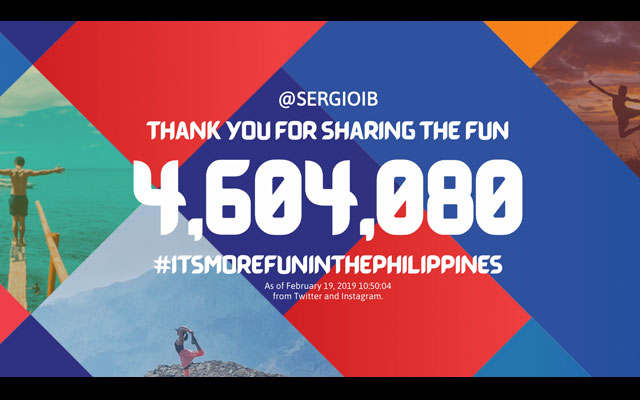
Sporting a new logo that weaves the unique colours and culture of the Philippines as well as a new font, the refreshed campaign is 100 per cent crowd-sourced using photos and videos shared by tourists.
Social media engagement at the centre of the refreshed campaign
The DoT is encouraging tourists to share more photos and videos through the hashtag #itsmorefuninthePhilippines. For every submission, US$10 will be donated to the World Wildlife Fund (WWF).
Tourism secretary Bernadette Romulo Puyat explained that the refreshed campaign started with Boracay’s ongoing rehabilitation. “When we think of fun, it’s already redefined. We can have fun but at the same time protect the environment (and) have responsible tourists.
“We are coming into 2019 with a renewed and refreshed sense of purpose, with more and more travellers conscious about their ecological footprint, the cultures and experiences they are consuming and simply wanting to know how they can give back,” she added.
Puyat said she retained the It’s More Fun in the Philippines name as she believed in continuity, citing Malaysia, Truly Asia and Incredible India as examples of how other countries don’t change their tourism campaign names.
She added that the name has already found acceptance among the travelling public, with 4.3 million people already using the hashtag. “The hashtag works. The Philippines have embraced it. So why not continue what is good?”
The DoT is hopeful that the refreshed campaign will help meet the 8.2 million foreign arrivals targeted for this year.
Puyat noted that despite Boracay’s six-month closure, foreign arrivals reached 7.1 million in 2018, which was still a 7.7 per cent growth from the previous year.
Malaysia’s minister of tourism, arts and culture, Mohamaddin Ketapi, has called on unlicensed hotel operators and those offering vacation rental services on Airbnb to register with the ministry immediately to avoid legal action under the Tourism Industry Act 1992.
Mohamaddin said the ministry was also in talks with the Housing and Local Government Ministry on implementing conditions for Airbnb businesses, including registration requirements, according to a Bernama report.
Airbnb hosts urged to register as Malaysian government works with hotels association to draw up new home-sharing regulations
In response, the Malaysian Association of Hotels (MAH) said in a statement that it had been actively involved with the two aforenamed ministries in drawing up regulations for the home-sharing sector, based on laws in cities such as Paris, Barcelona, New York, San Francisco, Santa Monica and more recently, Japan with its Minpaku law.
The MAH statement read: “Many of these laws were drawn up with intention to protect local residents as home-sharing business had in fact driven property prices up, to the disadvantage of locals – displacing them from main cities and indirectly raising cost of living, as well as causing disturbance and nuisance at residential areas.
“As much as Airbnb had openly declared their willingness to cooperate with the government of Malaysia, we have yet to see actual actions from them to comply with existing laws (such as Innkeepers Act 1952, Registration of Guests Act 1965, Tourism Industry Act 1992, Tourism Tax Act 2017 and various tax laws, just to name a few). If Airbnb is sincere to be part of the tourism industry of Malaysia, it must demonstrate its compliance to the laws of Malaysia and ensure hosts & listings that do not comply with registration and licensing requirements are removed from its platform immediately.”
It’s high time the government tightened regulation of home-sharing, stressed MAH, citing revenue loss for the country.
“The government and the industry should not be made to bear such losses when on the other end home-sharing hosts and operators are reaping fruits of what they did not sow.”
Uzaidi Udanis, president of the Malaysian Tourism Council, agreed that the call for regulations is timely, as it helps “ensure there is a level playing field with licensed hotel operators and hotel investments are also protected”.
He added: “It is also important to keep records of guests staying at home sharing platforms as we don’t know their intentions of coming to the country.”
Massage stations at ILTM Cannes (photo credit: Facebook/ILTM)
ILTM Asia Pacific will return for its second edition with a fresh focus on wellness, with the organisers dedicating an area on the show floor to a relaxation space called The Retreat.
At ILTM Cannes last December, ILTM announced 2019 as the year of health and wellness, and debuted The Retreat, an area showcasing wellness products, in partnership with Six Senses.
Massage stations at ILTM Cannes (photo credit: Facebook/ILTM)
The organisers will bring this new element to ILTM Asia Pacific in May, continuing its collaboration with Six Senses. About 100m2 of space on the show floor will be allocated to wellness offerings including an alchemy bar, where delegates can make scrubs, a juice bar for energy shots, head and shoulder massages, and innovative products such as “sound chairs”, according to Alison Gilmore, portfolio director, ILTM.
“In Cannes, we worked with Six Senses to build The Retreat (which featured a range of invigorating elements such as) sound chairs. The user lies down on these (wave-form) seats. Music plays through the headphones and the chair, sending vibrations up to the user’s body,” Gilmore shared.
With product demonstrations especially key when it comes to such innovative treatments and therapies, physical marketplaces like ILTM are in a position to offer an enhanced proposition to suppliers looking to showcase wellness differentiators.
“Such products (especially benefit from) being showcased in a physical space (as opposed to catalogues and brochures). You really need to touch and feel them to get a sense of what they can do,” Gilmore said.
At the upcoming ILTM Asia Pacific, the wellness theme will extend beyond the show floor. Gilmore told TTG Asia that delegates attending the show this year can look forward to fun fringe activities such as group runs, a first for ILTM, and yoga sessions.
“Last year was our first year (doing an Asia-Pacific show), and we wanted to make sure we covered the basics. Now more things are in place, and we need add in other relevant components. We haven’t organised the run in Cannes, but do we see a lot of delegates out running in the morning. We want to start the running club off in Singapore.”
Marriott unveils loyalty programme rewards in Asia
Marriott International is introducing benefits in Asia-Pacific for members of its newly integrated loyalty programme in Asia-Pacific.
New to the Marriott Bonvoy Moments platform are VIP experiences at seven Maroon 5 concerts across Asia – in Tokyo, Seoul, Manila, Kaohsiung, Macau, Singapore and Bangkok – including the chance to meet the band in three of those markets.
Marriott unveils loyalty programme rewards in Asia
Come April, members will also stand to enjoy VIP access to the Hong Kong Sevens.
Marriott is also touting more ways to earn points under its rewards programme.
With year-round dining privileges available, Marriott Bonvoy members can dine and earn points even without a stay. Members can enjoy F&B savings of 10-20 per cent, depending on their membership tier. With a minimum spend of US$10, non-stay guests can also earn up to 10 points per US$1 spent at participating Marriott Bonvoy properties in Asia-Pacific.
Non-stay members can now enjoy up to 10 points per US$1 spent across over 210 participating spas in Asia-Pacific. Gold Elite members and above will also be offered a choice of complimentary enhancement services with each spa treatment.
Starting on March 25, Marriott Bonvoy will introduce member benefits for kids at participating hotels and resorts. With one paying adult, Gold Elite and below members with kids aged up to six will enjoy complimentary breakfast. Kids between 7-12 years of age will get a 50 per cent discount. And for members in the Platinum Elite tier and above, kids age 12 and below will enjoy complimentary breakfast.
In addition, all members’ kids will enjoy complimentary ice cream during their stay.
Dhaka Walk, a new venture of Wonder Ways DMC in Bangladesh, has launched walking tours of Old Dhaka.
Participants will walk the streets of Old Dhaka, where they will experience bazaars and monuments, with the Hindu Street being one of the highlights. Here, they can try local delicacies such as Tehari and Bakar Khani.
Star Mosque (photo credit: Dhaka Walk)
Dhaka Walk also offers walking tours around Louis I Kahn’s architectural wonders in Dhaka, taking participants to discover historical sites around Dhaka University.
Conducted by an experienced guide, tours run for four to six hours and depart with a minimum of two participants.