TTG Asia
Asia/Singapore Tuesday, 16th December 2025
Page 1333

New hotels: The Shanghai Edition, Novotel Ulaanbaatar and more

0
The Shanghai Edition, China

The Shanghai Edition, China
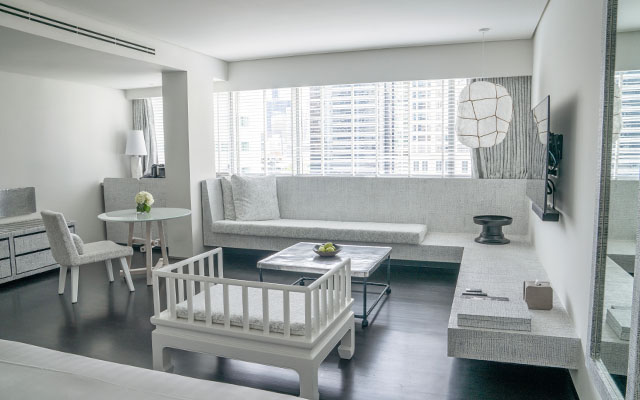
The Art Deco-style former headquarters of the Shanghai Power Company, with the addition of a new skyscraper on Nanjing Road, is now home to boutique hotel maverick Ian Schrager’s Shanghai Edition. The hotel offers 145 rooms and suites, many of which provide views of the Bund.

Restaurants, bars, and entertainment include Shanghai Tavern, Michelin-star chef Jason Atherton’s all-day dining, brasserie style restaurant; Hiya, a Japanese restaurant also by Atherton; Punch Room, a cocktail lounge first made famous at The London Edition; Canton Disco, a traditional Cantonese restaurant concept; The Club Room – a gentleman’s club-inspired lounge; and Electric Circus, a club, VIP lounge and nightclub rolled into one.

Communal spaces include a multipurpose space for meetings and events for up to 200, a fully landscaped tropical Roof Garden, equipped with a bar and cinema; a swimming pool sunk in stone; a gym, spa with six treatment rooms, and multiple terraces.

Novotel Ulaanbaatar, Mongolia
Novotel has set foot in the capital of Mongolia with a new 192-room property. Every room has been adorned with a picture of Mongolia taken by a famous local photographer, and designed in a Chinese minimalist style. Rooms from the 12th to the 16th floors will also have views of the mountain and city of Ulaanbaatar. Facilities include an indoor swimming pool, fitness centre, spa, three restaurants, two bars, a ballroom and a meeting room.


Joali, Maldives
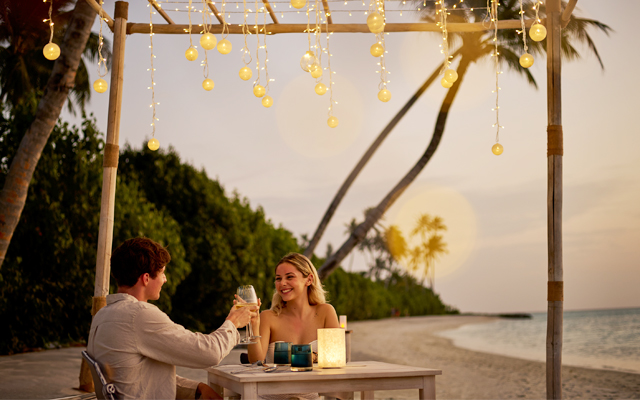
The island retreat Joali has opened in northern Maldives, situated on Muravandhoo Island in the Raa Atoll. The resort comprises 73 beach and water villas, ranging from two- to five-bedrooms. Amenities on the island include a whiskey lounge, curated library, ESPA spa, five F&B options, kids’ club and a chocolate and ice-cream store. The resort will create itineraries for its guests on request, where Dhoni excursions to meet local communities or snorkelling with manta rays can be arranged.

Holiday Inn Express Seoul Hongdae, South Korea
The second Holiday Inn Express in Seoul adds 294 guestrooms to the South Korean capital. Guests can enjoy amenities such as free and fast Wi-Fi throughout their stay, use of the business centre and laundry stations, and a 24-hour fitness room. There is also a Free Express Start Breakfast at the brand’s Great Room, or a Grab & Go option available. The property is on the main junction of Hongdae above the new AK Mall, and a 30-minute drive from Gimpo International Airport or a 50 minute drive (one hour by Airport Subway) from Incheon International Airport.

Selangor coming into its own

0
Sultan Salahuddin Abdul Aziz Mosque in Selangor's Shah Alam is known to be the largest mosque in Malaysia

While Kuala Lumpur remains a firm favourite in Malaysia thanks to its mature branding and iconic structures, agents are seeing neighbouring Selangor rising in popularity among tourists, fuelling demand for twin-destination programmes.

Yap Sook Ling, managing director, Asian Overland Services Tours & Travel, said new products in Selangor are driving interest for family travel from India, China, Hong Kong and the Middle East.

Sultan Salahuddin Abdul Aziz Mosque in Selangor’s Shah Alam is known to be the largest mosque in Malaysia

Itineraries span attractions such as Selangor Fruits Valley, Sekinchan paddy fields, Sky Mirror in Kuala Selangor and Sunway Lagoon, the oldest and largest theme park in Selangor.

She added: “We have seen demand for Selangor rising over the last two years, some from repeat visitors to Kuala Lumpur, and others who have heard about Selangor and were keen to explore beyond Kuala Lumpur.

“Selangor appeals to special interest groups as well as families with children because of its ecotourism attractions and educational experiences such as rice planting and harvesting and mangrove ecosystem in Kuala Selangor.”

In the past, Selangor was offered as a day trip component, but combination packages now include overnight stays both in Selangor and Kuala Lumpur, she shared.

Cherry Lee, executive director, World Express Tours, said: “Selangor’s appeal lies in its greenery and there are a number of resort hotels with green landscaping and space, which appeals to the leisure segment, unlike Kuala Lumpur which has more business class hotels.”

Lee added that hotels in Selangor are priced very competitively, with new hotels coming up in locations near shopping malls and theme parks. Sunway Clio Hotel, for example, is located within walking distance of Sunway Lagoon and Sunway Pyramid Mall, whereas New World Hotel in Petaling Jaya is adjacent to Paradigm Mall.

“We see growing demand for Selangor from the Middle East market, who in the past used to want to stay only in Kuala Lumpur and do day trips to Selangor,” shared Lee.

“(Seeing the changing trends), we have asked hotels in Selangor to give us bigger allotments to add into our distribution channels,” she added.

For Abdul Rashid Asari, Selangor state government chairman of standing committees for cultural and tourism, Malay tradition and heritage, however, “travel agents unforunately still tend to sell the same old tours emphasising Kuala Lumpur”, despite the abundance of ecotourism, culture and heritage offerings in Selangor.

To change this, there are plans to step up product briefings and fam tours for travel agents from 4Q2018 onwards, showcasing offerings in and around the big cities of Petaling Jaya, Subang, Shah Alam and Klang, he told TTG Asia.

A chief focus is to “develop the tourism infrastructure outside the main cities by building three- and four-star hotels in places such as Sabak Bernam, Sekinchan, Hulu Selangor and Kuala Selangor”.

“This year, we also initiated the Selangor Community Host Programme to train local communities to be local guides in the areas they live,” said Abdul Rashid.

Nazri Tashriq Rahmat, corporate communications manager, Tourism Selangor, said Selangor continues to be a day-trip option for many Asian tourists, but the state tourism board hopes to increase this to a few nights’ stay over time.

Another challenge lies in Selangor lacking recall as a geographically distinct destination.

Said Nazri: “Many travellers doing Selangor-Kuala Lumpur combination tours are unaware that some (attractions they visited) are in Selangor, as the guides don’t point this out. We are now educating inbound agents to (make the distinction clear).”

More travellers seeking a break from beaches in Asia

0
Borneo in the Malay Archipelago

Ecotourism and wildlife offerings are holding more sway among European travellers as they start to tire of the traditional beach holidays in Asia.

Diana Lozanova, director of Sofia Luxury Travel in Bulgaria, said while Asia remains the most popular destination, she has seen a recent rising trend in clients wanting more than the usual popular Asian beach destinations that initially drew travellers to the region.

Borneo in the Malay Archipelago

She said: “Bulgarians love the beach, but now they want to explore something new. They normally go to Phuket or Bali for the beach. They want wildlife and nature, so we are looking for destinations that can provide that.”

Lozanova noted that interest in wildlife, adventure and trekking trips are on the rise, with Cambodia and Japan on their radar. She added: “Japan is a new market and is very different, but it has been hard to find a travel agent with reasonable prices.”

Jana Oberreiterova, product manager of Fun Express in the Czech Republic, said while Asia remains the most popular longhaul destination with clients, they are searching for emerging destinations.

Said Oberreiterova: “They are no longer looking at Thailand and Indonesia and the beaches. (These beaches are) too touristy now and people looking for somewhere else. They want wildlife and nature.”

A strong economy in the Czech Republic is fuelling demand for longhaul travel, with 40 per cent of clients at travel agency Jedu interested in Asia. Project manager Martina Patova said while Bali is one of the top destinations, Czechs’ desire for something different is shining through.

She believes countries such as Laos and its wealth of nature and expanding ecotourism options as well as the Philippines will fit the bill.

Micheline Hardy of Toronto-based Club Voyages Mont-Tremblant, hopes to beef up his Asian offerings while catering to travellers’ changing needs for more nature-based activities such as scuba diving, trekking and golfing.

“Travellers are looking for more exotic destinations where they haven’t been before. They want to do more active travel.”

Courting China’s wired travellers

0

With a completely unique digital playground, travel and hospitality brands need to engage with their affluent Chinese customers according to their app-based, mobile preference.

Players in the hospitality or travel sector should already realise the importance of Chinese travellers – Chinese tourists made 130 million overseas trips in 2017, with total spending amounting to US$115 billion, according to a report from China Tourism Academy, and the number is projected to jump to 390 million in the next decade.

Life in China is digital, and it’s mobile. If you’ve visited China then you would have noticed that everything is paid for via mobile phones. WeChat Pay logos are popping up in many airports around the world. Research from Neilson shows 65 per cent of Chinese tourists use mobile payments while travelling overseas, compared with only 11 per cent of non-Chinese tourists; 90 per cent of Chinese tourists use mobile payment overseas when given the option.

A survey in 2017 revealed that 95 per cent of millennials had not bought print media in the last year. China is the global leader in proximity mobile payment adoption, accounting for 61.2 per cent of the worldwide user base in 2018.

When planning, booking and reviewing their travel, Chinese consumers seldom browse websites or the Internet, let alone print – they live on apps alone. And in China’s singular world of travel apps, who are the key players engaging Chinese luxury travellers in sales, marketing, reviews and content platforms?

Booking Platforms
Ctrip and HH Travel (High to Heart)
As China’s biggest OTA, Ctrip not only offers the most choices at the best prices, but also produces content in collaboration with travel key opinion leaders (KOLs). HH Travel, a luxury travel agency owned by Ctrip, books packages for wealthy clients via their own app and WeChat mini-programme. It serves approximately 10,000 customers each year, who typically fly business or first class, spend an average of RMB100,000  (US$14,639) per person, per trip on accommodation, and favour exotic destinations like the North and South Poles.

8 Continents
8 Continents Travel is one of the leading ultra-luxury travel agencies in China. Founded in 2012 and headquartered in Shanghai with offices in Beijing and Chengdu, 8 Continents provides customised worldwide travel for HNWI clients, from honeymoons and tours to adventurous destinations such as the Antarctica.

TuNiu
TuNiu is the largest booking platform in China. While it’s not luxury-specific, its sheer size means that all forms of travel bookings take place there. Founded in 2006, TuNiu’s sheer size makes it one of the strongest places to be seen.

Review Apps
XiaoHongShu (Little Red Book)
Launched in 2012 as a community for users to share recommendations of fashion and beauty products from overseas, XiaoHongShu shot to popularity to reach 70 million users at the end of 2017.

XiaoHongShu works very well as a place where sharing a love of products is the sole purpose. It is viewed as a ‘safe place’ for users, who do not like the ‘open’ nature of Weibo or want to refrain from appearing overly showy on WeChat.

The app now also includes travel reviews published by KOLs, angling at the user-base of females aged 18 to 35; i.e. millennials.

MaFengWo
MaFengWo is a travel review app with over 120 million users, with its gross merchandising revenue valued at four billion  renminbi according to analysis company Qianfan. Its success comes from a neat blend of KOL blogs, user-generated reviews and a Q&A section where tourism bureaus and businesses can get involved, as well as peer-to-peer responses.

The reviews and information go beyond hotel reviews, offering guidance on shopping, visas, insurance, with integrated booking into any form of travel service, ticket and so on.

In the blog section, Feng Show, there are approximately 5,000 contributors, with daily editorial picks highlighted. Users can comment on favourite posts. While not luxury specific, the opportunities for engagement on MaFengWo are vast and the savviest travel and hospitality people are wise to this – Tourism Australia just signed a strategic partnership agreement with MaFengWo in August.

FeiZhu (Fliggy)
While it’s categorically not a luxury app, the user base is high due to Fliggy being a booking and review-based app. Fliggy used to be called AliTravel, but it was rebranded a few years ago. The app’s ownership under Alibaba gives it easy reference to Taobao, prompting travel shopping.

With 10 million daily active users, the overall mass popularity is clear. While it’s not specifically for luxury travel, Fliggy has been making waves in the travel world with a number of headlining partnerships. It is collaborating with Singapore Airlines on the carrier’s Krisflyer mileage points programme, and has entered into several partnerships with NTOs such as Dubai Tourism. With support from the Alibaba Group, Fliggy is definitely one to watch as it continues to strengthen.

WeChat
Comparing the various options for content and commerce, WeChat is still the leader of the China digital landscape.

Anyone who lives in China will understand that WeChat is still first – first for daily usage of your consumer, but also first for any brand, destination or bureau to build a robust foundation. Think Google + Facebook + Instagram + your credit card = WeChat.

WeChat is the first place that travellers will share their holiday photos, experiences and reviews; the app that they will use to pay with and plug into your CRM and join your loyalty programme on; and the channel for them to speak to your customer service. All these are within WeChat, as should be your content via an official account to begin with, followed by a mini-program eventually. Build a rock-solid WeChat offering and the possibilities are endless for your luxury Chinese traveller.

Sabre expands Beyond NDC programme, achieves IATA Level 3 NDC certification

0

As Sabre achieved IATA’s level three NDC certification as an aggregator, adding to its existing level three capability as an IT provider, it has also expanded its Beyond NDC programme by entering into strategic relationships with additional airlines and agencies including United Airlines, BCD Travel, Finnair, American Express Travel & Lifestyle Services, Singapore Airlines and Corporate Travel Management.

Collaborating with agencies and airlines during the solutions design process

Beyond NDC is Sabre’s collaborative innovation initiative chartered to drive the industry forward through the development, integration and testing of end-to-end capabilities to process NDC-enabled offers and orders. Companies committed to the programme are participating with Sabre in the solution design process.

“IATA level three certification is another key step in developing holistic NDC-enabled solutions and we’re proud of this achievement, but the real work is being done in close collaboration with our airline and agency partners,” said Kathy Morgan, Sabre vice president of NDC.

Already, nearly 80 per cent of all air shopping in Sabre Red Workspace, the next-generation travel agency platform, starts with schedule and availability queries. Together, United Airlines and Sabre are working on schedule- and availability-led shopping solutions that were presented to attendees of IATA’s NDC Implementation Forum earlier this month.

Holiday Inn to open in prime HCMC district

0

Holiday Inn & Suites Saigon Hi-Tech Park will open in 2021, the result of a management agreement between the InterContinental Hotels Group and Công Ty Tnhh Mot Thanh Vien Đầu Tư Đông Sài Gòn DSG (DSG).

The new-build Holiday Inn & Suites Saigon Hi-Tech Park will offer 300 guest rooms, including 50 long-term stay suites, as part of a mixed-use development.

Back row, from left: IHG’s Sam Davies, Bryan Chan and Le Hoang Vu with Beton 6’s Le Thien Giao and Le Hoang Vu; back row, from left: IHG’s Serena Lim and DSG’s Pham Xuan Hung

Within the hotel there are three dining outlets, while facilities include outdoor pool, gym, spa and e-gaming facility. For corporate functions and special occasions, event planners can choose from five meeting rooms, including a banquet-style room that can accommodate up to 600 guests.

And with the property’s prime location in District 9, business travellers will enjoy proximity to the technology hub and connection to downtown District 1 via the upcoming metro network.

The Holiday Inn hotel will be 20 minutes away from the Tan Son Nhat Airport and the future Long Thanh Airport.

Centara brings three more hotels in Laos in 2020

0

Thai hospitality group Centara has inked an MoU with Asia Investment, Development & Construction Sole to manage three hotels in Laos with a combined total of 214 keys in Vientiane and Luang Prabang.

The three hotels will be operated under three distinct brands in the Centara Hotels & Resorts portfolio.

From left: Central Group’s Uaychai Khuhakarn, AIDC’s Adul Chaiprom, Dan Chinsupakul (board), Pheutsapha Phoummasak, Suthikiati Chirathivat (board), Suparat Chirathivat, Ronnachit Mahattanapreut and Markland Blaiklock

In close proximity to Luang Prabang airport and major tourist attractions will be Centara Grand, the upper upscale hotel comprising rooms, leisure and meeting facilities.

Targeting the more cost-conscious traveller in Luang Prabang will be a Centra by Centara hotel, a value offering in a convenient city location, while the latest Cosi branded hotel will be built in Vientiane.

This latest development is in line with Centara’s expansion strategy to bring its hotel count in Laos up to four, with Centara Plumeria Resort Pakse already well under development and scheduled to open in 2020.

Best Western appoints new regional director sales – Asia

0

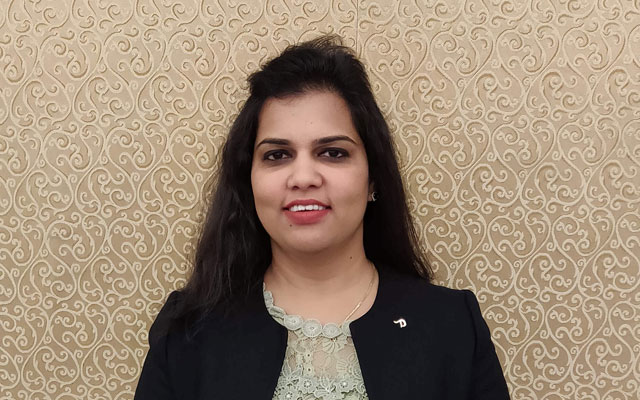
Luckrada Lucksanawimol has been appointed regional director sales – Asia of Best Western Hotels & Resorts, based in the Bangkok regional head office.

Luckrada, better known as Annie, has held senior sales and management roles for a series of major hotels and resorts, both at property and head office levels.

Most recently, she was executive assistant manager at B-Lay Tong Phuket, having returned to the property in 2017.

Her experience also includes serving as director of sales at B-Lay Tong Phuket, during the time it was operated by AccorHotels as part of the MGallery Collection; and as director of sales for the former dusitD2 Patong Resort, which was managed by Dusit International. She was also cluster director of sales for Bangkok-based BHMAsia, overseeing 17 properties in Thailand and beyond.

CLIA announces inaugural ITB Asia cruise seminar for agents

0
An extended season in Singapore for the Sapphire Princess

To support travel agents in Asia, CLIA is organising a cruise seminar at ITB Asia 2018 in Singapore in partnership with eight cruise brands to equip travel agents with the skills to matchmake the cruise products to consumers.

The two-hour seminar, titled Navigating the Cruise Industry Towards Greater Profits, will highlight the latest trends and opportunities for travel agents, as well as share tips on how travel agents can use the different cruise brands’ unique selling points to sell to and attract Asian cruise passengers.

Princess Cruises one of the participating cruise brands; Sapphire Princess pictured

The eight participating cruise brands are Costa Cruises, Dream Cruises, Norwegian Cruise Line, Oceania Cruises, Princess Cruises, Regent Seven Seas Cruises, Royal Caribbean International and Uniworld Boutique River Cruises.

“CLIA’s mandate is to provide essential training, resources and support to Asia travel agents. As the cruise industry continues to grow further in Asia, we look forward to partnering our cruise lines members and host a meaningful seminar for Asia travel agents at ITB Asia 2018,” said Joel Katz, CLIA Australasia & Asia managing director.

Cruise is one of the fastest growing leisure travel segments globally and has been picking up steam in the Asia region. Most Asian markets such as Singapore, Indonesia, India, Mainland China and Malaysia registered double-digit year-on-year growth in passenger numbers.

This year will see 38 cruise lines deployed and more ships in Asian waters. Compared to 2017, the number of large vessels with a capacity of 2,000 – 3,500 passengers will see the most significant increase of almost 50 per cent. Followed by small, upscale ships with a capacity of under 750 passengers expecting a 20 per cent increase in numbers.

South-east Asia is expected to see a significant 20 per cent increase in port calls for 2018 due to the deployment of more ships. The increased inventory of cruise itineraries coupled with Asians’ preference to cruise close to home in Asia, means that travel agents in South-east Asia will have tremendous potential to grow their cruise profits.

The cruise seminar will be held on October 19, 2018, 11.30-13.30 at Marina Bay Sands, Singapore. CLIA will also be at ITB Asia booth P25 from October 17-19, 2018.

This article was updated on October 10, 2018

Growth isn’t the enemy as Asia’s tourism hotspots hit breaking point

0
Regulating traffic at hotspots a chief concern as tourists still want to see icons such as Angkor Wat (pictured)

As overtourism becomes a growing challenge in Asia’s tourist hotspots, industry stakeholders are calling attention to the importance of tourism management.

“While it’s right to understand ‘overtourism’ (literally), what it basically means is a lack of tourism management,” said Willem Niemeijer, founder and CEO of Khiri Travel.

Promoting new destinations is one way to ease crowding, but it is far from the full solution.

Regulating traffic at hotspots a chief concern as tourists still want to see icons such as Angkor Wat (pictured)

Niemeijer said governments need to step in with measures to jump-start development in lesser-known destinations. “The Tourism Authority of Thailand’s (TAT) 12 Hidden Gems campaign is great, but we still need to get international brands in (to attract travellers from around the world)…There should be tax holidays, investment incentives in (the secondary destinations) they want to promote.”

Moreover, Carl Needham, general manager of Peak DMC’s office in Thailand, pointed out: “TAT has done a good job making these new areas look attractive. Still, once people start (flocking to the next new place), there comes question of where’s next, and (so on).”

Some DMCs TTG Asia interviewed at the recent PATA Travel Mart shared that while more travellers are seeking new areas to visit, they typically still want to see icons in popular cities. This highlights the need for better regulation of traffic within tourist hotspots, something the private sector is already actively pushing for.

“There’s a lot of growth still possible even for places at breaking point, it comes down to management,” Niemeijer said.

For example, Peak DMC, which just opened an Indonesia office, will include areas in Bali overlooked by tourists. “We are working on community-based tourism projects that include Mount Batur. For now, lots of tourists merely pass by that area, and communities don’t get to benefit. We’re working with NGOs to open up some of these areas in Bali and beyond,” said Needham.

One way crowds can be managed at tourist sites, Niemeijer said, is through a pre-booking system. “Taking the example of museums in New York, Amsterdam or Paris, you need to buy tickets ahead and there are time slots for bookings. Even though (key attractions are packed with) tons of people, tourists don’t feel that because the traffic is well regulated,” Niemeijer remarked.

When scaled up however, the work of regulating visitor flow will require government involvement. “When (efforts are centred around) the destination, such as Phuket, it becomes a tougher situation.

“To think about issues like where people can build hotels, what public spaces need to stay free, etc, (requires) public sector work… but (as long as) the government allows people to build hotels anywhere they like, (overtourism) will happen,” Niemeijer said.

There is currently a lack of public-private sector collaborations to better manage tourist flows, he stressed.

Likewise, Needham opined that to address crowding and build up new destinations and better distribute tourism benefits to local communities would require partnership between different parts of the tourism ecosystem.

On top of government collaboration, community-level partnerships are also key. “It’s about looking at crowded tourist spots, identifying similar areas (whose communities can benefit from that boom) and expanding operational capabilities there by partnering local NGOs, which have great traction with communities,” said Pravin Tamang, general manager, Peak DMC India.