TTG Asia
Asia/Singapore Sunday, 14th December 2025
Page 1299

Agoda partners JTB to expand Japan accommodation inventory

0

Agoda has joined forces with JTB Corp to strengthen and expand online sales and distribution of Japanese accommodations on both companies’ sites.

The OTA expects this partnership would help improve accessibility to the Japanese accommodation market nationwide, including hotels and ryokans, for both international and domestic travellers.

Agoda, JTB team up to enhance distribution of Japanese accommodations

John Brown, CEO of Agoda said: “We will be able to offer Agoda customers previously inaccessible choices of accommodation throughout Japan by accessing JTB’s extensive inventory.

“Meanwhile, our technology expertise will help JTB to achieve its online travel ambitions for growth more efficiently.”

The partnership will also leverage Agoda’s technological expertise to enhance the competitiveness of JTB’s Rurubu Travel and JAPANiCAN sites by targeting inventory and products to a wider consumer audience.

The partners plan to launch the renewed sites in late 2019.

In addition, under the agreement, Agoda and JTB will conduct user research to better understand the needs and habits of Japanese accommodation providers.

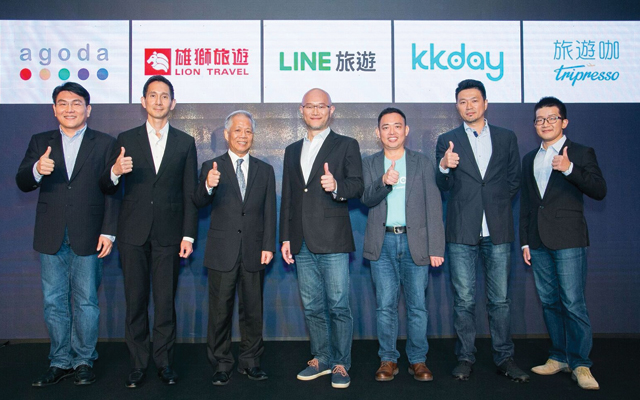
The move comes as Agoda enters a deal to become the sole travel accommodation supplier for Line Travel’s user base in Taiwan, traditionally a key visitor source market for neighbouring Japan. The agreement with Line Travel – the travel metasearch and media platform of the leading Taiwanese messaging app – will come into effect on November 28.

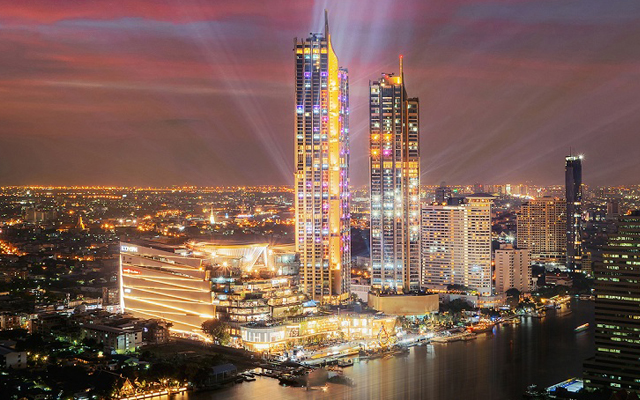
Bangkok’s new river mega-mall seeks to be a ‘destination’

0

New hotels: Capella Sanya, Treeline Urban Resort and more

0

Capella Sanya, China
Capella Hotel Group has unveiled Capella Sanya on Hainan island, a 190-key resort with accommodation categories ranging from ocean-front and garden rooms, grand ocean and garden suites, one-to-four bedroom pool villas, up to a 440m2 chairman’s penthouse.

The hotel was designed by Jean-Michel Gathy and Bill Bensley, with inspiration drawn from the fabled history of China’s ancient Maritime Silk Road. Dining concepts include Lan Ting, a modern Cantonese restaurant styled after a traditional Chinese teahouse; Silk Road, which presents daily menus featuring cuisine from the Mediterranean and Middle East to India, Singapore and Thailand; The Library & Library Bar; and a pool and beach restaurant.

The resort’s 4,020m2 spa features what’s said to be Hainan’s first authentic hamman and a snow cabin that provides a wintry experience amid Hainan’s year-round tropical warmth.

Capella Sanya also offers 2,000m2 of meeting and function facilities, including a ballroom for up to 400 guests in banquet style.
Treeline Urban Resort, Cambodia
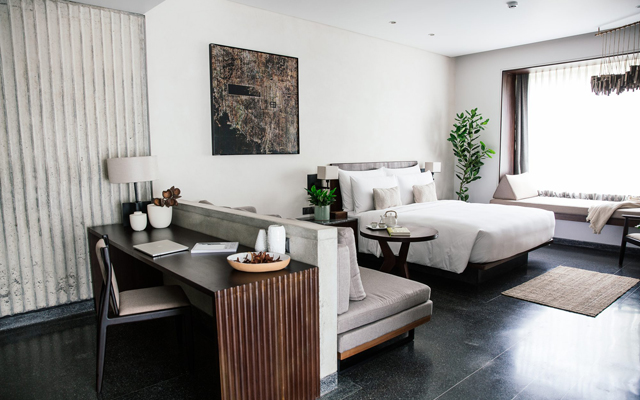
Bangkok-based Hospitality Management and Development Asia is now welcoming guests at its first managed property, the Treeline Urban Resort, in Siem Reap. The new-build boutique designed property has a riverfront location in Siem Reap’s historic quarter, featuring 36 rooms and 12 suites, together with modern culinary outlets including a rooftop pool and bar.

Mӧvenpick Resort Kuredhivaru Maldives
Mӧvenpick Resort Kuredhivaru Maldives has opened its doors on a private island in Noonu Atoll, marking the brand’s debut in Maldives. The resort features 105 villas and suites comprising 72 overwater pool villas, 30 beach pool suites and three beach spa pool residences, each with a private plunge pool.

Guests can choose from four dining experiences: the market-style all-day diner, ONU Marché restaurant and bar; Mövenpick Coffee & Wine Lounge; pool-side restaurant Latitude 5.5; and the overwater Bodumas Seafood Restaurant. Mӧvenpick Chocolate Hour, a key brand signature, will also be staged in the resort lobby daily offering complimentary tasting of chocolate presented in novel ways.

Facilities include the Mӧvenpick Little Birds Club, which offers family-friendly activities and babysitting services, a diving centre, tennis court, gym, water sports centre and spa.

The resort is 45 minutes from Malé by seaplane, and come early 2019 will be accessible by a 15-minute speedboat ride from the new airport on Maafaru island.

Ovolo the Valley, Australia
Ovolo Hotel Group has launched its Queensland flagship, Ovolo the Valley, the result of a a multi-million-dollar transformation of the iconic Emporium Hotel.

Each of the hotel’s 103 rooms come with 24-hour room service, Google Chromecast, phone chargers, Amazon’s Alexa voice service and other amenities. Designed to invoke fun and whimsy, rooms feature colourful elements and commissioned art pieces including eccentric furniture and illustrations. Among other highlights are the rock star suites in honour of the late David Bowie, complete with 1970s inspired velvet lounges and a gold bar.

Facilities include a rooftop swimming pool, gym, sauna, meeting rooms and Ovolo’s standard complimentary inclusions – breakfast, Wi-Fi, in-room mini bar, laundry and happy hour drinks.

Artyzen Habitat Hongqiao Shanghai, China
Located in the greater Hongqiao area, Artyzen Habitat Hongqiao has 188 guestrooms with city views. Artyzen Habitat’s rooms are designed to resemble a home, complete with a living space where guests can relax, and a separate area for sleeping.

Guests will also have access to the hotel’s 24/7 self-service laundromat, gym, as well as the Townsquare cafe. For functions, there is an amphitheatre – where the hotel will organise pop-up events and hold TED talks in – as well as several meeting rooms.


F1 Grand Prix races into Vietnam come 2020

0

A Grand Prix event will be held in Hanoi from April 2020, the first new race to be announced under Liberty Media’s takeover of Formula 1.

The event forms part of Formula 1’s strategy to broaden the appeal of the sport and to reach new audiences around the globe, while also demonstrating a “firm commitment to Asia”. The event is already established in Singapore, China and Japan.

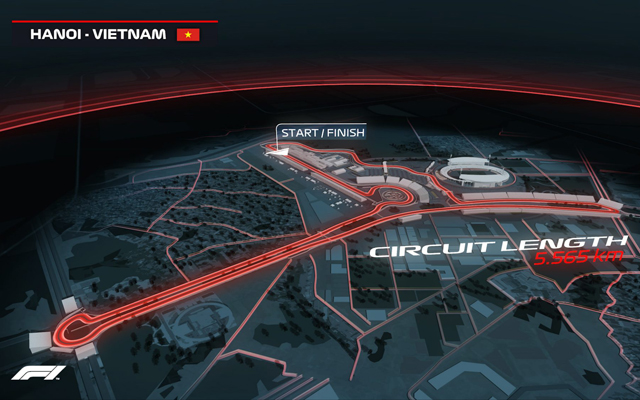
The first new event since Liberty Media’s takeover of F1 will be a street race around a 5.565km track in Hanoi

Hanoi city promoter, Vingroup, secured a multi-year deal to host the Grand Prix, which will begin as a street race using a 5.6km track in the heart of the city.

It will work with Hanoi city authorities and the Formula 1 Motorsport department to bring the event to fruition.

Chase Carey, chairman and chief executive, Formula 1, commented: “Since we became involved in this sport in 2017, we have talked about developing new destination cities to broaden the appeal of Formula 1 and the Vietnamese Grand Prix is a realisation of that ambition.”

Nguyen Duc Chung, chairman, City of Hanoi, said: “(Securing this deal with F1) is a demonstration of Vietnam’s ability to host events on a global scale and attract tourism to the country. It provides an opportunity for inward investment to Vietnam and importantly to bring the exciting wheel to wheel racing of Formula 1 to the people of Vietnam.”

On top of bringing social benefits such as job creation, infrastructure upgrades and potentially more international events being hosted in Vietnam, the event also provides an opportunity to “proclaim the first Vietnamese car manufacturer, VinFast, to millions of audiences around the world”, Nguyen Viet Quang, vice chairman and CEO, Vingroup, shared.

Pent-up demand showing up strong for less-than-ready Boracay

0
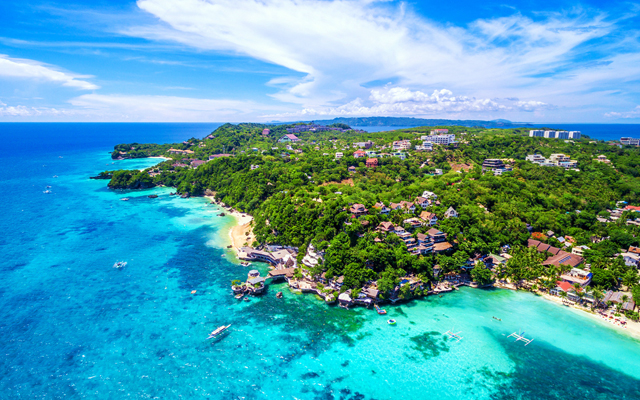
About 60 establishments in Boracay have been issued with notices of violation

The Philippine trade is observing a strong pent-up demand for travel to Boracay from January 2019 onwards, but what’s less clear is whether the popular beach destination, which reopened last month after a six-month closure, is ready to cope with the visitor influx.

Alta Briza Resort Boracay is already fully booked from January till March, director of sales and marketing, Teody Espallardo, told TTG Asia.

Trade players continue to question the destination’s readiness to receive tourists

“Boracay has an appeal of its own. During its six-month closure, tourists were diverted to Cebu and Bohol but they (the two destinations) did not replace Boracay,” Espallardo explained.

Coast Boracay and Blue Marina Resorts general manager, Randy Salvador, said the domestic market currently dominates visits to the island but the foreign market will likely catch up in 1Q2019.

“This quarter we expect South-east Asian nationalities and by early next year, we expect more Europeans, Americans and Australians,” Salvador said.

Still, hotels, resorts and travel agencies are managing tourists’ expectations by informing them beforehand that while Boracay’s beaches and waters have been cleaned up, the main road’s construction is still ongoing. Moreover, transport can be a problem and only 157 hotels out of 500 have been accredited and reopened at press time.

Wholesaler Blue Horizons Travel and Tours (BHTT) disseminated to overseas agents a two-page report* detailing the situation to protect itself from complaints and refunds especially from “sensitive” source markets like Europe, a major one for the company, said senior sales and marketing manager Marjorie Aquino.

Tourism Congress of the Philippines president Jojo Clemente said it’s good that the pent-up demand for Boracay is from January onwards, as this buys the island some time for further rehabilitation before the arrival of more tourists.

Clemente, however, is concerned about the absence of night lights on the beachfront. Lights nailed to trees have since the island’s closure been removed as part of broader environmental rehabilitation efforts.

“Another accident waiting to happen” is the “dangerous” use of a wooden plank for passengers disembarking from boats, Clemente said. Safer options should be provided for visitors to get on and off boats, he demanded.

Espallardo’s concerns are how the authorities will monitor the carrying capacity of 19,000-plus tourists per day and confusing statements from the Department of Environment and Natural Resources, which is in charge of the island’s rehab, which can change “on a daily basis”.


* The new ayes and nays in Boracay per BHTT’s overview report:

Ayes
‘One entry, one exit’ policy – before taking the boats to Boracay, tourists need to queue up at the tourism information counters outside the terminal building, log in their names, present their resort voucher/confirmation then ‘rubber stamped’ on the arm with the insignia that says ‘verified’. The guard at the pier will check this mark before allowing tourists to board the waiting boats.

Nays
On beaches – sunbeds, umbrellas, cocktail tables and couches; smoking and drinking; hawkers and vendors; beach parties, fireworks display and sand-making activities.

Water and land activities – diving, ATV driving, island hopping and parasailing

Bigger budget allotments for Malaysia’s tourism in the works

0

Malaysia is planning generous budget allocations to tourism, including RM100 million (US$24 million) in matching grants to support the private sector in promotional and marketing campaigns overseas.

The country’s finance minister, Lim Guan Eng, announced plans for the grant scheme while tabling the 2019 Budget.

Grants to encourage private sector players to promote the destination overseas

The scheme could help the Ministry of Tourism, Arts and Culture Malaysia to achieve its target of 30 million foreign tourist arrivals by 2020, contributing RM100 billion in tourist receipts. Last year, the tourism industry contributed 14.9 per cent of the national GDP or RM201.4 billion.

For some inbound tourism players, grants are much needed as international marketing can be a costly exercise.

Uzaidi Udanis, president, Malaysian Inbound Tourism Association, said: “The cost of promotions is not cheap. For example, to participate at WTM in London, each tour operator has to spend at least RM30,000 for three days.”

Moreover, Sutra Group of Companies managing director, Syed Razif Al-Yahya pointed out the private sector’s complementary role in destination marketing.

He explained: “Tourism Malaysia may not have a physical presence in certain overseas markets due to budget constraints but inbound operators strong in those markets could apply to use the funds to do their own marketing.”

Lim further shared that half the country’s tourism tax proceeds, estimated at RM50 million, will be shared with the state governments to encourage and assist tourism activities in these states.

In addition, the government will make available RM500 million worth of loan facilities via the SME Tourism Fund with SME Bank at a two per cent interest subsidy. This will assist handicraft makers and homestay operators to expand their businesses.

The finance minister added that the federal government will provide tax free incentives to Swettenham Pier in the form of duty-free shops in a bid to improve cruise tourism.

Moreover, the Langkawi’s duty-free island status will be further expanded and enhanced, while Pangkor Island will become the country’s second duty-free island after Langkawi.

Meanwhile, to encourage domestic tourism, the government proposed to impose a departure levy for all outbound travellers by air starting June 1, 2019.

The proposed rate is two-tiered, RM20 for outbound travellers to ASEAN countries and RM40 to other countries, which the government said is consistent with Thailand (US$20), Hong Kong (US$15) and Japan (US$10).

Hyundai, Kia pump US$250m into Grab in electric car push

0
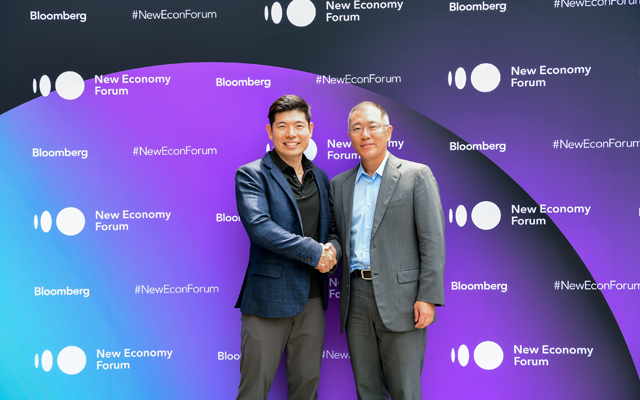
Grab's Anthony Tan (left) with Hyundai Motor Group's Euisun Chung

Hyundai Motor Company and Kia Motors Corporation will invest an additional US$250 million into Grab as the three enter a partnership to pilot electric vehicle (EV) programmes across South-east Asia.

Under the EV partnership, Grab and the Hyundai Motor Group affiliates will also bring together stakeholders from the EV industry to collaborate on measures to improve EV adoption and awareness in the region.

Grab’s Anthony Tan (left) with Hyundai Motor Group’s Euisun Chung

Grab, Hyundai and Kia will launch a series of EV pilot projects in South-east Asia, starting with Singapore in 2019. The pilot projects will focus on utilising EVs to maximise cost efficiencies for Grab’s driver-partners.

The deal will see the carmakers add 200 vehicles to Grab’s fleet, according to a Straits Times article.

The partnership will also include working with regional stakeholders including governments and infrastructure players to improve EV infrastructure in the region, such as through the building of a network of quick-charge stations.

In addition, the partners will explore the development of customised maintenance packages to Grab EV drivers and conduct research into how EVs can be most efficiently deployed in South-east Asia under its hot and humid climate conditions.

The three companies will further explore how to customise EVs to optimise them for mobility service platforms.

The additional investment builds on Grab’s existing strategic partnership with Hyundai and brings Grab’s current fundraising raised to US$2.7 billion. Grab is on track to raise over US$3 billion by the end of this year.

Investors in Grab’s current financing round include Booking Holdings, Microsoft, Toyota, and global financial institutions such as OppenheimerFunds, Goldman Sachs Investment Partners and Citi Ventures.

Hyundai first invested in Grab in January, and the two companies proceeded to exploring collaborations in the EV sector.

Grab’s latest initiative expands its cooperation with the Korean automotive group to include Kia.

In August, Grab announced a partnership with Singapore’s energy utilities provider, SP Group, to use SP Group’s public EV charging network for its EVs.

“As home to one of the world’s fastest growing consumer hubs, South-east Asia is a huge emerging market for EVs,” commented Youngcho Chi, Hyundai Motor Group’s chief innovation officer and head of strategy & technology division.

WTTC Global Summit in Seville extends invitation to wider industry

0
The skyline of Seville at dusk

In a departure from its by-invite tradition, the 2019 WTTC Global Summit, set to take place in Spain’s Seville on April 3-4, is now open to industry professionals keen to attend the event.

This will be the first time industry professionals will be able to attend WTTC’s annual summit by paying a recovery fee — interested participants can write to summit@wttc.org for further details. Until now, the summit has been by invitation only, encompassing WTTC members and travel leaders.

The skyline of Seville at dusk

The 2019 summit will be centred on the theme of Changemakers to “(outline) a future vision of travel & tourism with the pioneering individuals and disruptive ideas that will make it happen”, Gloria Guevara, WTTC president & CEO, said in a statement. Entrepreneurship, innovation, and inclusivity will be at the core of conversation throughout the summit.

WTTC has revamped the Tourism for Tomorrow Awards categories to introduce a special Changemakers Award to mark the summit’s theme, alongside the Social Impact Award, Destination Stewardship Award, Climate Action Award and Investing in People Award.

Applications for the Tourism for Tomorrow Awards are open and will close on November 14, 2018. Visit wttc.org/T4TAwards for category guidelines, case studies on past winners, and the application form.

Meanwhile, destination hosts Ayuntamiento of Seville, Turismo Andaluz and Turespaña are leveraging the WTTC Global Summit to celebrate the 500th anniversary of the departure of the first circumnavigation of the world, which set out from Seville.

Juan Espadas, Mayor of Seville, said: “The global summit will demonstrate the extraordinary economic and tourist potential of Seville. It offers a great opportunity for entrepreneurs to recognise the possibilities of investment in the city and for tourists to see Seville as a destination of global importance.”

Francisco Javier Fernandez, tourism minister of Andalusia, added: “The WTTC Global Summit is a great opportunity to continue strengthening the international positioning of Andalusia, which is known as one of the world’s leading tourism regions.”

New CEO heads up Scott Dunn

0

Luxury tour operator Scott Dunn has named COO Sonia Davies as global CEO, an appointment that will take place with immediate effect.

Former CEO Simon Russell will relocate to San Diego in the spring and take up the role of international director to further develop Scott Dunn’s global expansion. Scott Dunn Asia CEO, Chang Theng Hwee, will continue in his role of spearheading growth to further establish the brand in the region.

Davies joined Scott Dunn in London in January 2018 as COO, leading the company’s global business operations of marketing, people, IT and product. Most recently she also managed the acquisition and integration of Asian-based tour operator Country Holidays, which now trades as Scott Dunn in Singapore and Hong Kong.

She has worked across a number of different industries, including chief commercial officer at private aviation company NetJets and European Change Director at Sysco.

These roles, along with eight years in strategy consulting at Bain & Company and The Parthenon Group, have given Sonia significant experience leading and working with UK based, as well as pan-European and global teams.

Smart hotels drive revs up in Singapore

0
The guide identifies innovations that help Singapore hotels address manpower challenges

The Singapore Tourism Board (STB) and The Hotel Innovation Committee (HIC) yesterday unveiled a slew of projects that encourage technology adoption and innovation by hotels.

Supported by STB, HIC launched the Smart Hotel Technology Guide outlining the vision of a smart hotel and relevant technologies already available to help realise this vision.

HIC’s guide identifies innovations that help Singapore hotels address manpower challenges

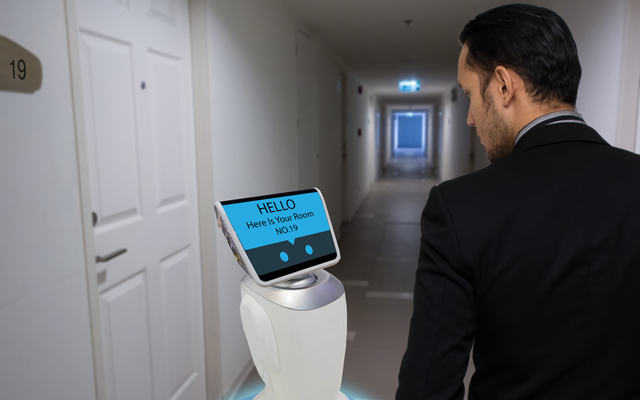
The guide puts forth a vision of a smart hotel as one that allows guests to check-in independently and asses their room through a smart device, with a robot delivering their luggage to the room.

A video analytics system supporting facial recognition could zero in on a guest leaving the hotel with a suitcase and send an electronic bill to the guest to complete the check-out process.

Food and drinks consumed from the minibar could be automatically computed in the bill, eliminating the need for a manual stocktake.

The guide also features case studies of hotels and organisations that have successfully implemented such innovative solutions.

According to a joint statement released by STB and the Singapore Hotel Association (SHA), which leads HIC, the vision “is no longer a pipe dream… as many of the technology solutions required are already available in the market today”.

Technologies identified in the guide include real-time marketing distribution and review tracking solutions, artificial intelligence, machine learning and predictive analysis, biometrics recognition and video analytics, the Internet of Things, among others.

“It is critical for the hotel industry to look beyond the present and learn to innovate and be future-ready,” said Ong Huey Hong, STB’s director of hotels and sector manpower.

While many hotels are already working towards learning to innovate and be future-ready, she said they may have limited capacity to explore and evaluate the many solutions available.

“Hence, the guide and the directory are very good starting points for solution providers to showcase their offerings to the industry and for hotels to search for smart solutions that best meet their needs,” she added.

To facilitate link-ups between hotels and technology vendors, HIC also launched the Hotel Technology Directory. To date, more than 70 local and foreign vendors with solutions ranging from facial recognition to Internet of Things can be found on the directory, providing hotels with a one-stop portal to source for technological solutions and start their transformation journey.

With the first Smart Hotel Technology Guide focussed on front-of-house operations, plans are underway to create a version targeting the back-of-house in 2019.

Other collaborations between STB and HIC planned include a new Hotel Innovation Challenge, which will seek innovations in emerging solutions covering areas including big data, blockchain technology and sustainability, on top of housekeeping and F&B jobs.

As well, Workforce Singapore, in partnership with STB and SHA and supported by the Food, Drinks and Allied Workers Union, has embarked on a Job Redesign Project to develop a Job Redesign Toolkit for the hotel industry. Slated for publication in the first half of next year, the JR Toolkit will complement the hotels’ transformation journey by helping them identify opportunities for job redesign.

Alongside these efforts, the new Advisory Committee on Human Capital Progressive Practices for Hotels, led by SHA and supported by STB, WSG, FDAWU and NTUC’s Hospitality and Consumer Business Cluster, will also work with the hotel industry to develop more progressive human resources practices to equip the industry with a future-ready workforce.