Four top executives at Jet Airways have stepped down as lenders continue seeking investors for the troubled airline.
The four are CEO Vinay Dube, CFO Amit Agarwal, chief people officer Rahul Taneja and company secretary Kuldeep Sharma, the Economic Times of India reported.
Jet Airways has suspended operations
Last month, the airline suspended operations after failing to secure funds. Etihad Airways has since made a highly conditional bid, but at a fraction of what the airline needs.
The airline is also being probed by the Enforcement Directorate on its deal to sell 50.1 per cent of its loyalty rewards programme Jet Privilege to Etihad, according to the report. The Serious Fraud Investigation Office of the corporate affairs ministry is looking into alleged irregular transactions by Jet’s founder Naresh Goyal.
NZ$35 will be levied on most tourists to New Zealand
Sustainability is now a key focus of New Zealand’s tourism industry, as indicated in Tourism 2025 & Beyond – a Sustainable Growth Framework, released yesterday at Trenz 2019, which is currently taking place in Rotorua.
This announcement is an update of the Tourism 2025 Growth Framework, first released in 2014.
Milford Sound, New Zealand
Chris Roberts, chief executive of Tourism Industry Aotearoa (TIA), a membership association representing all sectors of New Zealand tourism sector, said: ”The Sustainable Growth Framework keeps our focus on the industry firmly on growing our value to individuals, communities, the economy and our visitors.
“The key change is that sustainability is now at the centre of Tourism 2025, providing a clear pathway towards a sustainable tourism industry for New Zealand. We have added visitor, community and environmental goals, and pushed our economical ambition up to NZ$50 billion (US$32.9 billion) a year in annual tourism revenue by 2025,” he shared.
This represents a marked increase from the original annual tourism revenue goal of NZ$41 billion by the same year. In 2018, progress towards the goal has exceeded expectations, with tourism contributing NZ$39.1 billion to the country.
With the tourism industry increasingly recognising and adopting the Maori values of guardianship, hospitality and work-togetherness, Roberts added that these foundations have been incorporated in the new directive.
More than 1,000 tourism businesses have now signed up for the newly released New Zealand Tourism Sustainability Commitments, he revealed.
In November 2018, Tourism Industry Aotearoa and six other New Zealand organisations also launched Tiaki, Care for New Zealand, an initiative that actively encourages international and domestic travellers to act as guardians of New Zealand.
Roberts, who organises Trenz on behalf of the Tourism Industry New Zealand Trust, said that there are signs of New Zealand’s continuing popularity as a destination, evident from the 386 buyers from 30 markets – an increase over last year – attending the annual tradeshow in Rotarua’s Energy Events Centre this year.
International buyers hail from Australia, China, the US, the UK, Germany, Japan, Brazil and Indonesia, with over 15,000 meetings expected to be held until May 16.
Accor is in talks to invest up to US$50 million in Indian budget hotels company Treebo Hotels, Live Mint reports.
Quoting an anonymous source, the report said Accor had put up a term sheet for a minority stake in Treebo, and that both parties are in advance stages of discussion.
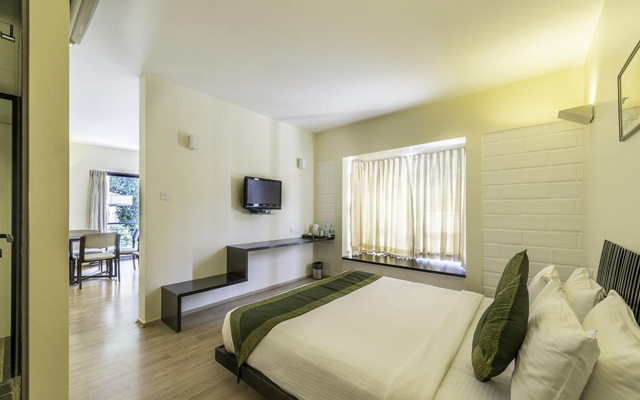
Treebo Trend Spektrum Suites in Mysore, India
If the deal goes through, it will also give Accor the right to acquire a majority stake in Treebo at a later date, he said.
In 2017, Hong Kong-based investment firms Ward Ferry Management and Karst Peak Capital led a US$34 million investment in Treebo, which also saw participation from its existing investors Bertelsmann India Investments, Matrix Partners, and SAIF Partners.
To date, Treebo has raised more than US$55 million.
Live Mint quoted another source, who said the Treebo network has grown at a fast pace, from over 70 since its most recent financing in 2017 to around 500 today.
In October, Live Mint reported that Treebo and FabHotels had entered merger talks, which is expected to help them compete against the heavily funded Oyo.
Oyo raised US$1 billion in September in a funding round led by Softbank, valuing the company at around US$5 billion.
UFTAA's meeting wants to show that Sri Lanka is ready to receive tourists; train on the Nine Arch Bridge pictured
An international body of travel agents, the Universal Federation of Travel Agents Associations (UFTAA), has announced plans to hold its next meeting in Sri Lanka to support the destination which took a devastating hit in the wake of last month’s Easter Sunday attacks.
UFTAA president Sunil Kumar Rumalla told reporters in Colombo last Friday: “UFTAA board member, Trevor Rajaratnam, appealed to us to try and look at Sri Lanka as a destination for our next immediate event which is normally held in August (in another country).”
UFTAA’s meeting wants to show that Sri Lanka is ready to receive tourists; train on the Nine Arch Bridge pictured
Rajaratnam, who is also the president of the Travel Agents Association of Sri Lanka, told TTG Asia that he was preparing a formal letter address to UFTAA’s board of directions to look into meeting earlier in Colombo in June or July. Some 100 tourism leaders and experts from 30 countries are expect to attend.
Rumalla also informed reporters that the event was fast-tracked by a month or so as it could “serve as a message to the whole world that a global body of tourism experts and leaders is present in Sri Lanka”.
He added UFTAA is committed to supporting Sri Lanka, similar to its support of Turkey to rebuild confidence in the country in the aftermath of terrorist attacks there three years ago.
“We are very keen to see that this most wonderful country is brought back to normalcy as soon as possible,” Rumalla shared.
In the meantime, Emirates and SriLankan Airlines have pledged their support to facilitate the UFTAA mid-year forum by offering concessionary airfare to delegates coming to Sri Lanka. Hotels are also expected to offer concessionary rates for foreign delegates attending the forum.
UFTAA is also considering holding an event at one of the affected hotels on Easter Sunday. More than 250 people including 40 tourists died in the attacks on three churches and three luxury hotels in Colombo. Two of the hotels are have reopened, but a third hotel, the Shangri-La Colombo, has yet to reopen.
Tours and activities have to become mobile-first to better capture customers
With Arival bound for Bangkok come June 24-26, the organiser has released a teaser of the five top tips for business owners looking to tap into the fast-growing tours and activities sector.
Among the speakers and presenters sharing their insight and new data at Arival are Google, videc, CrescentRating and Dragon Trail.
Ahead of the event, Arival has unveiled some areas that will be covered by these expert speakers.
Tours and activities have to become mobile-first to better capture customers
Become mobile-first
Super apps, OTAs, direct digital bookings and ticketing tech are transforming the sector. Mobile-first brands across Asia are redefining just about every consumer industry. Tours, activities and attractions are no exception. Asia’s travellers expect same-day, direct-to-gate mobile booking, ticketing and more. And they’re going to choose those brands that can deliver.
Let a million experiences bloom
In-destination operators need to encourage immersive sensory experiences that connect travellers to a place, people, cuisine or culture.
Seasonal activities and one-off events now drive 50 per cent of travellers to book a holiday before flights or accommodation are sorted.
“The need for authentic experiences is forcing travel brands to create product that is more personalised, adventurous, aligned to local culture and takes travellers on a journey of self-discovery,” said Douglas Quinby, CEO of Arival. “Travellers want us to move beyond the one-size-fits-all discounted ticket model.”
Encourage sustainability
According to Virtuoso, travellers in their 20s and 30s are three times more likely to book a sustainable tourism product compared to those in their 40s and 50s.
“Tourists of tomorrow will increasingly care about helping host communities, respecting indigenous cultures, consuming Fairtrade local produce, conserving wildlife, reducing plastic use, and protecting coral reefs, forests and historic sites,” says Anula Galewska, responsible business manager at Urban Adventures.
“The challenge for tourism operators is how to integrate best practices into their day-to-day activities that support these sustainability goals and advance the business.”
Galewska will present a responsible tourism workshop at Arival, as part of a series of talks on sustainability and social enterprise in travel.
Harness the power of NTO marketing
“If an NTO kicks open a marketing door with its dollars, the private sector should walk through,” says PATA CEO, Mario Hardy, who will lead a roundtable discussion at Arival on the role of NTOs and how operators can work with them.
Hardy says the private sector should partner with NTOs, which often have an agenda – and budget – to promote secondary destinations, ‘sustainable’ tours, new attractions and cultural activities that reflect the destination in a way consistent with NTO marketing.
Innovate – even if it means failing
“You can’t grow if you’re not willing to risk failure,” says John Sharpe, founder of Riverlife Adventure Centre of Australia.
Most operators start with a passion, but then face essential questions: What’s next? How do we grow? Leaders from innovative in-destination companies such as Riverlife, I Love Asia Tour, Hello Tours, Hong Kong Foodie Tours, socialtours, Aquawalk, KidZania and more will share their stories.
Arival is an event dedicated to advancing the business of creating in-destination experiences. Arival aims to establish tours, attractions and activities as the most important sector of the global travel and tourism industry. Since its foundation in 2017 by Douglas Quinby, Bruce Rosard and Alex Kremer, Arival has held seminal, industry events in Las Vegas (2017 & 2018) and Berlin (March 2019).
The revolution continues in Bangkok (June 24-26, 2019), Orlando (October 28-31, 2019) and Berlin (March 1-3, 2020).
Airbnb has named Sean Joyce, a global leader in trust, safety and privacy, as its first-ever chief trust officer.
In this new role, Joyce will be responsible for developing and implementing strategies to “ensure Airbnb is one of the most trusted communities in the world”, with robust efforts focused on identity and reputation, online and offline safety and fraud prevention, and partnerships with law enforcement, the company announced.
Sean Joyce
“Airbnb’s hosts and guests are not a product – they are our community and we have a responsibility to protect their trust,” said Belinda Johnson, COO of Airbnb.
Joyce joins Airbnb from PwC (PricewaterhouseCoopers), where he was a principal in PwC’s Advisory Practice, the US and Americas cybersecurity & privacy leader and a member of their global Cybersecurity and Privacy leadership team.
Prior to that, Joyce spent more than 26 years with the Federal Bureau of Investigation (FBI) and departed after serving as deputy director, the highest ranking career employee in the organisation.
He also held numerous other roles with the FBI, including leading the international operations division, where he oversaw 75 locations overseas.
“Trust is a foundational element to every interaction in our lives. It is what Airbnb’s community is built on and what enables the sense of belonging between people from different communities and cultures. My goal is to help make Airbnb the most trusted online and offline community in the world, and I am incredibly excited to work with the team at Airbnb to achieve this,” said Joyce.
Joyce will relocate to San Francisco and begin his role on May 17, 2019, reporting to Johnson and serving on Airbnb’s executive team.
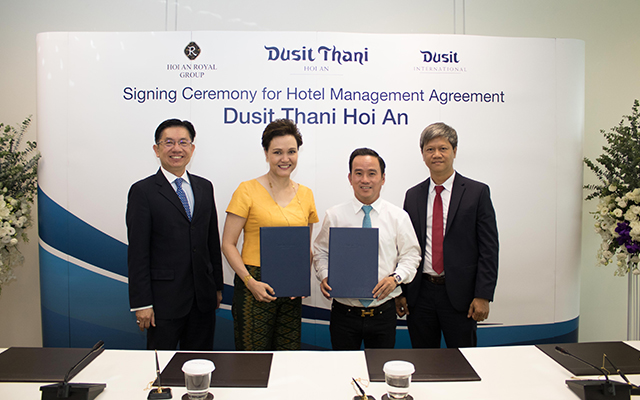
Dusit International's Lim Boon Kwee and Suphajee Suthumpun; and Hoi An Royal Group's Nguyen Phu Quy and Le Huy Khang at the signing ceremony at Dusit International’s headquarters in Bangkok
Dusit International has signed a hotel management agreement with Vietnam-based property developer Hoi An Royal Group to operate the five-star Dusit Thani Hoi An, the first Dusit Thani branded hotel in Vietnam.
Located in Dien Ban Town near the port of Hoi An, the resort is set to open in 2021 with 180 guestrooms and 69 luxury villas. Resort facilities will include a large outdoor swimming pool, gym, spa several function rooms, and a bar and lobby lounge. Wellness will feature heavily on the menu of the resort’s all-day dining restaurant.
Dusit International’s Lim Boon Kwee and Suphajee Suthumpun; and Hoi An Royal Group’s Nguyen Phu Quy and Le Huy Khang at the signing ceremony at Dusit International’s headquarters in Bangkok
Nguyen Phu Quy, chairman of the Hoi An Royal Group, commented: “Hoi An’s reputation as a must-visit destination just keeps going from strength to strength. The town welcomed almost five million visitors last year – up 50 per cent on the 2.4 million who visited in 2017.”
From the resort, Da Nang International Airport is 30 minutes away by car, while Hoi An’s Riverside and Old Town centre can be reached in under 10 minutes.
Dusit Thani Hoi An will be Dusit’s second property in Vietnam, following the opening of the Dusit Princess Moonrise Beach Resort in Phu Quoc in May last year.
Vivid Sydney returns for its 11th year in 2019 with more family friendly fun than before.
The festival will transform the city from May 24 to June 15, with large-scale light installations and projections, free family events, and creative ideas and workshops for children, teens and families.
Minister for jobs, investment, tourism and Western Sydney Stuart Ayres said: “With this year’s festival set to run for 23 days, families will have more time to take in the growing number of attractions and locations for this much loved event, and to visit more than once for the ultimate Vivid Sydney experience.”
Destination NSW CEO and Vivid Sydney executive producer, Sandra Chipchase, said: “There are nine precincts with illuminations and projections that light up the city and the imagination, plus some fun, hands-on ideas sessions to inspire those inquisitive, growing minds.”
Walk on the wild side
It’s not often you see tigers roaming free around Taronga Zoo. With Lights for the Wild, visitors follow an illuminated trail which winds through the zoo’s grounds and meet the giant multimedia light sculptures, from the magnificent Sumatran tiger and her new cubs to a swarm of tiny buzzing bees and a gorilla family.
Electric Wonderland
The Samsung Electric Playground at First Fleet Park is a giant illuminated wonderland inspired by features of the new Galaxy S10. Kids – big and small – can choose their own adventure, from playing with light patterns to enjoying views and other playground-like activities.
Pixar lights up
The Argyle Cut in The Rocks is back in 2019 with a new Pixar Animation Studios Installation. The creative light projection is a visual retrospective of behind-the-scenes artwork and animation of beloved Pixar characters.
Get among the art
‘Look but don’t touch’ doesn’t apply here, as kids are encouraged to participate.
Let it Snow is an immersive installation in Circular Quay that creates the sensation of standing under snowflakes, walk through it and feel the snow flurry around you. Beetopia is a touch-sensitive, giant glowing bee hotel which emits the smell of honey. KA3323, an interactive satellite dish overgrown with alien plant matter, reacts to the sounds of space.
Set up camp
Layers of light, sound and puppetry reflective of land and water will transform Exchange Place in Barangaroo into a Winter Camp. A six-metre-tall puppet Marri Dyin (Great Woman) is the embodiment of a contemporary spirit that recognises the influence of First Nations women, including Barangaroo, a Cammeraygal leader of the Eora Nation who lived in Sydney. You can find her every evening sitting and contemplating by the fire at her campsite and on Thursday to Sunday evenings she hunts and gathers along Wulugul Walk.
Play the harp
The Cascading Harp at the Chatswood precinct resembles a giant rope curtain adorned with clusters of traditional bells, LED lights and music that chime in time to the movement of the ropes. Watch children weave in and out of the ropes, running their fingers along the jangling bells.
A place to call home
Parents will have very different memories of dancing at Home nightclub back in the day, as did house DJ Kate Monroe before she had kids. She created Kiddo Disco so parents could boogie on down with their kids under the disco ball. The little ones can participate in disco dancing lessons and play games to positive, kid-focused tunes, while mum and dad relax in a safe, kid-friendly environment.
I believe I can fly
Volaré, which means ‘to fly’ in Italian, is the newest ride at Luna Park and claims to be Australia’s largest and highest wave swinger. So strap in and enjoy the ride.
Discover what lies beneath
Showing there’s more to Sydney Harbour than what we see above the surface, this year, Customs House will be transformed into an underwater wonderland. Under the Harbour is deep-dive underwater encounter that draws visitors in to a watery wonderland of neon sea creatures.
Guests who book a Superior Room between now and December 31, 2019, will enjoy a rate starting from 1,499 baht (US$48) nett per night, including complimentary Wi-Fi, and buffet breakfast for two people at the resort’s Thiwaratree restaurant.
Tawaravadee Resort
The hotel is located in Thailand’s Prachinburi province, two hours outside of Bangkok. It features 199 rooms and suites, an outdoor pool, a fitness centre and a spa, while a range of outdoor activities and sports such as archery, tennis, badminton, cycling and a golf driving range are also available. F&B options include the Thiwaratree restaurant and lobby lounge.
Blecharczyk: Airbnb keen to work with local regulators
Amid regulatory issues it faces in different parts of the globe, Airbnb is keen to work with local regulators to thrash out the issues and grey areas, according to its co-founder and chief strategy officer, Nathan Blecharczyk.
“Short-term home rentals are here to stay and of course there should be guidelines… and that is something we strongly recognise too,” said Blecharczyk during the PATA Annual Summit in Cebu City last Friday.
Blecharczyk: Airbnb keen to work with local regulators
“Every municipality and countryside has to draw the line”, and with issues in Asia vastly differing from Europe, for instance, Airbnb is very much keen to engage in dialogue, he added.
The sharing economy is a “new paradigm, (so) there are some bumps” but “overall it is going more smoothly” for Airbnb as it achieved global scale.
Blecharczy cited Airbnb’s experience in Japan where it had a tough period of transition a year ago but the country is now one of its fastest-growing markets. It is understood that Japan required Airbnb hosts to register their properties and limited home sharing to a certain number of days per year.
Blercharczyk, who is also the chair of Airbnb China, said it is now the biggest homesharing platform in China, with the domestic market making up a majority of demand although it started mainly for China outbound homeshare.
Commenting on Airbnb’s strategic investments including buying into Oyo, Blecharczyk explained: “There is so much happening in the industry right now, so many new models emerging and there is basically a new ecosystem emerging and within that ecosystem, new alliances emerge”.
He also noted the “interesting trend” of hospitality groups like Marriott International moving to offer apartment-like accommodations and more entrepreneurs joining the fray. “All of these are emerging in new interesting ways and of course we want to be a platform that set them off”.
Notably, Airbnb will soon expand into the “flights space”. “It’s going to be something about improving the experience,” said Blecharczyk, without divulging further details but added that it would not involve buying an airline or selling air tickets.