Royal Caribbean International has rolled out RoyalUp in Asia-Pacific, its new bid-based upgrade programme for guests to score upgrades to their staterooms.
Guests booked on eligible sailings will be notified via email on stateroom upgrade options available 45 days prior to departure, and will be invited to make an offer online.
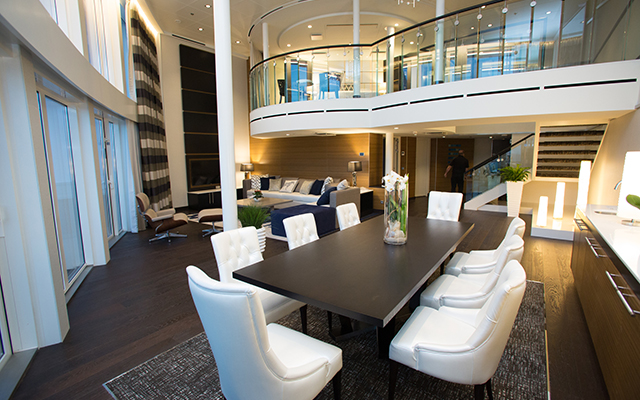
Loft Suite
Accepted offers will be automatically charged, and guests will be upgraded to their desired staterooms. In the case of unsuccessful bids, guests will keep their original staterooms without incurring any charges. Bid offers are based on double occupancy, so only the first and second guests will be charged, even for triple and quadruple sharing staterooms.
The RoyalUp programme is currently available for most Royal Caribbean International ships, including Voyager of the Seas in Singapore. Guests will have a chance to bid for upgrading to a variety of higher category staterooms including the two-storey Loft Suites on available sailings of the Oasis and Quantum Class ships.
Angie Stephen, managing director, Asia-Pacific of Royal Caribbean Cruise, said: “We are seeing very strong response for RoyalUp from our other markets because of the great value it brings to our guests, and we believe that many guests in our region will likewise take advantage of this programme to pamper themselves even more on our cruises, starting from their accommodation.”
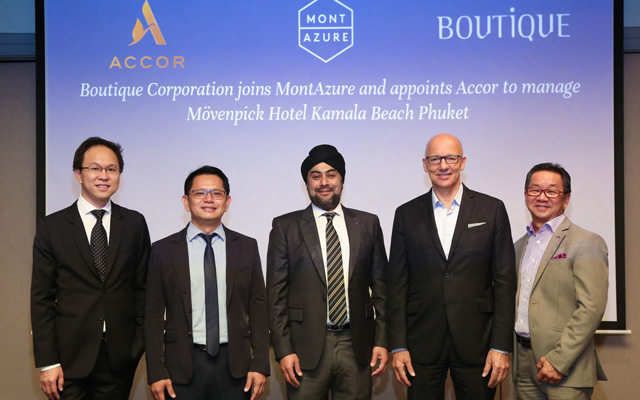
From left: Boutique Corporation's Ekanut Ungphakorn; MontAzure's Setthaphol Boottho; Boutique Corporation's Prab Thakral; Accor's Patrick Basset and Victor Pang
Boutique Corporation has appointed Accor to manage its new 230-room hotel under the Mövenpick brand, which will be located at MontAzure, an integrated resort community in Kamala, Phuket.
The 230-room Mövenpick Hotel Kamala Beach Phuket is set to open in 1Q2021.
From left: Boutique Corporation’s Ekanut Ungphakorn; MontAzure’s Setthaphol Boottho; Boutique Corporation’s Prab Thakral; Accor’s Patrick Basset and Victor Pang
Prab Thakral, president and group CEO of Boutique Corporate, said: “Phuket is one of the world’s most sought-after tropical destinations, well-known for its beautiful beaches and a plethora of tourist attractions.
“We were impressed by the development quality of the MontAzure project in Kamala, and are fortunate to expand our presence with the upcoming Mövenpick Hotel Kamala Beach Phuket. This is our second hotel managed by Accor, targeting families with children-friendly facilities.”
Avis recommends road trips in Europe as part of Mediterranean Luxe campaign
Avis has partnered with Mediterranean Luxe for a second year to roll out its exclusive road trip recommendations.
This year Croatia, and its capital city Zagreb, joins the line-up of Mediterranean Luxe partner countries which also includes Spain, France and Monaco.
Avis recommends road trips in Europe as part of Mediterranean Luxe campaign
Angeline Tang, regional director – leisure travel & partnerships, Asia, Avis Budget Group said: “Our continued engagement with Mediterranean Luxe helps travellers discover and explore some of the region’s most scenic spots by road and helps guide them to the best routes to make the most of their trip. Our prestige fleet allows to travel in luxury while to soaking in the local culture, discovering hidden gems not (reachable) by public transport and giving them the freedom to plan and experience their own unique adventure.”
Avis Prestige provides luxury car rentals in Mediterranean Luxe partner countries such as France where customers can experience the scenery in premium vehicles such as an Audi or Mercedes-Benz. As well as the comprehensive travel guides, Avis provides its customers with a list of recommended scenic routes, undiscovered locations and driving rules for each country.
Avis has a guide to the latest destination to the partnership, Croatia, offering travellers a scenic driving experience along the Adriatic Highway. The coastline runs along a beautiful beachside stretch and vantage point to views of mountains, parks and ocean.
In France, Avis’ recommended journey showcases the southern coast, starting in Montpellier and venturing through Nîmes, Provence, the seaside town of Toulon and Saint Tropez.
Another road trip Avis recommends is to the Bay of Biscay which takes drivers right to the Spanish border starting from Bordeaux through the Parc Naturel Régional des Landes de Gascogne – a national park famed for its scenery and abundant birdlife.
Travellers can also access Avis guides to explore other key locations in Spain by road to discover the cultural hubs of Barcelona and Bilbao, as well as the vibrant capital Madrid and resorts on the Atlantic and Mediterranean coasts.
This model for in-destination business fits Thomas Cook Group's strategy for growth
British travel giant Thomas Cook has confirmed that China’s Fosun Tourism Group was in talks to buy its tour operator business.
Fosun, which acquired a minority stake in Thomas Cook in 2015, is already the group’s biggest shareholder with an 18 per cent stake. The Shanghai-based conglomerate is also the owner of Club Med.
Fosun, already with a minority stake in Thomas Cook, may buy the UK giant’s tour operator business
There is no certainty that this approach will result in a formal bid from the Hong Kong-listed Fosun, Thomas Cook said in a statement. “However, the board will consider any potential offer alongside the other strategic options that it has, with the aim of maximising value for all its stakeholders.”
When contacted by TTG Asia for comments, a Fosun spokesperson replied: “Fosun Tourism Group follows Thomas Cook’s recent developments and maintains normal communication with its board of directors. We have no further information to disclose now.”
At the recent Skift Forum Asia, Fosun Tourism Group chairman and CEO Qian Jiannong did not deny the possibility of a Thomas Cook takeover although he declined to comment further.
At the forum, Qian also described Fosun’s joint venture with Thomas Cook in China as “very successful”. The two partners have developed their own-brand properties in southern China and near Shanghai, opening up the domestic Chinese market to Thomas Cook.
Acquiring Thomas Cook would make sense for Fosun, as it steps up its focus of creating a synergy among its resorts, destination and tourism products.
The takeover move, if it goes through, is expected to break up the 178-year-old tour British tour operator. The ailing company is already looking to sell its airline business, and last month said it had received a takeover approach for its Nordic operations from private equity group Triton.
Thomas Cook has in recent years come under multiple headwinds, citing uncertainty around Brexit and last year’s summer heatwave to have affected bookings. The British travel giant has declared a 1.5 billion pound (US$1.3 billion) loss in 1H2019, and has already closed down 21 stores.
The Malaysian Association of Hotels’ (MAH) statistics on 1Q hotel occupancy showed a slight drop to 64.2 per cent, compared with 65.7 per cent in 1Q2018, despite Tourism Malaysia announcing an improvement in arrivals performance.
The NTO recently announced that tourist arrivals showed a 2.7 per cent growth to 6.7 million tourists in 1Q2019.
Some deduce that the disparity comes down to how arrivals figures are quantified.
MAH’s CEO, Yap Lip Seng, commented: “Tourism Malaysia gets their statistics from the Immigration Department, but whether those numbers shown are tourists (benefiting the traditional players) or not, remains a question mark.”
He said MAH had on several occasions proposed to the Ministry of Tourism, Arts and Culture Malaysia for the reintroduction of arrival cards at entry points, where foreigners are required to state their reason for visiting the country and accommodation type.
He said some foreigners coming into the country could be staying with friends and relatives, or at vacation rental services such as Airbnb instead of hotels, possibly explaining the disparity between hotel occupancy and arrivals.
According to Tourism Malaysia’s arrival statistics for 1Q2019, arrivals from China grew by 8.8 per cent to 841,800 tourists, from 773,732 in 1Q2018. Yap viewed the Chinese market as a low-hanging fruit which could be further tapped by the introduction of visa-on-arrival.
Steve Woon, senior vice president – sales marketing of Lexis Hotel Group, agreed that the market was soft and described Airbnb as a “big killer” for hotels.
He shared that the government should make visa requirements easier and cheaper for all major markets, including China, in order to further encourage tourists to visit the country.
He shared that Chinese arrivals to the Lexis properties in Malaysia had seen a “20 per cent drop easily year-to-date”. Chinese tourists are the top medium-haul market to Malaysia and spent an average of 6.1 nights in Malaysia in 1Q2019.
Exports generated by international tourism reached US$1.7 trillion in 2018, up 4% over the previous year, with Asia-Pacific leading growth, a new report from UNWTO shows.
For the seventh year in a row, tourism exports grew faster than merchandise exports (+3%), reflecting solid demand for international travel in a generally robust economic environment.
Tourism exports grew faster than merchandise exports for the seventh year running
Strong growth in outbound travel from many source markets around the world fuelled revenues. This accounts for 29% of global service exports and 7% of overall exports of goods and services. These figures consolidate international tourism among the top five economic sectors in the world, behind chemical manufacturing and the fuel industry but ahead of the food and automotive industries.
“Rather than growing in volume we need to grow in value. We are pleased to see that both emerging and advanced economies around the world are benefiting from rising tourism income,” said UNWTO secretary-general, Zurab Pololikashvili.
“Revenues from international tourism translate into jobs, entrepreneurship and a better situation for people and local economies, while reducing trade deficits in many countries” he added.
International tourism receipts increased 4% in real terms (adjusting for exchange rate fluctuations and inflation) to reach over US$1.4 trillion in 2018, about US$100 billion more than the previous year. This is consistent with the 6% increase in international tourist arrivals in 2018.
By regions, Asia and the Pacific led the way with 7% growth in international tourism receipts, followed by Europe with a 5% increase. The Middle East saw 3% growth, while Africa (+1%) and the Americas (0%) recorded more modest results. Central and Eastern Europe and North-East Asia (both +9%) were the subregions with the strongest growth.
Growth in receipts was fuelled by strong demand for international travel in the context of a robust global economy.
Among the world’s top ten source markets, France and the Russian Federation both recorded 11% growth in outbound spending in 2018, while Australia saw a 10% increase.
China, the world’s top spender reported US$277 billion in international tourism expenditure in 2018, a 5% increase in real terms from a year earlier, while the US, the second largest, spent 7% more, to reach US$144 billion.
International expenditure from the UK grew 3% in 2018, and 4% from Italy, while Germany and South Korea both reported rather flat results. Further down the ranking, Spain enjoyed 12% higher spending on international tourism in 2018.
Radisson Hotel Group has named hotel professional and revenue leader Hannes Bos as its new vice president, commercial, Asia-Pacific.
Bos brings 18 years of global hospitality experience to Radisson Hotel Group. With expertise in revenue and project management, commercial operations, and sales and marketing, he will play a key role in the company’s future as it implements the ongoing five-year transformation strategy named “Destination 2022”.
Hannes Bos
He was educated in the Netherlands and Sweden before embarking on his hospitality career with AMS Hotel Group in Amsterdam. Specialising in revenue management, he also held senior management positions with Concorde Hotels in Paris and Millennium & Copthorne in London and Singapore.
He then joined InterContinental Hotels Group (IHG) in 2008, initially as director of revenue management for the Middle East & Africa based in Dubai, and later as senior director of revenue strategy & operations support in Greater China, where he was responsible for more than 200 hotels.
Following his time with HotelBeds in Singapore and RateGain in India, he joined Wyndham Hotels & Resorts in Dubai as director of revenue management, Middle East & Africa. Most recently, he worked for VinGroup, Vietnam’s leading tourism and hospitality conglomerate.
Based at Radisson Hotel Group’s regional head office in Singapore, Hannes will sit on the group’s Asia-Pacific executive committee.
NASA International Space Station will open up for commercial use
NASA is opening the International Space Station for commercial business, which it hopes will open the gates to American innovation in the low-Earth orbit economy.
This comes as NASA pushes forth in its goal of sights landing the first woman and next man on the Moon by 2024.
NASA will continue research and testing in low-Earth orbit to inform its lunar exploration plans, while also working with the private sector to test technologies, train astronauts and strengthen the burgeoning space economy.
NASA International Space Station will open up for commercial use
In a statement NASA expressed that providing expanded opportunities at the International Space Station to manufacture, market and promote commercial products and services will help catalyse and expand space exploration markets for many businesses.
The agency’s ultimate goal in low-Earth orbit is to partner with industry to achieve a strong ecosystem in which NASA is one of many customers purchasing services and capabilities at lower cost.
More than 50 companies are already conducting commercial research and development on the space station via the International Space Station US National Laboratory, and their results are yielding great promise, NASA says.
In addition, NASA has worked with 11 different companies to install 14 commercial facilities on the station that support research and development projects for NASA and the ISS National Lab.
This effort is intended to broaden the scope of commercial activity on the space station beyond the ISS National Lab mandate, which is limited to research and development. A new NASA directive will enable commercial manufacturing and production and allow both NASA and private astronauts to conduct new commercial activities aboard the orbiting laboratory. The directive also sets prices for industry use of US government resources on the space station for commercial and marketing activities.
Pricing is specific to commercial and marketing activities enabled by the new directive, reflects a representative cost to NASA, and is designed to encourage the emergence of new markets.
As NASA learns how these new markets respond, the agency will reassess the pricing and amount of available resources approximately every six months and make adjustments as necessary.
To ensure a competitive market, NASA initially is making available five percent of the agency’s annual allocation of crew resources and cargo capability, including 90 hours of crew time and 175 kg of cargo launch capability, but will limit the amount provided to any one company.
NASA also is enabling private astronaut missions of up to 30 days on the International Space Station to perform duties that fall into the approved commercial and marketing activities outlined in the directive released Friday, with the first mission as early as 2020.
If supported by the market, the agency can accommodate up to two short-duration private astronaut missions per year to the International Space Station. These missions will be privately funded, dedicated commercial spaceflights. Private astronaut missions will use a US spacecraft developed under NASA’s Commercial Crew Program.
The commercial entity developing the mission will determine crew composition for each mission and ensure private astronauts meet NASA’s medical standards and the training and certification procedures for International Space Station crew members. Market studies identified private astronaut missions to low-Earth orbit as a key element to demonstrate demand and reduce risk for future commercial destinations in low-Earth orbit.
In the long-term, NASA’s goal is to become one of many customers purchasing services from independent, commercial and free-flying habitable destinations in low-Earth orbit. A robust low-Earth orbit economy will need multiple commercial destinations, and NASA is partnering with industry to pursue dual paths to that objective that either go through the space station or directly to a free-flying destination.
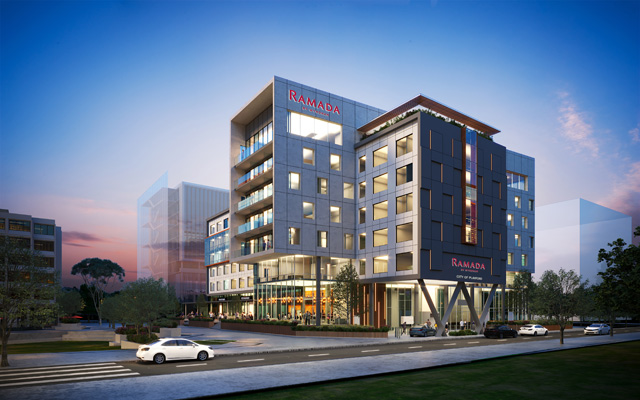
Ramada Playford, the brand's first in South Australia, will be located in Adelaide's booming north
Wyndham Hotels & Resorts’ Ramada brand will make its South Australia debut with the signing of Ramada by Wyndham Playford, a new property planned for Adelaide’s booming north.
Construction on the A$90 million (US$62.6 million) development is set to commence in October this year, with the hotel’s opening scheduled for the first quarter of 2021.
Ramada Playford, the brand’s first in South Australia, will be located in Adelaide’s booming north
The site is within walking distance of the Civic Centre and Shedley Theatre, Prince George Plaza, Grenville Hub and Playford Arena.
The hotel will operate as a Ramada under an agreement between Wyndham Hotels & Resorts and property owner, Playford City Hotel.
“Playford is emerging as the gateway city to the northern regional areas of South Australia and the hotel will play a role in city’s ongoing expansion,” said Joon Aun Ooi, president and managing director, South-east Asia and Pacific Rim, Wyndham Hotels & Resorts.
Upon opening, Ramada Playford will boast a collection of 205 rooms and facilities, including a swimming pool, gym, restaurant and sports bar, along with meeting and conference spaces.
“The development will set a benchmark for the planned infrastructure to take place across the city over the next five years,” said Andrew Russell-Price, managing director, Playford City Hotel.
Playford is tipped to become the CBD of Adelaide’s north, with the population expected to expand from 96,000 to 135,000 by 2036. The hotel’s launch will coincide with a significant expansion of Playford’s infrastructure, including the A$885 million Northern Connector Expressway and a A$40 million ice sport and recreation centre.
The hotel will operate under a license agreement with Wyndham Hotels & Resorts and be managed by Resort Management by Wyndham, an Australian hotel management subsidiary of Wyndham Destinations Asia Pacific.
Next Story Group has appointed Patrick Imbardelli as chairman of its board with immediate effect.
Imbardelli succeeds Luis Miranda who has retired from the board after more than six years in that role. Prior to this appointment, Imbardelli was a non-executive director and advisor to Next Story Group for the past three years.
With a hospitality career spanning more than 30 years, Imbardelli was formerly the chief executive Asia-Pacific of the InterContinental Hotels Group, and the chief executive and board member of Pan Pacific Hotels Group. His achievements extend from capital restructuring and investments in developing countries to integrating hotel management companies, businesses and brands.
He is also a director and advisor of IDEM Hospitality, advisory board member and advisor for Tionale Enterprises, director of The Goodnight Co, and previously a director and advisory board member of Symmons Industries in Boston.