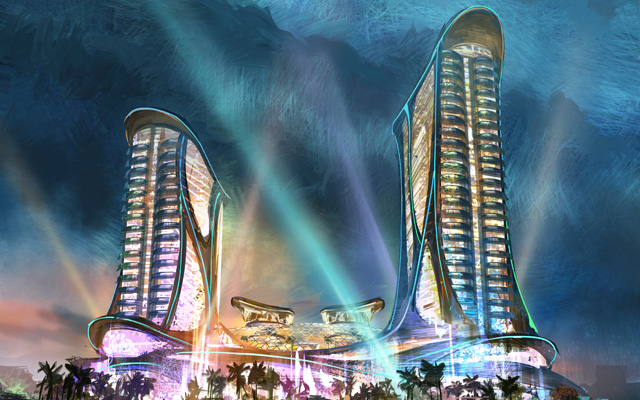
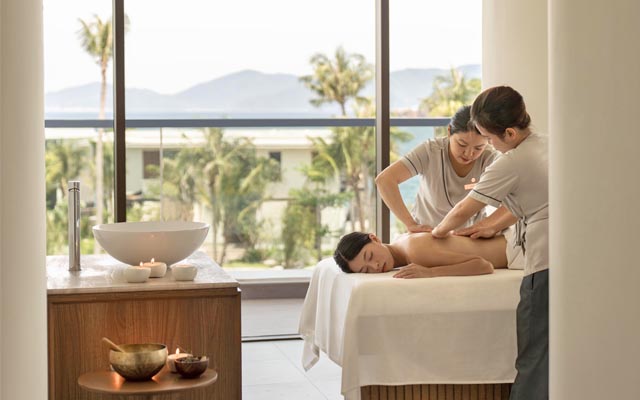
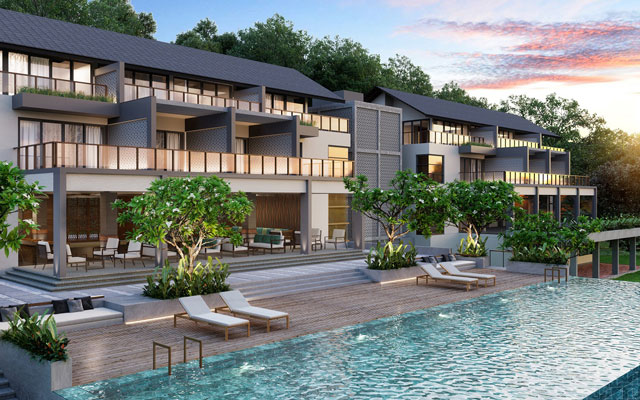
Jetwing Symphony has unveiled plans to open a new boutique hotel in Kandy, Sri Lanka.
The hotel will feature 26 rooms and suites ranging from 52m2 to 81m2 with private butler service. The rooms enjoy sweeping views of the Mahaweli River and the hill country, and includes a private balcony or terrace.
The four-storey hotel has been designed in collaboration with renowned architectural firm Philip Weeraratne Associates, and joins a portfolio of 40 resorts and villas in Sri Lanka managed by Jetwing Hotels.
The building is formed by two wings on either side, connected by a semi-public Gallery Walk dedicated to the arts and crafts of Kandy.
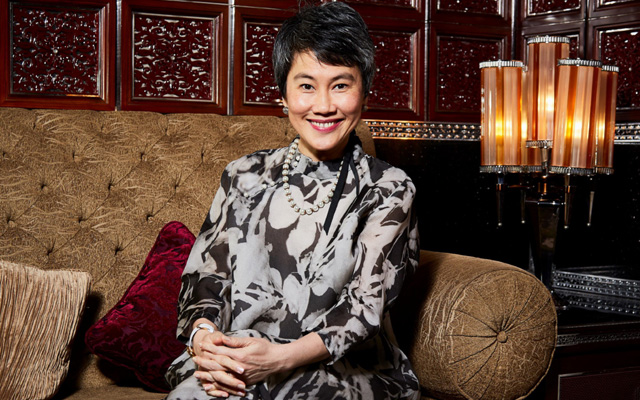
The Landmark Mandarin Oriental, Hong Kong has appointed Jill Goh as general manager.
A seasoned hotelier, Goh has been with Mandarin Oriental Hotel Group since 1993, serving previously as resident manager both at Mandarin Oriental, Singapore and Mandarin Oriental Hyde Park, London until 2013, when she was appointed corporate operations manager – Asia, based in Hong Kong. From 2015, she then held the role of general manager at Mandarin Oriental’s Macau property.
The Malaysian native also has extensive experience in operations and management and has played a key role in numerous Mandarin Oriental renovation projects.
The Thailand Travel Mart Plus (TTM+), Thailand’s leading annual B2B travel show, which was held between 5-7 June, has ushered in a fresh era of business opportunities for buyers looking for new Thai destinations.
This year, the theme of the “New Shades of Emerging Destinations” is designed to encourage visitors to explore the new shades of Thailand in the 55 provinces identified as emerging destinations or the “hidden gems” throughout the country.
This is part of Tourism Authority of Thailand’s (TAT) strategy to promote provincial destinations which are already popular with domestic tourists and increasingly preferable by international visitors.
As a testament to the show’s success, the first day of business networking session saw a total of 339 buyers from 51 countries and 370 sellers, including 10 from the Greater Mekong Subregion countries.
For the first time, the buyers list includes 13 companies from Brazil along with new buyers from Chile, Argentina and Colombia.
First time buyers have also been invited from other new source-markets; such as, Lebanon, Latvia, Estonia, Kyrgyzstan, Kazakhstan, Azerbaijan, Slovakia, Ukraine and Israel.
The sellers list includes exhibitors, mainly from the Southern and Central regions of Thailand. In order to help buyers home in on the emerging destinations, the directory of sellers includes a special listing of the 20 exhibitors from this segment.
Srisuda Wanapinyosak, TAT Deputy Governor of International Marketing (Europe, Africa, Middle East and Americas) said that this year’s TTM Plus features some important changes in the trade show component to ensure enhanced business opportunities for both buyers and sellers.
She said: “We recognise that in this era, there are constant changes in everything from customer segments to technology and demographic profiles. The value of travel trade shows needs to be constantly refreshed and enhanced to justify the investment in time and money by both buyers and sellers.
We also have to marry the business objectives of the private sector with our national objectives to create jobs, reduce income disparities and better distribute visitors around the country. At the TTM Plus, all these objectives have been merged. It takes time and effort for emerging destination cities to be recognised and chosen by travellers, and this year’s TTM Plus has set the ball rolling.”
In 2018, the Thai tourism industry recorded a total of 38 million international arrivals, up by 7.54 per cent, generating an estimated US$62 billion in earnings, up by 9.63 per cent over 2017. This year, TAT has set a growth target of twelve percent in tourism revenue from the international market.
China Eastern launches two flights to Myanmar
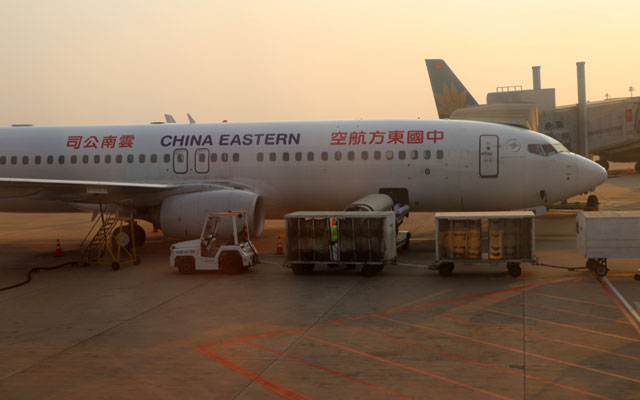
China Eastern Airlines has started direct flights between Wuhan, China, to two destinations to Yangon and Mandalay in Mynamar.
The Yangon route will utilise a Boeing 738 aircraft with a seat capacity of 174. The once-weekly flight will depart from Wuhan at 23.00 on Wednesdays, arriving in Yangon at 01.35 the following day. On Thursdays, the China-bound flight leaves Yangon at 02.35, and arrives in Wuhan at 07.45.
The Wuhan-Mandalay flight will operate twice weekly, also utilising a Boeing 738 aircraft. MU2605 will depart Wuhan at 19.10 on Mondays, and arrive in Mandalay at 20.35. The return flight will depart Mandalay at 21.30, and arrive in Wuhan at 01.50 the following day.
Cebu Pacific to launch Shenzhen-Manila service
Cebu Pacific will launch four-times-weekly flights between Shenzhen and Manila stating July 2. Flights will leave Shenzhen for Manila in the early mornings of Tuesdays, Thursdays, Saturdays and Sundays, with the overall flight time taking two hours and 40 minutes.
VietJet debuts flights to Island of the Gods
VietJet has commenced a five-times weekly service between Ho Chi Minh City and Bal. Flight time will take around four hours, and will operate every Monday, Wednesday, Thursday, Friday, and Sunday. The flight departs Ho Chi Minh City at 08.05 and arrives in Bali at 13.05. The return flight takes off from Bali at 14.05 and lands in Ho Chi Minh City at 17.05.
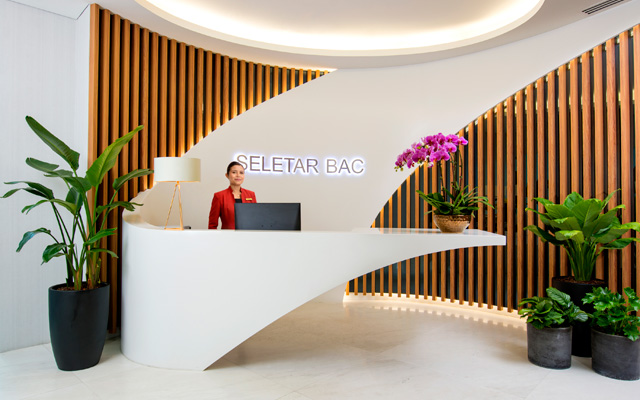
Singapore’s Seletar Airport yesterday unveiled its Business Aviation Centre (BAC) to cater to the growing segment of private jet passengers, who are demanding more seamless travel and personalised service.
The highlight of the BAC is its private bag check and immigration lane, which is touted as the first for any business aviation centre in the world. This exclusive lane ensures a smooth and direct travel experience for passengers, who can journey from lounge to post-immigration within 10 minutes.
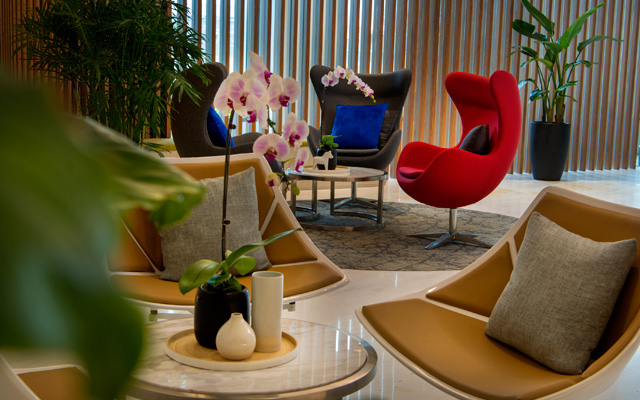
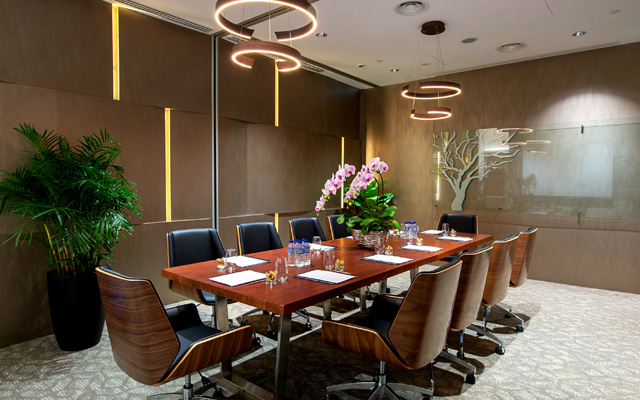
Seletar Airport Business Aviation Centre
1 of 3
Other offerings at the BAC include plush waiting and relaxation areas, shower facilities, a business lounge and express laundry services.
It also provides a personal shopper service and a kitchen that prepares a premium menu of dishes for in-flight service, which includes made-to-order requests.
The centre is managed by SATS Seletar Aviation Services (SSAS), a joint venture company SATS formed with Jet Aviation and Universal Aviation.
Bob Chi, chairman of SSAS, said that having a business aviation centre “has been in the cards for a long time”, and until recently, private jets were operated out of Changi Airport.
Now, however, the growing segment and its changing demands has called for a dedicated centre. Chi said: “We’re looking at a five per cent growth every year. We look forward to having more private jet operators locating here.”
Private jets are also facing strong competition from commercial airlines that have stepped up their in-flight menus to include wellness brands and cuisine by celebrity chefs.
To beat the competition, BAC’s dedicated kitchen is able to cater to private jet passengers’ specially requested dishes, desserts and more, which is a service that commercial airlines cannot offer, said Chi.
Since its first flight at Seletar Airport on November 19, 2018, SSAS has handled more than 4,000 flight movements, of which close to 70 per cent are attributed to business aviation.
Chinese GDS TravelSky has sealed a five-year deal to integrate ATPCO’s Routehappy Rich Content, Ancillaries and the Next Generation Storefront standards that are in development.
The agreement will TravelSky broaden the reach of retailing content throughout Asia, as the Chinese IT solutions provider will now get all its pricing and retailing content from one source, making integration much easier.
Chinese GDS TravelSky is now testing all three of Routehappy’s rich content types
TravelSky is currently testing all three Routehappy Rich Content types; Amenities, Universal Ticket Attributes (UTAs), and Universal Product Attributes (UPAs) and plans to integrate Amenities first into its OpenSearch airfare search engine to modernise and enhance its flight shopping display. TravelSky will work closely with ATPCO’s Retailing Solutions team and continue testing to determine customer preferences.
Amenities provide at-a-glance information about flight features while UPAs provide relevant media to describe an airline’s product and services by aircraft type, cabin, time of day, and more. UTAs provide benefits and restrictions, like cancellation, refundability and boarding priority by fare.
Qiongwei Sun, deputy general manager, airline business department at TravelSky, said: “With simple API integrations we are able to give our flight shoppers a next-generation purchasing experience with deeper information about the ticket and product attributes related to the flight they are searching, translated in either traditional or simplified Chinese.”
TravelSky, one of the first channels in China to integrate Routehappy’s rich content, is now urging more Chinese and Asian carriers to partner with ATPCO in the creation and distribution of rich content so it can consume their Amenities, UTA and UPA content and get them in front of more passengers.
ATPCO first partnered with TravelSky a decade ago to open the North Asia fares support office, which helped onboard more than 20 Chinese carriers to distribute fare data via ATPCO. ATPCO then provided consultancy services as TravelSky starting building an agency pricing engine five years ago.
CDL says it has received 'irrevocable undertaking' from key minority shareholders of M&C; Millennium Hotel Rotorua in New Zealand pictured
Singapore-listed real estate firm City Developments Ltd (CDL) is taking another stab at buying Millennium & Copthorne (M&C) Hotels in a deal that values the London-listed company at £2.2 billion (S$3.9 billion).
Channel News Asia reported that the offer represents a premium of about 37 per cent to M&C’s closing price of 500 pence last Thursday.
CDL says it has received ‘irrevocable undertaking’ from key minority shareholders of M&C; Millennium Hotel Rotorua in New Zealand pictured
Currently, the company, part of Singapore’s Hong Leong Group, owns approximately 65.2 per cent of M&C. This offer is final and will not be increased, according to the Channel News Asia report.
CDL had in 2017 offered to take M&C private in a deal valued at £1.8 billion. The offer fell through last January as CDL did not satisfy the minimum acceptance condition of more than 50 per cent of M&C’s shares that it did not already own.
The move will return M&C – which operates the Millennium, Grand Millennium, Copthorne and Kingsgate hotels – to billionaire Kwek Leng Beng’s property empire.
In its current attempt, CDL said it has received “irrevocable undertakings” from key minority shareholders, who hold a combined 43.6 per cent of M&C shares not already held by CDL, to accept the final offer.
Quoting Sherman Kwek, CDL’s group CEO, CNL reported that the decision to take M&C private is in line with the company’s focus on boosting recurring income and enhancing underperforming assets.
Izumisano City, one of the 33 cities in Osaka Prefecture, has announced several upcoming tourism developments in Rinku Town, located a 10-minute drive from Kansai International Airport, the main gateway for air travel into Japan’s Kansai region.
The city made an effort to raise its tourism profile around six years ago, when the then mayor pushed for more integrated resorts (IRs) and hotels to be built in Izumisano to unlock the area’s potential, shared Ryota Nakahira, planning general manager for Izumisano City.
A rendering of the upcoming SICC
And while the city lost the IR bid to nearby Yumeshima – a reclaimed area in Osaka Bay – Izumisano fought on to capture the throngs of international leisure and business visitors passing through Kansai International Airport yearly.
A prominent project will be the Setia Izumisano City Center (SICC), a two-hectare mixed-use development scheduled to open in 2024. SICC will house serviced apartments, a four-star hotel, a 1,600-pax convention centre, offices, a conservatory with fountains and waterfalls, gardens, and F&B and retail shops.
The developer is S P Setia, a Malaysian real estate specialist that is also behind Setia SPICE Convention Centre in Penang and Setia City Convention Centre in Selangor.
“We’re working closely with our hotel partner to ensure that we cater for diverse tastes in food. We want to bring in Malaysian and South-east Asian food, and let Japan experience Malaysian hospitality,” S P Setia’s executive vice president, Koe Peng Kang, told TTG Asia.
As for the area’s selling points, Koe said: “Izumisano offers a genuine way to experience the Japanese way of life without the hordes of tourists.”
In addition to the SICC, other upcoming attractions in Izumisano include the Kanku Ice Arena (opening December 2019); as well as an expansion of Rinku Premium Outlets by 2020 that will add another 60 to its existing 210 shops.
As well, new hotels on the cards include the Hen na Hotel Kansai Airport with 98 keys (opening November 2019); the Oriental Suites Kansai Airport with 258 guestrooms (opening winter 2019); and the Hotel WBF Grande Kansai Airport with 700 guestrooms and a rooftop bar (opening 2020). With these new developments, Rinku Town will boast 2,834 rooms, up from the current 1,778 rooms.
Aside from capturing the inbound crowd heading to Osaka for the World Expo 2025, Koe also shared plans to capture more Muslim travellers.
Calling the segment “a well of untapped potential”, he believes that the SICC will “inspire confidence in visiting Muslim tourists” due to Setia’s “experience and knowledge of designing and constructing Muslim-friendly buildings and environments. Moreover, Kansai International Airport is already a Muslim-friendly airport, featuring halal-certified F&B options, as well as a prayer room.
“There are many things to be seen here, we just have to polish and generate the story,” concluded Koe.
The controversial elephant rides at Angkor Wat will cease next year, Metro UK reported.
The 14 elephants that now ferry tourists to Angkor Wat are believed to be overworked, with the crowded attraction receiving over 2.5 million international tourists each year.
Angkor Wat will end elephant rides by next year
The Angkor Elephant Group Committee confirmed to Metro that these elephants will be transferred to a conservation and breeding centre by early 2020.
Last year, a petition to end elephant rides garnered over 14,000 signatures in just 48 hours after an elephant working at the attraction died from exhaustion. This followed another elephant death at the site in 2016.
Bangkok was the top tourist destination by arrivals for the third consecutive year
China and India continue to be big drivers of Expedia Group’s Thailand bookings, while the UAE, Israel and South Africa are emerging as high-value markets according to the group’s data.
Thai accommodation partners are enjoying steady growth as evidenced by Expedia Group’s data, which showed the overall inbound demand to Thailand has increased by 10% year-on-year over the past 12 months.
Bangkok was the top tourist destination by arrivals for the third consecutive year
Based on demand generated by Expedia Group’s extensive portfolio of travel brands, the US remains as the largest market to Thailand, with demand growing by 20% year-on-year.
China now is the second largest market to Thailand, surpassing Japan, Hong Kong and South Korea for the first time in the past two years.
Alongside China’s strong performance, India also upped its game, moving up three ranks to gain a place in Thailand’s top 10 international markets.
Notably, Chinese and Indian travellers show growing appetite for premium accommodation – more than 60% of the bookings made by Chinese, 55% of bookings made by Indians were for four- and five-star hotels.
This trend is in line with the Thai government’s focus to attract more high-end arrivals from China and India.
In terms of popular destinations, Bangkok, Phuket and Pattaya are the most visited cities among Chinese and Indian travellers.
Hua Hin (110%), Koh Phi Phi (100%) and Koh Lipe (100%) are rising markets with Expedia seeing triple-digit demand increase during the same period.
In particular, the data uncovered that Chinese travellers are the driving force behind the strong demand for packages into Thailand – almost one in three international package bookings were made by Chinese. China is also the fastest growing market for packages as demand skyrocketed by 200% year-on-year.
India is trending in the same direction, with package demand up by 160% . Other markets tracking triple-digit growth in package demand include Ireland (130%), South Korea (120%) and Indonesia (100%).
Diving deep into some new emerging international markets that showed impressive growth momentum, Expedia Group confirms that the UAE, South Africa and Israel are the new high-end markets that hoteliers should capitalise on.
Travellers from these markets typically spend 15% more on accommodation and stay one day longer than the average international counterparts. Moreover, a whopping 70% of the total bookings made by these nationalities were in four- and five-star hotels where travellers paid 50% more on daily accommodation.
Accommodation partners wanting to capture this new stream of high-value travellers need be aware of the peak seasons, Expedia advised. The OTA’s data showed that UAE travellers prefer travelling from June to September and December to January, while both Israeli and South Africa travellers prefer travelling from December to February.





 China Eastern launches two flights to Myanmar