TTG Asia
Asia/Singapore Friday, 10th April 2026
Page 1256

Tourism Malaysia wants to more than double Chinese arrivals in 2020

0
Chinese arrivals set to hit three million this year

Tourism Malaysia is aiming for a staggering eight million arrivals from China in Visit Malaysia Year 2020, more than double the 2.9 million Chinese the country received in 2018.

Overall, the NTO targets 30 million tourist arrivals for next year. This means the share of Chinese visitors would make up around 26.7 per cent attract of total arrivals, double the 13.1 per cent in 2018.

Chinese tourists pose for a photo in front of the Sultan Abdul Samad building by Kuala Lumpur’s Independence (Merdeka) square

Mohmed Razip Hasan, deputy director-general (promotion) Tourism Malaysia, is positive that Malaysia is not being over ambitious, having benchmarked the numbers against Thailand, which attracted some 10.5 million Chinese tourists last year.

To attract more Chinese, Mohmed Razip said Tourism Malaysia is planning to increase its presence in China by attending tradeshows in addition to doing more online promotions with Chinese technology providers.

He added that there will be more promotions in second tier cities and the tourism board will promote its joint international tourism development fund with Malaysia Airports to attract more charter flights from China to Kuala Lumpur as well as secondary destinations in Malaysia.

“We wish to spread Chinese arrivals, so that secondary destinations such as Penang, Melaka, Johor, Kota Kinabalu and Kuching also benefit from tourist arrivals, he explained.

According to Mohmed, Tourism Malaysia is not just interested in numbers but also yield, and hence will promote niche segments such as weddings and honeymoon, shopping, golfing, diving, birding and homestays.

He stressed: “We can’t do this alone, but with the support and collaboration from industry players such as The Malaysian Association of Tour and Travel Agents (MATTA) and various airlines.”

The NTO is also promoting ASEAN to Chinese travelers in collaboration with the Federation of ASEAN Tourism Associations (FATA).

Jimmy Thoo, vice president Inbound and domestic at MATTA, shared that MATTA is planning to organise a roadshow to Chengdu and Chongqing in September to further promote Malaysia after participating at China (Guangdong) International Tourism Industry Expo in Guangzhou from August 30 to September 1.

Recently, minister for tourism, arts and culture, Mohamaddin Ketapi said visa-on-arrival for China and India – two major inbound source markets for Malaysia – may be relaxed next year, in conjunction with Visit Malaysia Year. The decision is pending further discussions with relevant ministries and ministers.

Expansion-hungry Oyo to acquire European vacation rental group

0

Oyo Hotels & Homes is stepping up its foray into the vacation rentals sector, with its latest acquisition of Amsterdam-based vacation rental company @Leisure Group from media and technology company Axel Springer.

The acquisition is said to give the Airbnb-backed Oyo a leg up in realising its vision of becoming a global real estate brand and drive further consolidation in the vacation rental segment. Launched in 2017, Oyo Home already has over 15,000 villas and apartment units globally. The company also recently entered into Japan’s housing rental market through a joint venture with Yahoo.

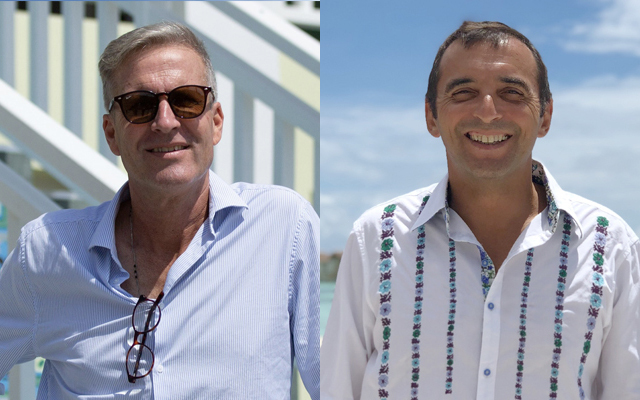
Oyo Hotels & Homes’ Ritesh Agarwal, @Leisure’s Tobias Wann and Oyo Hotels & Homes’ Maninder Gulati

Commenting on the strategic rationale behind the latest deal, Oyo’s global chief strategy officer, Maninder Gulati, said: “With Europe spearheading the vacation and urban home rental trend globally, @Leisure Group is uniquely positioned to capitalise on its experience and insights aided with Oyo’s full stack approach towards building the world’s largest global vacation rentals business. If one were to look at Europe alone, there is an ever-increasing demand for vacation homes with an increasing trend of booking an entire home.”

Gulati added: “Further, in such a market of largely fragmented small and independent players, and a handful of established players, of which @Leisure Group, is one of the largest, we feel travellers will be excited with what @Leisure Group can offer.

“Through this acquisition, the size and scale of the opportunity can be immediately unlocked for Oyo’s Homes business. Today, more than 2.8 million holidaymakers from over 118 countries book their holiday every year with @Leisure Group. The combined strength of both brands can scale the opportunity multifold.”

@Leisure Group, through its Belvilla, DanCenter and Danland brands, offers more than 30,000-fully managed holiday homes across 13 countries in Europe; and through its Traum-Ferienwohnungen brand, offers a subscription-based home management service with over 85,000 homes across 50 countries. This represents a total inventory of over 300,000 rooms.

With the acquisition, @Leisure Group CEO Tobias Wann will join Oyo’s leadership group as CEO, Vacation Homes, Oyo Global.

Last year, @Leisure Group achieved a record EBITDA of more than 24 million euros (US$27 million) last year.

SriLankan Airlines hit by wave of cancellations after bomb attacks

0

As SriLankan Airlines grapples with a flood of cancellations in the wake of the Easter Sunday bombings, its chief executive is expecting a revenue loss of at least US$100 million due to an estimated drop of 30 per cent in tourist arrivals this year.

“We have been closely monitoring forward bookings for the next three months and as of today, cancellations in May is 17 per cent compared to May last year, 12 per cent in June (against June 2018) and about 18 per cent in July,” SriLankan Airlines CEO Vipula Gunatilleka told TTG Asia on Tuesday. “We expect the figures to go up.”

The airline accounts for one-third of the tourist traffic into the country. The government had set an ambitious target of three million arrivals in 2019, up from 2.3 million in 2018.

However after the Easter Sunday blasts which killed 253 including 40 tourists, the authorities estimate a 30 per cent drop following a wave of cancellations and a flow of travel advisories from countries like India, China, the UK, the US and Canada urging their nationals to postpone non-essential travel.

The airline’s new five-year business plan for 2019-2024, which was announced to the media earlier this month, would be re-visited, Gunatilleka said. A key aspect of that strategic business plan includes “developing a route network to match customer demand and market opportunities, including new destinations in Europe, Africa, the Middle East, South Asia, the Far East and Australia, as opposed to the limited point-to-point strategy”.

Noting that the worst affected routes are London and Tokyo, Gunatilleka said the airline is awaiting update from the authorities as to when the situation would return to normal. Security forces, helped by British and US intelligence, have fanned out across the country hunting for Muslim extremists, responsible for the bombings at churches and luxury hotels. Scores of arrests have been made along with weapons and explosives.

“The moment we have some clarity from the government then we can work (with the authorities) on relaxing the travel advisories. Without this clarity and assurances there is no use in targetted marketing and special promotions,” he said, adding that they would then examine how traffic could be increased from India and China, Sri Lanka’s main tourist source markets.

“We can bounce back once normalcy is restored,” he said, noting that currently travellers are not even keen to be transiting in Colombo.

New research predicts the end of standard room types

0

New research released by Amadeus and InterContinental Hotels Group (IHG) surmises standard room types with fixed inclusions are coming to an end, among the key findings published in the Drivers of Change in Hospitality report.

Study predicts the end of room types with standard inclusions, and the beginning of cult-status achievable at scale

The beginning of the end of room types
Traditional room types – single, double, twin, suite or family room – are a tried and tested format, loved by hotels and understood by guests the world over.

However, new research suggests that this will change dramatically and give way to a new trend that sees guests able to swap desks for yoga mats, stream their own content through the in-room TV, or ask for that third-floor room with their preferred view.

Hotel accommodation, which has traditionally been bought in a standard and uniform way, will need to adapt to travellers’ growing bespoke leanings. According to the study, 61% of global travellers state a preference for hotels to be priced in a way that allows them to add on bespoke options.

The study surmises will see the emergence of attribute-based booking, where guests pick and choose the individual components of their room, marking the end of traditional room types.

New selling models will become more mainstream too, with guests able to book a room for a length that suits their needs rather than a traditional overnight stay.

Achieving cult status at scale
The kind of status usually reserved for luxury or boutique hotels or consumer brands will be available for all who are able to earn loyal fans. In the competition for guest loyalty, hospitality providers need to identify how to offer value through delivering memorable, shareable experiences, the study stressed.

To do this, hotels must understand individual guest needs on each trip, and offer a host of unique and unexpected surprises. In fact, 70% of global travellers would like hotels to provide more advice and tips about unique things to do, with only 20% saying they currently get ideas from the hotel.

If done right and with the requisite technology, personal attention and personality will no be longer a characteristic of boutique brands only, the study imagines.

The rise of tech-augmented hospitality
Hospitality providers will need to serve guests in a significantly more connected way, striking the right balance between automated solutions and human interaction.

The study details how technology will be used to empower staff to deliver unprecedented levels of service at scale. It suggests that technology needs to support human interaction, not replace it, as the majority of guests (67%) say they prefer to interact with a person for the emotional interaction. For example, the deployment of real-time translation earphones and smart glasses could ensure that concierges easily interact with guests in their native tongue.

Chris K Anderson, director of Center for Hospitality Research, Cornell University, remarked: “The hospitality industry is on the cusp of a new chapter. Guests are seeking richer individual relationships and seamless experiences with their hospitality providers, and are willing to share more data and insights than ever before.”

Findings from the Drivers of Change in Hospitality were informed by over 7,500 consumers worldwide and industry experts.

Sofitel expands China footprint to Xi’an

0

Sofitel Xi’an South is slated for completion in the commercial and high technology Qujiang District in south Xi’an.

The hotel will form part of Nanfeihong Plaza, a 300,000m2 mixed-use complex that comprises a shopping mall and commercial offices owned by Shaanxi Nanfeihong Industrial. Its is 300m from Sanyao Station on Metro Line 2, 35 minutes’ drive to Xi’an North Railway Station’s high speed train, and 45 minutes’ drive to Xi’an International Airport.

Rendering of Sofitel Xi’an South

Sofitel Xi’an South will feature 280 guestrooms and suites, three restaurants, a 800m2 grand ballroom, six meeting rooms, an indoor swimming pool, gym and spa.

Sofitel currently operates more than 120 hotels globally including 23 hotels in greater China, with the recent addition of Sofitel Beijing Central.

New CEO of Qantas International announced

0

Qantas has promoted its CFO, Tino La Spina, to the post of CEO of Qantas International, following the recent resignation of previous chief, Alison Webster.

Vanessa Hudson, who is currently the group’s chief customer officer, will move to the role of CFO. A process to appoint a replacement chief customer officer will start shortly.

Tino La Spina

These changes will take effect from October 1, 2019, allowing La Spina to close out the current fiscal year through to annual reporting. From mid-May, Hudson will be CFO designate and will work closely with La Spina to ensure a smooth handover.

Narendra Kumar will remain acting Qantas International CEO until the transition is completed.

All three roles will continue to report to Qantas Group’s CEO, Alan Joyce.

Aloft Kuala Lumpur Sentral appoints new GM

0

Rubel Miah has joined the four-star Aloft Kuala Lumpur Sentral as general manager.

The hospitality veteran has 15 years of experience under his belt, having embarked on his career as a sales manager at the Novotel Peace Beijing. This was followed by a three-year stint with the Sofitel brand in China, before moving on to Sofitel Saigon in Vietnam as director of sales & marketing where he spent two years.

The French national then joined the pre-opening team of the Sheraton Chongqing Hotel. In 2012, he moved to Bangkok and joined Sheraton Grande Sukhumvit, A Luxury Collection Hotel, as director of sales & marketing. This led to his eventual appointment as hotel manager, a position he held for three years before moving to Malaysia.

Preferred Hotels & Resorts Independent hotels. Global Luxury.

0

Brought to you by Preferred Hotels

Lelewatu Resort Sumba

It’s a big world. Where do you prefer?

Preferred Hotels & Resorts is a collection of 750 independent hotels, resorts, and residences around the world. Named “Most Excellent” large hotel chain globally in 2018 by TripAdvisor, they connect discerning travelers to unique luxury experiences. Find out what they offer from Josephine Lim, Managing Director, South East Asia.

How does Preferred differ from other hotel brands/consortia?

With 50 years of luxury hospitality experience, Preferred Hotels & Resorts (PH&R) is the world’s largest independent hotel brand, representing distinctive hotels, resorts, residences, and hotel groups spanning 85 countries. Through five global collections, we connect people to stays that meet their life and style preferences for each adventure. From legendary palaces to modern villas, each stay is one-of-a-kind.

What is the Preferred philosophy?

We believe in travel. Our brand offers unique, immersive stays and experiences in dream destinations all over the world. Our portfolio of 750+ hotels caters to discerning travelers who seek uncommon experiences – something our member hotels are inherently positioned to provide.

What achievements are you most proud of?

We are proud of connecting travelers with unforgettable experiences at unique hotels that consistently lead top travel lists and receive rave guest reviews. We are honored to support hotels that continuously inspire travelers by delivering authentic and memorable hospitality experiences.

Where are your hotels and would we know any of them?

Our diverse portfolio includes prestigious properties such as Andara Resort & Villas, Borneo Eagle Resort, Lelewatu Resort Sumba, One Farrer Hotel, Primus Hotel Shanghai Hongqiao, The Capitol Hotel Tokyu, Wanda Reign on the Bund and Hotel EQ, Kuala Lumpur. We will also have Fullerton Sydney soon. Around the world, in small towns, big cities, and everywhere in between, you will find us there.

How do you make sure your hotels meet quality standards?

To ensure the highest levels of customer satisfaction and elevated experiences, every property in our portfolio conforms to the Preferred Standards of Excellence™, renowned quality and service standards measured yearly anonymous on-site inspections carried out by professional third-party experts.

Who owns Preferred?

As a family-owned company led by the Ueberroth family, PH&R is driven by family values, the independent spirt, borderless hospitality, and a belief in travel and the power it has us for the better. As champions of independent hotels, we believe the most remarkable experiences happen when we leave the ordinary behind.

Do you offer any benefits for booking via Preferred?

Book a stay at a PH&R member property today and experience the difference. Get the best price when you book directly with us, and take part in special programs offering additional savings and perks for you and your clients.

  • I Prefer Hotel Rewards is the world’s first global points-based loyalty program for independent hotels. Members earn instant rewards and points with every eligible stay, and redeem points for perks like free nights.
  • The I Prefer Meeting Planner program is a loyalty program for meeting planners to earn points for booking programs at participating properties. Points can be redeemed for Reward Certificates for stays at any I Prefer participating hotel.
  • The I Prefer Alliance Program is an innovative loyalty platform for partner reward programs and their members through a points-exchange structure. Tokyu Hotels Comfort Rewards is one major partner, with members of both loyalty programs benefitting.
  • Preferred Residences™ and Preferred Golf™ offer additional benefits.

How do we book? One brand. Five distinctive collections. Endless unique experiences. Visit preferredhotels.com to discover more. To book, search for GDS code Chain Codes PH or Master Chain Code PV. You can also contact Nicole Foo by email at NFoo@preferredhotels.com or telephone +65 6909 8903.

CEO of Beyond Luxury Media, Serge Dive, on the 3 trends shaping luxury travel in Asia

0

Brought to you by Further East

Image: Serge Dive, CEO & Founder of Beyond Luxury Media

Over the last 10 years, Serge Dive has redefined luxury travel, taking his perspective-shifting events across the globe from Marrakech to Miami. His latest venture, Further East, hit Bali in November 2018, aiming to celebrating Asia’s rich heritage and powerful future.

Here, Dive shares his perspectives on the future of luxury travel in Asia – and how he believes hospitality professionals can tap into the trends shaping our ever-changing industry.

Authenticity is your greatest asset

“Everyone is building in Asia. But (luxury travellers) want to discover the real, fascinating Asia,” Dive warns. Globalisation is problematic for hotels and native brands, who risk losing their authenticity. “I think that the greatest challenge is to resist the temptation of globalisation that will dilute your brand’s identity – and embrace your uniqueness,” he advises.

“What Asia now needs to do now is truly capitalise on its assets – to cherish and display its traditions to international customers, while inventing its own future,” he advises. This belief underpins Dive’s long-term strategy for Further East. “We believe that Asian products should be displayed in a truly strong, Asian context, rather than at generic travel trade fairs that are potentially destructive to brand equity.”

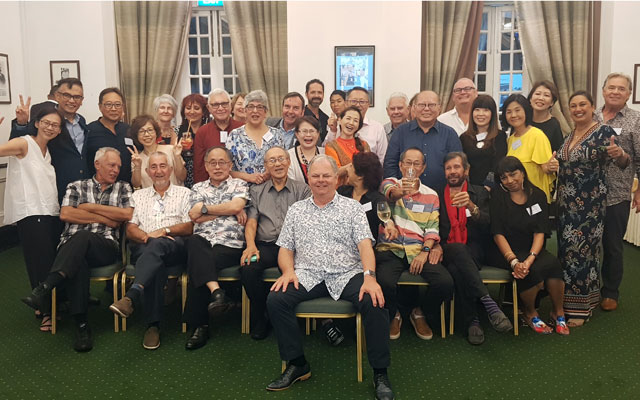
Image: The Further East community gather for sunset networking at the first edition of AWAKEN, November 2018.

Look beyond tech (and into the past)

While many in the luxury travel industry are frantically finding ways to weave tech into every facet of their operations, Dive is less convinced.

“I am a huge skeptic when it comes to gimmicks – I think that VR and AI won’t be experiences in their own right; instead, they will help customers test travel products from their living room.” He also predicts that nostalgia, not tech, is the next trend set to disrupt the future of the travel industry in Asia. “I think we are actually returning to an analog way of travelling; nostalgia is returning because tastemakers are fed up of both tech and products born from globalisation.”

Life should be amplified – and optimised

Nostalgia aside, what is the next buzzword set to shape the travel industry? “I would choose two – amplified and optimised,” predicts Dive. “I think that luxury travel is the promise of a life optimised and amplified; optimised because we want be the best person we can be and do the best things we can out of the precious hours that we are on this planet. Amplified, because we want each of those hours to be as remarkable and memorable as possible.”

If the future of luxury travel in Asia resembles anything close to his vision for Further East, one thing is for certain – it will never be boring. From its oceanside location and holistic approach to its diverse guest list of iconic hospitality brands, it demonstrates a disarmingly different way to do business.

For more information on attending Further East (11-14 November 2019) please visit furthereast.co or contact Roy Smith, Sales Manager, on furthereast@beyondluxury.com.

Want to make your business meetings and events truly outstanding and memorable?

0

Brought to you by SACEOS

In today’s exciting and ever evolving digital landscape, the business meetings and events industry has to keep reinventing itself to stay relevant and innovative. We have to adopt creative ways to engage our audience and build sustainable value for the future. Some of the important and key questions we need to ask ourselves include these:

  • How do we create more purposeful events with innovation and inclusivity?
  • What kind of meaningful moments can we offer our audience and make our events and meetings powerful, impactful and memorable?
  • How can we best incorporate new technology such as AI, to better engage our clients and foster greater interactions amongst them?
  • How do we achieve strategic synergies with blending design and digital to produce spectacular user experience? What ideas can we borrow from other industries that can be applied to events and meetings?
  • What are the key global trends and developments in event spaces and immersive experiences that we need in order to stay ahead of the curve?
  • How do we get wired for the future? Wired for growth, to the right community and for authenticity?
  • How can you build greater rapport with your online community?

As our customers demand a “return on engagement”, and to ensure that they derive optimal value from their participation in the business events, it is imperative for us as organizers to plan and execute a well-designed interplay of online process and onsite experiences that represent a perfect blend of design, digital and community.

We are pleased to present SMF2019: Wired for The Future, SACEOS annual flagship event and most respected platform for the industry to gain deeper insights and true stories on journeys taken by rising stars and luminaries from both core and adjacent industries. SMF2019 (www.smfconference.org) will present a high value content program and a focused discussion on design, digital and community engagement for tomorrow’s business success. Presenters will share strategies and road maps on game changing ideas and how the industry can be wired for future success.

Here is a glimpse of what to expect at the event. SMF2019: Wired for The Future (25-26 July 2019, Singapore) will be an immersive experience for all participants, to model what the event of the future will be like.

The organizing team at SMF2019 invites professionals in the business meetings and events industry as well as those from the related fields of travel, hospitality, event venue and destination operators to join in this exciting journey to dream, act and grow as an ecosystem of dreamers and builders of the future. At this platform, discover new opportunities to collaborate with key industry Associations, technology partners and all relevant stakeholders from the industry.

To participate, please contact us at smf@saceos.org.sg or register online at http://smfconference.org/registration/

Take advantage of STB’s Training Industry Professionals in Tourism (TIP-iT) scheme to lower the cost of participation. Apply here.