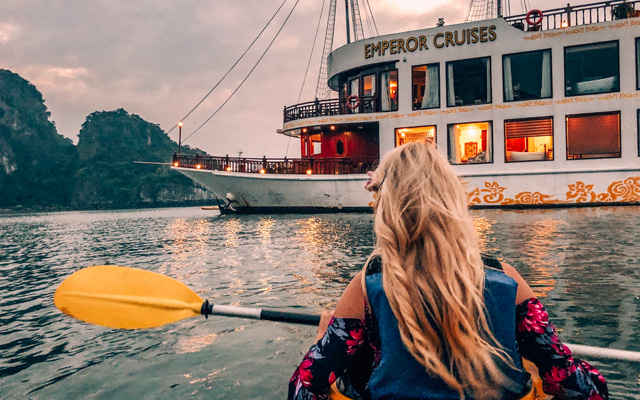
Vietnam-based Lux Group has fully acquired the five-star, all-inclusive Emperor Cruises, adding to the travel and hospitality company’s portfolio that includes the DMC Luxury Travel and Heritage Cruises.
Pham Ha, the president of Lux Group, told TTG Asia that he previously owned a 50 per cent stake in Emperor Cruises and has now bought the remaining stake to gain full ownership of the business. Financial details of the purchase have not been released.
Emperor Cruises is now part of Vietnam-based Lux Group, which also owns Luxury Travel
In a statement, Ha said that the company “will expand its portfolio of luxury small ship and expedition cruises to new cruising destinations” following the acquisition.
“Five new cruise ships will be added in Nha Trang Bay and Phu Quoc Island, and overnight cruises will be introduced for the first time in these amazing beach and island destinations,” Ha said.
Meanwhile, Heritage Cruises will begin sailing around Cat Ba Archipelago in the Gulf of Tonkin from September 7. The boutique cruise ship, which consists of 20 suites ranging from 33m2 to 80m2, is divided into three different categories – Delta, Ocean and Heritage Suites – with a maximum capacity of 60 guests.
Amenities onboard include two Vietnamese restaurants, an infinity swimming pool, a pool bar, wine cellar, lounge and a library.
Heritage Cruises also hosts a floating exhibition, L’Art de l’Annam, which showcases the first designer art gallery of artist Pham Luc, known as the Picasso of Vietnam, alongside the works of many Vietnamese artists.
Universal Studios Singapore’s (USS) Halloween Horror Nights will return for its ninth edition, from September 27 till October 31 this year, featuring five haunted houses, two scare zones and two killer shows across 16 event nights.
Taking centre stage this year is Curse of the Naga, USS’ first regional collaboration with the directors of blockbuster Thai horror films Shutter and 4bia, Parkpoom Wongpoom and Gunn Purijitpanya, in the creation of the an original haunted house. Featuring elaborate landscape design, stunning special effects and original characters, the haunted house will transport guests from the colourful streets of Bangkok to a lost village that is under the spell of the Naga, a snake spirit.
Halloween Horror Nights 9 (Photo credit: Resorts World Sentosa)
1 of 4
Curse of the Naga
The Chalet Hauntings
Twisted Clown University
Try to survive the Undertaker (pictured in the centre) as he roams around, searching for the next unsuspecting victim
Those curious to unmask the horror and secrets behind Curse of the Naga can go for a daytime, behind-the-scenes guided tour, available at a top-up fee in addition to daytime admission ticket.
Adding on to the list of ever-popular Asian-inspired horrors is The Chalet Hauntings, brought to you by Official Partner Traveloka. Here, Singaporeans can relive one of the most commonly shared experiences of paranormal sightings in their teenage years. This house will feature the event’s most extensive collection of South-east Asian ghosts – from the mischievous Toyol to the bloodthirsty Langsuir – in a single house. Not for the faint-hearted, The Chalet Hauntings plays off one’s darkest fears with illusions that will trick the eyes and minds, raising fears and anxieties as guests unravel the mystery behind the disappearance of five teenagers.
Elsewhere, visitors can join the circus of clowns as they wreak havoc and train the next generation of red-nosed killers at Twisted Clown University or step into Spirit Dolls, an abandoned village where the only inhabitants are silent dolls watching everyone’s movement.
Those looking for a respite from the scares can head to Pantages Hollywood Theater where hosts Skin & Bones will present a repertoire of offbeat entertainment, quirky cast, along with terrifyingly funny acts in their live show. For a head-banging frenzy, join the mass of metal heads in Death Fest and rock out to the savage sounds of the Death Trap band. On peak nights, Death Trap will lead a morbid metal procession around the park with specially designed floats, electrifying acts, and culminating in a hardcore music festival bursting with pyrotechnics.
Tickets are now available for purchase at www.halloweenhorrornights.com.sg and guests can choose from 16 event nights (10 peak nights + six non-peak nights). From now till September 1, tickets can be purchased at S$65 (US$47; peak nights) and S$55 (non-peak nights). After which, regular tickets will cost S$70 for peak nights and S$60 for non-peak nights. Guests can also enjoy many of the theme park’s rides and attractions during event nights.
Travelport and Qantas have launched an NDC live production test
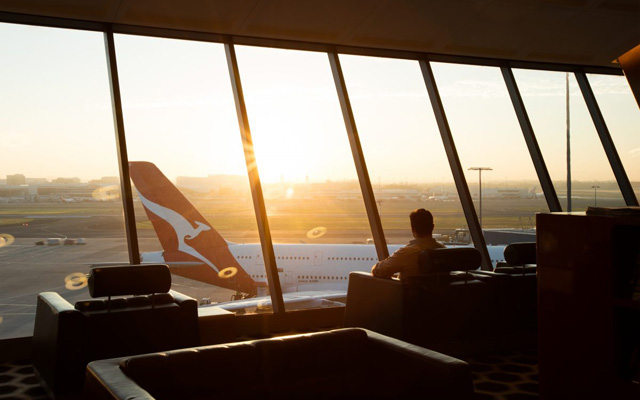
Travelport has begun handling its first bookings with Qantas using IATA’s New Distribution Capability (NDC) standard, as part of its continuing support for the airline’s NDC, including the Qantas Distribution Platform (QDP).
The bookings are made through Travelport Smartpoint in a live production test environment as Qantas prepares distribution of differentiated NDC content from late 2019.
Travelport and Qantas have launched an NDC live production test
This NDC connection to Qantas is the first by any GDS to the carrier and enables live bookings of NDC content to be made by selected agency partners taking part in the testing programme, including ATPI Corporate Travel, Globetrotter and Travel Beyond. It comes ahead of a rollout to the wider agency community in the coming months.
The development is part of the airline’s plans for the QDP which offers an improved customer experience via enhanced and personalised content.
Having been the first GDS to make a live NDC booking in October 2018, Travelport has already connected to five European airlines’ NDC content, said the travel technology company in a statement. It will follow up with an API NDC connection channel through Travelport’s Trip Service API with Qantas’ content among the first to be available through this channel. The Trip Service API is also currently part of a testing programme with an Australia-based OTA successfully coding to it.
Scott Barber, managing director Australia and New Zealand at Travelport commented: “Qantas shares our vision that NDC has the potential to enhance the travel experience for its customers, offering personalised and differentiated choice and a seamless booking experience. NDC delivery is complex and requires collaboration from all parts of the travel industry.
He added: “We value our relationship with Qantas and are grateful to our test agencies for partnering with us to ensure we deliver an NDC solution which makes the process of buying and managing travel continually better for everyone. The ongoing delivery of our NDC roadmap is a key part of this.”
The airline industry has been developing NDC since 2012 with the aim of extending customisation to agents and establishing closer relationships between airlines and customers.
British Airways is testing VR entertainment on select first class flights
British Airways has partnered SkyLights to offer some passengers their own 3D cinema in the skies as the airline trials a virtual reality (VR) headset.
From now till end 2019, customers travelling on select flights in first class from London Heathrow to New York JFK will be able to enjoy a selection of award-winning films, documentaries and travel programmes in 2D, 3D or 360-degree formats.
VR entertainment will be available on select first class flights of British Airways
The AlloSky headsets from VR provider SkyLights, a former alumni of British Airways’ parent company IAG’s Hangar 51 startup accelerator programme, allow customers to fully immerse themselves in 3D view regardless of their seating position.
British Airways said it is the first UK airline to trial the technology after working with experts to select a range of therapeutic programmes, including guided meditation and sound therapy, specifically designed for customers who have a fear of flying.
Sajida Ismail, head of inflight product at British Airways, said that “VR has the power to revolutionise inflight entertainment” as the airline looks to enhance the customer journey both on the ground and in the air.
Earlier this year, British Airways trialled the technology at Heathrow Terminal 5, giving customers a glimpse of the Club World cabin through VR.
British Airways said it is investing £6.5 billion (US$7.8 billion) on airline amenities over five years, including the installation of Wi-Fi and power in every aircraft seat, fitting 128 longhaul aircraft with new interiors and taking delivery of 72 new aircraft. The airline recently introduced its Club Suite, a new business class seat with direct aisle access.
Amadeus has appointed Champa Magesh as the executive vice president of retail in travel channels and managing director EMEA, replacing Leon Herce who has left Amadeus.
Magesh, who previously managed this travel channels segment in Asia-Pacific, will report to Decius Valmorbida, the president of the unit. She will also assume a regional leadership role responsible for the travel channels business across Europe, the Middle East and Africa.
From left: Champa Magesh & Ramona Bohwongprasert
Prior to her most recent role in Asia-Pacific, Magesh was the managing director of Amadeus in the UK and Ireland. Before joining Amadeus in 2014, Magesh worked internationally and has a background in diverse industries, having held positions in American Express, World Pay and Cisco Systems.
Taking over from Magesh in Asia-Pacific is Ramona Bohwongprasert, who is now Amadeus’ senior vice president of retail in travel channels, Asia-Pacific. She will report to Magesh.
In her previous role, Ramona led the consolidators & networks global organisation within the Retail Travel Agency team. She joined Amadeus in 1999 and has held a number of managerial positions across the organisation in Asia-Pacific and Europe.
A tropical island off the east coast of Madagascar in the Indian Ocean, Mauritius is perhaps better known worldwide as a beach and honeymoon destination, but industry players want to show that the country offers cultural and natural riches beyond upmarket beaches.
Dubbed the gateway to Africa, the island nation of 2,040km2 is rich in scenic beauty with a dramatic coastline fringed by white-sand beaches and turquoise waters, alongside a whole bucket-list of activities both on land and in water to provide once-in-lifetime experiences to visitors.
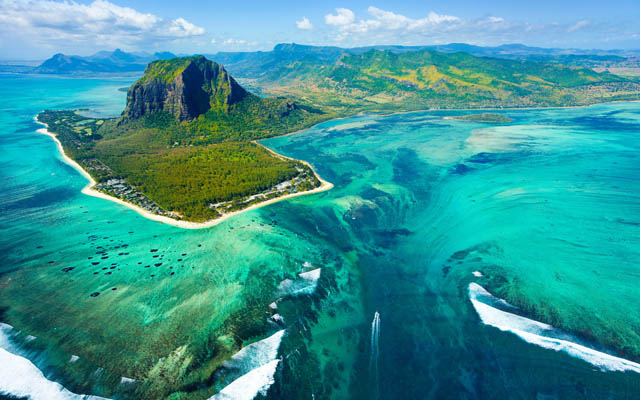
Mauritius offers plenty of attractions on land and in water (pictured: Le Morne peninsula as seen from the air)
Mauritius is also a melting pot of Asian, African and European influences, the result of centuries of immigration that created diverse traditions and a richly mixed cuisine on a previously uninhabited island barely five centuries ago.
Now, the country’s top tourism leaders and industry players are putting a stronger focus on attracting Asian travellers to its shores, expanding from its traditional core visitor markets of Europe and Africa.
Anil Kumarsingh Gayan, Mauritius’ minister of tourism, said: “We believe that Mauritius needs a share of the global tourism market. We want to promote Mauritius as a quality destination, and peg the country as a high-end destination.”
Asia’s superpowers India and China are key target markets for Mauritius, where historical and cultural ties to both countries run deep. “We share a natural affinity with India, while the Chinese in Mauritius date back some 200 years,” said Gayan.
About 70 per cent of the country’s population is descended from indentured Indian labourers taken there after the abolition of slavery during the 19th century. The small but sizeable Chinese community, meanwhile, were descendants of traders and artisans who migrated to Mauritius under French and British rule.
Arvind Bundhun, director of Mauritius Tourism Promotion Authority (MTPA), revealed that the NTO has also rolled out “big visibility campaigns” in both India and China to shore up destination awareness of Mauritius among travel operators and consumers alike, with OTAs and social media also making a key part of its marketing offensive.
In China, MTPA already has appointed marketing reps to focus on Shanghai – where Air Mauritius has a direct service to – and surrounding cities.
As well, Bundhun sees potential in “developing the golf market from Asia” for Mauritius, where the country’s ample greens are set against breathtaking Indian Ocean backdrops.
On the island, more local travel players are also tapping the potential of the up-and-rising Asian markets.
Pont Naturel Quad, which was established last year by industry veteran Sweety Moheeputh, the ATV tour company has made inroads into the Chinese leisure market, riding on the connectivity gains made with Air Mauritius’ connection to Shanghai, as well as seasonal charter flights from other parts of China.
However, in order to make Mauritius a much more attractive and top-of-mind destination for Asian travellers, Moheeputh would like the airfares and connections to Mauritius to improve.
MTPA’s Bundhun admits that “affordability and visibility” are key challenges for Mauritius, especially when it comes to marketing Mauritius to the Asian markets, amid intensifying competition from other resort destinations like the Maldives and the Seychelles.
Air Mauritius obviously has a vital role to play in the country’s ambitions of luring more Asian visitors, a point that CEO Somas Appavou is only too aware of as the carrier seeks to build better connectivity with major air hubs around the world.
One key effort was the Africa-Asia Air Corridor, which was launched in 2016 to position Mauritius as a cross-continent hub by developing air traffic through Singapore, reviving Mauritius’ ancient role as an Indian Ocean transit role in the skies, said the airline chief.
“Singapore is an island among people. Mauritius is an island surrounded by fish. The thing is if you’re a small gateway – and we want to be a gateway between Asia and Africa – you have to build connections with the hubs,” said Appavou.
This air corridor initiative, according to the tourism minister, has also helped to market Mauritius as part of the “Blue and Green Safari” joint campaign, which sees the island nation promoted as attractive tourism destinations alongside Kenya and South Africa.
Furthermore, the recent delivery of the first two Airbus A330-900neo planes to Air Mauritius in April this year – an “fuel-efficient aircraft model” which offers better cost per seat than predecessors A330 classic or A319 – could help the airline achieve greater competitiveness in a costly operating environment and step up service frequencies to China and elsewhere in Asia in the near future, Appavou shared.
In Asia-Pacific, the national carrier currently flies to Delhi, Mumbai, Chennai and Bengaluru in India, Singapore, Kuala Lumpur, Shanghai, Hong Kong and Perth.
Meanwhile, Air Mauritius is also trying to seal more alliances with Chinese carriers. Said Appavou: “We are working on (securing) partnerships with Chinese carriers in the pipeline, and we have started discussion with China Eastern Airlines.”
He remarked that Air Mauritius was climbing in Chinese traffic three years back, but the ongoing Sino-US trade war as well as an eroding yuan has caused the destination to lose momentum in courting the Chinese market.
The private and public sectors in New Zealand have pledged to the Tiaki Promise – a commitment to care for the land, its people and upholding the sustainability of the country as they conduct their tourism-related businesses.
To achieve that, they bestow the responsibility not only upon the local communities and tourism businesses, but also their international business partners and travellers.
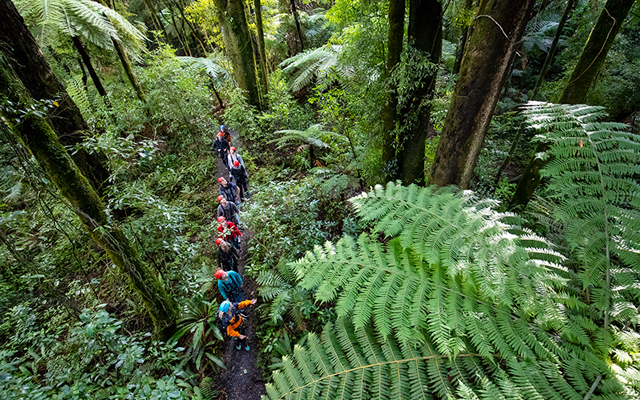
The Tiaki Promise is a commitment to care for New Zealand while travelling (pictured: Rotorua forest walk)
Air New Zealand – one of the seven organisations who founded the Tiaki Promise last year – for instance, has worked together with Tairãwhiti Gisborne stakeholders, including local tribe Mãori tribe Ngãti Porou to support the region’s tourism proposition and drive demand for travel, which would translate into more job opportunities for the locals.
Cam Wallace, Air New Zealand’s chief revenue officer, said: “Ngãti Porou shares our belief that Tairãwhiti Gisborne has huge untapped potential. In April 2018, we formalised an agreement to work together toward a stronger region.
“We have purchased carbon credits from the iwi’s (tribe in Maori) forest estates on the East Coast and are committed to supporting Ngãti Porou to promote its Mount Hikurangi tourism venture offshore. We’re also bringing some iwi primary sector products into our customer offering – with Ahia smoked fish among the first of these to be served on board.”
The airline is also working with charitable organisations and colleges to help youth in the regions reach their potential by fostering clear pathways into study and employment through strategic programmes and partnerships, and help build the country’s tourism talent pipeline.
Tourism Holdings (THL), another Tiaki Promise co-founder, whose business ventures include self-drive experiences, motorhome holidays and guided tour programmes, launched electric motorhomes this year.
Saskia Varraes, THL responsible management general manager, said: “We released our first 10 electric motorhomes this year in our fleet. This is exciting as we can now offer customers options to drive around our country without releasing emissions.
“We released this with two targeted responsible travel itineraries to show people that they can drive around beautiful parts of New Zeland, as we have chargers installed. They can also drive slower around places that they normally would have driven past, and enjoy the local opportunities and beautiful photo spots (along the way).”
This is merely one of many steps that THL is taking to achieve its goal to become a zero-emission operator.
Since 2014, Varraes said, THL has been integrating sustainability into its way of working, including introducing “lower footprint activities like glamping, beach clean-ups and giving back to community events”.
Some suppliers rope travellers in to actively participate in the sustainability movement.
At this year’s TRENZ, for instance, Rotorua Canopy Tours partnered with Tourism Industry Aotearoa and the Department of Conservation to bring delegates to set and bait pest traps in a native, untouched patch of forest near Rotorua.
Canopy Tours general manager, Paul Button, said: “We’re really pleased with the trapping results, and that more of the Dansey Reserve is on the way to being predator-free.”
Rotorua Canopy Tours continues to administer the trap line by integrating it into its regular conservation programme in the Dansey Road Scenic Reserve.
“We’re finding that the rats are eating all the possum baits. So we’re going to keep clearing the traps every day until the number of rats caught daily drops,” Button said.
“Once the rat numbers settle down, we’ll be able to get the possums out and have a better sense of the forest’s overall health.”
Napier Maori Tour incorporates into its tours the native wisdom that men must leave this world a better state than when they came into it.
Hinewai Hawalkinangi, owner of Napier Maori Tour, said: “The essence of kaitiaki (Maori term for guardianship) is a person who protects those who are yet to be born. We believe our business is a vehicle for sharing our Maori way of life to the world.
“We aim to connect with visitors to our land by sharing our traditions, history and culture in the 21st century Aotearoa (the Maori name for New Zealand). We invite visitors to plant native plants on our sacred mountain. They can watch them grow over satellite feed and come back to visit them again. The trees will bear legacy in Aotearoa.
He added: “After they return home, we continue our role. Each year, we grow 2,000 native trees and, with the help of our community, plant them alongside our waters.”
This way, both the local community and visitors work hand-in-hand to fulfil the Tiaki Promise.
Sustainability is a key theme at YTL Corporation. How is this ethos translated to your hotel projects?
We started sustainability in the 1980s before it became fashionable. The green story is something we are really passionate about and it is part of our DNA. As the resorts operate in the proximity of protected areas or primary forests, and some of the resorts’ attractions also rely on the (health of) the ecosystems, extra care has been taken to assess and monitor any habitat changes and trends.
We also strongly encourage our guests to participate in activities with an environmental focus. We had a resident naturalist in Pangkor Laut Resort to show guests the nature and the two-million-year-old jungle on the island. Later, when we opened Gaya Island Resort in Sabah in 2012, we employed a marine biologist and resident naturalist. At Tanjong Jara Resort, we have a turtle hatchery.
YTL has preserved the heritage of luxury properties took on, from The Majestic Hotel Kuala Lumpur, The Majestic Malacca and Tanjong Jara Resort, to the latest Monkey Island Estate. What drives your passion for heritage conservation?
I like history. Classic properties have its own unique DNAs which we are keen to preserve, while at the same time, modernise the facilities to provide comfort for today’s guests. The Majestic Hotel Kuala Lumpur was once the Hotel Majestic, and later housed the National Art Gallery. I told then minister of culture, arts and tourism, Sabbaruddin Chik, that Kuala Lumpur did not have a classic hotel and he brought up the idea of converting the building into a hotel, which I thought was a brilliant idea.
After we took over the management and ownership of the Tanjong Jara Resort in Terengganu, we renovated it and enhanced its Malay cultural heritage. Its ethos and experiences are centred around the tagline “Unmistakably Malay” because that was what Terengganu was at the time. We are proud that it was awarded the Aga Khan award for architecture.
Monkey Island Estate, Bray-on-Thames (in the UK), which has a rich history dating back centuries, was recently relaunched after we did an extensive restoration to the Grade I listed building. The Monkey Room is particularly special, with its ceilings slathered in singerie, depictions of monkeys punting, fishing and hunting by French specialist, Andie de Clermont.
The most satisfying thing to me is when customers love our award-winning properties. This is the success of YTL Hotels.
How do you intend to grow business through the sustainability investments made?
It is about giving guests a complete experience. I think our guests like to be in an environment where they can also participate in our conservation efforts.
At the turtle hatchery in Tanjong Jara for example, guests can adopt nests. Through participation, people feel they are socially responsible and they have played a part in conserving nature, and this trend is growing. To grow the business, we have to tell the story of what we do and how guests can also be part of these efforts.
How do you see the hotel industry evolving?
The hotel business is a bit like the fashion business – you have to be relevant and understand the trends and your customers. In the 1980s, our clientele in Pangkor Laut Resort was predominantly western. As I had the benefit of a western education, I was able to understand their needs and how to satisfy them. For westerners, living in a wooden house is exotic to them because they had lost the history of living in a wooden house for the last 300 years.
I always tell my team, at the end of the day, we are purveyors of peoples’ dreams and fantasies.
Do you see YTL going into other categories of hotels as the group is currently focused on the luxury and business class segments?
Yes, we are always interested in good investments and getting into new segments where we can add value, especially if it fits into our demographic profiling of the segment of the market and investment philosophy. If there is a demand from millennials, then we would probably do a hotel for millennials.
The reason why we are in hotels is because we always believe we can build and design buildings 30 per cent cheaper, thus we have a 30 per cent head start over our competitors.
In Malaysia, how many YTL properties are there now and what kind of new hotel investments are you looking at?
We have 36 properties in 10 countries, and in Malaysia, we have 12 properties. We are looking at developing an Edition in Kuala Lumpur, an upmarket lifestyle hotel by Marriott International which will be the first in Malaysia. It will be located within Kuala Lumpur’s Golden Triangle, close to the Kuala Lumpur Convention Centre. We are also looking at having a second JW Marriott property in Kuala Lumpur and converting an office building to a hotel near Petaling Street. All these are currently in the planning stages.
As the second-generation chief of a family business, what’s different about your leadership?
There is not much difference between my leadership and that of my late father, Yeoh Tiong Lay. Leadership is about getting your fellow co-workers or whomever is with you to be in one complete alignment. It is the ability to get people to go in the direction you want them to. Leadership is also about making decisions, and engaging, motivating and educating the younger generation. This was what I learnt from my father. Young people, then and now, have to buy into the vision and the challenge; and if they are, they become goal-driven.
A little bit of history – my father encouraged me to go into the family business and start the hotel arm of the business. This was a new sector for us three decades ago. I learnt leadership from my father from my early childhood days when I used to follow him on site visits. At the time, we were strong in the construction industry.
What do you want to achieve next through your job?
I’d love to develop the next generation of employees. YTL Corporation has a hospitality school called YTL International College of Hotel Management, which has close to 1,000 students. We provide diploma and degree courses that are recognised. I spend a lot of time with our management developing talent development programmes for our trainees. Our hotel school has international standards, and I am so confident about the programmes that I guarantee every graduate a job within YTL Hotels.
I always like to tell the younger generation my story. At seven years old, I was walking barefoot in Kuala Selangor. Now, we are global leaders. The moral of the story is that you can be whatever you want to be provided you work hard.
PHOTO:
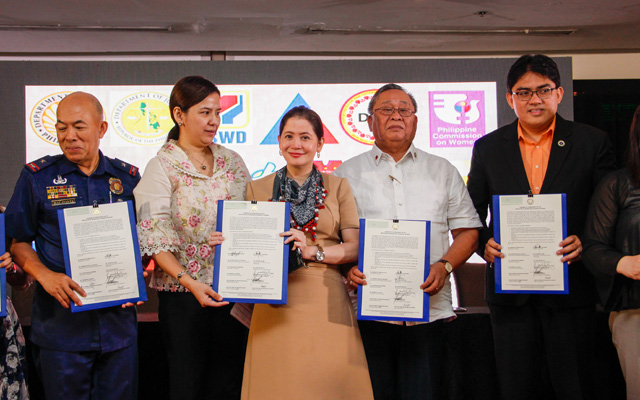
L-R: Police Chief Superintendent William Macavinta of the Philippine National Police; Executive Director Mitzi Cajayon-Uy of the Council for the Welfare of Children; Tourism Secretary Bernadette Romulo Puyat;Aassistant Secretary Roosque Calacat of the Department of Interior and Local Government; and Assistant Justice secretary George Ortha II
The Philippine Department of Tourism (DoT) have joined hands with several government agencies to stop sexual violence against women and children, a burgeoning problem fuelled by tourism growth in the country.
The Tourism Integrates, Supports and Minds Women’s Respect and Child Safety (TouriSM WorCS) programme supports the training of tourism frontliners like tour guides and hotel staff to detect such abuses and empower them to prevent, report and respond.
From left: Philippine National Police’s William Macavinta; Council for the Welfare of Children’s Mitzi Cajayon-Uy; Tourism secretary Bernadette Romulo Puyat; assistant secretary Roosque Calacat; and assistant justice secretary George Ortha II are working together to stop sexual violence against women and children
Tourism secretary Bernadette Romulo Puyat said that besides the creation of the Inter-Agency Council Against Trafficking (IACAT), every regional office will also have personnel dedicated to the safety of children and women in tourism.
Initiatives also include a partnership with global child safety network Friends International in the dissemination of leaflets titled ‘7 Tips for Travellers’ on the measures to take if a sex worker appears underage or if one spots an adult propositioning a child. The leaflet also contains IACAT’s hotline numbers.
Tourism Congress of the Philippines president Jojo Clemente said the private sector is supporting the initiatives, which he called a “good first step to eradicate the abuses which is still a reality”.
Noting that the “increase in tourism over the past decade in the Philippines has resulted in a parallel increase in sex tourism”, Council for the Welfare of Children’s executive director Mitch Cajayon-Uy has called on the DoT to watch tourism spots with the highest reported cases of child sex victims, including child pornography. Those spots are within the National Capital Region that includes metro Manila; Central Luzon; Central Visayas; Zamboanga Peninsula in Mindanao; and Northern Mindanao.
Cajayon-Uy said it is difficult to determine the number of victims. While the number of reported incidents of child sex abuses are “alarming”, there are also many “unreported cases (due) to its covert nature”.
Over the three-year period from 2016 to 2018, there were 388 reported cases of sexually exploited children and 103 victims of prostitution, while pornography victims numbered 107 and cyberpornography victims 180, according to Cajayon-Uy, who added that “most of the cases aren’t even reported”.
The Philippines has become a source and transit country for the cross-border trafficking of children, showing the dark side of tourism, she said.
Justice assistant secretary George Ortha II said the Department of Justice will form a one-stop shop in Manila to cater to the needs of human trafficking victims. “We are aware of tourist destinations becoming hotspots for human trafficking, particularly sexual exploitation,” he said.
The Malaysian travel trade have rallied on AirAsia’s side after the airline recently launched a petition to protest against the additional RM23 (US$5) passenger service charge (PSC) for passengers using klia2 to fly to destinations outside of South-east Asia.
The petition – launched on August 8 on www.change.org with versions available in English, Malay, Chinese and Tamil – has, as at press time, received more than 64,739 supporters.
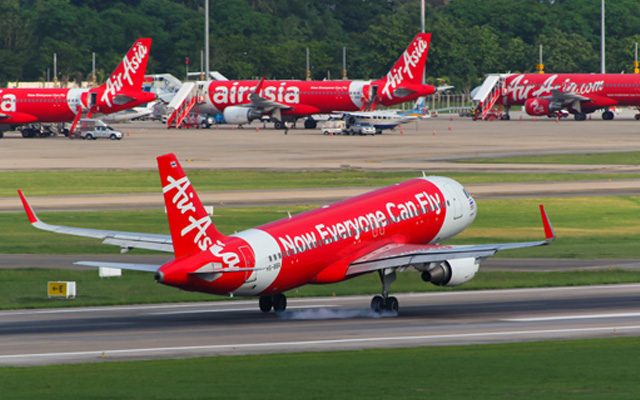
Malaysia’s travel trade have sided with AirAsia in the airline’s protest against the PSC
When contacted, a source from AirAsia familiar with the campaign said: “The online petition was to give Malaysians an avenue to speak up as well as to create better awareness and to educate the public on the issue at hand.
“For example, many think that the PSC is borne by airlines, so why should passengers be bothered? With this information going out using layman terms, it makes people understand that they are the ones forking out money to pay for the PSC.”
However, the source did not comment on AirAsia’s next course of action once the target of 100,000 signatures is reached.
Following a recent High Court ruling, AirAsia has since August 9 started collecting the increased PSC for klia2 flight bookings, a move that the airline claimed was done “under protest” after it lost a lawsuit against Malaysia Airports Holdings Berhad (MAHB).
Industry players TTG Asia spoke to questioned MAHB’s move to raise the PSC for passengers using klia2, designed and operated as a LCC terminal, to that of full-service KLIA, and warned that the increased PSC may deter travel to the country.
Malaysian Inbound Tourism Association president, Uzaidi Udanis, asked: “I don’t see the logic of charging the same rate between KLIA and klia2 when the latter has lesser facilities. Since the PSC is levelled up to be the same between KLIA and klia2, I wonder if there is a possibility for airlines to choose whether they can fly to or from KLIA?
“If there were such a possibility, then in the long-term, klia2 will lose out. Passengers will prefer to fly from KLIA as the distance to the departure gates is shorter, and the airport has better signages and a classier ambiance.”
He added: “The PSC charges at klia2 should be lowered as that will attract more low-cost foreign airlines to fly to klia2. To further promote tourism, I think the government should look at opening up the management of new airports to the private sector. It will create competition and help make Malaysia a primary hub. Right now, we are a secondary hub to Singapore and Bangkok, which have managed to attract more foreign airlines.”
While there are no known statistics on the impact of the increased PSC on travellers, John Chan, business advisor to ISMA Holidays, is worried that a silent majority of travellers using LCCs “may choose to defer their plans, change course or curtail the length of their travel, especially affinity travellers”.
Presanth Chandra, group CEO, Apollo Conferences, expressed concerns that higher tax rates at klia2 would erode Malaysia’s appeal to foreign travellers, especially for frequent flyers and repeat visitors to the country.
“Malaysia needs to strengthen arrivals into the country. Our current challenge is an oversupply of hotel rooms and tourism products amid lesser demand, (a result of) unnecessary taxes and flight connectivity, among other factors,” stated Chandra.
AirAsia maintains that consumers should not be charged a higher PSC because klia2 was designed and operated as an LCC terminal. The PSC has always been lower at klia2, up until 2018 when the rate was increased and equalised for reasons unknown, it said in a statement.
The PSC rates at klia2 had more than doubled in recent years, increasing from RM32 (until December 31, 2016) to RM50 (from January 1, 2017) and to the current RM73 (from July 1, 2018).
According to Malaysian Aviation Commission, the equalisation of the PSC rate across all airports in Malaysia arose from the need to move towards a more internationally accepted cost-based mechanism for charging PSC, which is consistent with the principles outlined by ICAO, the need to lower the subsidies at klia2, the need to facilitate air traveller welfare, and the fact that PSC rates in Malaysia for both domestic and international departures will remain amongst the lowest regionally and globally.