Changi Airports International (CAI) has announced the promotion of managing director, asset management Eugene Gan to the position of CEO from July 1.
Gan will succeed current chief Lim Liang Song, who will be moving on to pursue personal interests.
Eugene Gan
In his current role, Gan is responsible for the business and operating performance of the airports in CAI’s investment portfolio.
Since joining CAI in 2001, Gan has held various leadership positions in the investments and consultancy businesses. He also serves as director on the boards of airport companies in Brazil, China, India and Russia.
Kee Teck Koon, chairman of CAI, said: “Eugene has close to 20 years of experience in CAI. He is well acquainted with the global aviation industry, and has been deeply involved in charting the company’s strategic direction. We welcome Eugene to his new position as the CEO of CAI. We are confident that the company will continue to expand its footprint and create sustainable airport businesses around the world under his leadership.”
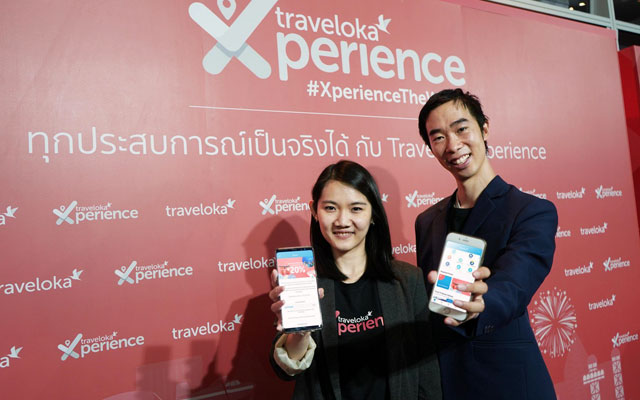
Traveloka Xperience's Sylvia Gunawan (left) and Traveloka Thailand's Tee Chayakul
Indonesian OTA Traveloka has rolled out the Xperience activities booking platform in Thailand.
Thailand is chosen to be the first official launch market of Xperience as the OTA has achieved significant growth across all its business units and has proven to be very popular among Thais and international visitors visiting the kingdom.
Traveloka Xperience’s Sylvia Gunawan (left) and Traveloka Thailand’s Tee Chayakul
Traveloka says the platform is targeting not only domestic and international travellers, but even residents seeking unique experiences or a night out.
The categories include attractions, movies, events, entertainment, tours, beauty & spa, sports, playgrounds, transport, food & drink, classes & workshops, as well as travel essentials.
Traveloka Xperience has built strategic partnerships with international players including Cartoon Network, Universal Studios, Resorts World, Legoland, Disneyland, Ngong Ping, etc.
Commenting on the launch in Thailand, Sylvia Gunawan, vice president for revenue & growth, Traveloka Xperience, said: “Thailand has become one of the most popular destinations in South-east Asia visited by travellers, as well as Traveloka’s second largest market.”
Tee Chayakul, country manager of Traveloka Thailand, said: “Xperience is for anyone who wants to discover more of the many ‘worlds’ around them. The initial response to Xperience has exceeded our expectations and we look forward to building on this momentum and continually offering more experiences worldwide tailored to individual preferences and passions.”
Traveloka currently has an inventory of nearly 15,000 listings across various countries, available for booking by users in seven countries including Thailand, Indonesia, the Philippines, Vietnam, Malaysia, Singapore and Australia.
From left: Dan Lynn and Vikram Malhi, co-founders of Zuzu Hospitality Solutions
South-east Asian hospitality management start-up Zuzu Hospitality Solutions has partnered with Revinate, a global reputation management software company, to help independent hoteliers source and collate guest feedback data at no additional charge.
Through Zuzu’s all-in-one hotel management system, hotel partners will have access to guest reviews from all online channels. The system will also provide consolidated sentiment analysis and analytics of the reviews. This solution will allow the hotels to closely monitor the guest experience and take corrective actions where required.
From left: Dan Lynn and Vikram Malhi, co-founders of Zuzu Hospitality Solutions
With access to guest feedback coming in from multiple channels, hotels will then able to address specific concerns and thus provide better hospitality services, according to Zuzu.
Typically, chain and large independent hotels buy reputation monitoring or management software to track guest feedback and collate the data. With this partnership, small and medium independent hotels across Asia-Pacific will be able to leverage Zuzu’s platform to get access to the data set provided by Revinate.
Vikram Malhi, co-founder of Zuzu Hospitality Solution, said in a statement: “Our initial four-in-one solution of insights analytics platform, channel management, revenue management and property management delivered an average uplift of 30 per cent in online revenue to our hoteliers.”
He added that this new partnership will allow the start-up to provide a “five-in-one solution” that will provide hoteliers with “easy access” to crucial data insights.
Thai Airways International (THAI) has opened an office in Taipei, located in the Jia Jia Building in the CBD.
The airline currently operates 21 direct flights per week between Bangkok and Taipei with Boeing 737-300, Boeing 777-200, and Boeing 787-9 aircraft.
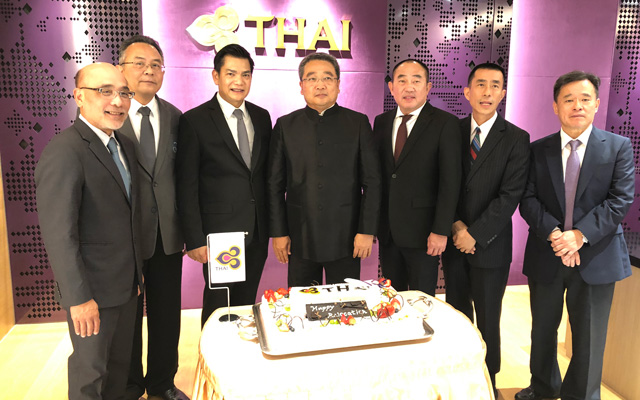
Marking the grand opening of the office were (from left) THAI’s Kunjit Reanthong; Thailand’s tourism division Taipei’s Chookiet Potito; THAI’s Wit Kitchathorn; Thailand Trade and Economic Office Taipei’s Thongchai Chasaweath; THAI’s Nond Kalinta; and Taipei Association of Travel Agents’s Benny Wu, as well as customers and sales agents.
Hotelbeds makes available a local domain to improve usability in China
Hotelbeds has launched a China-based hotel extranet solution for hoteliers in China.
China-based hoteliers now have access to a Chinese domain version of MaxiRoom, Hotelbeds’ free hotel extranet launched in 2015.
Chinese hoteliers will be able to access MaxiRoom via a local domain – https://www.maxiroom.cn – without facing any restrictions and in Chinese.
Hotelbeds makes available a local domain to improve usability in China
Adam Krzciuk Kuna, head of supplier connectivity partnerships, Hotelbeds, commented: “Doing business in China requires a bespoke approach as their technology platforms are different. In the past we tried other non-domestic websites, but the performance of the platform was not up to the standard we wish our hotel partners to receive.
“The domestic domain is created to improve usability and functionality, which is part of our commitment to offer hotels a segmented and ever stronger value proposition. MaxiRoom offers hoteliers greater autonomy by helping them find and manage their rates, availability, offers and content more easily.”
Hotelbeds says MaxiRoom also helps hoteliers to be more competitive, since it offers information about performance in comparison with local competitors and allows hoteliers to make decisions to improve their pricing in order to optimise productivity.
Other features of MaxiRoom include:
• Interactive calendar where hoteliers can make rate and room type changes
• An intuitive content management system designed to easily update the quality of information, images and offers
• A tool that allows to quickly and easily make massive changes in availability and price by product range or by room type.
• Smart alerts that notify hotel partners about dates that have been left unavailable, incomplete descriptions or lack of images so they can improve their showcase on the platform
• A promotions manager that allows hoteliers to launch their own offers directly any time and in a dynamic way
Hotels that work with Hotelbeds have access to more than 60,000 tour operators, airlines, point redemption programs, loyalty plans, and travel agents from more than 140 source markets.
Visit local communities and have rice and a water well donated under your name as part of Shinta Mani Angkor’s Open Doors, Open Hearts CSR package.
Guests will take a full-day tour of the Angkor temples complex including English-speaking tour guide, private vehicle and driver; visit the Green Gecko project with rice donation to an orphanage; visit a village with a donation of a water well to a family; and have dinner complete with performance at Bambu Stage Siem Reap to support the local community.
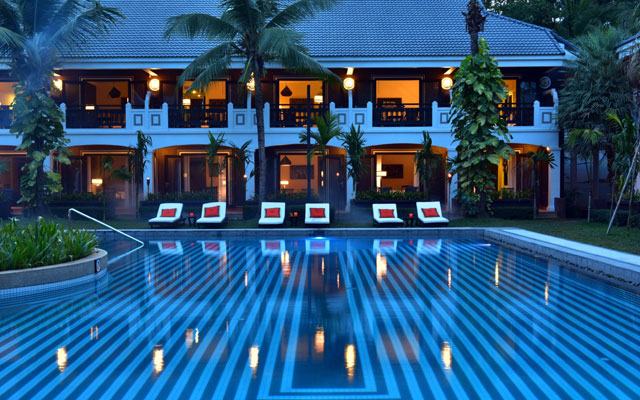
Shinta Mani resort in Siem Reap
The Open Doors, Open Hearts CSR Package also includes:
– private round-trip airport transfers
– fast track immigration on arrival
– three-night accommodation in Superior Room
– daily breakfast
– 60-minute spa treatment
– early check-in and late check-out (subject to availability)
Valid this year, the package costs US$1,890 (pre tax) per couple for travel during the peak season (January 1-3, December 23-31); US$1,550 per couple for travel during the high season (November 1 to December 22) and US$1,290 per couple for the low season (April 1 to October 31).
A percentage of the daily room rate will be donated by the resort to the non-profit Shinta Mani Foundation created by the owner, to support their health, education and development programmes for the less fortunate in the community.
An open sky proposal made by Indonesian president Joko Widodo, who suggested allowing international airlines to operate domestic routes, has drawn a mix of support and caution from tourism stakeholders.
With the Indonesian trade recently up in arms over high air ticket pricing, Widodo opined that heightened competition could help keep airfares affordable.
“Maybe there is not enough competition. We try to multiply the competition by inviting foreign airlines to serve domestic routes,” said Widodo.
Domestic air travel hindered by high airfares;
Under the current law, foreign airlines need to establish a business entity in the country with at least 51 per cent of shares held by Indonesians in order to operate flights within the country.
AirAsia Indonesia was set up under such rulings on ownership.
The transportation ministry is to study Widodo’s proposal, and the government will convene this week to discuss the possibility of open skies in Indonesia.
Such developments in aviation could have far-reaching effects on the tourism and hospitality industry, expressed Haryadi Sukamdani, chairman of Indonesia Hotel & Restaurant Association.
At present, the local aviation industry is dominated by two major airlines, namely Lion Air Group and Garuda Indonesia Group.
Haryadi said the duopoly market conditions have contributed to the high airfares in Indonesia.
He added: “The president’s plan will not only stimulate competition in the aviation industry, but also (make air tickets) more affordable. The hospitality industry is very affected by airline tickets. As is the case at this time, hotel occupancy (has taken a tumble) after air ticket prices have risen.”
Pauline Suharno, secretary general of The Indonesian Travel Agents Association, believes open skies will improve opportunities to promote the destinations in Indonesia and distribute tourism benefits to local communities.
She said: “The main obstacle to Indonesian tourism is access. There are destinations that are ready with the airports, but sadly the flights are still limited. One example is Belitung, which has only five to six flight services from Jakarta. If the government allows the foreign airlines to fly domestic (routes), perhaps the story will be different.”
Pauline sees huge projected growth for domestic travel in the coming years. “But if there are still limited airlines and high fares persist, Indonesia’s tourism will suffer greatly as more Indonesian will opt to travel overseas,” she remarked.
However, while supporting the open sky discourse, Pauline prefers for the government to allocate more slots to existing airlines. “To make destinations in Indonesia more connected, the government can start by making it easier to grant flying licenses and give more flying slots to existing airlines,” she suggested.
Similarly, Budijanto Ardiansyah, vice president of Association of the Indonesian Tours and Travel Agencies, also opined that the government needs to give consideration to other important issues in its move to allow foreign airlines to operate in Indonesia.
Budijanto added that before even considering the safeguarding the country’s sovereignty, there are “problems” still to fix within the country. “I am worried (the move) will backfire if foreign airlines are allowed to fly. We don’t want foreign airlines to destroy the Indonesian aviation industry.”
He added: “I suggest the government gives more incentives, like tax reduction for local airlines. Perhaps, if such kind cost is reduced, it can make airlines more efficient and ultimately bring down ticket prices.”
If the open sky finally happens, Arief Yahya, Indonesia’s tourism minister suggested that foreign airlines would not only fly trunk routes but also connect remote areas or small cities in Indonesia.
“They should not only fly on routes around Java Island or Bali. They must also link the services to areas that are remote or isolated. I do hope they will fly to developing regions,” Arief said.
Encouraging visitors to hop from island to island and from resort to resort
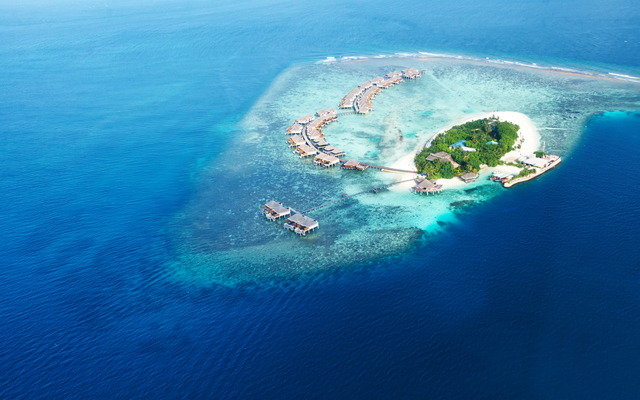
The Maldives has launched an aggressive destination marketing campaign this year, tripling its promotion budget from a few years ago, and partnering Singapore Airlines (SIA) and the BBC in the process.
“Yes, we are promoting the destination more aggressively,” asserted Thoyyib Mohamed, managing director of the Maldives Marketing and PR Corporation (MMPRC), the country’s main state tourism promotion agency.
Under new national leadership, the destination marketing agency has three times the budget
The agency is set to spend close to US$7 million this year, up from US$2.2 million annually in the past two to three years. The increased budget was approved after a new government took office in April this year.
In comments made at the Travel Trade Maldives show in Male last week, Mohamed said a social media marketing campaign targeting six countries – the US, Ukraine, Thailand, India, Russia and China – will begin soon. The organisation has also signed separate contracts with 11 PR agencies across the world.
The destination is partnering with SIA in an US$180,000 deal promoting the destination in China, Japan, South Korea and the US, while MMPRC is also in talks with AirAsia, Emirates and SriLankan Airlines for similar arrangements covering other markets.
Thoyyib added that the agency has signed a contract with BBC, starting September 2019, to use their multimedia platform for a 3.5-month period to promote the destination.
“We are constantly looking for new ideas and taking different approaches than what we used to,” he said, adding that MMPRC is bringing back roadshows as part of the campaign. In recent years, the Maldives trade has complained about the lack of proper promotion on a smaller budget with presence at overseas trade fairs being the main item on the then budget.
Andrew Ashmore, chief commercial officer at Coco Collection Hotels & Resorts, welcomed the promotion campaign as a positive step forward. “Funding is critical. (And with) so many new high-level brands opening in the Maldives, the future new airport will help increase global awareness and bring the destination further into the mainstream,” he told TTG Asia.
“Interestingly the lesser markets like India are really growing, but we need much more to achieve the millions (targeted) in the next few years,” he said, referring to the Maldives’ goal of reaching two million arrivals in 2020-2022.
Abdul Karam, president of the Guesthouse Association of the Maldives, shared that the promotion campaign will, for the first time, include guesthouses as part of the product offering in the Maldives.
However, the general manager of a destination marketing company cautioned: “You need to be careful not to focus too much on guesthouses and low-end accommodation because people will then think this is a cheap destination… whereas the Maldives is a premier destination”.
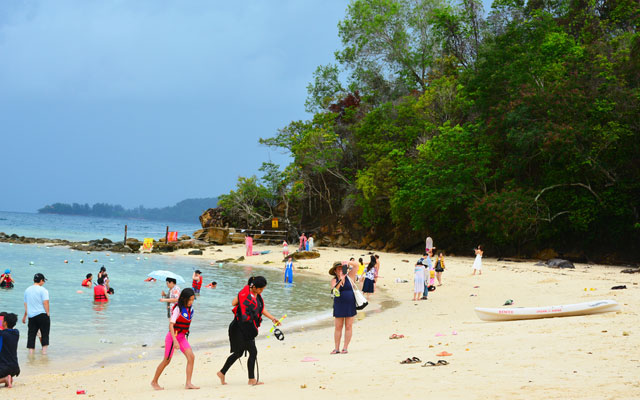
Sapi island, one of five islands that make up the Tunku Abdul Rahman Park
As Sabah Parks proposes a visitor cap for the five islands that form Tunku Abdul Rahman Parks, tourism players in the East Malaysian state agree that visitor numbers can be high during peak periods, while putting forward their own recommendations for protecting against environmental damage from tourism.
A tourism player based in Sabah shared: “Overcrowding happens only during the peak Chinese New Year period, when the state receives an influx of Chinese tourists. This is usually during the first two weeks of Chinese New Year and during the Golden Week holidays.
Sapi island, one of five islands that make up the Tunku Abdul Rahman Park
“There should be a study done first to determine whether there is a need to limit the carrying capacity, and if so, the mechanism in which to do it. The results of the study should also be made known to all the tourism stakeholders.”
Instead of putting a cap on visitor numbers, the spokesperson suggested that Sabah Parks should limit the types of activities that can be carried out to further promote green practices, as well as review entrance fees to create a budget for maintenance and environmental work.
Marilyn Semoring, a dive instructor with Borneo Divers and Sea Sports (Sabah), opined that the move to limit carrying capacity on the Islands will protect the marine life and corals on the island, but she too agreed that overcrowding was seasonal and not year round.
She said visitor surge occurs during the peak Korean and Chinese travel seasons to Sabah. A source at Sabah Parks acknowledged these trends.
The key destinations in the two markets are the islands and beaches in Sabah and Tunku Abdul Rahman parks, being only 20 minutes by boat ride from the city centre.
Semoring suggested tourists to all islands in Sabah be educated by tour operators on do’s and don’ts before they go snorkelling and diving.
According to a recent report in The Star, Jamili Nais, Sabah Parks director, had said: “We have yet to discuss the exact figures but a study has been done according to the space available, the facilities and the volume of clean water.
“The first step is to call up representatives from the tourism community including Malaysian Association of Tour and Travel Agents and Sabah Association of Tour and Travel Agents. We will come up with a figure to bring to the Sabah Parks board and eventually to the Sabah tourism, culture and environment minister Christina Liew.”
He shared that numbers could reach up to 2,000 visitors per day, with an average of 400 to 500 visitors per island.
When contacted, Sabah Association of Tour and Travel Agents president, Lawrence Chin, declined to comment before first discussing the matter with Sabah Parks.
In APAC, South Asia saw fastest growth in international visitors
Asia-Pacific destinations collectively received almost 700 million international visitor arrivals (IVAs) in 2018, an increase of 7.7% over the 2017 figure, according to PATA’s Annual Tourism Monitor 2019 Early Edition.
Rising from an arrivals volume of just almost 562 million in 2014, the annual growth of visitors into and across the region has increased consistently each year, peaking in 2018 at 699.6 million international arrivals.
South-east Asia gained share of APAC IVAs between 2014-2018
In this edition of the report, which covers 47 destinations across the Asia-Pacific region, PATA found that the distribution of these arrivals has been relatively constant over the past five years, although marginally favouring Asia, largely at the expense of the Americas.
Within each of those destination regions, PATA found differences across both individual destinations and at the sub-regional level. Between 2014 and 2018 for example, South-east Asia gained 1.34 points of share in terms of IVAs into and across Asia-Pacific, while North America lost 1.55 points of share.
There are several main indicators of particular interest at this level, particularly the top five destinations by volume of visitor arrivals in 2018.
China was the number one destination for visitor arrivals, with close to 161 million in 2018. That alone represents 22.6% of the total visitor volume into and across Asia-Pacific in that year.
The remaining four destinations in this top five list cover North and Central America as well as North-east and West Asia. Collectively, these top five destinations accounted for 54.8% of the total visitor arrivals into and across Asia-Pacific in 2018.
A second destination indicator considers the top five destinations that received the most additional volume added to their respective inbound counts between 2017 and 2018.
This particular list is remarkably similar to the previous one, except that Mexico has been replaced by Macau. In total, 12 destinations of the 47 covered in this report had annual increases in excess of one million IVAs apiece between 2017 and 2018.
This top five group received a total of over 30 million additional arrivals between 2017 and 2018, which was just over 59% of the total net arrivals for Asia-Pacific over this period.
A third indicator looks at the longer-term growth of Asia-Pacific destinations, in particular, the top five destinations that showed the strongest percentage growth in arrivals between 2017 and 2018.
While the volume of arrivals varies greatly for most of these destinations, they are of particular interest given that annual growth is often a precursor to some significant tourism opportunities presenting themselves.
Turkey in this regard, shows clearly how it is rebounding from the recent contractions in visitor arrivals, appearing in the top five lists by volume and annual growth rate.
So too is Nepal, which has been on a strong growth track for a number of consecutive years now, and which received more than one million foreign arrivals in a single year for the first time ever in 2018. Similarly, with Papua New Guinea which has rebounded strongly since 2016, growing its annual growth rate strongly since then.
Over the longer term – between 2014 and 2018 – PATA notes the top five destinations that received the most additional IVA volume added to their inbound counts over that period. China tops the list with over 34.2 million additional arrivals added to its inbound count, followed by Japan with a gain of close to 17.8 million IVAs over that period and then Thailand with almost 13.5 million additional IVAs.
Mexico and Vietnam close out that top five list with period increases of 12.1 million IVAs and more than 7.6 million.
In similar fashion, PATA says Japan and Vietnam in particular have been expanding their foreign arrivals counts with some strength, given the AAGRS of almost 24% and 18% respectively. This is supported by the fact that both of those destinations also appear in the top five list of the increase in absolute numbers of arrivals between 2014 and 2018.
In addition, and based on these top five AAGR results, Indonesia is certainly a destination to keep watching, according to PATA.














Visit local communities and have rice and a water well donated under your name as part of Shinta Mani Angkor’s Open Doors, Open Hearts CSR package.
Guests will take a full-day tour of the Angkor temples complex including English-speaking tour guide, private vehicle and driver; visit the Green Gecko project with rice donation to an orphanage; visit a village with a donation of a water well to a family; and have dinner complete with performance at Bambu Stage Siem Reap to support the local community.
The Open Doors, Open Hearts CSR Package also includes:
– private round-trip airport transfers
– fast track immigration on arrival
– three-night accommodation in Superior Room
– daily breakfast
– 60-minute spa treatment
– early check-in and late check-out (subject to availability)
Valid this year, the package costs US$1,890 (pre tax) per couple for travel during the peak season (January 1-3, December 23-31); US$1,550 per couple for travel during the high season (November 1 to December 22) and US$1,290 per couple for the low season (April 1 to October 31).
A percentage of the daily room rate will be donated by the resort to the non-profit Shinta Mani Foundation created by the owner, to support their health, education and development programmes for the less fortunate in the community.