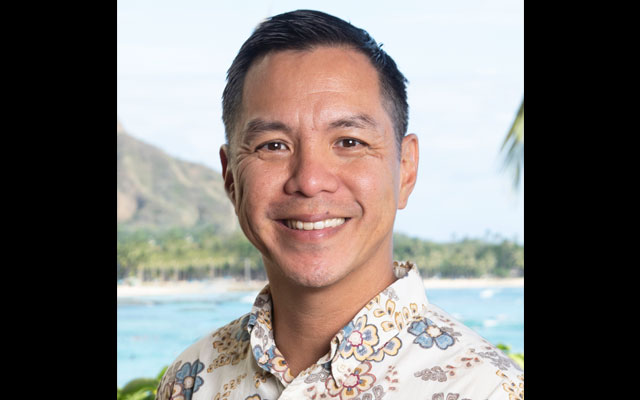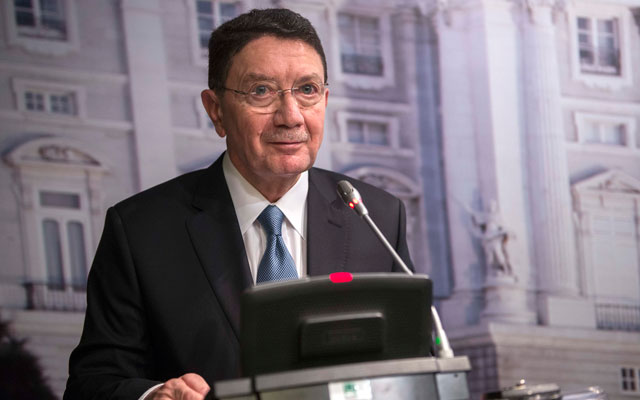
Experienced luxury hotelier Donald Wong has joined Song Saa Private Island as general manager.
With 17 years of sales and marketing experience under this belt, where Wong’s previous positions include director of global sales for the Pacific at Raffles Hotels & Resorts; and director of sales and marketing for Raffles’ two properties in Cambodia – Le Royal, Phnom Penh and Hotel d’Angkor, Siem Reap.
Wong then joined Aman Resorts in 2006, where he spent time as resident manager of Amankora in Paro, Bhutan, before becoming general manager of sales with Aman Resorts in South Asia and China.
In 2011, he joined The Siam Hotel in Bangkok as director of sales and marketing. He then moved to the The Landmark Mandarin Oriental in Hong Kong in the same capacity, and later re-joined Aman as general manager of Amantaka in Luang Prabang.
The Airbnb Luxe tier has been launched with 2,000 exceptional homes; Te Kahu in Wakana, New Zealand
Building on expertise gained from its acquisition of Luxury Retreats in 2017, Airbnb has launched Airbnb Luxe, a new tier above Airbnb Plus, which the home rental giant says will enable it to “meeting the needs of every traveller at every price point”.
Boasting more than 2,000 high-end homes, the new luxury tier provides access to outstanding properties with dedicated trip designers to deliver bespoke experiences and services.
The Airbnb Luxe tier has been launched with 2,000 exceptional homes; Te Kahu in Wakana, New Zealand
Each home in the tier must pass an evaluation across over 300 criteria in both design (e.g. premium materials and finishes, rare features) and function (e.g. chef-grade appliances and the proper amount of bathrooms corresponding to each bedroom).
The homes are also evaluated by the special attributes they possess, their location and surroundings, as well as the services that come with them – like the medieval farm-to-table experience of Castello di Vicarello in Tuscany, or the cutting edge, yet eco-friendly design of Te Kahu in New Zealand, or the chef, driver and butler services that come with Grace Bay Residences in Turks and Caicos.
Each Airbnb Luxe booking provides 24/7 access to a dedicated trip designer who will ensure the stay is tailored to the traveller’s needs throughout their trip. This includes ensuring smooth booking and check-in, coordinating local bespoke experiences and activities, and arranging a range of services from childcare to private chefs and in-house massage therapists – or even personal training sessions in a private gym.
“Today’s luxury traveller is craving more than just high-end accommodations; they seek transformation and experiences that leave them feeling more connected to each other and to their destination. With Airbnb Luxe we are applying the same approach we’ve used since we launched Airbnb more than 11 years ago – creating local, authentic and magical travel moments now in amazing places to – to reimagine the way people think and experience luxury travel,” Brian Chesky, Airbnb co-founder, CEO and head of community
In Asia-Pacific, Bali, Ko Samui, Phang-nga, Phuket, South Island and Sydney currently have homes in Airbnb Luxe.
Beyond the region, guests may choose from homes in New Zealand and South Africa, castles in France and historic villas in Tuscany. Literary fans may seek inspiration and beachfront luxury at The Fleming Villa in Jamaica where Ian Fleming wrote his famous spy novels. Others may prefer complete privacy and exclusivity by booking an entire island with its own self-declared time zone at a private atoll in French Polynesia, Nukutepipi, curated by Guy Laliberte, founder of Cirque du Soleil and Lune Rouge.
In addition to chateaux and chalets, Airbnb Luxe will also open the door to remarkable places to stay in cities. Building on the places to stay already available in cities like London and Los Angeles, the company will be adding Luxe properties in at least 12 more cities this year, including Milan, Paris and Austin.
The launch of Airbnb Luxe also helps meet increasing demand from Airbnb guests for luxury properties and experiences. In 2018, the number of Airbnb bookings for listings worth at least US$1,000 per night increased more than 60 per cent. The increased interest in luxury travel on Airbnb is consistent with broader trends: analysts believe the luxury travel market is worth more than US$200 billion and poised to grow in the years ahead.
Hot on the heels of recent openings in Maldives and Shenzhen, Singapore’s Sentosa island, Bali and India will be among the next destinations to welcome Accor’s luxury hospitality brand Raffles.
Set to open next to Sofitel Sentosa Resort & Spa in 2022, the Raffles Sentosa Resort & Spa will be the brand’s second property in Singapore. The resort will feature 61 keys, ranging from the 260m2 one-bedroom villa to the 450m2 four-bedroom villa, each sporting its own private pool and garden terrace area. Other facilities on the 100,000m2 resort site include a bar, restaurants, fitness centre, three function rooms, the Raffles Spa, as well as butler service.
Raffles Sentosa Resort & Spa rendering
1 of 3
Private Pool Villa
Villa entrance
Ballroom
The hotel will be the outcome of a partnership with property investment and development company Royal Group and global design studio Yabu Pushelberg.
When asked about the room rate at Raffles Sentosa, Michael Issenberg, Accor’s chairman and CEO Asia-Pacific, said it was too premature to disclose, but added that introductory rates for a suite at the soon-to-open Raffles Hotel Singapore will start from US$875.
Similar to the Sentosa property, Raffles Bali will boast 32 private pool villas across 23ha of land in the Jimbaran area. The resort, set to open in 2020, will also feature a Writers Bar, spa, and restaurant.
Raffles Udaipur will also open next year, marking the brand’s first foray into India. The 101-suite property will occupy its own private island in the middle of Udai Sagar Lake in Rajasthan, and will also feature the 1,100m2 Raffles Spa, rooftop restaurant, swimming pool, and the Raffles Long Bar and Writers Bar.
After which, the second Raffles property in India will open in 2022 in Jaipur, part of a larger complex that currently houses the Fairmont Jaipur. The hotel will have 50 suites with private pools.
Raffles currently boasts a collection of 14 properties worldwide, with Accor aiming to reach 20 by 2025. There are currently another eight to 10 Raffles properties in the pipeline, of which 50 per cent will be located in Asia-Pacific.
Flagships for Europe, the US and Middle East are also in the pipeline, including the Raffles London (2020) in the former War Office, Raffles Boston Back Bay Hotel & Residences (2021), and Raffles Palm360 Resort Hotel & Residences (2021), respectively.
Sabre's Wade Jones, Clinton Anderson, and Sean Menke
Sabre will step up its engagement efforts in Asia-Pacific, including Indonesia, Malaysia, Singapore, Vietnam, Australia and New Zealand starting 2H2019, the technology provider announced on the sidelines of Sabre Technology Exchange in Las Vegas this week.
“We’re working with multiple airlines (in these markets), and as we integrate their content, we intend to release (our products) in their primary markets first,” revealed Kathy Morgan, vice president – NDC, Sabre.
Sabre’s Wade Jones, Clinton Anderson, and Sean Menke
She added that Sabre’s push into Asia-Pacific will be a “gradual test-and-learn” process to figure out the different needs in this region.
The company continues to receive “a lot of interest” in Asia-Pacific, where its market share currently stands at 40 per cent, said Sean Menke, president & CEO of Sabre.
The region holds high potential for greater penetration as a majority of airlines adopt mostly solutions that improve operations and have not explored passenger servicing systems.
Menke added that Sabre is “continuing to look at ways into the China marketplace”, whose GDS and travel network landscape remains “closed”, by working with the US government and other agencies to encourage the Chinese market to open up.
This comes after Sabre launched its first NDC API through United Airlines’ global flight network in April. Soon to follow in 2H2019 are scaled-up additional APIs that support voluntary and involuntary flight changes, refunds and voids.
Feedback from this API launch has reflected that response time is Sabre’s “number one focus right now”, said Morgan. She explained that while most GDS today offer sub-second response time to a search query, an NDC-enabled system would take slightly longer.
The “test-and-learn” approach will help Sabre and its partners have a feel of what their “customer time-out” limit is, she said.
Sabre has also launched a customer advisory board, which comprises its Beyond NDC partners and 60 other industry testers from technology providers to travel agencies.
“The customer advisory board has provided a mechanism for the two sides of the equation – buyers and suppliers – and the technologists that sit in the middle to be able to talk through the real-life implications and concerns around bringing in new technology standards into travel distribution,” shared Morgan.
She explained that the board convenes for meetings where working groups can “take apart and break down where these standards have gaps”, and the results are passed on through IATA’s change request process.
“It takes all of us working together for this to scale, to make sure we get these standards better,” she asserted.
Wade Jones, president of Sabre Travel Network, added that with the expansion into Asia, some future advisory board meetings might be held in Sabre’s headquarters in Singapore.
The InterContinental Hotels Group (IHG) and Sands China have jointly announced that The Venetian Macao and The Parisian Macao have become InterContinental Alliance Resorts as of yesterday.
In addition, The Londoner Hotel in Macao will join the alliance when it opens in 2020, following the renovation of the current Holiday Inn Macao Cotai Central.
The Venetian Macao
IHG and The Venetian Resort Las Vegas – comprising the Venetian and Palazzo hotels – announced the long-term extension of their alliance. The partnership extends through to 2027 at all five properties. The Venetian Resort was the first-ever InterContinental Alliance Resort when the partnership launched in 2010.
While these alliance resorts maintain their own identities, they are being marketed through IHG’s channels including InterContinental.com, where guests can book or redeem points for a suite.
Guests across these five luxury properties – which include approximately 13,000 luxury hotel rooms and suites – will be able to earn IHG Rewards Club points and redeem them for stays at more than 5,600 IHG hotels worldwide. IHG Rewards Club Members will also be able to redeem Reward Nights at all five InterContinental Alliance Resorts.
Holistica's first project is a US$275 million development in Freeport, The Bahamas
After a recent analysis threw large cruise liners back into the hot seat for their startling environmental impact, Royal Caribbean Cruises (RCL) is eager to show it has sustainability in its sights by forming a joint venture company advocating “an inclusive model for destination development”.
The Miami-based cruise company has teamed up with ITM Group, a privately-held Mexican company based in Cancun with more than 30 years’ experience developing tourism and entertainment infrastructure, to form a new destination company named Holistica.
Holistica’s first project is a US$275 million development in Freeport, The Bahamas (pictured)
Holistica will be a 50-50 partnership between both companies. The partners have commenced a search for a CEO for the company, which will be headquartered in Miami.
According to RCL, Holistica will create “an inclusive model for destination development that works holistically to meet the needs of coastal communities, local governments, and land, sea, and air travellers”.
“The continuing growth and rising popularity of cruise vacations make it clear that the sustainable development of coastal destinations, including the thoughtful evolution of existing ones, is in the travel industry’s best interest,” said Michael Bayley, president and CEO of RCL.
This month, an European environmental group released its own findings showing that cruise liners run by Carnival Corporation emitted nearly 10 times more sulphur oxide pollution around European coasts than all of the continent’s 260 million cars in 2017. In the same month, the company agreed to pay a criminal penalty of US$20 million for environmental violations.
Mauricio Hamui, ITM Group’s CEO, said a well managed destination can bring benefits while “creating the least possible disruption to the human and natural environment”.
He added that there ware ways to do tourism projects “inclusively, collaboratively and sustainability”.
RCL’s Bayley said: “We have spent five decades learning what works and what doesn’t, and we know the potential of strategic development to deliver extraordinary guest experiences and meet the needs of local communities.”
Holistica’s first project is a US$275 million development in Freeport, The Bahamas, currently under review by the Bahamian government. Centred on the regeneration of the Grand Lucayan resort, the project includes ambitious plans for local ownership, employment, job training, community investment and sustainable construction practices.
In addition to the Freeport project, the companies said the new venture will own and operate destinations in Costa Maya, Mexico; Roatan, Honduras; and Kumamoto, Japan.
These projects, among others, is expected to serve eight million visitors annually, and be accessible to all travelers, including land and air vacationers and guests of multiple cruise lines.
Holistica is also engaged in discussions regarding multiple existing and proposed destinations around the world.
Singapore Tourism Accelerator opens for applications
The Singapore Tourism Board (STB) is calling for local and international companies to join the Singapore Tourism Accelerator programme.
The pilot programme, which will run for two years, aims to develop solutions to long-standing issues, as well as developing new ideas that will transform the tourism sector.
Singapore Tourism Accelerator opens for applications
Poh Chi Chuan, director, digital transformation, STB said: “With increasing disruption faced by the tourism sector, we are committed to help our industry partners meet the challenges and stay ahead of the competition.
“The Singapore Tourism Accelerator gives us a platform to work with companies with innovative solutions that can be applied across the industry and to enhance the overall visitor experience.”
The accelerator was first announced during the 2019 Tourism Industry Conference as the Singapore Tourism Incubator.
However, it has been renamed to reflect that the programme fast-tracks the development and scaling-up of promising solutions within a fixed period of time.
This means targeting start-ups already at the prototyping or business development stage, as well as those that have piloted a breakthrough solution in another city and are looking for opportunities to scale their solutions in the Singapore and Asian markets.
STB will work with the accelerator’s appointed partner Found8 to select start-ups to participate in the programme. To qualify, companies must already have prototype solutions or have piloted their solutions elsewhere.
The accelerator, located on STB’s premises, will take in its first batch of 12 companies in October. During the first stage of the programme, companies go through workshops and informal sharing sessions, to help refine and adapt their solutions to meet the needs of Singapore’s tourism sector.
They will also be working with established industry players that include Expedia Group, Sentosa Development Corporation, SingEx Holdings, Singapore Airlines and Marina Bay Sands. At the end of three months, the solutions will be evaluated by a panel of industry members.
Selected companies will move on to the next stage where they will receive funding support of 70 per cent of qualifying costs, up to S$25,000 per company, to testbed their solutions with an industry partner. The programme concludes with a showcase, which is where they get to pitch their business plans to industry stakeholders and investors.
Grace Sai, co-founder and co-CEO, Found8 shared that the company has supported more than 90 corporates in their innovation journeys.
Google Flights has gained access to all Routehappy rich content with the signing of a long-term deal with ATPCO.
In 2014, Google Flights was one of the first metasearch websites to integrate Routehappy’s Amenities data (Wi-Fi, seat pitch, IFE, power availability etc) in its flight search results.
A screenshot from the Google Flights page
With the new deal, Google can now broaden its display options with Routehappy’s Universal Ticket Attributes (UTAs) and Universal Product Attributes (UPAs) product types.
UTAs provide information by fare about benefits and restrictions such as cancellation rules, baggage allowance, upgrade eligibility, check-in, and boarding priority, making it easier for flight-seekers to discover important ticket attributes associated with each flight.
UPAs visually highlight in-flight features through descriptive text, photos, graphics, and videos, improving the shopping experience for consumers.
Vietnam may be a rising destination in South-east Asia’s tourism landscape, but travel sellers at the recent Thailand Travel Mart Plus (TTM+) are not concerned about the competition it may pose to tourism heavyweight Thailand – at least not yet.
Nicola Scaramuzzino, Thailand country manager for Panorama Destination, thinks other South-east Asian countries offer “more incentives than competition” to Thailand. Furthermore, he contends that it’s comparatively harder to spend two weeks in Laos or Cambodia than Thailand, where tourism offerings are much richer and diverse.
Vietnam is not seen as a threat to Thailand yet
Sharing similar views, Tobias Fischer, director of business development at Go Vacations Thailand, remarked: “Vietnam definitely has more authentic experiences which are harder to find (in Thailand), but Thailand is diverse. There’s no better repeater destination than Thailand in this region.
“I don’t think Vietnam takes visitors away from Thailand but adds to overall South-east Asia’s appeal,” he stressed. However, Vietnam’s growing international flight connections have also made combination tours with Thailand a thing of the past, acknowledged Fischer.
It’s also Thailand’s friendlier policies towards foreign travellers that make it a more attractive destination than its regional counterparts, overseas buyers at TTM+ pointed out.
“I don’t think Vietnam will be a threat to Thailand for quite some time yet. Thailand is seen as a ‘flop and drop’ destination for Australians. With its visa-free entry policy for Australians, they can just turn up in the country any time,” said Simone Nankervis, product manager of Fusion Holidays Australia.
Thailand is still “selling much better” than Vietnam, which is “a new and slowly emerging destination” for the Australian market, Nankervis told TTG Asia. And Bali, which direct connections from most parts of Australia, poses a stronger competition to Thailand than Vietnam, she added.
But not all buyers at TTM+ are quick to write off the threat from other up-and-rising destinations in South-east Asia though.
David Kevan of UK-based Chic Locations observed: “Bookings are holding up for Thailand but the gap between the top three is narrowing month by month, with both Vietnam and Indonesia pushing Thailand hard.”
Despite Indonesia losing a direct connection in Garuda Indonesia’s Jakarta-London service, Kevan still sees competitive pairing of destinations such as Singapore-Bali for the UK market.
What he urges for Thailand is more controlled development and less complacency from the authorities as the country struggles with ever-growing arrival numbers.
“The fire haze created by farmers in the country’s north has hit demand for the region, and in many resorts in the south the beach and sea pollution is making clients search for alternatives,” he stressed.
“But there seems very little real desire to improve the situation, it’s finger pointing at other departments, shrugging of shoulders and acceptance of that is how it is. Great pity as Thailand is better than that,” lamented Kevan.
Go Vacations’ Fischer also recognises that competition is no longer confined to Thailand’s immediate neighbours. Competition to the destination also comes from Tunisia, Turkey, Egypt and Mediterranean, which have come back on the travel radar for European travellers, and with attractive rates to rival Thailand’s to boot.
Investor confidence closely tied to completion of airport expansion
The Maldives’ arrivals target could be hampered by delays in the expansion of the Velana International Airport to accommodate 7.5 million passenger annually by 2022.
This year, the Maldives revised its arrivals target to 1.5 million from 1.4 million, after the destination saw a 36.3 per cent surge in arrivals in April from the same 2018 month.
The country is aiming for 2-2.5 million arrivals in 2022-2023, largely dependent on the completion of the airport expansion. The current airport can accommodate two to three million passengers annually.
Industry sentiment riding on the completion of Maldives’ airport expansion
“The airport expansion delays worry us, a lot of things are in the pipeline (because of the delays). A lot of airlines want to fly and increase the airlift from here but the delay is the issue,” said Thoyyib Mohamed, managing director of the Maldives Marketing and PR Corporation (MMPRC), the country’s main tourism promotion agency.
Describing the slow expansion of the airport, Mohamed Nihaj, general manager at Rahaa, a four-star, 100-villa resort due to open next month, pointed out that while the new runway is ready, other infrastructure like the relocated seaplane terminal and new terminal building are not ready yet.
“When this all is ready, there will be more flights. One of the problems now is that the airport cannot cope with the demand and planes have to sometimes circle the airport till the runway is clear for landing,” he said.
These developments are part of a US$800 million project to expand and upgrade the country’s main international airport. The project involves building a brand-new runway, a new passenger terminal and a seaplane terminal, as well as other support facilities.
While the new runway was completed in September 2018, it cannot be operated as the old seaplane terminal, near the same land, has to first be moved. The new passenger terminal will not be ready until 2022.
Speaking in February this year, the nation’s president Ibrahim Mohamed Solih, acknowledged concerns over the slow progress of the development vis-à-vis the rapid expansion of the tourism industry and room stock.
“Without the completion of a new terminal, the full potential of the new runway at the airport cannot be realised and more tourists cannot be brought in,” he said.
Echoing how investor confidence is entwined with the airport expansion,
Afrah Abdulla, reservations manager at Waldorp Astoria Maldives Ithaafushi – opening in July with 122 rooms – said: “Airport expansion will help enhance traffic and increase the number of first class and business class capacity, for which there is an (existing shortage).”
At least 162 new resorts – largely in the five-star category – have opened in 2016 to 2018, bringing the inventory up 7,152 beds to 43,770 in 2018. Another 20 resorts are opening or have opened this year, adding another 2,000 beds.