TTG Asia
Asia/Singapore Friday, 14th August 2026
Page 12

WTTC urges reforms to unlock India’s tourism potential

0

India has the potential to become one of the world’s biggest tourism destinations but must remove policy and infrastructure bottlenecks to realise that ambition, according to Gloria Guevara, president and CEO of the World Travel & Tourism Council (WTTC).

Speaking at the Federation of Associations in Indian Tourism & Hospitality’s (FAITH) conclave in New Delhi from July 16 to 17, she said India remains underrepresented in global tourism despite its rich cultural heritage, history and diverse experiences.

WTTC’s Gloria Guevara addresses delegates at the FAITH conclave in New Delhi; photo by Rohit Kaul

Delivering a presentation titled Travel & Tourism – A Global Powerhouse for Growth, Prosperity & Employment on the opening day of the conclave, Guevara highlighted that international overnight arrivals reached a record 1.54 billion in 2025, an increase of 82 million travellers over the previous year, representing 5.6 per cent growth. Globally, the travel and tourism sector expanded by 4.1 per cent, significantly outpacing overall global GDP growth of 2.8 per cent.

India’s travel and tourism economy also posted robust growth, expanding by 7.3 per cent in 2025, although it trailed China, which recorded 9.9 per cent growth. Japan’s travel and tourism GDP grew by 4.6 per cent during the same period.

“Global international visitor spending crossed US$2.02 trillion in 2025, registering a 3.2 per cent year-on-year increase. In contrast, India witnessed an eight per cent decline in international visitor spending to US$33 billion, while China recorded a 10.5 per cent increase and South Korea posted an 11.6 per cent rise,” she shared.

Guevara attributed India’s decline in international visitor spending to a series of adverse events during the year, including the Pahalgam terror attack in April, subsequent India-Pakistan border tensions, the Air India Ahmedabad-London crash, intense monsoon rainfall in several parts of the country and widespread flight disruptions in early December following the implementation of the government of India’s revised Flight Duty Time Limitation norms.

International visitor arrivals worldwide also reached 1.54 billion in 2025, growing by 5.4 per cent over the previous year. India, however, recorded a 7.4 per cent decline, receiving 18.6 million international visitors. WTTC’s figures include Indians residing overseas who visited the country during the year. In comparison, China welcomed 68.2 million international visitors, reflecting a 15.5 per cent increase, while Japan recorded 42.7 million arrivals, up 15.8 per cent.

“Despite the setback in inbound tourism, India’s domestic travel market remained a major growth driver. The country’s travel and tourism sector contributed US$263.6 billion to the economy in 2025, accounting for 6.6 per cent of GDP and supporting 46.2 million jobs. Domestic visitor spending rose by 10.3 per cent year-on-year to US$203 billion,” said Guevara.

India’s share of global international visitor spending slipped to 1.6 per cent in 2025 from 1.8 per cent a year earlier, underlining the country’s relatively modest presence in the global inbound tourism market.

Looking ahead, WTTC expects India to remain one of the world’s fastest-growing travel economies. The organisation forecasts India’s travel and tourism GDP to grow by 8.5 per cent in 2026, higher than China’s projected 5.3 per cent growth, though below Thailand’s expected 11.6 per cent expansion. International visitor spending in India is projected to rebound by 15.3 per cent to US$38 billion next year.

WTTC also projects India to become the world’s fourth-largest travel and tourism economy by 2036, up from 10th position in 2025. The growth is expected to be driven by sustained investment, enabling government policies, improved connectivity and continued expansion of tourism infrastructure. The sector is also forecast to create 15.4 million new jobs between 2026 and 2036.

However, Guevara emphasised that India must address several structural issues to unlock its full tourism potential.

“I don’t think that India has its fair share in the global tourism market considering the size of the country, its rich history, culture and gastronomy. India currently offers visa-free access to citizens of only three countries compared with around 70 countries in China and about 90 in Thailand. There is also a need to improve connectivity to secondary cities through high-speed rail networks and introducing a fully digital arrival process to make travel to India more seamless and attractive for international visitors,” she advised.

Klook, KTO renew partnership to drive regional tourism in South Korea

0

Klook and the Korea Tourism Organization (KTO) have renewed their partnership to promote regional travel across South Korea while supporting the digital transformation of the country’s tourism sector.

The memorandum of understanding focuses on four areas: digitalising tourism products and businesses, promoting destinations beyond Seoul, developing marketing campaigns for free independent travellers (FIT), and building smart tourism solutions using traveller insights and AI.

From left: Korea Tourism Organization’s Sunghyeuck Park and Klook’s CS Soong

The renewed partnership comes as demand for regional destinations continues to grow. Klook said bookings for Busan and Jeju increased by more than 50 per cent year on year in the first half of 2026, outpacing the national average.

According to Klook’s latest Travel Pulse report, 73 per cent of Asia-Pacific travellers would visit a lesser-known destination to attend a local event, festival or activity, while almost 80 per cent have chosen destinations after seeing them trend on social media.

Under the agreement, Klook and KTO will work together to promote a wider range of tourism experiences across South Korea, raise awareness of emerging destinations and encourage a more even distribution of visitors.

The partners will also develop marketing campaigns and tourism products across multiple source markets, including China, Hong Kong, Taiwan, South-east Asia, Japan, the US and Europe.

The collaboration builds on earlier initiatives launched in 2023 to improve transport access for international visitors. These include a real-time express bus booking service developed with the Korea Express Bus Lines Association and Tmoney, as well as a real-time KORAIL rail booking service introduced on Klook in April 2026.

Sunghyeuck Park, president and CEO, KTO, said: “Through this partnership with Klook, we aim to make it even easier for international travellers to discover more of Korea, while supporting local tourism businesses in adapting to changing traveller needs.”

CS Soong, vice president of corporate development at Klook, added: “South Korea is already one of the most exciting destinations for international travellers, but there is still a huge opportunity to help visitors discover more of the country, from major cities to emerging regional destinations.

“Working closely with KTO allows us to combine digital access, traveller insights, and destination storytelling to create meaningful ways for travellers to experience South Korea.”

Macao teams up with Flyday HK on running-themed tourism campaign

0

The Macao Government Tourism Office (MGTO) has partnered with Hong Kong travel platform Flyday HK to launch the Macao, Get, Set, Glow 2026 campaign, promoting neighbourhood tourism through running-themed experiences.

The campaign combines urban exploration with recreational running, encouraging visitors to discover lesser-known parts of Macao beyond its main attractions.

The Macao Government Tourism Office and Flyday HK have launched a campaign encouraging visitors to explore Macao’s neighbourhoods through themed running routes

Eight themed jogging routes have been developed across four categories: gastronomy, heritage, community and scenery. Designed for different fitness levels, the routes will be promoted by influencers from Hong Kong and overseas through social media platforms including Instagram, Facebook, Threads, TikTok, Xiaohongshu and YouTube.

The campaign also includes online voting, allowing the public to support their preferred running routes, alongside an offline challenge where participants who complete designated routes and share photos at selected locations can receive promotional gifts, including Marathon Sports vouchers.

A series of short videos featuring local residents will showcase Macao’s food culture, neighbourhoods and running routes. Participants include a Macanese chef, the owner of a long-established local business and a local runner, who share their perspectives on the destination.

To encourage spending in local communities, MGTO has partnered with AlipayHK to distribute promotional vouchers through the payment platform. Travellers can redeem campaign offers via the AlipayHK app and earn A.Point rewards on eligible purchases made in Macao.

The initiative aims to encourage visitors to spend more time exploring residential districts while supporting local businesses through community-based tourism and digital payment incentives.

MATTA Connect returns to Ipoh to support Visit Malaysia goals

0

The Malaysian Association of Tour and Travel Agents (MATTA) will stage the second edition of MATTA Connect from July 29 to 30 at the Ipoh Convention Centre in Perak, following the inaugural event held in Kuala Lumpur in April 2025.

The B2B travel marketplace will bring together buyers, sellers and tourism stakeholders from Malaysia and across South-east Asia for two days of business matching, networking, destination presentations and industry discussions. Malaysia’s minister of tourism, arts and culture, Tiong King Sing, will attend the closing dinner on July 30, where he is scheduled to deliver the keynote address.

Selected international buyers will explore Perak attractions, including Royal Belum Rainforest, pictured, ahead of MATTA Connect 2026

Nigel Wong, president of MATTA, said: “Following the success of our inaugural edition last year, MATTA Connect has established itself as an important platform for tourism businesses, buyers and destination partners to forge meaningful collaborations and unlock new business opportunities.”

He added that MATTA Connect plays a strategic role in supporting Visit Malaysia 2026, while continuing to drive business matching, knowledge sharing and market expansion into 2027, strengthening the competitiveness of Malaysian travel businesses.

Wong said the minister’s attendance reflects the importance of industry-government collaboration in driving Malaysia’s tourism growth.

“The minister’s presence reflected the importance of strong industry-government collaboration in driving Malaysia’s tourism growth.”

MATTA Connect 2026 will feature structured B2B business matching sessions and a business forum covering tourism trends, digital transformation, innovation and market opportunities. Participants will include international buyers, destination management companies, airlines, hotels, attractions and travel service providers. The ASEAN Tourism Association (ASEANTA) will also participate, creating additional opportunities for cross-border collaboration across South-east Asia.

Selected semi-hosted international buyers will take part in a five-day pre-tour from July 24 to 28, visiting Perak’s tourism attractions, including Ipoh, Kuala Kangsar, the Lenggong Valley and the Royal Belum State Park.

The programme is designed to provide buyers with first-hand destination experiences before participating in scheduled business meetings, enabling them to better promote Perak and Malaysia in their respective international markets.

“Ipoh was chosen as the host city for MATTA Connect 2026 to showcase Perak’s rich tourism offerings while creating meaningful business opportunities for the industry,” said Ken Chong, organising chairman of MATTA Connect 2026.

He said the event was designed as a long-term platform to strengthen Malaysia’s tourism industry beyond Visit Malaysia 2026, while creating lasting value for MATTA members in 2027 and beyond.

MATTA Connect 2026 is supported by Tourism Perak, alongside destination partners Penang Global Tourism and the Macao Government Tourism Office (MGTO).

Accor, Worldwide Hotels Group inks new ibis Styles hotel in Johor Bahru

0

Accor has signed ibis Styles Johor Bahru City Centre in partnership with Worldwide Hotels Group, with the 243-room property scheduled to open in late 2026.

Located within walking distance of Johor Bahru Sentral and close to the city’s cultural attractions and shopping areas, the hotel will feature an all-day dining restaurant, lobby lounge, fitness centre, and meeting and function spaces.

From left to right: Accor’s Chris Cho and Garth Simmons, and Worldwide Hotels Group’s Carolyn Choo and Jason Peck

The signing expands Accor’s partnership with Singapore-based Worldwide Hotels Group to nine hotels across Asia and supports the group’s growth strategy in high-potential markets. Accor currently operates 28 hotels across seven brands in Malaysia, with a further 10 properties in the pipeline.

Garth Simmons, COO, Asia, Accor, said: “The signing of ibis Styles Johor Bahru City Centre marks another step in advancing Accor’s growth in Malaysia. Johor Bahru is a key cross-border gateway, supported by rising connectivity and growing demand from both leisure and business travellers. ibis Styles is well suited to this market, offering a design-led, flexible model that appeals to today’s value-conscious, experience-driven guests while delivering strong value for owners.”

Carolyn Choo, CEO, Worldwide Hotels, added: “Strategically located within walking distance of the upcoming Johor Bahru–Singapore Rapid Transit System (RTS) Link station at Bukit Chagar, the hotel will offer convenient accommodation for travellers commuting between the two destinations.”

Regent Seven Seas Cruises unwraps festive Europe voyages for 2026

0

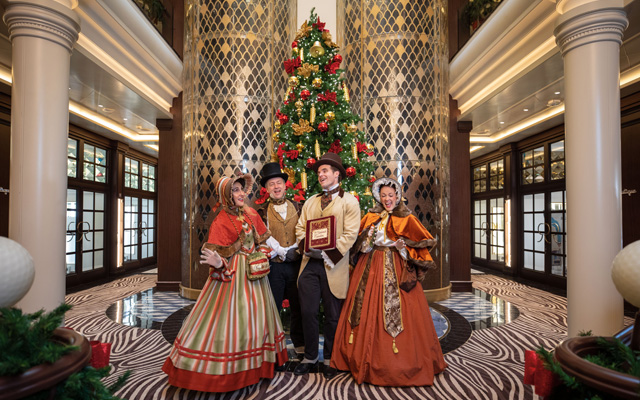
Regent Seven Seas Cruises has introduced 56 new shore excursions and five pre- and post-cruise land programmes for the 2026 festive season, giving guests more ways to experience Christmas traditions, markets and seasonal cuisine across the Mediterranean.

Available on selected voyages aboard Seven Seas Navigator, Seven Seas Voyager and the maiden voyage of Seven Seas Prestige, the new excursions range from Christmas markets and festive light displays to regional food experiences and local holiday customs. Several are included in Regent’s all-inclusive fare, while Regent Choice excursions start from US$119.

Regent Seven Seas Cruises will offer new festive experiences across Europe during its 2026 holiday season

The new land programmes are available on Seven Seas Navigator‘s first full winter Mediterranean season, with three-night itineraries in Barcelona, Rome, Tuscany and Viterbo. Prices start from US$2,399 per guest.

Highlights include Holiday Magic in Catalonia, which combines Barcelona’s Christmas markets with Girona’s festive fairs; Holiday Magic in Rome and Viterbo, featuring the Vatican, Rome’s landmarks and Viterbo’s Christmas markets; and Tuscany’s Winter Magic, with visits to Florence, Pienza and Montepulciano, alongside regional food and wine experiences.

Among the new included shore excursions, guests can explore Málaga’s Christmas lights, cathedral nativity display and festive markets during the Felices Fiestas voyage aboard Seven Seas Prestige. In Cyprus, a walking tour of Limassol visits illuminated landmarks, the marina and Old Port during the Turkish Treasures itinerary on Seven Seas Voyager. In Marseille, guests can experience Provence’s Christmas traditions, including the famous 13 Desserts of Christmas, artisan markets and seasonal sweet tastings during the Southern Mediterranean Sojourn aboard Seven Seas Navigator.

On board, ships will also feature seasonal decorations, festive dining menus and holiday entertainment throughout the Christmas period.

For more information, visit Regent Seven Seas Cruises.

Bangkok to host second Hyrox this year

0

The trending indoor fitness competition, Hyrox, will return to Bangkok with another race this August, making this the second edition for the year in the same city.

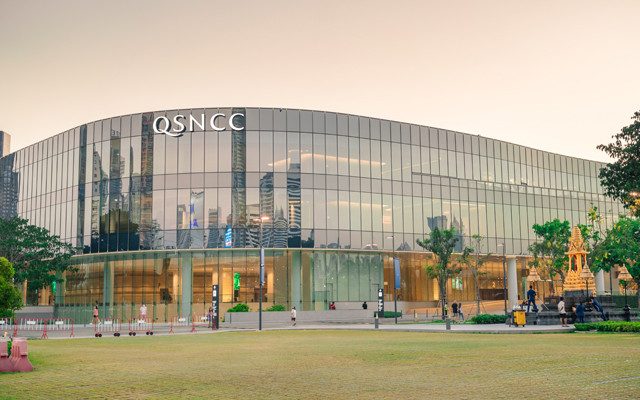
BYD Hyrox Bangkok will run from August 13 to 16 at the Queen Sirikit National Convention Center, with more than 22,000 participants from Thailand and overseas expected in attendance.

BYD Hyrox Bangkok returns to the Queen Sirikit National Convention Center this August, with more than 22,000 participants expected for what is set to be the largest Hyrox race in Asia to date

It is expected to be the biggest Hyrox race in Asia to date.

It is also significant that the second race in Bangkok will stretch for four days, up from three days in March – an indicator of strong and growing demand from both participants and the local fitness community.

Hyrox has built a strong local ecosystem in Thailand, partnering with more than 170 gyms nationwide, including 100 in Bangkok alone. Through structured training programmes and shared resources, the company supports local operators in delivering official Hyrox training and helps transform gyms into community-driven fitness hubs.

For more information, visit BYD Hyrox Bangkok.

The Hari Singapore welcomes new GM

0

Andreas Kraemer has been appointed general manager of The Hari Singapore ahead of the hotel’s opening in spring 2027.

He joins the 326-room property after more than five years as general manager of InterContinental Singapore.

Kraemer brings more than 30 years of hospitality experience across Europe and Asia.


TTG Conversations: Five Questions with Chayadi Karim, Kinn Hospitality Concepts

0

Inspired by the community spirit of European hostels and the self-service convenience of Japanese capsule hotels, Singapore-based Kinn Hospitality Concept founder Chayadi Karim launched his own line of modern capsule hotels that capture the best of both worlds.

In this episode of TTG Conversations: Five Questions, Karim discusses his vision for the capsule hotel of the future, how this accommodation type can help value-seeking travellers explore a destination without breaking the bank, how younger generations of travellers are driving demand for experiences worth paying for, and more.

Building for the right guest

0
  • South-east Asia welcomed 144 million international visitors in 2025, yet development capital is concentrating in premium and luxury products while the region’s growing middle class drives the largest volume of future demand
  • Owners are diversifying into secondary destinations, using branded residences to bring cashflow forward and lifestyle concepts to lift returns without the capital burden of traditional luxury builds
  • Developers say the winning formula now sits where consumer demand meets real estate returns, with localised design replacing one-size-fits-all brand standards across the region
From left: Andrew Shaw and Xavier Grange explore whether what owners are prioritising is aligned with the region’s development needs

The guest South-east Asia’s hotel owners are building for is not necessarily the one most likely to walk through the door. Development pipelines across the region are skewing towards wellness, luxury and lifestyle products, even as the fastest-growing demand pool, the regional middle-class holidaymaker, remains underserved in the midscale segment.

The macro picture explains the confidence. The region welcomed 144 million international visitors in 2025, a 19 per cent increase from 2024, with Malaysia, Thailand and Vietnam leading the numbers, according to Bryan Chan, vice president, development, South East Asia and Korea, IHG Hotels & Resorts.

“Despite ongoing global geopolitical tensions, travel to the region continues to be highly resilient, supported by expanding GDP, a growing middle class, and the fundamental desire to travel for leisure, business and to stay connected with family and friends,” Chan said. “Demand is also consistently outpacing supply in key segments, particularly in premium and luxury, which creates attractive opportunities for owners and sustained development momentum across the region.”

Selective optimism
Andrew Shaw, chief development officer, Centara Hotels & Resorts, described his outlook as “selectively optimistic”, noting that growth is not uniform. “The strongest opportunities are in frontier and emerging destinations, while mature markets are becoming more competitive and, in some cases, oversupplied,” he said.

Thailand remains a regional heavyweight, but Shaw pointed to rate pressure in Bangkok and Phuket caused by high levels of supply, forcing developers to think harder about value creation, product differentiation and secondary destinations. Vietnam, he said, is “the clearest high-growth story”, with coastal corridors such as Cam Ranh and Ho Tram drawing significant attention on the back of improving infrastructure and rising leisure demand. The Philippines interests him for its strong domestic base and the depth of employment tied to tourism, while in Indonesia the conversation is shifting from chasing volume to capturing higher-spending luxury and experience-led travellers in Jakarta and Bali.

Owner priorities have hardened accordingly. “Margin protection is the first priority. Even where average daily rate and occupancy have recovered, operating costs remain a pressure point. Owners are therefore looking closely at gross operating profit, not just revenue,” Shaw explained. Labour shortages are pushing operators towards automation, upskilling and cross-training to improve staff retention.

Asked whether owners’ ideal hotel types match what the market actually needs, Shaw was blunt: “Only partly. Owners are broadly aligned with demand at the premium end of the market, particularly in wellness, lifestyle, and experiential hospitality. But there is still a noticeable gap in the midscale segment, where South-east Asia’s growing domestic middle-class is likely to drive much of the volume growth.”

He added: “Owners are understandably building for the most profitable guest: the luxury wellness traveller. But the most common guest may be the regional middle-class holidaymaker. That creates a strategic tension. The premium strategy protects margins today, but it may underserve the largest long-term demand pool.”

Branded residences and secondary destinations
Where owners are diversifying, branded residences are doing much of the financial engineering.

Xavier Grange, global chief development officer for Sofitel, Emblems, MGallery & All Luxury Brands Europe-North Africa at Accor, said the model continues to gain momentum across the region.

“This model allows owners to diversify revenue streams by combining hospitality operations with residential sales. It can also help accelerate project financing and enhance the overall positioning of the asset, particularly in emerging destinations where brand recognition plays an important role,” Grange noted.

Shaw shared the enthusiasm on capital grounds.

“Branded residences allow developers to sell units off-plan, bring cash-flow forward, reduce project risk, and help fund the hotel component. In today’s capital environment, that structure is highly attractive,” he said.

Localised concepts for regional demand
The other structural shift is away from standardised brand templates. Grange stated that the ideal hotel type is no longer a one-size-fits-all concept. “Japan requires a very different approach from Thailand, and Indonesia does not operate in the same way as Vietnam,” he said. “The market is less about identifying a single ideal format and more about adapting each project to its local context, with brands providing structure and clarity rather than a uniform model.”

Shaw connected localisation directly to shifting source markets, with owners reducing reliance on longhaul Western travellers in favour of intra-ASEAN, Chinese and Indian demand. “Localised design, distinctive F&B concepts, and culturally grounded experiences are becoming more important for experience-led guests,” he said, highlighting Vietnam’s rising appeal among younger, self-booked Chinese leisure travellers, alongside growing demand across Indonesia and the Philippines.

Armand Steinmeyer, vice president, development, South-east Asia at Radisson Hotel Group, explained: “We see South-east Asia as an integrated region. It is a nexus for tourists coming from outside, but intra-regional travel will become the key driver. The region sits between India and China, and that will continue to drive new destinations.”

Chan pointed to brands being used to transform “micro-locations”, citing the recent opening of Kimpton Naluria Kuala Lumpur in Tun Razak Exchange, the Malaysian capital’s new downtown district. “Owners today are increasingly focused on driving stronger returns through differentiated, efficient and future-ready assets,” he said, adding that distinctive concepts with F&B and social components appeal to both travellers and local communities.

The lifestyle bet
Lifestyle and collection brands are where owner economics and traveller preferences most visibly converge. Chan cited IHG’s Vignette Collection, which has opened Reve Ho Chi Minh City and will soon welcome Mangala Estate Kuantan and Vaagali Maldives. “It offers one-of-a-kind stays that weave responsibility, community and locality together,” he said.

Shaw argued the segment can bridge the gap between owner objectives and the volume market. “Lifestyle hotels avoid some of the space-heavy requirements of traditional luxury hotels, while creating high-margin social spaces, local food concepts and curated experiences,” he noted. “Done well, they can lower capital cost per key and still command upscale rates.”

Steinmeyer, meanwhile, cautions that fashionable segments carry their own risk. “One thing that all hotels and operators have to take into consideration is that there are cycles. Trends and lifestyle have a shelf life,” he said. “Not every location needs a lifestyle brand. When a market is more complex, there is a need to differentiate segments, and ask questions such as whether it resonates with ownership and brings value.”

Shaw also warned that strong hotel performance does not automatically translate into an active transaction market, with sellers pricing assets based on strong cashflow while institutional buyers stay cautious on persistently high interest rates, producing more recapitalisations, restructuring and creative joint ventures instead of outright sales.

For Chan, the resolution of the region’s strategic tension is ultimately straightforward.

“The market will dictate what gets built. What is built by hotel developers is what sits at the intersection point between consumer needs and strong real estate investment returns,” he concluded.