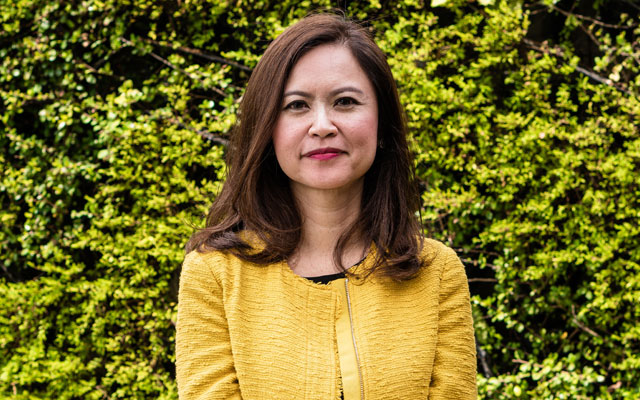
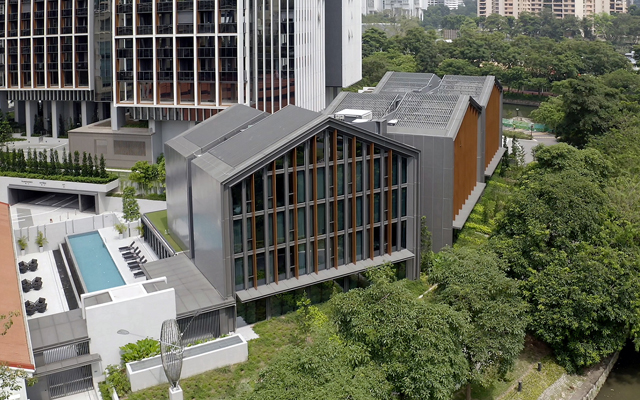
Grand Park City Hall has appointed Rachel Ng as executive assistant manager, a promotion from her most recent role as director of sales at Park Hotel Alexandra.
In her new position, Ng will work with general manager John Kockan to
lead the sales, marketing and revenue teams to drive yield and growth for the hotel.
Ng brings some 17 years of hospitality experience to her new role. She spent more than a decade of her career with the Park Hotel Group, joining Grand Park City Hall in 2015 as senior sales manager and leaving as assistant director sales in 2013. She then took on the position of director of sales at Parkroyal on Beach Road and subsequently returned to the Park Hotel Group in 2014 as director of sales at Park Hotel Alexandra.
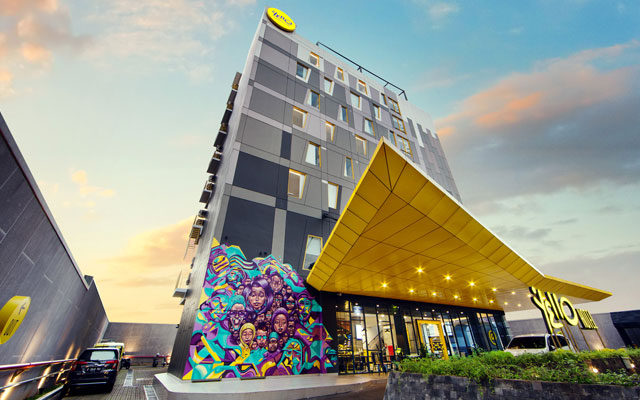
Tauzia customises the identity of each Yello lifestyle hotel to fit local preferences
Midscale hotel operators in Indonesia are integrating more lifestyle elements into their properties as they compete to elevate the guest experience. Standard rooms and basic amenities are no longer sufficient for hotels to edge out the competition.
Speaking at the 7th Tourism, Hotel Investment & Networking Conference in Bali in September, Armand Steinmeyer, director of business development and investment, Tauzia International Management, said: “In the past, midscale hotels started out simple but the proliferation of the middle class and their varying needs and experiences progressively changed (the way hotels operate).
Tauzia customises the identity of each Yello lifestyle hotel to fit local preferences
“We have, for example, seen the growth of meetings and incentives or people celebrating birthdays in hotels that we didn’t 10 to 15 years ago.”
He noted that while domestic travellers used to be contented with simple homestays, more are now opting for professionally-run properties.
Another panellist, David Wray, senior vice president, acquisitions and business development, Southeast Asia and Pacific Rim at Wyndham, also observed increasing integration of lifestyle elements in hotels amid growing demand for midscale hotels in South-east Asia, including Indonesia, and traveller interest in experiences.
Nathalia Wilson, director of development, South-east Asia and Korea, at InterContinental Hotels Group, agreed: “There is quite an interest in lifestyle (experiences) in the midscale segment in Indonesia. It does not only appeal to the millennials, but also those wanting a hotel stay where they can relate to the neighbourhood in terms of arts and culture. People want to relate more to the places where they stay and the experiences they get, and engage more with the community.”
Steinmeyer said: “In the past we saw more standardised hotels, but the future of the hotel is moving towards guest experiences.”
For example, Tauzia’s Yello Hotels lifestyle brand, according to Steinmeyer, is customised to fit local preferences.
“While the room sizes and the brand’s core identity as urban art and technology is the same, a Yello Hotel in Jakarta is not the same as the one in Manado, for example, to adapt more to the kind of experiences guests want in that city. How we manage the building has to change and evolve to meet the expectations of the guests in that area.”
He said that a bar may be de rigueur in a Jakarta hotel, but less so in Indonesia’s secondary destinations.
Wilson also stressed the need to adjust brand standards to make them more relevant to the destination.
“A lot of the hotel owners we are working with are (first-time) owners. We do come up with the number of room keys that would be feasible but room sizes may differ from one location to another (due to land size or market needs),” she said.
“For many hotels outside of Bali, the government-run business event sector is an important sector, so some of the facilities at (the hotels) need to cater for that.”
“I think that it’s also critical to note the type of hotels and what the trends are (in a destination),” added Wilson.
“Some of our hotels’ features, which may be our brand standards initiated in the US or Europe, may have to differ slightly for products that are in Indonesia where we see the MICE business coming from the government. Also, the wedding business is very important for a lot of hotels in secondary cities.”
In line with its Visit Malaysia 2020 tourism campaign, Malaysia will next year roll out a host of initiatives and efforts to strengthen ties with China, as 2020 marks the 45th year of economic and cultural cooperation between both nations.
To commemorate this milestone, the Malaysian government has declared 2020 the Malaysia-China Culture and Tourism Year, shared Faizal Shani, consul general of Malaysia in Kunming.
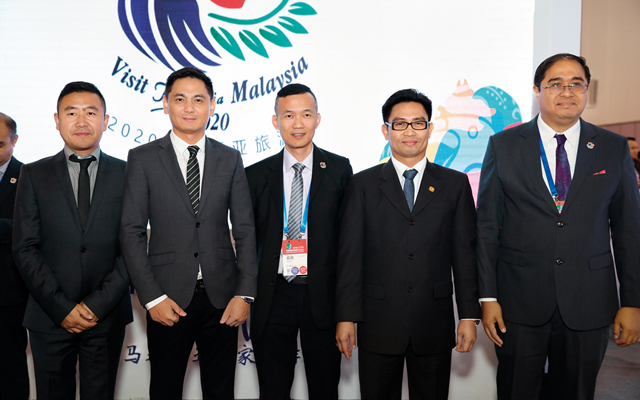
Malaysia Tourism Promotion Board (MTPB) representatives, alongside Faizal Shani, consul general of Malaysia in Kunming (second from right), were present at CITM 2019 last week to announce a series of initiatives and offerings rolled out by MTPB to woo more Chinese tourists
“As part of this programme, we will support tourism traffic between Malaysia and China. The Consulate General of Malaysia in Kunming will provide services especially to the Kunming and Yunnan market,” he told TTG Asia at the China International Travel Mart (CITM) in Kunming last week.
At CITM 2019, which marked the start of its China-oriented efforts, the Malaysia Tourism Promotion Board (MTPB) joined hands with local tour operators to promote unique experiences offering deeper engagement for Chinese tourists.
One such experience includes a stay on a durian farm, where guests can hear durians drop from trees in the night and follow a guide to enjoy the freshly-picked fruit. The experience includes a detailed telling of the different types of durians and their distinctive tastes.
“We’re seeing less of the large group tours. Instead, the Chinese are now travelling in smaller groups of friends and family, and planning their own itineraries. We believe that such experiences would appeal to these travellers,” explained Chan Hon Mun, deputy director, international promotion division Asia/Africa, MTPB.
In order to cater to this segment, MTPB has also been stepping up efforts to encourage local hotels and merchants to accept mobile payment methods such as WeChat Pay and AliPay, as well as advising tour operators to sell their packages on popular Chinese OTA sites like Trip.com, said Chan.
The Malaysian government has also relaxed its visa requirements for Chinese tourists, such that travellers with a China passport transiting in Thailand, Indonesia or Singapore can now enjoy a visa on arrival.
Shenzhen Airlines will commence flights between Penang and Shenzhen on December 18, joining the current roster of 232 Malaysia-China routes by seven airlines.
Faizal added that the efforts to deepen the bond between Malaysia and China extend beyond tourism, with the Malaysian government having introduced a four-year Bahasa Malaysia culture and language programme for Chinese students.
Meanwhile, the Malaysian travel trade was quick to leverage the Visit Malaysia 2020 campaign to woo more Chinese travellers, particularly the FIT segment, by promoting the country as a value-for-money destination.
Seeing strong potential for further growth from China, currently Malaysia’s top medium-haul market, Uzaidi Udanis, president at Malaysian Inbound Travel Association said: “Our travel counterparts in China mainly focus on group travel which is low yield, but FIT travel is already a strong force.”
With Thailand’s Phuket, Samui and Pattaya posing strong competition in pursuit of the Chinese FIT market, Uzaida is encouraging association members to promote more islands and beach resort packages to the Chinese market.
And Ally Bhoonee, executive director at World Avenues, has responded to the call. He said: “We have come up with new packages in Penang, Kota Kinabalu and Langkawi in conjunction with the year-long Visit Malaysia 2020 campaign. We are focusing on the beaches, islands and multicultural aspects in Malaysia.”
Inbound players also opined that the strong Thai baht makes hotel rates in Malaysia, in comparison, even more affordable.
Commented Bhoonee: “Targeting the middle class from Southern China, we have informed our partners that hotel rates in Malaysia are very competitively priced and value for money. Now would be a good time for repeat visitors to Thailand to try a new destination.”
Raaj Navaratnaa, general manager, New Asia Holidays Tours & Travel, shared: “We have segmentised the market to appeal to Chinese FIT millennials looking for soft adventure, educational tourism, or lifestyle travel.
“By doing so, we hope to show them aspects of a holiday they are interested in and woo them away from Thailand, which all this while remains a preferred destination.”
“We’re seeing less of the large group tours. Instead, the Chinese are now travelling in smaller groups of friends and family, and planning their own FIT itineraries.”
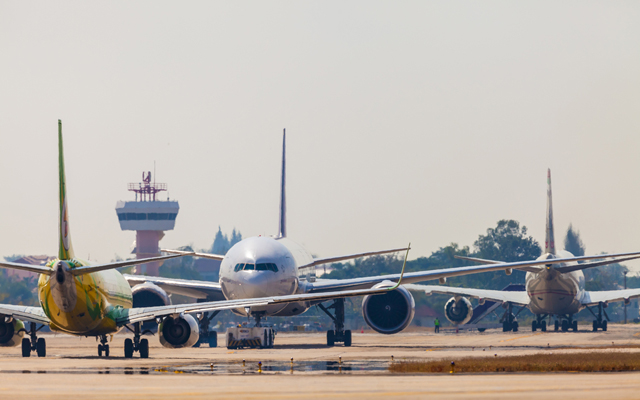
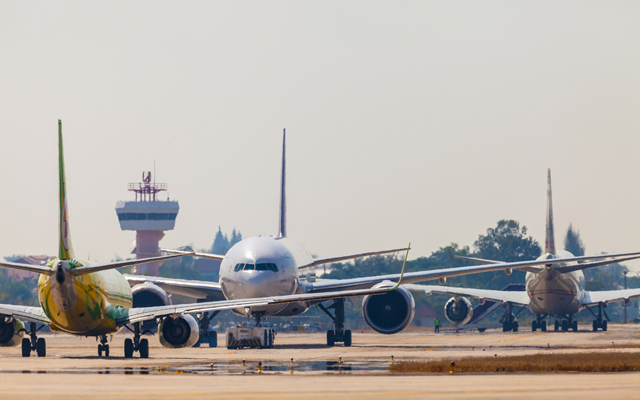
The new Airbus A321neo is projected to form the backbone of operations in AirAsia’s ambitious push for new destinations and markets in Asia, as the low-cost carrier on Wednesday took delivery of its first of 353 A321neo order in Hamburg, Germany.
The largest and newest variant of the A320neo family, the A321neo is 6.93m longer than the A320neo, fitting 50 more seats per aircraft and 40 per cent more cargo space. The A321neo also offers up to 20 per cent fuel savings and has a longer flight range of up to five hours, an additional one hour more than the flight range of the A320neo.
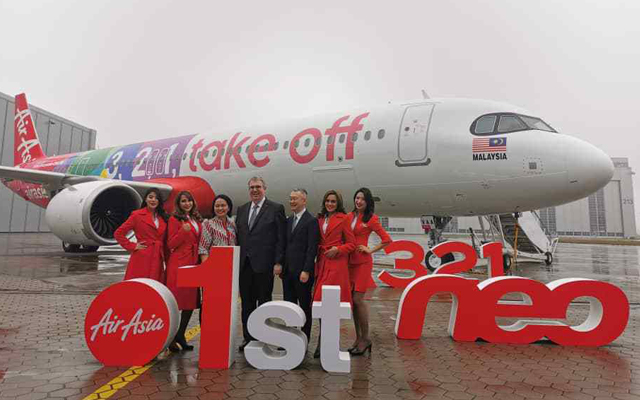
From left: AirAsia’s top executives Veranita Yosephine and Michael Menking, alongside CFM International’s Sean Kim, at the aircraft handover ceremony in Hamburg
The A321neo aircraft features a single class layout with 236 seats, and boasts some of the latest aircraft technologies including new generation engines and Sharklets, and 50 per cent less noise as compared to previous generation aircraft.
Speaking at the handover ceremony in Hamburg on Wednesday, AirAsia Indonesia CEO, Veranita Yosephine said: ”The A321neo is truly a remarkable aircraft incorporating the very latest technology, and we could not be more thrilled that it will be the new backbone of our operations across the AirAsia group.
“With the 25 per cent increase capacity and 10 per cent reduction in cost per seat, the A321neo will enable us to maintain low fares and it will enable us to grow and be the largest low-cost carrier in Asia.”
Speaking at an earlier press briefing at the Airbus conference centre in Hamburg, a day before the delivery of the first A321neo delivery, AirAsia’s senior manager, aircraft planning & evaluation, Matthew Glaus, said: “Lower fuel burn per passenger will result in lower operating costs per seat mile and improved fuel efficiency. A higher seat capacity will benefit high density routes while a longer flight range will allow AirAsia to open new markets and new destinations.”
The new A321neo aircraft will initially operate from its Kuala Lumpur hub to Kuching and Kota Kinabalu. While no new destinations have been announced, the A321neo has the range capability to fly from Kuala Lumpur to Perth, Shanghai and Beijing, which was not possible with the A320neo. These routes are served by AirAsia’s sister company, AirAsia X, which operates the A330-300 and the A330-900 aircraft.
Asian airlines are bracing for slower growth in 2020 amid softening Chinese outbound travel demand and economic uncertainty owing to the ongoing US-China trade war, but industry leaders also say it is not all doom and gloom.
That was the common consensus among airline chiefs at last week’s CAPA Asia Aviation Summit and Corporate Travel Summit in Singapore, who said they see pockets of opportunities in growing ancillary fees, focusing on untapped inbound traffic and market segmentation.
Despite slower growth projected for Asia’s aviation industry next year, untapped opportunities still remain in the region, say airline chiefs
For regional LCCs, Jetstar Asia and Thai AirAsia both reported that revenue for ancillary fees are growing – at about one to two per cent annually – and now constitute between 18 per cent and 30 per cent of revenue.
Jetstar Asia’s CEO Barathan Pasupathi said that there are opportunities for airlines in the “vertical chain” and sharing platforms where passengers not only book air tickets, but also a ride to and from the airport via a car-hailing service, and booking of hotel rooms, etc.
Ancillary fees for Jetstar Asia have jumped from the “tens” to around 30 per cent, he noted.
Thai AirAsia’s executive chairman Tassapon Bijleveld said that OTAs were “not selling ancillary (products and services)”, and that the airline would have to drop big OTAs in China and work with those willing to sell ancillary products and services.
Chinese traffic had been slowing down over the last two years, he added, and despite a two per cent pick up, the market was not what it used to be.
Tassapon continued: “The Thai baht is very strong and there are no fundaments to explain why. We are suffering because of the exchange rate.”
For IndiGo, the Indian airline is betting big on the potential of East Asia, with the launch of new services to Chengdu, Guangzhou, Yangon, Ho Chi Minh City and Hanoi, according to the airline’s CCO Willy Boulter.
Boulter said that the airline was changing its domestic focus, going international and tapping the Chinese inbound market to India, both for leisure and business. He added that IndiGo was also eyeing more outbound traffic to Thailand, with the introduction of visa fee waivers.
For full-fledged airline Garuda Indonesia, its strategy is to work with companies that provide services for travellers looking for a luxury experience such as private jet services.
Indonesia is an increasingly consolidated market where the government set a cap for the selling price of airline tickets, said Garuda Indonesia’s CEO I Gusti Ngurah Askhara Danadiputra.
Meanwhile, CAPA – Centre for Aviation chairman emeritus Peter Harbison said that the industry would face four game changers in the coming decade.
He said that there would be environmental headwinds caused by “flight shaming” and the impact on corporate travel; distribution and technology change due to data analytics and big tech companies that know more about the customer; new aircraft technology revolutionising route planning; and partnerships and foreign ownership changes, where individual airlines have to respond to bilateral agreements because of market needs and groupings like Star Alliance, oneworld and SkyTeam being challenged.
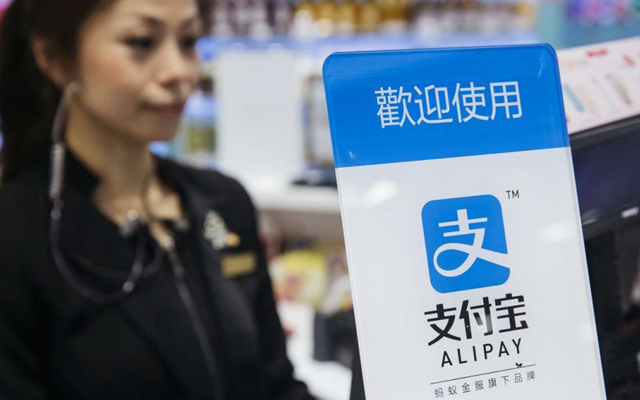
Chinese payment giants Alipay and WeChat Pay have both opened their platforms to international travellers in China for the first time.
To use Alipay app while in China, visitors will need just an overseas phone number, a visa and their bank card to sign up for Tour Pass mini-programme. They can top up in increments of as much as RMB2,000 (US$285), and use the service to not just make offline payments but also hail cars, purchase train tickets and book hotels, among other features available within the Alipay app. Access to Tour Pass lasts three months, and any leftover funds are refunded automatically.
Alipay and WeChat Pay is now open to international tourists in China
In a similar move, WeChat Pay has partnered with Visa, MasterCard, American Express, Discover Global Network, and JCB to allow foreign visitors to link their credit cards to WeChat Pay. With this new service, WeChat Pay users can add international credit cards directly to their digital wallets on the WeChat app.
While WeChat Pay allows users to make payments directly through its e-wallet, Alipay provides users with a prepaid card that can be topped up with international cards.
Previously, Alipay and Wechat Pay required a local phone number and Chinese bank account to access both payment systems, which precluded short-term international visitors from using the app.
The move by China’s two dominant mobile payment services providers to offer global visitors access will enable Chinese vendors tap the growing number of international visitors to the country, which welcomed 30.5 million international visitors arrived from overseas in 2018, an increase of 4.7% from a year earlier.
At the same time, the Chinese authorities are seeing greater spending from foreign tourists, with expenditure in areas such as hotels, shopping, and food rising 5.1% to a total of US$73.1 billion last year.
Wellness-oriented hotel group Fusion has unveiled plans to substantially step up its Vietnam’s presence by tripling the number of properties in the country while introducing new brands to the market.
Over the next three years, the Vietnam-based hotel group will launch 10 new hotels and resorts across the country, representing 1,385 rooms and private villas, suites, and apartments.
Fusion's new properties
1 of 2
Fusion Resort Quang Binh Main Reception
Fusion Suites Vung Tau Rooftop Pool Bar
“We see a tremendous opportunity to expand Fusion’s presence in the country,” explained Peter Meyer, CEO of Fusion. “Recognising that there are so many beautiful, and largely undeveloped destinations in Vietnam.”
Fusion Suites Vung Tau, opening in early 2020 in the weekend getaway beach destination near Ho Chi Minh City (HCMC), will feature 100 apartments and 71 suites, a spa with 12-double bed treatment rooms, aerial yoga studio, rooftop infinity pool with cocktail bar, and the Suites’ signature Fresh Restaurant.
The oceanfront Fusion Resort Quang Binh, located at the gateway to the UNESCO World Heritage Site of Phong Nha – Ke Bang National Park, is a three-hectare property with 60 private villas, each with its own plunge pool; a spacious spa with treatments included in the nightly rate; and several dining options. This resort will start taking bookings in late 2020.
Come mid 2020, Maia Quy Nhon will mark the first of a new brand line with a food focus. Culinary journeys will be tailored to the location, and guests will be able to choose a different programme each night of their stay. Options include experiences like farm- & sea-to-table dining, a local food tour, cooking classes as well as pop-up dining. One complimentary daily spa treatment will round out this new brand’s offering.
“Food is an integral part of any holiday adventure,” said Meyer. “Vietnamese cuisine has now become popular worldwide. Playing to this cuisine’s popularity, we want to take guests beyond well-known dishes like pho and banh mi, educating them on the histories of these iconic foods and other lesser known regional specialties.”
Next year will also see the launch of HIIVE, a three-star-plus line catering to the lodging needs of business travellers in Vietnam’s industrial zones and developing townships. Five HIIVE hotels are slated for development over the next three years in four different locations, including Binh Duong, north of HCMC; Bac Ninh, just east of Hanoi; Hai Phong, on the northern coast; and, Dong Nai, also near HCMC.
In addition to a existing hotel in HCMC, plans are now underway to add another new Fusion accommodation option in the city. The hotel will open with 146 rooms in the heart of District 1, the city’s culinary and cultural hub.
Similarly, in Danang where Fusion currently operates two hotels – the spa-inclusive Fusion Maia Da Nang and the Fusion Suites Da Nang – the group will open Fusion Resort & Villas Da Nang in 2021 to offer 157 hotel rooms and 85 villas.
With a portfolio of about 550 keys, Fusion currently has four high-end spa-inclusive resorts and two modern apartment-style suite hotels in Danang, Hue, Phu Quoc, Cam Ranh, and HCMC.
Helsinki is the top European destination for longhaul visitors this Christmas, with 29.6% growth in flight bookings over the period December 15, 2019 to January 15, 2020, according to a recent study by ForwardKeys.
Helsinki’s growth is mainly attributable to great growth in festive forward bookings from China and Japan, driven by a substantial increase in capacity, said the report.
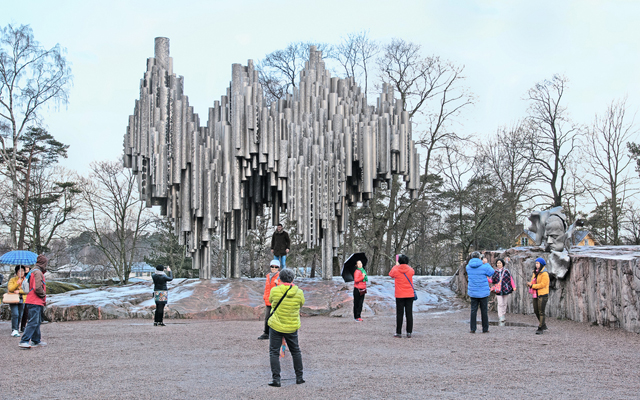
Helsinki tops European destinations for longhaul visitors this Christmas, driven by growth from China and Japan; Chinese tourists at the Sibelius Monument in Helsinki, Finland pictured
It is followed by Budapest (up 29.3%), Bucharest (up 28.4%), Lisbon (up 27.2%), Porto (up 26.5%), Athens (up 22.0%), Copenhagen (up 18.5%), Madrid (up 18.3%), Prague (up 16.5%), and Amsterdam (up 14.4%).
Budapest’s strong booking position is due to notable capacity growth on routes from New York and Tel Aviv. Bucharest’s boom is due to notable capacity growth over the last two years. Lisbon is benefitting from a new route, operated by Asiana, from South Korea; while Porto is profiting from an increase in flight capacity from Sao Paulo, Brazil’s commercial capital.
As of November 12, Christmas bookings to European countries from outside the European Union were 11% ahead from the same period last year.
However, not every destination has seen growth. Bookings to Stockholm and Venice are behind, 23.1% and 6.5%, respectively. Stockholm is suffering since SAS stopped direct flights to and from Hong Kong last November and Venice has experienced a stalling in bookings from South Korea, the US, Russia and China. Furthermore, with the recent floods, a further slowdown is likely, said the report.
Europe’s largest city destinations by market share are currently all showing very healthy bookings for the Christmas period, found ForwardKeys. The number one destination is London, with a 16.2% share and bookings 10.2% ahead from the same period last year. It is followed by Paris, which has a 13.6% share and bookings 12.9% ahead. The next most visited cities will be, in order, Rome, Madrid, Barcelona, Frankfurt, Amsterdam, Lisbon, Milan and Munich.
Looking at the most important origin markets for global shoppers in order of size, coming to Europe, there is extremely healthy, above inflation, growth from six of the top seven, said the report.
Forward bookings for the Christmas period from the US are 7% ahead; from South Korea, 15.1% ahead; from Brazil, 29.3% ahead; from Russia, 1.6% ahead; from Japan, 15.8% ahead; from China, 19.5% ahead; and from the GCC countries, 3.6% ahead.
China’s LvYue Group, the strategic investment arm of Trip.com, has raised several hundred million dollars as part of its Series A and A+ round financing led by Tencent, Sequoia China, Baidu Capital and Goldman Sachs.
The round also saw co-investment by Ocean Link, Citic Trust, Oriza and Caissa Travel.
LvYue Group raises several hundred million dollars in Series A and A+ financing
The funding raised will aid the company’s continued expansion in the domestic market, and exploration of new possibilities driven by its Internet big data capabilities.
LvYue, which is led by Mark Zhang who also serves as president of Qunar, is an Internet travel service provider that integrates hotel management, IT, trading and procurement, applying innovative internet technologies to traditional hotel industry.
Since its launch in 2016, LvYue has opened more than 1,900 hotels worldwide, in over 10 countries including Japan, South Korea, Thailand and India. By end 2019, LvYue expects that its network will exceed 2,600 hotels.
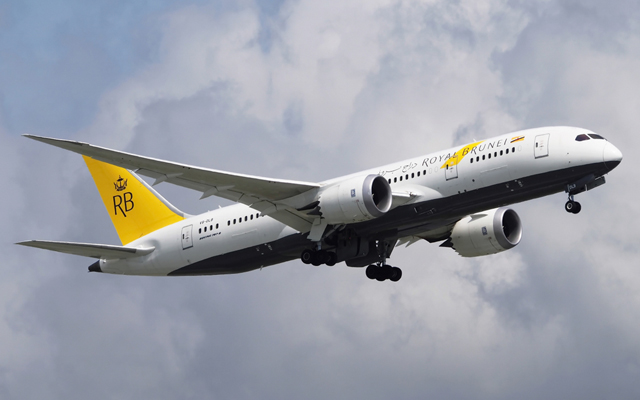
Royal Brunei Airlines launched its inaugural flight from Bandar Seri Begawan to Sibu, Sarawak last week.
BI6881 departs Bandar Seri Begawan at 06.00 to arrive in Sibu at 07.10 every Monday, Wednesday, Saturday and Sunday, while the return flight BI6882 takes off from Sibu at 07.40 to land in Bandar Seri Begawan at 08.50.
Meanwhile, BI6885 takes off from Bandar Seri Begawan at 13.30 every Thursday and Saturday and arrive in Sibu at 14.40, while the return flight BI6886 departs Sibu at 15.10 to arrive in Bandar Seri Begawan at 16.20.
The six-times weekly flight to Sibu will be operated by Malindo Air using its new ATR 72-600 aircraft.
Jetstar Asia to connect Singapore and Hefei
Jetstar Asia will be launching a direct, five-hour service from Singapore to Hefei, in mainland China, becoming the first Singapore-based airline to fly direct to Hefei Xinqiao International Airport.
The new service is launched in partnership with Shanghai Xihao Aviation Service, as Jetstar looks to strengthen its presence in the Chinese market.
Shanghai Xihao Aviation Service’s chairman and general manager Pan Huan Ying said the collaboration with Jetstar on the Hefei – Singapore route was a milestone in the company’s development.
“This partnership demonstrates our commitment in following and supporting the Belt and Road Initiative of China,” said Pan. “The new route will not only enable the citizens of Hefei to travel to Singapore more conveniently, but also enhance the city as an international aviation hub. In addition, it is going to encourage more economic, cultural and tourism exchange between Singapore and Anhui.”
Using the Airbus A320, the thrice-weekly Singapore-Hefei service will operate every Tuesday, Wednesday, and Saturday from November 28.
3K885 departs Singapore, Changi at 05.05 to arrive in Hefei, Luogang at 10.05, while the return flight 3K886 takes off from Hefei at 11.05 to arrive in Singapore at 16.20.
Emirates to suspend Singapore-Brisbane flights
Emirates will stop all flight services between Singapore and Brisbane from March 30, 2020, according to a report by The Straits Times.
Emirates’ request to pull out of the route was approved by the Competition and Consumer Commission of Singapore after it determined that “seat capacity remains adequate to meet demand”, said the report.
Emirates said the decision was “based on a recent review of our operations which was undertaken to ensure the optimal commercial utilisation of our aircraft fleet”. The Dubai-based carrier cited substantial losses in revenue and seat under-utilisation on its flights as its reason for withdrawal from the market, according to the report.
Three airlines currently service the route between Singapore and Brisbane. Emirates and Australia’s flag carrier Qantas each operate a daily flight, while Singapore Airlines operates four every day.
Emirates and Qantas are currently in a codeshare agreement, which allows them to sell seats on each other’s flights. The affected Emirates flights are EK432 and EK433, which have 4,956 seats per week for both inbound and outbound flights.
Despite Dubai’s withdrawal, the report quoted a Qantas spokesman as saying that the airline will continue to operate its daily flights, QF51 and QF52 which have 4,158 seats per week.
Air France and KLM launch Manila-Taipei-Paris flights
Air France and KLM have started a one-stop flight from Manila to Paris with a faster and smoother connection via Taipei. The service with KLM from Manila to Taipei, now connects KLM from Taipei directly to Amsterdam and Air France to Paris-Charles de Gaulle.
Using a Boeing 787-9 Dreamliner, the Air France flights from Taipei operate every Tuesday, Thursday and Saturday, and from Paris-Charles de Gaulle every Monday, Wednesday and Friday.
Winter schedule (November, 5, 2019 – March 26, 2020)