TTG Asia
Asia/Singapore Tuesday, 16th December 2025
Page 1193

Jakarta hotels put on brave front amid post-election unrest

0
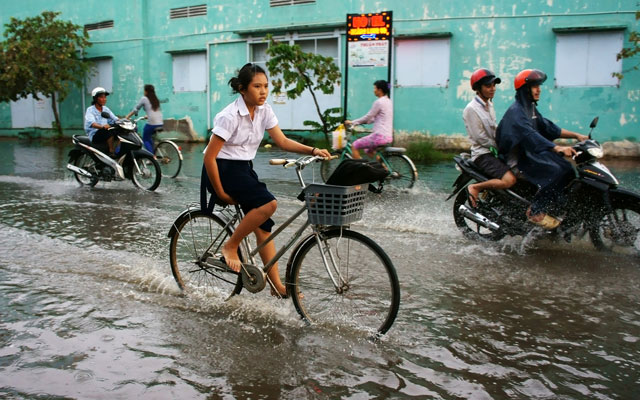
Pictured on May 22, protests escalate in Indonesia’s capital over presidential election results

After riots erupted in Central Jakarta on May 21 and 22 in protest of president Joko Widodo’s re-election, tourism stakeholders are keeping their chins up and stepping up on safety and security until order is restored in the city.

The protests broke out in Jalan Thamrin, near the office of the Election Supervisory Body, before spreading to the neighbouring Tanah Abang, Petamburan, Wahid Hasyim and Sabang.

Hybrid accommodation on the rise in Thailand

0
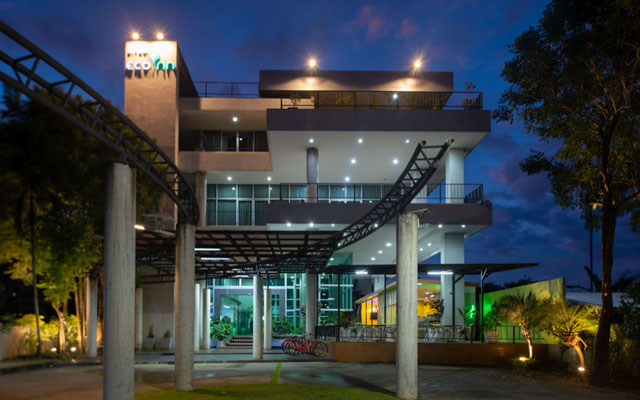
Thana City Resort outside of Bangkok

Hybrid accommodation models have grown in popularity among hospitality operators in Thailand, driven by greater long-stay demand and lower operating costs.

The hybrid model combining hotel and residence could serve varying demand for either short- or long-term stay, taking in the best of different return structures.

Thana City Resort outside of Bangkok

Ekanut Ungphakorn, COO of property development firm Boutique Corporation, said serviced apartment operations are more stable than purely hotels mainly due to lower daily operating cost.

When compared to hotels, serviced apartments spend less on marketing and F&B. On the other hand, serviced apartments may come with lower margins for some periods compared to hotels.

“Serviced residences may be more stable in terms of length of stay while hotels gain better margin if they get a good rate. Therefore, many operators put these under one roof. This is why hybrid accommodation has become more popular in Thailand,” Ekanut said.

Boutique Corporation plans to open five hotels in Thailand’s major destinations of Chiang Mai, Phuket and Bangkok over the next three years. Some properties will serve both short- and long-stay guests.

As Bangkok remains one of the top destinations for working and retiring, more hotels want to add serviced residence units to keep with demand, observed Brian Tan, country general manager Thailand, Ascott International Management (Thailand).

Peter Lucas, general manager, the Westin Grande Sukhumvit Hotel, noted that hotel operators located in Bangkok’s Sukhumvit, Thonglor and Ekamai districts as well as along the train systems have moved to penetrate long-stay markets.

Outside of Bangkok, hybrid accommodation is also expected to become a trend in other major cities in Thailand.

Ascott, for instance, is set to expand its brand into new areas such as Suvarnabhumi in Bangkok’s outskirts as well as Chiang Mai in the north.

Hello Kitty theme park to greet guests in Hanoi come 2021

0

Sanrio will open a Hello Kitty theme park in Vietnam in 2021, in partnership with Vietnam developer BRG Group.

According to media reports, the partners will build a 30,000m2 indoor theme park named Sanrio Hello Kitty World Hanoi, adjacent to the capital’s West Lake.

Sanrio Hello Kitty Town in Malaysia

BRG Group will construct and operate the park while paying Sanrio royalty fees for the use of characters, Masafumi Nishihara, Kyodo News reported.

The park will house gaming and ride attractions, as well as a theatre and dining and retail outlets, featuring mainly Hello Kitty and other popular characters such as My Melody and Pompompurin.

To cater to different age groups, the park will also conduct transport safety and cooking programmes.

Sanrio currently operates theme parks in Tokyo and Oita Prefecture in south-western Japan. There are five Sanrio brand theme parks abroad – two each in China and South Korea, and one in Malaysia.

State of play of NDC standard around the world

0

In my role, I am fortunate to lead conversations about new distribution (NDC standard) around the world, along with industry-wide representatives from airlines, travel agencies and organisations such as IATA and CAPA.

A common theme from these conversations, is that distribution and the NDC standard is a critical disruption to the industry. To collectively benefit from delivering a better, more personalised shopping experience to travellers, all players in our industry need to get on board and proactively advocate for modernised distribution.

What’s also interesting, is the diverse concerns and opportunities that are top of mind for travel industry leaders in different regions across the globe. To help drive the industry-wide NDC conversation even further, I am sharing regional highlights on NDC from around the world.

Asia-Pacific: FSCs, LCCs and travel agents – all in spotlight
Asia-Pacific is an interesting region to watch with the progression of NDC in, thanks to some unique features of their market. Primarily, through NDC, we are likely to see some changing dynamics between FSCs and LCCs.

Asia-Pacific is home to some of the best-known LCCs in the world who continued to develop the LCC model. Faced with tough competition from LCCs, including on some longer routes within the region, FSCs are keen to use NDC in order to increase their agility, improve cost-effectiveness and grow their customisation capabilities, delivering more than their LCC counterparts to customers.

In this region, Qantas – a key partner of Travelport – has been a forerunner with the launch of their Qantas Distribution Platform. The Qantas Channel which will allow travel agents to access non-surcharged and NDC content through the same channel. This is just one example of how FSCs are working hard to deliver NDC solutions in an attractive way for their agency partners, to ensure they can stay relevant through providing seamless, integrated travel choice.

In the meantime, NDC also has considerable value for LCC themselves. The majority of LCCs have always used API-based distribution and can capitalise on the shift in this direction from FSCs, through NDC, which may provide opportunities such as inter-lining between FSCs and LCCs using one single distribution standard, which in turn could also benefit travellers.

We should also watch how travel agents, OTAs and TMCs in Asia-Pacific can be further enabled, by NDC, to serve their increasingly demanding and digitally savvy customers. As is shown in Travelport’s 2018 Digital Traveler Survey, there is continuing demand among Asia-Pacific travellers for consolidated and streamlined travel experience.

Two Asian countries – India and Indonesia – were crowned as the top two countries with the most digitally-advanced travellers in the 2018 survey, recognising the willingness of travellers to use digital tools to enhance the travel experience.

It’s fair to say that travellers in Asia-Pacific are eager to embrace the personalised content and services brought by NDC. Therefore, NDC will be a great asset for travel agents in Asia-Pacific, supporting them as they continually strive to deliver value to customers by accessing the richest content choice through a single workflow.

I am confident that we will see many positive disruptions to the entire ecosystem in Asia-Pacific.

Americas: Personalisation is exciting – and a little scary
During the recent CAPA Americas event in Denver, Colorado, I led a panel discussion on Utilising the Travel Distribution Model… Future Proofing Your Distribution Channel with some of the people closest to air distribution and merchandising at United Airlines, AmTrav and American Express Global Business Travel. At Travelport, we’re working with each of these businesses to support their strides in NDC, enabling agencies to book flights – and ancillaries – following this new industry standard, while helping airlines to distribute their full suite of merchandise available.

As the panel “middle man” between a top US-based global airline and two of the most well-known corporate travel agencies in the US, here are the opportunities that providers and suppliers are most excited about:

• Eliminating technology hurdles: currently, mutual customers (travellers) must visit multiple channels to alter trips booked through an agency, and comparison shop for the best possible options.
• Alexa and Google-like shopping: greater personalisation capabilities will help partners and providers present fewer, yet highly relevant trip options that best fit the traveller’s unique needs.
• A stronger ecosystem: As more, better airline content is delivered to partners (both GDSs and agencies), travellers will ultimately win, with the ability to easily customise their trips at the point of sale – and receive more service support from providers.

Considering the broader Americas audience, there were some questions and concerns raised:
• Trust issues: with providers having access to full merchandising options from airlines, can airlines really trust partners and providers to sell (and upsell) their products appropriately?
• Differentiated content: confusion around NDC remains, leaving travellers and providers alike wondering, how do I know I am getting the best offer available?

Europe: Will competition enhance the traveller experience?
With half of the IATA NDC 2020 Leaderboard made up of Europe-based airlines, it might be fair to assume Europe is leading the way in rolling out NDC. To some extent this is probably true, at Travelport we started delivering our NDC roadmap through live bookings with major European carriers. But like the rest of the world, the fine balance between recognising the benefits of NDC and the potential challenges it may create for some customers is ever-present in Europe, and constantly top-of-mind during our discussions.

To characterise the NDC landscape across Europe, I’d say the major focus is on competition and collaboration.

A lot of the airlines I speak to acknowledge NDC provides an opportunity for increased competition across the distribution landscape, including the potential for more technology providers or aggregators to appear. Harnessed in the right way, they believe this competition could lead to better technology for distribution which could ultimately benefit the whole sector.

In the same way, the dynamic pricing facilitated by NDC will enable airlines to distribute additional fare price points, providing better opportunities to compete with LCCs on particular routes at busy times. NDC will now enable airlines to distribute the same offers through their direct and indirect channels, allowing airlines to better serve all their customers and making agents more competitive.

Airlines’ ability to add ancillary content, such as seat selection, additional bag allowances or meals on board through NDC will also mean passengers have access to a wider choice of options on which to base their decisions on who they fly with. This competition should benefit passengers and ensure they only pay for the parts of a trip they see value in. Airlines know they will have to deliver ‘bespoke’ personalised, tailored booking options in order to stay relevant.

But NDC isn’t just about airlines. At Travelport we’ve seen from the beginning of this shift towards new distribution that its implementation is only going to be successful if all parts of the ecosystem are on board.

Yes, we’ve got to be realistic. Some of our entrenched ways of working are likely to change. Airlines and travel agents need to work together not just on the technical side of NDC implementation, but on the commercial change it is driving, too. We’re having conversations with customers for which there is no precedent. We know our agency customers serve travellers through delivering value through all parts of their trip and that’s not going to change, so it’s important we are realistic about the enormous contribution they will make to the success of NDC.

So in conclusion, despite a level of uncertainty, there’s one thing for sure: travellers should be the ultimate beneficiaries of these changes. As long as we all work together to serve them and their desire for a seamless, cost-competitive, personalised trip, we believe NDC can – and will – work for everyone.

Football fans will go great lengths to watch teams in action: Expedia

0
Camp Nou in Barcelona

A recent Expedia Group study revealed strong enthusiasm for football among travellers, with some even willing to lie to their travel partner or miss family occasions to catch a game overseas.

Some 68% of respondents say they have planned holidays around sporting events at least once.

Camp Nou in Barcelona

Almost half (47%) admitted to changing their holiday booking to make sure they don’t miss a football match.

Expedia Group’s own data revealed that on the day of football fixture announcements, flight and/or accommodation bookings can increase by up to three times the usual average.

Revealing the findings as official travel partner of the UEFA Champions League, Expedia Group says hosting the league final is especially beneficial to tourism. The group highlighted a 30% increase in searches of Madrid during the lead up to the 2019 Final compared to the same timeframe in 2018.

How far fans would go
The study also revealed that football fans are decisive over bookings. Over a third of respondents (40%) confirmed they book their travel for a trip as soon as their team’s fixtures are announced.

Some were even willing to lie to their other half with 32% of respondents admitting they had pretended to book a romantic break to watch a football match.

Moreover, 25% of respondents would miss a birthday, 12% would flake on parent’s evening and 11% would skip a wedding to make a game.

Meanwhile, one in 10 football fans are willing to travel over 11 hours to watch their team in action.

Top football destinations
Home of football legend Lionel Messi, Barcelona tops the list of most desired destinations to watch live football, as voted for by nearly a third (30%) of global fans.

Camp Nou in Barcelona is heralded, with 15% wanting to rally behind FC Barcelona.

The UK falls close behind with 20% of respondents around the world choosing London and Manchester. Some 11% want to visit Old Trafford, homeground of Manchester United, to watch a game.

Making a trip out of it
When booking accommodation for away games, more than 50% identified proximity to the stadium as a must-have. Other key deciding factors for accommodation include free breakfast (35%), how close it is to the city/town centre (34%) and 24 hours check in (31%).

Many see travelling for football as an opportunity to explore a new city. Aside from watching football, 62% prioritise sightseeing when visiting a new destination. Shopping is the second most popular past-time (over 50%). Nearly half (46%) search out restaurants, while 39% prefer sampling local delicacies of street food markets.

Merlin Entertainments ties up with Klook

0
Pictured, Madame Tussauds, Singapore, one of Merlin's attractions in Asia

With new demands for in-destination bookings, UK-based Merlin Entertainments has entered into a global partnership with travel activities and services platform Klook.

The collaboration covers a series of marketing promotions, user experience optimisation, data analytics and information exchange to enhance guest experience at eight Merlin attractions across Asia, including Legoland Japan in Nagoya, Legoland Discovery Center in Tokyo and Osaka, Busan Sea Life Aquarium, Sea Life Bangkok Ocean World, and Madame Tussauds in Singapore, Bangkok and Tokyo.

Pictured, Madame Tussauds, Singapore, one of Merlin’s attractions in Asia

Klook users can now get their bookings with Merlin attractions instantly confirmed via their mobile devices.

In 2019, Klook and Merlin will launch a series of marketing initiatives and special promotions targeted at mobile savvy travellers. More details will be announced in the near future.

Thai Airways opens new office in Sydney

0

Thai Airways International (THAI) celebrated the opening of a new office in Sydney with agents and customers.

The airline has been operating direct flights between Bangkok and Sydney for the past 48 years since service began on April 1, 1971.

Presiding over the grand opening of the new office is (from left) Viroj Sirihorachai, THAI vice president, revenue management and commercial services; Chakkrid Krachaiwong, consul-general, royal Thai consulate-general, Sydney, Australia; Prin Yooprasert, THAI director, sales, Commonwealth of Australia; and Sern Chupikulchai, THAI department manager, Commonwealth of Australia, customers, and sales agents.

The new office is located at St Martins Tower, near the Town Hall train station.

Aviation roundup: Scoot, Jetstar Asia, AirAsia and more

0
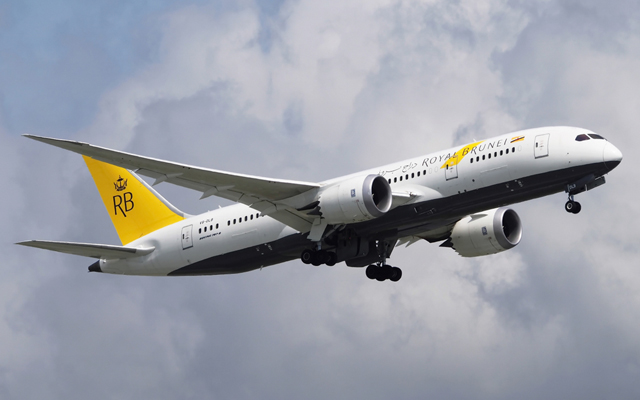
Scoot's Boeing 787 Dreamliner

Scoot to suspend flights to four cities
Scoot will suspend services to Lucknow, Kalibo, Quanzhou and Male – all served by the Airline’s Airbus A320 aircraft. The airline cited weak demand and a shortage of aircraft resources as reasons for its decision. The aircraft shortage is arising as SilkAir, due to the grounding of its Boeing 737 MAX 8 fleet, will no longer transfer its Boeing 737-800NG aircraft to Scoot in the financial year 2019/2020, as originally announced in November 2018. However, Scoot will continue to undertake the routes that SilkAir had earlier committed to transfer over.

The last flights departing Singapore and the four cities are:
Singapore to Lucknow (TR500) on June 29, 2019
Lucknow to Singapore (TR501) on June 29, 2019

Singapore to Kalibo (TR372) on June 30, 2019
Kalibo to Singapore (TR373) on June 30, 2019

Singapore to Quanzhou (TR178) on August 24, 2019
Quanzhou to Singapore (TR179) on August 24, 2019

Singapore to Male (TR588) on October 25, 2019
Male to Singapore (TR589) on October 25, 2019

Customers with existing bookings have been contacted and provided with the following options:

  • rebook their flight at no additional charge to the same destination departing before the planned suspension date;
  • rebook their flight at no additional charge to other Scoot destinations within the same country, within seven days of the original departure date;
  • obtain a 100 per cent refund on their booking via their original mode of payment; or
  • obtain a 120 per cent refund on their booking via a Scoot Travel Voucher.

Jetstar Asia adds 46 services to four cities during Ramadan
Jetstar Asia has added 46 services between Singapore and four destinations – Medan, Surabaya, Kuala Lumpur and Penang – to meet the increased travel demand over Ramadan and the Hari Raya Puasa holidays in 2019. These flights will operate in addition to the airline’s regular scheduled services from May 25 to June 24, 2019.

The additional services include: 16 flights between Singapore and Surabaya; nine between Singapore and Medan; 15 between Singapore and Kuala Lumpur; and six between Singapore and Penang.

AirAsia to resume Phuket-Jakarta flights
AirAsia will commence thrice-weekly flights between Phuket and Jakarta on July 2, 2019. On Tuesdays, Thursdays and Saturdays, FD793 departs Phuket at 21.40 for arrival in Jakarta at 01.00 the following day. FD794 departs Jakarta on Wednesdays, Fridays and Sundays at 01.25, arriving in Phuket at 04.20.

Juneyao Air and Finnair enter codeshare
Juneyao Air and Finnair have agreed to launch a codeshare partnership, with flights opening for sale on May 17 and travel effective June 28. Under the codeshare agreement, Juneyao Air HO code will be placed on the Helsinki-Shanghai flight by Finnair, and domestic cities in Finland include Rovaniemi, Ivalo, Oulu, Kemi and Kuopio. Passengers will also benefit from baggage check-through.

Finnair passengers can also take advantage of Juneyao Air’s network in China, with the codeshare flights connecting to cities including Harbin, Shenyang, Dalian, Xi’an, Chongqing, Qingdao, Xiamen, Kunming, Fuzhou and Nanjing to Xi’an, Chongqing and Zhangjiajie. Meanwhile, Finnair will place its AY code on the Shanghai-Helsinki flight by Juneyao Air.

Separately, Juneyao Air will launch its Shanghai (PVG) – Helsinki (HEL) daily service June 28 with its brand-new flagship Boeing 787-9 Dreamliner, becoming the only Chinese private-owned full-service carrier with direct longhaul flights to Europe.

Resorts World Sentosa presents first Summer Matsuri festival

0
Tokyo Koenji Awa Odor Dance

Singapore’s Resorts World Sentosa (RWS) is presenting its first Summer Matsuri, a spinoff of the Furusato Matsuri Tokyo festival that takes place in Tokyo annually.

From June 6 to 9, guests can join in the revelry of food, drinks, movies and cultural performances at RWS.

Held annually in spring at the Tokyo Dome, Furusato Matsuri Tokyo is a large-scale festival that brings together participants from different prefectures, from Hokkaido to Okinawa, to showcase their region’s food and culture.

RWS’ Summer Matsuri will showcase over 38 different types of food and over 55 types of sake, wine, spirits and beer – in addition to cultural presentations – from six regions and 11 prefectures in Japan.

Among the highlights are award-winning donburis from Furusato Matsuri Tokyo’s National Donburi Championship, grilled seafood from Hokkaido and different sweet treats.

In addition, two Japanese sake labels will be featured exclusively at this event: Ginrei Gassan Kuro Label Daiginjyo Sake GSS 133 and Ginrei Gassan Ao Label Daiginjyo Sake GSS 132.

Guests will also get to enjoy cultural performances such as the Tokyo Koenji Awa-Odori Dance and Akita Kanto, as well as free movie screenings.

Tourism New Zealand doubles down on SE Asia with 100% Pure efforts

0
Hooker Valley in New Zealand

Tourism New Zealand has recently launched 100% Pure New Zealand Stories in Singapore and India, a purely online and digital promotion specifically targeting both markets.

Steven Dixon, regional manager – South and South East Asia of Tourism New Zealand said: “The campaigns focus on localised contents to pull on the emotional strength and connect to the local travellers. In Singapore, for example, Singlish (Singaporean English) is used.”

Hooker Valley in New Zealand

The localised campaigns are designed based on the travel characteristics and profiles of each market, with the Singapore drive complementing an earlier promotion targeted at the market.

Dixon said: “(Being a mature market to New Zealand), Singaporeans are looking for new and off-the-beaten track destinations. They want to travel like the locals here and they want Instagrammable places.”

On the other hand, the Indian market is characterised by a strong preference for exploring diverse attractions within a holiday. Said Dixon: “The Indian travellers like to do many activities and try new things; they can do (as many as) 20 activities during their 12 to 13 days’ stay. So our focus is to introduce as many activities as possible (to this market).”

A fast-growing market for New Zealand, India has expanded 70 per cent in the last three years and is projected to grow nine per cent annually until 2025.

Another rapidly growing market for New Zealand is Indonesia, which has grown 60 per cent in the last three years and is projected to continue growing eight per cent annually until 2025.

Dixon said: “Indonesia is consistent with double-digit growth year around, not only during the Hari Raya peak season holidays.”

As awareness increases, New Zealand is seeing a growing number of FIT travellers from Indonesia.

“Indonesians stay 10 days, so our focus in Indonesia is to encourage them to come and visit different regions that we have throughout the year. The ways to (encourage) that is working with travel agents and campaign with airlines and a number of other programmes like the 100% Pure NZ Specialist programme,” he said.

Meanwhile, New Zealand’s newest darling market in South-east Asia is the Philippines, thanks to the opening of Philippine Airlines’ (PAL) Manila-Auckland services in 2017.

Dixon said: “(The Philippines) is currently the fastest growing market. Although from a very low base, the holiday market alone in the year ending March grew 20 per cent. A lot of that is due to the new capacity that PAL put in place with thrice-weekly flights in 2017 and in 2018 they upgraded to a bigger aircraft to increase its capacity by 22 per cent.”

Furthermore, the Philippine market travels during New Zealand’s shoulder season of March to October according to Dixon.

As for Malaysia, Tourism New Zealand is focusing on promoting its Muslim-friendly travel offerings as Muslim travellers account for 60 per cent of the market.

“Our focus is to increase the awareness of Malaysian travellers on products we have for them. Equally, we will also educate the New Zealand industry on the requirement of the Muslim travellers. We work closely with the Muslim Federation of New Zealand, creating a guide on website about halal travel guide that we just relaunched with content not only around food but also places of worships. “