TTG Asia
Asia/Singapore Monday, 26th January 2026
Page 1137

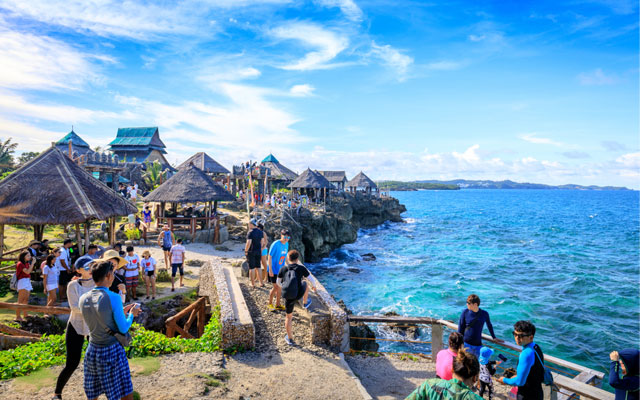
Melaka entices the world

0
More attractions are adding to Melaka’s appeal to leisure and business tourists

Melaka State Government’s Visit Melaka Year 2019 campaign, aimed at increasing visitor arrivals to 20 million tourists this year, is already bearing fruit.

The state saw a 17.5 per cent increase in tourist arrivals to 4.8 million in 1Q2019, from the same period last year. Of these, 3.4 million were domestic tourists and 1.4 million were foreign tourists.

More attractions are adding to Melaka’s appeal to leisure and business tourists

Under the umbrella campaign, initiatives are multi-pronged.

Special events have been curated for this campaign including the recent Melaka Food Festival, Melaka By the Sea Carnival in September, and Melaka Fiesta in October.

Tourism Melaka, through its Tourism Information Centres in Ayer Keroh and Jalan Kota, are giving away discount vouchers for entrance tickets to 28 attractions, including Melaka River Cruise, Menara Taming Sari, Encore Melaka and Melaka Maritime Museum.

Melaka’s travel trade partners have come onboard with the campaign, some pushing out their own initiatives.

Said Uzaidi Udanis, president, Malaysian Inbound Tourism Association (MITA): “On our part, MITA organised a three-day inbound tourism boot camp in Melaka in July that was attended by 50 tour operators and product owners. We identified and developed eight new tourism products and packages for foreign markets. Some new ideas include a walk to Konet Island during low tide from Telok Gong and an overnight stay at the former mansion used by the governor of Melaka, Mohd Khalid Yaakob.”

He added: “Melaka may only be a small state, but it is steeped in history and culture. Its UNESCO recognition received in 2008 has also been a boost for tourism.”

Klaus Sennik, general manager, Ramada Plaza by Wyndham Melaka, shared: “As a hotel, we are also taking our own initiatives to support the campaign through our hotel activities and campaigns to garner more publicity and support for this campaign which has resulted in a gradual increase in hotel occupancy.”

Asmaliana Ashari, senior manager, Tourism Melaka, said the campaign is also aimed at creating more awareness of the destination’s facilities and capabilities for business events.
Foreign tourists from this segment spend three times more than the average leisure tourist. Last year, the average spend per tourist per night was RM504 (US$122). For international business tourists, the average length of stay is six nights.

Arokia Das, director, Luxury Tours Malaysia, said: “With 186 events planned for the year, and new live theatre productions such as Encore Melaka and Rasa Melaka, it is easier to promote Melaka to meeting planners. These professionally-run shows with elements of heritage and culture cater to the needs of meeting planners.

“Meeting planners are looking for new destinations beyond Kuala Lumpur and within a two-hour drive from the city. In this respect, Melaka fits the bill. Kuala Lumpur has lost some of its allure for repeat leisure tourists because of the absence of new attractions; tourists have been cutting down their stay in the city to one or two days.

“We are trying to entice day trippers travelling south to Singapore to spend at least a night in Melaka instead, by highlighting the state’s rich history, culture, gastronomy and ecotourism products to Asian markets.”

South Korean firm leads consortium to acquire US hotels under China’s Anbang

0

A consortium led by South Korea’s Mirae Asset Global Investments (MAGI) has agreed to buy 15 hotels in the US from China’s troubled Anbang Insurance Group, according to Reuters.

Anbang, which was once among the most aggressive Chinese buyers of foreign assets, is now in the midst of selling down its overseas assets, added the report.

Mirae to acquire 15 of Anbang’s luxury hotels in the US, including the JW Marriott Essex House New York (above), for US$5.8 billion

The US commercial properties include New York, San Francisco and Los Angeles, said MAGI, an asset management arm of Mirae Asset Group, in a statement.

The report also quoted an insider as saying that the deal, valued at US$5.8 billion, is expected to close by next January.

Anbang’s selling down of its overseas assets to pay off its debt comes after the Chinese government seized control of the firm last February, as part of a campaign to reduce financial risk.

Anbang’s former chairman, Wu Xiaohu, was later sentenced to 18 years in prison for fraud and embezzlement.

In August, Anbang put its entire US$2.4 billion Japan property portfolio up for sale.

Mirae Asset Group has invested aggressively in overseas properties over the last two years, including a landmark building worth US$960 million in Paris in July.

YTL seals deal to bring AC Hotels by Marriott into Malaysia

0

Marriott International has signed a landmark agreement with YTL Hotels to bring AC Hotels by Marriott, a design-led lifestyle brand, to Malaysia.

Under the agreement, three existing hotels in Kuala Lumpur, Penang and Kuantan will fly the AC Hotels by Marriott brand flag following a strategic conversion in December.

Marriott International signs agreement with YTL Hotels to bring the AC Hotels by Marriott brand to Malaysia (Pictured; from left: Craig Smith, president & managing director, Asia Pacific, Marriott International; YTL Hotels’ executive director Dato’ Mark Yeoh; and Rajeev Menon, COO, Asia Pacific excluding China, Marriott International)

Set to be the first Marriott International hotel in Penang, AC Hotel by Marriott Penang will be located in the island’s south-eastern district of Bukit Jambul. Situated near the hotel will be Penang’s SPICE (Subterranean Penang International Convention and Exhibition Center) Arena, a 4,500m2 indoor arena which serves as a major MICE venue, and the UNESCO World Heritage-listed city of George Town.

AC Hotel by Marriott Kuala Lumpur will be located approximately four kilometres from the Kuala Lumpur City Center, the hub of Malaysian capital. The new hotel will also be within walking distance from the Titiwangsa monorail station and the Ampang LRT line, both of which link up to the city’s transportation hub of KL Sentral.

On the eastern coast of Peninsular Malaysia, AC Hotel by Marriott Kuantan will be located near the city centre, about five kilometres from Cempedak Bay and Beserah fishing village. Kuantan is also home to several industrial areas including the Malaysia-China Kuantan Industrial Park and Gambang Industrial Park.

YTL Hotels currently operate 12 Marriott International properties across Asia and Europe.

SiteMinder partners with HotelSwaps for hotels to trade unsold inventory

0

Hotel booking software provider SiteMinder has launched a partnership with HotelSwaps, the world’s first hotel room exchange programme for independently-owned and operated boutique and luxury hotels.

Under the partnership, hotels that use SiteMinder and meet HotelSwaps’ membership criteria can now trade their unsold rooms with other hotels using HotelCoins — HotelSwaps’ proprietary reservation system and digital currency.

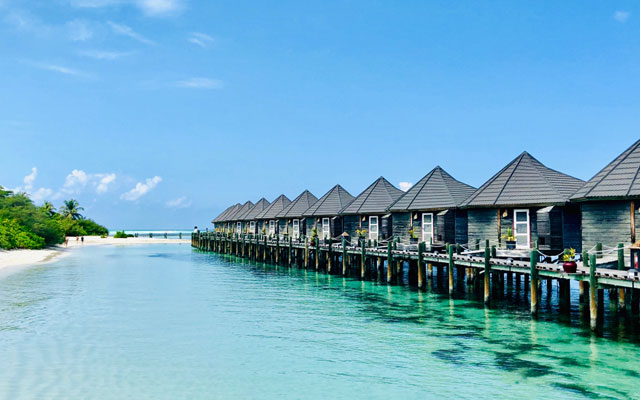
SiteMinder has partnered HotelSwaps to trade their unsold rooms with other hotels using HotelSwaps’ proprietary reservation system and digital currency. Zorah Beach Hotel (above) is among the the latest hotels to join the HotelSwaps programme

The partnership is an opportunity for hotels to create an alternative value from otherwise unused rooms. By sharing those rooms with the global hotel community, hotels can increase their ancillary revenues during periods of lower occupancy, save on their business travel expenses and offer attractive incentive programmes to their executive staff.

Preben Vestdam, co-founder and CEO of HotelSwaps, said: “Hoteliers are doing a great job in optimising yields and maximising utilisation of their valuable hotel assets, but still billions of room nights stand empty every year in wonderful hotels around the world. HotelSwaps’ technology and HotelCoins currency allow hoteliers to share such unused capacity within the community of hotel professionals for their mutual benefit.”

James Bishop, senior director global demand partnerships at SiteMinder, said that the partnership will “offer HotelSwaps’ hotel members access to [SiteMinder’s] technology where their entire inventory can be managed within one environment”.

“Never has the influence of the sharing economy on the world been stronger and the threat of new competition for hotels been greater. With this new capability, independent boutiques and luxury hotels are empowered to tap into a new, unique driver of occupancy and revenue, and share their perishable assets with like-minded hoteliers to benefit the industry as a whole.”

From today, HotelSwaps member hotels can use SiteMinder to maintain their live inventory within the HotelSwaps reservation system and receive reservations in parallel with their other distribution channels. Hotel customers of SiteMinder can connect to HotelSwaps through SiteMinder’s platform, as with any of the 400 other distribution channels that are available within the company’s open ecosystem.

Centara adds three new hotels to Phuket portfolio

0

Thai hospitality group Centara Hotels & Resorts has signed management agreements for three new hotels owned by Maikhao Dream Company in Phuket’s Mai Khao Beach area.

Two properties are already in operation and will fall under Centara management from September 11, 2019, while the third property is in development.

Maikhao Dream Villa Resort & Spa (above) has now come under Centara management

The 22-key Maikhao Dream Villa Resort & Spa, which has joined the Centara Boutique Collection as of September 11, 2019, is the only beachfront villa resort on the shores of Mai Khao Beach. The resort offers private villas, 460m2 two-bedroom villas and 650m2 three-bedroom villas.

Each of the 22 villas has its own private pool and whirlpool, outdoor pavilion and kitchen. Resort facilities include a swimming pool, fitness centre, spa, kids’ club, retail shop, library and business lounge, as well as an international all-day dining restaurant and wine cellar. Phuket International Airport is a 20-minute drive from the resort.

Also coming under Centara management from September 11, 2019, is the 142-key Maikhao Hotel, a midscale hotel which opened in early 2019. It offers studios, standard and superior twin rooms, as well as one-bedroom and two-bedroom suites. Facilities include a main swimming pool with separate kids’ pool, fitness centre, meeting rooms, beer garden, karaoke room and an all-day dining restaurant.

Centara’s chairman of the board Suthikiati Chirathivat (fourth from right) and Centara’s CEO Thirayuth Chirathivat (third from right) signed an agreement with Maikhao Dream Company’s managing director Mikhail Tyurin (fourth from left) for three new hotels in Phuket

The 280-key Centra by Centara Maikhao Resort Phuket is a greenfield development currently under construction. Slated to open in 2024, the resort will feature facilities including a swimming pool, fitness centre, meeting venues, a kids’ club and an all-day dining venue.

The new agreements expand Centara’s presence across the island to a total of nine hotels and resorts, with eight in operation.

Global tourism up 4% in 1H2019: UNWTO

0

International tourist arrivals grew 4% from January to June 2019, compared to the same period last year, according to the latest UNWTO World Tourism Barometer.

Growth was led by the Middle East (+8%) and Asia and the Pacific (+6%). International arrivals in Europe grew 4%, while Africa (+3%) and the US (+2%) enjoyed more moderate growth.

Global tourist arrivals grew 4% in 1H2019, from the same period last year, with growth led by the Middle East and APAC (Pictured: Crowds throng popular tourist spot Global Village in Dubai)

Destinations worldwide received 671 million international tourist arrivals between January and June 2019 – almost 30 million more from the same period in 2018 and a continuation of the growth recorded last year.

Growth in arrivals is returning to its historic trend and is in line with UNWTO’s forecast of 3-4% growth in international tourist arrivals for the full year of 2019, as reported in the January barometer.

So far, the drivers of these results have been a strong economy, affordable air travel, increased air connectivity and enhanced visa facilitation.

However, weaker economic indicators, prolonged uncertainty about Brexit, trade and technological tensions and rising geopolitical challenges, have started to take a toll on business and consumer confidence, as reflected in a more cautious UNWTO Confidence Index.

Regional performance

Europe grew 4% in 1H2019, with a positive first quarter followed by an above-average second quarter (April: +8% and June: +6%), reflecting a busy Easter and the start of the summer season in the world’s most-visited region. Intra-regional demand fuelled much of this growth, though performance among major European source markets was uneven, amid weakening economies. Demand from overseas markets such as the US, China, Japan and the countries of the Gulf Cooperation Council also contributed to these positive results.

Asia-Pacific (+6%) recorded above world average growth during the January to June 2019 period, largely fuelled by Chinese outbound travel. Growth was led by South Asia and North-east Asia (both +7%), followed by South-east Asia (+5%) and arrivals in Oceania increased by 1%.

In the US (+2%), results improved in the second quarter after a weak start of the year. The Caribbean (+11%) benefitted from strong US demand and continued to rebound strongly from the impact of hurricanes Irma and Maria in late 2017 – a challenge which the region unfortunately faces once again. North America recorded 2% growth, while Central America (+1%) showed mixed results. In South America, arrivals were down 5% partly due to a decline in outbound travel from Argentina which affected neighbouring destinations.

In Africa, limited available data points to a 3% increase in international arrivals. North Africa (+9%) continues to show robust results, following two years of double-digit figures, while growth in Sub-Saharan Africa was flat (+0%).

The Middle East (+8%) saw two strong quarters, reflecting a positive winter season, as well as an increase in demand during Ramadan in May and Eid Al-Fitr in June.

Source markets

The report also shows mixed results for source markets amid trade tensions and economic uncertainty, with uneven performance across major tourism outbound markets.

Chinese outbound tourism (+14% in trips abroad) continued to drive arrivals in many destinations in the region in 1H2019 though spending on international travel was 4% lower in real terms in the first quarter. Trade tensions with the US as well as the slight depreciation of the yuan may influence destination choice by Chinese travellers in the short term.

Outbound travel from the US, the world’s second largest spender, remained solid (+7%), supported by a strong dollar. In Europe, spending on international tourism by France (+8%) and Italy (+7%) was robust, though the UK (+3%) and Germany (+2%) reported more moderate figures.

Among the Asian markets, spending from Japan (+11%) was strong while South Korea spent 8% less in 1H2019, partly due to the depreciation of the Korean won. Australia spent 6% more on international tourism.

Meanwhile, Russia saw a 4% decline in spending in the first quarter, following two years of strong rebound. Spending out of Brazil and Mexico were down 5% and 13%respectively, partly reflecting the wider situation of the two largest Latin American economies.

Traveloka rolls out insurance services aimed at Indonesians

0

Indonesia’s OTA unicorn Traveloka has launched insurance products under Traveloka Protect, which is aimed at capturing Indonesia’s largely untapped insurance market.

Traveloka Protect offers two types of insurance products: Travel Insurance, which includes comprehensive insurance and Schengen visa insurance; and Life Insurance.

Traveloka rolls out insurance products under Traveloka Protect, which is aimed at Indonesians

Traveloka Protect offers users “an easy purchasing process” sans health checks and complicated administrative processes, said the company, adding that it “guarantees acceptance for all users aged 18 to 69”.

The level of market penetration for insurance in Indonesia ranges from two to three per cent, making Indonesia the second-lowest in insurance penetration among South-east Asian countries, according to the Indonesian General Insurance Association (AAUI).

This low penetration rate is due to lack of insurance literacy, said AAUI. Hoping to tap this market, Traveloka Protect presents a variety of insurance products for Indonesians. Besides offering protection, Traveloka wants to educate the Indonesian people on the importance of insurance.

Construction begins for Dream Cruises’ second Global Class ship

0

The production of Dream Cruises’ second Global Class ship has commenced at MV Werften in Rostock-Warnemünde, Germany – almost exactly a year after the keel laying of the series’ flagship.

The first steel cutting for the 342m-long, 46m-wide, 208,000 gross ton cruise vessel was initiated at the press of a button by Genting Hong Kong’s chairman and CEO Lim Kok Thay.

(From left) Mecklenburg-Western Pomerania’s Harry Glawe, Genting Hong Kong’s Lim Kok Thay, MV Werften’s Peter Fetten and Genting Hong Kong’s Colin Au initiating the start of the steel cutting for Dream Cruises’ second Global Class ship

Dream Cruises’ second Global Class ship is identical in construction to her sister ship, which is due to set sail under the name Global Dream in 2021. The keel laying of the ship is planned already for December 9, 2019, with delivery scheduled for 2022.

Like her sister ship, Dream Cruises’ second Global Class ship is also aimed at the fast-growing Asian market. With 2,500 passenger cabins accommodating over 9,000 passengers and a crew of 2,200, Dream Cruises’ Global Dream and the second Global Class ship are the first vessels worldwide capable of carrying more than 10,000 people. In terms of passenger capacity, they are the largest ships ever built in Germany.

They are also equipped with digital technologies, such as face and speech recognition, as well as climate control and mood lighting via app. The 20m² standard cabins are about 15 per cent larger than other cruise ships’.

Lim Kok Thay and Harry Glawe posing with a steel cut of Mecklenburg-Western Pomerania for Dream Cruises’ second Global Class ship

Some 2,500 passenger cabins and 836 crew cabins for the new ship are being produced as completely prefabricated modules at MV Werften Fertigmodule in Wismar.

A total of over 600 firms are involved in the construction of the second Global Class ship. Over half of the partner companies come from Germany, a fifth from the Federal State of Mecklenburg-Western Pomerania, contributing to the growth of the local economy.

Marriott veteran takes helm of JW Marriott Phuket Resort & Spa

0

JW Marriott Phuket Resort & Spa has appointed George Varughese as general manager.

Varughese has been with Marriott International for over 25 years and brings to the role a wealth of global experience through his hotel career in Austria, Germany, the US, China, Malaysia, Australia and Thailand. His experience spans several disciplines including four hotel openings.

Prior to joining The JW Marriott Phuket Resort & Spa, he was general manager of the Bangkok Marriott Hotel The Surawongse.

STB partners Trip.com to market the Lion City

0

Trip.com, an independent OTA part of the Ctrip Group, has committed to deepening the collaboration on the marketing of Singapore as a tourism destination with Singapore Tourism Board (STB).

Both parties have agreed to deepen their cooperation through multi-pronged efforts which include technology and data, exploring product R&D and brand marketing.

Trip.com has committed to deepening the collaboration on marketing Singapore as a tourism destination with STB (Pictured: Ctrip’s CEO Jane Sun and STB’s CEO Keith Tan)

This announcement came after a recent meeting between STB’s CEO Keith Tan and assistant chief executive Chang Chee Pey with Ctrip’s CEO Jane Sun and general manager of overseas destination marketing Edison Chen at the Shanghai headquarters of the Chinese OTA giant.

“OTAs like Ctrip and Trip.com are important channels for us to reach out to a wider audience, particularly the free and independent travellers. Our partnership with Ctrip and Trip.com reinforces our latest campaign efforts to target post-90s Chinese consumers who tend to book their holidays on their own,” Tan said in a statement.

According to STB, the number of inbound Chinese tourists increased by six per cent year-on-year to 3.4 million in 2018, making it Singapore’s largest tourist source market for two consecutive years. This translated to more than S$3.9 billion (US$2.8 million) in tourism revenue. Other major inbound tourism markets for Singapore include South-east Asia, Australia and Japan, where Trip.com has seen significant growth in recent years and can leverage its platform to drive further growth.

At the same time, Ctrip.com International has announced a proposal to change its name to Trip.com Group, which will be voted on at the upcoming annual general meeting on October 25.

“Trip.com is a great name that clearly conveys our mission to serve our customers through every part of their travel journey. It is easily relatable and understood by global travel audiences,” said James Jianzhang Liang, Ctrip’s executive chairman.

Sun added: “Under the group level, we will continue to operate Ctrip and Qunar as OTA brands for Chinese users, in addition to Trip.com and Skyscanner, our OTA brand and travel search brand for global users, respectively.”