Despite the emergence of six confirmed Covid-19 cases in the Maldives, the authorities have expressed confidence that the country comprising more than 100 luxury resort islands is safe for foreign visitors.
Maldives Marketing & Public Relations Corporation’s managing director Thoyyib Mohamed told TTG Asia that the country was at an advantage compared to other destinations since all the island resorts stand isolated and not connected to one another.
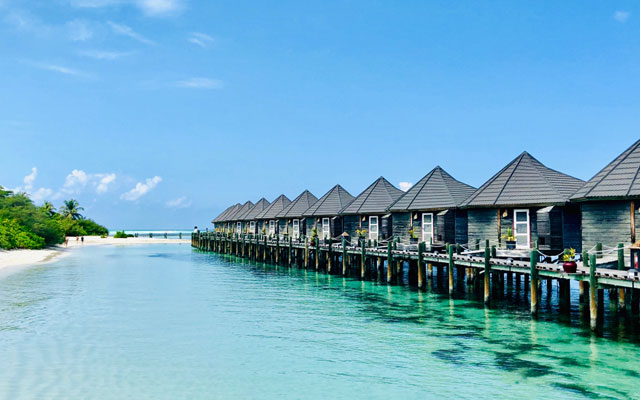
The Kuredu Island Resort is one of two resorts in the Maldives that have been put on lockdown
“In this context, isolating an island is very easy. In addition, the Maldives has a good surveillance and health system. It is safe to travel to the Maldives,” he assured.
His statement comes as two more foreign employees at Kuredu Island Resort tested positive for the virus. The resort was locked down last week, after two resort staff contracted the virus.
In addition, two Italian tourists at the Sandies Bathala Resort have also tested positive for the virus.
Both the Kuredu Island and the Sandies Bathala Resort Island have been placed on lockdown, with entry to and exit from the islands indefinitely restricted.
In a statement, the Maldives’ Tourism Ministry has also requested all resorts to cancel excursions to local islands as a precaution, to curb the spread of the Covid-19. This is effective from March 5 until further notice.
Currently, Maldives has shut its borders to arrivals from worst-hit countries, including mainland China, South Korea, Italy and Iran. Direct flights to and from the aforementioned countries have also been cancelled, while cruise ships have been banned from docking at Maldivian ports.
Summer Island Resort and Thinadhoo island, which were also placed on lockdown, had their restrictions lifted after suspected cases tested negative.
Thailand’s Centara Hotels & Resorts has laid out its ambitious expansion plans for the next five years, which includes the launch of its latest luxury hotel concept Centara Reserve, a new medical wellness collaboration in the works, and the expansion of its family resort brand Mirage.
Opening end-2020, Centara Reserve Samui will offer 184 luxury rooms, pool suites and beachfront pool villas. Each accommodation will boast private balconies and terraces, while suites and villas will be attended by “Reserve Hosts” – Centara’s take on butler service.
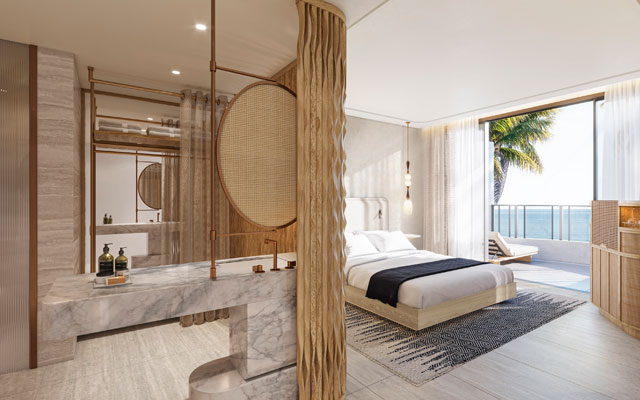
A rendering of a future Centara Reserve guestroom
Formerly known as Centara Grand Beach Resort Samui, the property will undergo a transformation overseen by design and concept firm AvroKO.
Resort facilities will include a gin bar featuring over 100 varieties and craft labels; a destination restaurant serving modern, seasonal cuisine; a mozzarella bar offering international fare and celebrating all things about the cheese; and a beach club concept featuring line-caught local seafood and a cultured wine list. The resort will also be home to the world’s first Cenvaree Reserve Spa.
Leading Centara Reserve Samui will be Patrick Moukarzel, the resort’s newly-appointed general manager. Previous luxury properties Moukarzel has helmed include The Chedi Chiang Mai in Thailand and Soneva Jani in the Maldives. He joins Centara from Al Bait Sharjah in the UAE.
Two more Centara Reserve properties will also be announced before the end of the year.
In addition to the unveiling of Centara Reserve, Markland Blaiklock, deputy CEO of Centara Hotels & Resorts, told TTG Asia that the company will also be developing a new medical wellness concept with a leading Fortune 500 medical brand, with details to be announced shortly.
Blaiklock called wellness travel the “fastest-growing traveller segment globally”, and he believes “nowhere else has the potential for a higher growth than the Asia region”.
Overall, the hospitality company aims to have a network of 170 hotels by 2024, located equally between and outside Thailand.
Blaiklock revealed: “This is expected to include a presence in Europe through the acquisition of a small group of five to 10 properties. Centara is also working on a regional brand with its parent Central Group to develop 10 to 15 properties in secondary locations serving mostly the communities where they are located and becoming an integral part of them.”
Blaiklock: openings are part of a strategic plan to make Centara a top 100 global hotel operator over the next five years
By the end of this year, Centara expects to open eight properties, located in Laos, Myanmar, Qatar, Thailand and the UAE.
In the UAE, the group will be launching the first international Mirage outside of Pattaya – the Centara Mirage Beach Resort Dubai – in which it has invested US$64 million out of a total project value of US$160 million. Mirage is a collection of family-centric themed resorts, which Centara plans to roll more out of in the future as well.
When asked why Dubai, Blaiklock shared: “Dubai was picked due to the nature of the destination and because we felt there was a niche that was not yet filled for an upscale family-focused, themed resort.”
Located on the Arabian Gulf, the Arabian adventure-themed hotel will comprise 607 rooms and suites, including pool villas; and family activities for all ages, such as a water park with lazy river, waterslides and cliff jumping; multiple restaurants; and a kids’ club. There will also be a regular spa, as well as Centara’s first kids’ spa.
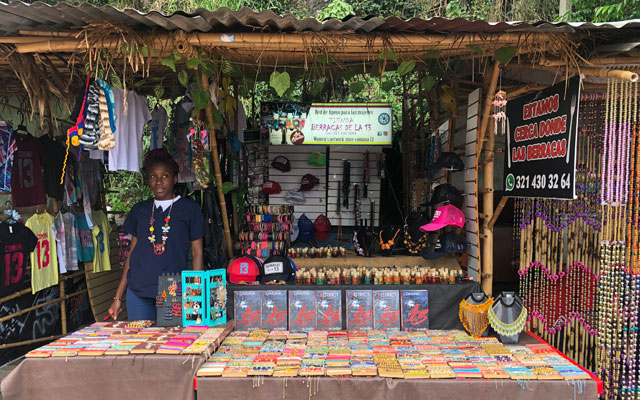
The Berracas de la 13 project in Comuna 13, Medellin, Colombia
Adventure travel operator G Adventures and its non-profit partner Planeterra are rolling out five new projects with a focus on empowering women, youth and indigenous communities.
More than 2,800 women will be positively impacted by the 3,000 travellers expected to visit these projects annually.
The Berracas de la 13 project in Comuna 13, Medellin, Colombia
The new projects include a visit to a cultural and craft experience in Jerusalem where cultural stories are shared and local handicrafts are showcased, as well as a stopover in Kerala, India where 10 local women create community through hospitality and traditional food.
The new projects are part of the Project 100 initiative, a commitment to have 100 Planeterra projects built into G Adventures tours by the end of 2020.
With these projects, the total number now built into the company’s tours has reached 85.
The Berracas de la 13 project in Comuna 13, Medellin, Colombia, was created by a group of women to help their community. With Planeterra’s support, Berracas de la 13 has improved its restaurant, developed a local tour and meal service, and created a sustainable income stream. Travellers can visit this on the nine-day Colombia Express tour (from US$1,849).
The Domari Culture and Craft Experience in Jerusalem, Israel supports local women and children. Over here, guests can enjoy traditional food, listen to cultural stories, and purchase local handicrafts. Travellers can visit this project while on the 15-day Jordan and Israel Adventure tour from Amman to Jerusalem (from US$4,049).
The Domari Culture and Craft Experience in Jerusalem, Israel
The TWE (Together We Earn) in Kerala, India helps equip women with tangible skills so they can find employment. Travellers can visit and experience this project on the seven-day National Geographic Journeys South India: Explore Kerala (from US$1,349).
Shedia Home in Athens, Greece is a not-for-profit organisation working to employ and empower those experiencing homelessness and social exclusion in Athens. Planeterra brings travellers to the new Shedia Home, which features a cafe, an educational talk from one of the Shedia’s guides, and the option to join a tour of Athens. The visit is available on the 15-day Best of Greece tour from Athens to Santorini (from US$3,349).
Lastly, the Maldives Plastic Program in Malé, Maldives is a collaboration between Planterra and local travel company Voyages to integrate plastic pick-ups into all G Adventures tours in the Maldives. The experience can be had on the eight-day Maldives Island Hopping trip (from US$959).
Search Results
Web results
Dnata expands partnership with The Hertz Corporation
Emirates Group’s travel management arm, dnata, will now promote and sell services from Dollar Rent a Car and Thrifty Car Rental.
Both brands belong to The Hertz Corporation, which is best known for its Hertz car rental brand.
Dnata expands partnership with The Hertz Corporation
Alan William, vice president, dnata Air & dnata Representations (land), said that the travel management company is strategically placed to increase awareness of all three brands in dnata’s key markets, namely, the UAE, Oman, Saudi Arabia and Bahrain.
The Dubai-based travel management company has been Hertz’s GSA for the UAE since 2011.
The Lux Collective will be launching its flagship property, under the group’s Lux Resorts & Hotels brand, in Mauritius come 2Q2021.
Located in the Grand Baie neighbourhood in the north of the island, Lux Grand Baie Resort & Residences will house 86 suites (65m2) and eight two-bedroom villas with private swimming pools (from 240m2) in the main resort complex.
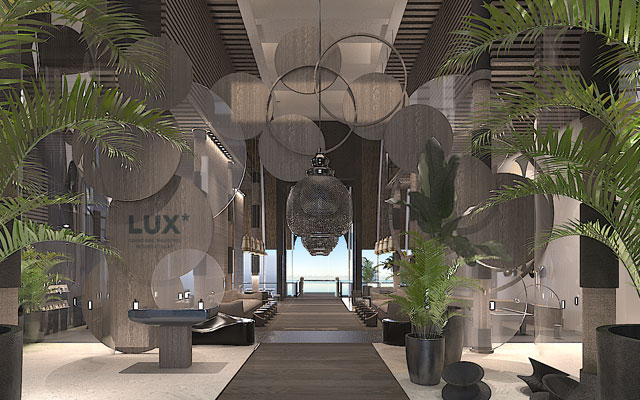
LUX Grand Baie Resort Residences
Sitting adjacent to the resort are an additional 24 residences (from 180m2), each complete with two bedrooms, a private pool and kitchen. All rooms, which feature floor-to-ceiling windows and expansive terraces, overlook the resort’s sheltered beach and lagoon.
The three-bedroom Beachfront Lux Villa (420m2) offers direct access to the beach, a wide sun deck, and a fully equipped kitchen with a personal chef and butler on standby.
F&B offerings include a beach club serving locally-sourced cuisine, a Japanese restaurant featuring Asian cuisine, a cafe, an in-pool bar, as well as a pool deck bar serving fresh juices, smoothies and cocktails.
The resort will also feature an adults-only rooftop area housing an infinity pool with cabanas, an inventive raw restaurant and bar, a cookery school, as well as an open-air wellness space for sunrise meditation and yoga classes. As night falls, guests will enjoy music sets from the resident DJ.
Elsewhere, Lux Me Wellbeing will offer an array of thermal experiences and spa treatments, while Lux Me Fitness will feature curated wellbeing programmes overseen by a wellness concierge.
Other facilities include a yoga and pilates studio; a gym and indoor cycling studio; a kids’ club with an outdoor garden space, aquatic zone, library, arts and crafts area and mini-kitchen; and an adult-free hangout area for teens. Guests can also indulge in a range of outdoor activities, including kayaking, SUP, beach football and volleyball.
A two-day Aviation Resilience & Health Workshop was organised by IATA in Singapore last week (March 4-5), where the association’s medical advisor and an infectious diseases specialist reassured attendees that catching Covid-19 on a flight was “extraordinarily low”.
The closed-door workshop, attended by more than 100 members and partners from 50 organisations in 20 countries and territories, focused on meeting the medical and regulatory aspects of the Covid-19 outbreak and working with governments.
From left: IATA’s Anthony Council, Brian Pearce, David Powell, and Isaac Bogoch at the media briefing
David Powell, IATA’s medical advisor, told the media that airline medical advisers around the world are “in touch” with virus outbreaks dating back to SARS, and the workshop confirmed that existing procedures and suitable solutions for the current challenge required no changes.
Powell added there was no evidence of a passenger catching Covid-19 from a sick passenger on the same flight.
IATA, in following WHO’s guidance for the aviation industry, is not advising travel bans and with Powell adding that bans “tend to be ineffective and have significant disadvantages”. He advised each traveller “to do his own risk assessment” instead.
Powell said IATA’s messages have to be reinforced and rational messages need to get out.
While IATA respects the right of countries to issue travel bans, Anthony Council, IATA vice president, corporate communication, commented that “there needs to be consistency and clarity” – something that is very difficult right now – and called for “collaboration” for the industry and life to “return to normalcy”.
By holding the workshop, which was organised in 10 days, IATA is trying to reassure people the travel process is safe, Council added.
Isaac Bogoch, University of Toronto’s infectious diseases faculty member, reiterated it was pointless to keep adding countries to the travel ban list, pointing out that it would slow down, but not stop the spread of Covid-19.
As such, Bogoch advised travellers to consider factors such as the destination, how to get there and back from the home country, and the rules and regulations of the respective countries.
“The risk is extremely small,” Bogoch stressed. “Remember to practise good hand hygiene and try not to touch the face, the same as during flu season.”
Meanwhile, IATA revealed two scenarios in its analysis update of the financial impact of Covid-19 on 2020 global revenue losses – it is US$63 billion where it is contained in current markets, and US$113 billion with a broader spread, said chief economist Brian Pearce.
Malaysia’s prime minister Muhyiddin Yassin unveiled his Cabinet yesterday (March 9), appointing Nancy Shukri as the tourism, arts and culture minister, and Jeffrey Kitingan as the deputy tourism, arts and culture minister.
Nancy was a former minister in the prime minister’s department in charge of law, while Jeffrey serves as Keningau’s member of parliament and is the president of Parti Solidariti Tanah Airku (STAR), a Sabah-based political party.
Nancy Shukri has been appointed Malaysia’s new tourism minister
Local stakeholders have responded positively to the new appointments, and are eager to work closely with them.
Malaysian Association of Tour and Travel Agents president, Tan Kok Liang, shared that the association is looking forward to working closely with the new minister “to achieve tourism targets, modernise outdated laws, introduce incentives to spur the industry, and step up enforcements against illegal and unlicensed operators”.
Tan also said that the new tourism minister should prioritise engagement with tourism players, and ensure that reasonable requests are being met.
He added: “The tourism industry is at the lowest level now due to Covid-19. (Restoring) confidence in foreign holidaymakers to visit Malaysia and not cancel their trips here should be a top priority, as well as growing the domestic travel segment.”
Malaysian Association of Hotels’ CEO, Yap Lip Seng, shared his hope for the new ministers in tourism, arts and culture to “actively continue to listen to the private sector in formulating policies and initiatives for the industry”.
Yap added: “We look forward to more opportunities, especially in addressing the negative impact of Covid-19 on the hotel industry. We will be updating the government periodically and possibly formulate new strategies towards a sustainable tourism industry.”
Malaysia has temporarily banned all cruise ships from entering the country’s ports due to the increasing number of Covid-19 cases, putting a further damper on the tourism industry.
The decision, which will take effect immediately, was made following instructions from the Health Ministry and Transport Ministry.
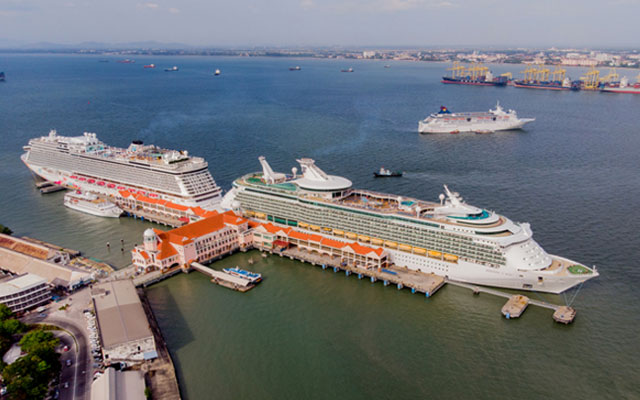
Malaysia issues blanket ban on all cruise ships; Swettenham Pier Cruise Terminal in Penang pictured
Malaysia’s health director-general Noor Hisham Abdullah said in a recent Facebook posting: “The entry and transit of cruise vessels, passengers and crew members require considerable medical resources to be made available at ports for screening and treatment purposes.
“During this difficult period, it is important that more medical resources are concentrated at hospitals to attend to medical emergencies and undertake preventive measures.”
Last year, Penang recorded 449,885 cruise passengers, while Port Klang received 360,000 passengers, with 150 cruise liners calling on the port.
Malaysia joins several countries which has banned cruise ships from entering their ports, including Taiwan, Hong Kong, Japan, and the Maldives.
The Philippines’ International School of Sustainable Tourism (ISST) will host the Asian Ecotourism Network’s (AEN) first International Ecotourism Travel Mart (IETM) in September.
IETM was hatched during last year’s AEN conference in Vietnam when it was noted that despite the many global travel marts and exhibitions for general tourism such as ITB Berlin, World Travel Mart and ASEAN Tourism Forum, there were none for ecotourism.
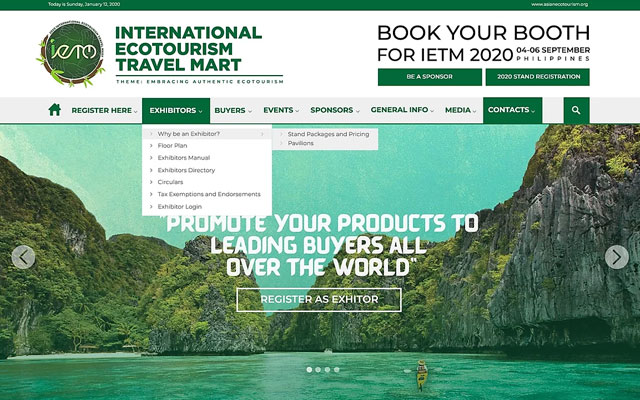
A screenshot of the soon-to-launch website for International Ecotourism Travel Mart which will take place in Manila this September
ISST bagged the hosting as there were no other bidders, its president and founder, and former tourism secretary, Mina Gabor told TTG Asia.
AEN is the regional initiative of Global Ecotourism Network (GEN).
The IETM is slated to be held from August 31 to September 6 at the Philippine International Convention Center Forum, coinciding with 2020 as the year of celebrating biodiversity.
Gabor said the 18 AEN member countries have confirmed their participation, while other countries have also indicated interest.
With the theme Enhancing Authentic Ecotourism, IETM will have a strong focus on international ecotourism buyers and sellers, while exhibitors will showcase a strong ecotourism component, green technology and sustainable green practices.
The travel mart will also host an Ecotourism Training course component where 36 speakers and trainers from around the world will tackle wide-ranging topics from disaster risk control and management to climate change and community development.
PATA Philippine Chapter chairman Bob Zozobrado said that as the chosen partner for IETM, they will be campaigning for the participation of local and overseas schools, while details are being finalised in their role in organising tours and accommodations and possibly, transport and transfers.
With a deluge of travel mart cancellations in 1H2020 due to the Covid-19 scare, buyers and sellers are requesting to be accommodated at IETM. Priority will be given to those with a portfolio of adventure, nature and ecotourism, and those primarily in ecotourism areas and destinations, Gabor said.
She added that IETM will be poised to deal with the evolving Covid-19 situation, with a strong emphasis placed on health and safety.
Gabor further shared that the first day of the IETM, which will be open to the public, will showcase the natural environment with demos on jungle survival course, special vegan and drinks preparation, and daily performances in native costumes.
To drum up public awareness, they are working with the Department of Education to run an ecotourism essay competition for students, as well as organising an eco-run along Roxas Boulevard in Manila.
IETM will also showcase the ASEAN Centre for Biodiversity, including major ecotourism sites; four indigenous villages in Indonesia, and the Philippines, among others; as well as four villages in the Pacific islands.
Qatar Airways, Singapore Airlines (SIA), and Emirates have all announced that they will waive fees for date changes in light of the Covid-19 outbreak.
Qatar Airways’ customers can change the dates of their booking without charge should their travel date falls between March 6 and June 30, 2020. Fees for booking alterations will be waived if reservations are changed at least three days before departure.
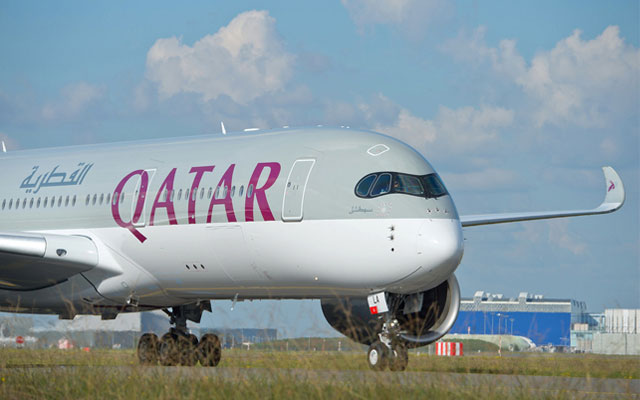
Qatar Airways among airlines to offer more flexible booking policy for travellers
Qatar Airways will provide customers the additional option of exchanging the flight ticket for a travel voucher, where the unutilised value can be used for future travel, valid for one year from its date of issue.
Qatar Airways’ customers wishing to cancel their flights altogether can avoid incurring a refund penalty if they do so three days before departure.
Similarly, SIA will waive change fees for tickets issued between March 6 to March 31 for travel to and from all destinations. The new travel date must commence before March 31, 2021.
For Emirates, customers will be able to change their travel dates without penalties, if their tickets are issued between March 7 and March 31, 2020. Flight changes can be made to any date within an 11-month range, within the same booking class. Changes can also be made on the day of the flight, provided they call at least two hours before.
Also, Emirates’ Skywards members who have booked to travel between March 1 and June 30 will receive a 20 per cent bonus in tier miles.
Passengers are advised to contact the respective airlines with specific details of their flights for confirmation. Fare differences or applicable taxes still apply.
The three airlines’ new policy, introduced to provide convenience for passengers amid imposed travel restrictions and flight reductions, apply to flights booked directly with them, as well as through travel agencies.
All airlines have taken additional precautions to stem the spread of the virus, such as disinfecting aircraft, as well as the use of advanced air filtration systems, which remove 99 per cent or more of the viruses in the cabin.