TTG Asia
Asia/Singapore Thursday, 22nd January 2026
Page 1092

Thai travel firm eyes medical tourists from China

0
Thai travel firm

Thailand-based travel firm Really Really Cool (RRC) has partnered Bangkok Dusit Medical Services (BDMS) to sell bespoke medical tourism packages specifically tailored for Chinese travellers.

Founded in 2018 by former Nok Air CEO, Patee Sarasin, RRC is looking to tap into the rapid growth of China’s outbound medical tourism market.
Thai travel firm Really Really Cool aims to sell quality medical tourism packages to Chinese tourists

Patee said that Chinese travellers are spoilt for choice now that every country in Asia is trying to woo a larger market share of outbound travellers from China.

“Innovation is key if Thailand wants to remain the preferred top-of-mind destination with Chinese travellers,” said Patee.

“Thailand is losing travel business from China to other destinations around Asia. For example, Japan is currently experiencing 14 per cent growth of Chinese tourists travelling to Japan versus only 1 per cent growth of those coming to Thailand. The Chinese are also spending 18 per cent more in Japan than in Thailand.”

Several factors are affecting inbound travel from China to Thailand, including the Thai baht’s persistent strength and visa issues. Currently, Chinese tourists coming to Thailand can apply for a visa upon arrival at the airport, but they have to contend with long queues, said the company. In comparison, Japan issues five-year multiple entry visas for Chinese tourists looking to visit Japan.

“What I would like to propose for Thailand’s policymakers is that we offer three-year multiple entry visas for FIT Chinese travellers. This segment doesn’t have an issue with visa fees, but they are looking for convenience. If we can fix the visa issue, it will certainly help capture more Chinese tourists to come to Thailand for medical purposes,” said Patee.

Thailand receives between 50,000 to 60,000 Chinese medical tourists per year, according to RRC estimates. Patee claimed that current flight arrival time slots available to many airlines between Bangkok and key Chinese cities like Beijing and Shanghai aren’t convenient. Passengers depart China late at night and arrive in Thailand too early in the morning and, vice versa, he said. He also urged the responsible authorities to continue discussions with operators on how to find more suitable departure and arrival times.

Thailand ranked third globally in terms of medical tourism revenue, according to the Chinese Medical Travel Journal 2018. A growing number of Chinese patients are seeking both practical and preventive programs such as anti-aging, IVF, plus elective health screening and treatment, said RRC.

How to deal with medical emergencies when abroad

0
Low:

Every year, International SOS receives 4.1 million calls from our clients all over the world, requesting for assistance and advice on different medical situations and/or security situations before and during their business trips.

This can range from non-urgent ailments to critical emergency cases, and is often exacerbated by the lack of knowledge on what to do in these situations.

Low: some due diligence will go a long way in helping travellers who encounter medical emergencies while on the road

Based on data collected from our 26 global assistance centres, we found that medical advice cases have increased by nearly half. Most significantly, the number of cases where emergency evacuation and/or repatriation has been prevented has risen by 10 per cent, which demonstrates how prevention helps to avoid costly emergencies.

While it is important to obtain travel insurance and understand the scope of coverage, we recommend five other best practices that business travellers should note before their trips, to stay prepared for the hidden dangers of medical emergencies during their travels.

Be aware of your own medical history
The first and most vital step for business travellers is to undergo a thorough medical examination by physicians. A physician can detect pre-existing medical conditions which may be potentially exacerbated by varying conditions during the trip, and help you to mitigate these risks by arranging for the required vaccinations, medication, and emergency protocols.

Assess the most suitable medical options to provide specialised care
When you consider existing medical care options, this does not just involve researching the most reputable or the nearest facilities. Some hospitals differ with specialised medical and nursing staff and medical equipment, and may be more equipped to handle certain emergencies. You must also consider the accessibility of the hospitals to the locus of activities during your trip, especially in population-dense environments where road travel is often hindered by the sheer number of vehicles, extending journeys for hours on end.

Research the health risks of a destination to know your potential exposure
All travellers should refer to current health advisories issued by their governments and travel assistance partners before the trip so that they can keep abreast of any current or potential outbreaks. There may be vaccinations or prophylaxis that the traveller can take prior to the trip, to directly minimise the health risk. During the trip, there are usually simple non-medical measures that the individual can take to mitigate the risk of contracting any infective diseases as well.

Understand the permitted medication you can bring into your destination
One major concern that travellers have is running out of medication, particularly if they have a chronic condition. Pharmaceutical regulations can vary from destination to destination, so if you have medication to bring, keep to the permitted amount so that there will be no complications when you enter. To further reduce any hassle, carry relevant documents to certify usage and avoid any miscommunication.

Communicate, communicate, communicate
Before leaving home, know who is responsible for protecting you and how you can easily reach them if you are caught in a medical incident. Take note of the contact information and address for your embassy or consulate.

Business travellers can be equipped with the capability to share their locations and access immediate medical advice and assistance anytime and anywhere with the help of companies like International SOS. Such visibility is critical particularly during an incident where it is imperative within the golden hour to know who is safe, and who else needs help most.

Oyo hires independent advisor for governance guidance

0

Betsy Atkins, CEO and founder of Baja Corporation, has been appointed by Oyo Hotels & Homes as an independent director on the company’s board of directors.

As an independent board member, Atkins will play a supervisory role and provide guidance to the founder and the management on key business decisions.

She brings to the board experience in several aspects of the business, including corporate governance, driving tech-enabled efficiencies in business operations as well as ensuring strong business economics.

Experienced in scaling companies through the hyper-growth stage and leading them to access to the public markets and acquisitions, Atkins joins Oyo as the company is embarking on its next phase of growth.

At Baja Corporation, Atkins has built three early-stage funds and made early seed investments in consumer and enterprise software companies. Prior to that, she co-founded enterprise software companies in multiple industries, including energy, healthcare and networking.

Atkins is currently the chairman of the board at a private company, GlobalLogic, and also serves as board member at Wynn Resorts, SL Green Realty and Volvo.

New hotels: SureStay Hotel by Best Western Vientiane, Change Overnight Hotel and more

0

SureStay Hotel by Best Western Vientiane, Laos
Designed with a blend of classical Lao art deco and French colonial styles, SureStay Hotel by Best Western Vientiane comprises 68 rooms and suites. Guests will have access to an onsite restaurant, Sure Spa, a business corner in the lobby, and a fitness centre and the Tipsy Elephant Rooftop Bar on the top floor. This is the brand’s inaugural property in Laos, and the fourth operational SureStay hotel in Asia.

Change Overnight Hotel, Australia
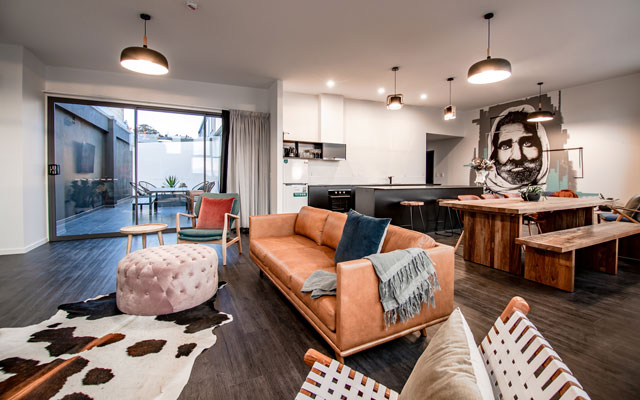
Guests can support a cause and stay the night simultaneously at Change Overnight Hotel, an 18-room apartment-style modern property built upon a social enterprise concept in Launceston. Choose one of eight causes, such as the Good Shepherd Agricultural Mission in India, where one night’s stay contributes to nutritious breakfasts for the children of the orphanage. For guests passionate about the environment, a one night’s stay can protect approximately 10m² of land in Tasmania through the Tasmanian Land Conservancy.

The Postcard Galle, Sri Lanka
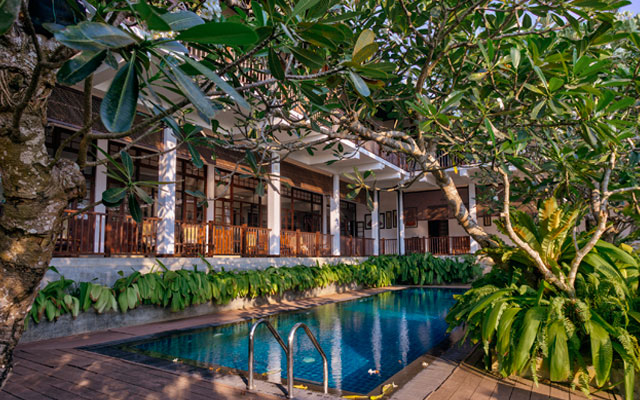
Located on the country’s south-western coast near the fortified city of Galle is The Postcard Hotel’s latest outpost. There are just 10 rooms, each featuring high Burmese teak ceilings, wooden beds and titanium flooring. Attic Suites can house up to four guests, and come with a mezzanine floor and a private seating area overlooking the ocean. Luxury Suites meanwhile, offer an added plunge pool or jacuzzi. Facilities on-site include a lap pool, spa and restaurant-lounge.

Microtel by Wyndham Guiyang, China
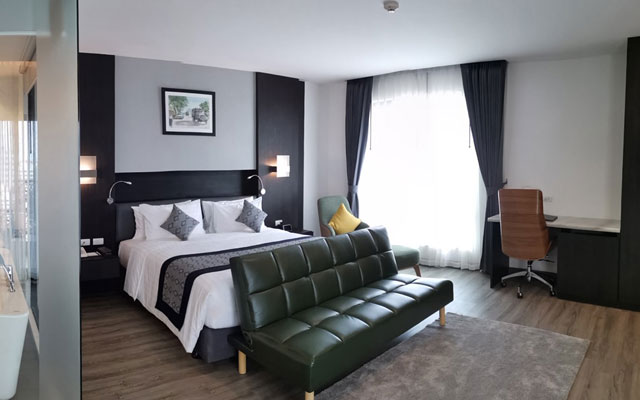
The newly-built, 192-room Microtel by Wyndham Guiyang is billed as the “first intelligent hotel in Guiyang”, featuring QR code payment, and in-room voice automation allowing guests to control lighting and temperature. Amenities include an all-day dining restaurant, two meeting rooms, a gym and complimentary laundry services. Two more Microtel-branded hotels in Greater China are slated to open later this year, one of which will be in Hangzhou.

The Ritz-Carlton Pune, India
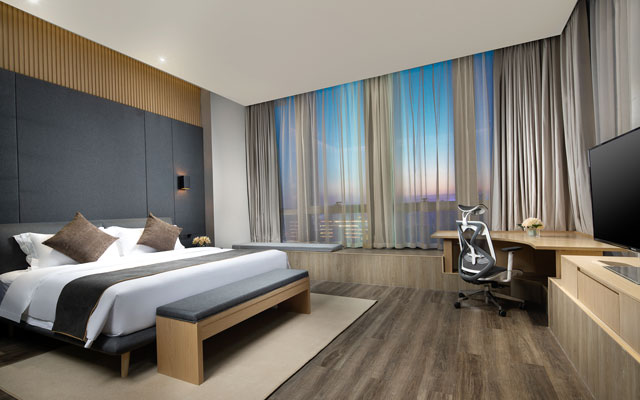
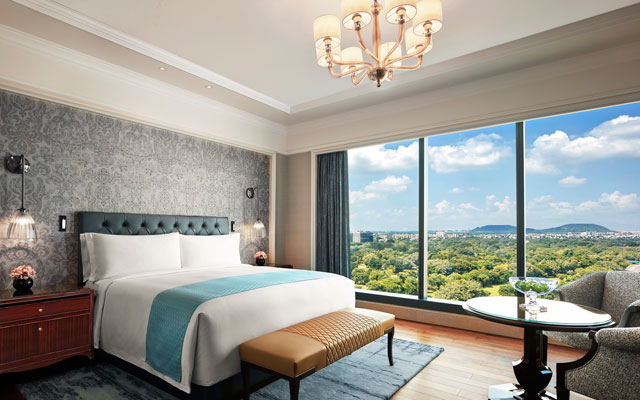
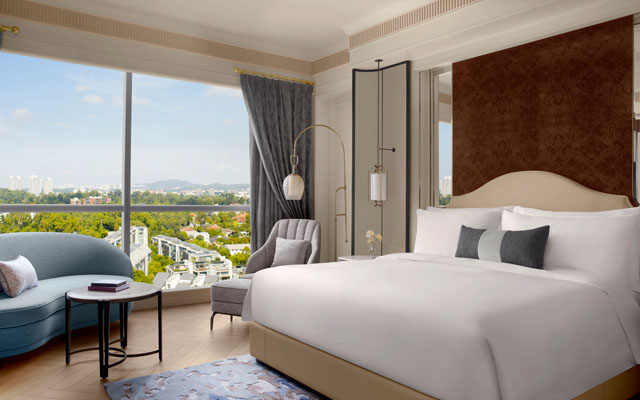
The second Ritz-Carlton in Maharashtra features 198 guestrooms and 35 suites, the largest being the Presidential Suite with two bedrooms, a living room and dining area, private bar and in-suite treatment room. Guests staying on the Club Level floors will enjoy access to the Ritz-Carlton Club Lounge on the 18th floor that features views of the golf course, private check-in, a dedicated Club Concierge, and small bites throughout the day.

There are five dining venues on-site, as well as recreational facilities includes a fitness studio, yoga deck, and Ritz-Carlton Spa with eight treatment rooms. Event planners may avail the myriad spaces on-site spread across more than 3,200m², with spaces such as an outdoor foyer for hire.

Rachel Ng promoted to EAM at Grand Park City Hall

0

Grand Park City Hall has appointed Rachel Ng as executive assistant manager, a promotion from her most recent role as director of sales at Park Hotel Alexandra.

In her new position, Ng will work with general manager John Kockan to
lead the sales, marketing and revenue teams to drive yield and growth for the hotel.

Ng brings some 17 years of hospitality experience to her new role. She spent more than a decade of her career with the Park Hotel Group, joining Grand Park City Hall in 2015 as senior sales manager and leaving as assistant director sales in 2013. She then took on the position of director of sales at Parkroyal on Beach Road and subsequently returned to the Park Hotel Group in 2014 as director of sales at Park Hotel Alexandra.

Up-close and personalised

0
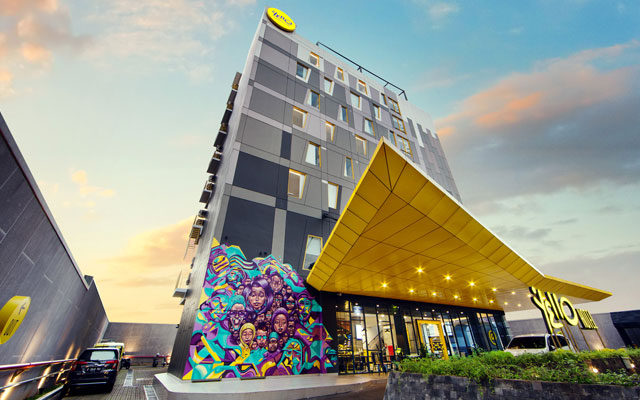
Tauzia customises the identity of each Yello lifestyle hotel to fit local preferences

Midscale hotel operators in Indonesia are integrating more lifestyle elements into their properties as they compete to elevate the guest experience. Standard rooms and basic amenities are no longer sufficient for hotels to edge out the competition.

Speaking at the 7th Tourism, Hotel Investment & Networking Conference in Bali in September, Armand Steinmeyer, director of business development and investment, Tauzia International Management, said: “In the past, midscale hotels started out simple but the proliferation of the middle class and their varying needs and experiences progressively changed (the way hotels operate).

Tauzia customises the identity of each Yello lifestyle hotel to fit local preferences

“We have, for example, seen the growth of meetings and incentives or people celebrating birthdays in hotels that we didn’t 10 to 15 years ago.”

He noted that while domestic travellers used to be contented with simple homestays, more are now opting for professionally-run properties.

Another panellist, David Wray, senior vice president, acquisitions and business development, Southeast Asia and Pacific Rim at Wyndham, also observed increasing integration of lifestyle elements in hotels amid growing demand for midscale hotels in South-east Asia, including Indonesia, and traveller interest in experiences.

Nathalia Wilson, director of development, South-east Asia and Korea, at InterContinental Hotels Group, agreed: “There is quite an interest in lifestyle (experiences) in the midscale segment in Indonesia. It does not only appeal to the millennials, but also those wanting a hotel stay where they can relate to the neighbourhood in terms of arts and culture. People want to relate more to the places where they stay and the experiences they get, and engage more with the community.”

Steinmeyer said: “In the past we saw more standardised hotels, but the future of the hotel is moving towards guest experiences.”

For example, Tauzia’s Yello Hotels lifestyle brand, according to Steinmeyer, is customised to fit local preferences.

“While the room sizes and the brand’s core identity as urban art and technology is the same, a Yello Hotel in Jakarta is not the same as the one in Manado, for example, to adapt more to the kind of experiences guests want in that city. How we manage the building has to change and evolve to meet the expectations of the guests in that area.”

He said that a bar may be de rigueur in a Jakarta hotel, but less so in Indonesia’s secondary destinations.

Wilson also stressed the need to adjust brand standards to make them more relevant to the destination.

“A lot of the hotel owners we are working with are (first-time) owners. We do come up with the number of room keys that would be feasible but room sizes may differ from one location to another (due to land size or market needs),” she said.

“For many hotels outside of Bali, the government-run business event sector is an important sector, so some of the facilities at (the hotels) need to cater for that.”
“I think that it’s also critical to note the type of hotels and what the trends are (in a destination),” added Wilson.

“Some of our hotels’ features, which may be our brand standards initiated in the US or Europe, may have to differ slightly for products that are in Indonesia where we see the MICE business coming from the government. Also, the wedding business is very important for a lot of hotels in secondary cities.”

Malaysia steps up tourism game to attract more arrivals from China

0

In line with its Visit Malaysia 2020 tourism campaign, Malaysia will next year roll out a host of initiatives and efforts to strengthen ties with China, as 2020 marks the 45th year of economic and cultural cooperation between both nations.

To commemorate this milestone, the Malaysian government has declared 2020 the Malaysia-China Culture and Tourism Year, shared Faizal Shani, consul general of Malaysia in Kunming.

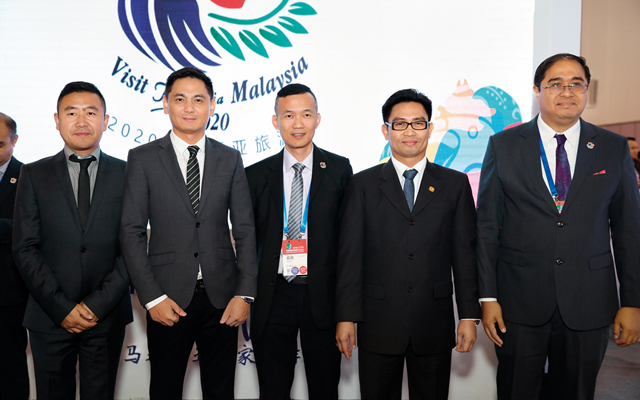
Malaysia Tourism Promotion Board (MTPB) representatives, alongside Faizal Shani, consul general of Malaysia in Kunming (second from right), were present at CITM 2019 last week to announce a series of initiatives and offerings rolled out by MTPB to woo more Chinese tourists

“As part of this programme, we will support tourism traffic between Malaysia and China. The Consulate General of Malaysia in Kunming will provide services especially to the Kunming and Yunnan market,” he told TTG Asia at the China International Travel Mart (CITM) in Kunming last week.

At CITM 2019, which marked the start of its China-oriented efforts, the Malaysia Tourism Promotion Board (MTPB) joined hands with local tour operators to promote unique experiences offering deeper engagement for Chinese tourists.

One such experience includes a stay on a durian farm, where guests can hear durians drop from trees in the night and follow a guide to enjoy the freshly-picked fruit. The experience includes a detailed telling of the different types of durians and their distinctive tastes.

“We’re seeing less of the large group tours. Instead, the Chinese are now travelling in smaller groups of friends and family, and planning their own itineraries. We believe that such experiences would appeal to these travellers,” explained Chan Hon Mun, deputy director, international promotion division Asia/Africa, MTPB.

In order to cater to this segment, MTPB has also been stepping up efforts to encourage local hotels and merchants to accept mobile payment methods such as WeChat Pay and AliPay, as well as advising tour operators to sell their packages on popular Chinese OTA sites like Trip.com, said Chan.

The Malaysian government has also relaxed its visa requirements for Chinese tourists, such that travellers with a China passport transiting in Thailand, Indonesia or Singapore can now enjoy a visa on arrival.

Shenzhen Airlines will commence flights between Penang and Shenzhen on December 18, joining the current roster of 232 Malaysia-China routes by seven airlines.

Faizal added that the efforts to deepen the bond between Malaysia and China extend beyond tourism, with the Malaysian government having introduced a four-year Bahasa Malaysia culture and language programme for Chinese students.

Meanwhile, the Malaysian travel trade was quick to leverage the Visit Malaysia 2020 campaign to woo more Chinese travellers, particularly the FIT segment, by promoting the country as a value-for-money destination.

Seeing strong potential for further growth from China, currently Malaysia’s top medium-haul market, Uzaidi Udanis, president at Malaysian Inbound Travel Association said: “Our travel counterparts in China mainly focus on group travel which is low yield, but FIT travel is already a strong force.”

With Thailand’s Phuket, Samui and Pattaya posing strong competition in pursuit of the Chinese FIT market, Uzaida is encouraging association members to promote more islands and beach resort packages to the Chinese market.

And Ally Bhoonee, executive director at World Avenues, has responded to the call. He said: “We have come up with new packages in Penang, Kota Kinabalu and Langkawi in conjunction with the year-long Visit Malaysia 2020 campaign. We are focusing on the beaches, islands and multicultural aspects in Malaysia.”

Inbound players also opined that the strong Thai baht makes hotel rates in Malaysia, in comparison, even more affordable.

Commented Bhoonee: “Targeting the middle class from Southern China, we have informed our partners that hotel rates in Malaysia are very competitively priced and value for money. Now would be a good time for repeat visitors to Thailand to try a new destination.”

Raaj Navaratnaa, general manager, New Asia Holidays Tours & Travel, shared: “We have segmentised the market to appeal to Chinese FIT millennials looking for soft adventure, educational tourism, or lifestyle travel.

“By doing so, we hope to show them aspects of a holiday they are interested in and woo them away from Thailand, which all this while remains a preferred destination.”

“We’re seeing less of the large group tours. Instead, the Chinese are now travelling in smaller groups of friends and family, and planning their own FIT itineraries.”

– Additional reporting by S Puvaneswary

With increased capacity and fuel efficiency, new A321neo to form backbone of AirAsia’s operations

0

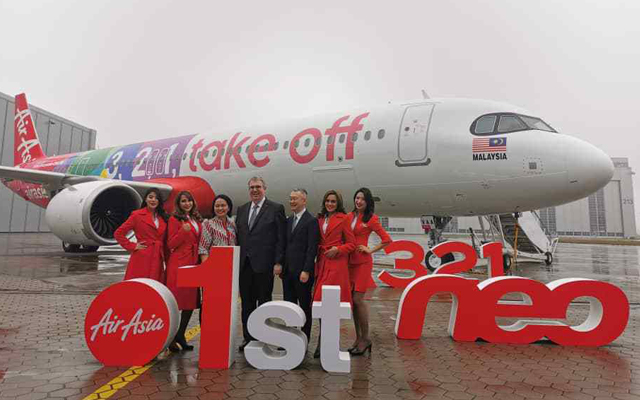
The new Airbus A321neo is projected to form the backbone of operations in AirAsia’s ambitious push for new destinations and markets in Asia, as the low-cost carrier on Wednesday took delivery of its first of 353 A321neo order in Hamburg, Germany.

The largest and newest variant of the A320neo family, the A321neo is 6.93m longer than the A320neo, fitting 50 more seats per aircraft and 40 per cent more cargo space. The A321neo also offers up to 20 per cent fuel savings and has a longer flight range of up to five hours, an additional one hour more than the flight range of the A320neo.

From left: AirAsia’s top executives Veranita Yosephine and Michael Menking, alongside CFM International’s Sean Kim, at the aircraft handover ceremony in Hamburg

The A321neo aircraft features a single class layout with 236 seats, and boasts some of the latest aircraft technologies including new generation engines and Sharklets, and 50 per cent less noise as compared to previous generation aircraft.

Speaking at the handover ceremony in Hamburg on Wednesday, AirAsia Indonesia CEO, Veranita Yosephine said: ”The A321neo is truly a remarkable aircraft incorporating the very latest technology, and we could not be more thrilled that it will be the new backbone of our operations across the AirAsia group.

“With the 25 per cent increase capacity and 10 per cent reduction in cost per seat, the A321neo will enable us to maintain low fares and it will enable us to grow and be the largest low-cost carrier in Asia.”

Speaking at an earlier press briefing at the Airbus conference centre in Hamburg, a day before the delivery of the first A321neo delivery, AirAsia’s senior manager, aircraft planning & evaluation, Matthew Glaus, said: “Lower fuel burn per passenger will result in lower operating costs per seat mile and improved fuel efficiency. A higher seat capacity will benefit high density routes while a longer flight range will allow AirAsia to open new markets and new destinations.”

The new A321neo aircraft will initially operate from its Kuala Lumpur hub to Kuching and Kota Kinabalu. While no new destinations have been announced, the A321neo has the range capability to fly from Kuala Lumpur to Perth, Shanghai and Beijing, which was not possible with the A320neo. These routes are served by AirAsia’s sister company, AirAsia X, which operates the A330-300 and the A330-900 aircraft.

Asian airlines face headwinds, but pockets of opportunities persist

0

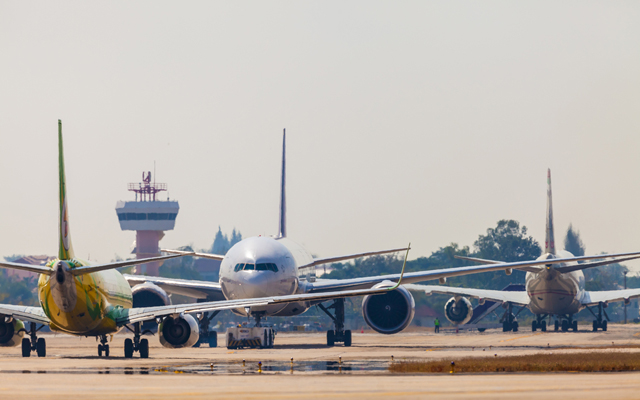
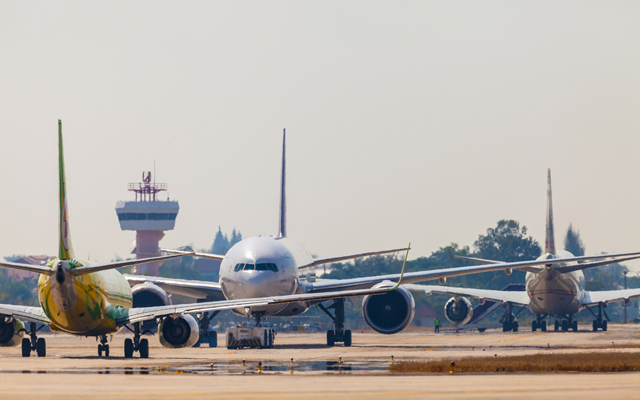
Asian airlines are bracing for slower growth in 2020 amid softening Chinese outbound travel demand and economic uncertainty owing to the ongoing US-China trade war, but industry leaders also say it is not all doom and gloom.

That was the common consensus among airline chiefs at last week’s CAPA Asia Aviation Summit and Corporate Travel Summit in Singapore, who said they see pockets of opportunities in growing ancillary fees, focusing on untapped inbound traffic and market segmentation.

Despite slower growth projected for Asia’s aviation industry next year, untapped opportunities still remain in the region, say airline chiefs

For regional LCCs, Jetstar Asia and Thai AirAsia both reported that revenue for ancillary fees are growing – at about one to two per cent annually – and now constitute between 18 per cent and 30 per cent of revenue.

Jetstar Asia’s CEO Barathan Pasupathi said that there are opportunities for airlines in the “vertical chain” and sharing platforms where passengers not only book air tickets, but also a ride to and from the airport via a car-hailing service, and booking of hotel rooms, etc.

Ancillary fees for Jetstar Asia have jumped from the “tens” to around 30 per cent, he noted.

Thai AirAsia’s executive chairman Tassapon Bijleveld said that OTAs were “not selling ancillary (products and services)”, and that the airline would have to drop big OTAs in China and work with those willing to sell ancillary products and services.

Chinese traffic had been slowing down over the last two years, he added, and despite a two per cent pick up, the market was not what it used to be.

Tassapon continued: “The Thai baht is very strong and there are no fundaments to explain why. We are suffering because of the exchange rate.”

For IndiGo, the Indian airline is betting big on the potential of East Asia, with the launch of new services to Chengdu, Guangzhou, Yangon, Ho Chi Minh City and Hanoi, according to the airline’s CCO Willy Boulter.

Boulter said that the airline was changing its domestic focus, going international and tapping the Chinese inbound market to India, both for leisure and business. He added that IndiGo was also eyeing more outbound traffic to Thailand, with the introduction of visa fee waivers.

For full-fledged airline Garuda Indonesia, its strategy is to work with companies that provide services for travellers looking for a luxury experience such as private jet services.

Indonesia is an increasingly consolidated market where the government set a cap for the selling price of airline tickets, said Garuda Indonesia’s CEO I Gusti Ngurah Askhara Danadiputra.

Meanwhile, CAPA – Centre for Aviation chairman emeritus Peter Harbison said that the industry would face four game changers in the coming decade.

He said that there would be environmental headwinds caused by “flight shaming” and the impact on corporate travel; distribution and technology change due to data analytics and big tech companies that know more about the customer; new aircraft technology revolutionising route planning; and partnerships and foreign ownership changes, where individual airlines have to respond to bilateral agreements because of market needs and groupings like Star Alliance, oneworld and SkyTeam being challenged.

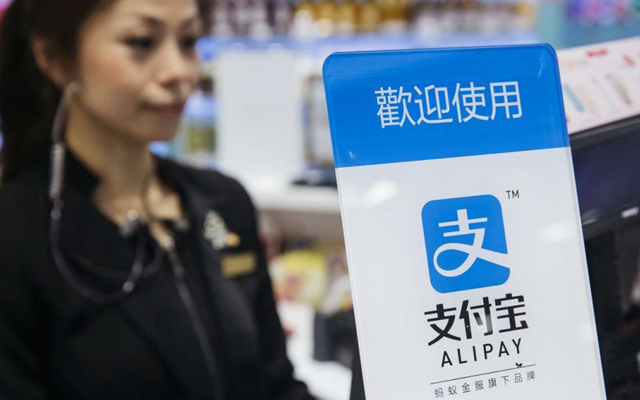
Alipay, WeChat Pay now open to international tourists

0

Chinese payment giants Alipay and WeChat Pay have both opened their platforms to international travellers in China for the first time.

To use Alipay app while in China, visitors will need just an overseas phone number, a visa and their bank card to sign up for Tour Pass mini-programme. They can top up in increments of as much as RMB2,000 (US$285), and use the service to not just make offline payments but also hail cars, purchase train tickets and book hotels, among other features available within the Alipay app. Access to Tour Pass lasts three months, and any leftover funds are refunded automatically.

Alipay and WeChat Pay is now open to international tourists in China

In a similar move, WeChat Pay has partnered with Visa, MasterCard, American Express, Discover Global Network, and JCB to allow foreign visitors to link their credit cards to WeChat Pay. With this new service, WeChat Pay users can add international credit cards directly to their digital wallets on the WeChat app.

While WeChat Pay allows users to make payments directly through its e-wallet, Alipay provides users with a prepaid card that can be topped up with international cards.

Previously, Alipay and Wechat Pay required a local phone number and Chinese bank account to access both payment systems, which precluded short-term international visitors from using the app.

The move by China’s two dominant mobile payment services providers to offer global visitors access will enable Chinese vendors tap the growing number of international visitors to the country, which welcomed 30.5 million international visitors arrived from overseas in 2018, an increase of 4.7% from a year earlier.

At the same time, the Chinese authorities are seeing greater spending from foreign tourists, with expenditure in areas such as hotels, shopping, and food rising 5.1% to a total of US$73.1 billion last year.