TTG Asia
Asia/Singapore Thursday, 22nd January 2026
Page 1091

Asia leads the charge in solo travel market: Klook survey

0
Solo travellers in Asia are leading the charge by a large margin, as the concept has already been relatively popular in western nations

The vast majority of travellers – regardless of age, gender, or nationality – are keen on solo travel, according to a Klook-commissioned Solo Travel study conducted by YouGov.

The study, which polled close to 21,000 respondents across 16 markets, found that 76% of them have either travelled alone or are considering it.
The number of travellers in Asia who are more inclined to travel solo are growing

When comparing generational preferences, 80% of Generation Z (18 to 24 year olds) respondents and 79% of Millennials (25-39) said they have already travelled alone or would be keen to plan a solo trip.

Similar trends were also found among the older generations: roughly 73% of Generation X (40-54) and 71% of Baby Boomers (55+) said they were interested in travelling alone. There is also little difference between genders, with 74% of women and 78% of men saying they have either already experienced or would be interested to pursue solo travel.

And while there has been an uptick in interest globally, the data shows that solo travellers in Asia are leading the charge by a large margin. Between 69% and 93% of travellers from Asia have either travelled solo in the past or said that they are open to the idea. In western countries, by comparison, that number hovers between 60% and 69%.

When asked about their reasons for flying solo, half of the respondents said that they wanted to enjoy uninterrupted “me time” or reward themselves, suggesting that travellers value their independence more than ever.

However, the same survey also found that while many people said that they are interested in hitting the road alone, they also had reservations about potentially feeling lonely. In fact, half of the survey participants who wanted to solo travel cited a “fear of loneliness” as the biggest hurdle. This concern was prevalent across all generations – with Gen Z, Millennials, Gen X and Baby Boomers all ranking loneliness as their top concern.

Additionally, 48% said that safety was their biggest worry; and 30%, planning and booking the itinerary on their own.
VLeisure teams up with Travel Prologue on open ecosystem for B2B partners

0

Vietnam-based travel booking platform VLeisure has partnered with Travel Prologue, a hotel direct booking service provider, to deliver live room rates and inventory to B2B channels like travel agencies, wholesalers and corporate travel intermediaries.

Under the partnership, VLeisure is able to provide an open ecology network to its customers, while leveraging on Travel Prologue’s hotel connectivity services and network of hotels such as Mandarin Orchard Singapore, Furama Hotels International and Berjaya Hotels & Resorts.

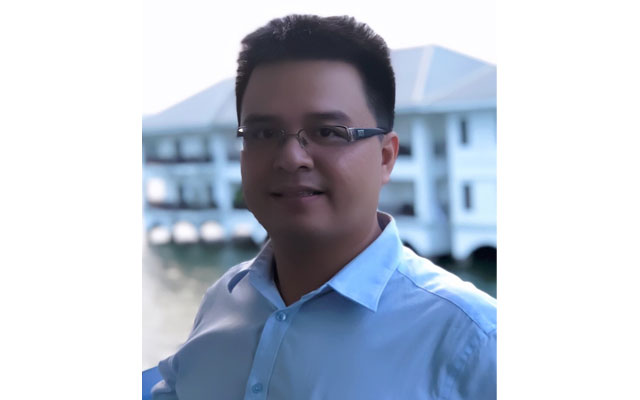
Phan: sharing technology is the way forward for the business

VLeisure’s technology will deliver “seamless payment solutions and many more efficiency driven modules for wholesalers and agents”.

VLeisure’s CEO Phan Le said: “An open ecosystem for the travel industry will be the next development in the hotel distribution business. There is no longer a ‘one man wins’ in hotel distribution anymore, making it more of a level playing field. Sharing technology is the way to go and Travel Prologue shares the same ideology with our vision on this.”

Travel Prologue’s managing director Ho Siang Twang said: “Our B2B hotel direct booking service, Trip Affiliates Network, is designed to help hotels and their B2B channels improve their direct bookings with one another.”

Hertz adds Mini fleet to British Collection

0
Rent Minis from certain locations in Europe

Hertz is marking its 60th anniversary with the addition of 60 Mini vehicles, including the Mini Cooper, the Mini One and the Mini Countryman, to the premium British Collection.

To launch the expansion, Hertz has asked the vehicle wrapping company Yannimize to “dress up” some of its Mini cars in vinyl, featuring three eye-catching designs. The artwork showcases the traditional red, white and blue of the Union Jack, alongside 16 typically British cultural references.

Minis are available for rental in the UK from Hertz

“Mini is an icon of British style and culture, and as such, it had to be part of our British Collection,” Hertz UK’s country manager Richard Davies said. “With the British Collection sporting Jaguar, Land Rover and Mini models, as well as an exclusive, personalised service, we trust customers will be pleased to join the ‘Best-of-British’ vibe.”

The newly added Mini models are available at Hertz locations in Edinburgh Airport, London Heathrow Airport and London Marble Arch.

New DOSM arrives at JW Marriott Hotel Bangkok

0

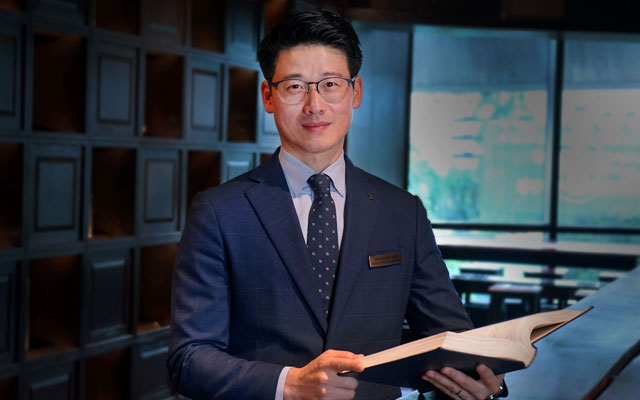
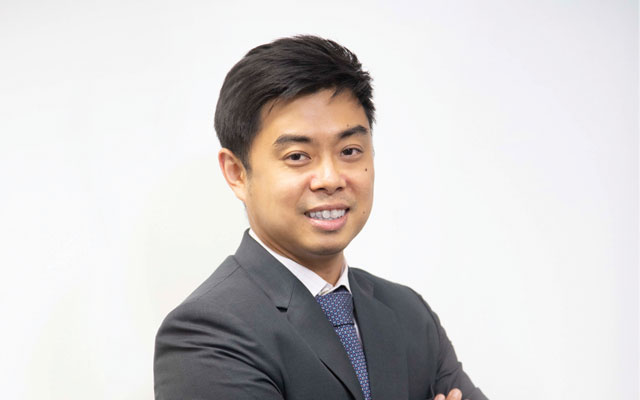
JW Marriott Hotel Bangkok has appointed Dongwoon Kim as director of sales and marketing.

A Korean national, Kim joins JW Marriott Hotel Bangkok from Renaissance Riverside Hotel Saigon, where he was also director of sales & marketing.

His previous stints include the positions of director of sales and associate director at the Grand Hyatt Guangzhou, and other sales positions at the Hyatt Regency Jing Jin City Resort & Spa, and the Hyatt Regency Xi’an.

Royal Caribbean seals five-year, fly-cruise partnership with Singapore Tourism Board and Changi Airport

0

Royal Caribbean International has entered into a new multimillion-dollar marketing partnership with Singapore Tourism Board and Changi Airport Group (CAG) to promote fly-cruises.

The five-year tripartite collaboration is expected to bring some 623,000 international fly-cruise visitors to Singapore, and generate over S$430 million (US$315.6 million) in tourism receipts between end-2019 and 2024.

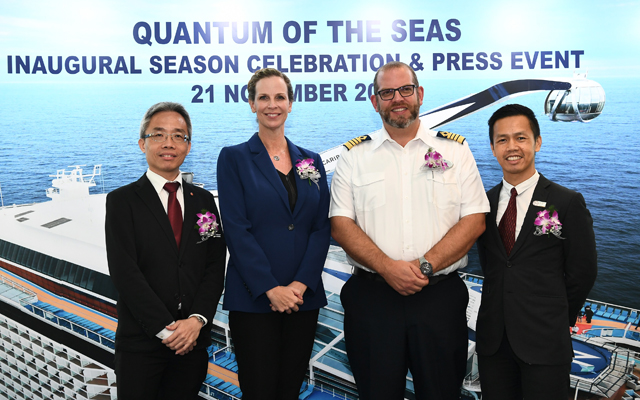
From left: Changi Airport Group’s Peh Ke-Wei; Royal Caribbean Cruises’ Angie Stephen; Quantum of the Seas’ captain Sindre Borsheim; and STB’s Keith Tan at the event to mark the tripartite collaboration to promote fly-cruises

The partnership targets key regional markets including China, India, Indonesia and Malaysia, as well as longhaul markets like Australia, the UK, and the US.

Angie Stephen, managing director Asia-Pacific, Royal Caribbean Cruises, is confident that the partnership will “extend beyond five years”. She told TTG Asia: “This is because of the success that we’ve seen over the past 11 years. Cruising, and the awareness of cruising, is just getting started in Asia. I am very optimistic about the growth of cruising, (which is further) buoyed by a rising middle class.”

The partnership is also expected to generate at least 60 per cent higher tourism receipts compared to the previous partnerships combined. The first partnership ran from 2015 till 2018 to market Mariner of the Seas, followed by another three-year partnership launched in 2017 to promote Ovation of the Seas and Voyager of the Seas. Both partnerships generated a total of S$260 million in tourism dollars.

Aside from being a significant generator of economic benefits, South-east Asia’s cruise tourism sports a positive outlook, as the sector is expected to post growth of between 4.6 per cent and 6.4 per cent per annum to reach 4.5 million cruise passengers by 2035.

To support fly-cruises, a fast-growing passenger segment, CAG launched a seamless intermodal transfer service for passengers flying into Singapore and sailing out on cruise lines and ferries.

Passengers who take up this service will have their bags delivered from their arriving flights to their departing ship and enjoy facilities of the Changi Lounge located in Jewel Changi Airport, before being transferred to the cruise terminal. From December 1, 2019, Royal Caribbean guests sailing out of Singapore from China will be able to enjoy this seamless transfer service as part of the new fly-cruise travel packages.

This announcement is in tandem with the cruise line’s five-year Quantum Class ship deployment in Singapore. To kick off the partnership, Quantum of the Seas has arrived fresh from her multimillion-dollar refurbishment for her six-month homeporting season in the city state – Royal Caribbean’s longest ever Singapore deployment for a Quantum Class ship – which is expected to carry some 150,000 overseas and local guests.

Royal Caribbean also announced new amenities onboard the refurbished Quantum of the Seas, including an escape room and glow-in-the-dark laser tag, which target multigenerational travellers.

“We’re also working on a new children’s programme that we hope to announce next year. We’re also looking at themed cruises – for instance we’re partnering a local radio station in March 2020 – and we’ve also successfully completed a halal-certified cruise for a partner in Malaysia with 500 guests on Voyager of the Seas two weeks ago,” Stephen shared with TTG Asia.

She noted that it marked the cruise line’s first halal-centric initiative, and based on its success, is certainly something “we can explore in the future”.

Singapore’s Liang Court to be turned into mixed-use development with Somerset, Moxy brands

0
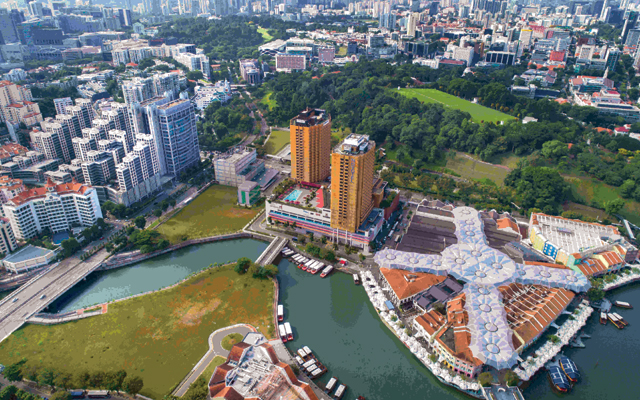
Liang Court site

Ascott Residence Trust (Ascott Reit) will join City Developments (CDL) and CapitaLand to redevelop the Liang Court site in Singapore’s Clarke Quay area into an integrated development, the companies announced in a joint news release on Thursday.

The site currently comprises Liang Court mall, Novotel Singapore Clarke Quay hotel and the Somerset Liang Court Singapore serviced residence.

The Liang Court site proposed integrated development, which will have a gross floor area (GFA) of 100,263m², will comprise two residential towers offering some 700 residential units, a commercial component, a hotel, and a 192-unit Somerset serviced residence, subject to approval from the authorities, according to the statement.

The proposed integrated development is targeted to open in phases from 2024.

The residential and commercial components will be owned by the 50:50 CDL-CapitaLand JV entities, while the serviced residence will be owned by Ascott Reit, which is a wholly-owned subsidiary of CapitaLand.

Upon completion, CDL and CapitaLand’s 50:50 joint venture entities will own the residential and commercial components, while Ascott Reit will own the Somerset serviced residence. CDL Hospitality Trusts (CDLHT) will own the hotel under a forward purchase agreement with CDL.

The new hotel will be operated under the Moxy brand by Marriott International when it is completed around 2025, the result of a deal involving CDLHT selling its entire stake in Novotel Singapore Clarke Quay to the 50:50 CDL-CapitaLand joint venture entities and CDL, according to a report by The Straits Times.

Meanwhile, Ascott Reit, which is a wholly owned subsidiary of CapitaLand, said that it has signed a put-and-call option agreement with CDL to sell 15,170m² of the site’s GFA for Somerset Liang Court Singapore for S$163.3 million (US$119.8 million).

With net proceeds from the sale, Ascott Reit will redevelop the retained GFA of 13,034m² into a new Somerset serviced residence with a hotel licence. The land’s lease tenure will be refreshed from 57 years to 99 years. Upon completion, the estimated project development expenditure of the new property is approximately S$300 million.

The consortium also said that it plans to rejuvenate the river promenade flanking the integrated development, which is “in line with the government’s plans to enhance the vibrancy of the precinct”.

The move is expected to to generate social activities around property, increase footfall and improve pedestrian accessibility along the Singapore River, it added.

Bob Tan, Ascott Residence Trust Management’s chairman, said: “With revitalisation plans in place for the Singapore River and Clarke Quay precinct and the proposed construction of a new integrated development, it is an opportune time to recycle our capital into redeveloping our ageing property into a new Somerset serviced residence and refresh the land’s lease to 99 years.

“We will strengthen our presence in a prime location in Singapore’s popular lifestyle hub. We will continue to seek yield-accretive acquisitions, as well as development and conversion projects to maximise returns for unit-holders.”

Oakwood to open first Myanmar property in Yangon

0

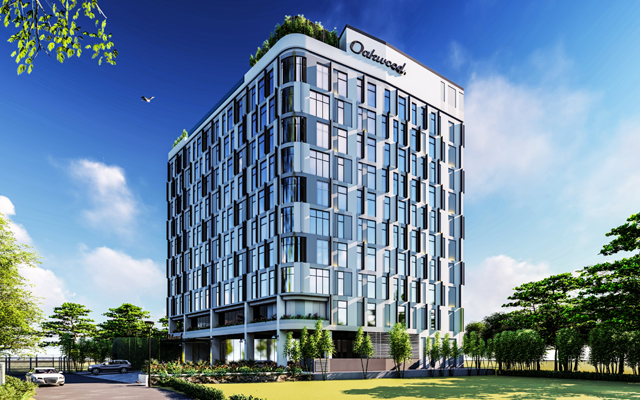
Oakwood, a wholly owned subsidiary of Mapletree Investments, will be launching its first Oakwood Hotel & Apartments in the Bahan Township of Yangon, Myanmar.

Opening in 2H2021, this new development signals Oakwood’s aggressive expansion within Asia-Pacific following recent property announcements in Australia, Cambodia, China, Indonesia, Thailand and Vietnam.

Oakwood Hotel & Apartments Yangon is slated to open in 2021

Housed within a newly developed landmark, Oakwood Hotel & Apartments Yangon will offer 128 studio and one-bedroom apartments. On-site facilities include an outdoor swimming pool, fitness centre, an all-day dining restaurant and two meeting rooms.

Oakwood Hotel & Apartments Yangon will have easy access to many tourist attractions, including The Shwedagon Pagoda, which is a short drive away. Other nearby attractions include the famous Kandawgyi Lake, Yangon Zoological Garden, People’s Park and Bogyoke Aung San Museum.

New tax-free app by UTU touts higher VAT refunds

0

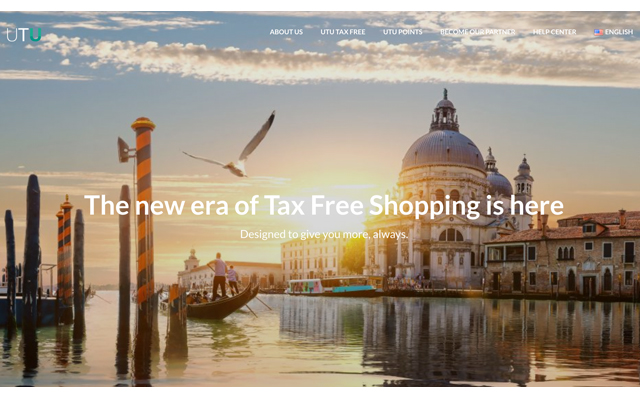
Singapore-based digital rewards platform UTU is providing global tourists and shoppers with the means to receive 85 per cent of their VAT refund back – a significant increase from the 55-60 per cent refund that tourists currently receive.

Tourists can now bypass the long queues at multiple tax-free operator counters by utilising UTU Direct, a tax-free app, to consolidate all their purchases and track transactions throughout the refund process, until they receive the money and cash back to their preferred credit card.

UTU rolls out a tax-free app that gives users higher VAT refunds

International shoppers in Italy can also bring any tax refund form issued within Italy by any tax refund operator to the UTU Service Counter, and using UTU Direct, receive 85 per cent of the tax refund amount back.

Working with various card schemes and bank-issued cards, UTU Direct has been created to bring “increased fairness to the tax-free shopping sector”, which has long been operating through a paper-based system shrouded in opaque commissions, meaning shoppers do not receive as much VAT refund as they are entitled to.

Co-founded by Asad Jumabhoy, a VAT refund veteran with 25 years’ experience, UTU said that its focus is customer-centricity for VAT refunds – paired with a new business model designed to deliver additional value to shoppers and shops in this era of mobile connectivity.

“Most shoppers are not aware of their rights or that they even have a choice in how they claim their VAT refunds to get the best outcome for themselves. The goal of UTU has always been to innovate the tax refund process, which has remained mostly unchanged for decades as a complex, paper-based and commission-ridden system. Our solutions ensure tourists the choice in how they wish to receive their refunds, getting more for their VAT Refund every time,” said Sanjay Chinchwade, senior vice president of marketing at UTU.

In coming weeks, UTU also plans to launch UTU Plus, a VAT refund product available to all travellers and shoppers across 19 Eurozone countries, providing up to 5 per cent more on all qualifying VAT refunds.

UTU is also in the process of beta testing its 100 per cent VAT Refund product in Italy at selected stores, pending a general roll out.

Thai travel firm eyes medical tourists from China

0
Thai travel firm

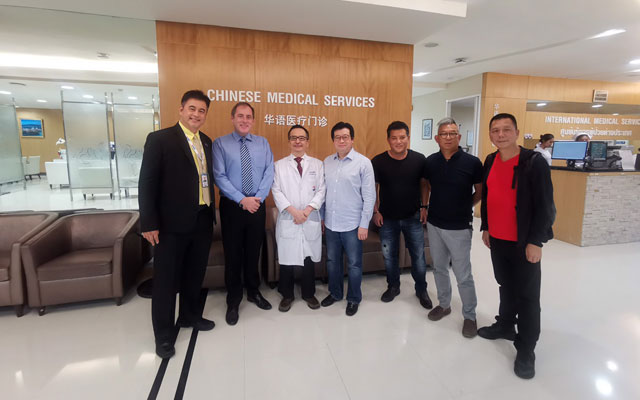
Thailand-based travel firm Really Really Cool (RRC) has partnered Bangkok Dusit Medical Services (BDMS) to sell bespoke medical tourism packages specifically tailored for Chinese travellers.

Founded in 2018 by former Nok Air CEO, Patee Sarasin, RRC is looking to tap into the rapid growth of China’s outbound medical tourism market.

Thai travel firm Really Really Cool aims to sell quality medical tourism packages to Chinese tourists

Patee said that Chinese travellers are spoilt for choice now that every country in Asia is trying to woo a larger market share of outbound travellers from China.

“Innovation is key if Thailand wants to remain the preferred top-of-mind destination with Chinese travellers,” said Patee.

“Thailand is losing travel business from China to other destinations around Asia. For example, Japan is currently experiencing 14 per cent growth of Chinese tourists travelling to Japan versus only 1 per cent growth of those coming to Thailand. The Chinese are also spending 18 per cent more in Japan than in Thailand.”

Several factors are affecting inbound travel from China to Thailand, including the Thai baht’s persistent strength and visa issues. Currently, Chinese tourists coming to Thailand can apply for a visa upon arrival at the airport, but they have to contend with long queues, said the company. In comparison, Japan issues five-year multiple entry visas for Chinese tourists looking to visit Japan.

“What I would like to propose for Thailand’s policymakers is that we offer three-year multiple entry visas for FIT Chinese travellers. This segment doesn’t have an issue with visa fees, but they are looking for convenience. If we can fix the visa issue, it will certainly help capture more Chinese tourists to come to Thailand for medical purposes,” said Patee.

Thailand receives between 50,000 to 60,000 Chinese medical tourists per year, according to RRC estimates. Patee claimed that current flight arrival time slots available to many airlines between Bangkok and key Chinese cities like Beijing and Shanghai aren’t convenient. Passengers depart China late at night and arrive in Thailand too early in the morning and, vice versa, he said. He also urged the responsible authorities to continue discussions with operators on how to find more suitable departure and arrival times.

Thailand ranked third globally in terms of medical tourism revenue, according to the Chinese Medical Travel Journal 2018. A growing number of Chinese patients are seeking both practical and preventive programs such as anti-aging, IVF, plus elective health screening and treatment, said RRC.

How to deal with medical emergencies when abroad

0
Low:

Every year, International SOS receives 4.1 million calls from our clients all over the world, requesting for assistance and advice on different medical situations and/or security situations before and during their business trips.

This can range from non-urgent ailments to critical emergency cases, and is often exacerbated by the lack of knowledge on what to do in these situations.

Low: some due diligence will go a long way in helping travellers who encounter medical emergencies while on the road

Based on data collected from our 26 global assistance centres, we found that medical advice cases have increased by nearly half. Most significantly, the number of cases where emergency evacuation and/or repatriation has been prevented has risen by 10 per cent, which demonstrates how prevention helps to avoid costly emergencies.

While it is important to obtain travel insurance and understand the scope of coverage, we recommend five other best practices that business travellers should note before their trips, to stay prepared for the hidden dangers of medical emergencies during their travels.

Be aware of your own medical history
The first and most vital step for business travellers is to undergo a thorough medical examination by physicians. A physician can detect pre-existing medical conditions which may be potentially exacerbated by varying conditions during the trip, and help you to mitigate these risks by arranging for the required vaccinations, medication, and emergency protocols.

Assess the most suitable medical options to provide specialised care
When you consider existing medical care options, this does not just involve researching the most reputable or the nearest facilities. Some hospitals differ with specialised medical and nursing staff and medical equipment, and may be more equipped to handle certain emergencies. You must also consider the accessibility of the hospitals to the locus of activities during your trip, especially in population-dense environments where road travel is often hindered by the sheer number of vehicles, extending journeys for hours on end.

Research the health risks of a destination to know your potential exposure
All travellers should refer to current health advisories issued by their governments and travel assistance partners before the trip so that they can keep abreast of any current or potential outbreaks. There may be vaccinations or prophylaxis that the traveller can take prior to the trip, to directly minimise the health risk. During the trip, there are usually simple non-medical measures that the individual can take to mitigate the risk of contracting any infective diseases as well.

Understand the permitted medication you can bring into your destination
One major concern that travellers have is running out of medication, particularly if they have a chronic condition. Pharmaceutical regulations can vary from destination to destination, so if you have medication to bring, keep to the permitted amount so that there will be no complications when you enter. To further reduce any hassle, carry relevant documents to certify usage and avoid any miscommunication.

Communicate, communicate, communicate
Before leaving home, know who is responsible for protecting you and how you can easily reach them if you are caught in a medical incident. Take note of the contact information and address for your embassy or consulate.

Business travellers can be equipped with the capability to share their locations and access immediate medical advice and assistance anytime and anywhere with the help of companies like International SOS. Such visibility is critical particularly during an incident where it is imperative within the golden hour to know who is safe, and who else needs help most.