Wyndham Hotels & Resorts will be launching TRYP by Wyndham, its urban lifestyle brand, in Melbourne.
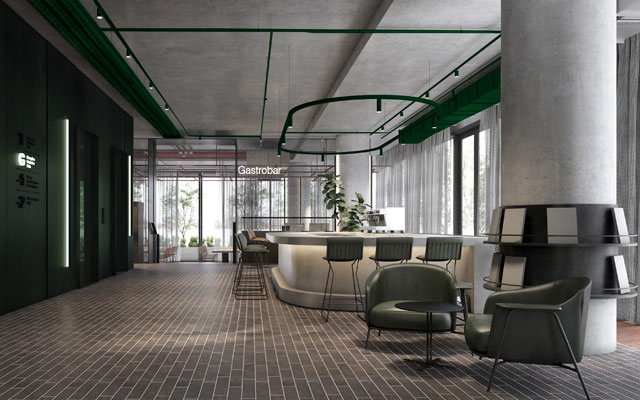
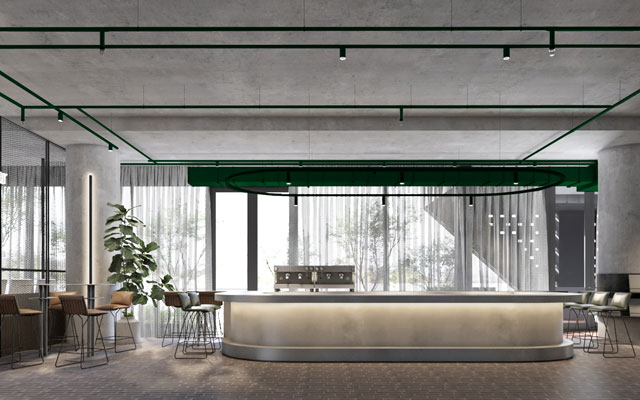
Set to open in March 2021, the 173-key TRYP by Wyndham Carlton Melbourne will feature a café-style restaurant, a rooftop bar, a modern fitness centre, communal work areas, meeting rooms and a business zone.
TRYP by Wyndham Carlton Melbourne
1 of 4
The new Melbourne hotel, which is being developed by Manors Gate Group, forms part of a strategic expansion of the TRYP by Wyndham brand in Australia. This is the fifth location announced in the country, following TRYP by Wyndham Fortitude Valley in Brisbane, which is already open, and three additional properties in the pipeline: TRYP by Wyndham North Lakes and TRYP by Wyndham Southport in Queensland, and TRYP by Wyndham Pulteney Street Adelaide in South Australia.
TRYP by Wyndham Carlton Melbourne will be managed by Resort Management by Wyndham, a subsidiary of Wyndham Destinations which currently manages 63 properties across Australia, New Zealand, Fiji, Thailand, Indonesia, Japan and Europe.
The Standard, Huruvalhi Maldives Standard International has opened its first Asia-Pacific property in the Maldives, following its London debut. The Standard, Huruvalhi Maldives, nestled between the Raa and Baa Atolls, is home to 115 private pool villas, each featuring its own private lounge deck and plunge pool. Facilities include a spa with nine treatment rooms and a communal hammam; an overwater nightclub; and six F&B offerings ranging from a beachfront BBQ shack to Maldivian cuisine featuring ingredients taken from the island farm. Activities include diving and snorkelling at the house reef, while boat excursions and night fishing can also be arranged.
The Postcard Dewa Thimphu, Bhutan
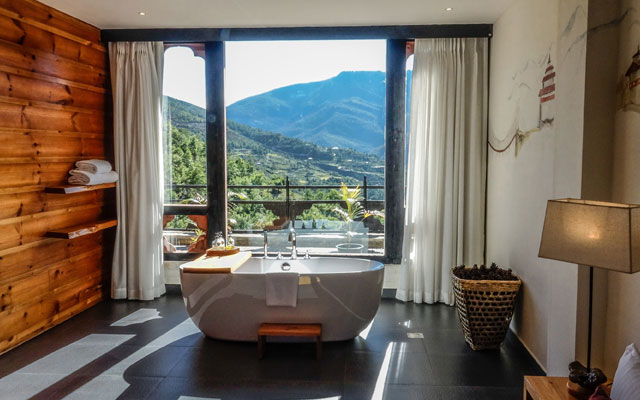
Located a 20-minute drive from Bhutan’s capital city and nestled in a forest is this 15-key mountain hideout. The hotel’s 13 rooms and two suites range from 92m2 to 185m2 – the largest being The Raidak Suite, complete with a private garden, terrace and dining gazebo. Amenities on-site include a restaurant, spa, gym, as well as a temperature-controlled swimming pool. Guests can partake in activities such as yoga, hike to ancient Buddhist temples, tour the numerous sacred sites, or take in the pristine views of the Khasadrapchu Valley and Raidak River.
Seda Lio, Philippines
This property stands along a 4km-long stretch of beach within the Lio Tourism Estate in El Nido, Palawan. Rooms start from 45m2 in size, and all 153 rooms feature a balcony. Amenities on-site include a two level infinity pool, children’s playroom and outdoor play area poolside cabanas, gym, spa with eight treatment rooms, and all-day restaurant. Function rooms at the hotel can accommodate up to 300 pax, plus El Nido’s only indoor ballroom that can seat 150 people.
Monopoly Mansion by Sirocco, Malaysia
The first Monopoly-themed hotel in the world has opened with 290 guestrooms, spread across 14 storeys, in Kuala Lumpur. Features and subtle hints of the board game and the Great Gatsby era (when the idea for Monopoly came about) will be incorporated into the aesthetics of the hotel. For instance, room keycards have been designed like the property cards from the game. Facilities include a rooftop pool, lounge, several restaurants, gym, spa, kids’ playground, alongside a range of meeting spaces including a pillarless Grand Sky Ballroom.
Aerotel Beijing, China
The two-storey hotel is located in the north-east pier of Beijing Daxing International Airport, spanning more than 9,000m2 and offering 215 guestrooms. Other facilities within Aerotel Beijing include a fitness corner, game room with billiard table, and the library lounge/restaurant which offers an international buffet and a la carte menu.
As the flagship property and a first for Aerotel, the hotel also houses two meeting rooms – Xijin House and Jibei House, and VIP room Guji House. Equipped with an audio-visual system, the facilities can accommodate meetings, private dinners and intimate gatherings for up to 36 guests.
Come November 11, 2019, Malaysia-based Sunway Hotels & Resorts will be joining the biggest global cyber sale, with 98 per cent off on the first night of stay.
The 11.11 Sunway-cation Sale is expected to offer room rates from as low as RM10 (US$2.30) on the first night at participating Sunway Hotels & Resorts in Malaysia, Cambodia and Vietnam, according to the hotel group.
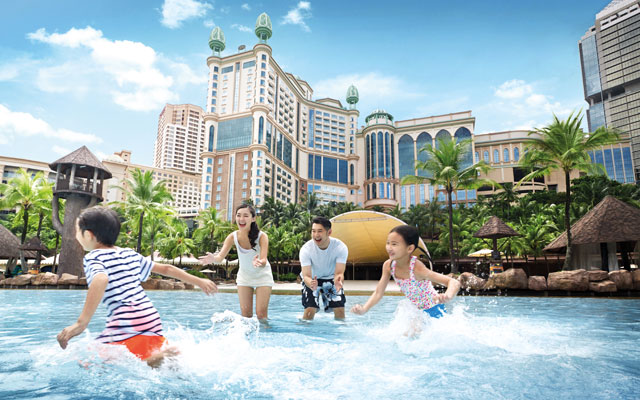
Family fun at Sunway Lagoon
Participating hotels include Sunway Resort Hotel & Spa, Sunway Pyramid Hotel, Sunway Clio Hotel in Sunway City Kuala Lumpur, Sunway Putra Hotel and Sunway Velocity Hotel in Kuala Lumpur city centre, Sunway Hotel Georgetown and Sunway Hotel Seberang Jaya in Penang, Sunway Hotel Phnom Penh and Sunway Hotel Hanoi in Indochina.
The 11.11 Sunway-cation Sale is applicable for stays between November 12, 2019 to June 30, 2020 with a minimum of three days, two nights stay at its hotels in Malaysia, Cambodia and Vietnam when booked directly at www.sunwayhotels.com from 00.00 to 23.59 on November 11, 2019. Terms & conditions apply.
Sandy Ho, country manager China & Hong Kong, Buffalo Tours
Marciano C Ragaza III, president, Travel Enterprise Corp Philippines
Hui Juan Lim, co-founder and COO, Quotient TravelPlanner Singapore
Charlotte Harris, director, Charlotte Travel Hong Kong
Audrey Marc, deputy general manager, Asia World Indonesia
Arokia Das Anthony, director, Luxury Tours Malaysia
Ally Bhoonee, executive director, World Avenues Malaysia
TTG Asia: What key changes are you seeing for hospitality brands? Are brands still relevant? Lim: Chain hotels felt quite sterile and were geared towards efficiency when we started out 12 years ago. However, in the last few years, we’ve seen big brands starting to soften and incorporate properties with a sense of place.
They’re no longer in glassy buildings, but can be housed in historical buildings. These hotels can now create a measured experience for travellers; they have good service; and they know how to operate a hotel well. Big brands can now have a boutique feel, and they know travellers are looking for a variety of experiences, not just the singular feeling of staying in a Hyatt or Westin. With boutique hotels, there is the risk of having to deal with weak booking and payment mechanisms.
Harris: With more hotels consolidating and brands merging under one umbrella, we are seeing an even stronger sense of consistency among hotels under the same brand, leading to an increase in brand loyalty.
Ho: Customers are focusing less on brands but rather on good service standards and price value. Travellers are also seeking options for smaller, independent accommodation with less facilities and F&B outlets. Brands may still be relevant to corporate travellers and luxury clients, but leisure travellers are now more attracted to residential-style accommodation that are well connected to shopping areas and restaurants.
Marc: Main hotel chains nowadays prefer to invest in acquisitions and huge marketing campaigns instead of developing new products and services for their customers. Their focus seems to be on expanding faster globally and in some cases at the expense of guests’ demand for good service, amenities and comfort.
Anthony: Brands will become more relevant. It is the brands that will ride out Airbnb’s rapid expansion. Branded hotels have strong brand loyalty and this will remain. While a small percentage of market share may be lost to Airbnb and other short term accommodation services, the majority of travellers are still keen on staying in branded properties they are familiar with. Brands are also relevant for well-heeled travellers who seek good service, comfort, familiarity of brand and a personal touch.
Bhoonee: Brands will still remain relevant to people with status as they have always been brand conscious. Also with brands, travellers can expect a consistent level of service at the hotel regardless of which part of the world they are in. There are no surprises for the customer. Brands also offer loyalty reward programmes and this is an added value.
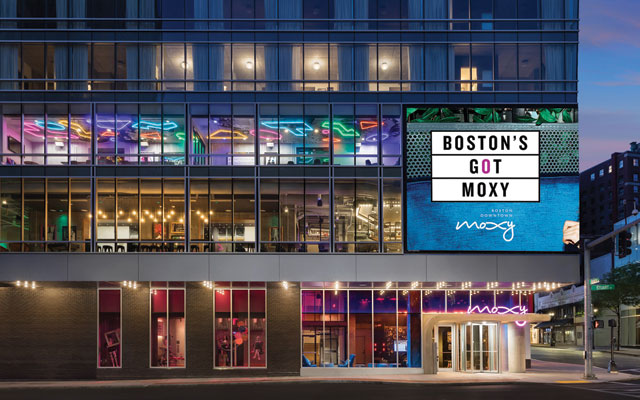
Moxy Boston Downtown
TTG Asia: What hotel branding trends and preferences do you notice among your clients, especially younger travellers who are said to be more brand agnostic? Marc: The younger generation is looking for new and unique experiences (which explains the growing trend for boutique hotels over standardised hotel chains). The power of Instagram also emphasises the demand for independent hotels and villas; millennials crave inclusion and recognition from their online community, so they tend to gravitate towards places with social media credibility which also explains the rise in popularity of villa rentals.
Harris: The current trend among younger travellers is lifestyle travel and we are seeing many hotel brands edging towards this by combining high-quality services and personalised amenities and touches. With Hyatt developing the Andaz brand and Marriott with Edition, millennials are able to stay loyal to a larger umbrella brand, yet find a concept that meets their personalities and requirements.
Bhoonee: Millennials often seek hotels that offer wellness facilities such as spa, gym, rooftop bar and restaurants offering healthy cuisines due to a growing wave of health consciousness. Location is also important – hotels that are close to popular shopping districts and spots, or near the beach tend be more attractive to them. Millennials are willing to pay more for the location of hotels that meet their requirements as compared with their counterparts a decade ago who tended to be more careful with their spending, and just went for the basics.
Ho: Younger travellers want an environment focused on wellness, offering simple yet stylish comforts, and at a good price point. Personalised services are growing in demand. To tap into the young travellers market, direct online marketing and social media channels are the way to go.
Lim: We have younger clients who grew up staying at big hotel chains with their parents, and they would ask us to book them in those hotels. But we also have both young and old guests who are willing to try boutique brands.
Anthony: India and regional markets are cost-conscious. Even the well-to-do would rather stay in a three- or four-star property or local brand rather than in a five-star branded accommodation. They don’t mind staying a little bit out of the central area if it gives them some savings and which can then be spent on other things like entertainment and shopping.
Millennial travellers see the hotel as just a place to stay. They are not looking to have the full hotel experience.
In the past, staying in a branded property was part of the bragging rights. Today, travellers use social media to share or brag about their experiences.
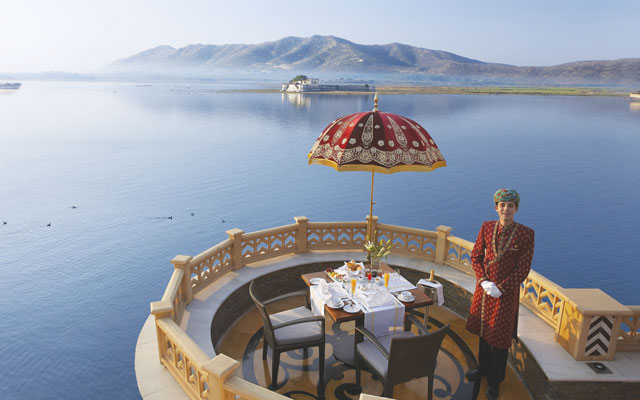
The Leela Palace Udaipur
TTG Asia: What benefits and trade-offs have come with the spate of boutique brand buyouts by bigger chains? How does it impact your customers and you as a travel expert? Marc: Greater access to powerful marketing funds has been a major benefit, along with bigger customer databases and improved efficiency in booking systems and websites. But, of course, all these have come at a cost. The trade-offs would be a proportionate tightening of rules and regulations, combined with a lack of flexibility in terms of sales, distribution and marketing.
As a DMC, we are facing more difficulties with regard to contracting and special deals. Big hotel chains are growing increasingly intransigent in promoting the best rates on their own websites rather than through a more flexible independent.
Ho: The concern will be that pricing structures will be affected as bigger hotel companies are likely to demand control on yield with less competition. We can see commissions getting less down the line when dealing with big hotel companies versus boutique hotels.
Also, some global brand hotels are allowing commissions only if clients pay BAR rates directly at the hotel which adds to the challenge of working with them. Global brand hotels should expect to see a significant drop in sales over time.
Harris: We see benefits of cross-selling within different hotels that fall under a single brand. Clients are keen to chase points and utilise them whenever they can. If they are able to do this at different hotels, then we’re only seeing positive feedback from our clients.
Ragaza III: Boutique hotels usually shunned by travellers who are more comfortable staying with branded hotels will gain more acceptance with these buyouts. As a travel agent, I too will be more confident recommending such boutique hotels. But for the adventurous and bargain hunters, that won’t matter.
TTG Asia: What future do you see for smaller independent brands? Lim: There is always space for everything, even smaller hotels. Every client is different and there are always going to be travellers who want to stay in a smaller, independent property. This is especially the case in Japan, where a lot of family-run ryokans operate very smoothly and are very popular.
Bhoonee: There will still be a big market for boutique hotels or independent brands. Well-to-do Malaysian travellers like niche boutique hotel experiences that offer personalised services. They stay away from big hotels and crowded all-day dining experiences. Independent hotels that offer unique designs or experiences and an atmosphere unlike a large commercial hotel tend to be of greater interest to Malaysians. The management of the hotel is of no importance to clients.
Anthony: It will get harder for boutique hotels or smaller independent brands to survive as the majority of business is driven online. The big chains will win because they have marketing budgets that run in the millions and billions.
In my opinion, smaller hotels with small budgets will die because they cannot compete. Existing independently managed hotels that have been around for a decade or more provide good service, but unfortunately the newer ones seem to only provide lip service to what they promise.
Ragaza III: Eventually, as a new generation of frequent travellers become savvier in choosing and staying in lesser known hotels or brands, these independent brands will be mainstream too. Word of mouth through travel agents, social media and friends will help them.
Harris: Personalised guest engagement based on local experiences is what results in client satisfaction. Those looking for a unique, one-of-a-kind stay will prefer to stay in a boutique hotel which are usually more innovative, trendy and quirky.
TTG Asia: What are your thoughts on hotel chains’ efforts to acquire or partner with boutique and independent brands? Do we still need more brands? Marc: Boutique brands, even those by mega hotel chains, can offer good service and a cosier and intimate ambience, which is what the market wants. However, these hotels tend to remain quite generic and reflect the style of a chain hotel.
Ho: We definitely welcome more brand diversity in the market. Tour operators and DMCs can service client needs a lot better if we are able to offer more options to both the corporate and leisure markets.
Harris: Different brands cater to different travellers and needs. I, for example, may look for a specific brand when I am travelling alone on business. However, I might look for another type of brand when I am travelling with my family. I would be interested to see if hotel brands are able to find a market gap and a unique concept to fill it.
Anthony: Brands are good for a destination. They have their own niche segments, own clientele and they bring prestige to a destination. Having lots of brands in a single destination suggests that the destination is safe.
However, launching more ‘boutique’ brands in tourist destinations such as Kuala Lumpur, Melaka, Penang, Johor will also cannibalise existing market share unless tourist arrivals into Malaysia grows exponentially.
Ragaza III: Having more or less brands is not the issue, but rather having quality hotels at price levels acceptable to the market. There will always be a market for all types of accommodations. The main beneficiaries of this trend are the travellers.
Reporting by S Puvaneswary, Prudence Lui, Mimi Hudoyo, Pamela Chow and Rosa Ocampo
The integration of the tourism and creative economy portfolios under one ministry is expected to provide impetus to Indonesia’s US$62.6 billion tourism industry and propel it to become the economy’s top revenue earner, while spurring the country’s creative sector to greater heights.
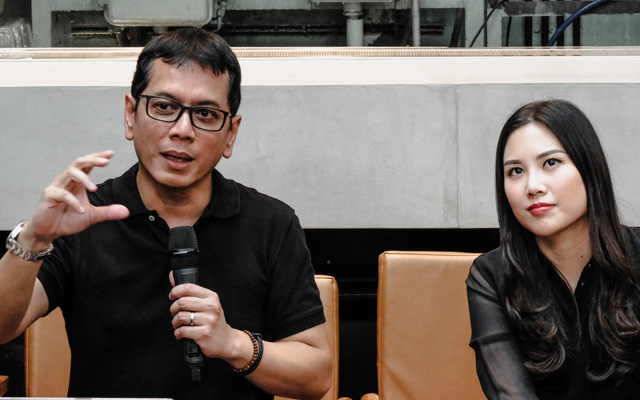
In his new cabinet line-up, Indonesian president Joko Widodo incorporated the tourism and creative economy under one ministry as a policymaker in the two sectors, and also formed the Tourism and Creative Economy Board (TCE Board) as an executive body of the tourism and creative economy. Both institutions will be spearheaded by Indonesia’s newly-appointed minister of tourism and creative economy and head of TCE Board Wishnutama Kusubandio, and vice minister Angela Tanoesoedibjo.
Minister of tourism and creative economy and head of TCE Board Wishnutama Kusubandio, and vice minister Angela Tanoesoedibjo at their first press conference in Jakarta on Wednesday
Speaking at his first media conference in Jakarta on Wednesday, less than a month after his inauguration, Wishnutama said: “The tourism and creative economies are two sectors which will support each other. Tourism now ranks as the country’s second biggest revenue earner and the sector will be able to rise to the top with the support of the creative industry.
“It does not matter (how good) a creative industry product is – it will not grow without a market. On the other hand, the tourism sector will need products and attractions to entice travellers to come.”
Citing the example of Ambon, the capital of Maluku province which was recently named City of Music by UNESCO, the minister said: “We can develop the infrastructure and the creative ecosystem that will boost the development of the creative industry and in turn support the development of tourism to the destination. By creating events, concerts and festivals in Ambon, we will have (new) attractions and activities apart from the natural attractions the city and its surrounding areas have to offer.”
He added that events would be a key driver to tourism development in the country, and his office will review and cherry-pick the calendar of events.
“We do not need to stage so many events, but only the quality ones. In fact, we are considering to create new events that will attract not only domestic but also international crowds,” he said.
At his inauguration speech last month, Wishnutama drew attention to the Coachella Valley Music and Arts Festival in the Colorado Desert, US. “Coachella is just a desert but it has an annual event which travellers flock to. We have more than that, so we should be able to create (such a large-scale event),” he said.
Apart from organising events to attract visitorship, Wishnutama pointed out that the ministry will also focus on developing sports tourism events.
On destination development, Wishnutama added that the government would continue focusing on developing the 10 new Bali’s, particularly, the five super-priority destinations of Lake Toba area, Labuan Bajo, Mandalika, Borobudur area and Likupang.
When it comes to marketing, Wishnutama said that the TCE Board would not only focus on big volume markets like China, but would also tap on high-spending markets like the US, Russia and Australia.
As for the 2020 target, Wishnutama said: “We are looking into the achievements in term of numbers and revenue this year as well as the readiness of destinations, particularly the 10 New Bali’s, and more specifically, the five super-priority destinations. So (at this point) we have not decided the target yet. We need to calculate it before coming up with a number,” he said.
International visitor arrivals to Indonesia are projected to reach 18 million this year and rise to 20 million in 2020. According to the latest data from Statistics Indonesia, the country received 12.2 million arrivals between January and September this year.
Crystal International Asia, in collaboration with Crystal River Cruises, has introduced its new river cruise line experience on Crystal Mozart specifically targeted at guests from across China and Asia.
The experience will provide Asian-friendly features for the growing number of Asian guests who are interested in exploring the many wonders of Europe but feel more comfortable travelling with some of the comforts of home, said the company in a statement.
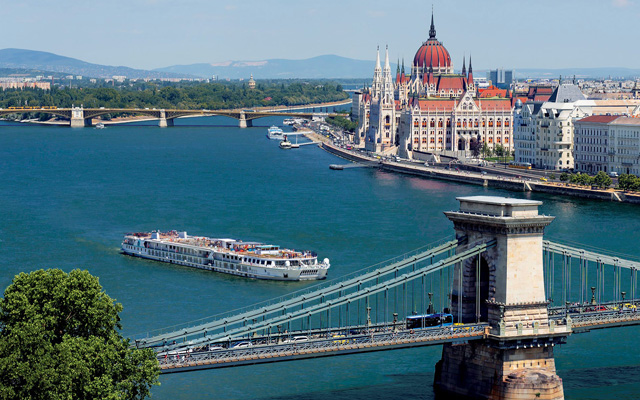
Crystal Mozart will feature Asian-friendly features
Michael Goh, president of Dream Cruises, and head of international sales for Genting Cruise Lines, said: “With the Asian cruise market currently enjoying unprecedented growth, our more experienced cruisers are looking for new and exciting destinations and adventures outside of local waters and Crystal Mozart is the ideal option for an intimate journey into the heart of Europe.”
Beginning March 2020, Crystal Mozart’s voyages will be anchored by the cities of Vienna, Austria and Budapest, Hungary and will feature a variety of six-, seven- and 10-night all-inclusive itineraries on the Danube River including special Christmastime Market cruises.
Crystal Mozart features private butler service in every room category, king-sized beds, ETRO amenities, robes and slippers, and flat-screen HD TVs. Additional features include farm-to-table cuisine in multiple, open-seating eateries: the Waterside Restaurant, Bistro cafés and the Vintage Room; as well as the Palm Court for entertainment and enrichment presentations.
As part of Crystal Mozart’s new focus on the Asian traveller, in addition to immersive experiences ashore, a host of new Asian-friendly features will provide “a comforting familiarity to guests from the region”.
Dedicated English and Chinese speaking butlers will be available to serve guests while Michelin-inspired cuisine featuring international and Asian cuisine will be served onboard. Shore experiences, which will be led by professional English and Chinese language tour guides, are designed to deepen the understanding of Europe’s landscapes, historic cities and quaint villages.
A highlight of every Crystal sailing is a complimentary live musical experience that captures the essence and cultural character of the region of each voyage. These “Signature Events” combine access to a landmark venue, such as Vienna’s famed Belvedere Palace, with a musical performance.
These new features will debut on board Crystal Mozart in 2020 when she plies the waterway of the Danube River.
The travel and tourism sector is more resilient than ever, with average recovery times having decreased from 26 months in 2001 to 10 months in 2018, the latest research by The World Travel & Tourism Council (WTTC) and Global Rescue revealed.
The findings from the report titled “Crisis Readiness: Are You Prepared and Risk Resilient to Safeguard Your People and Destinations?” analysed the impact of 90 crises between 2001 and 2018 at national and city levels, and examined the time to recovery as well as lost arrivals and lost visitor spending.
Tourism industry shows greater resilience to calamities, new study shows
Of the 90 crises analysed, 32 per cent were terrorism/security related, 13 per cent were disease/outbreaks; 19 per cent were political instability and 36 per cent were natural disasters.
Of the four crisis categories analysed, political instability proved the most challenging, with average recovery times of 22.2 months, and minimum 10 months; while terrorist or security related incidents have the shortest average recovery time of 11.5 months and minimum 2 months.
Additionally, the study also found that the average recovery times for natural disasters and disease outbreaks were 16.2 months, and minimum one month; and 19.4 months, and minimum 10 months respectively.
Public private partnerships and effective, transparent communications are critical for preparedness and prevention, the study concluded.
WTTC’s president & CEO Gloria Guevara said: “This comprehensive research shows just how resilient the travel and tourism sector truly is. While there is still work to be done, the data shows that recovery times have fallen significantly over the past two decades, and that major strides have been made. It is crucial that we continue to learn from previous incidents and continue to come together through public private partnerships to make a real difference in reducing both the economic and human impact.”
She added: “Political instability has proven to be the most challenging crisis to overcome, with the longest recovery times. However, through public private collaboration, effective communication and continued efforts that focus on preparedness and prevention, we can make a real difference in reducing both the economic and human impact.”
In the report, WTTC and Global Rescue offer recommendations on how destinations can mitigate the impact of a crisis, showcasing successful examples from the likes of Kenya, Mexico, Egypt, Hawaii and Japan. The report also highlights the importance of being prepared and the need for coordinated management to ensure a successful recovery.
The Singapore Tourism Board (STB) and the Singapore Hotel Association (SHA) have launched a series of new initiatives focused on leveraging technology to foster business innovation and support job redesign efforts in the hotel industry.
These initiatives are designed to further boost productivity, which has grown 4.5 per cent in nominal terms annually since 2015, exceeding the 2020 target of two per cent set out in the Hotel Industry Transformation Map (ITM).
STB and SHA pushes out new initiatives to foster innovation and growth in the industry, including job redesign efforts to upgrade skills of employees to take on more value-added jobs
“We are pleased to share new and updated initiatives for hotel stakeholders to discover, adopt and benefit from. To transform the hotel industry and support our hotels to be more competitive and innovative for sustainable growth, we continue to work in close collaboration with industry partners to drive enhanced guest experiences via new solutions and initiatives. Even as we focus on the hardware, we are also invested in the software. The human aspect is at the heart of the business, and the
passion and skillset of hotel staff is what ultimately drives the industry,” remarked Tan Yen Nee, director, hotels and sector manpower, STB.
Towards a more seamless check-in experience
A new initiative, the E-Visitor Authentication (EVA) System will enable faster verification of guests’ stay validity, which will facilitate a seamless check-in experience for guests. Participating hotels can use facial recognition technology to authenticate their guests’ identities, and the guest data will be sent to the Immigration & Checkpoints Authority (ICA) to verify the validity of their stay. By eliminating the process of performing manual checks on travel documents, check-in time will be reduced by up to 70 per cent.
18 new solutions to drive productivity and better harness data
The second Hotel Innovation Challenge (HIC), which was organised by STB and SHA this April, yielded 18 new solutions that will be piloted by 18 participating hotels. These solutions were conceptualised in response to the HIC’s call for crowdsourced ideas to address key challenges and opportunities in housekeeping, human resources and data management.
Some examples include a manpower scheduling solution developed by SIMTech, an A*Star Research Institute, to effectively roster employees based on their skillsets and demand; Champs Industrial’s peelable cleaning formulation to reduce cleaning time and water consumption; and Samsotech’s integrated Customer Relationship Management solution to help aggregate guest information across several silo systems.
With two Innovation Challenges and one Innovation Pitch held over the past three years, a total of 39 solutions have been or are currently being developed. The Innovation Pitch is designed to seed high-level ideation for solutions to address housekeeping and F&B productivity challenges. 46 hotels in the industry have participated in the challenges on a pilot basis, with 13 hotels implementing the developed solutions thus far.
For example, four hotels in the Pan Pacific Hotels Group have adopted the AI-enabled asset performance management system for their heating, ventilation and air-conditioning (HVAC) while Mandarin Oriental Singapore has adopted a new inventory management system.
Guiding hotels towards customised transformation
Launched this year by the Hotel Innovation Committee (HIC) with the support of STB, the second edition of the Smart Hotel Technology Guide focuses on back-of house operations to drive productivity, and enhance both guest and employee experience. It proffers the vision of a smart hotel where back-end processes are streamlined and made more efficient by technology, thereby enabling hotel employees to focus on more value-added tasks for the organisation. The guide also features case studies of
hotels that have successfully implemented such innovative solutions.
Complementing the Smart Hotel Technology Guide is the newly launched Hotel Industry Digital Plan (IDP) by the HIC, with the support of STB and the Infocomm Media Development Authority. The IDP presents a full suite of hotel solutions that hotels can readily adopt at each stage of their business. These solutions are categorised into various stages of sophistication to help hotels enhance their digital capabilities and optimise operations, build a smart ecosystem with data-driven operations and drive intelligent businesses. The IDP includes illustrations on how hotels can incorporate STB’s technology resources, such as the Tourism Information and Services Hub, in their solutions to provide a seamless travel experience for the visitors.
Redesigning jobs and upskilling staff in the hotel industry
The hotel industry continues to be a source of good and fulfilling jobs for people of all ages and levels, thanks in part to job redesign efforts. Together with industry partners, concerted efforts have been made to improve HR practices and strengthen job attractiveness across the hotel industry.
Currently, more than a hundred hotels have pledged to implement job redesign under the Hotel Job Redesign Initiative. Developed and launched in May this year by Workforce Singapore (WSG) in partnership with STB and SHA and supported by the Food, Drinks and Allied Workers Union, the initiative encourages and enables hoteliers to create higher quality jobs and enhance job satisfaction for the hotel workforce by reviewing, optimising and adding value to existing jobs in their establishments.
To further support hotels in their job redesign efforts, WSG has also introduced the new Job Redesign Place-and-Train Programme for the Hotel Industry. The programme will help hotels train and upskill existing workers for redesigned job roles. Through the programme, hotels can receive up to 70 per cent of salary support for the training duration. Hotels are also encouraged to work with WSG to customise their training plans, which can comprise up to 100 per cent on-the-job training.
Webjet, the owner of B2B accommodation provider WebBeds, has unveiled Rezchain, a new technology that enables users to eliminate costly discrepancies that occur in up to five per cent of hotel booking transactions.
The technology, pioneered in collaboration with Microsoft, makes use of blockchain, which also underpins cryptocurrencies. Rezchain is touted to be the first application of blockchain to verifying hotel reservations.
Hotels can now leverage on Rezchain verification technology to ensure error-free bookings
Approximately one in every three hotel bookings are amended in some way after the reservation was first made and one in every 10 bookings experience some kind of manual intervention, according to Webjet. Discrepancies typically occur in price, duration, booking status, currency, board basis or room type because the amendments were not recorded on the booking systems of all the relevant parties, be it the hotel, travel agent, tour operator or other online intermediary.
Typically, discrepancies between accommodation trading platforms go unnoticed until after the travel is completed, resulting in costly, time consuming and embarrassing invoice disputes that cause hotels and travel companies to lose out on expected revenues, said the company in a statement.
Rezchain, like a combined virtual handshake and early warning system, enables any two parties to verify that their hotel reservation data matches across both booking systems and, conveniently, no sophisticated IT integration is needed.
Rezchain receives a daily update of all bookings made or modified between two Rezchain connected parties. It then uses Smart Contracts and blockchain technology to highlight issues in data submitted, based on agreed matching criteria. When there is a discrepancy or mismatch, an email alert is triggered to tell both parties that they should take action to correct the records on one side or the other. If data is received for a new booking from only one party, Rezchain records that as an “incomplete” booking and notifies both sides that only one party has the booking recorded. A simple daily CSV file is all that is necessary to begin matching data and resolving booking issues.
Webjet’s managing director John Guscic said: “Settlement between hotel suppliers and travel partners can be a complex, time consuming and ultimately costly process. With multiple IT systems speaking different languages, mistakes are probable, and the default position is often to write off debts when the situation is not clear. For years, the industry considered it a cost of doing business. But, with Rezchain, it doesn’t have to be that way any longer.”
WebBeds says it has been trialing Rezchain with all of its brands successfully for several months. It is now being made available to any business in the travel industry that transacts over the internet via an XML interface. After an introductory 30-day free trial, the cost of using it will be a few cents per transaction.
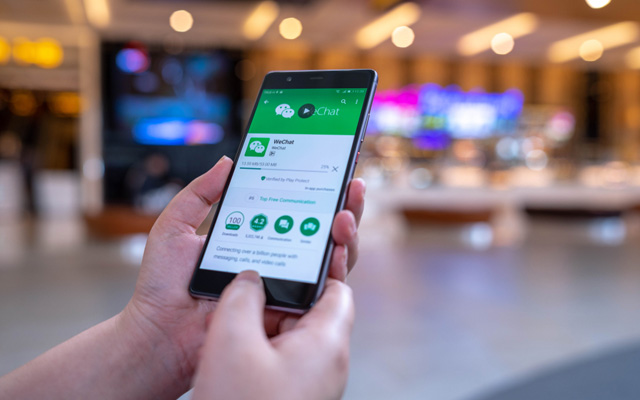
Reuter: Intelligence, in partnership with ILTM China, has released a new study looking at how travel and hospitality brands can master WeChat, build up their digital presence in China and stand out in a crowded marketplace by winning hearts and minds through creative content.
The importance of emotion and storytelling
Luxury travel brands cannot only focus on the capabilities of platforms available in China’s social media landscape, but must provoke connections beyond mere digital, elevating engagement and making emotional connections. According to the report, big content wins of recent years found success thanks to boldly presenting more meaningful storytelling that was based on Chinese cultural moments and issues.
Travel and hospitality brands need to build creative content on top of mastering technology like China’s super-app WeChat to connect with Chinese travellers: study
Breaking down marketing labels across sectors
Marketing labels such as aspirational, immersive and inspiring are also broken down within the report, which describes their true meaning in relation to the functionalities offered by WeChat, and how Red and Douyin are being best employed by savvy luxury brands. A view outside of travel and hospitality takes a look at how leading brands in other sectors such as fashion and beauty are winning with luxury Chinese consumers.
The report also examines the closed-loop functionality offered by WeChat, explaining how the big content wins by international brands in recent years have not only been about mastering the technology, but winning hearts and minds. These successes have been achieved through telling stories that provoke emotional connections.
UGC and interactivity key for younger consumers
For luxury brands, the WeChat superapp must still be the foundation of digital communications in China, while user-generated content (UGC) platforms such as Red and Douyin offer exciting new opportunities for innovative connections with affluent Chinese consumers.
On Douyin, they don’t only want to watch, they want to “give it a go” themselves and get involved in whatever’s viral. Although a luxury brand may want to appear slick, luxurious and on-brand elsewhere, Red is the place to go under the cover, beneath the surface and behind the scenes. Red users have seen flashy and slick corporate communications a million times and expect to be able to enter the real world of the brand and product in their own Red world.