Travel agencies using Amadeus’ B2B Wallet for virtual payments now benefit from advanced process automation
Amadeus has integrated Troovo’s advanced Robotic Process Automation (RPA) engine into its B2B Wallet, allowing its travel agent users to benefit from faster automated payments.
The introduction of RPA means key data relating to each payment and booking can be moved between the booking system and the airline passenger service system (PSS) or the hotel property management system (PMS) automatically by a software robot.
Travel agencies using Amadeus’ B2B Wallet for virtual payments now benefit from advanced process automation
Software robots are a light-weight tool that can quickly be configured to complete basic business processes, such as entering a 16-digit virtual card number, or travel booking details, from a travel agency system into an airline or hotel system to complete a payment.
This automation avoids error-prone human processes or traditional systems integration work, which can take longer. The data transferred includes virtual card information that is written back to the booking system as well as transaction data provided to the travel supplier and the card-issuing bank.
Combined with Amadeus’ B2B Wallet solution, it enables travel agencies to pay suppliers using the right virtual card for that specific booking scenario – be it pre-paid, credit or debit – in the most efficient way.
Troovo can be deployed easily within the travel provider’s payment processing workflow to provide a completely virtual solution for generating and processing payments.
Amadeus B2B Wallet customers can now enjoy the significant commercial, risk management and data visibility benefits of B2B Wallet, alongside the operational cost savings and simple integration capabilities of Troovo Payments.
Damian Alonso, head of payer services, payments, Amadeus, said: “Even though our industry is in challenging and uncertain times, payment innovation has remained resilient given the typically low implementation burden and incremental contribution towards both cost reduction and revenue collection. As we navigate the pandemic and begin to reimagine how travel agencies pay providers, it’s important we strive for the most automated and efficient approach possible.”
Troovo’s co-founder and CEO Kurt Knackstedt added that virtual payments “eliminate inefficiencies while providing a whole new level of security, data richness and ease of use, thanks to RPA”.
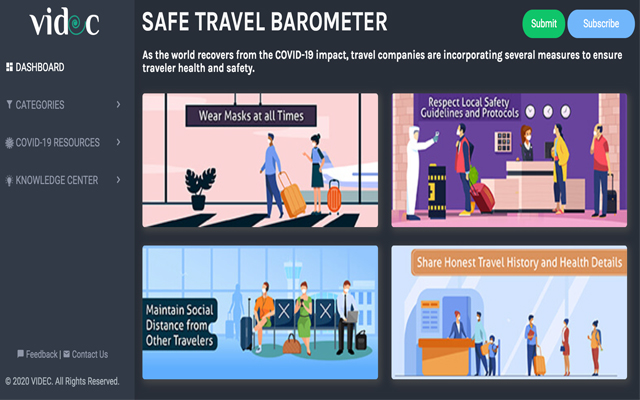
Advisory and analytics firm VIDEC has launched the Safe Travel Barometer, an interactive dashboard that charts the Covid-19 health and safety initiatives of over 100 travel companies worldwide as part of efforts to restore consumer confidence.
The free-to-use dashboard includes the latest updates of various safety measures for travellers rolled out by the companies, with more than 100 entries across airlines, hotels, cruises, airports, and amusement parks.
Travellers can now track health and safety measures rolled out by destinations with VIDEC’s safe travel barometer
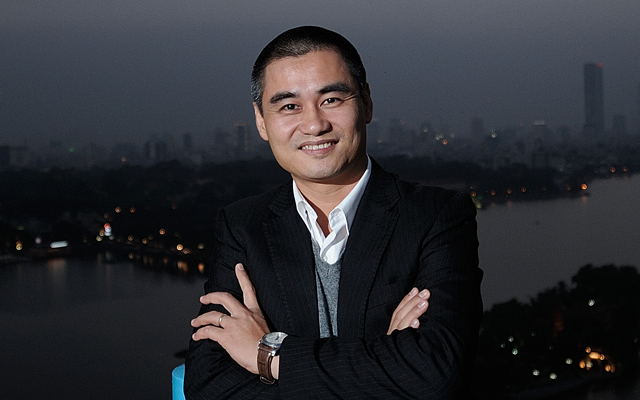
Virendra Jain, co-founder and CEO, VIDEC, said: “Covid-19 has changed how we travel. Traveller health and safety measures are at the heart of our new normal, but it is also a complex maze.
“The Safe Travel Barometer is an independent dashboard of the initiatives announced and enacted by various companies and destinations, applicable to both travellers and the industry.
“It is heartening to see the industry implement traveller safety measures, even as they may vary widely by categories, and often within the same market! Having an overarching view of the implemented measures is essential for our industry to revive traveller confidence and regain trust.”
Travel companies are invited to submit their own related entries via Microsoft Forms to be included in the Safe Travel Barometer.
Hotels, resorts in the Philippines who want to operate under the MGCQ will need to secure certification from DOT
The Philippine Department of Tourism (DOT) and Tourism Congress of the Philippines (TCP) on Tuesday said all hotels and other accommodation establishments in areas under the modified general community quarantine (MGCQ) need to secure a certificate from the DOT prior to resuming operations.
Application for such accreditation is free; and businesses who resume operations without the certificate will be subjected to relevant penalties under applicable laws, the duo said in a joint statement.
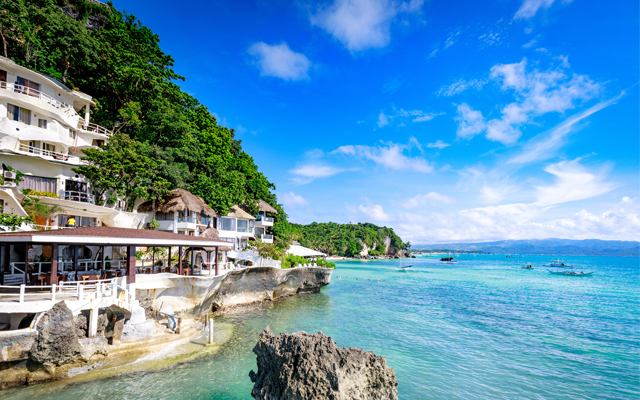
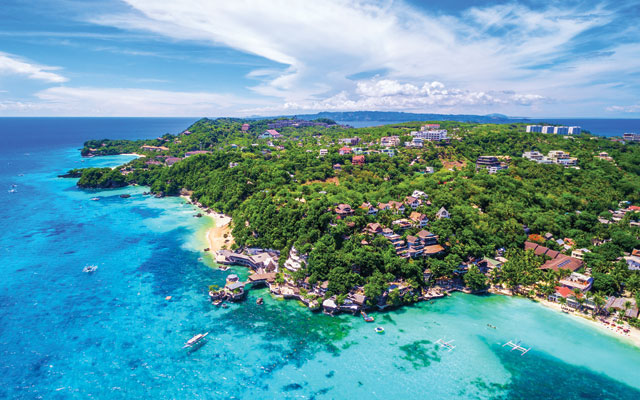
As Philippine destinations like Boracay (pictured) ease into modified general community quarantine, hotels and resorts across the country who want to resume operations will need to secure certification from DOT
DOT–accredited hotels and other AEs need only to submit to the DOT Regional Office with jurisdiction over their area the Letter of Intent to Operate, while Non-DOT-accredited hotels and AEs will need to apply for accreditation to ensure compliance of basic requirements, it added.
As the country gears up to push domestic tourism, all AEs are required to comply with the DOT’s health and safety guidelines for accommodation establishments, based on protocols issued by WHO and the Department of Health.
Tourism secretary Bernadette Romulo-Puyat reiterated that tourism stakeholders must work closely with their respective local government units to assess the readiness of their areas to support resumption of tourism activities.
Moreover, the DOT and TCP enjoined tourism stakeholders to defer to the strict guidelines issued by the Inter-Agency Task Force on Emerging Infectious Diseases on reopening of businesses while transitioning from one community quarantine level to another.
To reduce the environmental impact of single-use glass bottles for high-end spirits, Four Seasons Hotels and Resorts (FSHR), Asia-Pacific, is teaming up with ecoSPIRITS to implement an innovative packaging and distribution system for its properties in the region.
The pioneering low-carbon and low-waste distribution technology by ecoSPIRITS can lower the carbon footprint of spirit consumption at the group’s regional properties by up to 80 per cent, said FSHR in a press statement.
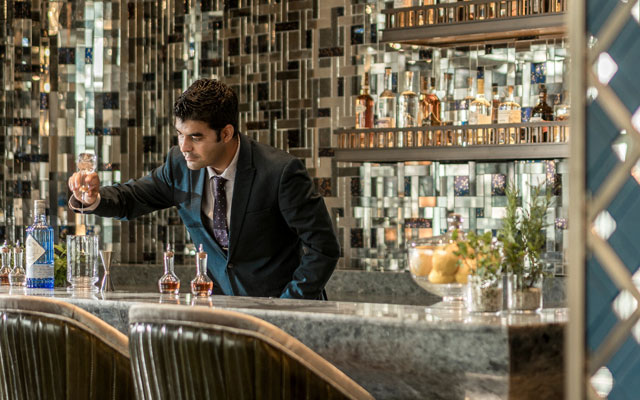
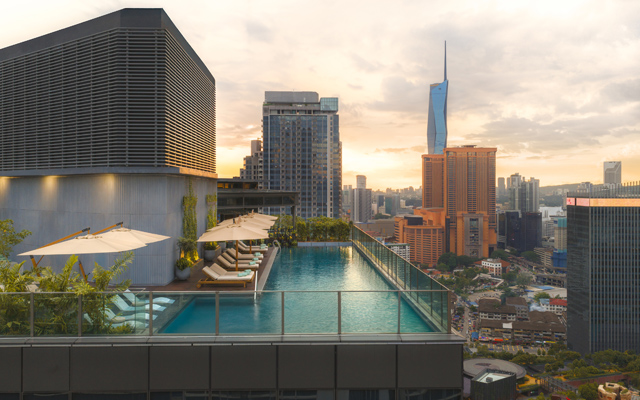
Four Seasons Asia Pacific leverages ecoSPIRITS low-carbon, low-waste distribution technology to reduce carbon footprint of alcohol consumption in its properties; Bar Trigona, Four Seasons Hotel Kuala Lumpur pictured
Not only does the technology take away the need for glass bottles – typically used once to contain high-end spirits and discarded to landfills – it also removes the need for cardboard packaging by using a reusable, stackable container called ecoTOTE.
At small-scale, local ecoPLANT facilities, the premium spirits are poured from bulk containers into the four-and-a-half-litre ecoTOTEs. Bartenders then refill their bottles using the totes. The packaging and distribution method helps to improve shipping efficiency.
The hospitality group has kicked-start the switch to the new technology at fourteen of its properties in the region, with more properties to follow, shared Philipp Blaser, vice president-food and beverage, FSHR, Asia-Pacific, in the press statement.
Of the transition process, Blaser said it was “seamless with very few changes required in back-of-house”.
Paul Gabie, CEO, ecoSPIRITS, said in the statement that the technology will help to “eliminate a small portion of the 22 million tons of carbon emissions that (such bottles) will generate in 2020” worldwide.
Travellers will have to jump through several hoops before getting onto a flight.
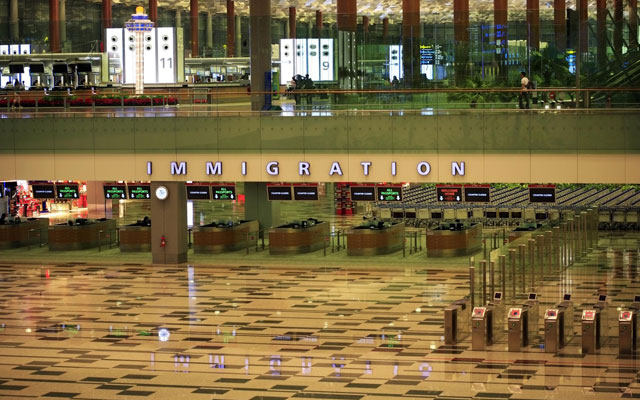
immigration lanes at Changi Airport
Access available only for essential business and official travel
Layers of approvals as well as health and safety measures in place as safeguards against cross-border transmissions
Trade desires for “fast lane” to be created for select Asia-Pacific cities too
Singapore’s move to launch a “fast lane” between the city-state and China to facilitate essential business and official travel between both countries offers a glimmer of hope for travel agents in Singapore.
Launching on June 8, 2020, the “fast lane” will be first established between Singapore and six Chinese provinces and municipalities – Shanghai, Tianjin, Chongqing, Guangdong, Jiangsu and Zhejiang – and gradually expanded to other Chinese provinces and municipalities.
Business travellers on Singapore-China “fast lane” will have to jump through several hoops prior to flying; immigration lanes at Changi Airport pictured
As well, both parties have agreed to explore the increase of air links between the two countries for the “fast lane”.
The move comes as Singapore enters phase one of its post-circuit breaker, and moves cautiously to reopen its borders by exploring “fast lane” arrangements with a few other countries, allowing for quarantine-free, cross-border travel to reboot their economies.
China is the first country to establish a green lane with Singapore. With the arrangement, Ker Joo Kheng, general manager of Prime Travel & Tour, said that he is “seeing light at the end of the tunnel”, adding that the move is “essential to reactivate our economy and people’s livelihoods” and will “inject a booster to the aviation sector”.
Agreeing, Simon Er, general manager, business events & marketing, Global Travel, said: “This is a positive step towards reopening of borders for travel, especially business travel as China is a major trading partner of Singapore. It might also form the basis of opening more green lanes with other countries.”
He added: “Opening of green lanes will provide some form of business, especially to corporate travel management companies. As for the aviation industry, we might see more airlines restoring some flights.”
However, Er noted that the move is unlikely to have a major impact on the general tourism industry as it is currently limited to essential business travel.
Martin Zhao, chairman & CEO of Sino Elite Travel Services, which specialises in bringing Chinese delegates to Singapore for conferences and exhibitions, said though the “fast lane” is only limited to essential business travel, the move “heralds a good start” and signals the determination of the two governments to resume exchanges.
Zhao added: “Part of our company’s inbound sales belongs to business travel, and we hope that under this agreement, our related business can be gradually restored.”
Limited and heavily-controlled access
While the travel trade applauds the bilateral pact, the move has drawn sharp criticism among nervous netizens in Singapore who regard the travel bubble with the birthplace of the global pandemic as unwise and “risky”.
Downplaying these concerns, Ker stressed: “I believe the majority will agree that China has contained the virus well and domestic travel is recovering. It’s not an easy decision, but eventually, the border needs to be reopened in order to activate the economy.
“Reasonably, China has progressed with low community infections and imported cases; whether or not it links to the outbreak is no longer important.”
Er echoed that sentiment: “Singapore must have considered all factors and procedures before embarking on opening this green lane with China. One factor could be the ability and speed in formalising procedures and protocols between the two governments to ensure safe passage of travellers.”
On June 3, the Singapore government outlined the necessary safeguards for the Singapore-China “fast lane” to prevent cross-border transmission.
For starters, the company or government agency sponsoring the trip must apply for approval with the local authorities on behalf of the applicant, announced Singapore’s Ministry of Foreign Affairs and Ministry of Trade and Industry in a joint press statement.
Approved applicants from both sides must then apply for a travel visa, if required, and submit their health declaration to the local authorities before arrival at the host country.
Travellers from either country must take a Covid-19 swab test 48 hours before departure, and another upon arrival at their destination, after which they must remain in isolation at specified accommodations for one to two days until the test result is out. They are also required to use the respective country’s contact tracing app for the duration of their stay.
In addition, travellers must adhere to a controlled itinerary for the first 14 days, and may not use public transport, except for private hire cars/taxis or cohorted company transport.
In a Facebook post on Wednesday, Singapore’s foreign minister Vivian Balakrishnan said: “The gradual and safe reopening of our borders will help underpin Singapore’s position as a safe and reliable business, financial and aviation hub for the region.”
Hopes for expanded “fast lane”
To further stimulate the faltering tourist industry, both Ker and Er expressed hopes that Singapore will extend the travel bubble to its regional neighbours.
Said Ker: “South-east Asia and Japan are the top destinations for business travel for many Singapore firms as well as foreign companies. In our case, up to 70 per cent of corporates travelled to these countries.”
Er added: “Singapore should look at (bubbling with) regional countries such as South Korea, Taiwan, Australia, New Zealand and some South-east Asian countries which show promise in managing the pandemic as well as being major trade partners.”
Singapore’s Health Ministry on Wednesday reported 569 new Covid-19 cases, bringing the country’s tally to 36,405. Its death toll stands at 24.
Swire Hotels has moved three members of its senior management team into new roles.
Brian Williams, Toby Smith, and Dean Winter have all worked with the company for over a decade, each contributing to the launch and growth of EAST Hotels and The House Collective brands.
From left: Toby Smith; Dean Winter
Toby Smith will replace Brian Williams as deputy chairman, while Dean Winter will take over from Smith as managing director. Following 14 years at Swire Hotels, Williams will take up the role of senior advisor to the brand on a part-time basis from his new base in the UK.
As deputy chairman, Smith will lead Swire Hotels’ growth strategy for both Swire Properties-owned developments and hotel management agreements with third-party owners.
Smith joined the Swire group as a management trainee in 1991, and has since held positions within the group’s shipping and aviation sectors, taking him to countries across the globe including Papua New Guinea, Vietnam, Australia, Turkey, Sri Lanka, France, Singapore and Hong Kong.
On the other hand, Winter has over 25 years of experience as a hotelier and restaurateur across London, Hong Kong and Singapore, and will oversee the day-to-day operations of the hotel and restaurant businesses.
Winter came onboard Swire Hotels in October 2006 to concurrently manage operations and pre-opening preparations for The Opposite House in Beijing, The Upper House and EAST in Hong Kong, before opening The Upper House as general manager in 2009.
Williams originally joined Swire Hotels as managing director before becoming deputy chairman, and will now relocate to the UK to take on his new role. He will continue to support the development plans of the group, as well as act as a brand ambassador to raise the profile of EAST and The House Collective globally.
The pandemic has disrupted the island’s rehabilitation initiative
How Boracay navigates the double whammy of temporary closure in 2018 as well as her current lockdown will determine the speed at which she can rebound from the pandemic.
While tourism on the island has recovered well from the unprecedented six-month closure in 2018 as part of its rehabilitation programme, inbound arrivals started going downhill in February and March this year as the Philippines banned tourists from China and parts of South Korea. The two countries are Boracay’s biggest tourism source markets.
The pandemic has disrupted the island’s rehabilitation initiative
Tourists trickled to 1,000 daily from the 5,600 daily average in 2019 and hotel occupancy nosedived to 20 per cent, according to Teody Espallardo, director of sales and marketing, Alta Briza Resort Boracay.
“(During the 2018 closure, we knew) Boracay would reopen eventually. (This time, it’s worse) with the loss of tourists from China and South Korea. We don’t know how things will end,” a source told TTG Asia before the lockdown.
Rehabilitation efforts, which began in 2018 due to the devastating effects tourism and mismanagement had on the island’s environment, lifted Boracay’s status as a destination. With a carrying capacity imposed on its expanse of clean beaches and seas, these spaces became quieter and more peaceful.
However, the lockdown on March 23 put the brakes on the island’s last phase of rehabilitation, which involves mainly road infrastructure.
Tourism undersecretary Art Boncato Jr said the Boracay Inter-Agency Task Force that is managing the island’s affairs was meant to have been disbanded in April 2020 – two years after its inception.
The task force, however, has yet to hit certain milestones, said Boncato, including the road infrastructure project – which he claimed was on track. It must reach these targets before it can be dissolved and Boracay’s management can be handed back to the local government.
How that is going to pan out is uncertain, what with the infrastructure work currently at a standstill. In all likehood, the task force’s life will be extended.
As the Philippines’ tourism crown jewel, Boracay is expected to eventually rebound. The crux of the matter lies in when recovery will come, given that the current crisis is global.
Bill Barnett, managing director, hospitality consultancy company C9 Hotelworks, listed the factors that would help in the island’s rebound.
“Philippines has (a relatively strong) domestic market. We expect her to have a stronger recovery than most countries in the region. Boracay will be a (beneficiary),” he remarked.
He also expects China to be the foreign source market to lead recovery when it comes to international arrivals. This will help Boracay’s visitor numbers rebound.
In the meantime, the Covid-19 crisis has several lessons for Boracay, including the need for the major tourist destination to have adequate health and safety facilities. It has only one hospital – Ciriaco Tirol Hospital.
The facility was shut down on March 23, after one frontline medical worker tested positive for the virus, and 18 of his close contacts had to be quarantined for 14 days.
This meant that locals, tourists with existing bookings, and long-stay guests who chose to remain in the country have had to head to private clinics and other hospitals in the province for medical care.
Besides responding to the need for such crucial facilities, Boracay will have to adapt to new travellers’ concerns post-crisis. This will impact hotel operations in terms of receiving business event groups, providing buffets, ensuring hotel-wide hygiene, and many other areas, said Barnett.
He added that the crisis also brought home the need for diversification. The island will need to reduce its reliance on a few segments or geographical sources going forward, so it will be less vulnerable in tough times.
Jojo Clemente, president, Tourism Congress of the Philippines, said other destinations, not just Boracay, are facing the same difficulties.
Clemente estimated that clear signs of a rebound will occur in 2021 at the earliest. “Without a vaccine, no one will travel. Returning to the numbers prior to Covid-19 will be a challenge, (and) I don’t see that (happening) in one or two years,” he said.
Vietnam’s booming luxury outbound market in 2019 is expected to scale back in the aftermath of the pandemic, as cautious elites choose to stay close to home for safer holidays, projected luxury travel specialists.
Prior to the pandemic, Luxury Travel Vietnam said the wealthy locals jetted to far flung destinations, particularly Paris, Rome, Amsterdam, Barcelona and London. The US, Japan and South Korea were also a hit with some.
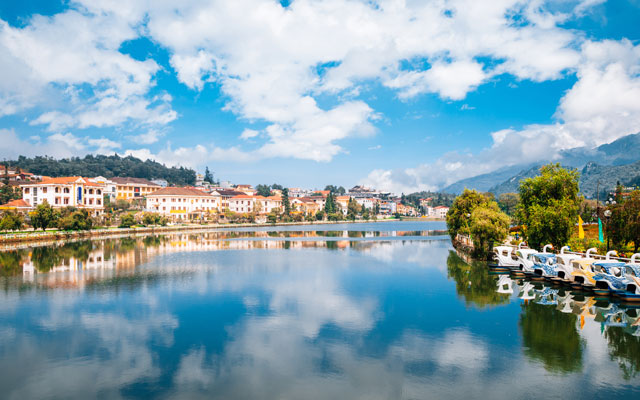
Preference for domestic vacations will soar among cautious Vietnamese luxury travellers; Sapa town pictured
Despite the desire for travel, Linh Le, principal and CEO of Luxperia, said it would take a long time for confidence to be restored in longhaul travel. He predicted domestic travel would drive the luxury market’s recovery for some time. Popular destinations include Vung Tau, Phan Thiet, Danang, Sapa and Phu Quoc.
Emerging coastal spots, such as Quy Nhon in Central Vietnam, will also appeal to the country’s elite. This is spurred by the opening of high-end hotels, such as Anantara Quy Nhon Villas. Pieter van der Hoeven, Minor Hotels’ regional general manager IndoChina, noted the domestic market already forms a “significant part of the overall business mix”.
Luxury Travel Vietnam’s CEO Pham Ha said the segment’s recovery is dependent on many factors in addition to travel being given the all-clear. These include the re-establishment of international airline routes and visa policies for Vietnamese travellers in destinations.
Added Ha: “The luxury outbound market will need a long time to recover, even once the coronavirus pandemic is over. Travellers are still worried about health and security in other countries. Therefore, they will prefer domestic spots over international ones.”
Ha: holidays away from the masses will be desired
However, he predicts that when confidence is eventually restored, luxury travellers will seek out relaxing vacations away from the masses, with safety placed at the forefront. There will also be a spike in demand for charter cruises and flights.
“Instead of going to big cities, they may select off-the-beaten-track resorts or stay at hideaway villas with private services. Vietnamese luxury travellers will tend to select all-inclusive packages to avoid having any trouble in payment,” said Ha.
In anticipation of strong demand for exclusive experiences, Luxury Travel Vietnam’s Heritage Cruises will launch a 10-day/nine-night Heritage Binh Chuan Expeditions this September. The four-deck, 20-cabin boutique ship Binh Chuan will journey from Halong Bay to Nha Rong Saigon Seaport, with stops at Danang and Nha Trang.
Ha told TTG Asia that cruise guests would find the ship’s plentiful common spaces and dining venues reassuring, as these prevent over-crowding risks. Health and safety precautions will also be in place – guests will need an all-clear health certificate prior to boarding, a doctor will be onboard to attend to medical cases, and hand sanitisers will be provided throughout the ship.
According to global property consultant Knight Frank’s Wealth Report 2020, the country had 458 people with a net worth of more than US$30 million in 2019.
The report also revealed Vietnam had five billionaires by the end of 2019. This is expected to rise to six by 2024. The country was home to 25,727 millionaires in 2019, a 12 per cent hike from the previous year.
The report said the number of ultra-high net worth individuals would hit 753 by 2024. This placed Vietnam as the world’s third fastest to increase in the next five years, at 64 per cent. – Additional reporting by Karen Yue
Exclusive and typically secluded, private villas and self-contained properties are seeing bookings from people eager to resume their travel but with safe distancing in a post-Covid-19 world.
Bawah Reserve, remotely located in Indonesia’s Anambas Archipelago, has recently received bookings for extended family stays and corporate retreats scheduled for later this year, and bookings are set to rise as travel restrictions lift.
Elite Haven’s Arsana Estate in Tabanan Bali, Indonesia promises privacy and space in luxurious surroundings
Kristen Graff, director of sales and marketing, told TTG Asia: “Bawah Reserve’s remote location, limited number of suites and maximum of 72 guests at any one time make it an excellent destination to holiday in. Couple this with six islands for guests to explore and four dining outlets in addition to private and in-room dining, and you could spend your time here with very limited interaction.”
Jon Stonham, CEO of Elite Havens, believes that villas are the “perfect safe alternative to crowded hotels”.
Stonham remarked: “They provide the luxury and now, safety of privacy, space, and flexibility. (They make the best locations), handpicked for their idyllic outlook or for being close to the action.”
Resorts in Vietnam – one of the earliest countries in Asia to emerge from a brief lockdown in April – are reporting rebounding numbers.
InterContinental Danang Sun Peninsula Resort’s ultra-private Bai Bac Bay villas and Sun Peninsula Residence villas have seen keen interest, revealed general manager, Seif Hamdy.
Hamdy: keen interest in InterContinental Danang Sun Peninsula Resort’s private villas and residences
Hamdy said the majority of InterContinental Danang Sun Peninsula Resort’s bookings are now “coming back from the key markets in Asia, but mostly for 3Q2020 and 4Q2020″.
He added that changes have been made to “virtually all aspects of the resort operation”, with measures including staff safety training, the addition of hand sanitisers, social distancing signage, seating limits in its restaurants, and touchless menus in guestrooms as well as all F&B outlets.
“Both (Anantara) resorts in Mui Ne and Quy Nhon (an all-villa resort) have been doing extremely well over the last month as restrictions have been lifted, domestic flights starting, and kids returning at school. Weekends are very robust in both, weekdays less so, but still strong,” said Pieter van der Hoeven, Regional General Manager, Indochina for Minor Hotels.
To ensure utmost privacy for guests along with enhanced health and safety standards, Karen Slocombe, Samujana Villas’ director of sales and marketing, said only registered guests may access the villas. The resort in Koh Samui, Thailand has reduced F&B services as well as other external services to minimise unnecessary contact.
Samujana has also partnered with Portier Technologies to introduce smartphones that guests can use on- and off-property to access all property information, chat remotely with their villa managers and access island-wide dining and activity suggestions deemed “safe” by Samujana staff.
Despite given the green light to reopen for tourism on June 1, Philippine destinations are now reluctant to do so, out of fear of catching the Covid-19 virus.
At a virtual press conference on Tuesday, tourism secretary Bernadette Romulo-Puyat broke the news that “there is no province ready to accept tourists” – not even Covid-19-free destinations like Boracay, Bohol and Baguio which have been eased into modified general community quarantine (MGCQ), the lowest form of restrictions.
Bohol governor may only reopen the province for tourism in July; a jungle river cruise down Loboc River in Bohol
She shared that Bohol governor Arthur Yap’s comfort level for reopening his province is July while mayor Benjamin Magalong is more comfortable reopening Baguio City in September.
Romulo-Puyat quoted Magalong as saying that it is “better safe than sorry” and that it takes only one outbreak ruin Baguio’s tourism.
Under quarantine rules, travel is only allowed between MGCQ destinations. Those in metro Manila and Cebu City, which are under general community quarantine (GCQ) wherein travel is not allowed, are not allowed to cross into MGCQ destinations.
Romulo-Puyat also noted that a lot of provinces are hesitant to accept commercial flights, and are using this time to prepare their own health and safety protocols. Meanwhile, the Department of Tourism (DoT) is using this delay to process hotels that have applied for a certificate to operate.
The DoT has no tourism targets for 2H2020 as some local government units are still not opening to tourism and time is needed to “restore confidence of the people to travel”, she explained.
For the January-May period, the Philippines recorded 1.3 million foreign tourists, a 62.2 per cent plunge from 3.46 million posted during the same period last year. Arrivals were virtually zero in April and May.
Foreign exchange receipts during the period under review nosedived by 81.6 per cent to 81.05 billion pesos (US$1.62 billion).
Romulo-Puyat said that while marketing and promotions are continuing for tourism, attention is also paid to highlighting the safety of the destinations, specifically how they are enforcing physical distancing and contact tracing.
She expects domestic tourism will return with overland trips to destinations near metro Manila such as La Union, Baler, Pampanga and Batangas. Tourists will go first around their municipalities before exploring cities and making inter-island trips.