TTG Asia
Asia/Singapore Tuesday, 20th January 2026
Page 1065

Adventurous baby boomers hit the road

0
Senior travellers are no longer content with lying on a beach, but are increasingly starting to embrace adventure holidays

Retirees are getting gutsier with their travels and eschewing laid-back itineraries for more exciting and adventurous ones, observed travel agents at ATF 2020.

“I have customers from Japan who are 65 years old or older, and they love adventure. They go trekking by waterfalls, cycling and even kayaking,” said Norakoun Tanseri, manager, Lao Boutique Travel, who added that favoured itineraries also include nature experiences such as staying in treehouses, gibbon-spotting, and Mekong dolphin-sighting.
Senior travellers are no longer content with lying on a beach, but are increasingly starting to embrace adventure holidays

Even in a relaxing destination like Bali, older travellers are swapping out their beach towels for sporting gear as they take a gander at low-impact water activities and land exploration, said TRM Hospitality’s sales manager Mardian Putra.

Nensi Setyaningsih, ASEAN inbound manager, TMS Tours, chimed in that these guests are opting for more invigorating activities that include tree-top adventure courses, snorkelling or a jungle lazy river.

“For our older guests, we can work together with the tour company to arrange a special tour that can provide activities that are not as dangerous. For example, we can replace river rafting with an outdoor lunch (while still giving them access to) other activities on the tour like tree-top adventure and snorkelling,” said Mardian.
Sun Princess calls at Kangaroo Island

0
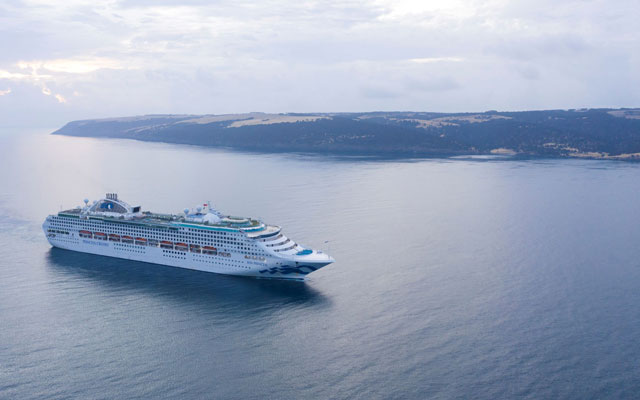
Sun Princess at Kangaroo Island

Princess Cruises’ 2,000-guest Sun Princess yesterday became the first cruise ship to return to Kangaroo Island in Australia as a show of support for the local community since the recent bushfire disaster.

Guests came ashore on tender vessels and fanned out on a range of tours by local operators while many others visited market stalls established by the local community on the nearby Penneshaw Oval.

Sun Princess at Kangaroo Island

Princess Cruises’ senior vice president Asia Pacific Stuart Allison said that the visit signals to the world that Kangaroo Island is on the path to recovery.

“It is our hope that this visit by Sun Princess and her guests will serve to boost morale and send a message to the community that their lives are getting back to normal,” Allison added.

Sun Princess’ captain Diego Perra added: “Understandably, some local tours won’t be available as a result of the impact of the fires. We have encouraged our guests to support the local tourism operators who have worked so hard to ensure there is a good selection of experiences from which to choose.”

Sun Princess is currently on a 13-night cruise from its current homeport of Fremantle with the majority of guests onboard residents of Western Australia. An earlier cruise to Kangaroo Island had been diverted to Port Lincoln at the height of the bushfire emergency.

Nils Rothbarth named GM of Park Inn by Radisson North Edsa

0

Park Inn by Radisson North Edsa has appointed Nils Rothbarth as its first general manager.

Prior to moving to the Philippines, Rothbarth spent three years at Fairmont Zimbali Lodge and Resort, South Africa in the same capacity.

The German’s career spans three decades in various countries. Rothbarth has also helmed a number of properties belonging to the Carlson Rezidor Hotel Group, Swiss-Belhotel International, and Southern Sun Hotels, among others.


Australia’s tourism industry projects US$3.1 billion loss from bushfires

0
Fire and Rescue personal run to move their truck as a bushfire burns next to a major road and homes on the outskirts of the town of Bilpin on December 19, 2019

The drop in inbound tourism traffic in the aftermath of the Australian bushfires will cost the industry an estimated A$4.5 billion (US$3.1 billion) loss, according to a survey by Australian Tourism Export Council (ATEC).

Revealing that the overall status of forward bookings has softened significantly compared to this time last year, ATEC estimated that tourism will see at least a 10 per cent decline in international visitor numbers.

Fire and rescue personnel fighting the raging blaze on the outskirts of Bilpin in December

“ATEC undertook a survey of its members who represent both Australian-based tourism businesses as well as inbound tour operators – the people who sell Australian travel in-market – with 70 per cent of respondents recording significant cancellations of travel to Australia by internationals,” ATEC’s managing director Peter Shelley said.

He added that the value of cancellations seen by tourism businesses and tour operators range from A$5,000 to A$500,000, with significant impacts seen across key inbound markets such as the US, UK, and Europe.

Fears around air quality, safety, and the impact fires have had on the country’s tourism offerings, coupled with uncertainty around the length of recovery, are reasons why foreign tourists are cancelling trips, noted ATEC.

“The bushfires have impacted at a significant time for international bookings, with the booking window for around 50 per cent of the UK, European and the US travellers typically captured from these markets between December and the end of February,” Shelley said.

As such, a positive campaign highlighting that Australia is “open for business” needs to be at the core of Australia’s bushfire recovery initiatives, urged ATEC.

To aid in the sector’s recovery, the Australian government announced an A$76 million industry-specific bushfire recovery fund over the weekend, a move that ATEC welcomes.

“Timing is now of the essence with key booking windows from our larger international markets closing towards the end of February, therefore engaging these markets in the short term, especially via the established tourism trade channels will be critical,” Shelley said.

“While Australians understand the extent of the bushfire damage, and have already been keen to re-engage and support the affected areas, we need to work hard to positively influence the narrative around our global reputation as a leading tourism destination.”

Shelley added that the tourism industry the “economic backbone” of many regional communities impacted by recent bushfires. As such, ATEC is getting behind them by promoting products around Australia that are open for business and ready to welcome international visitors through its social media campaign #bushfirebounceback.

Slow travel, social activism to drive growth of Muslim travel

0
Muslim travellers passing through the ticket machine at Osaka Station in Japan

Often touted as the world’s last great untapped market, the Muslim travel sector is gaining prominence in the tourism industry, with distinct patterns and trends coming to the fore as the segment swells in numbers.

In 2018, the global Muslim travel population clocked at 140 million, according to the Mastercard-CrescentRating Global Muslim Travel Index 2019. The index projected that by 2026, this figure will surge 64 per cent to reach 230 million.

Muslim travellers passing through the ticket machine at Osaka Station in Japanpam

This segment’s expenditure is also expected to rise. The index predicted that the market will spend US$220 million this year, and by 2026, this will rise 34 per cent to US$300 million.

As this market grows, experts have observed the emergence of distinct travel patterns. Fazal Bahardeen, CEO of CrescentRating & Halaltrip, shared four “key drivers” of this segment: technology, social activism, the Gen Z and alpha demographic, and the environment.

“For travel companies catering to the Muslim market, these (trends) should drive the next phase of product development,” he said.

Singling out social activism, Fazal explained that Muslim travellers – especially the millennial generation – are no longer travelling just to relax, but also “looking for ways to contribute back to the community”.

He shared that CrescentRating will be partnering with the United Nations Security Council Resolutions to develop a report on social activism in Muslim travel, particularly concerning issues such as ongoing refugee crises. The report is set to release this year.

Meanwhile, more leisurely travellers are gravitating towards “slow travel”, noted Have Halal Will Travel’s co-founder, Mikhail Melvin Goh. In newfound destinations such as the small Japanese town of Gunma, such travellers are “spending a lot more time doing a lot less things”, he described.

“This is encompassing the immersive travel trend. It’s about the stories that a country can offer, and the service that (hospitality) brands have. For example, can the concierge understand and offer Muslim travellers recommendations for their needs?” Goh said.

Fazal chimed in that the trend of Muslim women travelling either solo or in small groups is also burgeoning, and will continue to grow in future.

New European markets open up for SE Asia

0
XXX

New source markets in eastern and central Europe are glowing for South-east Asia, just as destinations in the region face falling numbers from traditional European markets like Germany and the UK, reported travel agents at ATF 2020.

VietUnique Travel and Myanmar-based Nature Dream Travels & Tours told TTG Asia that numbers from Russia and Greece are strong, with these groups preferring to visit three or four countries in a single trip.

Tourists walking in Hoi An’s old market

Filiz Koçer, owner of Turkish agency Karmitur, explained that the region holds many new and different sights for Turkish travellers that cannot be found elsewhere. “Flights to Asia take a long time, so when my clients come, they will chain destinations like Vietnam, Cambodia, Laos and Singapore,” she shared.

Amsterdam-based Asfalea Travel has also been sending Dutch travellers to “every part of South-east Asia”, said its director SH Oei.

He added: “We have special ties with Indonesia, where we’ve been sending many travellers from the Netherlands. We get all kinds of travellers, from young customers to retirees with pension, and they could go for something more relaxing like Lake Toba, or more adventurous like the jungles of Bukit Bintang. The Komodo dragons are very popular now, but with the (closure concerns regarding) Komodo Island, we’re selling more tours to the Lingga Islands and Flores.”

Also undeterred by the long journey are the Spaniards, who “love Asia” for its welcoming locals and unique food, said Jaime Monfort, operations manager of Spain-based Bidtravel. Top destinations like Thailand, Vietnam and Cambodia “already sell themselves”, he said, adding that other South-east Asian destinations such as Malaysia, Indonesia and Brunei need to step up their promotional push.

Another area of concern in travelling to Asia is the tourist infrastructure and accessibility, commented the agents. Many “new” destinations spotlighted by NTOs still require significant developments and enhancements in order to become viable for tourism, observed Oei.

Moreover, with more European markets coming into Asia, the need for interpreters and language-proficient guides becomes increasingly paramount, noted Monfort.

“It would be good for these destinations to look at their logistics, especially to consider Spanish-speaking guides. It’s easy to find guides who can speak English, French, or even Russian, but it is almost impossible to find one who can guide in Spanish,” he said.

AHRA slams event partnerships with short-term rentals

0

The nine-year, five-Games partnership inked last November between the International Olympic Committee (IOC) and Airbnb to provide accommodation for athletes, spectators and fans has put South-east Asian hoteliers on edge even though none of the arrangements will make it to this region.

As a global partner, Airbnb will support the Olympic Games Tokyo 2020, the Olympic Winter Games Beijing 2022, the Olympic Games Paris 2024, the Olympic Winter Games Milano Cortina 2026 and the Olympic Games Los Angeles 2028.

Yap: AHRA does not welcome short-term rentals

ASEAN Hotel & Restaurant Association (AHRA) president Eugene Yap said such an arrangement will be rejected by hoteliers in South-east Asia due to the lack of regulations on short-term rentals, which could result in safety and security problems that would dent the destination’s reputation.

Yap said: “What the IOC did with Airbnb may inspire similar arrangements for regional events such as the South-east Asian Games. AHRA does not welcome such arrangements.”

He explained: “There are issues of short-term rentals being a source of public nuisance, and concerns around safety and security. In the worst-case scenario, one is not able to trace terrorists who come into a destination and stay with an unregulated short-term rental. With legitimate hotels, all guests are registered so the government can get all the information they need.”

Working with short-term rentals also result in diminished economic impact for the destination, opined Yap who explained that hotels are a major contributor to local taxes and tourism receipts through their onsite recreational and dining facilities.

Brunei upskills tourism frontliners ahead of ASEAN Summit 2021

0
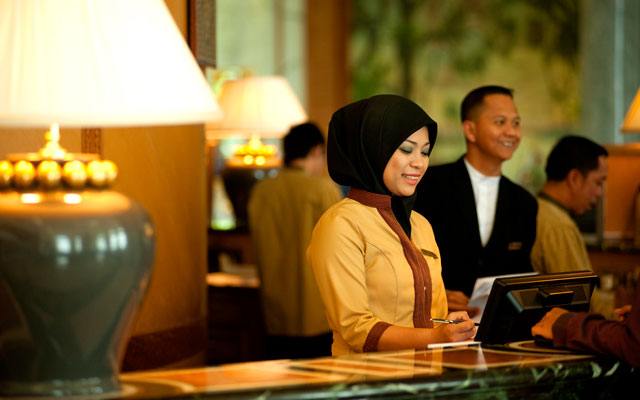
Front desk staff member from The Empire Hotel in Brunei. Photo credit: The Empire Hotel

The Brunei Association of Hotels (BAH) is working on upskilling frontliners and students in the hospitality industry, as the country readies to host the ASEAN Summit in 2021.

Its president, Mohd Iswandi Maaruf, said that BAH members will conduct two-day training programmes on customer service skills starting mid-2020.

Front desk staff member from The Empire Hotel in Brunei. Photo credit: The Empire Hotel

He said there were also plans to work with ASEAN Hotel & Restaurant Association members to further develop human capital for the hospitality industry in Brunei.

He shared: “Around 90 frontliners in hotels and restaurants received training in late 2019 in preparation for the recently concluded ASEAN Tourism Forum in Bandar Seri Begawan. To ensure that the level of service is in tip-top shape and in preparation for Brunei hosting the ASEAN summit next year, we have to continue this kind of training.”

BAH has also taken into account the feedback from ATF delegates in Brunei on the service levels of hotels and restaurants in the country in order to organise appropriate training programmes in the future.

2020 bodes well for China’s hotel sector: STR

0
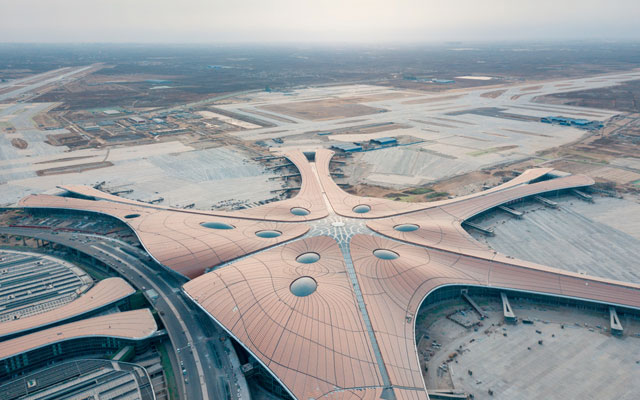
Beijing Daxing International Airport is the second international airport of Beijing

Key mainland China hotel markets are projected to report performance growth in 2020 despite a challenging macroeconomic environment, according to the latest forecast from STR and Tourism Economics.

“China’s economy, and by extension its hospitality industry, remains strong, even with concerns around the trade war with the US and an overall global economic slowdown,” said Christine Liu, STR’s regional manager, North Asia.

Beijing Daxing International Airport is the second international airport of Beijing

“A decline in Chinese departures to other countries, combined with significant government investment in infrastructure is driving domestic demand in key markets. However, the country’s resiliency to difficult macroeconomic situations will be tested if the trade war continues to decelerate economic growth.”

At the market level, Beijing should continue on its growth trajectory with a forecasted increase of 3.7% in revenue per available room (RevPAR). Average daily rate (ADR) is expected to continue to grow (+1.8%) after a strong 2019 in the metric.

“Demand growth is key for Beijing as supply continues to increase at a healthy rate. The newly opened Beijing Daxing International Airport, projected to be one of the busiest in the world; and Beijing preparing for the 2022 Winter Olympics, highlight potential growth for the tourism and hospitality sector,” Liu said.

After a challenging 2019, Chengdu is forecasted for ADR growth of 1.4%. The market is projected to report the country’s second-largest supply growth rate (2.8%) with close to 18,000 rooms in the development pipeline. Demand will be helped by China’s high-speed train system and subsequent MICE business.

As the international trading centre and comprehensive transportation hub of China, Guangzhou is expected to show RevPAR growth of 3.4% with solid increases in both occupancy and ADR.

Hangzhou, known for welcoming a mix of leisure and business travellers, is set to see its run of performance growth end in 2020 (RevPAR: -2.4%). Among key markets in mainland China, Hangzhou should see the largest increases in supply (+4.1%) and demand (+4.7%).

Following three years of occupancy declines owing to new supply, 2020 is expected to be Shanghai’s year of recovery. RevPAR growth is expected to reach 2.5% as the market is likely to pick up displaced demand caused by continued protests in Hong Kong.

IHG inks deal with AWC to grow Thailand portfolio

0

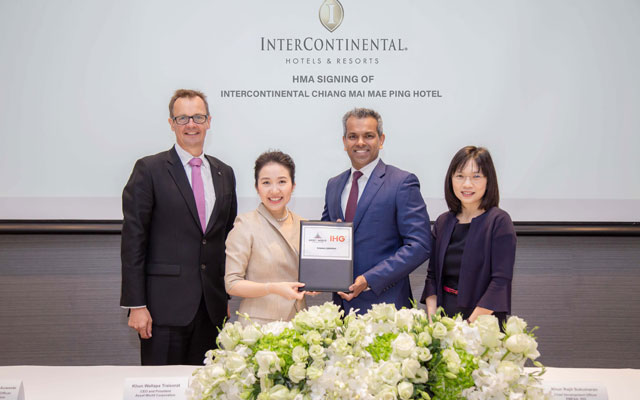
InterContinental Hotels Group (IHG) has deepened its partnership with Thai real estate group Asset World Corporation (AWC) with the signing of a number of properties which will see the development of more than 1,200 rooms across Thailand.

Under the agreement, hotels in multiple popular destinations such as Chiang Mai, Bangkok and Hua Hin will be signed within three years, including the 306-room InterContinental Chiang Mai Mae Ping which is a conversion of the now-defunct Imperial Mae Ping Hotel.

From left: Asset World Corp’s Stephan Vanden Auweele and Wallapa Traisorat; and IHG’s Rajit Sukumaran and Serena Lim

Located in downtown Chiangmai, InterContinental Chiang Mai Mae Ping will feature six F&B outlets, a spa, as well as over 3,600m2 of outdoor and indoor convention, event and meeting spaces. There are also plans to convert the current Teresa Teng Museum into a speciality restaurant and rooftop bar, where guests can experience its original set-up, decor and furniture when Teresa Teng last stayed here over two decades ago.

The hotel is expected to open in 2021 and will continue its extension with full operations in 2022.

IHG plans to double its portfolio in Thailand in the next three to five years, according to Serena Lim, vice president, development, IHG South East Asia and Korea.

Thailand continues to be a strong growth market for IHG with 29 existing hotels across six brands in the portfolio, with another 30 hotels in the pipeline.