

New tourism villages, marketing campaigns form part of Indonesia’s multi-million dollar domestic tourism push
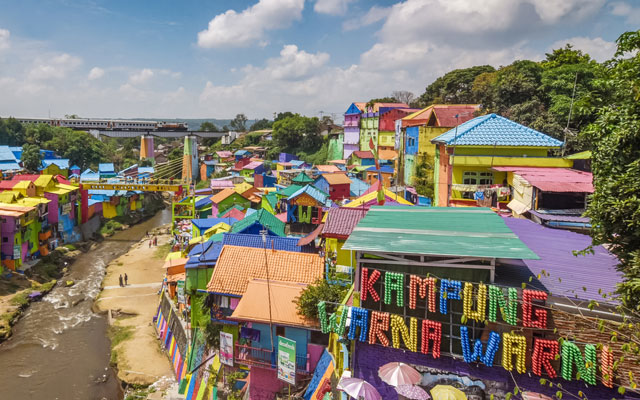
As the timeline for international tourism’s recovery from the coronavirus pandemic remains a big question mark, Indonesia is shifting its full focus to boosting the domestic tourism market, zooming in on pursuing quality tourists.
Indonesia’s vast collection of natural attractions is the country’s trump card to woo higher quality travellers as part of efforts to rebuild the domestic tourism sector amid the pandemic, Wishnutama Kusubandio, minister of tourism and creative economy, said during a recent webinar.
Amid lingering virus fears, he said, higher quality tourists would be more attracted to low-risk nature-based tourism in super priority destinations like Bali, Toba Lake in North Sumatra, and Labuan Bajo in East Nusa Tenggara, as opposed to urban tourism product offerings in Sydney, New York, and Singapore when international travel resumes.
As part of its new tourism push, Wishnutama recently earmarked 24 billion rupiah (US$1.6 million) in financial assistance to six tourism and creative economy sub-sectors, which includes an incentive of up to 200 million rupiah for each hotel and homestay in tourism villages, particularly in super priority destinations.
Last month, the government, in collaboration with state-owned oil and gas company Pertamina, kick-started the construction of ten new tourism villages spread across 279ha of land around Toba Lake in North Sumatra.
Ahead of the reopening of international borders, Wishnutama is upbeat that nature-based experiences in tourism villages will draw more quality domestic tourists, with plans for more tourism villages underway.
“In 2018, eight million tourists from Indonesia spent US$9 billion overseas. That is a potential. If they spend (that amount) in Indonesia, Indonesia’s tourism will rebound,” he said.
To lure quality tourists, the central government has earmarked 3.8 trillion rupiah to develop quality destinations and launch new marketing initiatives. These include social media campaigns with the hashtags #DiIndonesiaAja and #IndonesiaCARE, as well as various promotional programmes, such as Bali Rebound on July 7-15, Mandalika Rebound on July 16-17 in West Nusa Tenggara, and Likupang Rebound on July 22-24 in North Sulawesi.
In addition, Wishnutama said, his office has forged partnerships with Garuda Indonesia and the Association of State-Owned Banks (Himbara) to craft good deals and discounted airfares to those destinations. “Right now, tourism players can also get a bailout amounting to 10 billion rupiah from Himbara,” he added.
I Wayan Koster, governor of Bali, urged tourism stakeholders to shift their mindset to tap on Indonesia’s vast domestic tourism market. An increase in purchasing power of citizens, coupled with the country’s huge population, means that the potential of the domestic tourism market should not be underestimated, according to the governor.
Koster said that last year, 6.3 million foreign tourists visited Bali and contributed 116 trillion rupiah to the island. However, that total revenue was nearly matched by the receipts generated from domestic tourist arrivals, thanks to 9.8 million domestic tourists.
“Our economy will be stronger and more sustainable if we (Indonesians) visit (tourist destinations within the archipelago), rather than if the country depends on the arrivals of foreign tourists,” he said.
Agreeing, Rizki Handayani, deputy of tourism products and events at the Ministry of Tourism and Creative Economy, urged regional governments across the archipelago to focus on luring domestic tourists this year as uncertainties abound concerning international travel.
Coordinating maritime affairs and investment minister Luhut Binsar Pandjaitan said that 55 per cent of total tourism receipts in 2019 came from domestic tourists. In Q3, the government would try to gradually increase the contribution to 70 per cent.
“I want (tourist destinations) in regions to implement health protocols because the trend shows that (domestic tourists) will go to buffer cities that have beautiful and clean nature, such as Puncak (in Bogor, West Java), and Banyuwangi and Mount Bromo (in East Java),” he said.
Luhut has also issued a circular this month to instruct public officials from its seven subordinate ministries, including tourism ministry and creative economy, to spend a total budget of 4.1 trillion rupiah to host meetings and business events at the country’s priority destinations, such as Bali, Toba Lake, Labuan Bajo, Likupang and Mandalika.
According to Luhut, the government has seen an almost 100 per cent drop in foreign tourist arrivals and a 97 per cent year-on-year decrease in foreign exchange earnings from the tourism sector.
New Zealand aims to stay top-of-mind for Singapore visitors

A series of films showcasing New Zealand’s values of kaitiakitanga (care for the land), manaakitanga (hospitality), integrity, and ingenuity were launched last Thursday in Singapore, one of the first few international markets to receive the campaign.
Dubbed Messages from New Zealand, the campaign, released through Tourism New Zealand’s social and digital channels, features a cross-section of celebrities and everyday New Zealanders sharing video messages of hope and care with their international whānau (family).
“New Zealand is a place where manuhiri (guests) become whānau (family). These relationships are something that we, as New Zealanders, are proud of and want to celebrate and continue in perpetuity,” said Gregg Wafelbakker, general manager, Asia, Tourism New Zealand.
“Through Messages from New Zealand, we are staying in touch with our international whānau, including those right here in Singapore, and letting them know that we are waiting to welcome them to our shores again when the time is right.”
Though border restrictions remain in place, Wafelbakker stresses on the importance “to build preference and desire for New Zealand in the hearts and minds of our global audience, including those in Singapore”.
“This will ensure that when borders do reopen, New Zealand remains top of mind. One way to achieve this while borders are closed is by enabling audiences to still be able to experience New Zealand and building our reputation through digital content and export products,” he added.
Aside from Singapore, Messages from New Zealand will be rolled out across Tourism New Zealand’s key markets worldwide, including the US, China, Australia, Japan, the UK and Singapore.
When asked whether he is hopeful of the realisation of a travel bubble between New Zealand and Singapore, Wafelbakker told TTG Asia that the government is currently exploring options for safe travel zones, though nothing is certain yet.
And while this global campaign is directed at consumers, it also includes a digital toolkit with educational material for travel agents to be kept informed and updated on what New Zealand has to offer.
Wafelbakker elaborated: “Our trade team also works closely with our travel agent partners in Singapore, with specific training programmes and events to help them drive connections with our operators in New Zealand and stay up-to-date with their offerings, so they will be ready to go once it’s possible.”
Save 55% off 2nd admission to Singapore’s four wildlife parks

In celebration of Singapore’s 55th birthday, Wildlife Reserves Singapore’s four wildlife parks will be offering local residents 55 per cent off a second admission ticket with every paying adult to the Singapore Zoo, River Safari, Night Safari and Jurong Bird Park.
The promotion is valid from August 3-31, 2020. Blackout dates from August 8-10 apply. In addition, Night Safari will only be open from Thursday to Sunday, public holidays and eve of public holidays.
As part of the celebrations, visitors can catch the National Day themed animal presentations where the parks’ animal ambassadors – a Singapore special canine, sea lion, lemur and coatimundi – express their love and well wishes for Singapore in their respective shows.
Guests can also learn more about the Asian small-clawed otters at Singapore Zoo’s otter exhibit while they engage in enrichment activities and extract tasty treats from puzzle feeders. At River Safari, the otters demonstrate how they recycle used items in the Once Upon A River show.
The Jurong Bird Park’s High Flyers Show will also put on a special National Day edition, featuring the Brahminy kite, one of Singapore’s most often-sighted raptors. Visitors can feast their eyes on their high-flying manoeuvres as keepers share fascinating facts about them during scheduled sessions at Jurong Bird Park’s Hawk Arena.
Guests can also discover the amazing adaptations of Singapore’s native wildlife when they embark on the WILDerful Singaporean Explorer Trail at Singapore Zoo. Those who complete a row of activities on a bingo card can redeem an animal pin.
In keeping with safe distancing measures, Singapore’s wildlife parks are operating at reduced capacity with time-based entry, with all tickets and time of entry to be pre-booked online before visiting. In addition, all animal presentations will be limited to a maximum capacity of 50 pax.
Date set for Virtual PATA Travel Mart 2020

This year’s virtual edition of PATA Travel Mart (PTM) will take place from September 23-27, and will feature an interactive exhibition experience, video meets and live forums.
The event will offer two full business days with a possibility of up to 50 appointments across all time zones from September 24-25. There will also be two trade visitor days on September 26-27.
Additionally, there will be further networking opportunities at the interactive networking breaks, as well as opportunities to gain deeper insights into the industry at the presentation hall. Event delegates can also enjoy a 360-degree view of the Sichuan International Travel Expo through the Virtual PTM 2020 platform.
Event highlights include an interactive exhibition experience, where delegates can navigate an interactive map to browse sellers, submit matchmaking requests, view product presentations, and exchange contact information. Attendees can also hold meetings via video, text and voice chat; as well as gain insights on travel recovery with live presentations and panels through the PTM Forums.
Furthermore, buyers have the opportunity to earn prizes by earning points and completing event missions. Participants can also join virtual social games and stand a chance to win travel giveaways and prizes.
PATA CEO, Mario Hardy, said in a statement: “As some destinations have slowly restarted tourism through either domestic or regional travel, eventually international markets will follow. Virtual PTM allows business to begin exploring new opportunities and markets, particularly as travel behaviour and patterns will be dramatically different post-Covid-19.
“Asia-Pacific will be the leading force of tourism’s global recovery from Covid-19, as both an inbound destination as well as a robust source market. In addition, organisations need to start negotiating for recovery in 2021 and Virtual PTM is the perfect place to begin.”
The event is being organised in conjunction with the Sichuan International Travel Expo, with the support of the Leshan Culture, Radio, Television and Tourism Bureau and is powered by official virtual partner Dragon Trail Interactive (DTI).
DTI’s co-founder and CEO, George Cao, said that the company will live-stream forum sessions and other activities from the Sichuan International Travel Expo on the PTM Online platform.
Korea’s Jin Air implements full suite of Laminaar Aviation’s ARMS solution
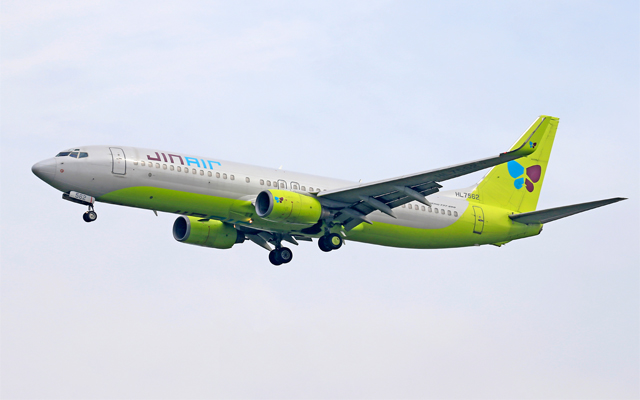
Singapore-based Laminaar Aviation Infotech’s implementation team has delivered its proprietary Aviation Resource Management System (ARMS) applications software solution to Korean carrier Jin Air.
The critical final phases of deployment were managed in the middle of the Covid pandemic, and delivered remotely from locations in India and Singapore, with not a single engineer or project manager on site in Seoul.
Leading the engagement with Jin Air was Collins Aerospace Systems, the exclusive global reseller of ARMS.
Starting in 2019 with a stringent evaluation process, the team of Collins Aerospace Systems and Laminaar steered the Jin Air programme for over 15 months through its phases – of due diligence, customisations, testing and deployment – as planned and to expectation.
In the final weeks, with travel and mobility restrictions, the Laminnar delivery team had to work from their homes in Bangalore and Mumbai. Critical pieces, like user acceptance test closure, data ingestion, parallel run, cutover and go-live, were all delivered in the four weeks of complete lockdown in India, Singapore and South Korea.
The solution mix for Jin Air is a combination of ARMS stand-alone modules, namely Commercial Planning, Flight Operations, Crew Management, and the Load and Trim feature from the Flight Planning & Dispatch module.
The airline is also using Laminaar’s tablet-based ARMS on the TAB components: Electronic Flight Bag, Electronic Flight Folder for the flight crew, and the ARMS on Mobile smart mobile interface for the workforce.
Clotilde Enel-Rehel, general manager for commercial aviation and network services for Collins Aerospace, said: “A more connected and intuitive system enables an airline to become more efficient in resource management and effective in strategic decision making. It is more important than ever that we support our customers to ensure that critical operation data gets transmitted in a timely and accurate manner.”
Jung-ho Choi, CEO of Jin Air, said: “As the first airline globally to implement the full suite of ARMS and the first in South Korea to utilise Collins Aerospace ARINC Integrator, we recognise the importance of leveraging on technology innovations to support a more robust system for our operations.”
Construction on Singapore-Johor rail link to resume
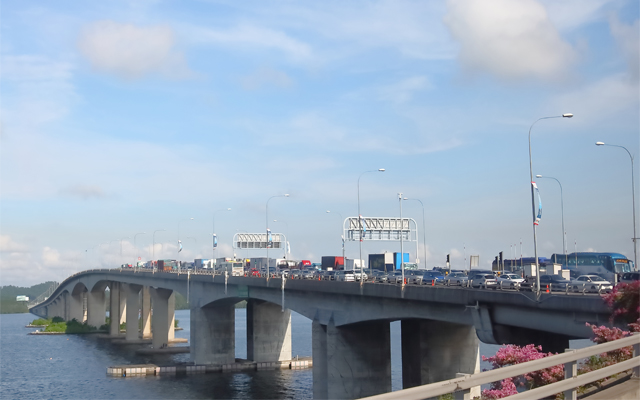
Malaysia and Singapore have agreed to proceed with the Rapid Transit System (RTS) Link project which will connect Woodlands in Singapore to Bukit Chagar in Johor Bahru in the southern state of Malaysia.
The cross-border project is expected to begin in early 2021 and to be completed by the end of 2026. Three agreements which are necessary to resume the project have been concluded, including one to amend the RTS Link Bilateral Agreement between both governments.
When completed, the RTS Link will ease Causeway congestion, improve connectivity, foster people-to-people ties, and generate shared economic and social benefits, said a joint statement from both countries.
The 4km long project is estimated to cost RM10 billion (S$3.2 billion), of which 60 to 61 per cent of the cost would be funded by the Singapore government and the rest by the Malaysian government.
Malaysia’s transport minister, Wee Ka Siong, said the first of two phases, encompassing the construction stage, will commence next year until 2024. Phase two, which will start in 2025, will involve the construction of systems such as signals, rolling stock, telecommunications and system testing.
40% of destinations have now eased travel restrictions: UNWTO

A growing number of destinations around the world have restarted their tourism industries while adapting to the new normal, with the latest analysis from UNWTO showing that 40 per cent of all destinations worldwide have now eased Covid-19 restrictions on international travel.
This latest outlook, recorded on July 19, is up from 22 per cent of destinations that had eased restrictions on travel by June 15 and the three per cent previously observed by May 15. It confirms the trend of a slow but continuous adaptation and responsible restart of international tourism.
However, of the 87 destinations that have now eased travel restrictions, just four have completely lifted all restrictions, while 83 have eased them while keeping some measures such as the partial closure of borders in place.
Destinations with a higher dependency on tourism are more likely to be easing restrictions on travel, according to the UNWTO report. Of the 87 destinations that have eased restrictions recently, 20 are small island developing states (SIDS), many of which depend on tourism as a central pillar of employment, economic growth and development. The report also shows that around half (41 per cent) of all those destinations that have eased restrictions are in Europe, confirming the leading role of the region for the responsible restart of tourism.
UNWTO secretary-general Zurab Pololikashvili said in a statement: “The restart of tourism can be undertaken responsibly and in a way that safeguards public health while also supporting businesses and livelihoods. As destinations continue to ease restrictions on travel, international cooperation is of paramount importance. This way, global tourism can gain people’s trust and confidence, essential foundations as we work together to adapt to the new reality we now face.”
In addition, this latest edition of the UNWTO Travel Restrictions Report shows that 115 destinations – 53 per cent of all destinations worldwide – continue to keep their borders completely closed to international tourism.
Of those 115 destinations, the majority (8 per cent) have kept their borders completely closed to international tourism for more than 12 weeks, found the report.
The cost related to the travel restrictions introduced in response to Covid-19 has historic dimensions. Last week, UNWTO released the data on the impact of the pandemic on tourism, both in terms of lost tourist arrivals and lost revenues. The data shows that already by end-May, the pandemic had led to US$320 billion in lost revenues – three times the cost of the 2009 global economic crisis
New licensing rule limiting Banyuwangi tour guide numbers draws flak
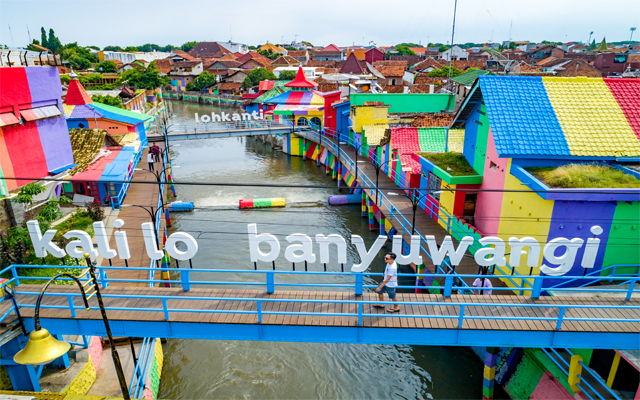
Indonesian tour operators have blasted a new regulation by the Banyuwangi authorities that limits tour guiding services in the regency to an exclusive group as ill-timed, saying it will have a deterrent effect on wholesalers selling this emerging destination in East Java.
The new policy stipulates that tour operators from other parts of the country entering the territory must enlist the services of the official 130 Banyuwangi travel agents and guides who have been certified by the district.
Yanuar Bramuda, head of the Banyuwangi Tourism and Culture Office, said that the new regulation is to protect local businesses and ensure that customers can enjoy consistent product quality and professional services.
He explained: “In the last two years, Banyuwangi tourism has developed rapidly, but we have received complaints about the unprofessional behaviour of some local players. Our investigations showed that the complaints were directed towards uncertified travel agents, therefore, we decided to restructure (the system) to avoid backfire.”
The new regulation also ensures the health and safety of guests travelling in the area as all 130 licensed guides – as well as drivers – have undergone training by the local government in the implementation of mandatory health protocols, and have passed these tests, according to Bramuda.
However, tour operators said that the issuance of the new regulation at a time when the tourism sector devastated by the pandemic is struggling to rebuild itself can deal a further blow to demand.
Umberto Cadamuro, COO Inbound of Pacto, said that if the regulation had been issued during rosy times, it would have been a good step towards protecting local players. However, the sector is now embroiled in turmoil.
He explained: “If DMCs or operators outside of Banyuwangi, who usually include the destination in their Java overland trip itineraries, must partner with local players (in Banyuwangi to bring tourists into the region), it will affect the pricing. Nowadays, besides health, price is a sensitive thing.
“(Tour operators) are now focused on how to bounce back the business; they will not want to be bothered with this regulation. So DMCs and wholesalers will end up not including Banyuwangi in the list of destinations (that they are selling).”
Echoing the same sentiment, Adjie Wahjono, operations manager of Aneka Kartika Tours, said that that this regulation might put a dent on demand because Banyuwangi is not a mono destination like Bali or Yogyakarta.
“Banyuwangi might be a popular route in a Java overland trip, but it still has to be combined with other destinations, especially because it does not have direct (international) access,” he said.
Moreover, Adjie expressed concern that the regulation may not sit well with guests. “With health issues like now, changing operators (may) cause anxiety to guests. It would be more efficient and safer for one agency to helm the entire tour journey,” he said.
For Monas Tjahjono, managing director of Monas Tour, the application of the regulation may affect the trip quality due to differing standards across operators.
“If they want to standardise the quality of the tour and health protocols, it is enough to follow the regulations drawn up by the central or provincial government because all operators must comply with the rules set forth nationally,” he added.
Umberto suggested that the Banyuwangi district government postpone the implementation of the new regulation, and instead, direct its focus towards upskilling tourism players to enhance the international competitiveness of the destination. For starters, he suggested foreign language training for industry players, noting that the language barrier still poses a barrier to selling the country’s tourism products.
Switzerland Tourism reboots workshops in South Korea amid pandemic
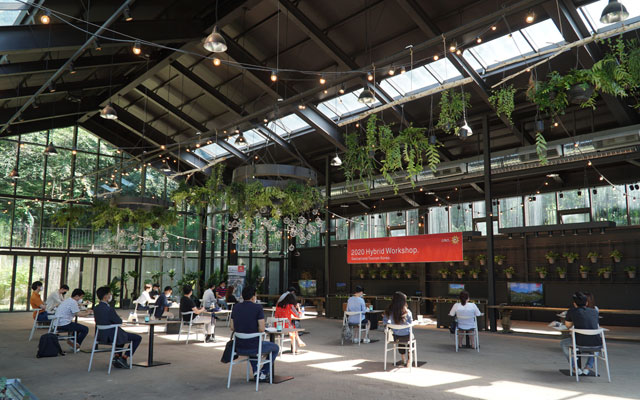
At a time when tourism organisations in South Korea are emptying their event calendars, one tourism board has taken the bold step of restarting its workshops in preparation for the returning demand post-Covid.
Switzerland Tourism’s office in Seoul is the first to try to blow life into the current lacklustre industry by lining up a series of workshops for travel agents and those in travel-related industries.
Its first hybrid workshop, held on July 15, was themed around Schilthorn, a summit in the Bernese Alps of Switzerland. The session was conducted as a webinar by a local tourism agency official in Switzerland. Participants were also taught how to take and compile pictures.
For now, the tourism board has a total of 10 workshops scheduled from July through September, which will be filled with programmes for Swiss travel information, its culture and architecture as well as its brunch culture. The tourism board said that this movement is in line with Switzerland reopening to tourists from 30 countries since June 15.
Switzerland Tourism marketing manager, Janice Cho, said: “The domestic and overseas travel industry is currently in a slump and it’s very difficult to predict even one step ahead. It has particularly been hard for those in the travel industry to meet in person and share ideas. We are holding these workshops to provide a means of encouragement for those both in Switzerland and South Korea to look forward to the time when tourism can resume again.”

With safety being paramount, especially since the country is battling a second wave of coronavirus, strict precautions have been put in place by the tourism board for its workshops. For one, each session is limited to 20 participants, and conducted in a space designed to accommodate over 200 people to maintain safe distancing.
All participants are also required to complete a health questionnaire and temperature check, and use hand sanitiser before the workshop.
Meanwhile, other tourism boards in South Korea like the Tourism Bureau of the Republic of China and Marianas Visitors Authority said that they have cancelled or postponed all their events and workshops, with no plans for any events in the pipeline as yet.








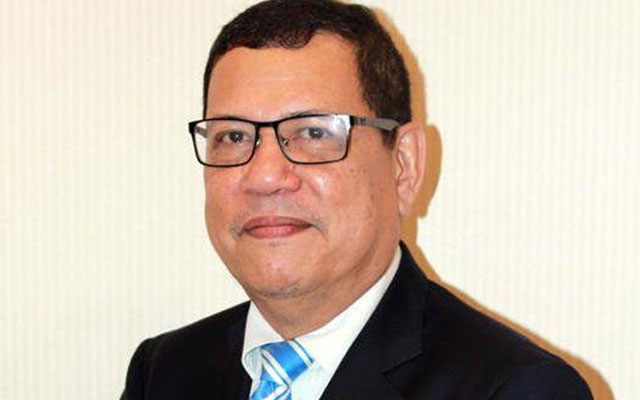
Seri Ramlan Ibrahim has been appointed as the chairman of Malaysia Tourism Promotion Board, effective August 3, 2020.
Ramlan entered the Administrative and Diplomatic Service of Malaysia in 1983. His first posting was as second secretary to the Embassy of Malaysia in Jakarta in 1988. Two years later, he was reassigned to the Embassy of Malaysia in the Netherlands, but as first secretary.
In 1994, Ramlan returned to the headquarters and was assigned to the Europe Division. Shortly after, he was posted to the Embassy of Malaysia in Zagreb, Croatia, to take on the role of the Chargé d’Affaires ad interim.
He returned three years later, in 2000, to become the principal assistant secretary at the Division of South-east Asia. The following year, Ramlan was appointed as deputy high commissioner to Singapore.
His first posting as ambassador was to Bosnia Herzegovina, in 2004. In 2009, Ramlan was again appointed ambassador of Malaysia – this time to the Republic of Korea. His return from Korea in 2013 saw him heading the Bilateral Department, the second-highest post in the Malaysian foreign service. In April 2015, Ramlan was appointed as Malaysia’s permanent representative to the United Nations in New York.
In 2017, Ramlan was elected as the secretary general of Ministry of Foreign Affairs. In February 2019, he was elected as the member of Election Commission of Malaysia until July 2020.