TTG Asia
Asia/Singapore Thursday, 15th January 2026
Page 1006

Health clearance may be needed for all future arrivals at Sri Lanka

0

Tourists arriving in Sri Lanka in the future must be armed with Covid-19 health clearance certificates approved by the World Health Organization (WHO) and be subjected to rapid testing at the airport, under a set of new proposals to revive tourism in the country.

Visitors must clear a WHO-designated health test two weeks prior to arrival and pass a rapid health test at the airport before they will be allowed to get to immigration counters.
Proposals for a new immigration process have been made to ensure arriving tourists have a clean bill of health

Under the proposed measures, future visitors will also need to book their accommodation in advance. Hotels will need to be certified as being Covid-19 prepared.

Detailing these measures in a webinar with other industry experts on Tuesday, Sri Lanka Tourism chairperson Kimarli Fernando added that a new visa process will also be implemented while visa-on-arrival will be terminated. The government is also deliberating the possibility of issuing five-year visas to encourage visitors to return.

Fellow speakers expressed hopes that Sri Lanka’s success in taming the viral spread – through a month-long countrywide lockdown and rigorous testing – will encourage travellers to regard Sri Lanka as a safe and healthy destination to visit once it is safe to do so.

So far, Sri Lanka has 309 cases, 100 recoveries and seven fatalities out of a population of 21.6 million people.


Porter & Sail’s Hotel Credits platform touts “ultimate flexibility”

0

Porter & Sail, the New York-based mobile concierge app and e-commerce company, has created a Hotel Credits marketplace where customers can purchase credits now for future stays at independent hotels across the globe.

Caitlin Zaino, CEO of Porter & Sail, told TTG Asia that the credits can be used at a later date when it is safe to travel again, and higher credits purchased will attract greater savings.

For example, pre-purchasing US$1,000 credit will net US$1,500 to spend.

Nihi Sumba in East Nusa Tenggara, Indonesia is one of the properties on the Hotel Credits marketplace

The aim of Hotel Credits is to support independent local properties with a near-term revenue stream by driving volume and purchases, as these hotels are currently struggling to retain staff with closed doors and travel restrictions.

Currently, there are 24 hotels live on the platform, with more to come on board. Asia-Pacific properties include Bisma Eight and Nihi Sumba in Indonesia, and Aleenta Phuket Resort and Spa in Thailand.

Porter & Sail’s target is to list 50 to 100 properties by the end of this month.

“We’re also talking to our partners in Singapore about coming on board, and are looking at a potential partnership in Seoul. The majority of our energy remains in South-east Asia and North America,” Zaino elaborated.

When asked how these properties were chosen, Zaino shared that most of them were already existing clients of Porter & Sail pre-crisis.

Zaino revealed: “Porter & Sail is not taking any fees on Hotel Credits. All proceeds go to the hotel, so that’s capital coming in now, save for the merchant processing fees (3.9 per cent).”

Should the Hotel Credits platform continue to see success, what started out as a temporary fix may stick around for longer.

Zaino is also evaluating what this means for Porter & Sail, as the tourism industry braces for a new normal.

She elaborated: “The future of travel will change, (alongside) consumers’ behaviours. Perhaps there’s a way forward here that can redefine how travellers book their holidays. Does that mean more travellers want the flexibility of not having to pick a date right away, but banking a good deal and having that to use later when they’re ready to travel?

“Ultimate flexibility is provided to the consumer with Hotel Credits, which may reflect the changed landscape as users begin to think about travel in the future.”

Malaysian tourism players urged to focus on domestic travel, events for recovery

0

The Tourism, Arts and Culture Ministry is looking at ways of strengthening domestic tourism and restoring the travel confidence of locals, once it is safe to do so.

Speaking at a recent webinar organised by the Malaysian Association of Tour and Travel Agents (MATTA), entitled Protecting the Tourism Workforce, minister Nancy Shukri said domestic tourism will help to spur the local tourism industry which has been badly hit by the Covid-19 pandemic.

Minister Nancy Shukri is seeking funding for online training courses for tourism frontliners

Nancy called on inbound tour operators to create innovative programmes in rural areas as well as areas that have been neglected by tourism stakeholders, while the ministry will help with promotions.

She added: “We are also looking at providing online training to further enhance the skills and quality of services for tourism frontliners.”

For this purpose, the ministry has proposed to the Economic Action Council for limited training allowances to run online training courses.

Nancy urged inbound tour operators to make use of the ministry’s grants for domestic marketing and promotions of domestic business events for 2020.

Road to Recovery tutorial made available to Australian tourism stakeholders

0

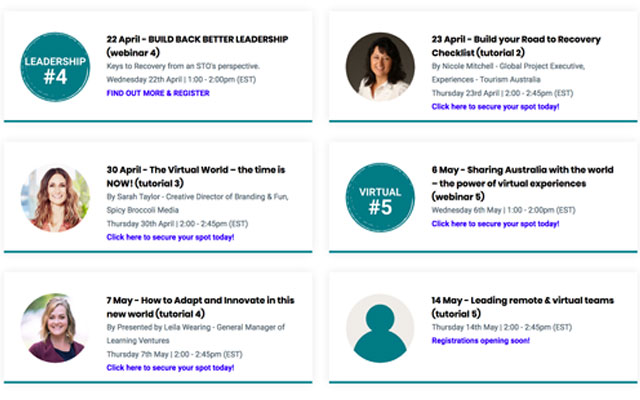
The Australian Tourism Export Council (ATEC) has created a 12-week Road to Recovery online tutorial series to arm tourism stakeholders with tools and knowledge that will help them with their rebound.

More than 1,200 people have registered for the free series, which is part of ATEC’s Build Back Better strategy

“ATEC is rolling out the Road to Recovery tourism tutorial series as a way of supporting our industry members and helping them use this time to work on their business,” said ATEC’s managing director, Peter Shelley.

Road to Recovery tutorials are 45 minutes long, and are hosted every Thursday at 14.00 (AEST)

Shelley added: “This is undoubtedly an unprecedented challenge for our industry and many people have lost their jobs or their entire business, but the tourism industry is full of passionate and committed people who will be there at the other end of this pandemic, looking to re-engage and find new opportunities.

“We are offering our Road to Recovery tutorials free to the tourism industry in order to help individuals use this time as an investment in their future, learning and building on their strengths and finding new paths.”

Over the past month ATEC has successfully delivered industry webinars to an audience of 3,000-plus registrants through its Build Back Better Leadership Webinars, where members gain insights from panellists discussing a range of industry-relevant topics and challenges.

Road to Recovery tutorials are 45 minutes long, and are hosted every Thursday at 14.00 (AEST).

Tutorial line-up and registration can be found here.

Regional passenger traffic at all-time low: ACI

0

Airports Council International (ACI) announced a 95 per cent year-on-year decline in regional passenger traffic for the month of April, based on preliminary figures. Nevertheless, traffic seemed to show first hints of recovery with the resumption of domestic flights in China and to a lesser extent, South Korea.

In the statement announcing the figures, Stefano Baronci, director-general, ACI Asia-Pacific, called for a “new normal” where travellers continue to have freedom of movement amid Covid-19. He asked that a balance be found between restoring connectivity and ensuring a safe travelling experience for passengers.

Regional passenger traffic for April fell 95 per cent year-on-year

Baronci also urged governments, health authorities, regulators and aviation stakeholders to form partnerships that would ensure the implementation of “sustainable and effective health measures” in airports.

ACI’s preliminary figures were compiled based on traffic data from 18 airports across Asia-Pacific and the Middle East, and reflect the status of regional passenger traffic as at mid-April.

Kayak rolls out curated virtual tours

0

As lockdowns worldwide continue, more and more destinations are taking the virtual route to keep the travel dream alive. Following Airbnb and Viator, travel search engine Kayak is fuelling wanderlust with the launch of its virtual travel hub featuring a selection of curated city guides.

Kicking off with curated virtual guides to Copenhagen, Amsterdam, Berlin and London, the virtual travel hub is now live, with additional destinations set to be released in the coming weeks.

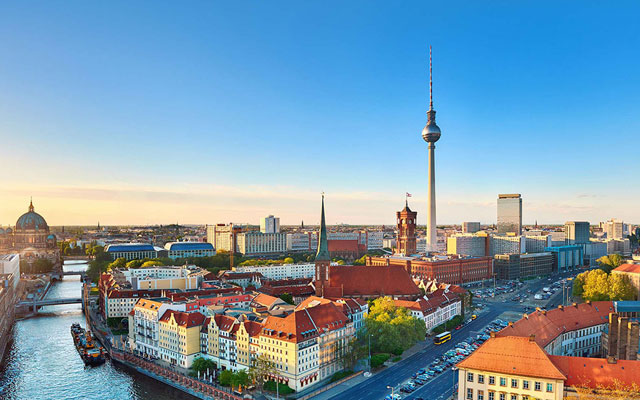
Kayak’s new initiative allows quarantined travellers to visit destinations like Berlin (pictured)

Beyond access to a virtual tour of the destinations, users will also be able to experience a curated selection of local recipes; a playlist for each city; a language lesson covering commonly-used phrases; a virtual tour from local museums and galleries; as well as a list of books, TV series and movies related to that city.

For example, those paying a virtual visit to Amsterdam will find a preview of the Rijksmuseum, an immersive look at the city’s scenic views with a helicopter tour, and a step-by-step guide on recreating the Netherland’s well-loved Stroopwafels.

Virtual visitors can also learn how to order a beer, ask for directions and greet new people in Dutch, as well as find out more about all the recent cultural updates, such as recommended books and films.

The site also gives users all the tools and information they need to plan their next trip, from daily itineraries to destination highlights.

Evan Day, country manager UK, Kayak, said: “At Kayak, we understand that these unprecedented times can bring a lot of emotions to the fore, from uncertainty and anxiety, to boredom and restlessness. Having a level of escapism and something to look forward to, are now more important than ever.

“The virtual travel hub aims to give users a fun, exciting distraction, whether you’re wanting to learn something new, ‘visit’ your favourite destination or get a preview to a location you plan on visiting.”

Singapore extends circuit breaker to June 1 as tally tops 9,000

0

Singapore’s circuit breaker measures holding all non-essential businesses and community activities on lockdown will be extended for another month to June 1, announced prime minister Lee Hsien Loong on Tuesday.

This comes as the city-state saw 1,111 new Covid-19 cases on Tuesday, bringing the tally to 9,125.

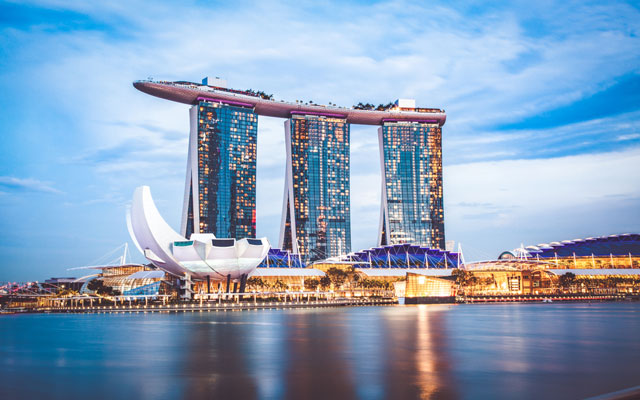
Singapore extends its circuit breaker period by another month; Marina Bay Sands skyline pictured 

While the vast majority of these cases were detected in migrant worker dormitories through methodical testing – only 20 of them were Singaporeans and PRs – Lee asserted that the extension was necessary to “prevent new clusters from forming and bursting out of control”.

He said: “Unfortunately, the number of unlinked cases has not come down, and this suggests that there is a larger, hidden reservoir of Covid-19 cases in the community that we have not detected. We must press on to bring down the number of daily cases to a single digit, or even, zero.

“The government will continue to help our businesses and workers cope during the extended circuit breaker period. Provided we have brought the community numbers down (by June 1), we can make further adjustments and consider easing some measures.”

Japan’s tourism industry sinks deeper ahead of Golden Week

0

Japan’s struggling tourism industry has been dealt a fresh blow ahead of the Golden Week holidays, as the government declared a nationwide state of emergency on Friday, in response to the continued rise of new coronavirus cases.

The country-wide “soft lockdown” until May 6, is a widening of the state of emergency declaration – covering Tokyo and six other prefectures – that was introduced on April 7.

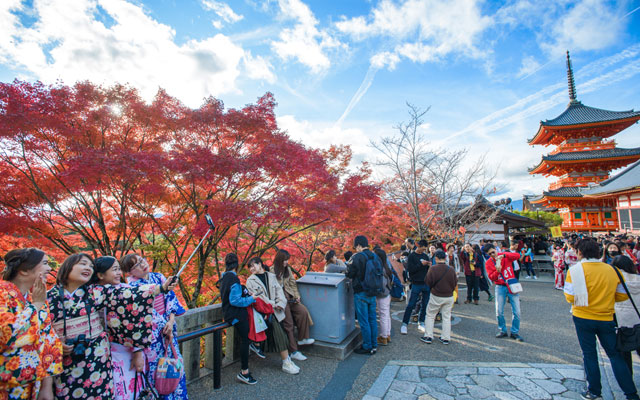
Japan’s tourism industry takes a further hit with the extension of the state of emergency nationwide; tourists in Kiyomizudera temple in Kyoto pictured

It follows pleas from prefectures to be included, as well as calls to curb domestic travel during Golden Week. The week-long series of national holidays between late April and early May is usually a peak period for Japanese travel, providing vital income to tourism suppliers.

With many prefectural governors now asking residents to refrain from non-essential outings and non-essential travel between prefectures, the travel trade has been dealt a second major blow, following the drying up of international business.

In Kagoshima Prefecture, which has seen six Covid-19 cases as of April 17 according to the Statista Research Department, Shozo Kikunaga, CEO of travel agency and bus tour company GSE, said that revenue is down 90 per cent.

Over in the prefectures of Kagawa and Okayama, which have reported 24 and 18 Covid-19 cases respectively, Benesse Art Site Naoshima has shuttered its 18 art facilities and one hotel in response to the declaration.

“We had lots of cancellations from overseas guests earlier in the year due to the crisis, particularly for our hotel,” said Sanae Oota, the organisation’s spokesperson. “We also had fewer domestic bookings for Golden Week compared to previous years, and now those bookings have to be cancelled.”

Japan hotels are also bracing for a further hit. STR reported 64.8 per cent occupancy in February, which dipped to 30.5 per cent in March.

Attractions across Japan, including Hiroshima Peace Memorial Museum, Kyoto National Museum of Modern Art, Nara National Museum and Sapporo Maruyama Zoo, have also been closed until further notice.

Klook trims workforce, impose pay cuts to ride out Covid-19 storm

0

Hong Kong-headquartered booking platform Klook has reduced its global headcount and furloughed a portion of its workforce as part of its latest cost-optimisation measures for weathering the Covid-19 storm.

The layoffs and furloughs will impact 10 to 20 per cent of the organisation’s headcount across most of its functions.

Pandemic forces Klook to shed staff and impose pay cuts

Ethan Lin, CEO and co-founder of Klook, revealed to TTG Asia that all of the company’s co-founders, including Bernie Xiong and Eric Gnock Fah, will forego their pay “until the end of the crisis”.

Its leadership team has also taken voluntary pay cuts, said Lin, and the company will implement a temporarily reduced work week. Furloughed employees will continue to receive healthcare coverage and applicable benefits, including access to Klook’s Employee Assistance Program.

Lin expressed: “The world is concerned about the devastating impact of Covid-19 and there is no travel at the moment, rightfully so.”

He lamented that these “painful decisions” had to be made to ensure that Klook can weather this storm, protect the long-term success of the organisation, as well as lead the recovery of the industry when the time comes.

Founded in 2014, Klook’s rapid and exponential growth elevated it into one of Asia’s symbols of start-up success. The company recently began expanding into Europe and North America, and as of September 2019, had more than 1,000 staff across more than 20 offices worldwide.

Pre-pandemic, it had raised a total of US$520 million in funding from investors including Sequoia China, TCV, Matrix Partners and Goldman Sachs.

CLIA floats out new health policy in push to regain trust

0
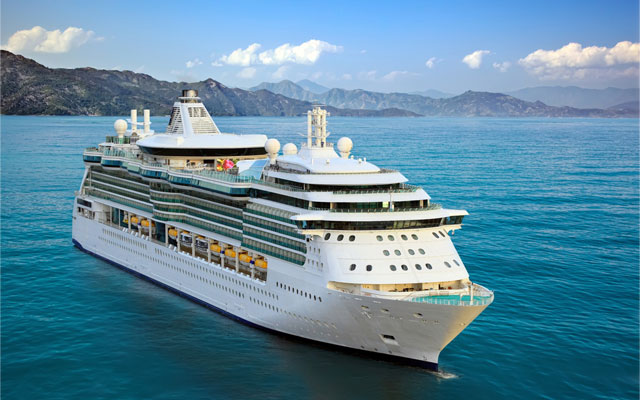
CLIA is working with various stakeholders on a new health framework post Covid-19

Cruise lines, long referred to as “floating petri dishes”, have found themselves at the centre of a raging debate amid the coronavirus crisis, with cleanliness and hygiene standards of cruise ships called into question.

In response, a new health framework is being developed by Cruise Lines International Association (CLIA) and its members to “uphold the safety of guests and prepare for future operations” post Covid-19.

CLIA is working with various stakeholders on a new health framework post Covid-19

CLIA Australasia & Asia managing director Joel Katz said the industry was working with medical experts and health authorities internationally to lay a new foundation for the cruise sector as it prepared for its long-term recovery.

“While cruise operations are suspended, we are using this time to define the new landscape we will work within and make sure we’re ready when the time comes to sail again,” he said.

“Many teams of people around the world are working in tandem with experts to ensure we learn as much as possible from these unprecedented events and exceed community expectations in our response.”

Katz said maritime policy work underway within CLIA would define the specific screening, cleansing and medical protocols that cruise lines would adopt globally, in addition to those already in place.

He said while it was too early to discuss specific procedures being developed or the timing, the industry’s priority would be to ensure the safety and security of guests, crew and the communities that cruise lines visit.

“The challenges before us are great and there is no quick fix, which is why we have embarked on a process that will be extremely thorough and will address the concerns that communities and authorities expect to see us confront,” Katz said.

He said once finalised, the new protocols would provide further opportunity to communicate with industry stakeholders, government and the wider public to provide reassurance on future cruise operations.

Katz added: “Our thoughts are with all those who have been impacted by Covid-19. The cruise industry is not alone in having to confront this disease, but we will aim to set standards that other sectors may follow when it comes to our response.”