

Banyan Tree Global Foundation offers grants for sustainability projects

Banyan Tree Global Foundation (BTGF) has launched the Greater Good Grants that aims to support innovative and impactful projects focused on the betterment of the environment and communities.
Founded with the core value of driving sustainable development, Banyan Tree is opening up its grant-giving foundation to external projects further afield from its immediate operating communities this year.
“Our usual approach has been to award project grants mainly through our operating properties and support the environment and community stakeholders in that specific vicinity. While projects should be in the same countries as where we operate, our new approach is to invite NGOs and academics to apply so we can support more impactful projects benefitting people and the planet,” explained Steve Newman, assistant vice president, group sustainability director and coordinating director of BTGF.
The Greater Good Grants for Year 2021 is now open for submission through December 31, 2020, and will invite projects across six areas as specified. Project grants are up to US$10,000, open to all individuals over the age of 18, who have an organisational affiliation. Submissions will be reviewed by the board of directors of BTGF and an internal panel of stakeholders. Successful project grantees will be notified by 1Q2021.
Projects will be assessed in their contribution to one or more of the following six areas: biodiversity and conservation, resource use and waste management, climate change and resilience, education and empowerment, health and protection; as well as culture and livelihood.
Claire Chiang, co-founder & senior vice president of Banyan Tree Holdings and chairperson of BTGF, said: “We have given project grants to over 150 partners in our operating locales since inception to now. This is our ecosystem of greater good, centred on our belief that our business is a vehicle for societal betterment and transformation. In this time where hope and optimism are needed more than ever, we hope to catalyse positive ripple effects and extend our support to more partners seeking to create positive, sustainable change.”
Australia hasn’t lost lustre in SE Asia despite closed borders

Tourism Australia has seen a spike in interest for its Aussie Specialist Program, an online training resource for the outbound travel trade, among agents in Singapore, Malaysia and Indonesia.
Across these three markets, Tourism Australia has conducted over 90 online training sessions over the last six months, reaching a cumulative audience of more than 17,000 people, shared Brent Anderson, regional general manager, South & Southeast Asia, Tourism Australia.
Spanning a spectrum of topics from nature and wildlife, food and drink, to self-drive holidays, the sessions were presented by the programme’s trainers, alongside members of the Australian tourism industry.
Anderson said: “We know that safety and security will always be a top factor for travellers from our region, even more so in the new travel environment. We believe Australia’s wide open spaces, national parks and wildlife encounters will be key experiences travellers will look for, and one of the best ways to experience these would be on a self-drive holiday.”
He urged visitors to venture beyond city tours to explore regional areas and the outback, many of which, such as the Blue Mountains in New South Wales, Kangaroo Island in South Australia and the Scenic Rim in Queensland, were badly affected by last year’s bushfires.
“Our Aussie Specialists are a great resource to help travellers plan and book their Australian holiday for when border restrictions are eventually lifted and travel resumes,” he said. “So they are even better equipped with information on planning a safe and enjoyable holiday in Australia.”
ASEAN Sustainable Tourism Solutions Expo opens next week
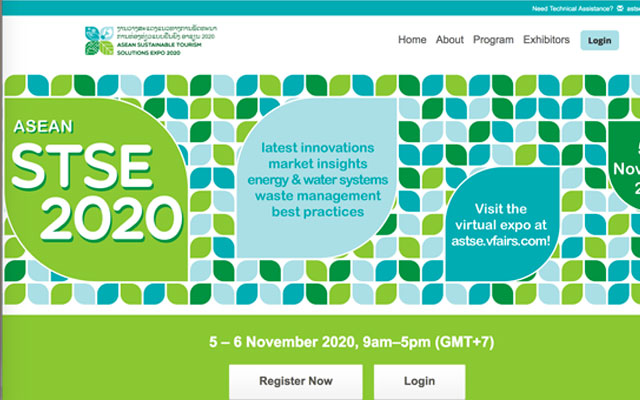
The annual ASEAN Sustainable Tourism Solutions Expo (ASTSE) will go online this year, kicking off on November 5 with a two-day free-to-access programme.
Usually hosted in Laos, the event is recognised as South-east Asia’s leading specialised tourism trade fair that centres on sustainable tourism and hospitality practices.
This year’s virtual edition, powered by the vFairs platform, will see 20 exhibitors from around the region and beyond showcasing their products, services, and initiatives. They represent several categories relevant to the theme of the event: eco-friendly hotel supplies, plastic alternatives, water and energy conservation systems, as well as initiatives and projects.
A highlight of the ASTSE is the symposia, which gathers renowned thinkers to discuss topics that matter greatly to the regional tourism industry.
Four live panel discussions will be conducted on November 5: The Future of Tourism in ASEAN, Crisis Communications for Tourism Destinations, Using Technology to Improve Sustainability in Hospitality Businesses, and How Can We Come Together to Support Tourism-Dependent Communities?
In addition, a workshop entitled Reducing Plastic Waste While Keeping Your Guests Safe will be held on the same day.
On the second day of the expo, visitors can attend the panel discussion, What to Do Now to Build Back Stronger and Greener?, as well as the workshop Cutting Operation Costs through Resource Efficiency.
There will also be several on-demand webinars that visitors can access any time during the expo.
ASTSE offers a face-to-face event opportunity for tourism industry professionals based in Laos. A physical expo will be held on November 6 to 7 at the Crowne Plaza Vientiane, featuring an additional 35 exhibitors, panel discussions, and a networking event.
ASTSE is organised by the Ministry of Information, Culture, and Tourism, with support from the Ministry of Natural Resources and Environment, the Lao National Chamber of Commerce and Industry, and the German Development Cooperation.
Singapore to allow visitors from China, Australia’s Victoria state from Nov 6
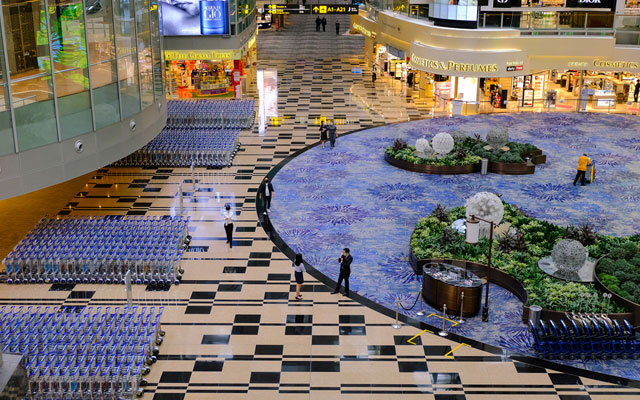
Singapore will lift border restrictions for visitors from mainland China and the state of Victoria in Australia, from November 6.
They will have to undergo a Covid-19 test upon arrival at the airport and will not need to serve a quarantine order if the result is negative.
The same applies to Singapore citizens, permanent residents and long-term pass holders returning from these two areas from November 6.
The Civil Aviation Authority of Singapore (CAAS) said on Thursday that both mainland China and Victoria were added to the list of countries that Singapore has unilaterally opened its borders to as they have comprehensive public health surveillance systems and had displayed successful control over the spread of the Covid-19 virus.
The risk of importation from these places is low, it added, noting that mainland China has a virus local incidence rate of 0.00009 cases per 100,000 people, while Victoria has a rate of 0.099 cases per 100,000 people.
Visitors travelling from both places can now apply for an Air Travel Pass (ATP) for entry into Singapore from November 6.
Applicants must have remained in either mainland China or Australia in the last 14 consecutive days prior to their entry. All visitors must also travel to Singapore on direct flights without transit.
During their stay, they will be required to use the TraceTogether app for contact tracing purposes, and must also bear any medical costs related to Covid-19.
CAAS said that it will also update the travel advisory to allow travel to mainland China and all of Australia.
This latest initiative follows the earlier lifting of border restrictions for visitors from Australia, excluding Victoria state; Brunei Darussalam; New Zealand and Vietnam.
As of October 29, CAAS has approved 1,375 applications from these places, and received 602 visitors, none of whom have tested positive for Covid-19 upon arrival, according to the aviation authority.
Bangkok Airways unveils unlimited domestic flight card
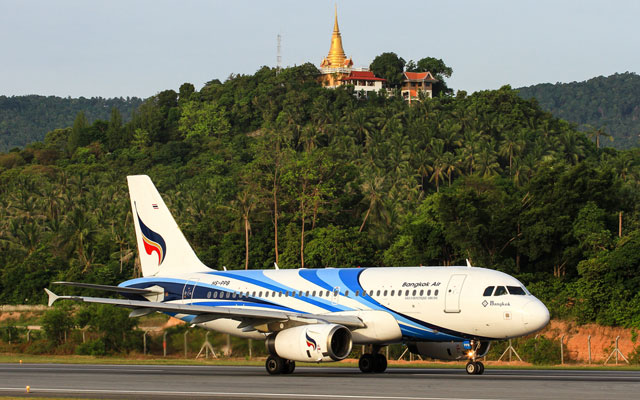
Bangkok Airways has launched the Bangkok Airways Elite Card, offering members unlimited travel on all domestic flights throughout 2021.
For a price of 100,000 baht (US$3,208), card holders will be able to fly economy class on all Bangkok Airways domestic routes for an unlimited number of times from January 1 to December 31, 2021.
Applications will open from November 1-30, and members can start booking their flights from December 16.
Furthermore, members will also be entitled to benefits such as qualification for Bangkok Airways Premier status, preferred seat assignments, priority airport stand-by status and reservations waitlist, premier check-in counter if any, free unlimited reservation modifications (travel date changes, flight changes), and a 10 per cent discount for Bangkok Airways inflight shopping.
In addition, members will receive Blue Ribbon Club lounge access with five extra lounge vouchers for companions; extra 10kg baggage allowance, in addition to the standard 20kg; as well as discount privileges and offers with the airline’s Beyond Flying Privileges partners.
New hotels: Wyndham Grand Flamingo Dai Lai Resort, Moxy Taichung, and more
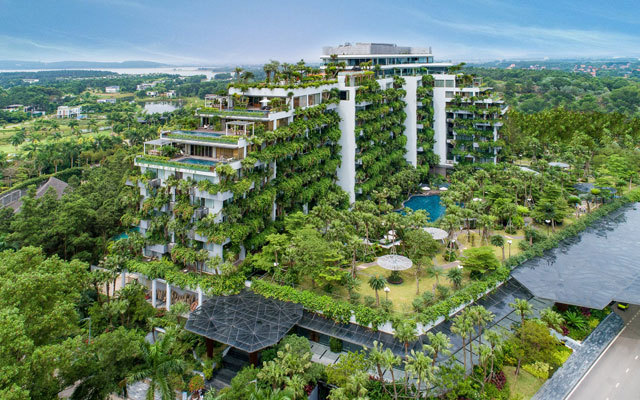
Wyndham Grand Flamingo Dai Lai Resort, Vietnam
Formerly known as Forest in the Sky Villas, the award-winning property in northern Vietnam has reopened as Wyndham Grand Flamingo Dai Lai Resort.
Wyndham Grand Flamingo Dai Lai Resort is nestled in a lush natural environment just north of Dai Lai Lake. Since its opening in 2018, the resort has clinched several accolades including the title of Landmark with the Most Hanging Gardens in Vietnam thanks to its iconic vertical garden architecture, covered by more than 7,000 trees and plants.
The expansive resort offers a collection of 179 premium Forest in the Sky villas with one to three bedrooms, all furnished generously with state-of-the-art amenities. There are 10 restaurants, bars and wine cellars to choose from, along with a comprehensive selection of 10 event venues that can accommodate gatherings of 20 to 2,000 guests.
Various exhilarating watersports, from kayaking to canoeing, are offered at the resort. If a relaxing vacation is preferred, guests can retreat into the SEVA Spa & Beauty Destination, where physical rejuvenation can be sought at unique facilities including the Gemstone sauna, the Oxy Hinoki room, Snow room and Infrared Cave.
For younger guests, the resort charms with its Virtual Reality Game Park, where go-kart and racing car simulators, shooting halls, eagle flight machines can be found. Active children can also be kept busy at the outdoor wonder park or the kids’ club; as well as with a plethora of outdoor activities like cycling, football and basketball.

Moxy Taichung, Taiwan
Marriott International has opened its first Moxy Hotel in Taiwan. The experiential and next gen-focused Moxy Taichung features 262 bedrooms, each equipped with the latest technology featuring a 55-inch flat screen television, high quality sound system, fast and free Wi-Fi, USB power outlets. Useful add-ons include a 24-hour ironing room for self-service ironing. Guests are greeted with a complimentary Got Moxy cocktail upon check in at Bar Moxy, which doubles up as a communal hub for dining, drinks, and social gatherings. Other amenities include a rooftop bar and 24-hour fitness centre. In addition, a tech-enabled meeting room is also available for any team brainstorming sessions in the hotel.
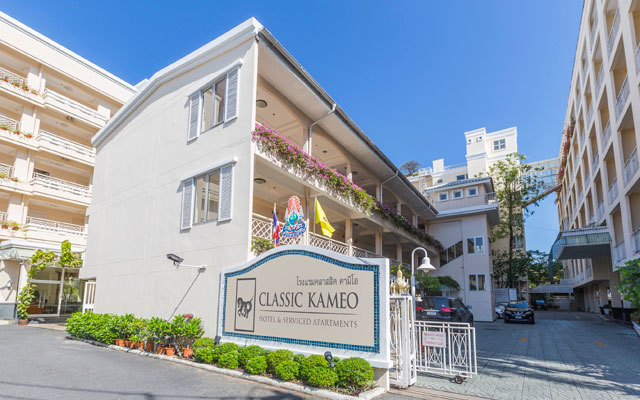
Classic Kameo Hotel & Serviced Apartments, Thailand
Cape & Kantary Hotels has invested over 100 million baht into the rejuvenation and rebranding of Karavel House Hotel, Sriracha in Thailand’s Chonburi Province.
Known as Classic Kameo Hotel & Serviced Apartments since October 1, the property caters to both short-term and long-term guests through 155 rooms across three room types – two-bedroom suite, one-bedroom suite, and a studio suite. All units come with a kitchen with standard kitchenware, a living room, a dining area, in-room Wi-Fi and other modern comforts.
The hotel packs in a host of guest facilities such as the California Steak Restaurant which serves European, Japanese, Thai and international cuisine; a fitness centre; a rooftop outdoor pool with whirlpool spa; and laundry service.
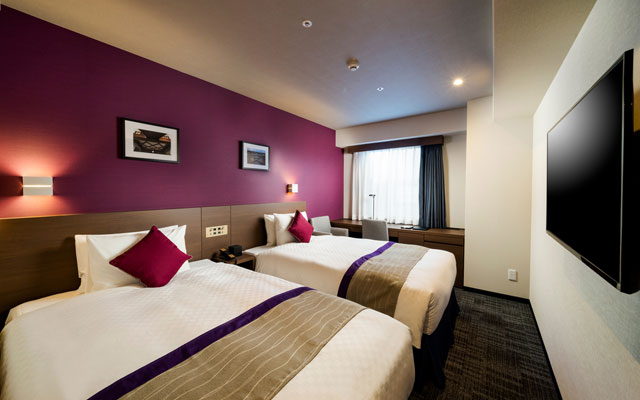
Best Western Plus Fukuoka Tenjin-minami, Japan
Located in the heart of Tenjin, Best Western Plus Fukuoka Tenjin-minami is the brand’s inaugural hotel in Fukuoka, a coastal city and the largest metropolis on the island of Kyushu. All 236 rooms in the midscale hotel feature flat-screen TVs with satellite channels, power showers, working spaces and complimentary Wi-Fi. Amenities include an all-day restaurant serving local and international dishes, a lounge, 24-hour gym and business centre.

Hyatt Regency West Hanoi, Vietnam
Located in Nam Tu Liem district, the newly renovated hotel marks Hyatt’s debut in the Vietnamese capital of Hanoi, and the third Hyatt hotel in Vietnam. Rebranded from an existing hotel, Hyatt Regency West Hanoi has undergone an extensive renovation throughout the property, including a redesign of its tranquil landscaped garden.
Spanning two towers, the hotel offers 519 guestrooms, including 114 suites and 129 long-stay rooms with kitchenettes and washing machines. The refreshed interiors feature a contemporary palette, coupled with modern facilities and floor-to-ceiling windows. On-site facilities include a sky bar with an outdoor terrace; a restaurant with open kitchens showcasing local and international cuisine; a lounge; an outdoor swimming pool; 24-hour fitness centre and spa. The hotel also has 823m² of meeting and event space, including a ballroom and several multifunctional meeting rooms.
Trafalgar sweetens staycation deal with heritage tour in Singapore

The Travel Corporation’s Trafalgar has launched a Near Not Far staycation tour itinerary to allow Singaporeans and local residents to see their backyard in a new light with immersive, exclusive experiences.
Highlights of its two-day/one-night Singapore Heritage Highlights itinerary include an exclusive tour of The Arts House and Victoria Theatre & Victoria Concert Hall (VTVCH), complete with a climb up the VTVCH clock tower.

The staycation tour is part of Trafalgar’s Near Not Far Series, which has been designed to offer travel lovers around the world the opportunity to enjoy deeper, richer experiences in their home country.
Through immersive Trafalgar exclusives like the Be My Guest dining experiences, guests on the Near Not Far staycation tours can connect with fellow travellers, while gaining new perspectives of familiar places through stories shared by their hosts, travel director, and local specialists.
Each travel director is a licensed tourist guide who will accompany guests throughout the tour, and will be able to provide an insider’s point of view.
During the Singapore Heritage Highlights excursion, guests will meet Trafalgar’s local specialist, heritage blogger Jerome Lim, on the tour of The Arts House and VTVCH, where he will share historical trivia about the two buildings. Each tour will host five up to 10 guests.
In a historic first, VTVCH’s clock tower will be open exclusively to Trafalgar’s guests to visit, and Lim will enlighten guests about the clock’s history and its connection to London’s Big Ben.
Additional highlights include a Be My Guest experience with Violet Oon at the National Kitchen at National Gallery and a guided tour of Kampong Glam that was once home to Singapore’s early migrants.
Prices for this two-day/one-night itinerary start from S$528 (US$387) per person for an Orchid Club Deluxe Room at Parkroyal on Beach Road (every Friday/Saturday) and S$628 per person for a Stamford Suite Room at The Capitol Kempinski Hotel (weekdays only). Package includes guided tours, a Be My Guest experience with Violet Oon, one-night hotel accommodation with breakfast, and coach transportation. Prices are based on twin-share and solo travellers can pay a single supplement from S$200.
ANA poised to launch new low-cost carrier
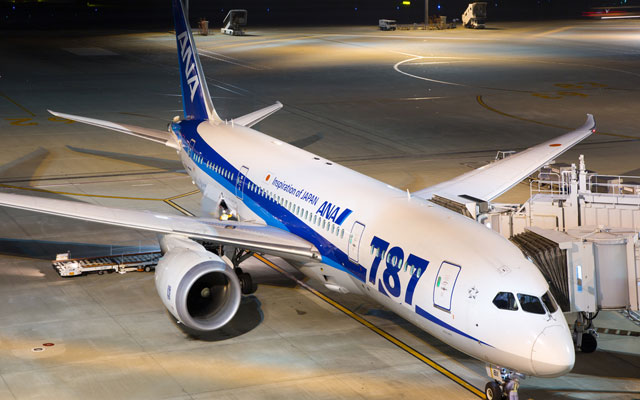
ANA Holdings, parent company of Japan’s All Nippon Airways, has unveiled plans for a new low-cost airline brand, as part of a major restructure to survive the Covid-19 crisis.
The third airline, which has yet to be named, will be positioned between the group’s premium brand ANA and its low-cost carrier Peach.
ANA said that the new carrier will start operations around fiscal 2022, and will utilise an all-Boeing 787 fleet offering more than 300 seats across two classes. The new carrier will target “demand for low-cost, medium-distance flights to destinations in South-east Asia and Oceania”.
“By using the current (ANA charter wing) Air Japan entity as the foundation, the brand will be capable of responding to sudden changes in demand and begin operations quickly after its establishment,” ANA said.
The group said its new business model is based around the idea that business travel demand “will decrease and likely not fully return to previous levels” due to the rise in remote working trends and growth of virtual meetings.
On the other hand, it foresees that “demand for leisure and visiting friends and relatives (VFR) will likely continue to remain robust”, with “potential growth from new segments including new working environments and multiple residency”.
Meanwhile, Peach will look to grow its customer base to business passengers and families, and expand to “medium-distance international routes” with new Airbus A321LR jets.
ANA also plans to retire 35 aircraft in 2020, up from the seven previously earmarked, of which 22 will be Boeing 777s.
Princess Cruises extends pause in Australia, New Zealand

Princess Cruises is extending its pause in operations for cruises departing from Australia and New Zealand through May 31, 2021, due to the uncertainty about when international travel restrictions might be lifted.
Guests who have booked these sailings will receive a refundable future cruise credit (FCC) equivalent to 100 per cent of the cruise fare paid, plus a non-refundable bonus FCC equal to 25 per cent of the cruise fare paid. To receive the above FCCs, no action is required by the guest or their travel advisor.

Alternatively, guests can request for a full refund before November 30, 2020, after which, they will receive the default offer above.
Princess said that it will protect travel advisor commissions on bookings for cancelled cruises that were paid in full, in recognition of the critical role they play in the cruise line’s business and success.







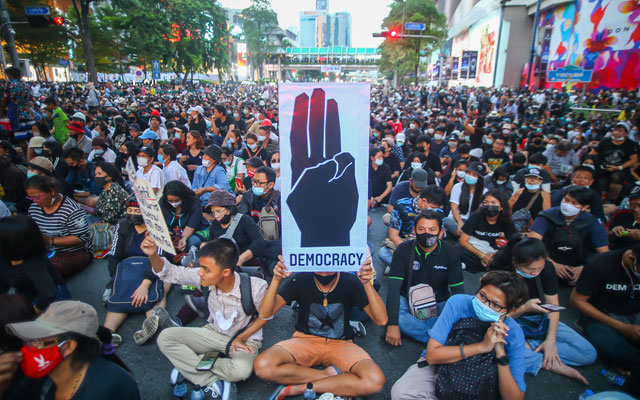
Earnest efforts by the Thai government to breathe life back into the country’s domestic tourism sector could be jeopardised by months-long nationwide protests calling for monarchy reform in the kingdom.
Amid the political turmoil in Thailand, the country’s domestic tourism recovery is getting stalled and delayed, reminding the tour operators that Covid-19 is not the only barrier for recovery, said GlobalData.
Johanna Bonhill-Smith, travel & tourism analyst at GlobalData, commented: “For the travellers’ confidence to return, a united front is not only essential for its destination image internationally, but also to encourage the domestic flows across the country.”
As the pandemic continues to ravage Thailand’s top inbound markets such as the US and India, GlobalData projects a slow international tourism recovery for the destination, as lack of spending and arrivals from its main contributors may cause further damage in the foreseeable future.
While domestic tourism has been hailed as a saviour for sector recovery, followed by regional travel, a different scenario is playing out across Thailand with protests stretching on for months. With demonstrations intensifying, it could spell trouble for domestic tourism, said GlobalData.
Bonhill-Smith added: “Covid-19 is one of the greatest crises the travel industry has ever faced and it has decimated industry revenues across the supply chain. However, the situation in Thailand reminds that travel and tourism companies should not ignore other circumstances/events. The pandemic has certainly rattled the travel sector but there are other factors that can still significantly hurt the demand.”
The Tourism Authority of Thailand (TAT) has been active in its response in attracting international tourists to the destination, including the launch of the Special Tourist Visa in early October to reboot inbound travel.
Bonhill-Smith concluded: “As a tourism-reliant destination, certain initiatives have been taken to ignite travel recovery. However, TAT and other travel and tourism related companies need to tread carefully while marketing amid protests as this may spark further concerns if extravagant tourism campaigns are rolled out when the country is suffering social unrest.”
Thailand is renowned as one of the most tourism-reliant destinations globally, receiving 39.7 million international visitors in 2019. Its domestic tourism contribution way surpasses this, with 113 million domestic trips taking place in 2019 – highlighting the significance of domestic travel.
GlobalData forecasts that international tourism to Thailand will decline by 38 per cent in 2020, while domestic will drop by almost 25 per cent, mainly due to Covid-19.