


When tourism activities in Malaysia came to a standstill during the almost-three-month-long movement control order period from March 18, imposed to stem the spread of Covid-19 in the country, tour and event specialist Laili Basir found his business rudely terminated.
Laili, who has been running traditional tours since 2010 and is the founder of Laili Basir Event Adventure, made the decision to use his expertise in a different way.

He moved online to sell virtual tours to anyone who is keen to experience destinations and attractions through their screen.
He told TTG Asia: “Selling virtual tours allowed me to build my customer base. I am certain that people would want to physically travel and visit those destinations at a later period, at their convenience. When they do, they can contact me for my tour services.”
While he started the initiative off with Whatsapp videos, he soon moved to the Malaysia Virtual Experience platform developed by Tourism Productivity Nexus as well as Zoom. These platforms allowed him to conduct pre-recorded virtual tours that showcase off-the-beaten-track destinations such as Semporna, Taman Negara National Park, Merapoh Caves and Ulu Baram in Sarawak, as well as extreme activities such as paragliding, free diving and rope swing, to a wider audience.
He said: “My intention is to offer the audience insider information that they will never find on Google or from travel agents.
“For instance, I provide live commentary during the viewing of my pre-recorded videos (and invite) participants to ask questions as they would on an live tour.”
While domestic travel is now possible and encouraged in Malaysia, Laili continues to conduct his virtual excursions as they provide his clients with an opportunity to learn about destinations before they commit to a paid physical tour sold by him.
Next on his cards is to offer virtual tours of Malaysia to foreign visitors keen on the country, through international travel platforms such as Airbnb Online Experiences.
“I am identifying unique experiences and destinations to offer which are currently unavailable on the platform,” he said.
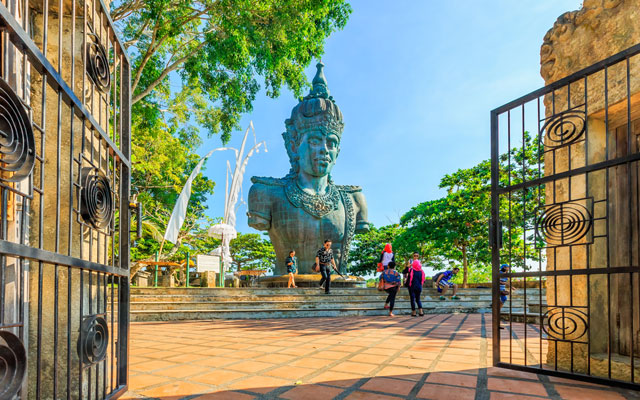












The Indonesian government is still considering whether to give Bali the green light to reopen to international visitors in September.
The travel ban on foreigners that the central government has set since April to curb the spread of coronavirus is likely not to be revoked by then, although the Bali administration has made known that the island is ready to receive international tourists from September 11.
Reopening the country to international tourists is a “very positive” move, but the government is seeking the right timing to do that, said state-owned enterprises minister Erick Thohir, who is also chairman of the national economic and Covid-19 recovery committee, during a web press conference on August 15.
He said that although Indonesia really needs foreign tourists, the government doesn’t want new Covid-19 clusters to emerge again.
According to a recent meeting among related ministers, including foreign affairs minister Retno Marsudi and coordinating minister of maritime affairs and investment Luhut Binsar Pandjaitan, safety remained the highest priority. Although the country was striving to get its economy back on track, the government did not want to go back to square one after its painstaking efforts to stem the Covid-19 spread, shared Erick.
“The reopening of destinations to foreign tourists is still under review. The vaccine may be available early next year,” Erick said.
Meanwhile, the country’s plan to establish travel bubbles hasn’t been burst. But the government is now exploring the possibility to include only Bali – or the island along with tourist destinations in other provinces – for the travel bubble scheme aimed at reviving its tourism industry.
The decision not to open the country as a whole is still under review, according to Hari Sungkari, deputy of infrastructure and destination development at the Ministry of Tourism and Creative Economy.
“It could be that the travel bubble will not involve a foreign country and the whole of Indonesia. It could be country A with Bali only, or country A with Bali and another region,” he said in a web press conference. “Or the bubble could be even smaller, that is, a point-to-point (travel bubble), in which (a destination) in a foreign country is (paired) with a destination in Indonesia.”
With talks for the project still underway, Hari expects that Indonesia will reach travel bubble agreements with partner countries only by year-end.
As travel bubbles will also require travellers to adhere to health and safety protocols, Indonesia Tourism Development Corporation will give them a fast track to enter its property, The Nusa Dua in Bali, said its director of business and development, Edwin Darmasetiawan.
Besides Bali, other tourist destinations that the government will propose for the travel bubble scheme were not disclosed by Hari. Ng Sebastian, owner of Incito Vacations, expressed hopes that the government would choose smaller islands, such as Lombok in West Nusa Tenggara, Belitung in Bangka Belitung Islands, and Bintan in Riau Islands.
The Covid-19 crisis has made the government’s target of attracting 18 million foreign tourists this year an impossible goal, said Hari. According to the government’s forecast, the number of foreign tourists in Indonesia will drop to around 2.8 to four million this year, from 16.1 million visitors in 2019.
Hari projects that the country would only realise its 18 million foreign tourist arrival target in 2024 or 2025, and that domestic tourism would recover to pre-pandemic levels only in 2023.