TTG Asia
Asia/Singapore Friday, 3rd April 2026
Page 899

Discova Asia gets ChildSafe certification

0

Global destination management specialist Discova has obtained the ChildSafe certification for its Asian teams and destinations, signifying the company’s commitment to protecting the well-being of children through responsible travel initiatives.

In an interview with TTG Asia, Michaela Connor, regional peopleworks leader for Discova, noted that there are many instances where child abuse could happen within tourism.
Discova’s team in Saigon has been ChildSafe certified along with other colleagues across Asia

“Largely, the abuse is a result of exploitation. One of the most common scenarios is found in orphanage tourism. Here, the children themselves become a tourist attraction as their disadvantage is exploited for the financial gain of others. Another shocking example, which gained significant media coverage, involves several cases where tourists have been targeted by locals using ill-looking children as emotional leverage. The claim being that the adult in this scenario wants some money to buy powdered milk formula for their child,” shared Connor.

“These are just two examples where tourists unwittingly support the exploitation of children. By thoroughly training all our staff, specifically our guides, we can give the best advice to our passengers and take the appropriate action to ensure exploitation and abuse is reported in the correct way,” she added.

Connor reflected that being able to influence customers towards child-safe behaviour may be the most difficult to enforce as part of upholding ChildSafe guidelines. “If, for example, we advise customers not to take photographs of local children, by law we cannot enforce this or take the camera off them. We can do our best to educate and influence a change in behaviour and that is always challenging no matter where you are in the world or industry you are in,” she explained.

Discova’s existing relationship with the ChildSafe Movement in Asia made training and certification a natural progression.

“Rolling out training across all our destinations in Asia was always going to be a big job so having some history with the organisation’s practises helped a lot,” said Connor.

Prior to certification, 12 Discova employees volunteered as ambassadors to represent ChildSafe within and outside of Discova. They undertook four assignments that expanded their subject matter knowledge prior to a virtual training course.

The virtual training course, led by Marie Duong, ChildSafe international coordinator, detailed seven ChildSafe tips for travellers and case studies the ambassadors could work on together. Post training, Discova employees sat for an exam and had three weeks to prepare to deliver parts of the same training and be assessed by Duong.

Upon passing the virtual training, exam and live assessment, these Discova employees were granted approval to train the rest of the Discova team.

In response to a question about tracking adherence to the programme, Conner said strategies are in place to raise awareness among partners, suppliers and local communities and to ensure staff are aware of guidelines.

“There will be monthly communications to all employees of what we have achieved that month related to ChildSafe and yearly refreshers and exams to test knowledge,” she added.

There are plans to take training to the Americas and the programme will be tailored to each destination.
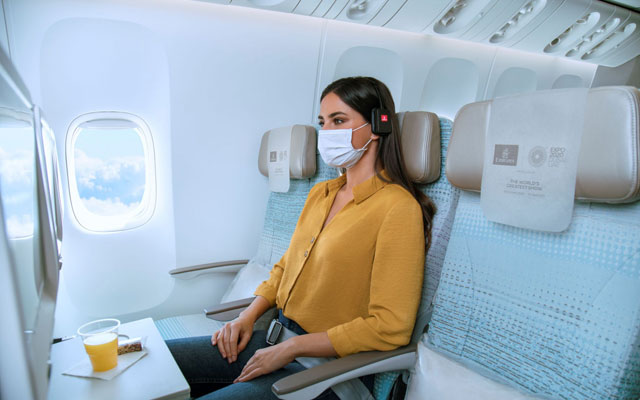
Emirates puts inflight privacy up for sale

0

Oakwood brings two Unlimited Collection hotels to life this month

0

Grand Park Kodhipparu beckons holiday-makers this Easter

0

Grand Park Kodhipparu, Maldives is offering an Easter Getaway package for families, which comes with free bed and breakfasts for children under nine and festive amenities.

Available for a stay period from March 15 to April 30, 2021, the package includes 20 per cent off on speedboat transfers, daily breakfast and dinner for two adults at all-day dining restaurant The Edge; a bottle of house wine upon arrival; an Easter Chocolate amenity; couples mixology class; and one-time four-course set dinner with a complimentary bottle of wine for two people at the award-winning, Firedoor restaurant.

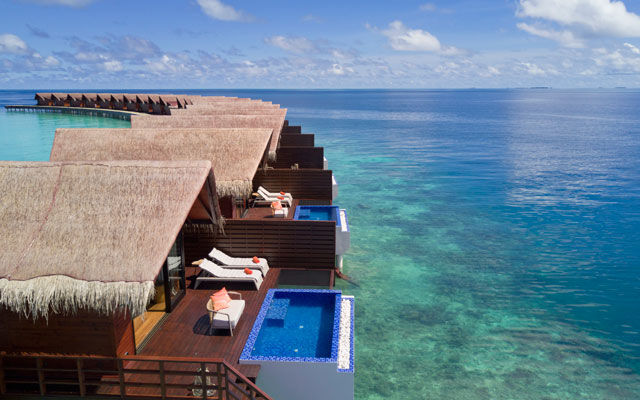
Ocean pool villas at Grand Park Kodhipparu, Maldives

The resort promises six exclusive benefits for direct bookings – best rate guarantee, exclusive member’s rate for Park Rewards members, flexibility, pre-arrival requests assistance, free Wi-Fi during stay, and a tree planted under the hotel group’s Room for Trees programme with every booking made through its website.

Myanmar’s tourism players call for solidarity after military coup

0

Hotels on sale in Indonesia belie optimistic outlook for sector

0

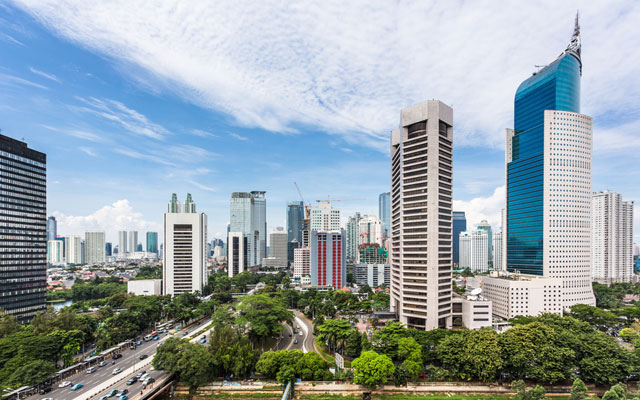
The prospects for Indonesia’s hospitality sector may be less grim than painted in recent media reports on more hotels closing or going up for sale amid the pandemic, with major property consultants saying that they are not seeing an uptick in hotel sales within the country.

On the contrary, a flurry of new hotel openings across the country proves that demand remains strong.

Long-term outlook for Indonesia’s hotel industry remains bright

Aldi Garibaldi, senior associate director of capital markets & investment services at Colliers International Indonesia, said selling property assets would usually occur when lenders were putting significant pressure on borrowers.

“There are steps to take to sell a property and (hotel owners) will usually hire a consultant to manage the process – which we are not seeing happening,” he said.

Corey Hamabata, senior vice president for Asia Pacific investment sales at JLL Hotels and Hospitality Group, said: “I would counter (news reports that many hotels in Indonesia are up for sale) with the question: ‘How many properties have we actually seen being transacted in this environment?’ As far as we are aware, (there have) been very few.”

Historically, in times of crisis, sales activity of real estate businesses slows down significantly because there is a lot of uncertainty among buyers and sellers. “We saw this last year when Asia-Pacific transaction volumes were down by nearly 60 per cent year-on-year,” Hamabata said.

Unlike the global economic crisis 12 years ago where lenders were forcing borrowers to sell their assets, Hamabata was not seeing that same storyline unfold amid the pandemic so far.

He also saw that hotels in Indonesia were not performing too badly – thanks to its huge domestic market – such that it would trigger hotel owners to sell their properties.

As such, the move by a handful of hotel owners to sell their properties in Indonesia was more likely due to strategic reasons, such as finding better opportunities to invest elsewhere, he said.

As well, the occurrence of new hotel openings in Indonesia indicates that there are opportunities in the market, said Satria Wei, managing partner at Hotelivate. “In fact, I am handling a couple of hotels which are preparing to open this month. Investors would not dare do so unless they see an opportunity,” he added.

Satria also noted that Indonesia’s hotel industry had started to recover last October-November. “It slowed down again (due to activity restrictions), but this proves that demand and opportunity are still there,” he said.

RedDoorz provides temporary housing for underprivileged women under CSR initiative

0

Balanced approach needed to tackle Covid-19, says tourism minister

0

Sabah woos Thai tourists back

0

Pandemic shrinks Japan’s travel surplus by a fifth in 2020

0

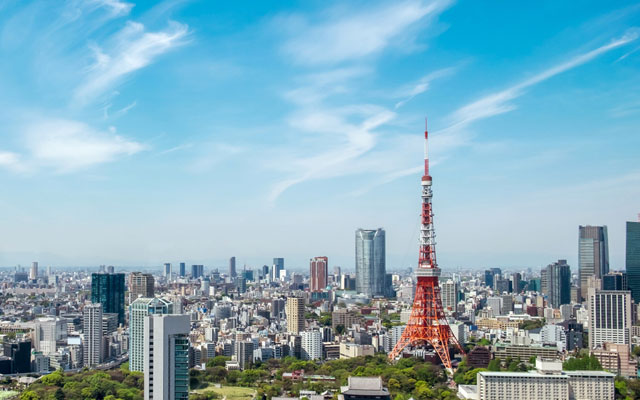
Japan’s travel surplus in 2020 shrank by almost one fifth year-on-year as a result of international travel bans implemented to stop the Covid-19 spread, marking the first year of decline since 2015.

The travel balance, which reflects the amount of money spent by international visitors to Japan versus Japanese spending abroad, dropped from a record ¥2.7 trillion (US$24.5 billion) in 2019 to ¥562 billion (US$5.3 billion) last year, according to government data. It did, however, remain in the black, escaping a return to deficit that Japan’s travel balance has experienced since data compilation began in 1996 until 2014.

Visitor arrivals to Japan in 2020 tumbled by 87 per cent year-on-year

A mere 4.1 million tourists visited Japan in 2020, the lowest level since 1998, as the country tightened up its borders in response to the pandemic. It marked a 87 per cent decline in arrivals from 31.9 million in 2019, which was a record high and the seventh consecutive year of growth, according to the Japan Tourism Agency.

The Japanese government had aimed to welcome 40 million tourists in 2020, a goal that had seemed within grasp as the number of arrivals had increased year-on-year up till 2019. Visitors from east Asian nations comprised more than 70 per cent of arrivals to Japan that year, with particularly high numbers from China (9.6 million), South Korea (5.6 million), Taiwan (4.9 million) and Hong Kong (2.3 million).

The hosting of the 2020 Olympic and Paralympic Games was expected to inject a further US$300 billion in income from tourism. Postponement of the event to 2021 has given Japan hope to recoup some of the benefits of hosting, but with the ability to welcome international spectators still unclear, the travel trade remains subdued about the prospects for Japan’s international tourism in 2021.