

IHG signs Holiday Inn & Suites in Ballarat
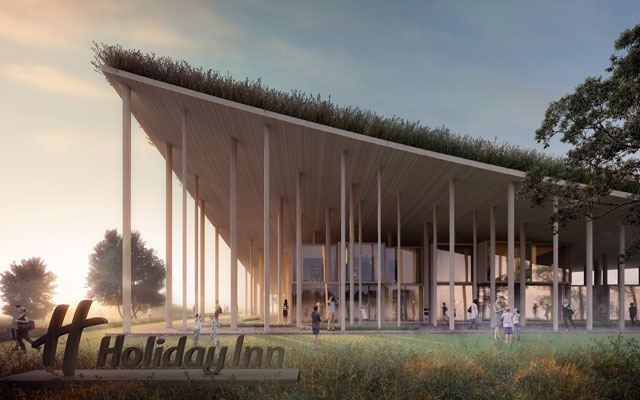
A 110-key Holiday Inn & Suites branded property is coming to Ballarat, heralding a new chapter in IHG Hotels & Resorts’ expansion into regional Victoria and a new partnership with hotel owners, Forte Group.
Expected to open in 2024, Holiday Inn & Suites Ballarat Goldfields will offer 400m² of flexible meeting space including a large ballroom with rural views, alongside a 90-seat restaurant and bar, day spa, gym and outdoor pool.
IHG’s Holiday Inn brand has undergone a global transformation over the last 18 months and its next-generation design includes open lobbies, as well as F&B and suite offerings. Holiday Inn Werribee, which just opened last week, boasts Holiday Inn’s next-generation brand hallmarks.
Raffles Hotels & Resorts marches on with global expansion
Raffles Hotels & Resorts continues to grow its global footprint, with the planned opening of flagship properties in Dubai, Udaipur, Bahrain and Macau later this year.
Set to open its doors in 4Q2021, Raffles the Palm Dubai will be the first Raffles resort on the Palm Jumeirah – the world’s largest man-made island and archipelago. Located across 100,000m² of landscape on the West Crescent, the 389-key property will feature eight bar and restaurant concepts.
Raffles Al Areen Palace, Bahrain is located near the island’s protected wildlife park and reserve, and will offer 78 opulent pool villas, and a spa. A collection of one- and two-bedroom villas will feature living and dining areas, an office, and master bedrooms with ensuite bathrooms.
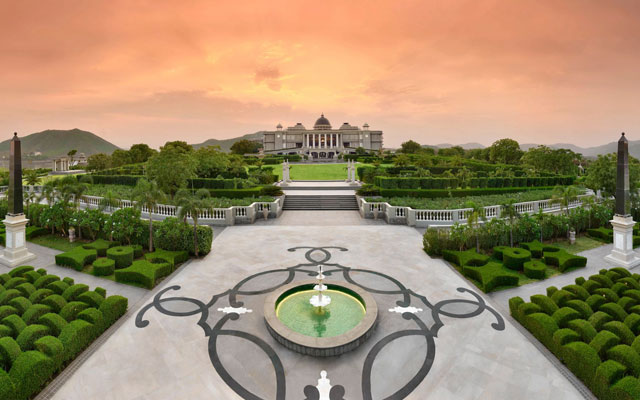
Raffles Udaipur, India’s first Raffles hotel, is set to open this year on a 8.4ha private island in Udai Sagar Lake. Surrounded by spectacular hills and a view of the 400-year-old temple in the background, the property has 101 rooms, each with a private pool.
Located on Galaxy Macau’s east promenade, Raffles at Galaxy Macau is an architectural landmark featuring a glass airbridge that connects the two towers on every floor. The property will be home to 450 suites, with some featuring private pools and gardens.
In 2022, Raffles will debut flagship locations in Doha and Jeddah.
A cultural tribute to Qatar’s heritage, the Iconic Towers in Lusail, a representation of Qatar’s national seal, will be home to the new Raffles Doha. A property with 132 suites and 49 apartments, the combo hotel will feature entertainment and recreational facilities, boutique shopping, movie theatres, restaurants and a cigar lounge, as well as meeting spaces.
Inspired by the rich history of Saudi Arabia and Jeddah’s old town architecture, Raffles Jeddah will have 181 guestrooms – including a wedding suite and penthouse suite – and 188 branded residences. Alongside six restaurants and lounges, there will be a library, spa and fitness club. The hotel’s meeting facilities include a 1,500m² ballroom overlooking the corniche and 1,000m² of conference rooms.
Cloudbeds partners with Rakuten Travel Xchange to extend reach
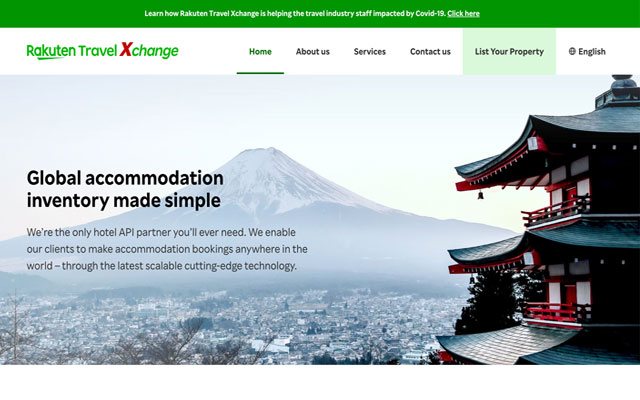
Hospitality management platform Cloudbeds has inked a partnership with Rakuten Travel Xchange, the hotel wholesale and travel technology division within the Rakuten Group, to drive global hotel distribution.
The collaboration connects Cloudbeds with Rakuten Travel, a major Japanese OTA, and more than 400 B2B partners connected worldwide through API connections, travel agent portals, and websites. These distribution channels allow Cloudbeds to extend its reach to the Rakuten Travel Xchange customer base through a single connection.
In addition, Rakuten Travel Xchange adds Cloudbeds’ inventory of properties that use its technology platform to manage all aspects of their business, from booking engines to payments.
Anna Tsujihata, head of hotel contracting and connectivity, of Rakuten Travel Xchange, said: “We are always seeking high-value partners to complement our expanding platform. With Cloudbeds now part of our global distribution platform, we expand our offerings to travellers seeking unique properties with superior guest experiences.”
Sebastian Leitner, vice president of partnerships for Cloudbeds, added: “As global travel reopens, we want our properties to be available to the largest customer base possible. By partnering with Rakuten Travel Xchange, a major global player and distribution channel in Japan; we significantly increase our global footprint.”
Pascal Bertrand helms Anantara Iko Mauritius Resort & Villas
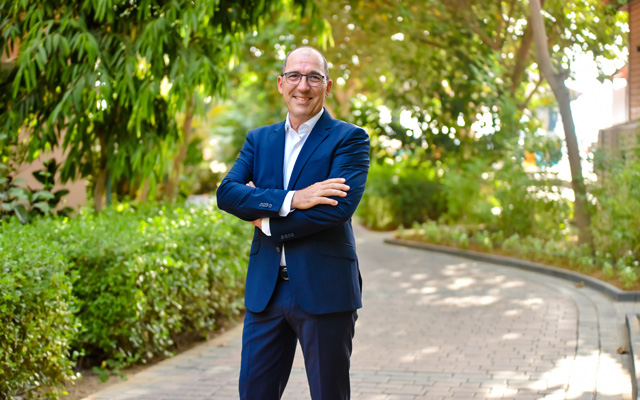
Anantara Iko Mauritius Resort & Villas has appointed a new general manager, Pascal Bertrand.
Bertrand brings over 35 years of luxury hospitality experience from around the globe, having worked with international hotel brands globally.
The French national got a taste for the hotelier life when he started his career in F&B, as sous-chef for Eleven Maple Street Restaurant in Florida. He continued his career in F&B by joining The Ritz Carlton in Atlanta as assistant banqueting manager, followed by The Ritz Carlton Cancun and The Ritz Carlton in Florida.
He progressed through the ranks of hotel operations before taking his first general manager position at the Legends Hotel Mauritius, in 2010.
Vietjet reports higher year-on-year revenue

Vietnamese budget airline Vietjet has recorded higher year-on-year revenue, earning VND127 billion (US$5.5 million) in the first half of 2021, despite the pandemic.
According to financial statements released by the Vietjet Aviation Joint Stock Company, Vietjet’s air transport revenue reached VND2,973 billion in 2Q2021, recording a 51 per cent year-on-year growth thanks to high travelling demand in April.

The airline has also sought ways to lift the cargo sector despite the impact of the fourth wave of Covid-19 in Vietnam this quarter.
Vietjet’s consolidated revenue totalled VND4,337 billion in 2Q. Revenue in passenger transport for 1H2021 was recorded at VND5,818 billion, generating a post-tax profit of VND13.7 billion. The airline’s consolidated revenue and consolidated post-tax profit were reported at VND8,386 billion and VND127 billion, respectively – both higher compared to 2020.
Amid the aviation slowdown, Vietjet has expanded its business portfolio by venturing into financial and project investments which has raked in more than VND1,756 billion of revenue. Vietjet’s total assets reached VND44,000 billion by the end of June.
Vietjet has transported more than 4.8 million passengers on 34,000 flights over the first six months of the year. The airline has also focused on refining operation protocols and boosting its cargo operations, resulting in a 40-45 per cent year-on-year growth.
Club Med promotes Rachael Harding to CEO ESAP

Club Med has appointed Rachael Harding as the CEO of East, South Asia and Pacific, succeeding Xavier Desaulles, who led Club Med Asia Pacific Markets for the past five years.
In her new role based in Shanghai, Harding will lead the stewardship of the Asia Pacific (excluding Greater China) region as they navigate the current market dynamics and prepare for an aggressive rebound. She will also drive the advancement of a profitable growth strategy focused on nurturing matured markets and elevating the emerging markets.
Harding joined Club Med in 2018 as the general manager for Club Med Pacific (Australia and New Zealand). Over three years, her leadership led to the successful growth of the Pacific market by 26 per cent.
Harding possesses over 20 years of experience in the travel sector, spanning multiple sectors of the tourism industry across retail, corporate & wholesale in the Australian, New Zealand, UK and European markets.
Prior to joining Club Med, she spent 15 years working with The Travel Corporation on brands including Trafalgar and Contiki in various sales, distribution and marketing roles.
Qantas and Jetstar furlough 2500 staff due to Sydney’s lockdown
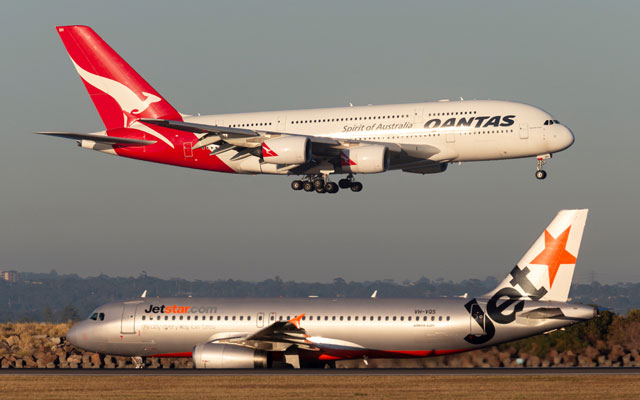
Around 2,500 frontline Qantas and Jetstar employees will be stood down for an estimated two months in response to ongoing Covid-19 outbreaks.
The Qantas Group said in a statement that the stand-downs are a temporary measure to deal with a significant drop in flying caused by the lockdown in Greater Sydney and the knock-on border closures in all other states and territories. No job losses are expected, it added.
The decision will directly impact domestic pilots, cabin crew and airport workers, mostly in New South Wales but also in other states. Employees will be given two weeks’ notice before the stand-downs take effect, with pay continuing until mid-August.
Income support in the form of government disaster payments will be key to helping eligible employees get through this challenging period, the airline said, adding that it welcomes the targeted federal government support offered for those stood down outside of declared hotspots and to retain domestic aviation capability.
Qantas Group CEO Alan Joyce said the difficult decision to trigger stand-downs reflected the reality confronting many businesses operating in New South Wales. “This is clearly the last thing we want to do, but we’re now faced with an extended period of reduced flying and that means no work for a number of our people,” he said.
“We’ve absorbed a significant amount of cost since these recent lockdowns started and continued paying our people their full rosters despite thousands of cancelled flights.”
Joyce noted that Qantas and Jetstar have gone from operating almost 100 per cent of their usual domestic flying in May to less than 40 per cent in July because of lockdowns in three states.
“Hopefully, once other states open back up to South Australia and Victoria in the next week or so, and the current outbreak in Brisbane is brought under control, our domestic flying will come back to around 50 to 60 per cent of normal levels,” he said.
Joyce predicted that based on current case numbers, Sydney’s borders will remain closed for at least another two months. “We know it will take a few weeks once the outbreak is under control before other states open to New South Wales and normal travel can resume,” he said.
“Fortunately, we know that once borders do reopen, travel is at the top of people’s list and flying tends to come back quickly, so we can get our employees back to work.
“This is extremely challenging for the 2,500 of our people directly impacted, but it’s also very different from this time last year when we had more than 20,000 employees stood down and most of our aircraft in hibernation for months on end.”
Joyce stressed that vaccinations will play a key role in aviation’s recovery. “The vaccine rollout means the end is in sight and the concept of lockdowns will be a thing of the past. Australia just needs more people rolling up their sleeves as more vaccine arrives,” he said.
“The challenge around opening international borders remains. There are still several thousand Qantas and Jetstar crew who normally fly internationally and who have been on long periods of stand-down since the pandemic began. Higher vaccination rates are also key to being able to fly overseas again, and finally getting all our people back to work.”
Regent Seven Seas Cruises unveils Japan itinerary for 2023
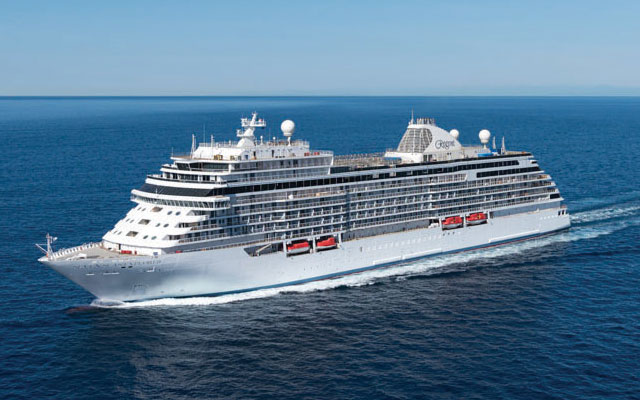
Regent Seven Seas Cruises has rolled out a destination-immersive Japan itinerary for 2023, with a newly added 10-night Tokyo round-trip voyage.
Dubbed Captivating Japan, the voyage is now open for reservations, with embarkation scheduled on 25 April, 2023, aboard Seven Seas Explorer.
The experience includes free unlimited shore excursions in every port, alongside a free three-night pre- or post-cruise land programme in Tokyo.
The cruise starts and ends at Yokohama(Tokyo), taking in sights and experiences from the 7th-century Sensoji Temple in Asakusa, to Odaiba Observation Deck, located in the headquarters of Fuji Television, and world-famous Ginza, the premier shopping and entertainment district.
During the pre- or post-voyage land programme, guests can discover ‘shogun’ history and Japan’s tradition of art at museums, stroll gardens, and explore Asakusa, Tokyo’s Old Town founded in the early 7th century. Other places of interest include Nakamise-dori, The National Museum of Nature & Science, Imperial Palace Plaza, and Meiji Shrine.
Docking at Kobe, visit temples and shrines of Kyoto, Japan’s old imperial capital, and ancient Nara, the cradle of Japanese arts, literature and crafts, with its magnificent shrines and temples, and park famed for resident deer. Guests can also tour Osaka’s imposing castle or shop for exotic mementos.
Regent Seven Seas Cruises is also sailing 14-night cruises from Hong Kong to Tokyo in 2023, with stopovers in Taipei, Sakishima Islands, Shanghai, Seoul, Kochi and Kyoto.
Go on an Ultimate Summer Retreat at Grand Hyatt Macau
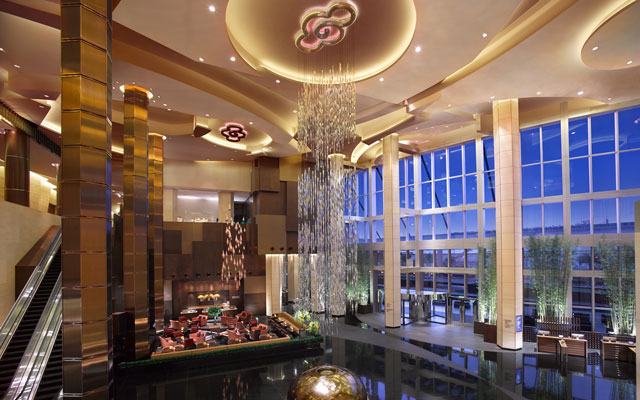
Grand Hyatt Macau has launched the Ultimate Summer Retreat package, offering complimentary breakfast for two, a MOP600 (US$75) hotel credit per night, and late check-out.
Other perks that come with the package includes a welcome gift for child; 20 per cent off dine-in at Beijing Kitchen, Lobby Lounge and in-room dining service; and 20 per cent off spa treatments at Isala Spa during the stay.
Guests can also select from one of two offers: a two-hour admission ticket to Kids’ City, a children’s amusement park in City of Dreams; or complimentary in-room mini bar for non-alcoholic drinks and snacks.
The package price starts from MOP1,599, and is available for bookings and stays from now until September 29, 2021. Guests can enter special code FAMSUM when making bookings here to enjoy the promotional offer.

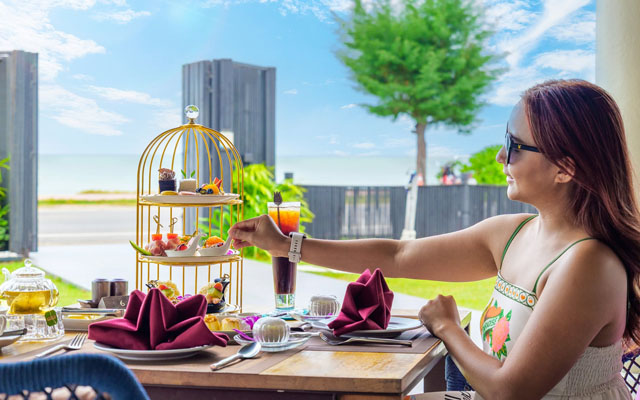






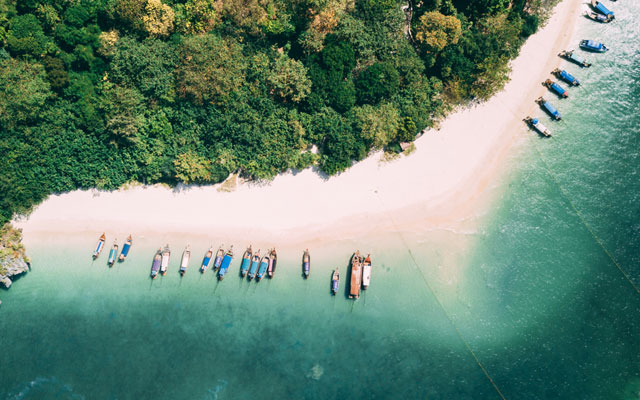
The Tourism Authority of Thailand (TAT) has confirmed plans to reopen Krabi and Phang Nga to fully vaccinated international tourists are set to start within this month.
Krabi and Phang Nga are scheduled to reopen selected areas under a 7+7 model. This will allow foreign tourists under the Sandbox programme to reduce the mandatory stay in Phuket from 14 to seven days, after which another seven nights can be spent in Krabi (Ko Phi Phi, Ko Ngai, and Railay Beach), and Phang Nga (Khao Lak and Ko Yao).
The 7+7 model aims to provide international tourists with more options to visit multiple destinations during their trip to Thailand. Krabi and Phang Nga are ideal for this given their proximity to and ease of access from Phuket.
At the same time, TAT also reiterated that both the Phuket Sandbox and Samui Plus programmes are going ahead as usual.
Thanakorn Wangboonkongchana, spokesperson of the Centre for Economic Situation Administration, said Thailand’s prime minister Prayut Chan-o-cha had been keeping a close watch on the Phuket Sandbox and Samui Plus programmes, and voiced confidence that the country’s reopening plan could proceed in a way that ensures the health and safety of both the tourists and local people.
TAT said that the new Covid-19 cases in Phuket were mostly detected among locals, construction camp workers and domestic travellers; with only a small number of cases found among international arrivals.
From July 1 until August 1, Phuket recorded 14,910 international arrivals under the Sandbox programme. Of these, 34 tested positive for Covid-19 and had been sent for medical treatment. To contain local transmission, Phuket has stepped up screening measures on domestic travellers, effective from August 3-16.
Phuket, Krabi, and Phang Nga are declared among the 11 Controlled Areas or orange zone provinces in Thailand’s expansion of the Covid-19 restrictions from August 3-31.
Meanwhile, the recently-reported 54 new cases on Koh Samui from a restaurant cluster has been brought under control, TAT said, adding that none of the infections were related to foreign tourists under the Samui Plus scheme or those who continued their journey from the Phuket Sandbox programme.
From July 15 to August 1, Surat Thani recorded 137 international arrivals under the Samui Plus programme, with one person testing positive for Covid-19. In addition, there were 211 tourists from the Phuket Sandbox programme. Surat Thani has since stepped up virus control measures.