TTG Asia
Asia/Singapore Monday, 6th April 2026
Page 683

IHG, SHG beef up partnership for portfolio expansion in Vietnam

0

IHG Hotels & Resorts (IHG) has deepened its decade-long relationship with Sun Hospitality Group (SHG), a member of Sun Group, to develop four hotels across two destinations in Vietnam, which will result in 2,709 rooms to meet the rising demand from domestic and international guests.

IHG’s Crowne Plaza, Holiday Inn Resort and voco brands will take centrestage in the expansion of Ba Na Hills – Vietnam’s leading highlands entertainment complex – while the Holiday Inn Resort brand will debut in Quang Ninh Province, within Yoko Park – the first large-scale hot spring resort in the country.

IHG Hotels & Resorts and Sun Hospitality Group signed off on a strategic alliance

A MoU has also been signed by both to bring Vignette Collection onsen-wellness resorts and products across Vietnam, in collaboration with world-renowned spa and wellness consultant, Raison d’Etre.

The 178-villa Sun Onsen Village, Vignette Collection and 194-villa Quang Hanh Onsen Village, Vignette Collection, located adjacent to the popular Yoko Onsen, are the first two projects under cooperation.

The alliance announcement coincides with two major milestones – the 15th anniversary of Sun Group and the 10th anniversary of InterContinental Danang Sun Peninsula Resort.

As part of the agreement, IHG and SHG intend to work together on learning and development, quality assurance, joint creation of new lines of products and services, as well as corporate social responsibility efforts in Vietnam.
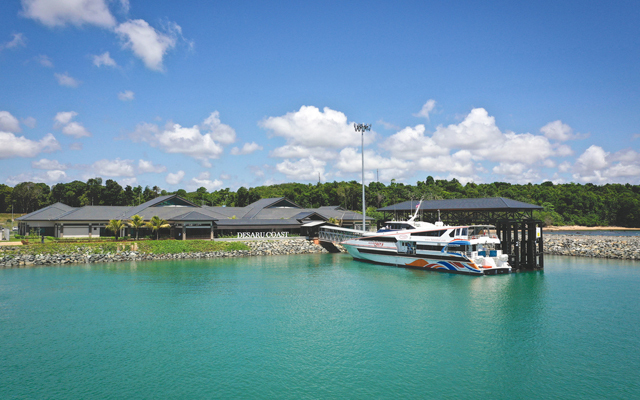
Singapore-Desaru ferry connection to commence July 7

0

New hotels: The Westin Yokohama, Buahan, a Banyan Tree Escape, and more

0

The Westin Yokohama, Japan
Opened on June 13, the 373-key hotel in Yokohama’s new central business district, Minato Mirai, offers guests access to popular sightseeing spots for a good mix of business and leisure.

Designed by leading architecture and design firm G.A. Design of London, The Westin Yokohama draws inspiration from the concept of biophilia, and incorporates elements that reflect Yokohama’s history as a port city and its local culture.

The lobby on the 23rd floor offers stunning views towards Mount Fuji and features a soaring indoor garden with lighting to convey the Japanese philosophy of “shinrin yoku”, also known as forest bathing.

The Westin’s six pillars of well-being – Sleep Well, Eat Well, Move Well, Feel Well, Work Well, and Play Well – are brought into the hotel’s guest experience, such as through Heavenly Bath rain showers in guestrooms.

Other facilities include five F&B outlets, a dedicated wellness floor, as well as indoor and outdoor event spaces.

Buahan, a Banyan Tree Escape, Indonesia
The adults-only Buahan, a Banyan Tree Escape is Banyan Tree Group’s newest brand and property.

Set in an off-the-beaten-track, untouched part of northern Ubud, the resort adopts a “no walls, no doors” concept. There are 16 balés (villas), and all are designed to blend spacious indoor-outdoor living areas with 180-degree panoramic views and sounds of nature through a bold taste of ‘The Naked Experience’ where only a thin veil separates guests from nature.

At the resort’s heart are the Open Kitchen and Living Room, both open dining and lounge spaces created to evoke a sense of community. Here, guests are invited to learn how the resort reinvents the basics of food and drink through its unique zero-waste farm-to-table concept, local sourcing philosophy and heritage techniques. The menu concept, 70 per cent of which is plant-based, is sourced locally within a one-hour drive from the property.

The resort’s Toja Spa adopts well-being traditions from Buahan village and its surrounding areas, offering an “open” garden experience.

A calendar of daily, weekly, and monthly events are offered to give guests a richer experience of the destination and surroundings.

Parklane Bohol Resort and Spa, the Philippines

Parklane Bohol Resort and Spa beckons travellers with a private beach cove, breathtaking views of the sea, sky and gardens, and well-appointed rooms.

Opened in May, the beachfront resort has eight rooms in each of its 11 two-storey villas. Each room has a balcony.

Facilities include three swimming pools, a restaurant, and spaces for corporate functions, team building activities and destination weddings.

Fueling travel recovery and revenue with loyalty

0

Over the past two years, even as the pandemic created intense challenges for the travel industry, loyalty programmes have proven to be a steady beacon of commercial strength and opportunity for their parent companies.

Despite not having the same opportunity to engage in the typical sense, it was clear that there was still strong interest among both loyalty programmes and their members to maintain their relationships with one another. And now, as travellers return to the skies and roads across Asia, there is a unique opportunity for these brands to capitalise on this trend and further realise the potential of their loyalty programmes through ancillary revenue opportunities.

Here are three key insights to help travel brands fuel innovation and travel recovery and beyond by leveraging their loyalty programmes:

The pandemic didn’t slow appetite for loyalty programmes
Once considered cost centres, loyalty programmes are now lauded as profit powerhouses. Loyalty programmes have steadily gained prominence in the last decade, but most notably over the past two years. After generating significant revenue – especially during a time of low travel demand – travel rewards programmes have established a newfound reputation within both their parent companies and the travel industry at large as drivers of revenue.

Furthermore, in spite of travel restrictions, travel brands maintained strong engagement between their loyalty programmes and their members during the pandemic. Now, there is a real opportunity in Asia to accelerate engagement further to gain an edge in the recovery. The millions of loyalty programmes members are the first to fill seats, and they’ll be the most frequent travelers in the future, too.

The increasing commercial importance of loyalty programmes to their parent companies since the pandemic has unlocked additional resources and accelerated the pace of innovation. And I expect this is a trend that will continue well beyond the travel recovery.

Loyalty currency retailing unlocks immediate revenue opportunities
With the emerging travel recovery in Asia, travel brands have a unique opportunity to bring their loyalty programmes to new heights. Loyalty currency retailing – selling points/miles to programmes members –represents an untapped market and opportunity to stimulate ancillary revenue for the airline industry in the Asia-Pacific region.

While mileage sales and promotions are a fixture in North American markets – and contributed heavily to the region’s rebound – there is a growing demand for mileage retailing across Asia. For airlines that leverage currency retailing today, we’ve found Asia-Pacific members are not only buying more points/miles, but also buying more often than members in the rest of the world. This is a positive sign that the market demand is there and all travel brands need to do is tap into their own potential.

Members who buy loyalty currency become more valuable
The bottom line will always exist, but the true value in loyalty programmes and their retailing opportunities lies in their name: cultivating real and authentic loyalty. Immediate ancillary revenue is great, but building member relationships and programmes satisfaction are what will drive long-term growth, revenue, and retention. One strategy for cultivating this authentic loyalty is through points/miles retailing.

Across our extensive global network of loyalty partners, we’ve found members who buy miles have higher lifetime value. After one mileage purchase, a member will spend 31 per cent more across their programmes in the subsequent 12 months. To stay competitive in travel recovery, finding those touchpoints and opportunities to foster programmes engagement will make all the difference for a travel brand and their key consumers.

As airlines navigate travel recovery it may feel like change is the only constant, but there’s a silver lining: uncertainty opens up space for innovation and experimentation. Loyalty programmes in Asia have a unique opportunity right now to create value and revenue by embracing new products and solutions designed to tackle the challenges of today and the ones to come.

Waldorf Astoria readies for Malaysia debut

0

Waldorf Astoria Hotels & Resorts will enter the Malaysia market in 2024 with the 279-key all-suite Waldorf Astoria Kuala Lumpur.

The opening builds on Hilton’s long-established partnership with Tradewinds Corporation.

The 279-key all-suite Waldorf Astoria Kuala Lumpur will sit on prime land

“As one of Asia’s key gateway cities, Kuala Lumpur, and to a larger extent, Malaysia, has always been a priority market for Hilton,” said Guy Phillips, senior vice president, development, Asia and Australasia, Hilton.

“Waldorf Astoria Kuala Lumpur is a fantastic addition to our suite of brands in this cosmopolitan city, and we look forward to further expanding our footprint as we welcome more guests with Hilton’s award-winning signature hospitality.”

Renovation and construction will start in 3Q2022, and the final product will feature custom-designed interiors and furnishings, five distinctive restaurants and generous meeting spaces.

The property will sit within Kuala Lumpur’s Golden Triangle, placing guests within walking distance of the city’s top malls and attractions, including Pavilion Mall and Suria KLCC, in the Bukit Bintang shopping and entertainment district. KL Sentral station and Kuala Lumpur International Airport are 10 minutes and an hour’s drive away, respectively.

Nils-Arne Schroeder, vice president, Luxury – Asia Pacific, Hilton, said: “The debut of Waldorf Astoria in Kuala Lumpur reinforces our commitment to bring unrivalled luxury to landmark destinations around the world and this launch in the metropolis of Kuala Lumpur will mark an important milestone for our luxury presence in Asia Pacific.”

Waldorf Astoria Kuala Lumpur joins an existing portfolio of 12 operating and nine pipeline hotels and resorts across Malaysia, and 14 Waldorf Astoria Hotels & Resorts currently open or under development in Asia-Pacific.

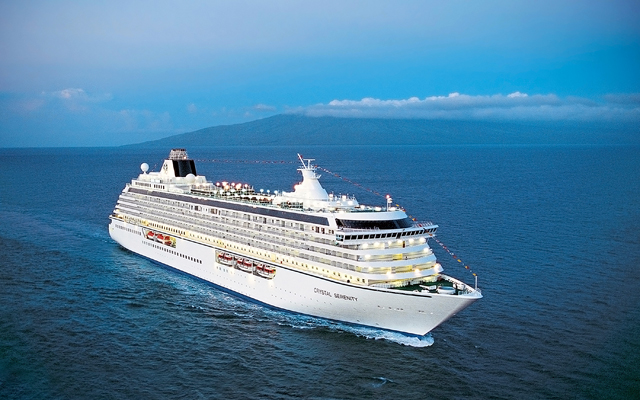
Crystal Cruises lives on with backing from A&K Travel Group

0

UNWTO summit spotlights tourism efforts that help communities thrive

0

From the development of a language app to help South Koreans communicate with foreign guests, to homestays in the Maldives to support locals, several efforts have been carried out across the world to ensure that travel and tourism drive equitable benefits to the community.

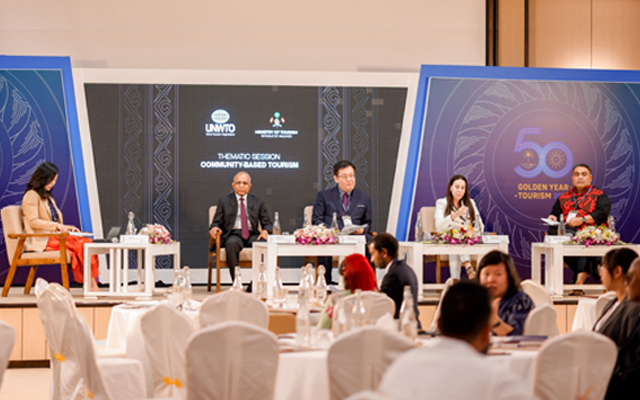
Shining examples of community-based tourism were highlighted at the UNWTO Global Summit on Community-based Tourism held last week in the Maldives. The event was attended by delegates from 35 countries.

Examples of community-based tourism were highlighted at the recent UNWTO Global Summit on Community-based Tourism held in the Maldives

In the Pacific Islands, local women have been able to derive income by repurposing plastic bottles into jewellery and other handicrafts that can be purchased by visitors, shared Christopher Cocker, CEO of the Pacific Tourism Organisation. Local communities are also part of a Spend-a-night initiative, where locals produce and sell mats and mosquito nets to travellers for use on the beach.

Maldives vice president Faisal Naseem acknowledged that there must be “fair and equitable benefits to the community from tourism”.

In his keynote speech, Jafar Jafari, professor emeritus of the University of Wisconsin and a recognised expert in community-based tourism, emphasised that a “happy community will ensure a happy tourist”, and that local communities should be “working with tourists and not for tourists”.

Driving home this point is the creation of an online platform that enables locals in a Japanese village to direct visitors to less crowded areas, as a solution for over-tourism.

Another example is set by Indonesia, through the creation of an online platform that gave 18.5 million small and medium businesses, most of which are tourism-related, additional visibility.

Australia touts choice destinations to attract Indonesian visitors

0

Tourism Australia’s Yours to Explore campaign is pushing destinations such as Queensland and Western Australia, while forming partnerships with Indonesian financial institutions and outbound travel companies in a bid to entice Indonesians to visit Australia.

At a media gathering in Jakarta, Agitya Nuraini, Tourism Australia’s country manager in Indonesia, said: “As we welcome Indonesian travellers back to experience Australia, we encourage them to also explore beyond New South Wales and Victoria, including states that might be less familiar for them.”

Tourism Australia is encouraging Indonesians to visit destinations such as Queensland and Western Australia

Some of the programmes that Tourism Australia is offering include the Outback Queensland family adventure; the new Muttaburrasaurus Interpretation Centre in Muttaburra; the Eromanga Natural History Museum in Eromanga; the Aboriginal experiences such as Gay’Wu, the dilly bag tour for women; or stargazing with Yagurli Tours.

The NTO has also partnered with Bank Central Asia (BCA) as an official bank partner, as well as six major airlines and leading travel partners, to offer discounts to travellers.

Agatya told TTG Asia that Australia was already making strong headway towards recovering almost one-third of pre-pandemic arrivals from Indonesia, and she hoped to see this positive trajectory continue. She added that for the direct services from Jakarta, arrivals would be slightly above 30 per cent recovery by June this year.

However, since Australia opened its borders, the Department of Home Affairs has been receiving an influx of visa applications from various markets – this has led to an extended waiting period for applicants.

Agitya advised visitors to confirm their airline bookings upon receiving their visa approval, or to book tickets that allow date flexibility.

She said: “We highly recommend that travellers plan and apply for their visas early.”

In 2019, 222,000 Indonesians travelled to Australia, of which 152,000 were leisure travellers. Notably, 74 per cent of Indonesian leisure travellers are repeat visitors to Australia, of which 60 per cent have visited the country more than twice.

Travel agencies in Singapore gear up for comeback travel to Japan

0

Japan’s reopening to international travellers this month and the current favourable yen exchange rate have prompted travel agencies in Singapore to roll out attractive packages to satiate pent-up demand for the Land of the Rising Sun.

Since Japan announced in May that it will reopen from June 10 to tourists from 36 countries, including Singapore, tour companies have sprung into action.

Travellers are advised to book in advance and beat potential airfare hikes for flights to Japan

Even with the higher number of procedures required currently for an organised tour to Japan, travel agencies expect the interest to remain strong into 2023.

For Chan Brothers Travel, one of Singapore’s largest travel agencies and tour operators, the strategy is multi-pronged. According to its spokesperson, Jeremiah Wong, the agency has launched longer tours that pack in enriched content to showcase the country’s offerings in greater detail.

The agency is also the first to introduce seasonal itineraries such as autumn, winter, and ski holidays to Hokkaido, as well as Sakura tours for April 2023.

On top of that, Chan Brothers Travel offers exclusive small group tours to Japan, capped at nine people – perfect for travellers who want more privacy with family and/or friends.

Wong said the agency is encouraging travellers to book in advance and beat potential airfare hikes by offering a time-limited offer of 50 per cent off the second traveller. Early bookers can also enjoy free cancellations and flexible refund policies.

A quick scan of the Internet reveals that a round-trip economy class flight on Singapore Airlines for the week before Christmas will set one back over S$3,000 (US$2,158.80). A flight with the same carrier for the same period in 2019, albeit booked in March the same year, cost under S$1,000.

Rising fares aside, travel agencies like H.I.S. International Travel are determined to appeal to tourists with its local expertise and extensive programmes.

Yusaku Koike, Singapore branch manager, H.I.S. International Travel, said: “The response has been overwhelming as people are thrilled to travel to Japan again. We have a few different itineraries to target different groups of travellers. For instance, our autumn itinerary is for those who want to catch the autumn maple leaf season, and our itinerary to Osaka caters to people who enjoy shopping.”

Koike told TTG Asia that H.I.S. has offices across Japan, and its connection with the Japan government and local prefectures means “we are able to provide not only a comprehensive itinerary but also exclusive services and information that travellers need, such as visa applications and immediate assistance from our Japan branches”.

Mike Harlow, general manager of luxury travel specialist Scott Dunn Asia, said: “It’s pretty clear that Japan will continue to be a popular destination – we are currently working to further expand our product and property offerings to bring more exclusive experiences that would appeal to our guests when the destination opens up for private tours and visits.”

Trip.com enhances traveller confidence with real-time digital updates

0

Trip.com is the first to implement Amadeus Travel Safety Conditions in partnership with Riskline as part of its commitment to deliver an exceptional customer experience by instilling full confidence back into the traveller journey.

Amadeus Travel Safety Conditions is a fully-digital solution that provides online players accurate information on Covid-19 risk levels along with general rules and safety measures.

Trip.com customers will receive real-time status updates about travel-related matters

Since 2020, Riskline has been closely tracking the development of the Covid-19 situation and communicating in real-time intelligence to its clients and partners via alert messages, travel advisories, special reports, and informer articles.

Meanwhile, Trip.com customers will receive real-time status updates about their travel destination, airport entry policies, post-arrival quarantine and testing requirements, Covid-19 travel passes, and any mandatory travel health insurance required. The data feed will also provide detailed Covid-19-related information for each country, including how countries respond to the crisis and its impact on travel.

Yudong Tan, CEO, flight business unit, Trip.com said: “Trip.com’s priority during this period of travel recovery is our commitment to safety for our customers. With Amadeus Travel Safety Conditions, we can facilitate efficient, safer and cleaner trips with up-to-date dynamic information in multiple languages, so that they are well prepared for travel with peace of mind throughout their entire journey.”

Frederic Barou, senior vice president, search & online, travel distribution, Asia-Pacific, Amadeus shared: “Amadeus is committed to making travel easy and safe, that’s why we have built a trusted Safe Travel Ecosystem with industry players and relevant authorities.”

Amadeus Travel Safety Conditions covers more than 200 countries and territories, and will support new languages – Chinese, Japanese, Korean, Bahasa, German, and French – during the second half of 2022.