TTG Asia
Asia/Singapore Tuesday, 3rd February 2026
Page 2530

Easier access to German visas a draw for Chinese FITs

0

MORE independent travellers from China are now heading to Germany, and the recently relaxed visa regulations for Chinese nationals are likely to spur the leisure segment even further.

In 4Q2012, the German Embassy in China outsourced its visa application process to TLScontact in Beijing, Shanghai, Chengdu, Shenyang and Guangzhou, according to Li Zhaohui, German National Tourist Office’s (GNTO) director, marketing & sales office China/Beijing. With this, Chinese nationals no longer have to undergo interviews for a German visa and they can now submit their applications via additional means such as post or a third party, she explained.

Said Li: “Besides that, Germany features five direct flights from China, while the country’s self-drive tours and Deutsche Bahn trains will certainly help to lure more FIT traffic from China.”

GNTO will push online deals such as fly-stay packages with OTAs and promotions through Chinese social media websites. Next year, Germany will aim to win the hearts of China’s under-30s – people who are more in tune with Western culture, possess a better command of English and have more disposable income.

In the first seven months of 2012, Germany received 851,997 overnight stays originating from China, a 20.4 per cent year-on-year increase. Visa applications made by Chinese FITs are also on the rise – 3,855 German visas were issued last year to independent travellers in Beijing, almost twice the number issued to groups.

German tourism suppliers have also observed the rise of Chinese FITs. Care Insurance Agency, which specialises in European tours with call centres staffed by Chinese expats across the European Union, has noted a greater uptake of its services by China’s white-collar professionals, according to its Shanghai general manger, Esther Liu. She said: “Chinese agencies used to dominate our bookings, but we have seen a 30 per cent spike in bookings from Chinese FITs since last year.”


Resorts World Sentosa’s Marine Life Park to open Thursday

0

RESORTS World Sentosa announced today that SEA Aquarium and Adventure Cove Waterpark ­­– the two attractions of the Marine Life Park – will welcome guests from November 22, as the integrated resort gears up for its grand opening on December 7.

 Said to be the world’s largest aquarium, SEA Aquarium comprises 10 different zones with 49 habitats, allowing encounters with manta rays, hammerhead sharks, bottlenose dolphins and other marine creatures. It is home to some 100,000 marine animals of over 800 species.

The oceanarium’s centrepiece is the Open Ocean habitat, whose viewing panel gives visitors the feeling of being on an ocean floor. It is flanked by a panoramic viewing area and a seafood restaurant operating on sustainability principles. Opposite the habitat are 11 Ocean Suites, offering guests a unique accommodation experience.

The Adventure Cove Waterpark, on the other hand, targets thrill seekers with its six water slides, a wave pool and a 620m lazy river. Incorporating marine life experiences, guests will have the opportunity to snorkel among fish, feed rays and interact with sharks and dolphins, which will be introduced next year.

Daily admissions to SEA Aquarium are priced at S$29 (US$23) for adults, S$20 for children and S$20 for senior citizens. One-day admission fees to Adventure Cove Waterpark are priced similarly. As not all attractions are ready for viewing yet, ticket prices will be partially rebated by a $5 meal voucher.

Opening hours for both attractions are 10.00-18.00 from now until December 7, and the SEA Aquarium will close at 19.00 from December 8.

SATTE 2013 sees growing international interest

0

NEXT year’s edition of SATTE, to be held from January 16-18 in New Delhi, is seeing strong interest from both local and international exhibitors, securing first-time participants such as Singapore’s Changi Airport Group (CAG).

More than 33 NTOs from around the world have confirmed or are confirming their presence, including China, Dubai, the US, Japan, South Korea, Singapore and Hong Kong.

India’s Ministry of Tourism and seven other state tourism boards have also confirmed their participation.

Sajid Desai, group director, UBM India, said he expects a growth of 15 per cent in terms of nett space and buyer participation for the 20th edition of SATTE.

Some 542 registered buyers from India and 168 international buyer applications have been received.

“India, being one of the top five visitor arrival source markets for Singapore and the seventh largest market for Changi Airport in 2011, is an important market for us,” said Peh Ke-Wei, vice president, passenger development, CAG.

CAG will also be making its debut appearance under a Singapore pavilion together with the Singapore Tourism Board, inbound travel operators, attractions and hoteliers.

A few key exhibitors such as Thailand, Turkey, Malaysia, Maldives and Indonesia are also increasing their stand sizes.

“This year, the Tourism Authority of Thailand has a much larger (exhibition) space, and buyers will meet more partners from the popular destinations in Thailand, as well a variety of services and products,” said Runjuan Tongrut, director, Tourism Authority of Thailand Delhi.

The United Nations World Tourism Organization and International Council of Tourism Partners, as well as nine local tourism associations have expressed support for the tradeshow.

SATTE also offers the opportunity to network with over 1,000 travel professionals from all over Mumbai and other tier-two cities through its companion event – SATTE Mumbai West, scheduled to be held from January 21-22.

Japan to double arrivals from South-east Asia

0

JAPAN will roll out its Visit Japan campaign in new destinations in South-east Asia and engage government agencies in a bid to double South-east Asian inbound traffic to one million visitors next year.

To achieve this target, Japan Tourism Agency (JTA) has requested a budget of 599 million yen (US$7.4 million). It expects to hit two million arrivals by 2016.

JTA director of international tourism promotion division, Shuichi Kameyama, said: “The South-east Asian market is showing significant growth after the (March 11) quake and UNWTO (United Nations World Tourism Organization) has projected that North-east and South-east Asia will be the international tourism markets where the world’s highest growth is (in the coming years).”

He also noted that the growth of arrivals from the Philippines, Vietnam and Indonesia was still low, because the Visit Japan campaign had not been launched in these markets.

Kameyama said Japan would capitalise on the 40th anniversary of the ASEAN-Japan Exchange to go all out with promotions for Visit Japan, engaging not only tourism-related government agencies but also diplomatic offices, the Japan External Trade Organization and the Japan Foundation.

Existing initiatives to grow South-east Asian inbound include the facilitation of multiple-entry visas for Thai, Malaysian and Indonesian passport holders, and the opening of an office in Indonesia next year.

Japan expects South-east Asia to become one of its major markets, and will focus its efforts on wooing the leisure market before getting to work on luring incentives. Currently, foreign tourists come mainly from East Asia, which contributed 4.1 million, or 65 per cent, of the 6.2 million total arrivals to Japan last year.

Ningxia vies for Muslim tourists from South-east Asia

0

NORTH-west China’s Ningxia, the only provincial-level autonomous region in the country with a one-third ethnic Hui population, is keen to woo Muslim tourists from South-east Asia.

Xu Xiaoping, deputy director-general, Ningxia Hui Autonomous Region Tourism Administration Bureau, said: “We have vast Islamic cultural and tourism resources that will appeal to South-east Asia’s Muslim travellers. Yinchuan Hedong Airport has special prayer rooms, halal cuisine is readily available (in the destination), and several hotels feature Mecca-direction signages, hence strongly positioning Ningxia as a Muslim tourism destination.”

Xu pointed out that the China-Arab States Economic and Trade Forum – launched in 2010 – has already increased awareness of Ningxia in the Middle East, which is why the bureau is now turning its attention to South-east Asia. He added that the bureau was working with Yinchuan Hedong Airport to invite carriers to launch flights between South-east Asia and the provincial capital.

The bureau conducted a presentation for Singapore and Malaysia tour operators at CITM 2012, showcasing its offerings including homestays with Muslim families and famed mosques.

China Sightseeing International Travel Service Ningxia’s general manager, An Ya Ping, said his company had seen a 20-25 per cent increase in Muslim travellers from South-east Asia over the past two years, with Malaysia, Indonesia and India as its biggest source markets in the region.

An also plans to launch more multi-province tours spanning Ningxia to Beijing, Qinghai and Xiamen, which also have significant Muslim presence.

Said An: “Muslim travellers are more at ease in Ningxia, which possesses closer cultural and religious affinities with Islamic nations than other parts of China. We often see repeat Muslim visitors as well as families who discover Ningxia by word of mouth.”

Jet Airways partners Expedia to sell rooms

0

JET Airways has added hotel inventory to its two websites, www.jetairways.com and www.jetkonnect.com, following the airline’s tie-up with Expedia Affiliate Network (EAN).

Sudheer Raghavan, chief commercial officer, Jet Airways, said: “(The) opportunity to engage with a renowned online travel company is of huge value to us, as it means we can go beyond guest expectations (by) providing them with a number of value-added services.”

Liz Travel Solutions CEO, Zacharia George, said: “The single-window booking for flights and hotels will facilitate mostly business travellers as they usually do not need any add-ons. Leisure tourists will use this facility for single-city travel but not much on multiple-destination itineraries,” he said.

EAN also recently inked a similar agreement with Air China, and has 10,000 partners in 33 countries, including Tiger Airways and Scoot.

EAN’s vice president, product & marketing, Benoit Jolin, said there was a need to tailor hotel offerings to flight booking behaviour. “Optimising conversion by knowing which hotels to offer to different flight shopper profiles can enrich the airline loyalty programme, boost revenues and airline brand loyalty, and increase customer retention.

“Making a hotel suggestion based on flight purchase behaviour combined with an optimised shopping experience can drive additional ancillary revenue streams over time.”

Jet Airways is rolling out an introductory offer for all bookings made before November 30. A discount of five per cent on net room tariff will be offered at 160,000 hotels in 20,000 cities.

Thai travellers lap up Lijiang charters

0

A SERIES of Bangkok-Lijiang charter flights operated by China Eastern Airlines three times fortnightly since September has proven popular with Thai tourists keen on visiting Yunnan province.

Launched by a consortium of outbound tour operators in Thailand including Quality Express, Dazhong Holiday, Holiday Seasons Travel and Four Seasons Travel, the charter flights will cease at the end of 2012, with a five-month extension on the cards in January.

Thanapol Cheewarattanaporn, managing director of Quality Express, told TTG Asia e-Daily that the flights were always fully booked. His company sends an average of 30-40 pax per flight to Lijiang, with the average budget ranging from 19,900 baht (US$647) for 5D4N to 27,900 baht for 6D5N, all-inclusive.

Programme highlights include visits to ancient towns and natural heritage sites such as Black Dragon Pool, Jade Dragon Snow Mountain, Lugu Lake and Tiger Leaping Gorge.

A Tourism Authority of Thailand official said the tourism markets of Yunnan and Thailand were complementary, and that the charter flights would help catalyse the development of bilateral tourism between the two destinations.

Ding Jianmin, assistant general manager, Shanghai China International Travel Service, said that Bangkok could even become a transit hub for longhaul traffic to Lijiang in the future.

“The four major transit hubs in Asia are Hong Kong, Kuala Lumpur, Singapore and Bangkok. Since Bangkok is (very popular with) European travellers, I expect more Europeans to be keen on visiting Lijiang if regular scheduled services are introduced (on this route),” he said.

However, Quality Express’ Thanapol doubted that the Bangkok-Lijiang charter flights would be extended beyond their present cut-off date.

“There are already many scheduled flights operated by Thai Airways International, Orient Thai Airlines and even China Eastern from Bangkok to Kunming (the capital of Yunnan). These connections are much cheaper,” he explained.

Additional reporting by Hong Xu

Best Western flexes mid-range muscle in China

0

BEST Western International’s prominent stock of three-star hotels in Asia, which comprises 60 per cent of its total portfolio in the region, has proven to be a boon in its pursuit of the Chinese traveller market.

Paul Suvodip, the company’s regional manager, sales & revenue, Asia & Middle East, told TTG Asia e-Daily that Best Western properties in Asia have been seeing “exponential growth” out of China, a result of the country’s “huge middle-income population”.

Today, China is among the company’s top source markets, which include Russia, Germany, the UK and South Korea, for its Asian property portfolio.

Suvodip said: “The middle-income Chinese are travelling a lot more today, and they tend to stay with mid-range properties. It helps that the bulk of our hotels in Asia are in the three-star category. As the Best Western brand is well-established in China now, Chinese travellers are willing to book with us when they head to Asia.”

The chain has more than 30 hotels in operation across China today, as well as two each in Hong Kong and Macau.

He added: “Chinese travellers are also exploring more of Asia. Most of our bookings out of China used to be for our Bangkok hotels. Now, we are seeing more demand for our hotels in Phuket and Malaysia.

“That said, Bangkok is still popular with the Chinese market. A Thai travel consultant we work with told me recently that he handles 40-50 busloads of Chinese travellers every month. They would stay two to three nights each time. And this is just coming from one travel agency, so you can imagine how well our travel agency partners can help to fill our hotels with Chinese travellers.”

Zhuhai mega ocean resort to open mid-2013

0

GUANGDONG Chimelong Group will unveil in the middle of next year its new Chimelong International Ocean Resort in Zhuhai, a prefecture-level city on the southern coast of China’s Guangdong province.

The mega resort’s general manager, Ivan Leung, said the property would feature a 1,888-room ocean-themed luxury hotel, a man-made beach with a wave pool, and various MICE facilities including a 3,000m2 grand ballroom, a 1,300m2 ballroom and 24 smaller function rooms.

According to Leung, water taxis will provide transfers between the hotel and the Ocean Kingdom water theme park via a 1km canal. Covering 500,000m2, the park will offer nine different rides, three separate shows featuring sea lions, dolphins and beluga whales, as well as the largest aquarium in the world, filled with 24,000 cubic tonnes of water.

Erica Zhang, director of sales & marketing, Chimelong Hotel Guangzhou, said the Chimelong International Ocean Resort would target leisure and MICE traffic from China, Hong Kong, Macau and Taiwan, as well as overseas markets such as Singapore and Malaysia.

While declining to reveal projected room rates at the upcoming property, she indicated that they would be similar to other five-star hotels in the region.

Pumping up capacity in Asia

0

Buoyed by steady growth, it’s full steam ahead for cruise lines operating in the region
2012nov16cruised1
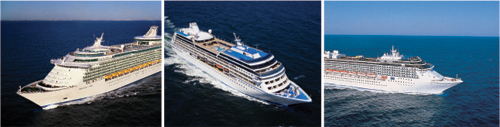
Mariner of the Seas; Azamara Journey; Costa Altantica

nov16-5-1
Kelvin Tan
Regional director, Asia Pacific
Royal Caribbean Cruises 

Homeporting, deployment plans in Asia
The 3,807-pax Mariner of the Seas will kick off her maiden Asian season in Singapore in June 2013 with cruises to Malaysia, Vietnam, Hong Kong, Japan and China. She will be deployed to China for summer and autumn, joined by the 3,840-pax Voyager of the Seas, before returning in November to offer a series of South-east Asian cruises. The 2,076-pax Legend of the Seas will complete her Asian deployment next April.

The 2,158-pax Celebrity Millennium will embark on her maiden Asian season this December for winter/spring 2012/13, featuring cruises from Singapore and Hong Kong with overnight stays in ports like Bangkok, Ho Chi Minh City, Halong Bay and Hong Kong.

The 694-pax Azamara Journey will sail in Asia for the first time for winter/spring 2012/13, offering voyages from Singapore, Hong Kong and Tianjin with overnight calls at destinations such as Bangkok, Hong Kong, Shanghai and Kobe.

Asia as a source market
We average 30-40 per cent year-on-year growth. Our fastest-growing markets are China, Singapore and Indonesia due to the emerging middle class, growing awareness of cruising and our brands, and our regular deployments to homeports such as China and Singapore.

Asian consumers tend to have later booking patterns, but over the years we are seeing more bookings coming in earlier, for instance, eight to nine months before the sailing dates.

For our Asian markets like Indonesia and Thailand, MICE business is also growing from year to year and makes up almost 50 per cent of our total sales, and we expect this to grow further. Incentive travel is a popular trend for companies in these markets. With the recent opening of the new cruise terminal in Singapore, we are also able to deploy larger ships here such as the Voyager of the Seas and Mariner of the Seas, which have more MICE facilities.

Investment on marketing and training
Training is one of our key focuses in our Asian business, to familiarise travel consultants with our cruise products. We are spending significant resources in travel consultant training, such as seminars, workshops, ship tours and cruise previews.

We have identified some markets in Asia, such as China, Singapore and Japan, where our cruise products are very well received. We will continue to invest in these markets by participating in tradeshows and events.

Greatest challenges 
As we deploy bigger ships with better hardware to the region in response to market demand, the port infrastructure in Asia, especially South-east Asia, needs to be upgraded urgently, in order to accommodate these bigger ships and passenger load.

nov16-5-2
Michael Goh
Senior vice president, sales
Star Cruises

Homeporting, deployment plans in Asia
SuperStar Gemini, which was formerly known as Norwegian Dream, will commence service in 2013. Currently undergoing a major US$50 million refurbishment, she will have a passenger capacity of 1,532 pax. She will start her deployments in Penang in January, Sanya in February and March, and then be homeported in Shanghai from April, calling at North Asian destinations. In addition, SuperStar Aquarius will return to Sanya for a second seasonal deployment, calling at Halong Bay and Danang. After that, she will be based in Taipei, calling at destinations such as Ishigaki and Naha.

Asia as a source market
The source markets for our current homeport cities (Hong Kong, Singapore, Penang, Taipei and Sanya) are Greater China, South-east Asia, India, Japan, South Korea and Australia. Among these markets, we are seeing particularly encouraging growth from India as we understand their holiday preferences, especially in F&B, entertainment and shopping. China also represents a good source with the growing spending power of the middle class and easier application process for travelling on cruises. We entered China in 1994, and have cultivated an intimate understanding of what Chinese passengers expect.

Investment on marketing and training
In 2013, Star Cruises will celebrate its 20th anniversary with a series of celebrations across our fleet. This will be supported by advertising & sales promotion campaigns. In addition, we will also celebrate the launch of SuperStar Gemini in Penang, Sanya and Shanghai with on-ground activities as well as publicity campaigns.

Since the announcement of SuperStar Aquarius’ second deployment to Sanya, we have conducted more than 30 cruise seminars and training sessions for travel agencies in major cities in China. Topics include how to promote cruises to individual travellers and MICE groups.

Greatest challenges 
To further develop cruise markets, local tourism bureaus have to develop an in-depth understanding of the cruise industry in order to help promote cruising as a holiday option in their regions. In addition, governments should provide cruise-friendly policies to make it more attractive for cruise lines to deploy vessels in their markets and grow their local cruise economies.

nov16-5-3
Buhdy Bok
Vice president
Pacific Asia & China, Costa Cruises

Homeporting, deployment plans in Asia
This year we replaced Costa Classica with the 2,394-pax Costa Victoria, boosting passenger capacity by 40 per cent. We will have the 2,680-pax Costa Atlantica in addition to Costa Victoria in 2013. This will boast a combined daily passenger capacity of 5,074 pax – more than double the capacity in Asia from 2012. Costa Atlantica has 1,057 cabins, including 54 suites and 620 cabins with private balcony.

Asia as a source market
Demand continues to grow at double digits, which coming off a relatively small base and penetration rate is achievable for the foreseeable future. Our major source markets continue to be Singapore, Indonesia, China, Hong Kong and other South and North Asian countries, depending on the programme and embarkation ports. Asia is expected to continue to grow at a rate that is faster than our other markets.

Investment on marketing and training
We look to differentiate our product through an ‘Italy at Sea’ theme, while uniquely positioning a European experience to the Asian market. Advertising campaigns and cooperation with our preferred sales agents remain crucial. We also look to enhance our products regularly, through special Italian themes. Training for travel consultants and staff also plays a key role. We encourage interaction and seek feedback.

Greatest challenges
In Asia, we believe that the cruise market, despite registering strong growth, is still relatively underpenetrated. The goal of cruise liners is still to actively promote the benefits of a cruise holiday. However, on top of marketing efforts, cruise operators should work hand in hand to develop attractive itineraries, ports and destinations to bring out the uniqueness of a cruise vacation.

nov16-5-4
Jan Swartz
Executive vice president
Sales, marketing & customer service, Princess Cruises

Homeporting, deployment plans in Asia 
In March, Carnival Japan was set up to sell Carnival Corporation brands, with a large focus on promoting the new Princess voyages. In 2013, we are launching the first short season of round-trip cruises from Japan. From April to July, the 2,022-pax Sun Princess will sail from Yokohama and Kobe, calling at ports in South Korea, Taiwan and Russia; many of these cruises are designed around festivals or onsens that are of interest to Japanese and other Asians that fly to Japan.

We also have usual Princess itineraries and deployments in the region, such as the classic Diamond Princess sailing between Beijing to Bangkok. Ocean Princess will make some calls in Asia in April and October, while Dawn Princess will offer some Asian cruises from Fremantle, Western Australia in May and June.

Asia as a source market
Asia has grown quite considerably over the last few years. We don’t share statistics about exactly how many passengers we are sourcing, but there has been a large growth for us, and that’s true not just for a single country in Asia but across the region. There are many Asian countries where consumers are increasingly interested in cruising as a way to see the world.

Investment on marketing and training
We spend considerable amounts to build awareness of our cruises and promote our brand in Asia through our GSAs. We do that in the form of creating local market brochures, local market cooperatives and marketing investment at times with travel agency partners who spend their own money to promote our brand.

We recently launched the Polar Online booking engine in Japanese and simplified Chinese, so there are increasingly opportunities for us to use (existing) tools in other markets and help travel agencies learn more about cruises they can offer their clients.

Greatest challenges 
The big challenge is port infrastructure: besides homeports, ports of call should have sufficient room to deliver a great passenger experience. Some ports may not know how to configure their facilities to handle the required volume of people, so that’s why we need to partner together to build the setting so that many ships can be accommodated – often on the same day – and consumers will be given an experience that they enjoy so much that they will want to cruise with us again.

nov16-5-5
Ann Sherry
CEO, Carnival
Australia 

Homeporting, deployment plans in Asia 
Besides Princess Cruises’ sailings to Asia, we are looking at deployments into Asia in 2014 for P&O ships, partly because we see many Australians flying into (South-east Asia), so obviously one of the ways to build your market is to follow the people who already know your brand. Carnival Australia represents international cruise brands operating in the local market namely P&O Cruises, P&O Cruises World Cruising, Princess Cruises, Cunard, Holland America Line, Seabourn and Carnival Cruise Lines.

Asia as a source market
Asia is a growing source market because there are a lot of flights coming into Australia from the region. We are seeing groups incorporating cruises as part of their holidays in Australia and New Zealand. The growth is very visible now, from almost none to quite big groups of 200 pax on some cruises, so it would be double digit over the past two years, particularly in the last 12 months, when we saw the arrival of several Asian airlines. The strongest growths are from Singapore, Malaysia and Indonesia.

Investment on marketing and training
Once we publish our 2014 itineraries, we will be embarking on a much bigger marketing campaign. We are looking at (investing in) South-east Asia as this part of the Asian market has a lot of air access, expats and Australian-educated Singaporeans, so we already have a connection that works, rather than go into a market where we have to start from scratch. We are looking at a market we already have some understanding of, as that makes it easier to get growth.

Greatest challenges 
The greatest challenges in Asia for us are probably where to go and how to start growing local as well as Australian demand. It’s really getting the balance right between offering a product that Australians already know versus a product that also works for the Asian market. We are watching what all the other brands are doing in terms of what changes are needed to made to the product, how do you work your onboard dynamics and what works for the market.

Additional reporting from Linda Haden