TTG Asia
Asia/Singapore Friday, 3rd April 2026
Page 1589

Malaysia’s budget travel segment hit by tourism tax

0

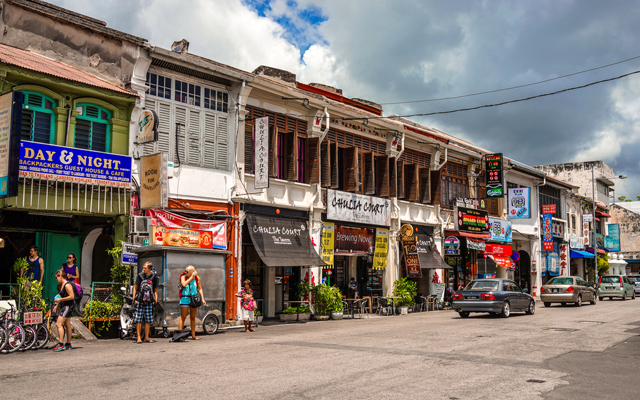
While agents operating out of Singapore say they are barely seeing a dent in demand for Malaysia after a tourism tax recently kicked in, trade players in the destination are concerned the budget travel segment might take a hit.

Joe Lim, executive director of Singapore’s Konsortium Express & Tours, told TTG Asia: “The news had been discussed for some time before finally being implemented. Customers have accepted it and it’s not turning them off from visiting Malaysia.”

Lim added that the exchange rates for the Malaysia ringgit has also made the price difference “negligible”.

Some confusion may arise when budget hotels do not clarify that they are collecting the tax, senior sales and marcom manager of TACentre.com Philip Gejon said, leading guests to mistake it for room payment.

Price-sensitive segments who typically choose budget hotels may opt for unregistered accommodation instead

Aside from this minor hiccup, customers are “quite accepting” of the tax, especially as “hotels are not that expensive” even in capital city Kuala Lumpur, said Gejon.

However, trade players in Malaysia say this acceptance does not come easy for the more price-sensitive segments – including younger travellers from the region and backpackers from longhaul countries.

Ally Bhoonee, executive director, World Avenue, said the company’s student travel segment, who typically opt for budget hotels, has taken the biggest hit.

Raaj Navaratnaa, general manager at the Johor-based New Asia Holidays Tours & Travel, shared that he had a group of 30 youth from Singapore refuse to pay the tax as it was not included in the package price.

The high tax to rate ratio at budget hotels has PK Leong, president, Malaysia Budget Hotel Association, concerned that the association’s members would lose their competitive edge to unlicensed accommodation providers.

“A RM10 tourism tax (could be an) additional 20 per cent to (budget hotel) rate. That is very high. We had members saying that guests walked out upon hearing about the tax. Where do you think they will go? Airbnb operators will benefit because it is unregulated and not registered by the government,” he said.

Alex Lee, CEO at Ping Anchorage Travel & Tours based in Terengganu, added: “In the long run, I foresee backpackers from longhaul destinations shortening their stay in Malaysia and neighbouring countries like Indonesia and Thailand benefiting from it.

-reporting by S Puvaneswary and Pamela Chow

New ‘livingroom’ concept makes the most of hotel space

0
Rooms come in just one configuration, with a uniform size of 25m2

Ansa Hotels & Resorts will introduce its second brand, thelivingroom Hotel, a three-star, limited-service hospitality concept, adding to its existing four-star, full-service Ansa brand.

Hanley Chew, CEO of Berjaya Hotels & Resorts, the parent company for Ansa Hotels & Resorts, explained: “We see a lack of hotels catering to corporate travellers with their families and millennials in key cities. This brand is meant to fill this gap where the demand is constantly on the rise.

“We offer a realistic 10-year return on investment outlook as compared to traditional hotels, which take approximately 15 years,” Chew added.

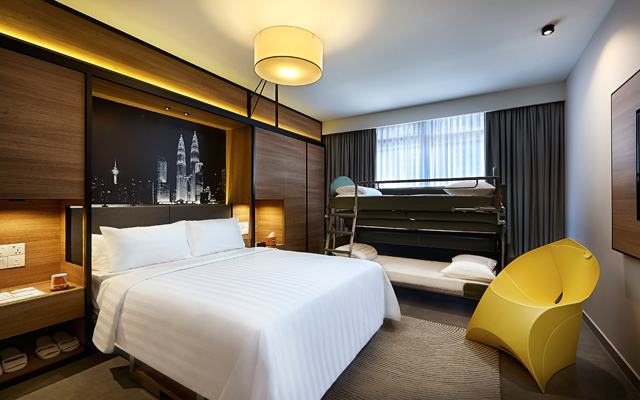
Room conceals a queen bed and bunk bed

Investors can expect a faster ROI due to greater operational efficiency and space maximisation. For example, the lobby also doubles as a lifestyle café area, which will be operated by a third party to generate premium rental revenue for the hotel.

Thelivingroom hotels will boost “new ways of serving guests” such as a flexible check-in service round the clock, which allows stays for a full 24 hours upon checking in, and a 24-hour breakfast concept at the lifestyle café, Chew told TTG Asia.

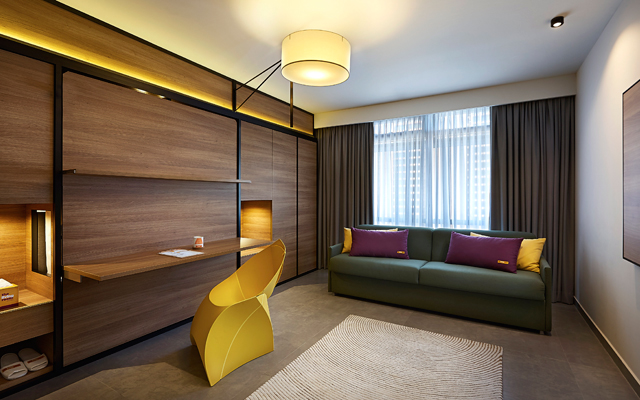
Rooms, however, come in one configuration only with a standard size of 25m2. Despite being smaller than the usual 30-35m2 room sizes at city hotels, thelivingroom hotels seek to cater to families with the innovative use of in-room space – a full-sized queen bed, which, when not in use, can be reclined back to the wall to transform into a study desk, and a three-seater sofa that opens up into a double-decker bunk bed.

Voila

There will be a facilities floor for guests to access the ironing room, vending machines and ice dispenser. Other facilities will include a fully equipped gym and small meeting rooms catering to 20-30 pax.

The first two properties, in Kuala Lumpur and Johor Bahru respectively, are currently under development and are expected to start operating in 2H2018.

The livingroom brand will have between 180 to 220 room keys. Room rates are expected to start from RM280 (US$66.50).

Chew is also looking at expanding the brand overseas through foreign partners who will have exclusive rights to expand the brand in their respective countries.

Upgrading travel industry training for the 21st century

0

David Topolewski, CEO of Qooco, urges a rethink of travel industry training programmes with greater use of technology

It is 16.30 in the afternoon, and finally the 30-plus guests from Japan enter the front office all at once, along with their luggage, arriving after a long flight that was delayed by three hours, with rain and traffic further delaying their arrival from the airport. They are all tired, and looking forward to going to their rooms, showering, eating and sleeping.

There is a problem, though. Some of their rooms are not yet ready, thanks to a previous group that left late and an undermanned housekeeping staff. Additionally, a glitch in the system means that check-in needs to be done by hand, and the front office staff don’t seem to be communicating with each other with guests being checked in twice and passports being mislaid, trying to explain the situation in halting Japanese. The team leader needs to take control of the situation, before guests start complaining and team members get too stressed.


Topolewski: hotel employee training needs to incorporate more technology 

Then everything goes dark, and a voice appears asking everyone to remove their goggles. There is now a lengthy debrief from the training manager, picking apart what went wrong, what went right and how the team can work better together to improve the situation. Not a single guest was harmed!

While this could be a real-life scenario, luckily this is virtual reality (VR) training of the (not too distant) future, which allows the hotel to train its staff realistically, away from the hotel frontlines. While this may seem far-fetched, the technology that would enable such realistic training is available today, yet many hotels still use 19th century training techniques.

Most hotels train their staff through apprenticeship programmes where they will work together with senior staff members in the various departments of a hotel, and classroom-based theory lessons conducted by professional trainers.

Language learning is nearly always an afterthought for these hotels, with few providing any proper training. Most simply hire a native language speaker at much greater expense. Little attention is paid to teaching upselling skills, at best a more experienced employee would pass down a few ‘tricks of the trade’ to a new team member.

Hotel employee training needs to be dragged into the 21st century. This does not necessarily mean a wholesale change in the way that staff are trained – frontline experience is a nerve-wrecking, yet vital part of a service employee’s development – but more incorporation of technology would reduce costs and improve learning outcomes.


VR is a low-cost yet effective way to prepare employees for real-life situations

VR is one technology that is almost tailor-made for the travel industry. VR can replicate many of the stresses and strains that employees would face. All this could be done in daily, 30-minute intervals at very low cost.

Mobile learning has already been adopted by the corporate world (mobile learning is forecast to grow by 16.5 per cent between 2016-2020), and is highly suitable for employee training given the use of smartphones among young workers today.

Not only can mobile learning teach employees language skills, but also upselling skills and customer interaction and engagement – something that was previously taught via a few role-plays during the first weeks of training. Importantly, unlike classroom-based learning, this can happen anytime, anywhere.

Augmented reality (AR) can aid employees to improve in their specific roles, and even accompany them on the job. An AR start-up, AR-Check, has developed glasses worn by housekeeping staff that informs them which tasks should be completed, when, where and how, reducing errors and inconsistencies.

This applies not only to hotels but the entire travel industry. Airlines have their stewards and stewardesses go through lengthy training processes, yet this could be made cheaper and more efficient through technology. Travel agencies can improve their frontline employees’ language skills through mobile learning, retailers can train their staff through AR.

The list goes on, but what is clear is that we are now entering an age where employees are more used to learning from a screen than from a book, and so the opportunities for constant learning and training are now opening up in ways that were not available before.

New facilities give The Strand Yangon urban resort shine

0

The Strand Yangon is moving into the final stage of an 18-month revamp, which will see the 31-key icon get new facilities and repositioned as Myanmar’s first luxury urban resort.

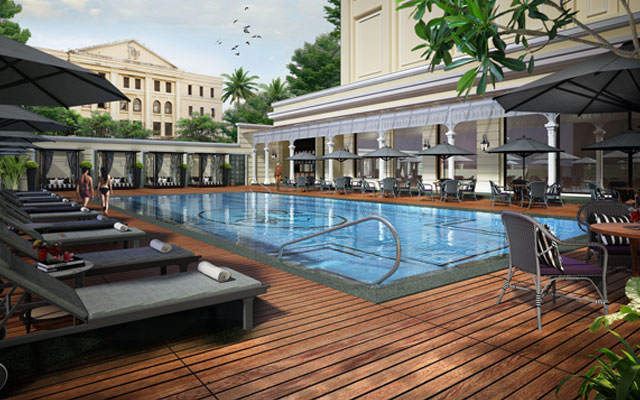
Following the complete renovation and upgrade of the hotel’s original 1901 building in 2016, the final phase will see the addition of a new 18x8m infinity-edge swimming pool. As well, a new poolside terrace will offer space for 35 loungers, as well as four private pool cabanas and tables for al fresco all-day dining for up to 48 guests.


The iconic hotel’s branding will be revamped as well

Completing the urban oasis positioning, the hotel will also get a new gym, a wellness area with two 25mtherapy rooms and 800m2 private garden.

The enhancements are scheduled to be officially unveiled in November.

New hotels: Lub d Cambodia Siem Reap, Mantra MacArthur Hotel and more

0

The latest hotel openings and announcements made this week.

Lub d Cambodia Siem Reap
This new-age hostel located a five-minute walk from Pub Street offers three room categories – Mixed Dorm (with 120 beds), Ladies Dorm (with 30 beds), and Junior Room (72 private rooms with a private bathroom). All dorms feature complimentary Wi-Fi, USB charging ports and lockers, while the private rooms come with extras such as bottled water, toiletries and a smart TV. Facilities include a swimming pool with a swim-up bar, co-working space, game area, laundry room, restaurant and tour desk.

Mantra MacArthur Hotel
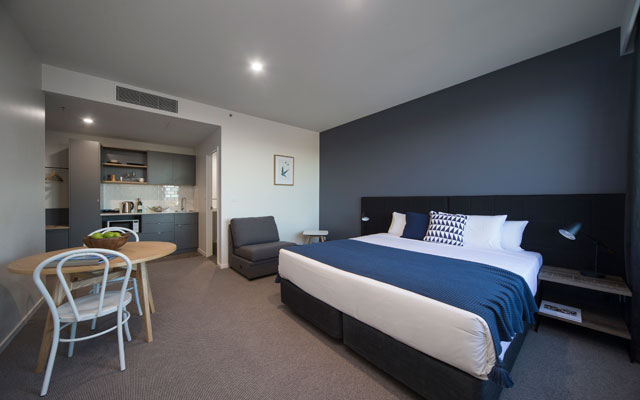
The only hotel to open in Canberra this year is converted from a former office tower after a A$19 million (US$15 million) makeover. Located in the inner city suburb of Turner, the 10-storey property features 136 rooms and 40 suites. Facilities on-site include the new Podilato restaurant and bar serving Greek Mediterranean-style cuisine, a fully-equipped gym, 24-hour reception, Internet lounge and express check-out.

Hilton Yantai
Occupying levels one to six and levels 26 to 41 of the 323m-tall Shimao Skyscraper in China’s coastal province of Shandong is the Hilton Yantai. The hotel offers 252 guestrooms and suites with views of either the sea or city skyline, and come furnished with 42-inch LED TVs and marble-clad bathrooms. Amenities include a temperature-controlled indoor pool, fitness centre and four F&B options. For events and meetings, the hotel offers 1,652m2 of space that includes the 940mFortune Grand Ballroom.

Red Planet Nishiki
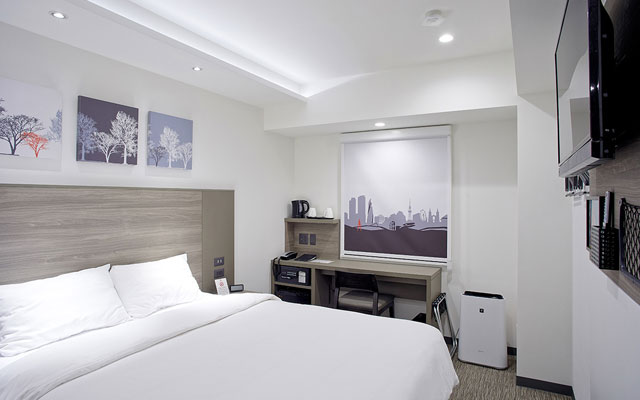
Value-hotel chain Red Planet will open its third property in Japan, the Red Planet Nishiki, on November 1. All rooms in the 211-key property feature free high-speed Wi-Fi, custom-made beds, a workstation, refrigerator, 40-inch flatscreen TV, and tea- and coffee-making facilities. The property stands close to the Nagoya train station and attractions such as the Nagoya Castle. The property is now accepting reservations.

The future of ASEAN hotel industry

0
Raini Hamdi

Last month on August 8, ASEAN turned 50. The ASEAN hotel industry without doubt, is one of its fascinating economic successes.

Hotels, unlike office buildings and retail centres, can open up destinations or bring a whole new market segment to a country. Being labour intensive, they provide jobs, but can also change the destiny of thousands of locals by equipping them with lifelong skills that will take them far – and faraway. Hotels are an integral part of communities, bearing witness to weddings, birthdays, anniversaries and other important occasions. They are a personal choice; everyone has a say about them.

It’s the sector I love covering the most in travel & tourism. There’s never a dull moment in the business. Hotel GMs love publicity – we knew a few who actually jostled to see who could get more photo airtime in TTG. ASEAN’s hotel industry was also peopled with unforgettable characters who played a huge in shaping it.

There were the educators such as Pakir Singh and Chanin Donavanik, who believed in local talent and built the first hotel schools in ASEAN; industry giants such as Adrian Zecha, who brought out the best of ASEAN’s service culture and beautiful locations; or Ho Kwon Ping, who turned a tin mine into a hotel goldmine, long before the word ‘sustainability’ was bandied about in the industry. There were the first ladies such as Jennie Chua, the first female GM in Singapore if not ASEAN, or Kamala Sukosol, the first and only female hotel owner who is at the same time, an accomplished jazz singer.

But ASEAN’s hotel industry wasn’t shaped just by locals. In fact, in the early years, it was the Westerners, individuals or international chains that came and set new standards. Brands such as Holiday Inn, Novotel, Hilton, Four Seasons, Meliá, etc were earlier than others. Today, these major chains have hundreds of hotels in operation throughout ASEAN and with more to come. AccorHotels and Marriott International alone have 100 hotels each in the pipeline.

But while the future spells growth, a more meaningful yardstick lies in how the industry will overcome the talent shortage in the region, how it will embrace sustainable development, and how it will address the changes technology will continue to bring on distribution, operations, alternative accommodations, among other key issues.

The next five decades look set to be even more fascinating for the ASEAN hotel industry.

What’s there not to love about covering it!

Changing nature of representation

0
Geoff Andrew

Geoff Andrew

What is the future of representation?
When people talk of representation, it conjures up an old-fashioned way of doing business and some have made it their mission to reinvent the word. But I think it’s exactly what we do. A hotel is under more competitive pressure right now with the chains getting bigger, OTAs getting a larger share and margins being squeezed as acquisitions outstrip room revenue growth. Hotels need representation more than ever.

Hotels need the sales reach into international markets which they could hardly afford and definitely can’t now. The nature of sales however is changing. It’s not the traditional us visiting the agents or getting RFPs; much of sales has moved online and we have had to move with it.

The idea of how you represent a hotel is also changing. We’ve become a hospitality services company. For example, we launched a Why? programme over a year ago. It forces hotels to answer a fundamental question: Why do you exist? Why should anyone stay with you versus the other hotel next door? One of the services we offer is helping a hotel to stand out in the crowd. We can also help them balance their distribution on OTAs versus their own websites.

So we put them through a whole workshop covering not just sales and marketing but all the way to service delivery. Hotels that have taken this see material changes in the way they are being reviewed online. They get higher rankings on TripAdvisor or Booking.com and this isn’t just marketing but revenue. A Cornell research shows  every point you gain on one of these sites is worth 5.5 per cent in terms of your ability to drive rate up without losing volume. You can’t dismiss OTAs but if you’re working with them, at least do the best you can and try to get your visibility up.

Then we work with them on how they can get more business directly, which involves a full audit of the hotel website, booking engine, strategy to improve traffic and conversion on the website. Online is so important that we’re putting more resources in helping hotels in that area of sales. Worldhotels now has a digital account manager and experts who do the audits. We’re trying to fill the need the hotel has in terms of competing. It’s a tough world. The nature of representation is changing but the fundamental philosophy – how do we best represent your property and help you achieve the optimum in roomnights and at the right rate? – hasn’t changed. I’ve been in the business for 30 years. I started with Utell, I know how it works, and that the philosophy hasn’t changed.

What is the impact of hotel chains launching soft brands to get independent hotels into their fold?
We battle with owners who say we’re going to Hilton, Hyatt, etc, whereas before they didn’t necessarily want the big brands. But now those chains are offering soft brands – it’s ridiculously expensive but hey they got them. And of course at the other end is to pick up a tech-and-plug and you have a channel manager; it is so simple to pick up OTA business these days. We still occupy the middle ground, from hard branding on the one end to simple plug-in on the other.

The battle is the quality of service you deliver. Some hotels think they’ve figured out the technology but often they haven’t figured out the sales. It’s great to have an engine, but if you aren’t pushing business through that engine, you’re doing only half the work.

Do you consider chains your competition now rather than the other representation companies?
There are still a number of us. There are opportunities for hotels to stay independent, so while the other representation companies are still competitors they are also partners. We are all trying to protect the individual ideal against the encroachment of the big boys.

It’s going to be down to who’s giving the best value at the right price. We think the combined organisation with ALHI  (Associated Luxury Hotels International, whose parent Associated Luxury Hotels bought Worldhotels in February from Boston-based private equity firm Battery Ventures) is going to give us an edge in a number of areas that will sit well with some hotels. Relais & Chateaux for instance has a certain profile; they have an F&B niche. We have done well in city hotels, even though we have resorts. Our sweet spot is business travel although we also have a lot of leisure.

How is the new parent good for you and your members?
ALHI is a good fit as they also deal with independents and are hotel people (ALHI describes itself as a global sales organisation dedicated to the meeting and incentive marketplace, handling global sales services for over 250 luxury level hotels and resorts primarily in the US.) Battery Ventures was more technology focussed; they had sold Trust and Nexus to Sabre and we didn’t fit in with their strategy.

Already, ALHI is generating leads for us. They have clients that they can’t place in their own portfolio so they pass those leads to us. As well, ALHI has a programme called Global Luxury Alliance and we’ve picked 50 or so of our hotels that fit the criteria to join this alliance so they will now benefit from the resources and expertise of ALHI’s sales team.

What’s the criteria?
They have to be luxury, upper end members, and if they have meeting facilities and are in destinations ALHI believes has the demand, we put out an invitation to them.

But all this gets bigger than meetings and incentives. Between us, we have 150-odd sales people and 600 hotels. One of the things we’re looking at is what services can we add that will benefit both organisations and members? Within the parent group, we’re evolving some ideas, for example, enlarging our loyalty programme Peak Points to potentially include ALHI hotels. We want to strengthen our proposition to give members more than what they were getting before, while ALHI is looking for a way to broaden their offerings to their hotels and their global footprint.

You were appointed CEO of Worldhotels last December. What is your mission?
To strengthen the brand. I see our World Luxury collection becoming a bigger element of what we do. I also see us developing a stronger meetings portfolio because of the opportunity we now have. I see our loyalty programme becoming a massive plus for our hotels.

Our mission has always been empowering true independence. So the question we always ask is what services do our hotels need in order to be successful? New services which we are not thinking of at the moment will emerge as we partner ALHI; the scale we have now will help us to accelerate this much faster than before.

The prize and price of mobile

0

As travel bookings on mobile continue to grow as a popular channel for consumers worldwide, Travelport projects that 76 per cent of the growth of online travel will originate from mobile apps by 2020.

Mobile is hence a space where brick-and-mortar travel agencies can carve a share in, advised Travelport president and CEO Gordon Wilson, especially as an ageing global population – which has a higher spending power, and values personal interaction and trust more – becomes a key market.

He told TTG Asia: “(Traditional) travel agencies are still growing. There is a market for cash-rich but time-poor people who want full service. (They may) want however, to experience engagement with the agency on their mobile. It can become a supplement to the traditional way of doing things.”

Costs a heavy burden
Despite the country’s high Internet and mobile penetration levels, some travel agencies in Singapore remain reluctant to adopt mobile solutions, citing cost as the main deterrent.

“It’s definitely expensive. We dare not even think about it,” said Focal Travel’s founder and advisor Wilson Tee. Although his agency has established a website and social media presence, as well as partnerships with online travel platforms such as Tripzilla, Tee believes that the payoff from developing mobile solutions is not worth the “high cost”.

According to Travelport product manager Daniel Rowley, an agent would have to fork out at least A$1-1.5 million (US$0.8-1.2 million) to develop a travel app, excluding expertise and training.

The costs extend past the development and adoption stages. Travel Star, which had previously dipped its toes into mobile app, found constant upkeep a challenge.

“It was rather tedious to keep a mobile app updated. It required high maintenance, and we didn’t have an in-house IT team,” said marketing & HR manager Zheng Lingna. Travel Star has since shut down its app to focus on its website.

Tee also opined that spending more money in the digital space does not necessarily translate into higher visibility.

Instead, Focal Travel subscribes to the “bigger is better” approach to maximising its marketing budget. Tee explained: “If I have more advertising money, I’d rather spend it on print. My ad would be bigger and more prominent, and more people can see me.”

Also keeping faith in traditional media is CS Travel, which is limiting its digital engagement to just social media marketing, said assistant general manager Alice Lai. Besides Facebook, Instagram and WeChat, the agency does not see the urgency or have the “big budget” to go mobile yet.

“We may seem outdated, but a lot of travellers still consume traditional media such as newspapers and TV,” said Lai, who believes that consumer behaviour will eventually find a new normal that incorporates offline platforms.

The price is right
Once bitten by its mobile foray, Travel Star is not twice shy as it does not rule out developing an app again in the future if more government grants are introduced to encourage ventures into the mobile sphere, said Zheng.

The funds provided are currently channelled into maintaining the agency’s website, but it would take more for them to operate an effective app, she said.

Pegasus Travel Management’s managing director, Charles Tan, sees schemes such as the Singapore Tourism Board’s recent Marketing Innovation Programme as opportunities for agencies to venture into the mobile landscape.

For Pegasus, the time and cost saved from digitising its processes justifies the high price. Its backend system currently runs on Travelport SmartPoint, and it has contracted Travelport TripAssist to build a customised app.

“It’s very cost- and time-saving for us. Our workers don’t have to key inputs manually, resulting in significant time savings,” said Pegasus Travel Management’s operations manager Kennix Hong.

What made the difference, explained Hong, was Travelport’s training and support, including education on how to effectively market the app to target users.

Going mobile has also created a wave among regional players such as Traveloka. Caesar Indra, senior vice president of business development, shared that bookings made on the Traveloka app account for 70 per cent of its online transactions.

“Consumers treat their mobiles as a part of their lives,” he noted, suggesting that apps are also a way for agents to go “beyond the transactional” to engage with the customer throughout their journey.

An example was introducing a feature for users to reschedule or refund their purchases on their mobile phones. This cut the processing time from 30 minutes – when done through a call centre or physical store – to just five minutes.

Indra added that the social aspect is especially important in Indonesia, where Traveloka incorporated WhatsApp as a function on its mobile app for users to share their itineraries on the popular messaging platform.

“This created a network effect, where people who didn’t use Traveloka learnt about us through their friends sharing their itineraries,” said Indra.

An agency’s mobile communication can be employed to also include ground staff such as tour providers and suppliers, advised Robin Yap, president, Asia, The Travel Corporation.

The company launched an app for its trip directors to interact with customers before their trip, allowing guides to learn about their customers’ interests, feedback and requests, in order to provide more personalised service.

“This mobile app is really critical to delivering a great customer experience,” said Yap.

Cody Cao, project manager, smallWorld Experience

0
Cody Cao
Cody Cao

What are the biggest challenges for Macau’s tourism business? We do not have sufficient manpower to support Macau’s fast-paced tourism development. For example, we lack  coach drivers, conference managers, and even tour guides proficient in some languages.

Despite the increasing number of tourism industry employees, there is still a focus on casinos and hotels, which offer attractive perks like high salaries and good working conditions.

The Macau government has strict standards on the (employment) of specialised non-resident workers and skilled workers, including tourism professionals. So far, part of the labour supply is from overseas or mainland China, but this group lacks (job stability). Retention of experienced talents is also a challenge.

The lack of professionals impinges on competitiveness within the industry, creating a barrier to improving service standards.

If I had my way to change things, I would…  like to see a targeted policy to appeal to non-resident workers with professional tourism skills in the short term. A stable and fair policy for overseas labour (recruitment) would give them more confidence to work in Macau’s tourism industry.

Overseas labour with professional skills can bring new perspectives and speed up the transfer of new technology to Macau. It’s also vital to build a competitive (environment) to incentivise local employees.

For tourism employees, we should provide more support such as continuing education to learn new technology and skills. The establishment of a special scholarship foundation can help attract skilled professionals.

Additionally, (we can benefit from) increasing media coverage on Macau’s tourism and (generating interest) in hospitality and tourism careers among young employees.

Panorama Destination buys up Singapore company to advance regional expansion

0
Singapore key to Panorama's plans to become regional operator

Panorama Destination, Indonesia, the inbound company of Panorama Leisure Group, has fully acquired Anemone Blue Investment to become Panorama Destination, Singapore.

The acquisition was aimed at making the Singapore office a hub for regional expansion, according to Renato Domini, CEO of Panorama Destination, Indonesia.

Singapore key to Panorama’s plans to become regional operator

“Singapore is the hub of South-east Asia and one of the countries that accounts for a large number of foreign tourists coming to Indonesia. The acquisition is a strategic step for us, allowing us to become a regional tour operator,” explained Domini.

He added: “By the end of 2016, the total number of visitors to Indonesia was 12 million people, which remains far behind Singapore (16.4 million visitors) and Thailand (32.5 million).”

Based on a conditional sales purchase agreement, this acquisition represents a total transaction of US$25,000.

Through Panorama Destination, Singapore, the company is preparing to open an operational office in Thailand to further expand and strengthen the company’s position in the region’s inbound market.