

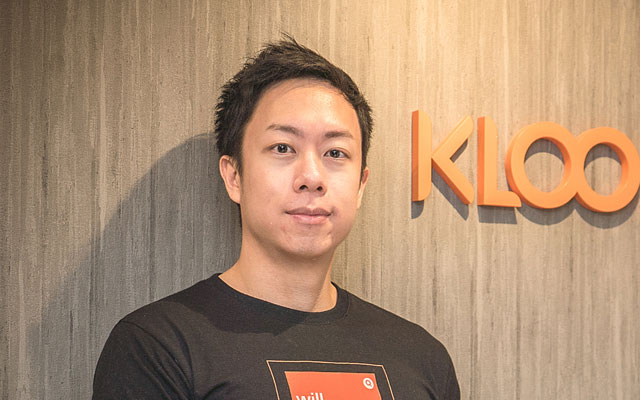
The online tours and activities segment hots up in Asia with Hong Kong’s Klook completing near US$60 million in Series C funding, the largest ever for an in-destination service booking platform, just months after Singapore’s BeMyGuest closed a Series A in July that gave it a total equity funding to-date of US$8.5 million.
Whether B2C as Klook mainly is, or B2B which BeMyGuest has pivoted to, tours and activities in Asia is in for a shake-up as investors begin to hanker after a market that is being buoyed by the rise of Asian FITs and their adoption of mobile booking.
Klook’s president and co-founder Eric Gnock Fah told TTG Asia: “For the most part, B2B and B2C will usually coexist and, in some cases, go hand in hand. Looking at market players, we see that B2C currently presents a bigger opportunity.”
Klook has 30,000 tours and activities on its platform. Fifty per cent of users book upon arrival, 70 per cent via mobile. Gnock Fah wants to cement its mobile-first and instant confirmation solutions, and create personalised experiences with AI.
The company has launched a visual search function, allowing travellers to use pictures taken during their travels to gain activity suggestions nearby. It will soon enable voice search function, as well as other new functions by mid-2018.
BeMyGuest on the other hand believes B2B is the space to be in. “Asia has overtaken Europe in tours and activities, said to be worth around US$33.3 billion now, and only 11 per cent is booked online,” said Graham Hills, chief commercial officer, a new position at BeMyGuest.
Hills said the business is still “very much in its infancy”, fragmented with small or mom-and-pop players in the region with a low adoption of technology.
Added Kei Shibata, CEO of Venture Republic Global, who is now on the board of BeMyGuest: “Aggregating them as quickly as possible is important and that’s the strength BeMyGuest has as (first mover).”
Clement Wong, CEO of BeMyGuest, said Klook’s Series C funding, led by Goldman Sachs and existing investors Sequoia Capital and Matrix Partners, is “a positive reaffirmation of the rapid growth that the tours and activities sector is experiencing in Asia”.
“Asia has overtaken Europe this year in terms of market size for tours and activities, and being the hottest sector in travel, we expect this investment trend to continue,” said Wong.
Meanwhile, Sam Turner who leads wholesale and sourcing for Hotelbeds Group, said the growth in tours and activities has been twice faster than in bedbanks that the group has created a separate division for it.
“Asia is currently the smallest proportion but we’re seeing an 80 per cent jump,” said Turner.
“I expect more consolidation in the space. It has created a lot of excitement as historically the distribution has been very offline. Consolidation is inevitable.”
Even hotels are now getting into the act, by being resellers of tours. GTA, now part of Hotelbeds Group, has tied up with Ireland’s Bokun, using its content and technology to allow hotels to resell tours and activities, then everyone will earn commissions.
Stefano Zeni, GTA head of commercial management and destination services, said this would be launched in the Middle East and Europe, and he is here at ITB Asia to propose to hotel partners in Asia to resell tours & activities to guests.
- reporting live from ITB Asia 2017


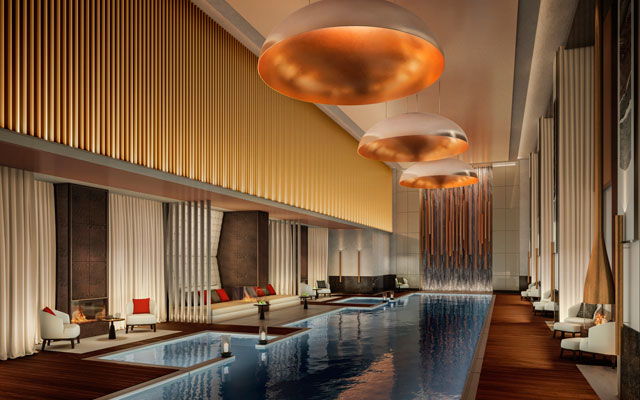
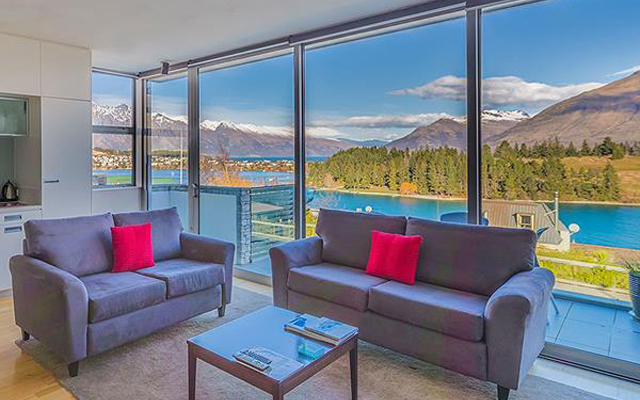
 Swiss-Belsuites Pounamu Queenstown
 Sheraton Petaling Jaya
 Fairfield by Marriott, Coimbatore









In response to German National Tourist Board’s (GNTB) promotions in South-east Asia, agents are optimistic that Germany can become a viable off-the-beaten-track mono-destination for the region’s travellers.
However, it is held back by the lack of awareness and a more exciting image in the region, opined both agents and stakeholders in the Germany tourism industry.
A main grouse is that the country is limited by common associations such as business, Oktoberfest and beer, when other aspects of the country can be marketed.
Alan Ang, managing director of EU Holidays, said: “Singaporeans’ perception of Germany is very skewed towards Bavaria, Munich and Berlin.”
He added that not many know about Germany’s “hidden gems”, which can be better marketed and have the potential to draw in bigger crowds from South-east Asia.
Examples of this are the historic operational Roman baths of Wiesbaden and the country’s oldest beer brewery, located 35 minutes and 40 minutes respectively by train from Frankfurt Airport.
Deeming awareness of the country insufficient, tourism stakeholders have taken marketing into their own hands. Frankfurt Airport has stepped up to exhibit at roadshows to promote the city and its surrounds, said its director of international tourism markets, Stefan M Kopp, and also launched an online portal to engage with travel agents and familiarise them with the airport’s services.
However, things are starting to look up for trade players with GNTB’s latest efforts, said Hanne Lim, deputy general manager, operation centre, travel business division, Kaytrip.
The Munich-based agency, which specialises in bringing Chinese-speaking tourists into Europe, has begun developing Germany-specific tours that ply routes like Southern Germany.
Lim said that although the country has to vie with crowd favourites like Iceland and Northern Europe, Germany can woo customers who are looking for “in-depth sight-seeing”, and that more needs to be done to build awareness in Asia.
The board in late-October wrapped up a week-long South-east Asian Roadshow, which stopped in Bangkok, Kuala Lumpur, Jakarta and Singapore, and connected local agents with German tourism operators.
The board earlier identified these four markets as South-east Asian economies with the most growth potential, and will be increasing mono-destination promotions in these markets.
By 2030, GNTB hopes to grow its overnight stays in Germany by two million to 3.2 million.