TTG Asia
Asia/Singapore Wednesday, 8th April 2026
Page 1456

On a road to tourism victory

0
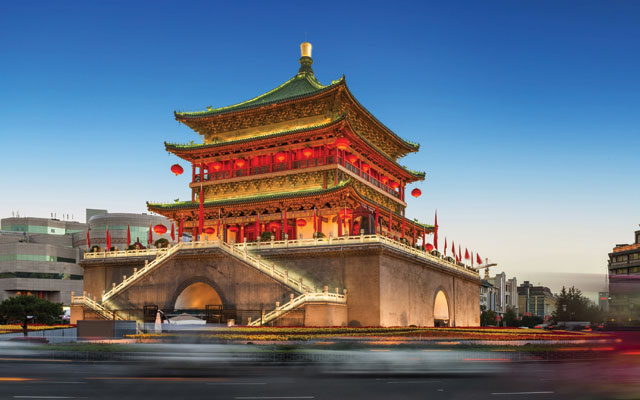
The BRI is likely to usher a new tourism era for Xi’an (its City Wall pictured), once a key crossroad on the ancient Silk Road

The Belt and Road Initiative (BRI) is ushering in benefits for China’s travel and tourism, with industry members reporting positive spinoffs such as renewed interest in Silk Road programmes, and increasing demand for second- and third-tier cities.

Secondary destinations in China are some of the greatest beneficiaries of the BRI as they become more attractive to travellers with new air services launched and the rising popularity of China’s high-speed rail (HSR), according to inbound tour operators.
The BRI is likely to usher a new tourism era for Xi’an (its City Wall pictured), once a key crossroad on the ancient Silk Road

Kin Qin, deputy general manager, Century Holiday International Travel Group, commented that demand for its Silk Road programmes jumped 50 per cent to some 1,800 travellers last year, with Malaysia, Singapore and Indonesia being the top three markets.

Qin said: “We started promoting our six- to 10-day Silk Road programme to Xinjiang in Malaysia for leisure or incentives last year. We are also targeting Muslim travellers from the Middle East and Indonesia as they are interested in sightseeing on the Silk Road and providing halal food is not a problem.”

The company will continue to promote Silk Road tourism for the August to October peak season during roadshows in the Philippines, India, Indonesia and Cambodia.
Qin pointed out that there are now more flights to destinations like Xi’an, Chongqing and Lanzhou from South-east Asia, and also direct flights from Europe and the US.

“We are seeing demand for second-tier cities like Changsha among repeat visitors and also first-timers from the US. The better air access is giving travellers more options and some are choosing to avoid the air congestion that can cause delays in some top-tier cities,” Qin continued.

The number of overseas tourists to China has continuously increased since the implementation of BRI, said Julia Shi, China general manager of Diethelm Travel, adding that it has undoubtedly become an important force in leading the development of China’s inbound tourism and benefitting places like Yunnan, Guangxi, Guangdong and Xinjiang.
Shi said: “Yunnan is China’s gateway for South Asia, Guangxi for South-east Asia and Xinjiang for Central Asia.”

With stable fares plus fast and regular connections, the HSR network is also making inbound programmes more attractive and reasonably priced, said Shi. About 80 per cent of travellers prefer this mode of transport, she explained.

“Flights can easily be affected by external factors such as weather and can cause delays or cancellations. There is potential for HSR to overtake domestic air travel among international visitors in the coming years,” she remarked.

On the business events front, Ricky Yang, deputy general manager, Easy Tour China Travel, added Nanning, which is at the crossroads of BRI, and Guangxi are attracting a lot of exhibitors from South-east Asia like Malaysia, Singapore, the Philippines and Vietnam.

“Air access from Thailand, Malaysia and Cambodia… has improved. At the same time, the rapid development of China’s HSR network has resulted in more Chinese airlines shifting their focus on expanding their international services from second-tier cities like Chengdu, Xi’an, Chongqing, Kunming, Xiamen and Wuhan to South-east Asia and Europe.

“BRI has definitely increased opportunities for tourism and expanded inbound options for repeat visitors who have visited Beijing, Shanghai and Hong Kong, and people now are also curious about BRI and what China is doing,” Yang said.

Kempinski to open first Singapore hotel at The Capitol, unveils Asian ambitions

0
The Capitol Singapore. Photo credit: Perennial Real Estate Holdings Limited

Perennial Real Estate Holdings has appointed Europe-based luxury hotel group Kempinski Hotels to operate The Capitol Kempinski Hotel Singapore at Capitol Singapore, the first luxury heritage lifestyle integrated development in the city’s downtown Civic District.

Comprising three heritage buildings, Capitol Singapore houses the premier shopping and dining destination Capitol Piazza, the iconic Capitol Theatre, the luxurious Eden Residences Capitol and the upcoming The Capitol Kempinski Hotel Singapore, which will be Kempinski’s flagship hotel in Singapore.

The Capitol Singapore will soon house a Kempinski hotel. (Photo credit: Perennial Real Estate Holdings)

A luxury lifestyle destination,The Capitol Kempinski Hotel Singapore will offer 157 guestrooms and suites within the restored Capitol Building and Stamford House. The hotel will also feature a leading international restaurant under the helm of a Michelin-star chef.

The Kempinski gourmet experience will be extended beyond the hotel to the Galleria, an air-conditioned sheltered promenade also part of Capitol Piazza. The Capitol Kempinski Hotel Singapore’s full range of services will be rolled out in phases later this year, starting with the hotel’s services in September 2018.

Pua Seck Guan, CEO of Perennial, said in a statement: “Combining the rich heritage of Capitol Singapore with the finest traditions of European hospitality, The Capitol Kempinski Hotel Singapore is set to become a landmark destination which will redefine service standards and create exquisite guest experiences.”

The Europe-based luxury hotel group has in recent months stepped up its presence and headcount in Asia, a region where Amanda Elder, Kempinski’s senior vice president business development, thinks there is still a lot of room for growth.

Speaking to TTG Asia at the recent IMEX Frankfurt, Elder said: “In Asia, the market is saturated, so we need to see where the next opportunities can be. We’re actually pitching for on a second property in Asia (in addition to The Capitol). We have a vice president based in Bangkok who is 100 per cent dedicated looking for opportunities for new hotels in Asia.

Elder: enormous growth opportunity in Asia

“We will also be opening a global sales office in Singapore, as well as have representation in Sydney, (both) by the end of this year,” she added.

Four months ago, Kempsinki also added three headcount in India, in a partnership with Nijhawan Group. Elder shared that there has been “immediate success”, where the three employees have “booked us half a million dollars worth of business in four months”.

Elsewhere in South-east Asia, opening at the end of this year is The Apurva Kempinski Bali. Located in Nusa Dua, the property will be home to 432 guestrooms and suites, and 43 one-, two- and three-bedroom villas. Facilities include five F&B options, a Cigar Bar, Javanese spa, fitness centre, swimming pool, kids club, as well as meeting facilities and three wedding chapels.

Integrated transport modes to shape a connected travel future

0

Seamless transportation is set to play a bigger role in shaping and influencing growth of tourist destinations, industry players forecasted at PATA Annual Summit, which took place in South Korea’s Gangneung last week.

Termed “intermodal” and “multimodal” transportation, integrated modes of transport have proven to be in demand among international travellers, said Edward Chen, co-founder and chief marketing officer of Singapore-based bicycle sharing company oBike.

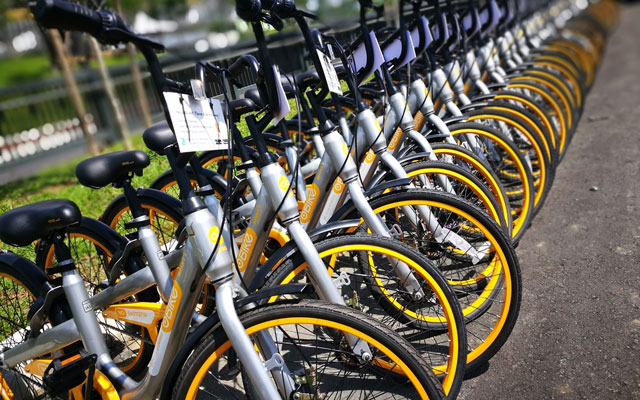
oBike first launched in Singapore but has since expanded to over 30 cities in 10 countries worldwide

“oBike started out as a service for locals, but it has become popular with tourists as well, hence we started collaborating with local tourism organisations and companies to make the tourist mobility experience more convenient,” said Chen.

For example, oBike has collaborated with ride-sharing service Grab in South-east Asia to allow Grab users to also activate oBike within the Grab app, extending and improving the land transport experience for users.

Arun Mishra, regional director, Asia & Pacific Office, International Civil Aviation Organization (ICAO), also cited how France and Belgium have integrated more than 30 airlines to provide a joint air-rail ticket, raising connectivity to various destinations in the area.

From left: International Civil Aviation Organization’s Arun Mishra and Korail’s Jae-hun Yun

In South Korea, industry stakeholders are well aware of this trend, and are “seeking other ways to expand bus services to reach across the nation”, shared Jae-hun Yun, Korail’s director of tourism division.

“We are seeing adequate demand for single tickets linking air and railways, subways and buses, so we are preparing to provide these services,” he said.

What the country is lacking, Yun opined, are proper policies to support this, as South Korea has different government authorities in charge of different means of transport.

“Intermodal connectivity is important to provide convenience to travellers. It’s the role of the government to coordinate different opinions and between stakeholders,” he pointed out.

Hotel booking portal dangles zero commission offer

0

Online travel booking engine Traveliko, which was launched in early 2017 to offer a flat 10 per cent commission rate for hotels, is now touting a zero commission model.

This zero commission policy will enable hotels to “challenge” and “break away from the burden of high commissions charged by dominant OTAs”, Traveliko stated in a press release.

World’s first zero commission booking engine is set to challenge global online travel giants

Yann Gouriou, Traveliko’s co-founder and COO, commented: “We work directly with hotels to guarantee the best available rate, and we have replaced commissions with a subscription model that provides hotels with a free listing for up to 100 bookings per month, supplemented by a range of premium options for a modest fee.”

Bjorn Harvold, traveliko’s co-founder and chief technical officer, elaborated: “Our zero commission policy means hotel owners and management companies now have access to an efficient high-value booking solution. The more hotels that come on board, the stronger Traveliko becomes, and the closer we get to fixing the industry,”

Traveliko is also in the midst of creating an intelligent payment platform using blockchain technology to facilitate faster, easier and lower-cost money transfers.

Dubai links arm with Tencent to court Chinese travel market

0
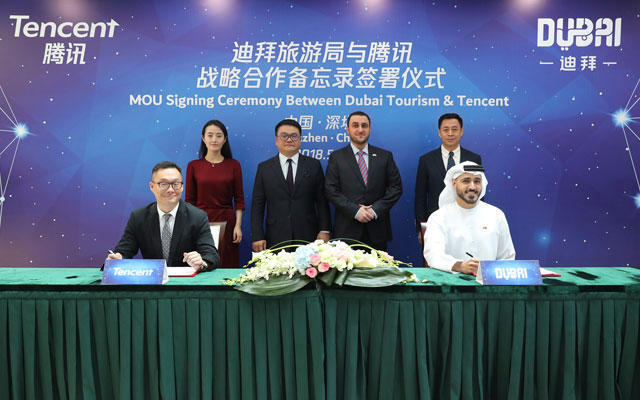
Tencent joins hands with Dubai Tourism to increase visits to the Emirate

Chinese Internet giant Tencent has signed an MoU with Dubai’s Department of Tourism and Commerce Marketing (Dubai Tourism), an agreement expected to see Chinese travellers receiving targeted social feeds about the city’s offerings and spearhead smart tourism along the route of the Belt and Road Initiative.

Issam Kazim, CEO of Dubai Corporation for Tourism and Commerce Marketing, commented that the agreement is an extension of the organisation’s ongoing partnership with Tencent to build affinity with the Chinese target audience.

Tencent’s Poshu Yeung (left, front row), and Issam Kazim, CEO of Dubai’s Corporation for Tourism and Commerce Marketing (right, front row), at the MoU signing ceremony

WeChat first rolled out the CityExperience Mini Program in November 2017 to offer an interactive platform for Dubai Tourism to connect with Chinese travellers. As Tencent’s offerings increasingly penetrate Dubai’s tourism sector, the programme could also be enhanced with Tencent Cloud’s suite of smart travel solutions to provide value-added functions such as AI customer service.

Meanwhile, Tencent Cloud will continue to incorporate an array of advanced offerings such as cloud computing, Internet of Things, Artificial Intelligence and big data to work towards a Smart Dubai.

In addition to providing user insights for targeted marketing, Tencent will also offer recommendations for other local stakeholders to start or improve their WeChat Official Accounts.

Through Dubai Tourism’s inetwork in Dubai, Tencent hopes to promote its offerings including WeChat and WeChat Pay as an option for convenient and secure mobile payment among Chinese tourists at local merchants. On the other hand, Dubai Tourism will also encourage Dubai merchants to adopt and leverage Tencent Cloud and ad solutions.

Maiden journeys on Cruise & Maritime Voyages’ new ship goes on sale

0
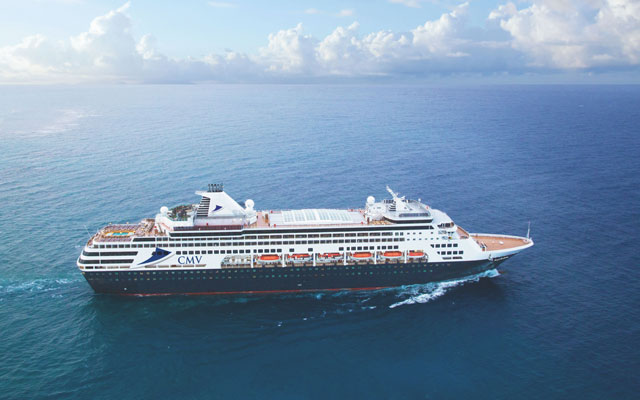
CMV Vasco Da Gama

Cruise & Maritime Voyages’ (CMV) latest ship, Vasco da Gama, will sail from Singapore and London on its 44-night maiden journey next year.

Currently sailing as P&O Australia’s Pacific Eden, the ship will be renamed to Vasco da Gama when she joins CMV’s fleet. The ship will be dry docked in Singapore and given a refresh before its maiden voyage on April 23, 2019.

Vasco Da Gama

A 56,000 GRT ship, Vasco da Gama offers 630 cabins and is able to accommodate 1,200 passengers. Other facilities onboard include two pools, a wellness centre and spa, theatre, five bars and lounges, as well as six dining venues.

The ship will sail from Singapore to London, and London to Sydney in 2019, before launching its inaugural Australian cruise season. Passengers can choose from a range of options along the routes of up to 55 nights.

The ship’s 44-night Maiden Voyage from Singapore to London will include South-east Asia, the Indian subcontinent, Jordan, Egypt and pass through the Suez Canal. The cruise will continue to Israel and around the Mediterranean, finishing with Morocco and Portugal before docking in London. Guests wanting more can stay aboard and disembark in Amsterdam (Netherlands) or Bremerhaven (Germany).

Vasco Da Gama’s Suite Twin Share

Next, Vasco da Gama’s 53-night inaugural Southbound voyage will depart London on October 9, 2019, calling on 16 ports of call in countries such as Morocco, Barbados, Mexico and New Zealand before arriving in Sydney.

London to Sydney cruise-only fares start from A$6,899 (US$5,193) per person twin share for an inside cabin (53 nights), which includes up to A$2,200 free on-board credit per cabin – for bookings made up until July 31, 2018 – to allow guests to experience even more of the new ship. Singapore to London cruise-only fares start from AU$5,399 per person twin share (44 nights).

Vasco da Gama will be deployed and dedicated to both the German and Australasian cruise markets. During the European summer (May-October) the ship will operate under CMV’s German brand, TransOcean Kreuzfahrten, homeporting from both Bremerhaven and Kiel; and during the Australian summer season (December-March) will sail from Fremantle and Adelaide.

In addition, CMV has launched a ‘Sell & Set Sail’ promotion for travel agents. The winner and a friend will spend five nights aboard Vasco da Gama during its inaugural Australian Season in 2019/2020.

The agent who books the highest number of cabins on Vasco da Gama’s Maiden Voyages or Inaugural Southbound Voyages by June 30, 2018 will be selected.

A new opportunity for luxury travel in Asia

0

Brought to you by Beyond Luxury Media

Luxury tourism to Asia is increasing rapidly, but its very nature is changing just as fast. Market research shows that top-end international travel agents are now looking for unique, tailored experiences to satisfy an increasingly demanding and discerning wealthy clientele.

In spite of this – and the fact that Asia represents over 30 per cent of global tourism receipts – there is still no travel tradeshow fully dedicated to that space.

That’s where Further East comes in. We’re delivering a fresh innovative event that will be the first show dedicated to inbound travel in Asia. Taking place from the 12-15 November 2018 on Seminyak Beach, Bali.

The continent is unique; it needs its own temple where all Asia’s values are celebrated, in an authentic context. That’s why our new four-day festival will create a global community on Seminyak Beach, Bali, for Asia’s travel elite to inspire, collaborate and grow luxury inbound tourism.

Spearheading this movement is Serge Dive, CEO and Founder of Beyond Luxury Media – the mould-breaking company behind globally renowned tradeshows PURE Life Experiences, We Are Africa and LE Miami. Serge explains why Further East is set to become another industry-defining event:

“Our aim is to create the most efficient and relaxed marketplace and the closest experience to a ‘barefoot travel tradeshow’. With the choice of uber-cool Seminyak and the enthusiasm of our incredible local partners – Alila Hotels, Potato Head Beach Club, Katamama and W Bali-Seminyak – we will deliver an event like no other and provide a cure to boring travel tradeshows.”

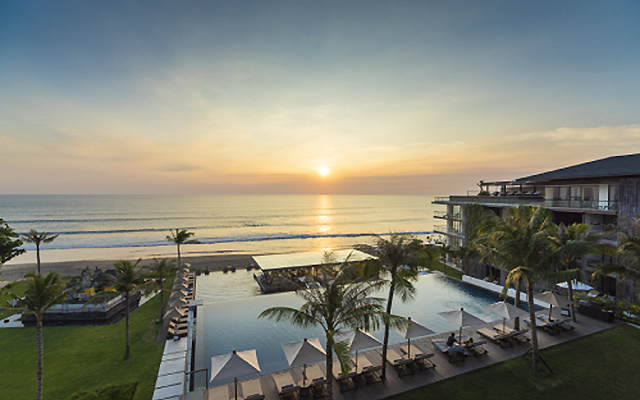
Image: Alila Seminyak, the official marketplace of Further East, 12-15 November 2018

Building communities

To be a truly great company, you need to be a small shopkeeper in a global village. The millennial mentality of Beyond Luxury – where personalisation and spontaneity are prioritised over the beige “cookie cutter” experience of pre-packaged holidays – allows us to achieve this.

While business is at the core of our shows, our approach is totally uncorporate. We build communities through shared experience; you don’t just leave with a business card but a feeling of real friendship and long-lasting business relationships.

Creating context

With Further East, we want to be a context creator for the Asian luxury travel space. It’s important that it resonates with the product we’re showcasing – Asia itself – and celebrates it within a relevant context.

We knew that Bali, with its unique harmony and spirituality, would be an outstanding location. We have distanced ourselves from the usual city hubs and sterile convention centres to find somewhere that truly embodies the spirit and the goal of the show.

And thanks to Beyond Luxury’s proven track record, we’ve already attracted some iconic names to Further East. They’ve been explaining why they’re joining us.

We’re going Further East…

…To build relationships that matter

“Further East is about authenticity and spending time with likeminded people who are passionate and have the same drive to deliver meaningful experiences”. — Christina Deeny, Aman

…To network with the best, in Asia

“The calibre of agents coming to the show means we can develop important relationships without having to travel to Europe and America”. — Anthony Syrowatka, Viceroy Bali

…To get real results

“We’ve attended Further East’s sister show, PURE, and trust the qualification process and the quality of participants – every appointment will be worthwhile”. — Nick Downing, The Siam

The corporate way of doing business is disappearing in front of us. In its place we are creating something that has never been done before, showcasing Asia on its own terms and celebrating its unique energy in order to build a truly exceptional travel show.

Join our global community www.furthereast.co

Surabaya attacks spur heightened security at Asian Games, trade recovery efforts

0
Jakarta says it will step up on security in time to welcome the Asian Games; Senayan Sports Complex (in background), one of the event venues, pictured

Security will be stepped up at the upcoming Asian Games, taking place in Jakarta and Palembang from August 18 to September 2, in the wake of the recent bombings in Surabaya.

Anies Baswedan, governor of Jakarta, said his office has been working closely with all stakeholders to keep the city safe and secure.

Jakarta says it will step up on security in time to welcome the Asian Games; Senayan Sports Complex (in middle ground), one of the events venues, pictured

“Do not be afraid,” he said while addressing the media in Jakarta last week, adding that the recent attacks in Surabaya serve as a lesson in vigilance, spurring efforts to improve security measures with the Asian Games round the corner.

Indonesia’s minister for youth and sports Imam Nahrawi also assured that preparations for the high-profile sports event remain on track and that the ministry will continue to work with all parties involved to ensure the smooth running of the Asian Games.

Meanwhile, the travel trade has reported minimal fallouts from the Surabaya attacks, attributing this to swift responses from the Indonesian authorities.

With the belief that the impact will be “minimal and contained”, Hariyadi Sukamdani, chairman of Indonesia Hotel and Restaurant Association, said: “Terror can take place anywhere and (referring to several incidents in Europe) the recovery is quick. In Surabaya, the police acted very promptly and managed to capture other suspects within a couple of days, (curbing plans for further attacks).”

The Casa Grande hotel group in Surabaya, despite recording a drop in occupancy for its economy hotels in the initials days following the attack, has already seen occupancy quickly bouncing back in the days after.

Hasiyanna Ashadi, chairman of ASITA Jakarta Chapter, said: “We received a few reports of cancellations or postponement of ad hoc tours on the day following the incident. However, the tour series remain generally intact.

“Moreover, now being the Ramadhan fasting month now, the market tends to be slower. So while there is an impact, it is insignificant,” Hasiyanna added.

To stimulate the market, Indonesia Ministry of Tourism together with Visit Wonderful Indonesia (ViWI) committee launched the Jakarta Ramadhan Hot Deals packages last weekend, on top of the Jakarta Weekend Hot Deals launched earlier.

Haryadi, who is chairman of Visit Wonderful Indonesia, said: “The low season in Jakarta gives us an opportunity to work with airlines (Garuda Indonesia, Malaysia Airlines and Singapore Airlines, among others ), hotels and agents to promote Ramadhan hot deals.

Later this month, Surabaya Hot Deal and Bali Hot Deals will also be launched.

With a new government, Malaysian hotels urge review of tourism tax

0
Hotel associations had opposed the tax leading up to its implementation, saying it impinges on the destination's price competitiveness

With the Malaysian cabinet set for a refresh following Mahathir Mohamad’s landmark election victory and return to the post of prime minister, the country’s three main hotel associations are taking the chance to resurface their objections surrounding a tourism tax that came into effect in September 2017.

Diminished competitiveness especially in the budget hotel sector and hotels’ unwillingness to be made “collecting agents” for the tax are among the issues highlighted by the Malaysian Association of Hotel Owners’ (MAHO), Malaysian Association of Hotels (MAH), and Malaysia Budget Hotel Association (MyBHA).

Hotel associations had opposed the tax leading up to its implementation, saying it impinges on the destination’s price competitiveness

This comes as the government announces a reduction of a goods and services tax introduced in 2015 to zero.

MAHO executive director, Shaharuddin M Saaid, shared with TTG Asia that the association will push for an overall review of the tourism tax so that it does not hurt inbound arrivals.

Shaharuddin said: “A RM10 (US$2.50) tourism tax per room per night at a budget hotel that costs RM50 to RM80 per room per night is too much for guests to pay. The budget hotels complain that they are losing business because of this tax.”

The association hopes to recommend putting a new mechanism in place to free hotels of the tax collection role they have reluctantly assumed.

In addition, the three hotel associations had last year proposed that the government introduce an exit tax that should be collected at the airports and borders and imposed on foreign tourists. Shaharuddin said: “We will most likely bring up this proposal again.”

Under the system, foreign tourists are charged a flat rate of RM10 per night and per room and Malaysian citizens and permanent residents are exempted from paying the tax.

The luxury sector keeps growing and growing

0
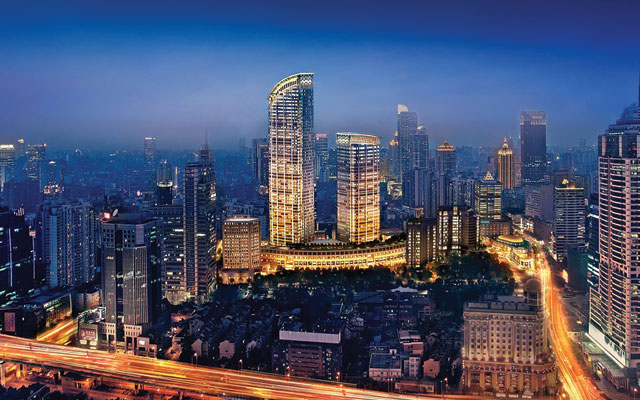
Above: The Sukhothai Shanghai is part of the HRKI Taikoo Hui mixed-use complex

Hotel inventory in Shanghai is expanding and the opening of at least 10 international high-end brands in the business and cultural hub in the past year is raising the city’s luxe appeal.

The Sukhothai Shanghai is part of the HRKI Taikoo Hui mixed-use complex

Among the additions are the 436-room St Regis Shanghai Jingan, which opened in May 2017; the 374-room W Shanghai – The Bund,  which opened in June 2017; and the 55 all-villa Capella Shanghai, Jian Ye Li – one of the last remaining clusters of shikumen architecture dating back to the 1930s – which opened in September 2017.

At press time, other notable openings this year include the Bellagio by MGM Shanghai and boutique brands, with between 100 and 150 rooms, like Bulgari, Edition, Middle House and Sukothai.

Yvonne Peng, director of sales and marketing, said all 55 of the Cappella’s one-, two- and three-bedroom villas were booked in February by a China-based finance company for a one-night stay that was combined with an off-site dinner as its annual company event.
Peng also noted the hotel is seeing demand for events that mix luxury lifestyle and business.

Meanwhile, the 28ha Shanghai Hongqiao Economic and Technological Development Zone, being developed for commerce and MICE, will house 100 new international chain and domestic-branded hotels in the next three to five years.

According to a city tourism official, there are now 51 hotels in the area with 14 business and high-end hotels providing some 4,400 rooms, and 32 in the economy category providing another 4,000 rooms.

Violet Wang, destination manager, Pacific World in Shanghai, commented: “Hotel demand in Shanghai is increasing but so is supply, and that is keeping hotel rates stable.”
Observing some increase in rates, Julien Delerue, general manager of 1000meetings, a Shanghai-based event technology platform, said there was “10 per cent growth for business group rates on room accommodation year-on-year in 2017 versus 2016 for five-star international hotels – RMB1,045 (US$166) in 2017 versus RMB945 in 2016”.
It was “seven per cent for four-star international hotels – RMB645 in 2017 versus RMB600 in 2016”, he added, noting that similar trends are expected in 2018.

As China’s financial hub, domestic demand for Shanghai is a big factor. Chris Tsoi, general manager, St Regis Shanghai Jingan, said: “The hotel business in China has evolved… the domestic market in China is now key.”

Cheryl Yue, executive assistant manager – sales and marketing, W Shanghai-The Bund, agreed. “China is now like the US and the domestic market is very important. For us between 20 and 30 per cent of the business is domestic, and China, the US and Hong Kong make up our top three markets,” she commented.