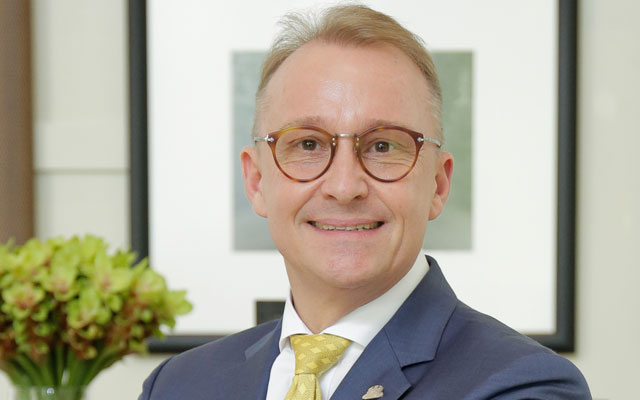
Hilton Worldwide has appointed Markus Kosch as general manager of the Hilton Phuket Arcadia Resort & Spa.
Kosch was most recently general manager of Conrad Guangzhou.
A 22-year veteran in the hospitality industry, Kosch began his career with Hilton Worldwide at Hilton Shanghai. In 2012, he served as cluster general manager of several Hilton properties in Sanya-Haitang Bay and Dalian.
While much attention in the travel industry has been given to “disrupters” like Airbnb and Uber, the continual foray of tech giants into the travel space is increasingly posing a bigger worry for industry players in the longer term.
The huge growth potential in the online travel space, particularly in Asia-Pacific, is attracting attention from non-travel players, noted Rob Brown, Travelport’s group vice president and managing director – OTA, speaking during a panel at the recent Travelport Live conference in Bangkok.
Travel tech players not the only competition; Google is fast making inroads with the all-important data advantage on it side
“We’re not looking at competition among ourselves – which OTA is growing the fastest or online versus offline,” he remarked.
“Competition is really coming from big technology players. Certainly, Google and Alibaba are already very much in the travel space, but many other companies are coming along as well.”
A poll conducted during a panel discussion at Travelport Live revealed that most attendees regarded Google the biggest threat to travel brands, more so than other tech companies like Facebook, Amazon, Alibaba or Tencent.
As Google fleshes out its flight and hotel comparison tools, Expedia is feeling the heat too, said James Marshall, the OTA giant’s vice president, transport partner services, Asia-Pacific.
Search engine heavyweights such as Google and Baidu are perceived as a major threat
“We have a complex relationship with Google. We are probably one of their biggest customers but we’re in a way competitors; they have Google Flights and we work with them. We work as competitors providing content but as competitor they’re also great source of business sources for us,” he conceded.
Gawin Tsang, e-commerce manager, IT department, Nan Hwa (Express) Travel Service, a B2B travel wholesaler in Hong Kong, is also wary of Google’s travel push. “Google is already a competitor. Everyone can get info easily through search,” he said.
“The more channels that Google gets into, the harder it is for us to survive. We need to sell more to get the same revenue,” remarked Tsang.
He pointed out that both Apple and Google already own 90 per cent of the mobile ecosystem, which allow these two tech giants to easily capture travel data and get insights on what they’re looking for. “It’s only a matter of how, not when,” he said.
Amid intensifying competition, Brown urged travel players to do an “outstanding job with data”, in order to better deliver customer personalisation in an age where travellers are valuing experiences over assets.
Questioned Brown: “We need to stay relevant. Do you want to be an innovator and come along for the journey or be left behind?”
Alipay and the Singapore Tourism Board (STB) are broadening their partnership with the launch of joint marketing activities to promote Singapore and drive tourist spending among Chinese visitors.
The marketing activities are designed to incentivise Alipay users, through rewards and discounts, to spend across different types of tourism businesses such as retail, F&B and attractions, further boosting their spending in Singapore.
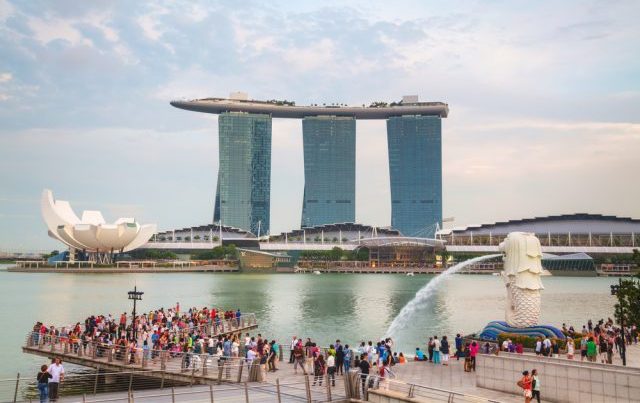
China is Singapore’s (pictured) top market both in terms of tourism receipts and visitor arrivals
Alipay and STB will also create tailored itineraries that are aligned with STB’s new Passion Made Possible brand. These itineraries are meant to encourage Alipay users to “pursue their passions by exploring and discovering new attractions, dining and shopping experiences”. It will also give them more reasons to visit and spend more in Singapore.
Additionally, the partnership is expected to leverage Alipay’s insights to deepen STB’s understanding of Chinese visitors’ consumer behaviour.
Since signing an MoU last September to explore co-investing in joint-marketing initiatives to encourage Chinese tourists to spend with Alipay while in Singapore, the payment platform has experienced double-digit growth in user spending.
China has also become Singapore’s top market in 2017 for both tourism receipts and visitor arrivals, contributing S$4.2 billion (US$3.1 billion) in tourism receipts and 3.2 million visitor arrivals.
“We hope to continue to broaden over time our partnership with Alipay to explore more innovative marketing initiatives in the areas of content, digital and technology to further enhance the Chinese visitor experience,” said Jacqueline Ng, director, marketing partnerships & planning, STB.
“Singapore is a favourite destination for Chinese travellers. According to research released by Nielsen last year, it is one of Chinese tourists’ top 10 preferred travel destinations in the world… At the same time, we are excited to connect more merchants in Singapore with Chinese tourists and be discovered by them through the app,” commented Cherry Huang, general manager, cross-border business for South and South-east Asia, Alipay.
According to the recent Nielsen report, jointly released with Alipay, over 90 per cent of Chinese tourists would consider using mobile payments when traveling overseas if more overseas merchants accepted them.
While the Port of Benoa Bali remains intact for cruise ships after a massive fire at the port last Monday, tourism players in Bali say there’s work to be done to address the safety concerns that have emerged from the incident.
A fire broke out at the port last week, destroying the boats of at least 39 fishermen. The cause of the fire has not been determined at press time.
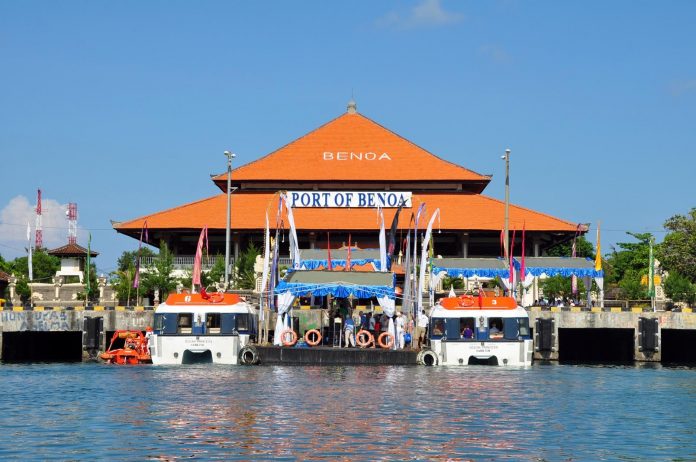
The massive fire at Port of Benoa Bali was mainly in its west zone, not affecting cruise ships
In a statement, the state-owned port operator Pelabuhan Indonesia (Pelindo) III assured that all operational activities at Port of Benoa were safe and running smoothly.
I Wayan Eka Saputra, Pelindo III’s regional general manager for Banyuwangi, Bali and Nusa Tenggara, explained that the extinguishing process did not interfere with port activities, including where cruise traffic is concerned.
In fact, the Equanimity Cruise successfully docked on the east pier on the day the fire broke, he said.
He explained: “The jetty at Port of Benoa has a U shape – the west zone is for fishing boats, and the east dock is (for cruises) and cargo/container vessels. Only the west zone was affected.”
Ida Bagus Lolec Surakusuma, managing director, Pacific World Nusantara, remarked that the fire has had no impact on cruise business.
Ketut Sediya Yasa, managing director of Destination Asia Indonesia, also saw minimal impact as it is now low season for cruising.
However, he expects the authorities to communicate to the international community about the fire and tighten safety measures at the harbour.
Otherwise, cruise operators are likely to reconsider docking at Benoa, he opined.
“Communication is vital to convince cruise operators to make a call here,” said Yasa.
Taiwan’s Ministry of Foreign Affairs (MOFA) last week announced the extension of its 14-day visa-free entry trial programme for nationals from Brunei, the Philippines and Thailand.
The decision followed a June 11 inter-ministerial meeting convened by MOFA. The trial of visa-free treatment for nationals from these three countries will continue for another year from August 1, 2018 through July 31, 2019, with a possible extension in the future.
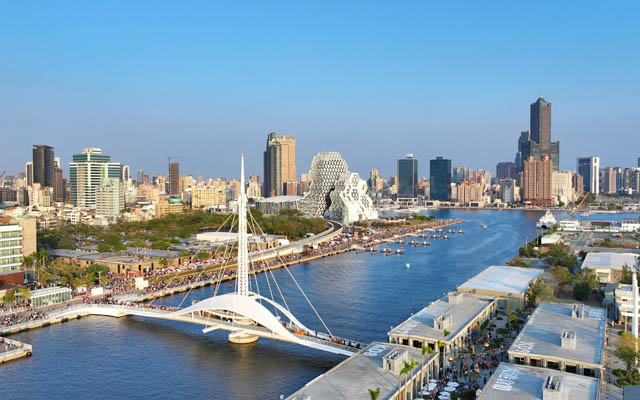
Taiwan renews visa-free entry program for Philippines, Thailand and Brunei; Taipei’s skyline pictured
This measure is being continued to attract visitors from New Southbound Policy partner countries for tourism and business purposes. Also factored into the decision to extend the trial period was the average length of stay by quality tourists and business travellers.
According to statistics from the Tourism Bureau, nationals from New Southbound Policy partner countries made a total of 2.3 million visits to Taiwan in 2017, a significant year-on-year increase of 27.7 per cent over the 1.8 million visits made in 2016.
As it forays into mainland China, KKday has kicked off a collaboration with Alibaba by launching a flagship store under Fliggy, Alibaba Group’s travel portal.
The tours and activities startup has also received an undisclosed investment from the Alibaba Entrepreneurs Fund, which supports young companies through its ecosystem and e-commerce and financial services.
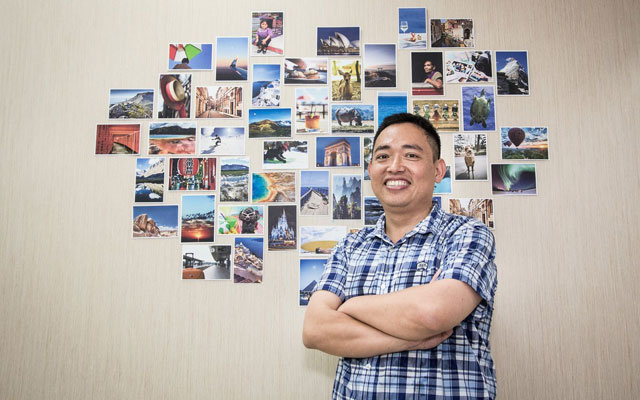
More partnerships for KKday; Ming Chen, founder of KKday pictured (photo credit: Twitter/kkdayth)
KKday recently launched an office in Shanghai – its first in mainland China. The three-year-old company is already operating in Taiwan, Hong Kong, Singapore, South Korea, Japan, Malaysia, Thailand, the Philippines, Indonesia and Vietnam.
“This deal will drive many potential collaborations – Fliggy is a great way for us to enter the Chinese market. Alipay’s universality will help us reach customers in China, and within South-east Asia,” said KKday’s CEO Ming Chen.
Chen believes that with Alibaba’s technology as a tool, KKday can streamline the travel experience and make it more enjoyable.
This news follows the previous partnership of KKday and Japanese travel firm H.I.S, which resulted in US$10.5 million raised and created new opportunities for cooperation between the two companies.
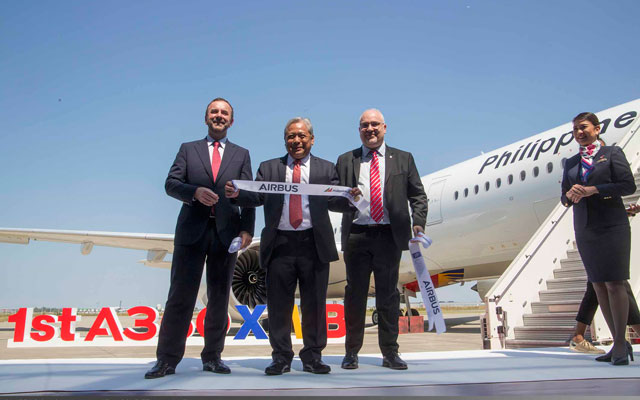
Philippine Airlines (PAL) has taken delivery of its first A350 XWB aircraft, Airbus’ new family of mid-size widebody longhaul airliners, which it believes will help it better compete in the premium longhaul market.
PAL has ordered six A350-900s, which will be primarily operated on non-stop services to Europe and North America. These will include the carrier’s longest route to New York, which the A350-900 can operate non-stop in both directions, all year round.
From left: Airbus’ Jean-François Laval; Philippine Airlines’s Jaime J. Bautista; and Rolls Royce’s Christophe Molus
Representing a distance of over 8,000 nautical miles, the 17-hour return journey from New York to Manila previously involved a technical stop in Vancouver.
PAL has configured its A350-900s with a layout seating 295 passengers in three classes. This includes 30 seats that convert to fully flat beds in business class, 24 offering extra space in premium economy and 241 18-inch wide seats in the main cabin.
The aircraft features the Airspace by Airbus cabin, which is said to offer more personal space and full connectivity, on top of being “the quietest of any twin aisle aircraft”.
“The arrival of the A350 XWB will see PAL offer new levels of comfort on our longhaul flights,” said Jaime Bautista, president and COO of Philippine Airlines. “At the same time we will benefit from the A350 XWB’s new generation efficiency, with a significant reduction in fuel consumption and lower maintenance costs. We believe that the A350 XWB will be a game changer for PAL as we compete with the best in the premium longhaul market.”
The A350 XWB joins PAL’s existing Airbus fleet of 27 A320 family aircraft, 15 A330s and four A340s.
Hong Kong’s Madera Group has rolled out in-room Deliveroo menus to three of its boutique hotels in the city – Hotel Madera Hong Kong, Hotel Madera Hollywood, and Madera Residences.
With the partnership with food delivery platform Deliveroo, the hospitality company says participating hotels now offer a much wider selection of on-demand in-room dining options.
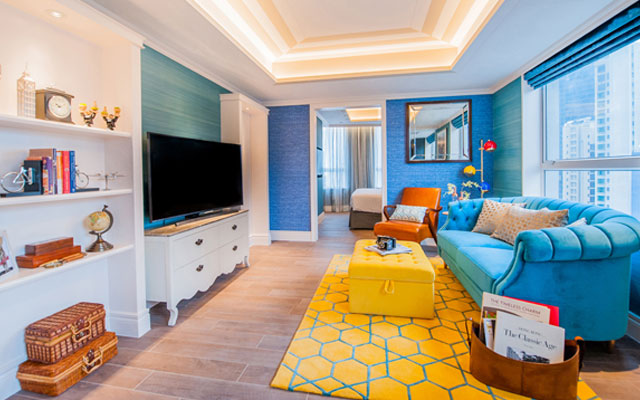
Hotel Madera Hollywood
Among Deliveroo’s range of restaurant partners are favourites such as Duocento Otto, Yu Mai and Honeymoon Dessert.
Guests may place their orders through guest services.
Onyx Hospitality Group has appointed Michael Gaehler as the new general manager of Oriental Residence Bangkok.
Prior to his appointment, Gaehler was group general manager at Regent Hotels and Resorts in Taipei, where he oversaw hotel projects in Vietnam, Taiwan, Indonesia and mainland China.
The Swiss hotelier began his career in his native country as commis de cuisine at Restaurant Frohsinn in Aarau. He rose through the ranks, working in a variety of positions in the hotel industry and was named general manager at Villa il Tesoro, Maremma in Tuscany in 2003.
After another general manager assignment in Switzerland, Gaehler further honed his hotelier experience with pre-opening roles and running luxury hotels of various sizes across Asia.
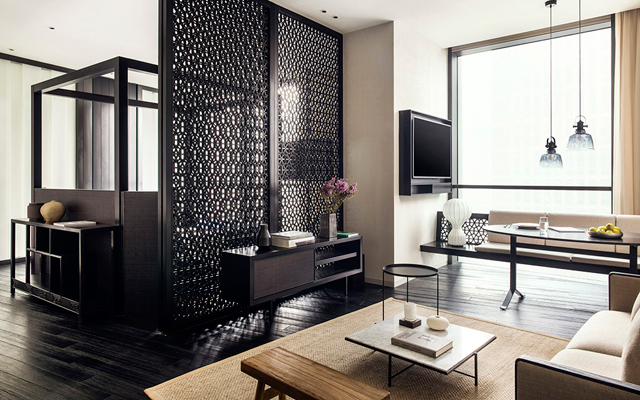
The Middle House in Shanghai recently opened featuring five serviced residence units, on top of suites
Preferred Hotels & Resorts is putting priority on growing its residences collection and sees a huge opportunity in Asia where hotels with a residential component are becoming popular with developers.
Preferred Residences is not a home-sharing business, the bandwagon that several global hotel chains have jumped on of late, although its intent is the same, i.e. to cater to new travellers’ desire of staying in a home, or a home-like environment, and living like a local. Since its launch three years ago, the portfolio has grown to over 80 members and Preferred expects to have more than 100 members by year-end.
The collection comprises largely high-end residential units in hotel or resort developments, serviced apartment units, and villas and suites in resorts, not individual homes. In Asia-Pacific, examples are the five residential units in The Middle House, a five-star boutique hotel in Shanghai which is part of Swire Hotels; 8 on Claymore Serviced Residences in Singapore which offers 85 apartment units; and Andara Resort & Villas, Phuket, which has 26 villas and 37 suites.
The Middle House in Shanghai recently opened featuring five serviced residence units in addition to suites
Preferred’s president Michelle Woodley, interviewed during the recent ILTM Asia Pacific in Singapore, said Preferred Residences differs from home-sharing in that “it is about providing a luxury residential experience with the amenities, safety and services of a hotel”. The company may extend to home-sharing in the future as “there is a certain segment that is interested in home-sharing with some branding – however, nothing eminent right now”, she said.
As it is, there is enough ground for Preferred to build up the collection as hotel developers are increasingly including residential units in their projects. Often, this supports the financials and infrastructure for the hotel development and vice versa.
In Asia, the ‘branded residence’ concept has taken off since Adrian Zecha launched the first Aman, Amanpuri in Phuket, in 1988. According to C9 Hotelworks’ research, Thailand now accounts for 41 per cent of South-east Asia’s supply, with over 21,000 hotel residence units, followed by Indonesia, while Vietnam, in particular Danang, is a rising star.
C9 Hotelworks counts at least 29 new hotel residence projects in Thailand alone as of October 2017. In addition, it expects developers to continue to seek brand affiliation for the projects as this fetches a price premium and greater buyer demand.
This augurs well for Preferred, which sees opportunity in Asia. “We see growth and opportunity for these types of developments and the support of the Preferred Residences branding provides value to the owner and choice for the consumer,” said Woodley.
Preferred’s customers expect access to a range of offerings depending on the ‘when, where and why’ of their travel, said Preferred’s CEO Lindsey Ueberroth in an earlier interview with TTG Asia. “The member who stays at a luxury hotel on one trip may stay at a moderate shared apartment on the next trip,” she said.
The rise of multi-generational stays in the Asian travel market, or of groups of friends or groups with similar interests travelling together, or of weddings and other celebrations being held overseas, also fuels demand for residences, which often have multiple rooms. To engage families, corporates and leisure travellers, Preferred is working on a dedicated section and new features for the residences collection on its website, which will be relaunched in the third quarter.
The fee for joining Preferred Residences is similar in nature to joining the other four collections of Preferred, namely Legend, LVX, Lifestyle and Connect. In fact some members that are already in one of the four collections have also joined Residences as an “add-on”. Examples include Montage Los Cabos, Mexico, which has 122 rooms and 52 residence units. It is in both Legend and Residences. Or, Primus Hotel Shanghai Hongqiao, which is in both LVS and Residences. The newly-opened hotel has 393 rooms and 158 residences.
Celebrating its 50th anniversary, Preferred has over 650 member hotels in the five collections, and the focus to grow residences is a way to expand further and create a new revenue stream. Woodley said it is eyeing a footprint of 250 to 300 members in the residences collection eventually.
Preferred appears to be the first and only one among independent hotel chains to have a strategic focus on residences. When approached by TTG Asia, WorldHotels’ CEO Geoff Andrew said the company has no plans to tap residences potential, but the main reason is priorities.
“We have just launched our new hotel collections and have a number of other major projects on our plate, including a new loyalty programme and CRM. For now, we want to focus on growing the hotel portfolio and driving additional revenue per hotel,” said Andrew.
Meanwhile, Preferred is also branching out to offer consulting solutions to hotels, including PR and representation, with Asia-Pacific as a key area of growth.
Earlier this year, it set up Preferred Hospitality Solutions to offer these services. This sits under Preferred Hospitality Group, a consulting arm which was set up in 2012 and has since represented several provinces in China including Suzhou and Nanjing in PR, social media and sales to the US market. In May, Preferred appointed Susan Devine as executive vice president to oversee Preferred Hospitality Group and its expansion in hospitality solutions. Devine has been with Preferred since 2006 and was senior vice president strategic development before the new role.
Said Woodley of the services offered: “A new hotel opening in Singapore may want to do a media event in London. For them to go find an agency who does not know them, and figure out a way to do a launch event in London, is difficult. But Caroline (Michaud, Preferred’s executive vice president corporate communications and PR) and her team can put together a programme for three to six months.
“Also branding. Often times hotels go through a renovation and they need help in positioning themselves in the marketplace because they’ve just invested all this money, and that might include more than just branding, into communications strategy, revenue management strategy – we’re able to bring the resources together and work with them on that.
“Pre-opening is another area. We’ve got owners and developers who are opening independent hotels for the first time; they need the expertise – how do I hire a GM or director of sales, what should my pre-opening plan look like? We have a lot of know-how and resources in our organisation to help them do that. That applies globally but we see a big opportunity here in Asia for that piece of business.”