TTG Asia
Asia/Singapore Saturday, 4th April 2026
Page 1388

Another airline bites the dust amid Myanmar’s overcapacity

0
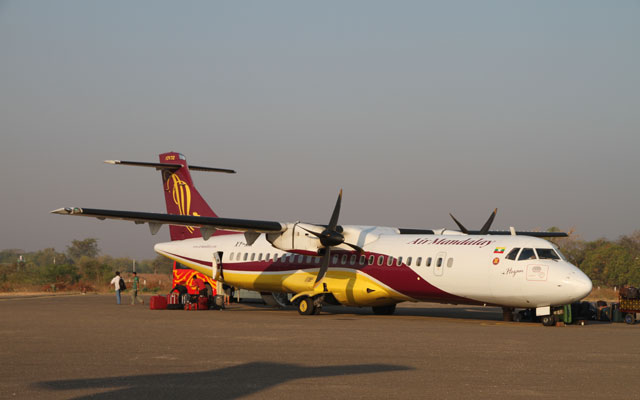
XXX. Photo credit: Flickr/Travel Aficionado

Air Mandalay has suspended all scheduled and charter services to restructure its business, the fourth domestic airline in Myanmar to wind up in the face of high fuel prices and slower than projected demand.

Myanmar’s second oldest airline suspended services starting from September 4, with no confirmed date for the resumption of operations. Speaking to the Myanmar Times, Air Mandalay’s spokesperson May Thandar Wi said this would be subject to market conditions.

Air Mandalay has shuttered once more. Photo credit: Flickr/Travel Aficionado

The airline joins Air Bagan, Apex airline and FMI Air to have wound down, leaving six domestic businesses to compete in the sector.

The company stated in a press release that it “has been extremely difficult” to operate in the country and the situation has worsened since 2011, when “a number of new airline licenses were approved to operate in the country.

While president Thein Sein’s administration since 2011 limited the number of airlines operating in the country to 10, there is already too much competition and an overcapacity in the small market. Along with high operational costs, this has seen many domestic airlines making losses, May Thandar Win told the Myanmar Times.

And in 2014-15, the airline was unable to operate for more than a year due to the delay in issuance of import permit for its two Embraer ERJ145 jet aircraft and a nine-month delay in 2017-18.

A foreign private joint venture airline with the government incorporated on October 6, Air Mandalay’s routes before the recent suspension covered Yangon, Myitkyina in Kachin, Sittwe in Rakhine and Tachileik in Shan.

K11 Artus luxury hotel residences to rise in Hong Kong’s Victoria Dockside

0
Concept of the K11 Artus, which will form part of the Victoria Dockside development

Hong Kong’s art and design district Victoria Dockside will soon see the addition of K11 Artus, a new luxury hotel residence concept, announced New World Development.

Located at the Tsim Sha Tsui waterfront, the property is scheduled to open in summer 2019. It will have 287 residences spanning 14 storeys, featuring open-air waterfront views of Victoria Harbour and Hong Kong Island.

Concept of the K11 Artus, which will form part of the Victoria Dockside development

“Artus marks a major milestone for the K11 brand with our expansion into the hospitality sector,” said Adrian Cheng, K11 founder and executive vice-chairman of New World Development.

New York-based architectural studio Kohn Pedersen Fox designed the building while Bangkok-based P Landscape will be responsible for the surrounding greenery. In addition, renowned Hong Kong-based architect Andre Fu and his studio AFSO have been engaged to create the interiors.

Artus will be part of the Victoria Dockside development, a 278,700m2 art and design district in Tsim Sha Tsui. This US$2.6 billion development includes the K11 Atelier office tower and K11 Musea, a new ultra-high-end experiential retail, art, cultural and dining destination.

Paul Cunningham, general manager of hospitality and portfolio management of New World Development, said in a statement: “Combining the convenience of hotels and the comfort of serviced apartments, ARTUS offers flexible rental plans from short- to long-term stays to accommodate the needs of our guests.”

Bored with unique experiences: how the phrase loses its meaning

0

Unique experiences. Two words that invoke anticipation, excitement, wonder – but why oh why am I so bored with them?

The race in travel & tourism to provide unique experiences to travellers is relentless. Just this past month, examples include Airbnb throwing a contest offering participants the chance to spend a night in a custom-designed bedroom on the Great Wall of China (although it had to withdraw the contest after an online backlash).

Or, just look at the new wave of unique experiences being offered in the Maldives. They include The Muraka, the world’s first undersea residence at Conrad Maldives Rangali Island; an ice rink at Jumeirah Vittaveli (I’m still baffled why anyone would want ice when the bluest water is all around); and the Sculpture Coralarium at Fairmont Maldives Sirru Fen Fushi, although the fate of this underwater art museum cum coral regeneration project is still unclear at the time of writing.

It’s not unique experiences themselves that bore me; it’s that the term ‘unique experiences’ is so over-used that it has lost its meaning and become an industry cliché.

Here’s a typical example, from a speaker at ILTM Asia Pacific opening forum recently: “We believe that nowadays this market (Gen Me and Gen X) is defined through the combination of the richness and uniqueness of the travel experience itself, not just the hotel brand or the flight class. Accordingly, this experience must also deliver a level of social bragging rights that allows travellers to express their individuality. It needs to be aspirational, enviable – and, above all, Instagrammable.”

The industry is taking the need to provide unique experiences all too seriously that it may be counter-intuitive. The first issue I have is, unique for whom? Travel is an experience in itself and unique to an individual. This past year, I’ve been to places that are unique for me, for example Paestum in southern Italy, and others that aren’t, for instance, New Zealand, even though I’m sure it is for others.

Moreover, unique experiences can easily be copied in today’s global world and social media sharing. There are many undersea or underwater restaurants now. There are so many tours and activities that ‘living like a local’ has also become another cliché. Isn’t it exhausting to keep trying to come up with unique experiences when a differentiator today can quickly become a standard tomorrow? And in doing so, isn’t the industry actually helping to create the ‘very demanding, always want something new, something Instagrammable’ customers it laments about today?

Who says we have to empower the customers so completely? Why not lead and shape the customer towards mindful travel rather than ‘insta’ travel (Instagram, instant gratification travel) which is so fleeting – like a spoilt kid who gets a new toy and seeks what’s next?

Ask new questions to shape the new traveller, e.g. what’s a unique experience that cannot be copied?

For me, that always has been great customer service – it’s unique to the place that offers it, is unique for everybody, and is almost always the first thing I remember about the travel and something that stays with me.  Is it an Instagrammable experience? No, it’s far more lasting and what keeps me loyal to a place, brand and service.

I fear the incessant chant on something as nebulous as the need to provide unique experiences is sidetracking the industry from discussing more meaningful issues.

GM for Hilton Garden Inn Puchong named

0

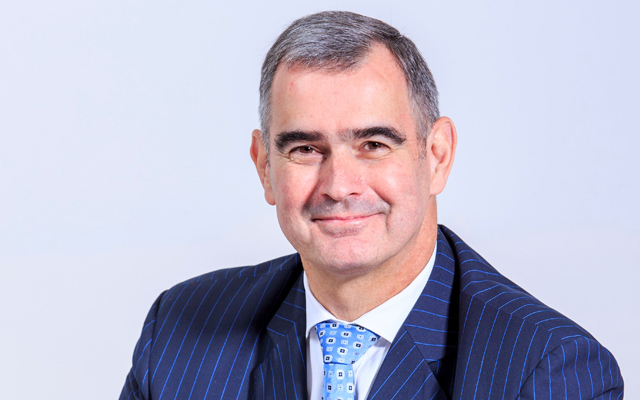
Kumar Muniandy has joined Hilton Garden Inn Puchong in Malaysia as general manager.

Prior to joining Hilton, Kumar was the general manager of the Oasia Suites Kuala Lumpur. He also served as general manger at the Sri Tiara Residences Kuala Lumpur.

A 20-year hospitality veteran, Kumar began his career as a waiter and bartender at Tasik Hotel in Seremban, before becoming a management trainee at Holiday Inn City Centre in Kuala Lumpur.

From there, Kumar went on to hold positions locally and internationally such as assistant manager in Singapore, night manager and guest service manager in the UK before moving up to the general manager position.

GM named for soon-to-open boutique resort in Siem Reap

0

Joni Aker has been appointed as general manager of Treeline Urban Resort, the first managed property under Bangkok-based Hospitality Management and Development Asia.

The New Zealander has extensive management experience in operations across a wide range of fields, including the luxury hospitality sector. She was most recently the cruise director for Aqua Expeditions operating on the Mekong between Cambodia and Vietnam, and on the Amazon in Peru.

Located on the banks of the Siem Reap River, Treeline Urban Resort will have 48 keys comprising 36 rooms and 12 suites, together with culinary outlets, a rooftop pool and bar. It will open November 1, 2018.

Master of change

0

Every new leadership opens a door to new ways of doing things. Are you looking at changing things now that you’re at the helm?
New leadership does bring something different but there must be an objective for that. The difference must be a positive one, and we must be able to calm waters when there is change and get everybody involved and on board.

Everybody has to see the endgame, and understand that sometimes a different road needs to be taken in order for the organisation to move forward.

You mentioned having to calm waters when there is change. Did you see churning waters when you arrived into this new position?
Oh no, not at all! It’s just that when somebody new arrives, even a new general manager at a hotel, everybody wonders who (he is) and how (things will be). It is normal.

What are some of the changes that you have set in motion?
We recognised that we needed to put more emphasis on our website and booking engine. We recognised that we needed our front-facing pages to be more customer-oriented and to portray ourselves to be more in line with what the customer is looking for. We also recognised that social media is an important channel, so we’ve stepped up our efforts there.

Digital is another important aspect of the game, so we’ve put more emphasis on that.

On the hardware front, together with our owners, we have and will continue to invest quite significantly in a number of our key properties for renovations and upgrades. We will even change some of our F&B concepts in some of our hotels.

These will take place over 18 months, three years and five years – one cannot make these changes immediately.

At the same time, we recognised that all of these changes would not pan out if we did not bring a definite change to our service, software and human capital.

The service offered by our hotels is very good. Can we do more? Of course! And that’s what we aim to do. Together with a professional company and a lot of our own senior managers, we have built an employee service culture training manual that is specific to our needs. This took us several months to put together.

We have hotels in different parts of the globe, so the way we portray this service culture and the way we deliver this training to our employees need to be localised. We don’t want to have a one-size-fits-all because our employees and customers are different in every hotel.

One of the key points about our training is that it is first given to our senior management. Not only did they build the course, they were the first to receive training when it was launched in June this year. The training course then cascades down to the employees, with training conducted by the senior team. This shows buy-in by the senior team. We wanted to create an emotional attachment to this course.

The other benefit of having our senior team conduct the training is that they can give relevant, real-life examples to emphasise a point.

Does your social media effort include influencer engagements? It is common for such engagements to come with direct booking motivations, such as through a promo code. Doesn’t that add to travel agents’ ongoing fight with direct bookings?
Social media is a large part of life and we need to embrace it. Have we worked with influencers? Absolutely! Our marketing team identifies which influencers are a right fit with PPHG.

This has happened because of technology and the change in people’s aspirations. They are looking to be inspired and influenced by others.

Influencers bring a new business opportunity but that does not mean we won’t continue to use all the other channels familiar to us.

Travel agents need to embrace this shift. They could themselves see advantages in engaging influencers too.

How about changes in innovation at the back- and front-end?
Our industry – any industry for that matter – has to keep innovating. But we need to understand if the technology is something the customer wants and understands.

We have seen hotels using robots. We have one too at Pan Pacific Beijing, and it’s called Peter Pan. It is quite fun, and the young children like it. The robot is extremely efficient but I do not see it taking over all service roles.

In the meetings and events space, innovation is vital. The days of hotels packing out projector screens and a projector are long over.

I love how PPHG’s ongoing global brand refresh includes a localised strategy and action plan for each market, built with local agency partners. Is this indicative of the continued importance of travel agents in the travel and tourism industry?
Travel agencies are our partners and we are clear about how very important they are. We are here to do business with them.

The relationship between hotels and travel agents have changed over the years because of technology and customer needs. I see both parties evolving together to keep in line with customer demands. Travel trends and habits are changing so rapidly that hotels and travel agents need to work together to do better business.

You’ve been in the hospitality business for 30 years. What are the biggest changes to the regional hotel landscape, and how do you see it evolving next?
Here in Asia-Pacific, there have been very powerful hotel players 20 years ago that are no longer as powerful today. And in the past year, there have been two or three hotel companies that have become very big, very powerful. They will continue to grow where they can. There is no doubt that these very large players, because of their booking system, back-of-house infrastructure and sheer size of their customer base, will dominate the market.

Having said that, PPHG is part of the Global Hotel Alliance which is also a very powerful organisation made up of many other small and mid-sized hotel companies. That gives us some power to fight the giants.

While these large hotel companies are here to stay, they will also change their shape as time goes on. Look at the news today – one of them is looking to offload some of its Australian properties.

What power does PPHG have over these mega hotel companies?
To get things done across the board for 40 properties, as opposed to several hundreds, will be faster, of course. Having said that, it is all about the people who are executing programmes and changes on the ground.

I think another advantage of ours is that we can afford to be more personal.

Have you also seen changes in the way hotels are built today compared to decades ago?
At PPHG, we work very closely with our contractors and architects on environmental impact. The new property that will take over what once was Pan Pacific Orchard (closed since April 2018 for a three-year redevelopment) will have a zero-waste capability.

Hotel companies need to be more conscious about the impact their properties have on the environment. Hotels consume a huge amount of water and energy, and generate a huge amount of waste.

Hotels today also are no longer being built with five or six restaurants. Now, one or two only. In the past, customers were happy to stay in the hotel, hence all the services were created to keep them occupied. Today, customers just want to go outside.


Asians invited to ‘Undiscover Australia’ beyond koalas and kangaroos

0

Tourism Australia has launched a AU$10 million (US$7.2 million) campaign targeting high value travellers in India, Singapore, Malaysia and Indonesia with experiences outside stereotypical views of travelling in Australia.

Speaking at the Singapore launch event on Wednesday, Tourism Australia chief marketing officer, Lisa Ronson, said the Undiscover Australia campaign aims to bust popular myths about Australia held by travellers in the region.

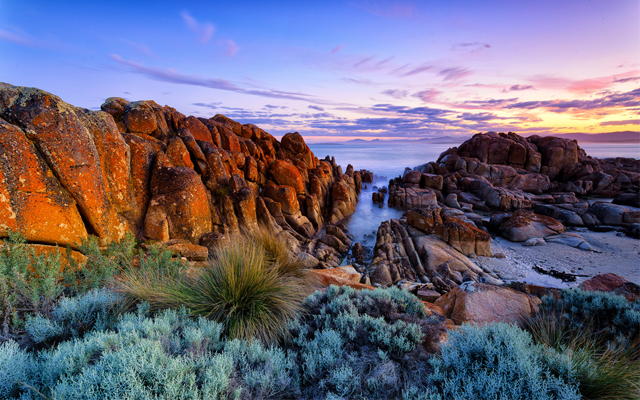
Beerbarrel Beach, Tasmania

She said: “One of the challenges that we face in South and South-east Asia is that travellers think they know Australia. This campaign is all about uncovering the some… hidden gems, and inspiring people to come and see a side of Australia they perhaps didn’t know existed.

“We know that travellers today are always on the hunt for the next cool, ‘Instagram-worthy’ destination, so the challenge for us is to show all the ways that Australia ticks this box as a vibrant, captivating destination and give them new reasons to come and explore for themselves,” Ronson added.

The campaign plays on some of the popular misconceptions about Australia highlighted by local research, showing that there is much more to the country than the typical stereotypes of koalas, kangaroos, the outback and well-known icons.

This is the first time Tourism Australia is targeting South and South-east Asia region as part of a single, coordinated tourism promotion. Tourists from Singapore, Malaysia, Indonesia and India accounted for around 1.3 million arrivals a year, contributing AU$5 billion.

The campaign will be supported by an online marketplace called Australia On Sale, which will be launched later this month to feature competitive fares from multiple airlines and travel agents.

Undiscover Australia will initially run for four months with the potential to be extended to additional markets in the future.

Growth in intended Thai travel spend leaps ahead of global average

0

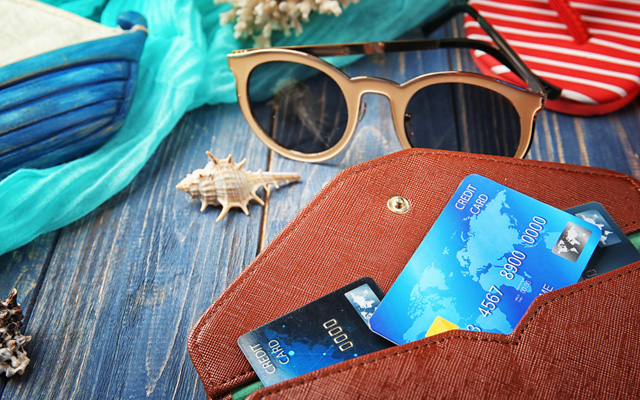
Thais’ intended travel spend is growing faster than the regional and global average, according to Visa’s Global Travel Intentions Study, which also found that most travellers from the market are using cards rather than cash for their pre-trip payments.

The study examines international travel trends and behaviour of 17,500 travellers from 27 countries around the world.

Thai travellers favour credit cards

The study show that the intended travel spend of Thais have surged 51% ahead, compared to Asia-Pacific (46%) and global travellers (36%).

The average Thai traveller spends US$1,502 per trip and that is expected to increase to US$2,252 for future travel, based on respondent feedback. On average, Asia-Pacific and global travellers spend more, US$ 1,677 and US$1,793 respectively, but see lower movement in future travel expenditure.

Suripong Tantiyanon, country manager, Visa Thailand, said: “From our conversation with different players in the tourism industry, an increase in intended spending of Thai travellers can be attributed to the fact that there are more financial products today than ever before. They are more sophisticated and better suited to travellers’ needs, with added benefits and privileges. As a result, Thai travellers are more confident and willing to spend more.”

The study also revealed that the use of payment cards is prevalent especially during the pre-trip stage. Three in four (76%) Thai travellers reportedly prefer and use payment cards for pre-trip expenditures, such as flight and hotel reservation, compared to cash at 52%.

Respondents cited their preference towards payment cards are due to promotion, lower transaction fees, better rewards for international usage and higher security.

Despite the fact that cash is used by all Thai travellers at some point during their trip, credit cards are also heavily featured at 67%. A quarter of Thai travelers use a different card to their usual one whilst abroad, basing their decision on transaction speed, wider acceptability at international retailers, lower fees and better rewards.

Additionally, 26% of Thai travellers would have spent more with wider card acceptance.

Interestingly, the use of digital wallet is fast emerging, with a quarter of Thai travellers having used it at their destination. Solo and bleisure travellers, in particular, are the heavier users of digital wallets at 41%.

“It is exciting to see travellers willing to spend and venture overseas more and we believe that the payment industry continues to have an important role to play,” commented Suripong.

“That is why it is important they are not limited to a handful sources of fund or few ways to their payment will be accepted. Travellers’ needs and behaviours are inherently diverse therefore driving adoption and usage of payment form factors, including mobile application, QR code or plastic cards, which will be key to sustaining the growth of the industry in the long run.”

Penang Port, Royal Caribbean sign JV to redevelop Swettenham Pier

0

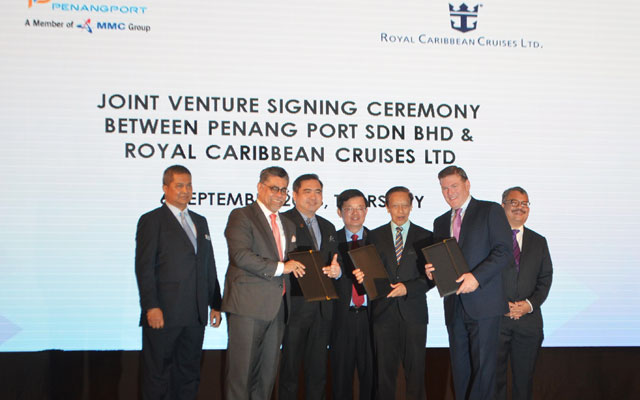
Penang Port (PPSB) has yesterday entered a joint venture agreement with RCL Development Holdings (Penang), an indirect wholly owned-subsidiary of Royal Caribbean Cruises (RCL), to redevelop its cruise terminal to accommodate larger ships.

The two parties had previously signed a Heads of Agreement in March 2017.

From right: MMC Corporate Berhad Group’s Khalib Mohamad Noh; Royal Caribbean Cruises’ Gavin Smith; Penang Port’s Syed Mohamad Bin Syed Murtaza; Penang’s chief minister Chow Kon Yeow; Malaysia’s minister of transport Anthony Loke Siew Fook; MMC Port Holdings’ Ian James; and Malaysia’s secretary general of ministry of transport Saripuddin Bin Hj Kasim

In the redevelopment plans for Penang’s Swettenham Pier Cruise Terminal (SPCT), the existing 400m-long berth will be extended by 220m with an additional 118m-long dolphin.

With the current expansion plan, SPCT will be able to handle two mega-sized cruise ships simultaneously on the outer berths along with one small- and one-medium sized ships on the inner berths by end-2019. The expansion will enable RCL’s Oasis-class ships, the largest in the world, to berth at the terminal.

Sasedharan Vasudevan, PPSB’s CEO, said in a statement: “Detailed design and site investigations are already midway, with construction to begin before the end of 2018. The expansion will see a significant increase in international transit calls at Swettenham Pier Cruise Terminal along with an increase in appeal for the homeport segment in Penang.

“With the state government’s full support in managing tourism activities,
logistics and transport staging around the terminal, we are confident in strong
future growth of the cruise industry in Penang.”

Founder and CEO of Asia Voyages passes away

0