TTG Asia
Asia/Singapore Thursday, 9th April 2026
Page 1345

Sommers named GM of K11 ARTUS

0

K11 Artus, a luxury residence slated to open in summer 2019 at Victoria Dockside, has appointed Christopher Sommers as general manager.

The hospitality veteran has 17 years of experience under his belt, having worked extensively with luxury properties for brands such as Ritz-Carlton in countries such as US, Portugal, Russia and China.

Prior to joining K11 ARTUS, Sommers was general manager at The Ritz-Carlton Haikou where he oversaw the pre-opening and operation of the brand’s first golf resort in China.

Further East on mission to grow ‘community’

0
Credit: Facebook/goFurther East

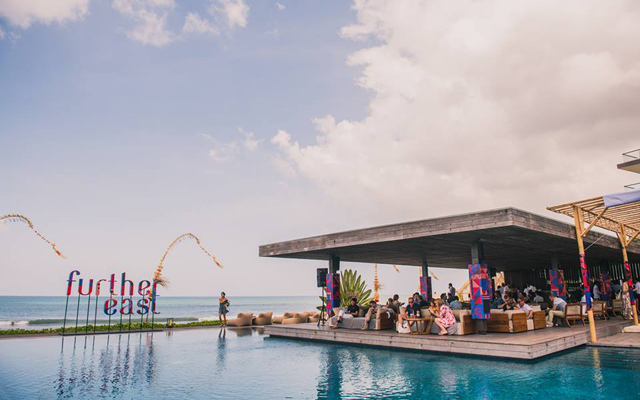
Further East has come out of left field and given international luxury travel buyers a relaxed B2B marketplace to discover unconventional Asian products in its inaugural edition, and will return to the same beachfront venues in Bali’s Seminyak but on a larger scale.

A departure from typical industry events
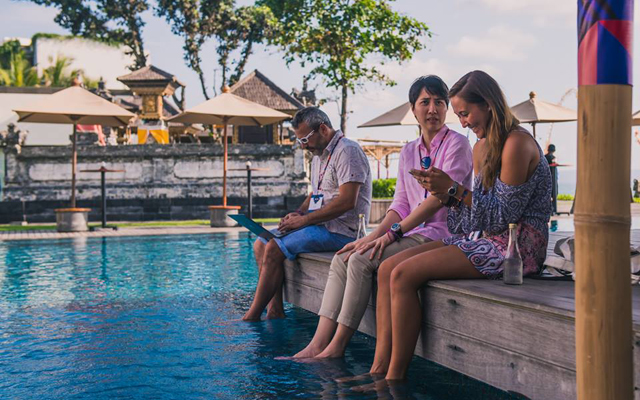
Yesterday, the debuting trade event concluded to generally positive reception, with a section of buyers and sellers swept off their (nearly bare) feet by the relaxed beachside setting as well as ample time for networking and doing business.

Over three days, the exhibition took place across two adjacent indoor spaces by the water in Alila Seminyak, which also provided the locations for lunch, sundowners, parties and networking. Lunch was available at W Bali and Potato Head Beach Club as well, both a short stroll down the beach from the exhibition venue.

“The ability for attendees to walk from accommodation to marketplace, lunch and other activities has provided additional opportunities to network. Attendees are not under pressure to fit everything into their schedules because of the global village feel,” said Jemma Uglow, head of Further East.

How can it scale?
With the event by Beyond Luxury generating considerable interest, a question some industry players now have is how the event will scale – both in terms of exhibition space, as well as the intimate appeal.

Addressing the latter, Serge Dive, CEO of Beyond Luxury, said: “The rule we have is: you can always grow something until you dilute the spirit of the community. As long as we find a way to nourish this spirit, while creating opportunities for greater interaction, we are good. Over 1,000 people including 400 exhibitors attend Pure (another Beyond Luxury show), but it’s an equally tight community there.

“We will definitely grow Further East. We aim to run the 200 mark for exhibitors next year. There will be more products and more interactions, which will help build a stronger community,” Dive continued.

The exhibition venue at Alila Seminyak housed 130 stands this year, although the exhibitor count was at 160 due to some suppliers sharing booth space, Uglow shared.

Buyer Vikram Kajaria of Makson Travels said: “The event is creating huge interest. It does not look like they can pack more exhibitors in the existing spaces, but I’m eager to see how they will utilise their venues next year.”

It remains to be seen how the same venues could find capacity as the show grows, but Dive had this to say: “We found long-lasting friendships with partners such as Alila and Potato Head who want (to go above and beyond) to support our shared mission… With Alila, it’s about how much they have let us create a playground (with different spaces).”

At this year’s event, international attendees formed most (65 per cent) of the 140 buyers, with the remaining made up by buyers from Asia. Dive shared that there will be even more buyers from beyond the region next year.

He added: “There will be more international next year. It’s not that the exhibitors are not interested in regional business, but they have the budget to do more trips within the region to meet buyers. On the other hand, having longhaul buyers gather here saves exhibitors a trip around the world.”

How fruitful was it, really?
Dive has said before that the company is “in the dating and falling in love business”, but has its matchmaking panned out for Further East attendees?

One exhibitor, who already attends other Beyond Luxury shows and targets mainly European and American buyers, remarked that he was “seeing the same faces”, and that sourcing of more suitable high-end Asian buyers could be better done.

In response, Dive stressed that the buyer overlap with a show like Pure was minuscule at “about 3.5 per cent”. Fifteen buyer companies at Further East were also represented at other Beyond Luxury shows, he said, but taking into account the buyers who were “not looking for Asian products” while at Pure, it was effectively an overlap of just five.

Meanwhile, a buyer shared that he had meetings with three boat companies allocated to him in a single day, but such products weren’t suited to his market. Still, he admitted that the allocation was from a preliminary round of matchmaking. “(Besides), given how fast the luxury market is developing, a client (may well) come along for a request for boating in Indonesia the next day and I’ll be able to make a recommendation.”

Another buyer, David Kevan of Chic Locations, which brings higher-end travellers from the UK to destinations including Asia, said: “The feedback I’ve been getting is it’d be silly not to (keep the show going). I have found a few (properties) that I’ve not heard about before. My wife and associate is already (doing some property inspection) as we talk.”


Sri Lankan tourism loses momentum through political turbulence

0
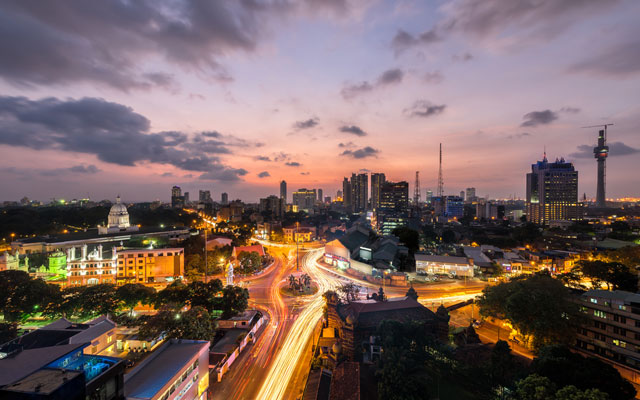
Colombo city at dusk

A bitter political feud which led to the sacking of Sri Lanka’s prime minister has turned the clock back for the country’s travel trade just as it was preparing for a better winter season.

The crisis has led to calls from Western governments for parliamentary democracy to be restored while several travel warnings have been issued focusing mainly on European visitors.

Amid multiple political developments – including a Supreme Court decision on Tuesday to suspend a presidential order to dissolve parliament – travel industry officials said some cancellations in hotels had been reported while two conferences were believed to have been postponed.

Political tumult threatening long-awaited tourism progress

Shiromal Cooray, managing director of Jetwing Travels, said there had been some cancellations at the group’s hotels but not on a large scale. “However, because of the crisis we have lost the momentum and don’t see many future bookings. There is a level of unease as to what will happen. The buoyancy in the industry is gone.”

Trevor Rajaratnam, president of the Travel Agents Association of Sri Lanka, said FITs and small families may rethink travel to Sri Lanka due to the confusion, but large group travel is unlikely to be affected.

An official at the Sri Lanka Convention Bureau said November-December is a lean season for conferences while a 10-day tour by 100 Spanish travel agents at end November is still on track.

But she was worried by the travel warnings which leads to either the unavailability of travel insurance or a rise in premiums.

Meanwhile, tourism promotion programmes will run as planned, according to Dushan Wickramasuriya, acting managing director at the state-run Sri Lanka Tourism Promotion Bureau.

“We had five travel writers from Germany, the UK and Poland on a fam tour during the crisis period and also a group of seven bloggers. Currently there are seven location managers from the UK scouting for good film location sites here,” he said.

Wickramasuriya added that in the last two weeks four charters from Aeroflot, TUI and Edelweiss brought more than 600 visitors. The bureau and travel industry officials were also participating in upcoming travel fairs in China and Italy.

While TPB and CVB activities seem unaffected, the Sri Lankan administration is at sixes and sevens.

A new tourism minister appointed last week, who led the launch of a new branding campaign at the WTM London, stepped down on Wednesday to cross over to opposition ranks. A new chairman to national carrier Sri Lankan Airlines was appointed on Tuesday only to be replaced the following day, reflecting the confusion in the administration.

Sri Lanka has been rocked by multiple developments after president Maithripala Sirisena sacked prime minister Ranil Wickremesinghe on October 26, and attempted to suspend parliament and appoint a new prime minister.

Both Sirisena and Wickremesinghe come from opposing political parties but came together in a grand coalition in 2015, a relationship which has soured.

In another development on Wednesday, parliament passed a no confidence motion against new prime minister Mahinda Rajapaksa, a former president, after Wickremesinghe’s allies triumphed in a vote taken in the legislature, throwing further confusion in the administration.

Sabre buys Farelogix to boost airline tech portfolio

0
Farelogix has advanced offer management and NDC order delivery technology

Sabre Corporation has inked an agreement to acquire Farelogix for US$360 million, a move that is expected to expand its airline technology portfolio and accelerate its strategy to deliver next-generation NDC-enabled retailing, distribution and fulfillment capabilities.

Sean Menke, president & CEO of Sabre, said: “By integrating Farelogix’s capabilities into Sabre’s leading airline technology platform, we’ll be able to offer the innovative and comprehensive solutions that airlines require, backed by best-in-class technology and the deep expertise that our teams bring to market.”

Farelogix has advanced offer management and NDC order delivery technology

Sabre says the acquisition and integration of Farelogix’s GDS- and PSS-agnostic technology will accelerate its innovation efforts in the airline IT space, as it partners with airlines and travel agencies through its Beyond NDC programme.

Based in Miami, Farelogix provides a suite of SaaS solutions that enables carriers to dynamically create, control, optimise and deliver personalised and differentiated offers across sales channels.

Jim Davidson, CEO of Farelogix, commented: “For the past few years, Farelogix and Sabre have worked together with shared customers to implement our complementary technologies to solve some of the industry’s toughest challenges. Today’s announcement is a natural evolution of the successful, ongoing collaboration between our two companies.”

The acquisition is subject to regulatory approvals and is expected to close in late 2018 or early 2019.

TTG Asia’s Boracay feature wins at MPAS Awards 2018

0
Feature of the Year (Trade) - Silver award goes to Rosa Ocampo's 'When Beautiful Turns Ugly'

TTG Asia’s When beautiful turns ugly feature, won Feature of the Year (Trade) – Silver award at the recent Asia Pacific Publishing Awards (APPA) and MPAS Awards 2018 in Singapore.

Written by Philippines correspondent Rosa Ocampo, the article examines the fallouts of unbridled development – and lack of regulation – on Boracay and other once-pristine spots in the Philippines, and questions whether lessons be learnt from Boracay’s six-month closure.

Feature of the Year (Trade) – Silver award goes to Rosa Ocampo’s ‘When Beautiful Turns Ugly’

The winning article, which was published in TTG Asia April 2018, can be viewed here.

In 2017, an analysis on Cambodia’s tourist sites of death and suffering – Dark side of dark tourism – won TTG Asia the Feature of the Year Bronze award from MPAS, while TTGassociations magazine picked up the Travel Trade Media of the Year award.

MPAS & APPA 2018 is organised by the Media Publishers Association of Singapore.

Demand for digital travel tools on the up: Travelport

0
Traveller in Hanoi

Mobile devices remain vital while demand for new technologies such as voice search, e-payment and digital room keys grows, according to Travelport’s 2018 Digital Traveler Survey.

The study, which surveyed 16,000 travellers from 25 countries, showed that around the world, mobile devices are seen to be as vital for travel as for other aspects of life.

Almost half of those surveyed have booked and paid for an entire or part of a trip through their smartphone. Nine in 10 respondents have travel-related apps, with maps, airlines, weather and social media ones topping the list of favourites.

Travellers now more mobile app reliant

While mobile remains crucial, travellers want a consolidated experience. On average, travellers use 10-12 apps throughout the searching, booking and traveling parts of their trip, the study showed.

The top three most important features identified by leisure travellers in their travel apps are the ability to search & book flights (68%), real-time flight alerts throughout their journey (64%) and being able to see an entire trip itinerary in one place (67%).

Only around a fifth of travelers currently use itinerary management tools.

Among the emerging technologies are voice-search. Over half of global travellers use voice to search either during booking or whilst traveling – up 3% from last year.

Over two thirds (68%) of Indonesian travellers use voice search, such as Apple Siri or Amazon Alexa. However, in Japan, Singapore and some parts of Europe, the proportion of travellers using voice search is less than 45%.

Almost half of all respondents rated the ability to pay using Apple/Android pay (Touch ID) is important or very important.

Over half of business travellers surveyed said they wanted to be able to check in to their hotel via an app, rather than at a reception desk. Some 50% also want to use a digital room key to unlock their hotel room door from their phone.

Source: Travelport’s The 2018 Global Digital Traveler League Table

Most respondents said they would use biometric scanning to reduce the need for waiting in security lines. This proportion is particularly high among Asian countries, with 80% in Singapore and 84% in Indonesia indicating that preference. Over two-thirds of travelers think digital boarding passes make travel easier.

India and Indonesia took top spots in a ranking of countries with the most digitally-advanced travellers. India has been top for the second year in a row, and Indonesia was ranked third last year.

The standings are based on a combination of the main indicators of digital usage for travel-related purposes by travelers in each country. For example, India’s top position is maintained due to 69% of the country’s travellers using voice search, over 60% wanting digital room keys and 88% saying they are influenced to travel by friends on social media.

Future for travel agents more than just tech

0
Thuan Dao

Technology is changing the tools travel agents use and how they use them, how they communicate with clients, and how those clients buy into their services.

It makes things easy for travellers. Hotel reservations, comparing prices and researching destinations – they’re all there. Travel agents need technology to stay ahead too. They also need to stay up to date with technology that improves efficiency, offers additional services and keep them relevant.

Thuan Daoan: technology as a tool to deliver travel services

The competitive edge, however, will go to travel agents who capitalise on technology to provide their clients with the most up-to-date communications and customised services, i.e. agents who delight their customers.

So what’s changing in technology, and as a travel agent what should you be looking out for in the year ahead?

Trends to look out for
Services to clients are becoming more focused and travel is driven less by destination and more about the experience. Technology provides the data agencies need to consolidate operations while at the same time reduce costs and increase revenues.

Agencies have access to high traffic portal travel sites and can access flight and hotel booking systems, enabling them to quickly filter travel options for their clients.

Social media enables a skeleton staff to handle high volume inquiries and forward automated alerts on delays and waiting times.

Technology-based luggage tags enable travellers’ luggage to be tracked, with up to the minute data via text message, email or apps. Mobile is continuing to penetrate this market.

According to a report by Criteo this year, over one third of people use a mobile device to book hotels and OTAs have around a 45 per cent share of that market. Interestingly, an eMarketer report revealed that a third of those surveyed said they were still uncomfortable using mobile to research and book – and this hasn’t changed since 2015.

Adapting does not mean being controlled by technology
Many agencies are shifting focus to online services while maintaining some bricks and mortar stores where business is sufficient to do so.

Adapting to new technology is tough but necessary; however, the industry is beginning to recognise that it should not be controlled by technology.

Technology enables agents to gather intelligence about the traveller which is used effectively by real humans, and ultimately that is the key. Travel agents will, as always, continue to be advisors – people with a passion and human knowledge that technology cannot replace. Technology just makes the service better and give an agent the edge.

Technology will enable travellers to call or message their travel advisor, to get a problem fixed or answer their questions while on holiday. It means that future agents will ultimately become not just an advisor but a technically assisted concierge.

They have all the data at their fingertips, they can learn more about their clients by analysing data that shows their travel habits, but with a real person delivering that information. It’s about personalisation, reassurance and a great experience, and that’s what travellers want.

The primary focus for agencies has been on online sales because it allows clients to book whenever they want without worrying about opening hours.

However, people like the human touch and they want a good experience from an agent who has the knowledge and advice they can trust. This is the cornerstone of the travel agent and it’s a business that, with the help of technology, will continue to thrive for many years to come.

Bedlinker is a technology provider of integrated B2B distribution solutions for hotels and resorts in Vietnam.

Another Best Western hotel to sail into Halong Bay

0
The Best Western Plus property is one of two in the chain currently under construction in Halong Bay

Best Western Hotels and Resorts has signed a second property in Halong Bay, which is expected to open in 3Q2020 a short distance from Halong Bay’s cruise port.

Developed by Tri Duc Hotel Joint Stock Company, the Best Western Plus Ha Long Bay Hotel will feature 327 rooms and suites, a fitness centre, infinity-edge outdoor pool, a kids’ club and several retail outlets.

The Best Western Plus property is one of two in the chain currently under construction in Halong Bay

Guests will be able to choose from an all-day restaurant serving exquisite Vietnamese and international cuisine, a café and ice cream shop as well as a rooftop bar.

Best Western Plus Ha Long Bay Hotel marks the second signing in the destination for the company, joining the 1,008-room Best Western Premier Sapphire Ha Long announced earlier.

“Vietnam is one of the world’s most dynamic tourism markets, with a series of enchanting destinations attracting record numbers of inbound travellers. The volume of international visitors to the country has more than doubled in the last decade, and Vietnam is on course to set new tourism records again in 2018,” said Olivier Berrivin, Best Western Hotels & Resorts’ managing director of international operations – Asia.

“This growth, combined with a buoyant domestic economy and forward-thinking government policies, makes it a very exciting time to be expanding in Vietnam.”

New hotels: Hotel Indigo Phuket Patong, Novotel Okinawa Naha and more

0

Hotel Indigo Phuket Patong, Thailand
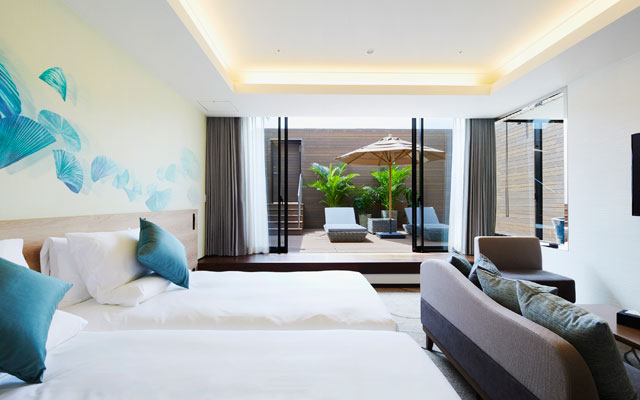
The new-built Hotel Indigo Phuket Patong, an InterContinental Hotels Group brand, opened this month featuring 180 rooms and suites across six categories, including the Retreat View Room with garden views; Oasis Pool Access Room and the 72m2 Executive Suite.

Dining offerings, helmed by chef Morten Nielsen, include Butcher’s Garden, craft beer and cocktail garden, Pots, Pints & Tikis, the by-password-entry No Name Bar with a cocktail menu and cigar room. The hotel offers a 24-hour fitness centre with a Muay Thai boxing ring, and three meeting spaces including two meeting rooms and a rooftop deck with The Cloud Rooftop Swimming Pool & Pool Bar.

Novotel Okinawa Naha, Japan
Opening a 15-minute walk from the Shuri Castle in the former royal capital of Shuri, the 328 room Novotel Okinawa Naha features the Terrace Suite Rooms with a private balcony that offers direct pool access. Guests staying at the Terrace Suite Rooms and Premier Level Rooms are given exclusive access to the Premier Lounge that offers a 360-degree view of the city skyline.

Dining options include four restaurants and a bar: Toki Japanese restaurant, Food Exchange Avancer serving local Okinawan dishes and international buffet, the BBQ Terrace adjacent to the pool, and the GourmetBar for pastries and gourmet coffees, cocktails and fine wines.

For meetings, events and weddings, the hotel has three meeting rooms that can cater up to 540 guests. Leisure facilities include a 24-hour gym and a 25m-long outdoor infinity pool as well as a kids club.

The Langham, Hefei
Langham Hospitality Group has launched the Langham Hefei in the largest city of Anhui Province in China. The hotel’s 339 guestrooms and suites range from the 45m2 Deluxe Rooms to the 247m2 Presidential Suite.

For meeting and event spaces, the Grand Ballroom spans 1,380m2 and can accommodate up to 910 pax, while individual meeting and function rooms range from 33m2 up to 450m2.

The hotel offers four unique dining concepts: the Seasons all-day restaurant, T’ang Court for Cantonese cuisine and local delicacies, Palm Court for afternoon tea, and The Bar. In addition to the signature spa, the hotel also features fitness facilities at the health club and a 25.8m-long swimming pool.

Travelodge Bukit Bintang, Malaysia
The 13-storey, 168-room hotel is now welcoming guests in Kuala Lumpur’s Golden Triangle. It offers Superior, Deluxe and Family Room types, Antipodean Bukit Bintang, a local cafe chain serving all-day breakfast, a 24-hour gym, self-service laundry room and on-site parking.

Ramada by Wyndham Brisbane Windsor, Australia
Ramada by Wyndham Brisbane Windsor, previously known as the Brisbane International Windsor Hotel, is nestled in the city’s inner northern suburbs, five minutes from downtown Brisbane and a convenient 15-minute drive from Brisbane Airport.

The newly rebranded property offers 61 rooms and suites, including a selection of triple rooms, while the hotel’s suites feature kitchenettes and spacious living-dining areas. Among the facilities are two conference rooms and a boardroom, an Italian restaurant, an outdoor swimming pool, a fitness room, and complimentary on-site parking.

Airlines face fuel, trade war headwinds going into 2019

0

Amid rising jet fuel prices, geopolitics and difficulty in getting preferred landing and take-off slots at congested airports in big cities, airlines at the recent APG World Connect 2018 in Monaco share how they are working to prop up their bottom line.

Jet fuel prices have risen by about 21 per cent end October, compared to a year ago when it was at US$78 per barrel.

Timothy Clark, president of Emirates, in an interview led by Bloomberg TV at the APG World Connect 2018, acknowledged that the key challenge faced by the airline in 2019 will be rocketing jet fuel prices that are expected to breach the US$100 per barrel mark. He said that rising jet fuel prices had taken a huge chunk of the airline’s profits in the first half of 2018.

Rising fuel prices a key challenge for airlines

While airfares may see an increase in 2019, he stressed that it “will be priced competitively in the market so that customers see the value in the product”.

Emirates on November 1 had launched a US$15 million global advertising campaign, Fly Better, its new brand promise. The campaign is also aimed at promoting its network and its hub in Dubai.

Karam Chand, CEO, Royal Brunei Airlines (RBA), said on the sidelines of the conference that his concern was the ongoing geopolitical issues and economic uncertainty may weaken demand for travel in 2019.

He said: “The ongoing trade spat between China and US, may impact emerging markets in Asia, which in turn could impact travel demand.”

To mitigate fuel prices which are expected to continue an upward trend in 2019, RBA “will impose fuel surcharge rather than hedge which is a practice that some airlines do, and it may not necessarily be successful”, said Karam.

Nana Haryana, senior manager alliance & international affairs at Garuda Indonesia, said the Indonesian flag carrier was looking at increasing its services on certain routes experiencing high loads.

His concern was “finding airport slots with preferred timings in busy cities such as Beijing, Shanghai, Guangzhou, Singapore and Amsterdam”.