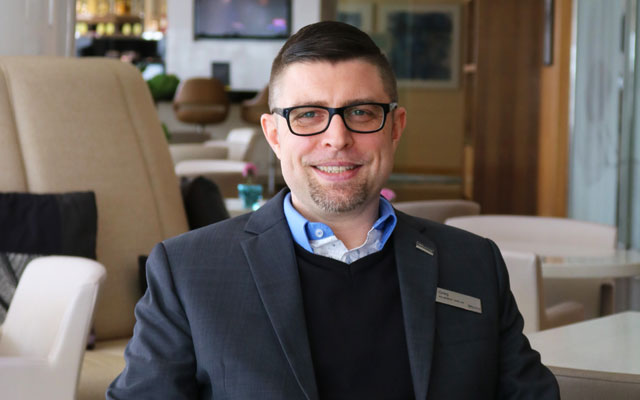
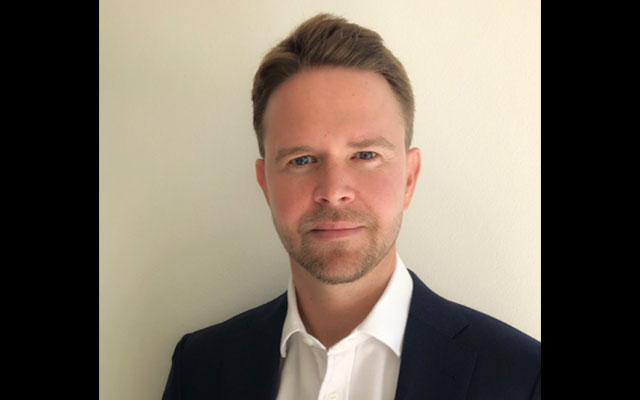
Gregory Gubiani has been appointed as the new general manager of The Westin Kuala Lumpur.
Prior to his move to Westin, Gubiani helmed the Aloft Kuala Lumpur Sentral from 2015 to 2018.
The French national has over 14 years of hospitality experience, starting his career as a resort host in an international five-star luxury resort in Maldives before becoming a front office manager in French Polynesia.
From there, he then joined Starwood Hotels and Resorts as front office manager at Le Méridien Nouméa, New Caledonia and then to The Westin Melbourne, where he was executive assistant manager in charge of rooms.
He then moved to South-east Asia in 2011 to step into the hotel manager role at Le Méridien Kuala Lumpur before opening Le Méridien Bali Jimbaran, Indonesia as its general manager.
Lesnick: luxury travel consultants core to WorldHotels for over 40 years, as well as to ALHI's Luxury MICE sales efforts
Associated Luxury Hotels (ALH) has unveiled the launch of a new programme for select travel consultants and concierge companies with rewards such as fast-track commissions, the first of three initiatives planned to drive luxury leisure sales.
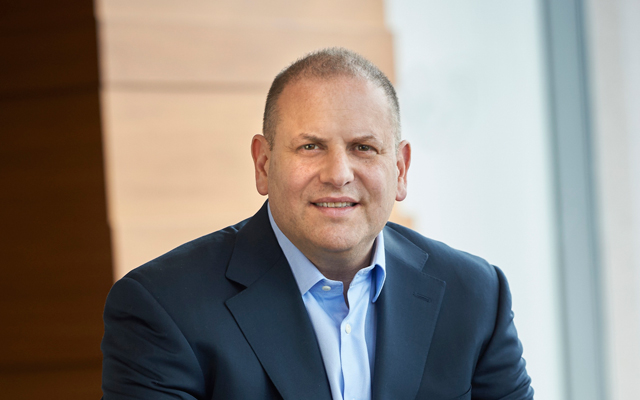
Named The Associates Club, the invitation-only programme will be offered to “top luxury travel agencies throughout the world”, said Josh Lesnick, president & CEO of Associated Luxury Hotels.
Lesnick: luxury travel consultants core to WorldHotels for over 40 years, as well as to ALHI’s Luxury MICE sales efforts
It will comprise select members of the WorldHotels Collection and of ALHI Global Luxury Sales.
Aimed at enhancing the network’s luxury leisure offering, the programme offers agents rewards ranging from tailor-made itineraries, fast-track commissions and customised benefits for their clients.
Lesnick commented: “Luxury travel consultants have been at the centre of our WorldHotels core business for over 40 years and a key part of our Luxury MICE sales efforts with ALHI Global Luxury Sales for over 30 years.
“Both of our businesses have enjoyed the strong support of the travel consultant community when serving our luxury clientele and with this programme we are further reinforcing and building on our strong relationships and commitment to them.”
The company intends to leverage key members of their WorldHotels sales team, with deep experience in the luxury travel consultant market as well as hiring additional dedicated luxury sellers.
While Japan remains the top choice for travellers in Asia-Pacific, South Korea and Vietnam are rising fast as preferred destinations, according to Skyscanner data for eight of the region’s markets.
Regional travel dominates, with London the only destination outside APAC to make Sykscanner’s top 10 list.
Skyscanner’s APAC Travel Trends report revealed that Tokyo, Osaka and Okinawa all made the top 10.
In South Korea and Vietnam, the two fastest emerging destinations in the report’s top 10 ranking, Busan, Jeju and Nha Trang show the most growth compared against the major hubs of Seoul and Ho Chi Minh City.
With the Korea Tourism Organisation (KTO) revealing that Japan, Vietnam, and Thailand contribute the highest number of travellers to South Korea, Skyscanner said its data shows significant growth in flight searches from the same markets.
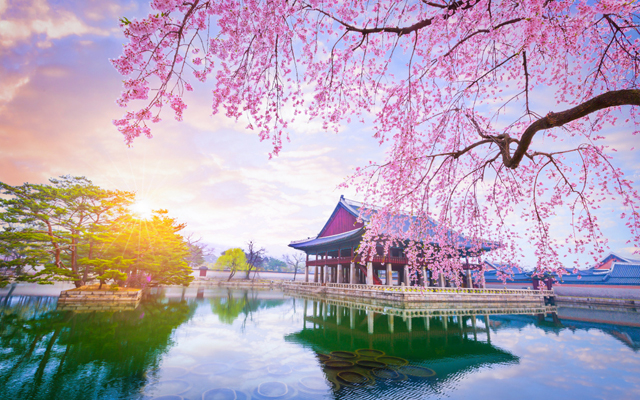
Gyeongbokgung palace in Seoul, South Korea
Vietnam, on the other hand, attracts a different crowd. Skyscanner also observed a trend to The Vietnam Tourism Board figures that show the largest numbers of visitors hail from South Korea, China, Japan and Taiwan.
Turkey showed the largest growth in popularity outside APAC, “most likely due to the market’s cultural attractions, entertainment options and a beneficial exchange rate drawing in visitors”, Skyscanner said.
Meanwhile, APAC demand for business and premium economy seats saw growth of up to 62% and 46% respectively with Skyscanner pointing out that reduced fares have encouraged travellers to book more comfortable seats
and longhaul flights.
Skyscanner also observed mobile use increasing by up to 3.5%.
In APAC, five out of eight markets start their flight search earlier, while also
making bookings closer to departure. With numerous travel sales, promotions and airline deals, decision making is becoming more complex for travellers, Skyscanner said.
The report looks at data from the period of October 2016 to September 2018 and covers eight APAC markets namely Australia, Hong Kong, Japan, New Zealand, Singapore, South Korea, Taiwan and Thailand.
The Tourism Authority of Thailand (TAT) has opened an office in Fukuoka to tap into the travel markets in southern Japan’s main cities such as Hiroshima, Yamaguchi, Ehime, Kochi, Fukuoka, Saga, Nagasaki, Kumamoto, Oita, Miyazaki, Kagoshima and Okinawa.
Roongtip Wongpatikarn Kimura has been appointed director and Keng Chaivarin deputy director of the new office, located on the 11th floor, Hakata-Riverain-East-Site, Shimokawabatabashi, Hakataza Nishigin Building.
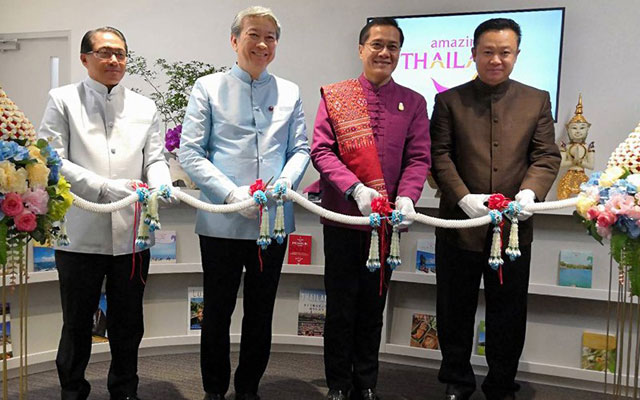
From left: The Royal Thai Consulate-General in Fukuoka’s Attakarn Wongchanamas, Thailand’s ambassador to Japan Bansarn Bunnag, Thailand’s minister of tourism and sports Weerasak Kowsurat and TAT governor Yuthasak Supasorn
The TAT Fukuoka office will also help to promote tourism cooperation between TAT and the Kyushu Tourism Promotion Organisation as per the letter of intent signed in February to promote cooperation and increase the number of visitors between Thailand and Kyushu.
The two-year agreement covers all seven provinces of Kyushu and includes activities such as travel exchange, public relations activities and information dissemination to promote the image of Thailand among the Japanese public.
The main customer segments will include first-time visitors, special interest groups, marathon runners, golfers and divers.
The deal includes cooperation with the Japan High School Golf Association to organise fam trips for local tour operators. TAT will also focus on promoting Thailand’s secondary destinations with a stress on their history, culture, cuisine and natural resources.
Fukuoka Prefecture has the largest population on Kyushu Island. The largest city of Fukuoka is also the main business centre. Fukuoka Airport is the largest international airport in the region.
Currently, there are daily direct flights linking Bangkok and Fukuoka, and direct flights between Bangkok and Okinawa by Peach Air, as well as charter flights between Bangkok and some provinces in Kyushu and Chūgoku.
In January-October 2018, Japanese visitors to Thailand totalled nearly 1.4 million, generating an estimated 58.7 billion baht (US$1.8 billion) in tourism income.
This year, Japanese tourists to Thailand are projected to increase by 7.5 per cent to over 1.6 million, generating an estimated 73.4 billion baht in tourism income, up by nine per cent. In 2019, TAT is targeting 1.7 million Japanese visitors, generating an estimated 77.5 billion baht.
AccorHotels is introducing Swissôtel Hotels and Resorts to Indonesia with a Jakarta opening set for mid-2019.
Located in a mixed-use lifestyle mall complex, Swissôtel Jakarta PIK Avenue will feature 412 guestrooms, six dining outlets, an executive lounge, the Pürovel Spa & Sport facility as well as the city’s largest event space – a 3,044m2 ballroom that can accommodate up to 3,000 guests.
The press conference where Swissôtel announced it is making its debut in Indonesia
“This is such an exciting time to introduce the Swissôtel brand into Indonesia and particularly Jakarta to complement the group’s growing portfolio of city and resort destinations throughout the region,” said Garth Simmons, COO AccorHotels Indonesia – Malaysia – Singapore.
Swissôtel Hotels & Resorts has more than 30 hotels globally including flagship properties such as Swissôtel The Bosphorus in Istanbul, Swissôtel The Stamford in Singapore and Swissôtel Krasnye Holmy in Moscow.
Indonesian phinisi charter company Rascal Voyages is partnering Nihi Sumba resort in Wanokaka, West Sumba Regency to offer stay-and-sail itineraries.
James McBride, CEO of Nihi Hotels, commented that the partnership will help the company to continue to develop “off-grid, boundary pushing activities” in line with its positioning.
1 of 9
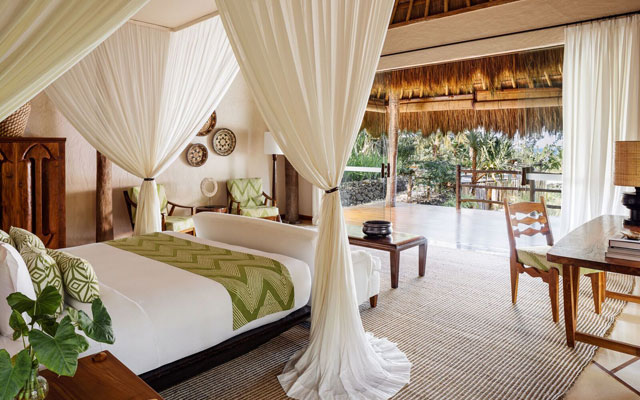
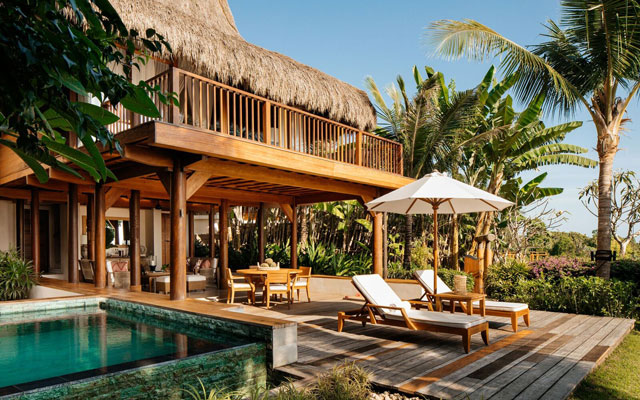
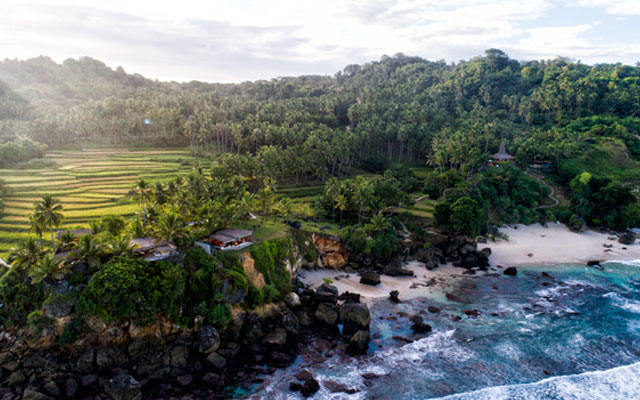
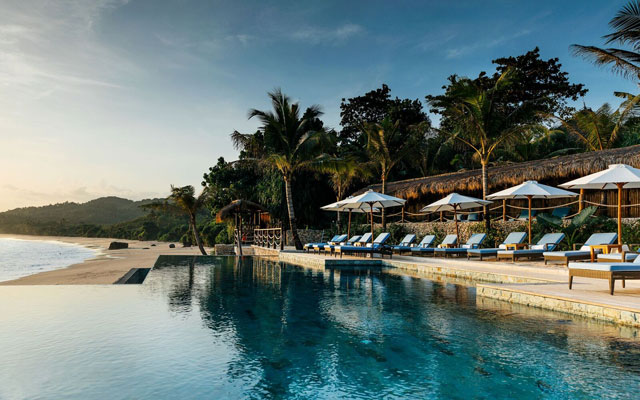
Surrounded by jungle and a stretch of private beach, Nihi Sumba offers 33 villas, a number of dining and drinking options and activities such as surfing, yoga and meditation, spa safaris, wild horse riding, and jungle trekking.
Now, guests of Nihi Sumba can explore remote Indonesian islands by embarking upon a private Rascal yachting experience around the archipelago at either end of their Sumba stay.
Rascal was the first phinisi yacht to offer a ‘floating villa’ experience,’ with all five double en-suite cabins above-deck. The 30m hand-crafted ironwood and teak yacht offers a 1:1 crew-to-guest ratio as well as land and sea activities.
The partners recommend the following itineraries:
The first is from Komodo to Sumba. Guests will be met at Komodo Airport by the Rascal crew, before departing on a three-night journey, taking in Mount Agung, Gili Islands, Mount Rinjani, Gili Moyo and Komodo National Park.
The second itinerary enables Nihi guests to witness pioneering research on a Rascal journey from Komodo to Nihi Sumba. With Conservation International experts on board, the six-night voyage will survey the behaviours of manta rays and raise awareness for the protected species and the marine biodiversity before disembarking for a land adventure at Nihi.
Guests may also opt to voyage with Rascal after their Sumba stay, embarking on a night cruise from Sumba back to Bali’s Benoa harbour. Along the way, guests can soak up the sights of Komodo National Park, Mount Rinjani, Gili Mayo, the Gili islands and Mount Agung.
Itineraries start from US$35,483 based on a minimum of seven nights (three nights on board Rascal and four nights at Nihi Sumba).
If 2017 was the year that overtourism was recognised as a major challenge for the global travel and tourism industry, then 2018 is the year the sector woke up to the scale of the plastic problem. It was just not too long ago that a brightly coloured straw in a cocktail against a backdrop of sun and sea was perceived as the image of a carefree holiday, but the tide has clearly turned in 2018 as plastic straws became public enemy #1.
Straws collected at a beach
This year, many travel and tourism players are finally sitting up to take steps toward plastic elimination. My inbox this year has been inundated with press releases from hotel chains, tour operators, cruise liners, airlines and cities declaring war on single-use plastic (e.g. straws). Any progress is progress, and any attempt at curtailing impacts of plastic pollution is better than none at all, but going strawless is still a low-hanging fruit.
As a huge industry – international tourist arrivals grew seven per cent to reach 1.3 billion in 2017 – the travel sector needs to show greater leadership and gumption in sustainable practices. Now is the best time for travel companies and operators to make sustainability central to their efforts and apply these principles throughout the business and the supply chain, as the plastic movement quickly moves from the fringes to the mainstream this year.
And things are looking up a little bit. In a sector where providing the ‘best’ guest experience is the holy grail, more travel sellers are taking bolder steps to apply sustainability in their efforts, even when it means adjusting the ‘comfort level’ of their guests.
Exo Travel, for example, is discontinuing wet wipes and reusable bottles during tours to curtail the environmental impact of their operations. Peregrine Adventures, having banned unnecessary single-use plastics on its adventure cruises, has written into all of its contracts asking suppliers not to use products like single-use straws, cups, water bottles, and plastic bags on board. Given the enormity of the plastic problem, it shouldn’t stop there.
Will sustainability be your company’s story in 2019? And will 2019 be the year that the travel and tourism industry becomes a force of change for the world?
Wanda Hotels & Resorts has unveiled the launch of a premium midscale hotel brand, Wanda Moments, and an upgraded guest loyalty programme at the Wanda Club conference in Qingdao last week.
The fifth hotel brand added to Wanda’s portfolio after Wanda Reign, Wanda Vista, Wanda Realm and Wanda Jin, Wanda Moments is targeted at business travellers with selected services, aiming to “create a new lifestyle that integrates art, culture, intelligence and fashion”, the Chinese hospitality company said in media release.
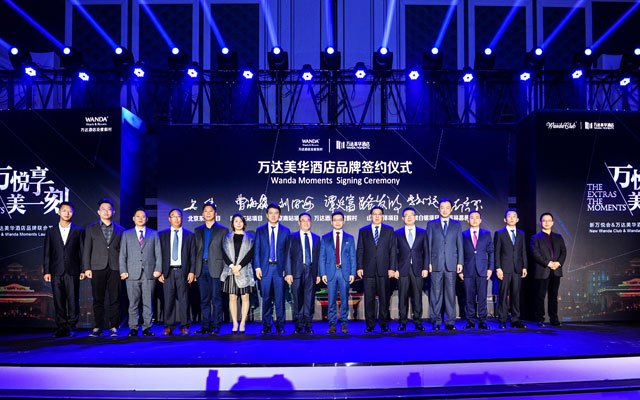
Wanda Moments signing ceremony and press conference
There are plans to develop 700 Wanda Moments hotels around China in the next five years, with contracts for the brand’s first six properties already signed with owners, Ning Qifeng, executive president of Wanda Cultural Tourism Creativity, and president of Wanda Hotels & Resorts, announced at the conference.
In addition, the guest loyalty programme will be upgraded. Points accumulation has been expanded from rooms to include consumption at restaurants, rooms, banquets and MICE events within Wanda Hotels & Resorts.
There are now four levels of membership: Blue, Silver, Gold and Platinum. Each level is designed with detailed privileges that include welcome amenities, exclusive discounts and extra rewarded points.
Lastly, points redemption has been expanded from room upgrades and redemptions to redemptions of hotel rooms, dining products, flight mileage and movie tickets at Wanda Cinemas across China.
The conference also saw the introduction of Wanda’s integrated services from hotel design to construction and project management.
Liu Yingwu, vice president of Wanda Hotels & Resorts and president of Wanda Hotel Design Institute, said: “The asset-light transformation we are pursuing is not just providing hotel management and design services, but a integrated project management services. It is an innovative service model and a mature and completed management system that based on the investment, construction and operation experience of more than 100 hotels. This enables us to assist and serve our owners with extensive ownership experience and systems.”
In a country located along the Ring of Fire, it is vital for any tourism players operating in Indonesia need to possess keen awareness, knowledge and readiness to cope with natural disasters.
It won’t be easy as turning your palm. It takes integrated effort and full commitment from all stakeholders, not just tourism sector stakeholders, but also external parties like media, as well as banking and finance institutions.
Indonesia was hit by two major natural disasters – the Lombok earthquake, and Palu-Donggala earthquake and tsunami – in the second half of this year, a period when Indonesia receives the majority of its foreign tourist arrivals.
Previously, the Mount Agung eruption in 2017 led to the closure of Bali’s Ngurah Rai International Airport for three days. Other volcano eruptions that took place last year also added more pressure to Indonesia’s tourism industry.
As we know, the tourism sector is resilient, yet it is susceptible to disaster. Last year’s 15 million foreign tourist arrivals marked a major achievement, and the target of 20 million tourist arrival now awaits for 2019.
Having said that, we need to convince the market that Indonesia is a safe place to visit, and convey measurable actions whenever natural disasters happen.
Disaster communication
Amid the barrage of news from sources all over, we need to build ‘tourism-friendly journalism’. It is important to publish news expressing hope rather than dramatising the disaster itself.
In this context, the media should have a sense of responsibility to share positive news from the tourism sector, such as mutual cooperation from societies helping disaster victims to improve their homes or clean up villages, without sacrificing their integrity or independence.
On the other hand, the trade should also share positive information to overseas partners, travel agents and clients to build up confidence that Indonesia and tourism stakeholders will be able to manage disasters well. This could foster a spirit of solidarity when disaster strikes. With good and open communication channels, we can minimise negative news and hoaxes on websites, printed news and other media platforms in times of disasters.
Tourism mitigation plan
All tourism players, be it tour operators, transportation suppliers or hoteliers, located in disaster-prone destinations should have emergency reserves (dried food, drinking water, and medium or big tents). These relief reserves should last for at least a week or more, by calculating the number of employees and immediate neighbourhood area that needs to wait for the evacuation teams to arrive when disaster strikes.
Emergency tents should be prepared as temporary shelters for survivors in the aftermath of an earthquake. This readiness must be included as one package in the standard operation procedure of each company.
Post-disaster rehabilitation
It is very important to revitalise an earthquake area, not just its physical rehabilitation but also the mental recovery of those affected, which must be done together with tourism players.
Tourist destinations are not created in a day, so by directly revitalising disaster-affected destinations, it is hoped that it can foster a collective spirit to create a better destination in the future.
Tour company Contiki has appointed James Marchant as global CEO.
Marchant will be responsible for the travel company’s global network of teams across Australia, New Zealand, the US, Canada, Europe, Latin America, Africa and Asia; as well as for developing and growing Contiki’s worldwide offering of trips.
He has relocated from London, and is based at Contiki’s head office in Geneva.
The seasoned professional joins Contiki from luxury holiday rental investment company Second Estates, where he was a marketing, loyalty and strategy consultant. He was also on the board of Black Tomato, the luxury travel agency that he helped to conceive and develop in 2005.