Japan’s new 1,000 yen (US$9.10) departure tax is unlikely to deter Indonesians from visiting Japan, although currency movements contributing to slowing growth in demand for the hot destination, outbound specialists in the country say.
According to a bill approved by the Diet in April last year, the “sayonara tax” will be charged at the time the traveller buys air or sea tickets, with infants and toddlers under two years old exempted. Travellers who are in Japan for less than 24 hours will also be exempt from the tax.
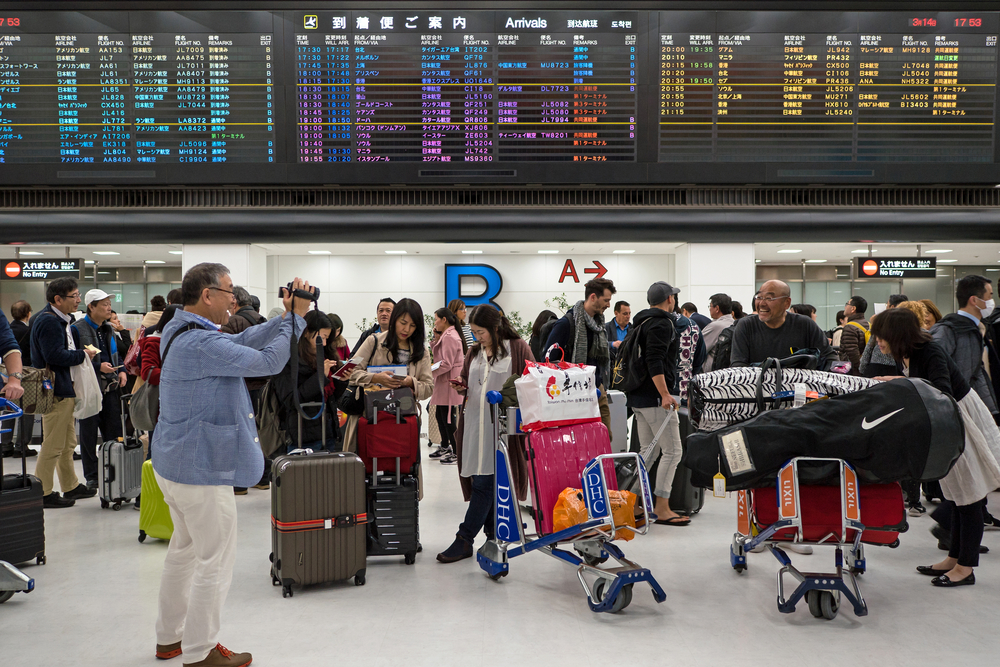
Travellers in Tokyo’s Narita airport
Putu Ayu Aristyadewi, group vice president marketing & communications at Smailing Tour, said it is unsurprising that travellers are accepting of the new departure tax, given that Japan is one of the most favoured travel spots for Indonesians.
Besides, Putu Ayu said Japan has new attractions every year so tourists never get bored and want to keep returning. On its part, Japan has also been actively promoting halal tourism recently.
Other agents are optimistic that the demand for Japan among Indonesian travellers will continue to grow despite the new tax, with Edhi Sutadarma, director at Golden Rama Tours and Travel, still receiving new bookings for the coming months.
Edhie added that his clients to Japan did not question the sayonara tax, perhaps because the amount is “still affordable”.
The inclusion of the tax in air ticket prices also did not make Indonesian travellers feel burdened by it, as travellers consider it only as an airport tax, similar to departure levies imposed in other countries like the US, the UK, Australia, Germany, Thailand, China and Singapore.
Rather than the sayonara tax, Hellen Xu, COO at Panorama JTB, is more concerned about the potential impact of a weakening rupiah against the yen.
A depreciating rupiah has made the price of tour packages to Japan more expensive. If Panorama usually sells tour packages worth 25 million rupiah (US$1,766) to 26 million rupiah per person, the stronger yen means tour prices have increased to 30 million rupiah.
She said: “This makes travellers think twice about vacationing in Japan. In the end many travellers are diverting their vacations to South Korea.”
Hellen added that the weakening of the rupiah against the yen also slowed the growth in demand for Japan. “In 2017 we were able to record growth above 30 per cent, but because of the unstable currency the market only grew 10 per cent last year,” she remarked.
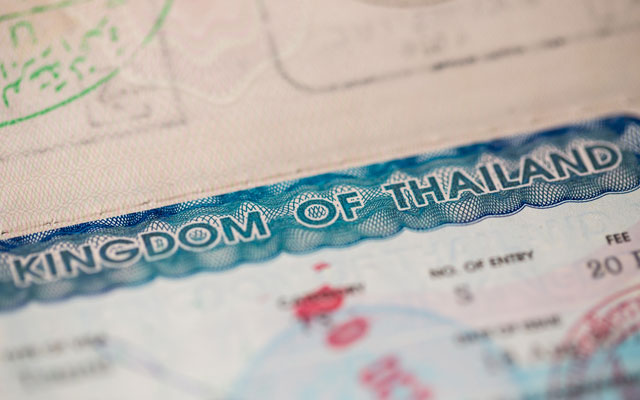
Thailand’s visa-on-arrival fee waiver for citizens of 20 countries, including China and India, will be extended until April 30.
The 2,000 baht (US$63) visa-on-arrival fee exemption applies for those arriving in Thailand for the purpose of touring for not more than 15 days.
The visa waiver came about due to the fall in Chinese arrivals
Yuthasak Supasorn, governor of the Tourism Authority of Thailand, said the continuation of the stimulus measure is timely, with Thailand set to celebrate Chinese New Year in February and the Thai New Year (Songkran) in April.
The countries eligible for the visa-on-arrival fee waiver are Andora, Bulgaria, Bhutan, China (including Taiwan), Cyprus, Ethiopia, Fiji, India, Kazakhstan, Latvia, Lithuania, the Maldives, Malta, Mauritius, Papua New Guinea, Romania, San Marino, Saudi Arabia, Ukraine and Uzbekistan.
Determined to change perceptions and raise the profile of Khmer food, Cambodia’s Ministry of Tourism is preparing to host the country’s first gastronomy fair in May.
Speaking to TTG Asia at ATF 2019, Thong Rathasak, director general of product development, international cooperation and ASEAN, said: “We want to raise the profile of Cambodian food. You go to Thailand and have pad Thai, in Vietnam you have pho. We want to raise Cambodia’s food identity.
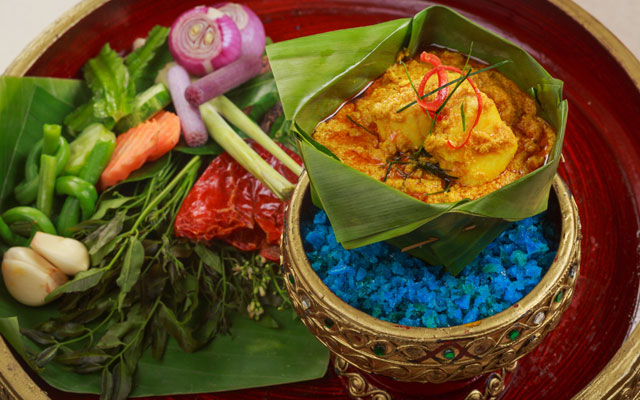
Fish amok (pictured) is a traditional Khmer dish
“Gastronomy is now a popular travel theme. We want to create a story, as well as ideas and concepts around Cambodian cuisine,” said Thong.
The fair dates are yet to be confirmed but the ministry will work with partners to develop a range of menus and tasters, as well as a host of food-related activities.
The country’s inaugural domestic travel fair will run alongside the gastronomy event in Phnom Penh, with the aim to stimulate domestic tourism.
Noting the desires of Cambodians who like to stay in the country’s growing legion of high-end hotels, the ministry will partner with industry players to provide green season offers for domestic travellers during the traditionally quieter months.
“The idea is to give them a chance to stay in these hotels,” Thong said.
Scoot zips off to Laos
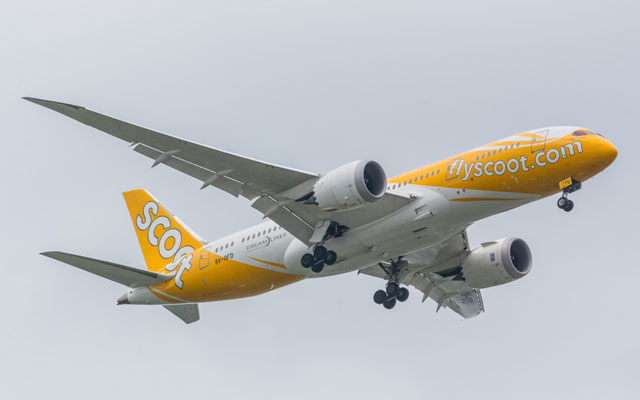
Singapore-based LCC Scoot will soon commence direct flights to Laos beginning April 1.
Operated on a Airbus A320 aircraft, the thrice-weekly service will fly a circular routing, departing from Singapore for Luang Prabang, then onward to Vientiane, before heading back to the Lion City.
These routes were transferred from sister airline SilkAir, making Scoot the only airline offering direct Singapore-Laos flights.
Air New Zealand adds Taipei to network
Air New Zealand has started five-times-weekly flights between Auckland Airport and Taipei’s Taoyuan International Airport.
NZ77 departs Auckland at 10.35 and arrives in Taipei at 16.50, while the return flight NZ78 takes off from Taipei at 18.30 to land in Auckland at 10.20 the following day. The route utilises a Boeing 787-9 Dreamliner, with a flight time of slightly over 11 hours.
ANA to link Japan and Western Australia
A new direct service linking Tokyo’s Narita Airport and Perth will be inaugurated on September 1 by All Nippon Airways (ANA). The new service makes Perth the second Australian city served by ANA.
Flights will depart Tokyo at 11.10 and arrive in Perth at 20.15. The return flight will depart Perth at 21.45 and arrive in Tokyo at 08.25.
The daily service will be flown on a Boeing 787-8 Dreamliner, offering a total of 184 seats including 32 business class seats, 14 premium economy seats and 138 economy seats.
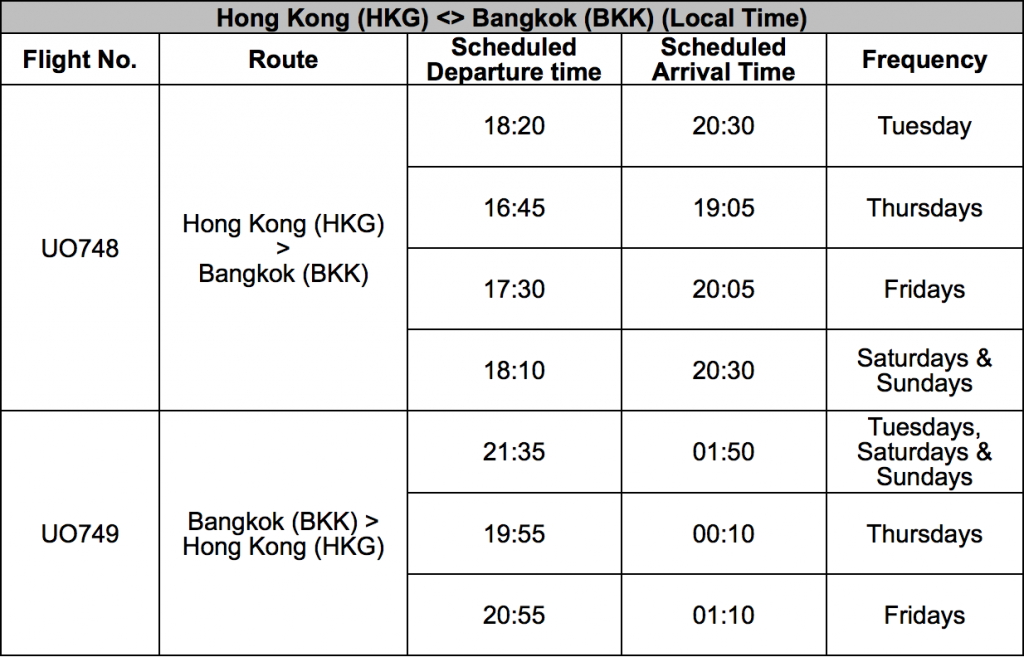
HK Express to fly direct to Thai capital
The Hong-Kong based airline will soon commence direct flights from Hong Kong to Bangkok’s Suvarnabhumi Airport.
Five-times weekly flights will begin on March 31.
AirAsia launches four routes from Chiang Rai
LCC AirAsia has added four routes to its network, from Chiang Rai Airport to domestic destination Phuket, and international destinations Macau, Singapore and Kuala Lumpur.
The Chiang Rai-Phuket route will be available thrice-weekly on Wednesdays, Fridays and Sundays from February 1. FD680 will depart Chiang Rai at 14.45 and arrive in Phuket at 16.50, and return flight FD681 will depart Phuket at 17.20 and arrive in Chiang Rai at 19.30.
The Chiang Rai-Macau route will also be available thrice-weekly on Wednesdays, Fridays and Sundays from January 30. FD290 will depart Chiang Rai at 08.15 and arrive in Macau at 11.35, while return flight FD291 will depart Macau at 12.05 and arrive back in Chiang Rai at 14.05.
Also available thrice-weekly on Tuesdays, Thursdays, Saturdays from January 31 is the Chiang Rai-Singapore route. FD926 will depart Chiang Rai at 07.10 and arrive in Singapore at 11.30, while return flight FD927 will depart Singapore at 12.30 and arrive in Chiang Rai at 14.30.
Meanwhile, the Chiang Rai-Kuala Lumpur route will be available four-times-weekly on Mondays, Tuesdays, Thursdays and Saturdays starting January 31. FD830 will depart Chiang Rai at 15.15 and arrive in Kuala Lumpur at 19.20, while return flight FD831 will depart Kuala Lumpur at 19.50 and arrive in Chiang Rai at 21.40.
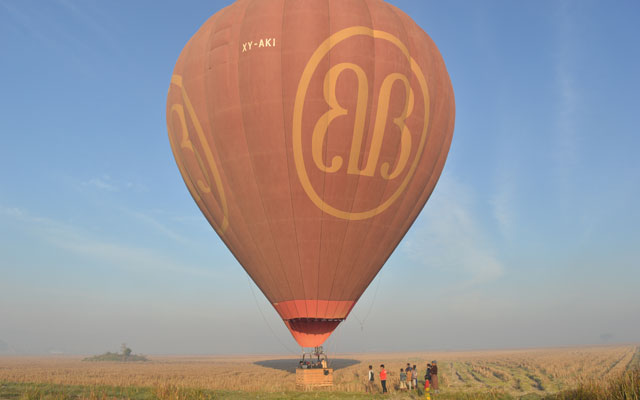
Balloons Over Bagan, under Myanmar-based Memories Group, has launched a new hot-air balloon flight in Kayah State.
Hot-air balloon rides in Loikaw take off at sunrise on a daily basis throughout the year and can carry six to eight passengers per flight. Air time lasts one to two hours, and balloons will reach a maximum altitude of 10,000 feet. Flights cost US$300 per person. Private charters for groups up to eight persons can also be requested.
Soar above the Kayah State, home to no less than 10 ethnic groups
Balloon Safaris Loikaw is the fourth option hot-air balloon adventure from the tour operator, following Bagan, Inle Lake and a two-day “balloon safari” in Shan State.
Situated on a 914m-high plateau surrounded by mountains and rice paddies in eastern Myanmar, Loikaw is home to ethnic groups including the Kayan, whose “long-necked” women are famed for the brass coils around their necks and colourful traditional costumes.
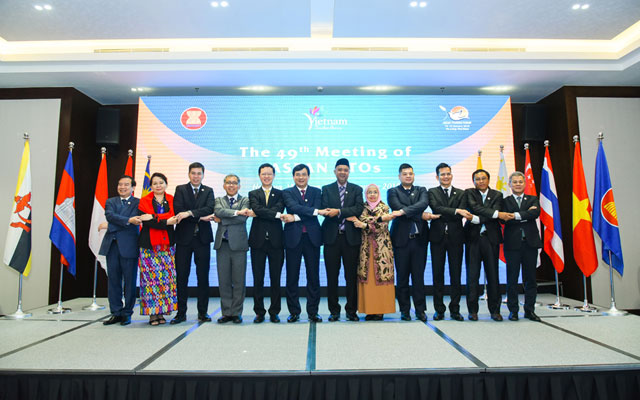
On Monday, the ASEAN Tourism Forum (ATF) 2019 kicked off in Halong Bay, Vietnam.
Tourism leaders of the trade bloc’s member states gathered at FLC Halong Bay Resort for the 49th Meeting of the ASEAN NTOs. The outcome of the closed-door session will be unveiled during a press conference at the conclusion of the forum.
Outside of the ministerial and association meetings, ATF delegates were treated to fun activities such as tours in and around Halong Bay, a friendly golf game, and more. See our Gallery for more photos from the event.
The Travex component of the annual ATF begins today. Watch this space for more updates from the showfloor.
You were the tourism minister in 2008 and again assumed the role in November 2017. What’s the biggest change that you’ve seen in these 10 years?
The size of the global tourism market is different. In 2008, LCCs were a new phenomenon and now they’ve grown much faster in this region than any other parts of the world. At that time international tourist arrivals into Thailand were about 14 million and now I’m working with an arrival size about half of the country’s population (69 million).
We have come so far this time to require a good look into the supply side, as well as the carrying capacities of destinations, cities and the country, and our manpower and facilities.
We also need to look at deregulation and to implement and upkeep safety measures. We have all the good word of the law, but when you go into the field there are so many things (that we still need) to pay attention to.
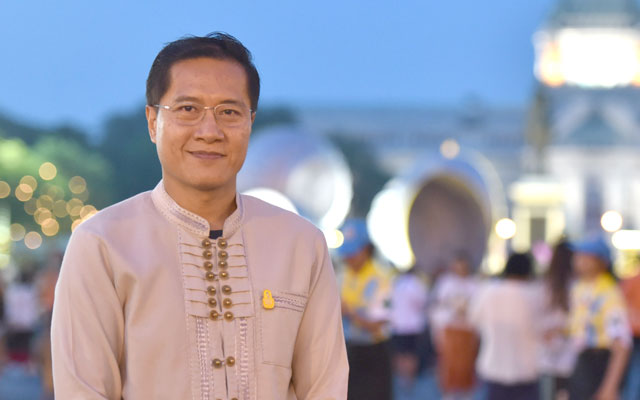
Weerasak Kowsurat
What key challenges do you face?
Regulatory reform. We have too many rules and departments that don’t work together seamlessly. We have 155 departments in the central government, but not many talk to each other; we have 7,000 municipalities, and not many of them talk to the central government.
Let’s get people to talk, work together and have the same aims and objectives, regardless of where they are from. Visitors are not interested where the (municipal) borders are; they are interested in having a smooth travel experience.
Thailand is a medium-size country of 70 million people, with international arrivals of 35 million and growing each year. We are talking about (increasingly) congested areas, and we don’t even have the train to spread visitors out yet. In the next five years we will have the dual-track train in Thailand, which I believe is more efficient than flying or driving.
UNWTO secretary-general Zurab Pololikashvili admitted, when I brought him around Thailand, that the size of international arrivals to the country is enormous. At the same time, the variety of arrivals is enormous. France, which is about the same size as Thailand, receives double our number of international arrivals but most of them are Europeans. Here, we have a wide variety of arrivals, so we have to have all kinds of measures to handle the different groups of people. That’s very difficult.
Would you then say that Thailand is becoming a victim of its own success with all this growth?
You can say that, because in the last six years we’ve seen about 20 per cent growth almost every year, and we can’t continue that.
I’m introducing a new legislation, probably within the next year or two, to require self insurance for all arrivals into Thailand – it will be one or two dollars more for each person. This common pool of money will be used to buy one insurance policy (to cover all international visitors). If travellers want to get involved in more challenging activities, like climbing mountains or diving in the sea, I’ll put into law to make sure service operators stop them from entering into the activity unless they buy the second level of insurance. And if they’re driving any vehicles, they will need another kind of insurance.
As well, people are visiting places differently. Travellers used to spend most of their time in major attractions areas, but now we would like them to explore farther and they are going in that direction, therefore we have to make sure the (safety) measures are (implemented ahead of visitor growth). A lot has been done and a lot are still underway.
Going towards quality tourism arena doesn’t always (equate with) wealth tourism; it’s about responsible tourism.
What were the lessons from the recent Phuket boat tragedy?
It was the biggest wake-up call ever, and the bell was big enough. The wake-up (shook up Thai tourism) from the top level down to the community and individual level.
(In the months following the accident), we spent hours and hours discussing what else we could do to prepare and ensure that we have enough measures, regulations, manpower, equipment, etc. We are more ready to manage any kind of risks.
Let’s solve the cause root of the issue – it’s not about the (fall in Chinese) numbers but about implementing measures and preventing such accidents from happening again.
If there’s one thing about Thailand tourism that you could change right now, what would if it be?
If I have a magic wand, I’d like to change mindsets (laughs). If everyone were to look at having the upper hand and (benefitting as much as they can) from the tourism industry, then it’s not sustainable.
I’d like to make sure that people pretty much share the same attitudes and bring more value into the supply chain. We need not define our happiness through getting more roomnights or longer length of stay. Our smiles should come even when less money is spent here but spent on the right supply chain, with money going to the right people who are doing the right thing for the environment and for society.
Think again where your money goes – does it go directly to people who should receive these benefits? We are not talking just about community-based tourism but the entire supply chain, including hotels and restaurants. One of the main directions I have been giving in our national policies is that we should not look at tourism as a tool to make money only; we would like to see it address income disparity in the country and disparities in other forms as well – culture, social behaviour, etc.
If we can overcome these disparities or at least address then correctly, we will not return to the conflicts that we have been having (in Thailand) for the past 10 years. We will make it more enjoyable for the guests as well as the hosts.
What I do most (in my role now) is to communicate with people through the local media, social media included. Changing behaviour and mindsets is difficult, but we have been successful in banning styrofoam and plastic bags where we don’t want them, and without any fight back from the industry.
Communication, not the law, is key (to changing mindsets). We start with small steps (e.g. one-time plastic ban) and come up with innovative ways to work away from those items.
Looking forward, what’s the most under-rated destination or niche segment that you would promote?
We have identified at least 55 new provinces in Thailand that are lesser visited. What we think is under-rated are the authentic experiences across theses 55 provinces and we will like to show more of them to the world. Some areas may not offer good panoramic views because it’s so flat, but the depth of knowledge and culture they have will touch the hearts of many. Those are still to be developed.
For the past 20-30 years, we have been selling pictures of Thailand through pictures of views – beaches, islands, mountaintops – and we didn’t pay much attention to the smiles on people’s faces. For example, gastronomy is not just about going to super-star restaurants only, you can go to anywhere local – a mother who is willing to share her great recipe and shows what she can do – and enjoy an authentic experience.
I started focusing on the authenticity of experiences only 11 months ago. We want to make sure that the carrying capacity of each area is accounted for, and city stakeholders should keep this in their mind.
Let me put it this way: tourism money should not be the main income of anyone’s life, it should be an additional income.
Even for someone whose livelihood depends on tourism?
Well, if they were designed to do business on tourism then it’s fine, but they have to make sure they have the competitiveness. But for those people who are presenting themselves or keeping their way of life for tourism, then they’re in a risky model.
Tourism is not an end, it’s just a means. My idea is to make use of tourism to serve the community, not the other way round. Tourism has only become a key pillar of the Thai economy in the last 10 years, when the exports sector became less favourable because of global market conditions.
We need to learn and understand more about the connectivity between supply chain and the market, and the relationship between tourism and life – not only for locals but also between the local administration and the central government. We’re still learning.
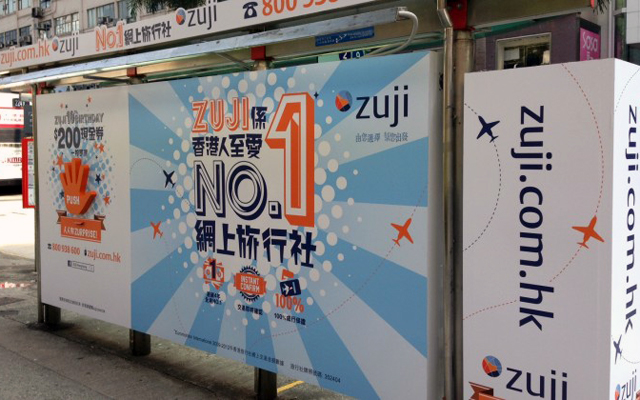
Zuji officially shut down on January 11 with HK$250,000 (US$32,000) owed to customers awaiting refunds, confirming rumours of trouble brewing at the online travel pioneer after news of suspension of airline ticket sales surfaced last month.
Ong Ling Lee, director, travel agents and tourist guides, Singapore Tourism Board, confirmed to TTG Asia that Zuji Travel did not renew its travel agent licence, which lapsed on December 31, 2018.
Photo credit: Marketing Interactiveji
IATA said in a statement: “Zuji’s participation in the IATA Billing and Settlement Plan in Singapore and Hong Kong was terminated earlier this month as Zuji was not able to meet conditions for reinstatement.”
In Hong Kong, a spokesperson from the Commerce and Economic Development Bureau confirmed to the South China Morning Post that Zuji’s licence has expired last Wednesday and that the company could not continue to operate a travel agent business although it is obligated to handle all booked services.
Zuji Hong Kong had earlier suggested that its website closure in Singapore and Hong Kong was temporary, and claimed on its social media that passengers who have made ticket purchases with them should not be affected.
As recently as last Friday, Zuji Hong Kong maintained on Facebook that it was “experiencing technical difficulties on processing refund”.
The OTA reportedly gave its assurance to the Travel Agents Registry, the government-run licensing body in Hong Kong, that it will honour the air ticket and hotel reservations made through its website.
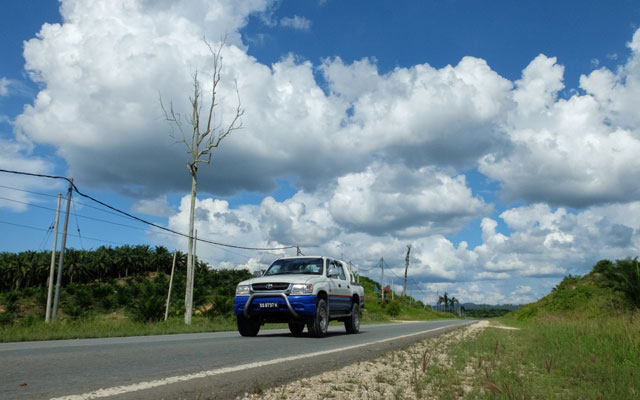
Car driving down recently operational pan Borneo highway that goes through Sukau Sabah, Malaysia
A growing interest in immersive travel experiences has strengthened demand for eco and cultural activities in Malaysia’s rural and countryside areas, opening up opportunities for inbound sellers to pursue a greater diversity of tours and activities in the country while spreading tourist visitor footfalls to secondary and tertiary destinations.
Manfred Kurz, managing director of Diethelm Travel Malaysia, noted: “For the European market, we see beach stays getting shorter. Travellers want to go out to experience things and interact with the locals.”
Car driving down recently operational pan Borneo highway that goes through Sukau Sabah, Malaysia
Nigel Wong, director, Urban Rhythms Tour Adventures and Travel, made similar observations: “People of all ages, not just millennials, are into experiential tourism. They want to mix with locals and experience a destination, rather than sit in a coach tour.”
Wong added that the eco and cultural attractions segment is still largely an “untapped market”. For tour operators who have made the effort to seek out new activities and experiences to promote, they have been rewarded with “a lot of branding opportunities” for these lesser-known destinations.
In 4Q2018, Urban Rhythms introduced adventure videos featuring actual travellers on its consumer website, Big Blue Holidays. These videos spotlighted off-the-beaten track experiences such as trekking in the Sukau rainforest in Sabah, traversing the face of Mt Kinabalu on Via Ferrata, and going on a food trail in Penang’s George Town.
As a result, these videos have helped contribute to the 15 per cent year-to-date spike in bookings to Sabah and Penang for the company, Wong shared.
Adam Kamal, general manager, Tour East Malaysia reports similar booking patterns. He shared: “We see more Indian tourists asking for soft adventure packages such as birdwatching and trekking. Asians in general are (becoming) more health conscious, and we have received more enquiries about marathon packages, walking tours and whitewater rafting activities.”
This growing trend has prompted Tour East Malaysia’s product team to continually look out for and consider new destinations that lie within a two hours’ drive from major cities as a day trip option.
Meanwhile, Diethelm Travel Malaysia has also developed a series of new products under its Go Local brand, offering travellers the opportunities to watch a mak yong performance (a traditional form of dance-drama from northern Malaysia), see the production of shadow play puppets, or visit homestays to spend a day with the locals and experience their way of life, shared Kurz.
But offering tours and activities in rustic locations are not without their own set of challenges.
For instance, Kamal revealed that when developing eco tours, they had to deal with basic infrastructure such as public toilets that may not be up to international standards.
“(That is why) we work with local communities and improve conditions if need be. In smaller towns, it is also difficult to obtain gluten free or Indian food, so we pack the food and bring it along.”
Kurz added: “One of our challenges in promoting ecotourism and countryside tours is we have to ensure the safety standards are up to par. We work with local operators in the villages by informing them of our requirements and they are very cooperative.
“Sometimes we need to touch up on the accommodation to ensure guests are comfortable.”