Travelport to promote multimodal services at HKIA to travel agents, TMCs
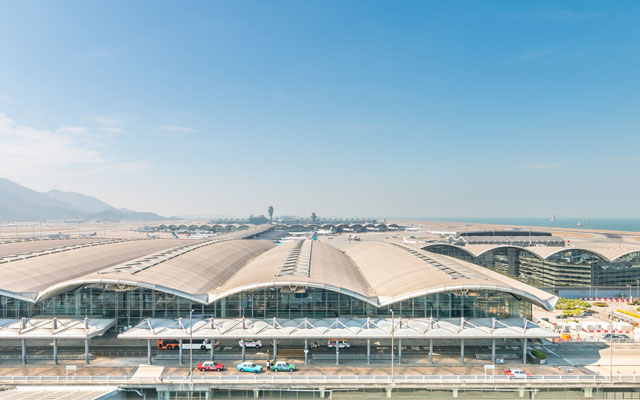
Travelport has signed an agreement with Airport Authority Hong Kong (AA) to promote multi-modal connectivity services at Hong Kong International Airport (HKIA) to travel buyers in Asia, Europe and North America.
As a regional hub and a multi-modal transport centre, HKIA offers travellers extensive land and sea connections to cities throughout the Guangdong-Hong Kong-Macao Greater Bay Area, which includes Macau, Zhuhai, Shenzhen, Guangzhou and beyond.
Travelport to promote multimodal services at HKIA to travel agents, TMCs
The services are fittingly rolled out to HKIA, which is “uniquely positioned in a vibrant region and connects a cluster of fast-growing cities”, Jason Clarke, Travelport’s senior vice president and global head of travel partners, said.
The partnership is expected help HKIA offer more convenient travel into China from Hong Kong. The technology allows overseas travel buyers – such as travel agencies and TMCs – to pre-book the airport’s multi-modal transport services for their customers in 18 markets from across the world.
The new digital solutions will also allow HKIA to embrace new business opportunities by targeting nearby airport destinations and promoting its multi-modal, multi-stop connecting services, according to Travelport.
Travelport added that it digital media solutions can help travel partners including airports, airlines, hotels and destinations to increase their brand awareness and sales through a global network and deliver targeted marketing messages to influence travel buyers at every stage of their booking process.
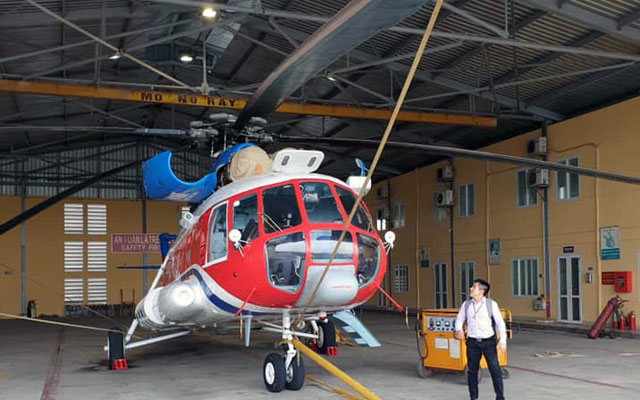
Vietnam's first helicopter ride-hailing service (photo credit: Facebook/fastgomobi)
Vietnam’s first helicopter-hailing service could be launching in Hanoi as soon as this month, focusing on tourism in northern provinces, according to VnExpress International.
Vietnamese ride-hailing startup FastGo, which is the middle of a major expansion, is planning to launch FastSky’s first flight on April 25, CEO Nguyen Huu Tuat told VnExpress International.
Vietnam’s first helicopter ride-hailing service (photo credit: Facebook/fastgomobi)
Using 12-seater helicopters, FastSky will operate tours from Hanoi to northern tourist destinations including the Red River and Halong Bay, forming the start-up’s SkyTour category of products.
Other use categories of FastSky include SkyWedding, for wedding photography, and SkySOS, for emergencies that require helicopters to pick up patients from Hanoi skyscrapers.
FastGo is the technology provider and has a partner operating helicopters and pilots. Tuan said the partner is permitted to fly in Vietnam, without disclosing the company’s name.
FastGo began operations last June, a few months after Uber announced its exit from South-east Asia. After expanding into Myanmar last year, it now plans to launch operations in Singapore this month and in five other countries in the region, including Indonesia and the Philippines, by the end of the year.
With almost 60,000 drivers on board, the company claims to be the second most popular ride-hailing firm in Vietnam after Grab.
Marriott has signed a new, multi-year agreement with Expedia Group, which the two say will result in “an innovative distribution agreement beyond transient retail bookings”.
According to a joint statement from Marriott and Expedia, this new arrangement is expected to launch in the fourth quarter of the year.
Marriott and Expedia to put in place new distribution arrangement beyond transient bookings
There is still no information on the commission rate to be paid by hotel owners, the two companies said they have reached “mutually beneficial economic terms that advance each company’s strategic objectives” under this expanded relationship. Some reports surmise the deal would give Marriott and its hotel owners more control over their distribution on Expedia.
The agreement will also continue Marriott’s existing distribution arrangement with the group for transient bookings, and expands Expedia’s role related to Vacations by Marriott, the company’s leisure packaging platform.
With fresh funds in the bag, Splitty is now expanding to Asian markets
Israel-based start-up Splitty has raised US$6.8 million in a series A round of funding, led by Fosun RZ Capital, the VC investment arm of Fosun International, and will now expand into Asia.
The other investors who participated in the financing round were 2bAngels, Techstars Ventures, Cockpit Innovation and 11-11 ventures.
With fresh funds in the bag, Splitty is now expanding to Asian markets
Currently, Splitty provides room booking options in Europe and America, but plans to expands its business into Asian markets upon completion of this round of financing.
With the new investment, the start-up will be able to expand its team and accelerate its global market growth in the coming years.
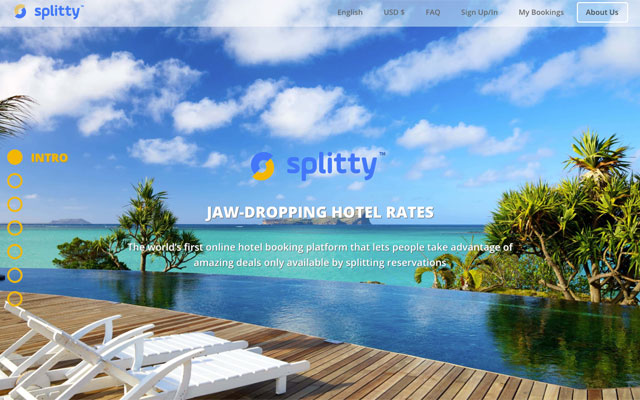
The Israeli startup offers unique hotel prices by taking advantage of splitting and combining multiple bookings under one reservation. Splitty says it analyses and splits over 1.5 million transactions to “create deals in one second”.
Eran Shust, Splitty’s CEO, said in a statement that his company differentiates itself from traditional OTAs through this transaction model, helping to improve hotel occupancy rates by over 15 per cent, while users enjoy up to 50 per cent lower prices.
Founded in 2015, Splitty launched in the market in 2018, after spending three years to develop its product. More than 500,000 properties in 127 countries are using its services today.
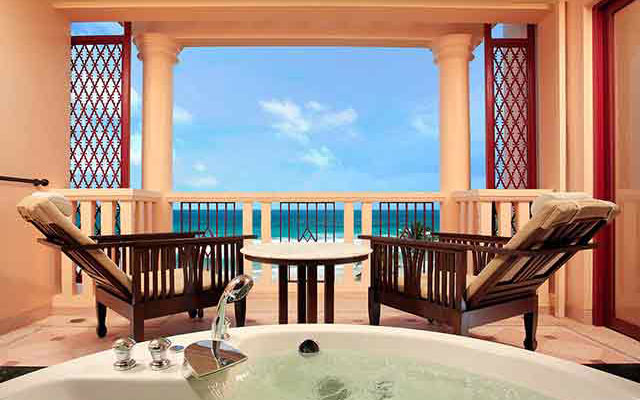
Centara Grand Beach Resort Phuket's Spa Deluxe Ocean Facing room
Thai hotel operator Centara Hotels & Resorts has launched a Grand Beach Sale.
Valid for bookings made by April 21, 2019, this promotion entitles guests to a 25 per cent discount on every room type at five resorts in Thailand and the Maldives.
Centara Grand Beach Resort Phuket’s Spa Deluxe Ocean Facing room
Participating properties are Centara Grand Beach Resort Phuket, Centara Grand Beach Resort Samui, Centara Grand Beach Resort & Villas Krabi, Centara Grand Island Resort & Spa Maldives, and the adults-only Centara Ras Fushi Resort & Spa Maldives.
This additional discount is on top of whatever rate, promotion or package the guest books – with no blackout dates or restrictions. In addition, up to two children can stay free-of-charge with their parents.
Guests must be a member of CentaraThe1, the brand’s free-to-join loyalty programme.
Plateno Group will bring Chonpines Hotel to Gangneung city, marking the midscale brand’s entry into South Korea.
Work on Chonpines Gangneung, South Korea has just commenced in the Gangwon Province city, with opening date scheduled for 2021.
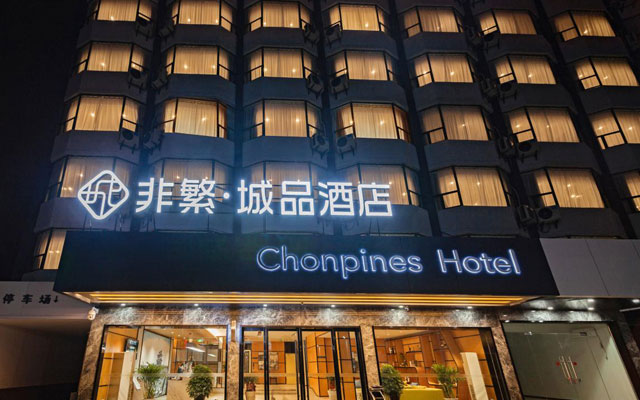
Chonpines hotel in China’s Dongmen, Jingzhou
The brand has 50 hotels opened and nearly 300 hotels under construction in China, and its entry to South Korea is hailed by Plateno as a “breakthrough”.
Following Plateno’s “favourable progress” in Europe and South-east Asia, Chonpines’ entry to South Korea also marks the beginning of the group’s strategic development in East Asia.
It is reported that, apart from the South Korean market, Plateno has been developing the exclusive regional agency cooperation in Malaysia. Besides the Chonpines Gangneung, there are a number of projects under negotiation.
The Plateno Group expects that in the next three to five years, Chonpines will enter a new stage of global development with more branches opened overseas.
Chonpines hotel focusses on “integrating hotels currently in operation”, the group said. The group sees huge potential in global markets including South Korea. On top of regular hardware upgrades, local service standards and concepts are also in need of improvement to address the unique demands of increasing international visitors, especially those from China, the group said.
A new beach club in Phuket is asking “why should adults have all the fun” as it introduces child-friendly activities to keep the whole family engaged.
Located next to Catch Beach Club on Bang Tao Beach, Catch Junior offers a safe and fun environment for play, and opportunities to connect with other young people from all around the world. Parents can choose to either supervise the little ones or use the supervisory services offered.
Catch Junior
1 of 4
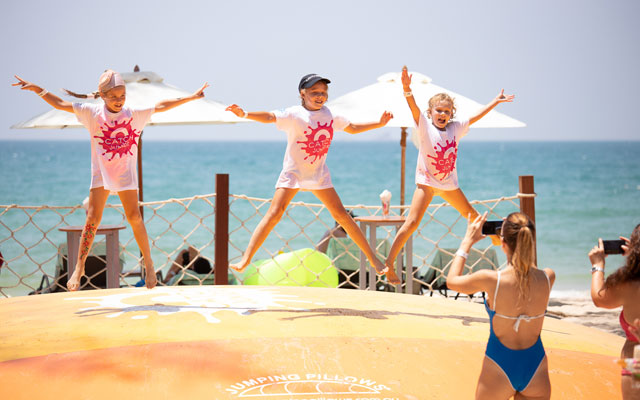
One, two, jump!
Face painting at Catch Junior
More Jumping Pillow fun
The beach club features a 30-metre-long pool with a shallow section for kids, as well as jumping pillow large enough for 15 bouncing away at any one time.
Youngsters can test their power of balance and dexterity by playing on a slack line, climbing on a spider rope, or take DJ lessons from Catch Beach Club’s in-house musical crew.
Every weekend, a special brunch for children will be available with complimentary ice-cream. There are also healthier options as well as a cuisine menu and drinks list for adults to enjoy.
The Singapore Tourism Board (STB) has struck partnerships with two major players in online travel – Indonesian unicorn startup Traveloka, fresh out of a US$420 million funding round led by Singapore’s sovereign wealth fund GIC, and China’s Alibaba Group.
Both agreements cover marketing, content and consumer analytics.
With Traveloka, STB announced a Memorandum of Cooperation (MoC) to promote the city as a preferred destination for visitors from across South-east Asia, targeting five major South-east Asian markets – Indonesia, Malaysia, the Philippines, Thailand and Vietnam.
Keith Tan: more partnerships between STB and major OTAs as travel research and transactions shift online
The MoC, which was signed on the sidelines of the Tourism Industry Conference today, will cover three broad areas: information sharing, marketing campaigns and content generation.
Under the MoC, STB and Traveloka will launch at least 12 marketing campaigns across South-east Asia, and increase the volume of Singapore attractions and activities on Traveloka’s online platforms by 15 per cent. In addition, STB will provide content about Singapore to Traveloka from its Tourism Information and Services Hub.
This cross-sharing of knowledge is expected to generate new insights that will enable both entities to target South-east Asian travellers with more relevant offerings.
Keith Tan, STB’s chief executive, shared that this partnership is “part of (STB’s) overall strategy to better engage visitors from our key markets”.
“As more travel research and transactions shift online, STB will forge new partnerships with major OTAs to better meet the expectations of visitors,” he added.
Yady Guitana, head of global partnership, Traveloka, said: “The online travel market has been increasing exponentially in recent years. We are excited for this partnership as Singapore is one of the top outbound destinations from all of the South-east Asian markets that Traveloka has a strong presence in.”
Prior to this MoC, STB and Traveloka previously collaborated on a campaign in February 2019 to promote Singapore activities and attractions in Indonesia.
STB also revealed that it is in discussions for potential collaborations to promote the new Jewel Changi Airport and events such as the Great Singapore Sale, and Singapore Food Festival in Indonesia.
Meanwhile, reports say the Indonesian Stock Exchange (IDX) is discussing an IPO with Traveloka. If this goes through, the OTA will be the first startup to go public locally.
STB on the same day also signed a three-year MoU with Alibaba Group to drive visitor arrivals and spending. Similar to scope of the MOU includes co-developing joint marketing campaigns and content, collaborating on inbound Chinese travellers analytics and insights and creating more “smart tourism experiences”.
Over the next three years, STB will work with key business units in the Alibaba ecosystem, such as Alipay, Fliggy, Youku, Damai and Alibaba Cloud, to engage Chinese visitors throughout the consumer journey and gain deeper insights into their travelling behaviour.
The Malaysian government is considering imposing measures to protect the ringgit, which has been sliding against the dollar, a move seen as beneficial for both inbound and outbound tourism business.
Speaking to University Malaya students recently at a Youths Ask, Tun Answers session, The Star reported the prime minister as having said that “Malaysia cannot allow the market and the ringgit to decline and depreciate further due to attacks by currency speculators”.
Ringgit stability good for business, tourism players say
During the Asian Economic Crisis in 1998, Mahathir, who was then the fourth prime minister of Malaysia, had pegged the ringgit at RM3.8 to the US dollar.
Manfred Kurz, managing director at Diethelm Travel Malaysia, said that pegging the ringgit again would benefit his longhaul inbound business from Europe where forward bookings are at an average of six months, though the company has also received bookings for summer 2020.
He shared: “We quote in US dollars because the ringgit is not tradable outside of Malaysia. We have to estimate and give a buffer on how the ringgit will develop. Sometimes we win and sometimes we lose. We are tour operators, not bankers.”
“Pegging the ringgit for a period of time will stabilise the currency from fluctuations and it will be easier to work with,” he opined.
Outbound agent, Stephen Thomas, managing director, Topaz Travel & Tours, agreed: “Pegging the ringgit will be good for us outbound players as we don’t have to speculate whether the ringgit will go up or down in six to 12 months time. Medium-haul holidaymakers usually book their tickets six months in advance, and those planning their trips to longhaul destinations, book 12 months or even longer.”
Uzaidi Udanis, president of the Malaysian Inbound Tourism Association, shared that a weaker ringgit has not resulted in a significant improvement of tourist arrivals over the last few years. He expects that fixing the ringgit would help to stabilise the economy.
He said: “If the ringgit weakens further, it can result in higher cost of hotel and tour operator services, which depend on imported food and equipment to run recreational activities and transportation.”
Yesterday, Bernama reported that the ringgit was trading higher against the US dollar in early trading on better demand as market sentiment towards the ringgit was lifted by news on the revival of the East Coast Rail Link project.
The ringgit traded at 4.10 against the US dollar, down from 4.11 against the US dollar on Friday.
Hotelbeds and Oyo Hotels & Homes have announced a strategic global distribution partnership, giving the Indian hotel giant its first deal with a bedbank.
The partnership provides Oyo with access to more than 60,000 travel buying intermediaries on the Hotelbeds platform, including tour operators, airline websites, points redemption programmes and loyalty plans from more than 140 source markets.
(From left) Oyo’s Abhinav Sinha, Hotelbeds’ Mark Redmond, and Oyo’s Maninder Gulati
Meanwhile, Hotelbeds’ clients will have access to Oyo’s portfolio of more than 18,000 franchised and leased hotels and over 10,000 homes and villas, across 10 countries – India, China, Malaysia, Nepal, the UK, the UAE, Indonesia, the Philippines, Saudi Arabia, and Japan.
The deal covers both wholesale and retail distribution via Hotelbeds and Bedsonline.
Mark Redmond, head of global chains at Hotelbeds, commented: “Oyo Hotels & Homes is one of the most talked about hotel brands currently and is massively shaking up the entire sector. While they currently have an impressive 515,000 rooms, they’re set to increase up to one million by the end of the year and we’re looking forward to helping them find incremental and higher-yielding bookings for many of those rooms”.